
How to Price Commercial Snow Removal: Top Tips 2024
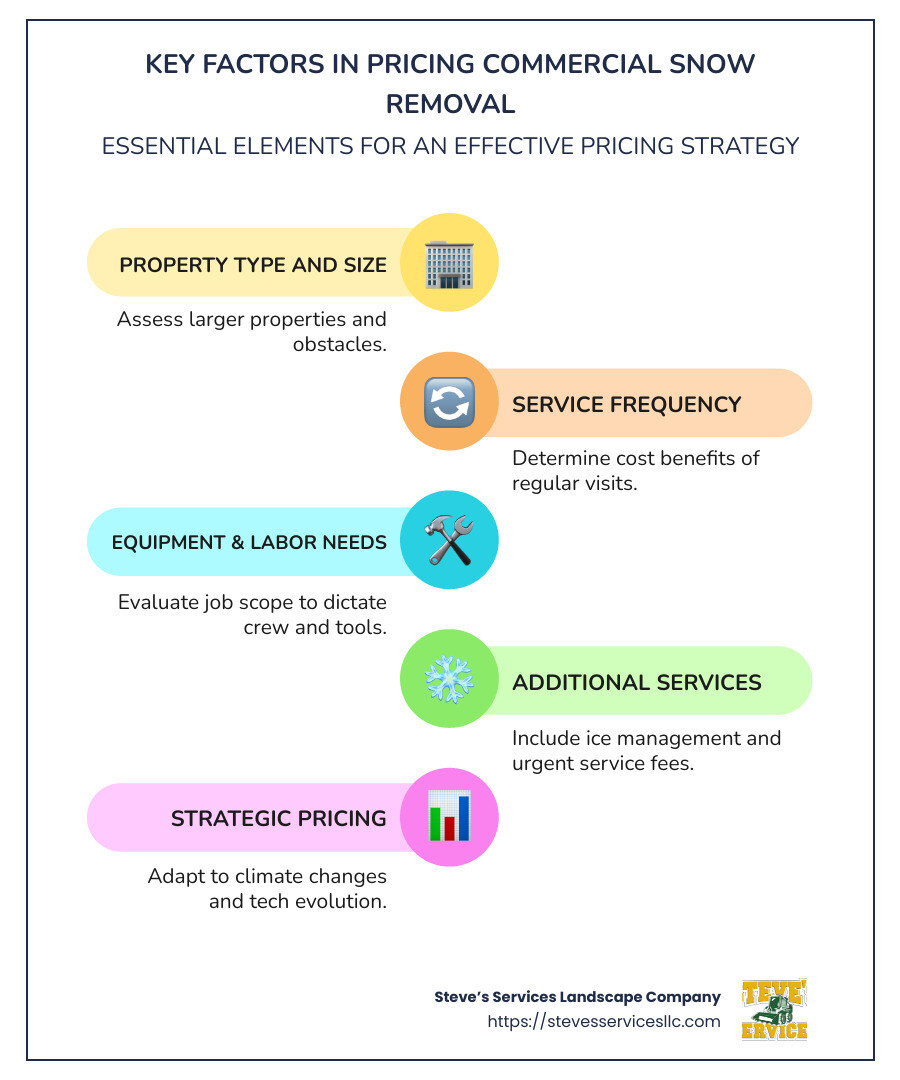
How to price commercial snow removal effectively is a vital concern for property managers in snowy regions. To get started, consider these key pricing components:
- Property Type and Size: Larger properties or those with obstacles require more labor and resources.
- Service Frequency: Regular visits may result in cost savings compared to pay-per-visit arrangements.
- Equipment and Labor Needs: The scope of the job dictates equipment use and crew size.
- Additional Services: Ice management or urgent services often require additional fees.
Understanding these factors can help establish a pricing strategy that balances profitability with customer satisfaction.
In snow and ice management, pricing strategies play a crucial role in maintaining a competitive edge. The importance of accurate and strategic pricing extends beyond simple cost recovery; it ensures long-term sustainability and client satisfaction. As climate patterns shift and technology evolves, businesses must adapt their pricing models to reflect these changes effectively.
As Steve Sylva, with over 25 years of experience in meeting the diverse snow removal needs of Massachusetts, I’ve learned what it takes to price your commercial snow removal services effectively, ensuring consistent value and quality for our clients. This guide will dig deeper into strategies that can improve your snow removal operation.
How to price commercial snow removal terms simplified:
– commercial snow plowing
– commercial snow removal
– machine to remove snow
Understanding Overhead Costs
When it comes to pricing your commercial snow removal services, understanding overhead costs is a crucial first step. Overhead costs are all the expenses your business incurs just to operate. These costs can add up quickly, so it’s important to know exactly what they are.
Key Overhead Components
- Insurance
Insurance is a big part of your overhead. You need both vehicle insurance and snow plow insurance to protect your business from accidents and damages. Without proper coverage, a single incident could be very costly.
- Driving and Setup Time
Time is money. The time it takes to drive to a job and set up your equipment should be billed to your clients. This ensures you are compensated for all the time your team spends on a job, not just the time spent plowing snow.
- Employee Wages
Your employees are your most valuable asset, and they need to be paid fairly. Consider their wages when calculating your overhead. This includes not just their hourly rate, but also any benefits or overtime pay.
- Supply Costs
Supplies like deicer and equipment maintenance are necessary for snow removal. These costs can vary depending on the weather and the size of the area you cover. Make sure to include them in your overhead calculations.
- Fuel
Fuel is another significant cost. Your snow removal equipment and trucks need to be fueled up and ready to go at a moment’s notice. Keep track of fuel costs to ensure they are accounted for in your pricing.
- Business Operations
As your business grows, so do your operational costs. This includes marketing, administrative expenses, and other business-related costs. These should be factored into your overhead to ensure your pricing is sustainable.
Why Overhead Matters
Understanding your overhead helps you determine how much to charge for your services. It ensures you cover all your costs and make a profit. If you ignore these costs, you could end up losing money, even if you’re busy with work.
By clearly identifying all your overhead expenses, you can set a pricing strategy that is fair to your clients and profitable for your business. This foundation will help you decide on the right pricing models, whether it’s per hour, per event, or through seasonal contracts.
Next, we’ll explore estimating job length accurately, which is another key component in setting the right price for your commercial snow removal services.
Estimating Job Length Accurately
Accurately estimating the length of each job is essential for pricing commercial snow removal services effectively. Getting this right ensures that you cover your costs and make a profit, while also providing fair pricing to your clients.
Job Scope
The first step in estimating job length is understanding the job scope. This involves assessing the size and complexity of the area to be cleared. For example, a large commercial parking lot with multiple entrances and exits will take longer to clear than a small, straightforward driveway. Consider any additional tasks, such as salting or snow relocation, which can add time to the job.
Labor Calculation
Once you know the job scope, you can calculate the labor required. This is typically done by estimating how long it would take one person to complete the job and then adjusting based on the number of workers you plan to use. For instance, if a job is expected to take one worker four hours, using two workers could reduce the time to two hours. This calculation helps you determine the total labor cost, which is a key component of your pricing.
Equipment Needs
The type of equipment you use can greatly impact job length. Heavy-duty plows and snow blowers can clear snow much faster than shovels, but they come with higher operating costs. When estimating time, factor in the efficiency of your equipment. This will help you decide whether to charge more for jobs requiring specialized machinery or additional equipment like salt spreaders.
Accurate Estimates
Providing accurate estimates is crucial for building trust with your clients. It shows professionalism and helps avoid disputes over pricing later on. Use historical data and past experiences to improve your estimates. For instance, if previous jobs of similar scope took three hours, use that as a baseline for future estimates.
By taking the time to accurately estimate job length, you can ensure your pricing is competitive and fair. This not only helps in covering all costs but also in building strong client relationships. Next, we’ll dive into the various pricing models available for commercial snow removal services, helping you choose the best approach for your business.
How to Price Commercial Snow Removal
When it comes to pricing commercial snow removal, there are several models you can use. Each has its own advantages, depending on the needs of your clients and your business operations. Let’s explore these different pricing strategies.
Per Hour Pricing
Per hour pricing is straightforward. You charge based on the time it takes to complete the job. To calculate this, use the formula:
Hourly rate x Number of workers x Estimated hours = Total price
For example, if you have two workers each earning $50 per hour, and a job is estimated to take three hours, the total price would be $300. This model is transparent and works well when job durations are hard to predict.
Per Event Pricing
Per event pricing is based on significant snow occurrences, like snowstorms. You charge a flat rate for clearing snow within a 24-hour window. This model is ideal in regions with infrequent, heavy snowfalls. It allows you to manage multiple visits if necessary, but be sure to clarify this with your clients beforehand.
Per Push Pricing
In per push pricing, you charge a flat rate every time you clear snow from a property. This model is useful when snowfalls are frequent but not very heavy. Customers appreciate knowing the cost per visit, which helps them budget. However, you should discuss expected frequency with your clients to align on expectations.
Per Inch Pricing
Per inch pricing is simple and effective. You charge based on the depth of snow. For instance, you might set a flat rate for the first 1-3 inches and then an additional amount for each inch beyond that. This model is clear and easy for clients to understand, making it popular in areas with variable snowfall.
Seasonal and Multi-Seasonal Contracts
Seasonal contracts are like subscriptions. Clients pay a flat fee for snow removal services throughout the season. This model is beneficial for both you and your clients, offering predictable revenue and budgeting. Multi-seasonal contracts extend this idea over several years, often with annual rate increases. This encourages long-term relationships and provides stability for your business.
By choosing the right pricing model, you can ensure that your services are competitive and meet the needs of your clients. Whether it’s per hour, per event, per push, per inch, or through seasonal contracts, each model has its place in commercial snow removal. Next, let’s explore the factors that influence snow removal costs, helping you refine your pricing strategy even further.
Factors Influencing Snow Removal Costs
When determining how to price commercial snow removal, several key factors come into play. Understanding these elements will help you create a fair and competitive pricing strategy.
Amount of Snow
The amount of snow is a major factor in pricing. Heavy snowfall requires more time and resources to clear, impacting costs significantly. Seasonal estimates can help you predict potential snowfall, but remember, weather is unpredictable. Utilizing location-specific weather forecasts can provide more accurate predictions and help adjust your pricing models accordingly.
Driveway and Property Size
The size of the area needing snow removal greatly affects cost. Larger driveways or properties take more time and effort to clear. Consider the length, condition, slope, design, and material of the driveway. For example, a steep, gravel driveway may require more specialized equipment and labor, increasing the overall cost.
Equipment and Labor Costs
Equipment is one of the biggest expenses in snow removal. The type of equipment, such as snow plows, snow blowers, and shovels, affects costs. Gas-powered blowers, for instance, are more expensive to operate than electric ones. Don’t forget fuel and maintenance costs, which add to your overhead. Labor costs, including wages and benefits, also play a critical role. Efficient labor management and equipment use can help keep these costs in check.
Location and Special Conditions
Location can significantly influence pricing. Urban areas might have different challenges compared to rural ones, such as tighter spaces or more traffic. Obstacles like parked cars or narrow pathways can increase difficulty and time. Additionally, emergency areas or high-priority zones may require faster response times, which can add to the cost. Special conditions, like areas prone to drifting snow or ice buildup, might need additional attention or equipment, further affecting pricing.
By understanding these factors, you can more accurately determine the costs of snow removal and set prices that reflect the true value of your services. This ensures both profitability and customer satisfaction. Now, let’s look at common snow removal service rates to help you benchmark your pricing strategy.
Common Snow Removal Service Rates
When determining how to price commercial snow removal, you’ll find several pricing models to choose from. Each model has its own advantages, depending on your business needs and customer preferences.
Per Hour Pricing
This is the simplest way to charge for snow removal. You calculate the total cost by multiplying the hourly rate by the number of workers and the estimated hours needed to complete the job. For example, if your two workers charge $100 per hour and the job takes 4 hours, the total cost would be $800. This method is straightforward and gives customers a clear understanding of labor costs.
Per Event Pricing
Charging per event can be ideal if you operate in areas with inconsistent snowfall. Here, you set a flat rate for each snow event, often within a 24-hour window. This can be advantageous for both parties, as it simplifies billing and ensures you’re compensated for each significant snowfall.
Per Push Pricing
With per push pricing, you charge a flat rate each time you clear snow from a property. This method is predictable for customers who experience frequent but manageable snowfalls. It requires you to know the average number of snow events in a season to set a fair price that covers your costs without overcharging.
Per Inch Pricing
The per inch model is simple and effective. You charge based on the total inches of snow removed. For instance, you might set a flat rate for the first 1-3 inches and then charge an additional rate for each extra inch. This model is transparent and allows customers to see exactly how their charges are calculated.
Seasonal and Multi-Seasonal Contracts
Seasonal contracts offer a subscription-like model where customers pay a single fee for the entire snow season. This method provides steady income and peace of mind for clients, as they won’t need to call for services after each storm. You might also consider multi-seasonal contracts for long-term clients, which can include annual rate adjustments to account for inflation or increased service costs.
Each of these models provides a different approach to pricing commercial snow removal. By offering a variety of options, you can cater to diverse customer needs while ensuring your business remains profitable and efficient.
Frequently Asked Questions about Pricing Commercial Snow Removal
How do you calculate snow plowing?
When calculating snow plowing costs, start with the hourly rate. Multiply this by the number of hours you expect the job to take. For instance, if you charge $100 per hour and estimate the job will take 3 hours, the base cost is $300.
Next, consider your overhead costs. This includes expenses like insurance, fuel, and employee wages. Add these to your base cost to ensure all expenses are covered.
Don’t forget to factor in materials like deicer or sand. Finally, add a markup to ensure profitability. This might be a percentage of the total cost or a fixed amount, depending on your pricing strategy.
How do I bill for snow removal?
Billing for snow removal can vary based on your chosen model. If you charge per inch, you’ll need to measure the snowfall and apply your rates accordingly. For example, you might charge a flat rate for the first 3 inches and an additional amount per inch beyond that.
If you prefer a flat rate per event or per push, simply bill the agreed amount each time you complete a service. This method is straightforward and easy for clients to understand.
How do I budget for snow removal?
To create a budget for snow removal, start by estimating the cost of a typical snow event. For example, calculate the cost for a 4-inch event using your per inch or flat rate pricing.
Once you have this estimate, multiply it by the expected number of snow events in a season. A common rule of thumb is to multiply by five, as this accounts for both average snowfall and unexpected storms.
This approach gives you a budget estimation that can help manage costs throughout the winter season, ensuring your business remains profitable while delivering reliable service to your clients.
Conclusion
In summary, pricing commercial snow removal services involves understanding various factors, from overhead costs to the chosen pricing model. Whether you opt for per hour, per event, or seasonal contracts, each approach requires careful consideration of job length, equipment needs, and client expectations.
At Steve’s Services Landscape Company, we pride ourselves on offering personalized solutions to meet the unique needs of our clients. Our team is skilled in not only snow management but also in providing exceptional customer service. We understand that each commercial property has its own set of challenges, and we tailor our services to ensure safe, accessible, and efficient snow removal.
Our commitment to excellence is reflected in our proactive approach, utilizing real-time weather data and top-tier equipment to deliver timely and effective snow management. We believe in building long-term relationships with our clients, ensuring their properties are maintained to the highest standards throughout the winter season.
If you’re looking for reliable and professional snow removal services, contact Steve’s Services Landscape Company today. Let us help you steer the winter months with confidence, knowing your property is in capable hands.
