
Lawn Installation Service: Top 5 Expert Tips for Perfect Results
Transform Your Outdoor Space with Professional Expertise
Looking for a lawn installation service that delivers exceptional results? Here’s what you need to know:
| What to Expect from Professional Lawn Installation | Why Choose Professionals |
|---|---|
| ✅ Site assessment and preparation | 📈 Increases property value up to 15% |
| ✅ Expert grass selection for your climate | ⏱️ Saves time and effort |
| ✅ Proper soil preparation and grading | 🌱 Ensures proper establishment |
| ✅ Professional installation techniques | 🏆 Provides immediate, beautiful results |
| ✅ Post-installation care guidance | 💰 Long-term cost savings from doing it right |
A professional lawn installation service transforms your property from barren soil to lush greenery, creating that perfect first impression for your home or business. Whether you’re starting from scratch with new construction or renovating an existing landscape, the right approach to lawn installation makes all the difference in achieving a vibrant, healthy, and long-lasting lawn.
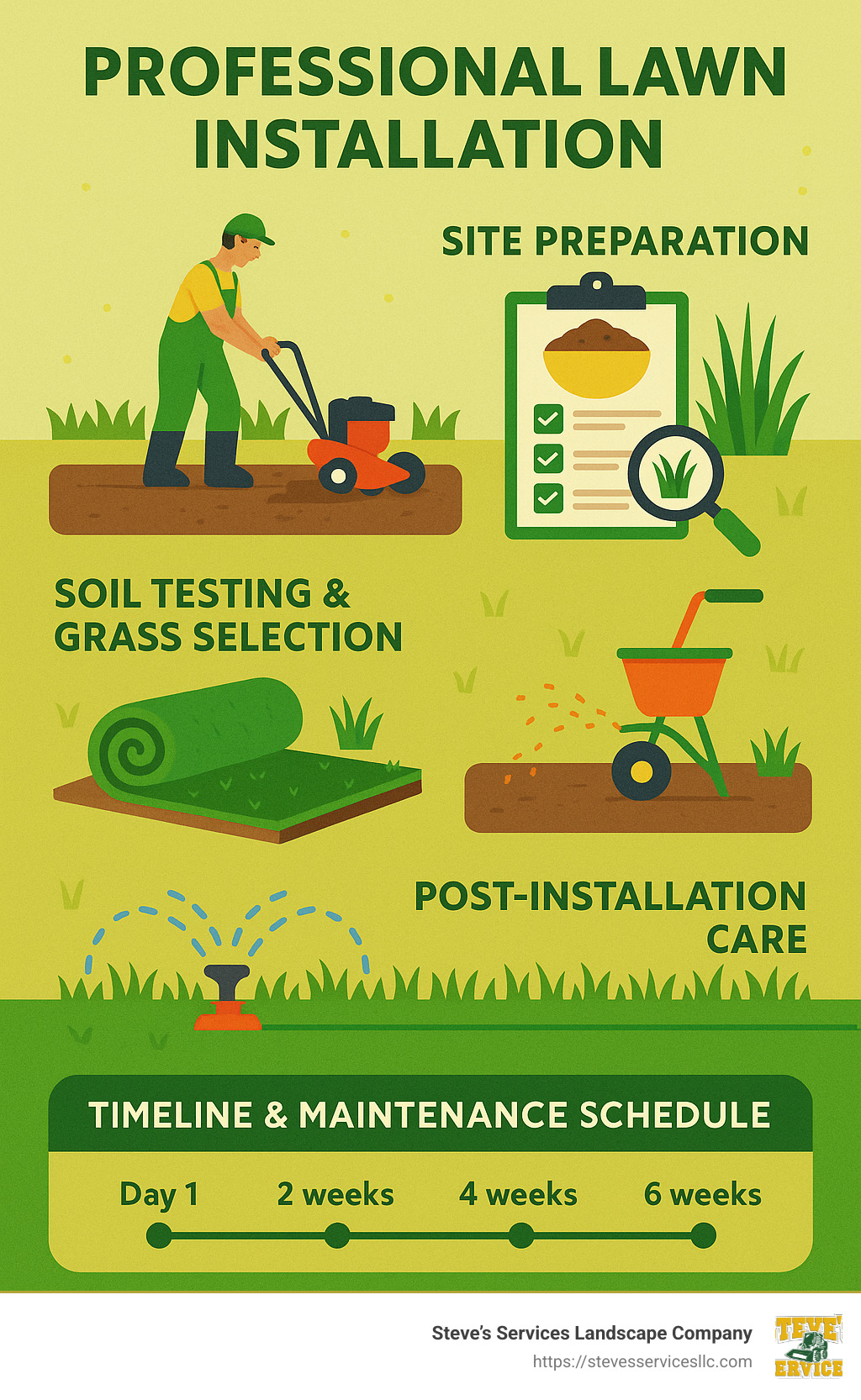
Professional installation isn’t just about laying sod or spreading seed – it’s about creating the proper foundation for years of enjoyment. The process involves careful site preparation, selecting the right grass type for your specific conditions, and implementing proven installation techniques that ensure successful establishment.
My name is Steve Sylva, and with over 25 years of experience providing professional lawn installation service throughout Massachusetts, I’ve transformed countless properties with expertly installed lawns that stand the test of time. At Steve’s Services Landscape Company, we combine industry expertise with personalized attention to deliver results that improve both the beauty and value of your property.
Why Choose Professional Lawn Installation Services
There’s something magical about a perfectly installed lawn that transforms your entire property. At Steve’s Services Landscape Company, we’ve witnessed countless “wow” moments as homeowners see their barren yards become lush, green retreats. After serving Massachusetts communities from Burlington to Winchester for over 25 years, we’ve learned that professional installation truly makes all the difference.
Time Saved
Let’s be honest – installing a lawn properly involves dozens of steps that most homeowners simply don’t have time to complete. Our lawn installation service compresses weeks of backbreaking DIY work into a streamlined professional process.
As Joseph Parker, one of our happy customers, recently told us:
“Steve’s Services has been an excellent service provider for all our outdoor needs. They completed in a day what would have taken me weeks to do myself, and the results were far superior to what I could have achieved on my own.”
From initial soil testing to final installation, we handle every detail while you focus on the more important things in life – like planning that first backyard barbecue on your new lawn!
Expertise and Experience
Have you ever noticed how some lawns look lush and vibrant while others struggle despite seeming similar care? The difference often comes down to how the lawn was initially installed.
With our team’s 25+ years serving communities from Everett to Winchester, we’ve developed deep knowledge of New England’s unique soil challenges and climate quirks. This expertise allows us to select grass varieties perfectly suited to your specific location, prepare soil with exactly the right amendments, install using techniques that encourage strong root development, and provide customized care instructions that ensure long-term success.
It’s like having a doctor for your lawn who understands its specific needs rather than trying generic solutions that might not work.
Instant Results
There’s something incredibly satisfying about the change that happens with professional sod installation. Unlike seeding, which requires weeks of waiting and hoping, professionally installed sod gives you that picture-perfect lawn immediately.
One Melrose homeowner captured this feeling perfectly: “We were amazed at the change. We went from a patchy, embarrassing yard to a beautiful lawn in a single day. It completely changed how we felt about our home.”
This instant change doesn’t just look good – it allows you to start enjoying your outdoor space right away while providing immediate erosion control and soil stability.
Increasing Property Value with Professional Lawn Installation
Did you know that a professionally installed lawn can increase your property value by up to 15%? That makes professional lawn installation service one of the smartest investments for improving your home’s market appeal.
Real estate agents consistently rank lawn quality among the top factors influencing buyers’ first impressions. That lush green carpet creates an emotional connection before potential buyers even step through your front door.
A recent client from Stoneham shared their experience: “When we decided to sell our home, we invested in professional lawn installation first. Our realtor told us it was the best decision we could have made. The house sold in just three days for well above asking price, and multiple buyers specifically mentioned the beautiful lawn in their feedback.”
Beyond just boosting resale value, your new lawn provides ongoing benefits like reduced erosion, improved air quality around your home, natural cooling during hot summers, and creating usable outdoor space for family activities. It’s an investment that pays dividends in many ways.
Addressing Common Challenges with Expert Help
Massachusetts properties face several common lawn challenges that our professional installation addresses head-on:
Soil Compaction
Walk across many yards in Revere or Saugus, and you’ll notice the ground feels hard underfoot. This soil compaction prevents proper root growth and stunts lawn development. Our lawn installation service includes specialized core aeration that creates thousands of small holes, allowing water, oxygen, and nutrients to reach deeper into the soil.
This process transforms compacted dirt into a nurturing environment where grass roots can thrive, establishing a stronger foundation for your entire lawn.
Weed Control
Nothing ruins a beautiful lawn faster than weeds. Professional installation includes strategic pre-emergent treatments applied at precisely the right times for our region – typically March and July – preventing weed seeds from germinating in the first place.
A North Reading customer summed it up perfectly: “After years of fighting a losing battle against weeds in my lawn, having professionals install a new lawn with proper weed prevention measures made all the difference. Two years later, my lawn remains virtually weed-free with minimal maintenance.”
This proactive approach saves countless hours of future weed-pulling and spot-treating that comes with DIY lawn installation.
Poor Drainage
Ever noticed those soggy spots that never seem to dry out? Improper grading and drainage issues can doom even the most carefully selected grass varieties. Before installing your new lawn, our team addresses these problems through proper grading techniques that eliminate low spots, installation of drainage solutions where needed, and soil amendments that improve natural drainage capacity.
By fixing these issues before your lawn goes in, we prevent the frustrating cycle of replanting and patching that plagues many DIY lawn projects. The result is a lawn that not only looks beautiful but stays healthy through all four New England seasons.
For more insights on proper lawn care, check out our guide on The Importance of Proper Lawn Care.
Exploring Different Lawn Installation Methods
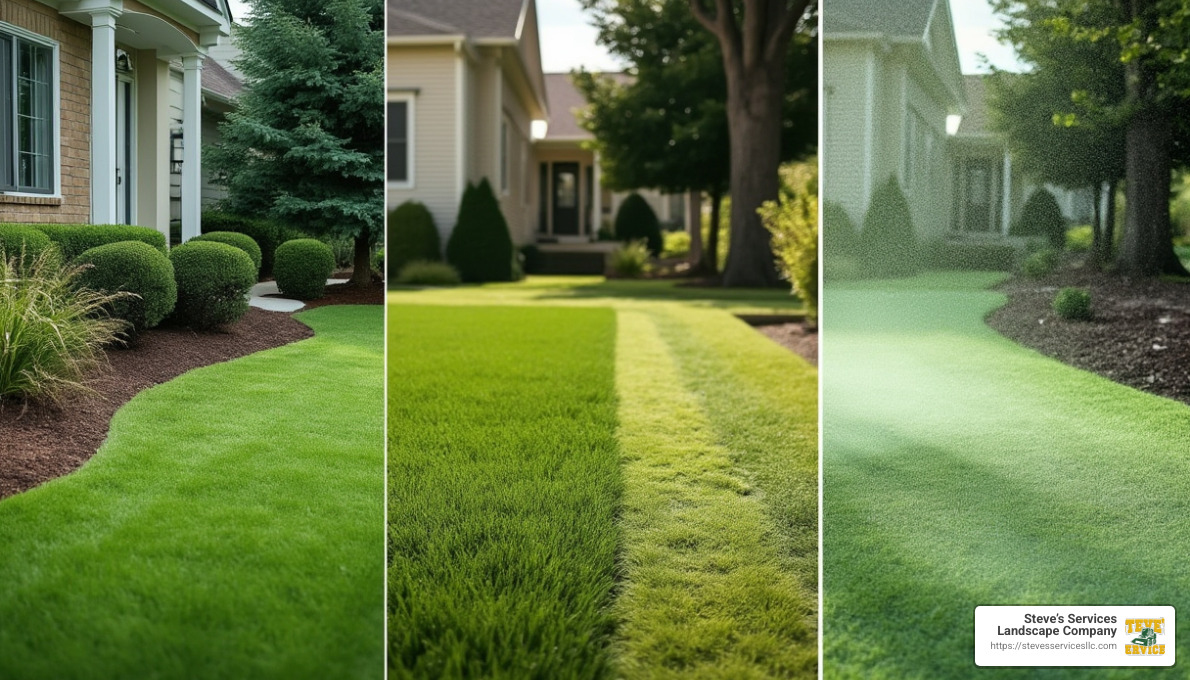
When it comes to changing your bare yard into a lush, green oasis, you’ve got options. At Steve’s Services Landscape Company, we’ve helped countless Massachusetts homeowners steer these choices to find the perfect lawn installation service for their unique needs. Let me walk you through the different methods we offer and help you understand which might be right for your property.
Sod Installation: Instant Gratification
There’s something magical about sod installation. In just one day, your property can transform from brown dirt to green paradise. It’s like rolling out a carpet of instant curb appeal!
Sod is essentially pre-grown grass that comes complete with a thin layer of soil held together by an established root system. When we install it, we’re essentially transplanting a fully mature lawn to your property.
One of our Wakefield customers described it best: “I left for work with a dirt yard and came home to a lawn that looked like it had been there for years. The change was absolutely stunning.”
The beauty of choosing a professional lawn installation service for sod is that we handle every detail to ensure proper establishment. We carefully lay each piece in a staggered pattern (similar to how bricks are arranged) to prevent seams from lining up, which creates a more seamless appearance and stronger overall lawn.
After installation, we roll the entire area to ensure good root-to-soil contact, then provide a deep initial watering to kickstart the establishment process. With proper care, those roots will knit into your soil within 2-3 weeks, creating a lawn that looks like it’s always been there.
The timing of sod installation is crucial for success. During active growing seasons, we always install sod the same day it’s harvested for optimal results. In cooler weather, we have a bit more flexibility—sod can remain rolled for 5-7 days and still establish successfully—but we always aim for the freshest installation possible.
Seeding and Hydroseeding: Cost-effective Alternatives
While sod delivers immediate results, seeding approaches offer distinct advantages that make them worth considering, particularly for larger properties or specific budgets.
Traditional seeding involves carefully preparing your soil and then evenly distributing grass seed across the area. Though it requires more patience (typically 8-12 weeks before you have a fully usable lawn), many homeowners appreciate its benefits.
“We have a large property in Reading, and the cost savings with seeding made it the obvious choice,” shared one of our customers. “Steve’s team took the time to select the perfect seed blend for our partially shaded yard, and while we had to wait a bit longer, the results were absolutely worth it.”
Seeding allows for tremendous flexibility in grass selection, often resulting in deeper, more resilient root systems since the grass establishes exactly where it will grow. For more information on caring for newly seeded lawns, you might find our article on The Importance of Proper Lawn Care helpful.
Hydroseeding represents an innovative middle ground between traditional seeding and sod. This method uses specialized equipment to spray a slurry mixture containing seed, mulch, fertilizer, and binding agents onto prepared soil. The result is faster germination and more even coverage than traditional seeding at a price point that’s typically 50-70% less than sod.
One of our Medford clients recently told us, “The hydroseeding process was fascinating to watch—like painting my yard green! Within three weeks we had significant growth, and by six weeks it looked like an established lawn.”
The mulch component in hydroseeding helps retain moisture, which dramatically improves germination rates and helps prevent erosion—making it particularly valuable for sloped areas. If you’re considering this option, you might want to check out our detailed guide on How to Care for Lawn After Hydroseeding.
Artificial Turf: Low-Maintenance Option
For some homeowners, particularly those with challenging growing conditions or minimal time for maintenance, artificial turf offers a compelling alternative to natural grass.
Today’s artificial turf products look surprisingly natural—nothing like the obvious fake grass of years past. Modern options feature varied blade heights, multiple green tones, and realistic textures that can fool even discerning eyes from a short distance.
“After years of struggling with a deeply shaded area where grass simply wouldn’t thrive, we finally installed artificial turf,” a Winchester homeowner shared with us. “It stays perfect year-round with virtually no maintenance, and honestly, most visitors don’t even realize it’s not real until we tell them.”
Beyond aesthetics, artificial turf offers practical benefits that make it worth considering. It requires zero watering, which is both environmentally responsible and a significant cost savings over time. There’s no mowing or fertilizing required, and it maintains a consistent appearance year-round regardless of weather conditions.
While the initial installation cost is higher than other methods, many homeowners find the long-term savings in water bills, lawn equipment, fertilizer, and time make artificial turf economically advantageous, particularly for smaller areas or problem spots where natural grass struggles.
Each of these lawn installation service options has its place, and what works beautifully for one property might not be ideal for another. That’s why we always begin with a thorough assessment of your specific conditions, budget, and goals before recommending the best approach for your Massachusetts home.
For more information about artificial turf options and installation, you can visit the Synthetic Turf Council to learn about industry standards and best practices.
The Importance of Soil Preparation in Lawn Installation
You know that feeling when you’re baking a cake and you rush through mixing the ingredients, only to have it flop in the oven? Well, soil preparation for your lawn works the same way – skip the fundamentals, and even the prettiest grass won’t thrive. At Steve’s Services Landscape Company, we’ve seen countless lawns fail simply because someone overlooked this critical foundation work.
“Think of soil preparation like the foundation of a house,” explains our lead installation specialist. “You can use the finest materials for the visible parts, but without a solid foundation, the entire structure is compromised.”
When we provide a lawn installation service, we emphasize soil preparation because it impacts everything that follows. Good soil creates the environment where grass roots can spread deeply, access nutrients easily, and find the perfect balance of moisture. We’ve seen properties in Everett where homeowners tried to skip proper preparation – only to call us months later when their new lawn was patchy and struggling.
Proper soil preparation affects your lawn in ways you’ll notice for years to come:
Nutrient availability makes the difference between lush growth and constant fertilizing. Well-prepared soil acts like a slow-release vitamin system for your grass.
Water management prevents both drought stress and soggy patches. The right soil structure drains excess water while holding enough moisture for healthy roots.
Root development determines how drought-resistant your lawn becomes. Loose, well-structured soil lets roots grow deep instead of staying shallow and vulnerable.
Weed prevention starts before the first grass seed or sod piece is placed. Thorough preparation eliminates existing weed seeds and roots that would otherwise compete with your new lawn.
Steps to Proper Soil Preparation
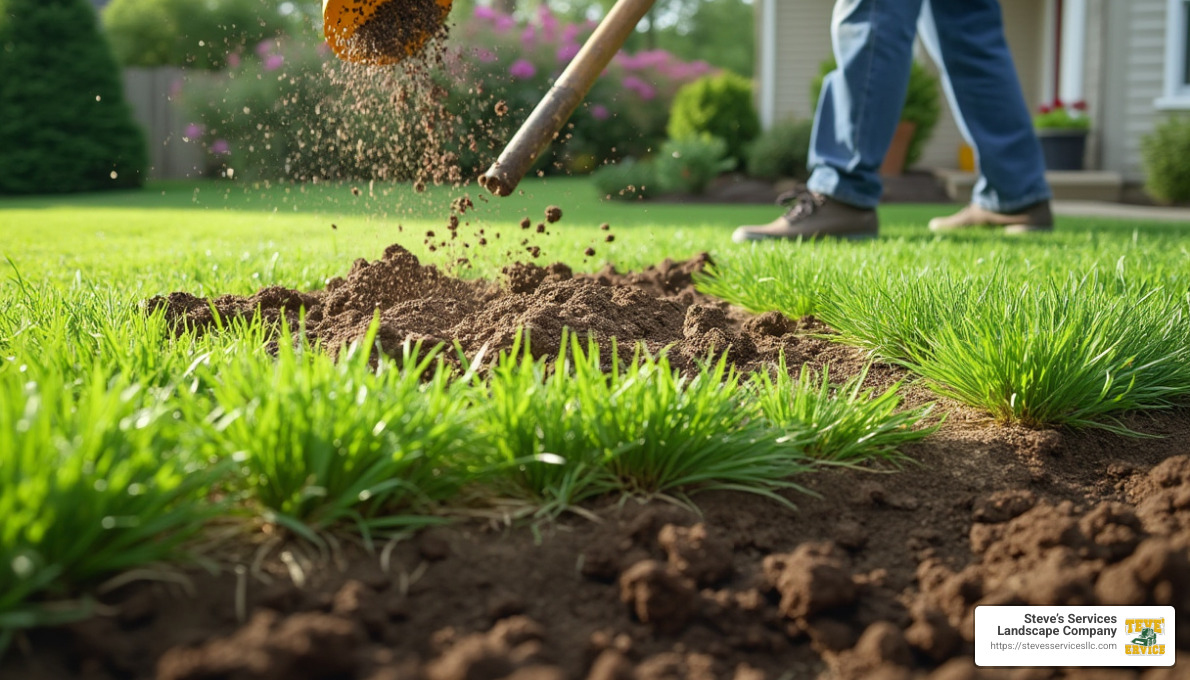
1. Site Assessment
Before our team touches a shovel to soil, we walk your property carefully. This initial assessment helps us identify the unique challenges and opportunities of your landscape. We’re looking at everything from existing vegetation to how water moves across your property after rain.
During this phase, we’re mapping out drainage patterns, checking soil quality, observing sunlight patterns throughout the day, and identifying any potential obstacles like tree roots or buried utilities. This detective work prevents surprises later and helps us create a customized preparation plan.
One Malden homeowner told us: “I was impressed that Steve’s team spent so much time just observing my yard before making any recommendations. They noticed things about water flow that I’d never realized despite living here for ten years.”
2. Remove Old Turf and Weeds
For lawns being renovated, we don’t take shortcuts. We completely remove existing vegetation rather than just tilling it under. This extra step makes a tremendous difference in the long-term health of your lawn by eliminating competition from old grass varieties and persistent weeds.
A Woburn client noted: “Other companies I consulted wanted to simply till under the old lawn. Steve’s team took the time to completely remove the old turf first. A year later, I have virtually no weeds, while my neighbor who used another service is still fighting breakthrough from their old lawn.”
This removal process is meticulous work, but it’s worth every minute spent. We’ve seen the difference it makes in Medford, Melrose, and other Massachusetts communities where our thorough preparation has resulted in lawns that remain weed-resistant for years.
3. Soil Testing and Amendment
You wouldn’t bake a cake without measuring ingredients, so why guess what your soil needs? Our lawn installation service includes professional soil testing to determine exactly what amendments will help your grass thrive.
We analyze pH levels (most grasses prefer slightly acidic soil with a pH between 6.0 and 7.0), organic matter content, nutrient deficiencies, and soil structure. Based on these scientific results, we create a custom amendment plan that might include:
Lime treatments to adjust pH levels when soil is too acidic, which is common in many Massachusetts communities.
Organic matter like compost to improve soil structure and microbial activity, creating a living ecosystem that supports grass health.
Specific nutrients to address deficiencies revealed by testing, ensuring your grass has everything it needs from day one.
Structural amendments like sand to improve drainage in heavy clay soils that are common in parts of our service area.
One Burlington homeowner shared: “The soil in my neighborhood is notoriously clay-heavy. Steve’s team added the perfect mix of amendments that transformed it into something that actually drains properly. My neighbors are still dealing with puddles after rain while my lawn stays healthy.”
4. Grading and Leveling
A properly graded lawn isn’t just about aesthetics – it’s functional. Our team creates subtle contours that direct water where it should go while creating a smooth surface for future mowing.
Good grading ensures water flows away from buildings, eliminates low spots where water collects (and mosquitoes breed), creates a smooth surface for safe mowing, and transitions naturally to existing landscape features.
“The attention to detail during the grading process was impressive,” shared a Malden homeowner. “They created subtle contours that not only look natural but also solved a drainage issue we’d had for years.”
This step requires both skill and the right equipment. Our team uses specialized tools to achieve precise grading that might look simple but makes a significant difference in how your lawn performs over time.
5. Final Soil Conditioning
Just before installation, we prepare a sandy loam fertilized base that provides the ideal growing medium for your new lawn. This final step creates the perfect environment for root establishment, whether you’re choosing sod, seed, or hydroseeding.
Think of this step as setting the table before serving dinner – everything is perfectly positioned for success. This final conditioning ensures your grass has immediate access to the nutrients it needs during the critical establishment phase.
A Revere customer recently told us: “What impressed me most was how different the soil looked after Steve’s team prepared it compared to what was there before. It went from compacted clay to rich, loose soil that you could tell would support healthy grass.”
When you choose our lawn installation service, you’re not just getting grass – you’re getting the comprehensive soil preparation that ensures that grass will thrive for years to come. It’s the difference between a temporary green covering and a truly healthy, sustainable lawn that improves your property value and your enjoyment of your outdoor space.
Selecting the Right Grass Type for Your Climate

One of the most crucial decisions in the lawn installation service process is selecting the right type of grass for your specific climate and property conditions. Here in Massachusetts, we face some unique challenges that make this choice particularly important.
I’ve seen many homeowners struggle with lawns that never quite thrive, and more often than not, it comes down to choosing the wrong grass variety for their specific conditions. It’s like trying to grow a tropical plant in New England – you can put in all the work you want, but if it’s not suited to our climate, you’re fighting an uphill battle.
How Climate Influences Grass Selection
Massachusetts weather can be, well, let’s just say “interesting.” From frigid winters to occasionally sweltering summers, our lawns need to be hardy and adaptable. At Steve’s Services Landscape Company, we carefully consider several key factors when helping clients choose the right grass.
Our region primarily falls within USDA hardiness zones 5b to 7a, which means we’re ideally suited for cool-season grasses. These varieties thrive during our spring and fall seasons, with their peak growth happening when temperatures are between 60-75°F. While warm-season grasses might look tempting with their drought resistance, they typically struggle with our cold winters unless they’re overseeded with cool-season varieties for winter color.
The amount of sunlight your property receives makes an enormous difference too. I remember working with a family in Wakefield whose property had massive oak trees creating patches of dense shade. “We’ve tried everything in those shady spots,” the homeowner told me, “but nothing seems to grow.” We recommended a fine fescue blend specifically for those shadier areas while using a different mix for their sunny front yard. A year later, they had a lush, uniform lawn throughout their property.
Soil conditions vary dramatically across Massachusetts communities. Properties closer to the coast often have sandier soils, while inland areas might deal with heavy clay. Each grass type has its own soil preferences – some varieties develop deep root systems that can penetrate compacted soils, while others are better suited to sandy conditions where drainage happens quickly.
How you plan to use your lawn also matters tremendously. A family with active children and pets needs a different grass type than someone looking for a purely ornamental lawn. As one Revere homeowner told me, “With three kids and a dog, our lawn takes a beating. We need something that can handle the traffic and bounce back quickly.”
Matching Grass Types with Lawn Installation Service Methods
Different grass varieties work better with specific installation methods, which is something we carefully consider when providing our lawn installation service. The relationship between grass type and installation method can significantly impact both immediate appearance and long-term success.
When it comes to sod installation, we’re somewhat limited by what’s commercially available as sod in our region. Kentucky Bluegrass blends are perhaps the most popular choice for Massachusetts sod installations, creating that lush, carpet-like appearance that many homeowners desire. They perform beautifully in sunny areas but require good irrigation. Tall Fescue sod offers better drought tolerance once established, while Fine Fescue mixes work better in partially shaded locations.
The beauty of seeding and hydroseeding lies in the flexibility they offer. We can create custom seed blends custom specifically to your property’s unique conditions – something that’s simply not possible with pre-grown sod. For properties with varying sun exposure or soil conditions, we might even adjust the seed mix for different areas of the yard.
“The hydroseeding approach with a custom seed blend was perfect for our property,” a client from Revere recently shared. “We have a front yard that gets full sun and a backyard with several mature trees creating shade patterns. Steve’s team adjusted the seed mix for different sections, and now we have consistent coverage throughout, despite the varying conditions.”
For Massachusetts properties, we typically recommend several proven performers:
Kentucky Bluegrass creates a dense, self-healing lawn with excellent winter hardiness – perfect for sunny areas where you want that showcase appearance. It takes a bit longer to establish from seed but creates a lawn that can repair itself through underground runners.
Perennial Ryegrass establishes quickly (sometimes germinating in just 5-7 days) and handles high-traffic areas well. It’s often included in seed blends to provide quick coverage while slower-germinating varieties establish.
Fine Fescues (including Creeping Red, Chewings, and Hard Fescue) offer superior shade tolerance and require less fertilizer and water than other varieties. They create a fine-textured lawn that’s particularly suited to partially shaded areas.
Tall Fescue develops deep roots that help it withstand drought conditions and summer heat. Modern turf-type tall fescues create an attractive lawn that’s more resilient during summer stress periods.
Bluegrass/Ryegrass/Fescue Mixes combine the strengths of different species to create versatile lawns that can adapt to varying conditions. We often recommend these blends for typical residential properties with mixed sun/shade patterns.
In specialized situations – like coastal properties in Revere that face salt exposure or areas with specific challenges – we might recommend other varieties or custom blends based on our 25+ years of experience with Massachusetts lawns.
The right grass selection sets the foundation for years of lawn enjoyment. As one Stoneham homeowner put it, “I spent years struggling with my lawn before realizing I had the wrong type of grass for my yard’s conditions. Once Steve’s team installed the right variety, it was like night and day – suddenly I had the lawn I’d always wanted.”
Cost Considerations for Lawn Installation Services
When planning your dream lawn, understanding the costs involved helps you set realistic expectations and make informed decisions. While every property has unique needs, I’d like to share some general pricing insights to help you plan your lawn installation budget.
Note: The following pricing information represents average costs based on internet data and not actual costs for Steve’s Services. Actual project costs vary widely based on specific site conditions, materials, and project requirements.
Average Cost Ranges by Installation Method
Your choice of installation method significantly impacts your overall investment. Based on industry averages, here’s what you might expect to pay:
| Installation Method | Average Cost Range (per sq. ft.) | Typical Project Range (5,000 sq. ft.) |
|---|---|---|
| Seeding | $0.10 – $0.30 | $500 – $1,500 |
| Hydroseeding | $0.15 – $0.60 | $750 – $3,000 |
| Sod Installation | $0.35 – $1.75 | $1,750 – $8,750 |
| Artificial Turf | $5.00 – $20.00 | $25,000 – $100,000 |
As you can see, there’s quite a range between the most affordable option (traditional seeding) and premium solutions like artificial turf. Most of our Massachusetts customers find that sod or hydroseeding offers the sweet spot between immediate results and budget considerations.
Key Cost Factors
Beyond the installation method, several other factors will influence your total investment in a professional lawn installation service.
The size of your lawn is naturally the most significant cost driver – larger areas require more materials and labor hours. However, you might benefit from some economies of scale on larger projects, as the per-square-foot cost often decreases slightly for bigger installations.
Site preparation requirements can dramatically affect your bottom line. A property requiring extensive grading, soil amendment, or removal of existing vegetation will necessarily cost more than one needing minimal prep work. Removing an existing lawn typically costs between $0.25 and $2.00 per square foot, while significant grading work might run $0.50 to $2.50 per square foot. Quality topsoil or compost amendments range from $15 to $60 per cubic yard.
One Medford homeowner shared with us: “I was initially surprised by the site preparation costs, but after Steve explained how poor drainage had caused my previous lawn to fail, I understood the value. The proper grading work they did has completely transformed how water moves across my property.”
Accessibility and site conditions play a major role too. Properties with steep slopes might see costs increase by 15-30% due to the additional labor and specialized techniques required. Limited access points that prevent equipment use can necessitate manual material transport, significantly increasing labor costs. And those pesky obstacles – from large rocks to old stumps – can add $100-$800 per obstacle for proper removal.
Your choice of grass type also impacts your investment. While basic seed mixes might cost just $0.10-$0.30 per square foot, premium drought-resistant varieties could run $0.30-$0.90 per square foot. Specialized shade-tolerant sod varieties typically cost 20-40% more than standard options. At Steve’s Services, we help you select varieties that balance your budget with your lawn’s specific needs and conditions.
Many lawn installation projects also include complementary elements that improve functionality and aesthetics. A typical residential irrigation system installation ranges from $1,800 to $5,500, while landscape edging costs between $5 and $25 per linear foot. Mulched beds, which beautifully frame your new lawn, generally run $40 to $150 per cubic yard installed.
Long-Term Value Considerations
When evaluating lawn installation service costs, looking beyond the initial price tag helps you understand the true value of your investment. A professionally installed lawn often provides significant long-term savings through:
Reduced water consumption – Properly installed lawns with appropriate grass selections typically require less supplemental irrigation, especially important in areas with rising water costs or summer restrictions.
Lower maintenance expenses – Professional installation with proper soil preparation often results in lawns that need fewer fertilizer applications, less frequent overseeding, and fewer pest control treatments over time.
Extended lifespan – Perhaps most importantly, a professionally installed lawn can thrive for decades with appropriate care, while improperly installed lawns may need complete replacement within just a few years.
“When we bought our home in Stoneham, we initially chose the lowest bidder for our lawn installation to save money,” one customer told us. “Within two years, we were dealing with constant bare patches, drainage issues, and weed problems. Having Steve’s team redo it properly actually saved us money in the long run by eliminating all those band-aid solutions we kept applying.”
At Steve’s Services Landscape Company, we provide detailed, transparent quotes that break down all costs associated with your specific project. We’re happy to discuss options that help you achieve your lawn goals within your budget constraints, focusing on solutions that provide lasting value rather than just the lowest upfront price.
For more detailed information about lawn installation costs, check out our article on How Much to Get New Lawn Installed?
Maintaining Your Newly Installed Lawn
Your beautiful new lawn is finally installed—but the journey has just begun! A professional lawn installation service creates the foundation, but what you do next determines whether your green investment thrives for years or struggles from the start. At Steve’s Services Landscape Company, we believe proper maintenance is just as important as proper installation.
“Think of your new lawn like bringing home a new pet,” says Steve Sylva. “It needs regular care and attention, especially in those first critical weeks. But once established, the routine becomes much easier.”
Watering and Irrigation After Lawn Installation Service
Water is the lifeblood of your new lawn, and getting the watering schedule right makes all the difference—especially during those crucial first weeks.
For newly installed sod, those first 21 days are make-or-break time. During the first week, your sod needs frequent, light waterings—typically 3-4 times daily for about 5-10 minutes each session. This keeps the sod and soil contact zone consistently moist without creating puddles. By the second week, you can typically reduce to once daily for about 30 minutes (though on particularly hot days, a morning and afternoon watering might be necessary).
“The watering schedule Steve provided saved our lawn,” shares Maria from Revere. “My husband wanted to water deeply but less frequently right from the start, which would have been a disaster. Following the proper schedule made all the difference—our sod rooted perfectly.”
For those with seeded or hydroseeded lawns, patience is key. The soil surface needs to stay consistently moist for the first 10-14 days to support germination. Think light, frequent mistings rather than deep soakings at this stage. Once you see those little green sprouts emerging, you’ll gradually reduce frequency while increasing duration to encourage those roots to grow deeper.
Morning watering (before 10 am) is ideal for all lawn types. This gives the grass blades time to dry during the day, reducing disease risk. Evening watering might seem convenient, but it can promote fungal problems that are much harder to fix than simply adjusting your watering schedule.
Many of our clients find that installing an irrigation system alongside their new lawn provides peace of mind. An automatic system ensures consistent coverage without the “forgotten corners” that often happen with manual watering. Plus, modern smart controllers can adjust to weather conditions automatically—a real water-saver during New England’s unpredictable weather patterns.
Fertilization and Weed Control
Your new lawn needs proper nutrition to reach its full potential. Think of fertilizer as a multivitamin for your grass—providing essential nutrients that might not be naturally available in sufficient quantities.
For sod lawns, we recommend holding off on fertilizing until about six weeks after installation. This gives the grass time to establish its root system before encouraging top growth. When you do fertilize, choose a balanced formula with slightly higher phosphorus content to encourage those roots to grow deep and strong.
With seeded lawns, we typically apply a starter fertilizer right at installation. This specialized formula provides the nutrients that young seedlings need most. Then, about 4-6 weeks after germination, a follow-up application helps support continued establishment.
“I was surprised when Steve told me not to fertilize my new sod right away,” shares Tom from Burlington. “Every other company I talked to wanted to sell me fertilizer immediately. Steve explained that premature fertilizing could actually harm the establishment process. His honest advice is why I’ve been a customer for years now.”
For established lawns in Massachusetts, the ideal fertilization schedule typically includes:
Spring (April-May): A light application with pre-emergent weed control helps your lawn green up while preventing crabgrass and other annual weeds from germinating.
Early Summer (June): A balanced fertilizer keeps your lawn looking great through the summer stress period, and we might include insect control if needed for your specific property.
Fall (September): This is actually your most important fertilization of the year! Fall is when grass builds its root reserves for winter survival and spring green-up. A properly timed fall application makes a huge difference in next year’s lawn performance.
Weed control becomes much easier when you start with a professional lawn installation service. The clean slate approach eliminates existing weed seeds and creates a dense turf that naturally resists weed invasion. That said, no lawn is completely immune to weeds. Pre-emergent treatments applied at the right times (typically March and July in our region) prevent most weed seeds from establishing. For any breakthrough weeds, targeted spot treatments are far more environmentally responsible than blanket applications.
Mowing Your New Lawn
That first mowing is a milestone moment, but timing is everything. For sod, wait until it’s firmly rooted—typically about three weeks after installation. You can test by gently tugging on a corner; if there’s resistance, it’s likely ready. For seeded lawns, wait until the grass reaches about 3-4 inches in height.
When you do mow, remember the one-third rule: never remove more than one-third of the grass blade in a single cutting. This might mean mowing more frequently during active growth periods, but your lawn will thank you with improved density and color.
Mowing height makes a tremendous difference in lawn health. For most cool-season grasses in Massachusetts, keeping your mower deck at 2.5-3.5 inches provides the sweet spot between aesthetics and lawn health. Taller grass shades the soil, reducing weed germination and helping your lawn stay cooler during summer heat.
“When Steve suggested I raise my mowing height from 2 inches to 3 inches, I was skeptical,” admits James from Melrose. “I always thought shorter looked more manicured. But after trying his recommendation, my lawn not only looks better, it needs less water and has fewer weeds. I’m completely converted to the taller grass approach now.”
Don’t forget to alternate your mowing pattern each time—mowing in the same direction repeatedly can cause the grass to lean and create permanent patterns in your lawn. It also helps prevent soil compaction from wheel tracks always being in the same spots.
With the right care regimen, your professionally installed lawn will mature into a beautiful, resilient outdoor space that improves your property for years to come. And remember, our team at Steve’s Services is always available to answer questions about your lawn’s specific needs as it matures through the seasons.
Frequently Asked Questions about Lawn Installation Services
How Can Professional Lawn Installation Services Increase Property Value?
When you invest in a professional lawn installation service, you’re not just creating a beautiful outdoor space—you’re making a smart financial decision. A properly installed lawn can increase your property value by up to 15%, making it one of the most cost-effective home improvements available.
Think about the last time you drove past a home with a lush, vibrant lawn compared to one with patchy grass or bare dirt. The difference in your impression was likely immediate and significant. This same psychology applies to potential buyers viewing your property.
“I’ve been selling homes in Lynnfield for over 20 years,” shares local real estate agent Maria Chen, “and I can tell you without hesitation that properties with professionally installed lawns typically sell faster and for higher prices than comparable homes with neglected landscaping. The exterior makes or breaks that crucial first impression.”
Beyond simple aesthetics, a professional lawn installation signals to buyers that the entire property has been well-maintained. It creates functional outdoor living space that effectively expands your home’s usable square footage. Plus, proper installation includes drainage and erosion control measures that prevent potential property damage—something savvy buyers recognize as avoiding future expenses.
What Are the Common Challenges Faced During Lawn Installation?
Even with professional help, lawn installation can present several challenges. Understanding these potential problems helps you appreciate the value of experienced installation services.
Weather conditions represent perhaps the biggest variable in lawn installation. Extreme heat, cold, or unexpected precipitation can impact both the timing and initial establishment of your new lawn. At Steve’s Services, we carefully monitor weather forecasts to schedule installations during optimal conditions, sometimes adjusting our schedule by a few days to avoid problematic weather that could compromise results.
Soil variability often surprises homeowners. Different areas of your property may have dramatically different soil conditions—from clay to sand, acidic to alkaline—sometimes within just a few feet of each other. Our comprehensive soil testing and preparation process addresses this by creating a consistent growing medium across your entire property.
Irrigation challenges can make or break a new lawn’s success. One Wakefield customer shared their experience: “Ensuring proper water coverage during those first critical weeks was more complicated than we expected. Steve’s detailed watering instructions and their suggestion to install a simple irrigation system made all the difference in our lawn’s establishment.”
Existing trees and shade create competitive growing environments where grass must battle for water, nutrients, and sunlight. We select appropriate grass varieties for these challenging areas and may recommend alternative groundcovers where grass simply won’t thrive.
Pest pressure poses a significant threat to new lawns. Insects, diseases, and weed competition can quickly overtake vulnerable new grass. Our preventative treatments and monitoring protect your investment during this critical establishment period.
A Reading customer recently told us about an unexpected challenge: “When installing our new lawn, Steve’s team finded a previously unknown drainage issue that would have doomed our grass within months. They quickly adapted their approach, installed a simple drainage solution, and continued with the installation without missing a beat. That kind of problem-solving ability is why we recommend them to everyone.”
How Long Before I Can Use My Newly Installed Lawn?
One of the most common questions we hear concerns timing—specifically, how long before you can actually enjoy your new lawn. The answer depends on your installation method and desired usage level.
For sod installation, patience during the initial establishment period pays tremendous dividends:
- Hold off on any foot traffic for at least two weeks to allow roots to establish properly
- Normal, light use can begin after three to four weeks when roots have developed good soil contact
- Heavy use or play areas should wait four to six weeks to ensure complete establishment
- Your first mowing typically occurs around three weeks after installation
For seeded lawns, the timeline extends a bit longer:
- Your first mowing happens when the grass reaches 3-4 inches in height, typically 3-4 weeks after germination
- Light foot traffic can begin after you’ve mowed at least twice, usually 6-8 weeks after seeding
- Regular use becomes possible around 10-12 weeks after seeding
- For areas that will see heavy use or play, allowing one full growing season ensures complete establishment
“Steve’s team was wonderfully clear about when we could start using different areas of our new lawn,” explained a Saugus homeowner. “They even placed small, tasteful signs reminding our family to stay off certain sections until they were fully established. My kids counted down the days until they could play on their new ‘field,’ and this clear guidance helped ensure our lawn established perfectly.”
These timelines represent general guidelines—specific conditions at your property might require adjustments. Our team provides customized recommendations based on your specific installation, grass type, and seasonal conditions to help you get the most from your investment in professional lawn installation service.
Conclusion
A beautiful, healthy lawn does more than just improve your property’s appearance – it transforms your entire outdoor living experience. When you invest in a professional lawn installation service, you’re getting the expertise, equipment, and knowledge needed to create a lawn that will flourish for years, not just seasons.
At Steve’s Services Landscape Company, we’ve spent over 25 years perfecting our lawn installation approach across Massachusetts communities. We don’t just plant grass – we create outdoor spaces where memories are made. Our comprehensive process ensures success from the ground up:
We begin with a thorough site assessment, examining everything from soil composition to drainage patterns. This foundation work might not be glamorous, but it’s absolutely essential for long-term success. As one of our Stoneham clients put it, “What impressed me most was how much attention they paid to what was happening below the surface – not just the pretty green stuff on top.”
Next comes expert grass selection custom specifically to your property’s unique conditions. That shady corner near your maple tree? It needs a different approach than your sun-drenched front yard. We match the right grass varieties to each microclimate on your property.
The installation itself follows industry best practices we’ve refined over decades of experience. Whether you’ve chosen sod for immediate results or seeding for a more budget-friendly approach, our techniques ensure optimal establishment.
But our relationship doesn’t end when the installation is complete. We provide detailed maintenance guidance to help you nurture your new lawn through its critical establishment phase and beyond. As a Wakefield homeowner recently shared: “The care instructions Steve provided were clear and easy to follow. A year later, our lawn still looks professionally maintained even though we’re handling it ourselves.”
“From our first consultation to the final walkthrough of our completed lawn, Steve’s team demonstrated professionalism and expertise at every step,” noted another customer in Melrose. “The attention to detail and quality of work was impressive, and a year later, our lawn still looks amazing.”
Ready to transform your outdoor space with a professionally installed lawn? Contact Steve’s Services Landscape Company today to schedule a consultation and find how our lawn installation service can create the perfect lawn for your specific property and lifestyle needs.
Our team proudly serves communities throughout Massachusetts, including Burlington, Danvers, Everett, Lynnfield, Medford, Melrose, North Reading, Reading, Revere, Saugus, Stoneham, Winchester, Woburn, Malden, and Wakefield.
A beautiful lawn begins with professional installation—let us help you create an outdoor space that welcomes you home and brings joy for years to come. After all, your lawn isn’t just grass – it’s the green carpet where life happens.
For more information about lawn care best practices, visit the Lawn Institute, a valuable resource for homeowners seeking to understand the science behind healthy lawns.
