how to add snow removal services to a landscaping business: 7 powerful proven steps for success in 2025
Transform Your Landscaping Business with Winter Revenue
If you’re searching for how to add snow removal services to a landscaping business, here’s a quick overview of the essential steps:
- Assess local demand – Research snowfall patterns and competition
- Handle legal requirements – Update insurance, permits, and contracts
- Acquire necessary equipment – Invest in plows, blowers, and de-icing materials
- Price your services strategically – Consider per-push, per-event, or seasonal contracts
- Market to existing clients first – Leverage your established customer base
- Train your team – Ensure proper operation and safety protocols
How to add snow removal services to a landscaping business is a smart strategy for creating year-round revenue and maintaining cash flow during what would otherwise be slow winter months. Landscaping companies in four-season climates often experience significant revenue drops when the ground freezes and lawns go dormant. Adding snow removal services can transform this downtime into a profitable season while keeping your crews employed year-round and making better use of your existing equipment and infrastructure.
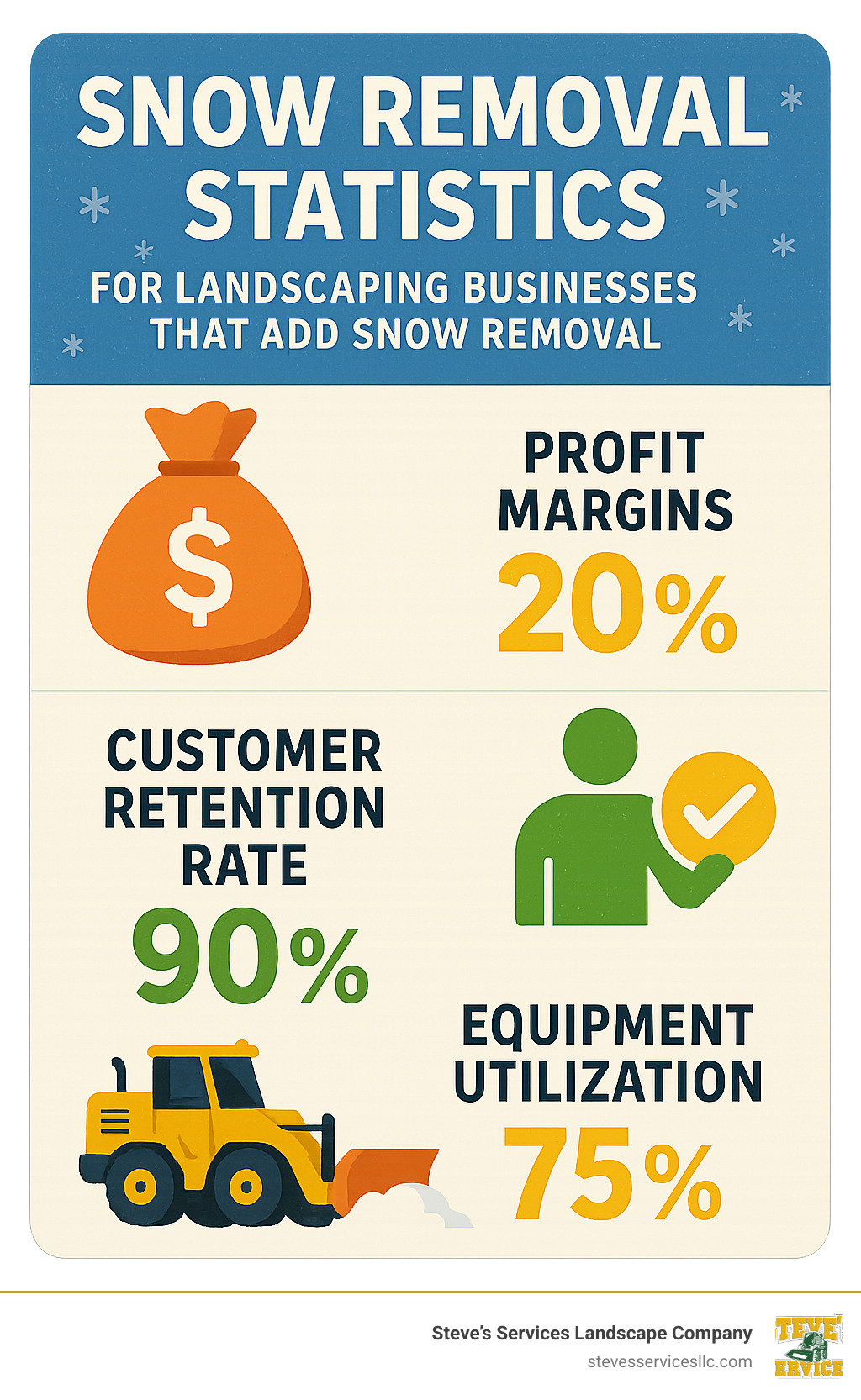
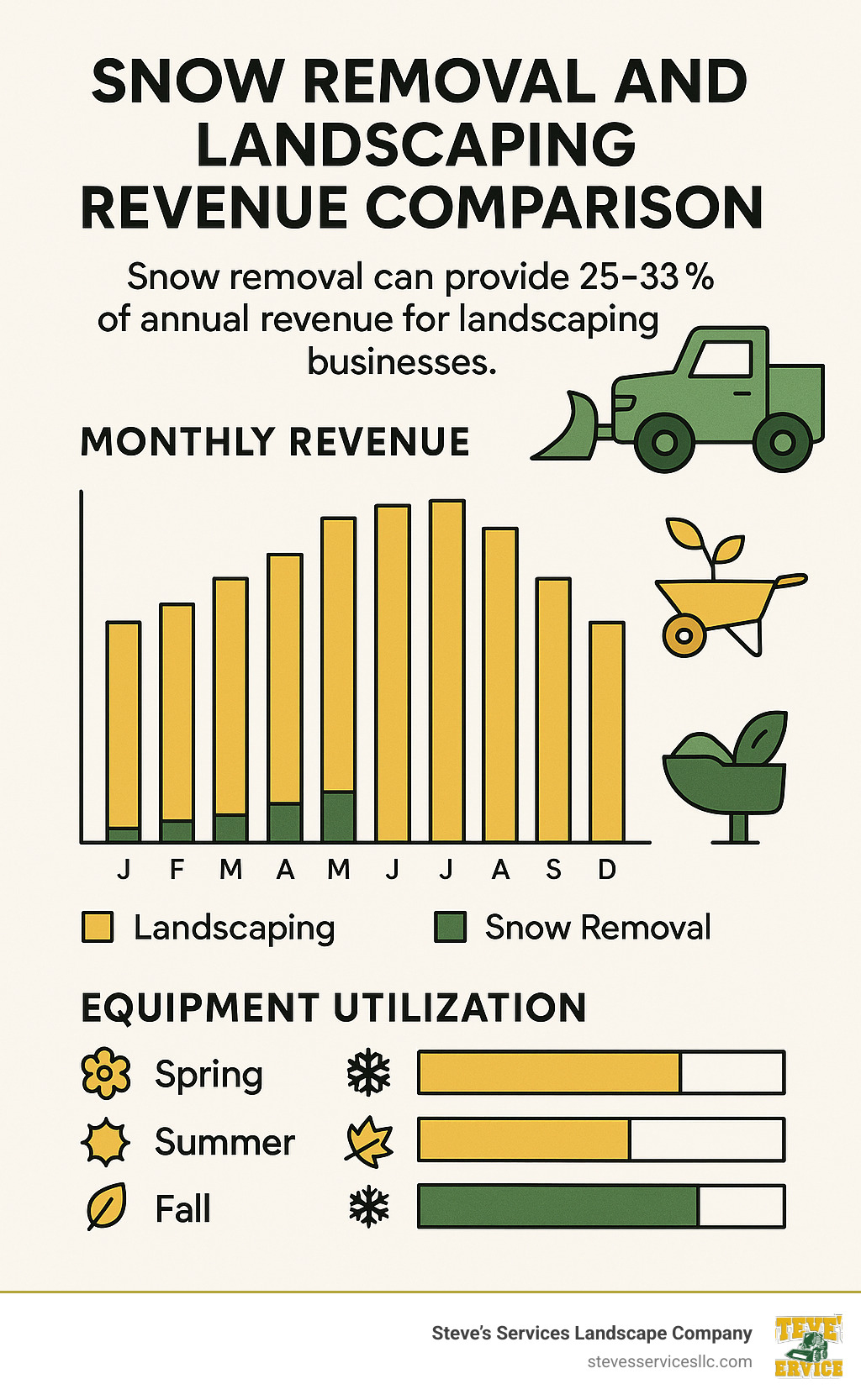
According to industry data from the 2022 SIMA Market Impact Study, approximately 50% of snow and ice service providers are primarily landscape companies that offer seasonal snow removal. For many of these businesses, snow removal accounts for up to one-third of their annual earnings, providing crucial cash flow during winter months when traditional landscaping work slows down.
I’m Steve Sylva, owner of Steve’s Services Landscape Company with over 25 years of experience helping landscaping businesses like mine successfully integrate how to add snow removal services to a landscaping business into their operations to generate consistent year-round revenue and maintain client relationships throughout all seasons.
Why Add Snow Removal to Your Landscaping Business?
When we first considered expanding into snow removal services at Steve’s Services, the decision wasn’t just about filling winter hours—it was about building a sustainable business model that could thrive year-round in Massachusetts’ variable climate.
The snow removal industry is a multi-billion-dollar market with substantial growth potential. In 2023, the median pay for snow removal professionals was $18.12 per hour or $37,690 per year, with experienced operators making up to $50,000 per plow truck in a single winter season. That’s significant supplemental income for what would otherwise be your off-season.
Year-round payroll stability is one of the biggest advantages I’ve found since adding snow services. Instead of seasonal layoffs, we keep our best team members employed through winter, maintaining their loyalty and reducing spring rehiring headaches. This continuity has been invaluable for our company culture.
Maximizing equipment ROI just makes good business sense. Those trucks sitting idle all winter? They could be generating revenue with the addition of plow attachments. The same goes for other adaptable equipment that can serve double duty across seasons.
Building client loyalty happens naturally when you become their single-source provider for property maintenance. Our customers appreciate the convenience of working with one trusted company year-round, and we benefit from stronger relationships that lead to more referrals.
Perhaps most importantly, snow removal services create cash-flow stability that transforms the traditional winter revenue valley into a profitable peak. As one of our crew supervisors likes to say, “Snow is just white gold falling from the sky.”
The cross-selling opportunities have been tremendous as well. Each service becomes a gateway to sell another, creating a virtuous cycle of business growth that spans all seasons.
As Marvin Salcido, a landscape business owner who expanded into snow removal, shared: “Before adding snow services, I would spend our winters wondering how to make payroll. Now the same challenge is figuring out how to service all the demand.”
Key Benefits vs. Challenges
While the benefits are compelling, it’s important to understand both sides of the equation:
Benefits:
Winter income stream can generate 25-33% of your annual revenue, turning a traditionally slow period into a profit center. The upsell opportunities are substantial too—from basic plowing to premium de-icing and sidewalk clearing services that boost your average ticket value.
Year-round client relationships create continuous touchpoints that strengthen loyalty. I’ve found that clients who use both our landscaping and snow services tend to stay with us 40% longer than single-service customers.
Equipment utilization improves your return on investment for vehicles and adaptable equipment. And perhaps most importantly for company culture, staff retention increases dramatically when you can offer year-round employment to your best team members.
However, there are real challenges to consider before jumping in. Unpredictable snowfall means revenue can vary dramatically based on weather patterns. Some winters bring bonanza conditions while others leave equipment sitting idle.
Increased liability is another significant concern. Snow and ice management carries specific risks that require proper insurance coverage and risk management strategies. Material costs for salt and de-icing products can fluctuate wildly in price and availability, sometimes squeezing your margins when you least expect it.
Equipment wear is accelerated in harsh winter conditions, potentially increasing your maintenance costs. And perhaps the biggest lifestyle adjustment is the need for 24/7 availability—snow doesn’t conveniently fall during business hours, and your team needs to be ready to respond when clients need you most.
As one forum contributor wisely noted: “It’s all fun until someone loses an eye (or limb).” This humorous but sobering perspective reminds us that proper planning, training, and risk management are essential when adding snow removal services to a landscaping business.
How to Add Snow Removal Services to a Landscaping Business: Step-By-Step Blueprint

Adding snow removal isn’t just about buying a plow. Here’s our comprehensive blueprint based on years of experience serving communities across Massachusetts:
1. Analyze Local Demand
Before investing a single dollar, research:
– Historical snowfall patterns in your service area (for us, that’s Burlington, Danvers, Everett, and other Massachusetts communities)
– Competitor landscape and service gaps
– Target segments (residential, commercial, municipal) and their specific needs
For example, in our Everett and Malden service areas, we found commercial properties were underserved for reliable snow management, creating an opportunity for our expansion.
2. Identify Your Ideal Service Model
Determine which services you’ll offer:
– Basic snow plowing
– Sidewalk clearing
– De-icing and salt application
– Snow hauling and relocation
– Pre-storm preparation
– 24/7 emergency response
3. Handle Legal and Administrative Setup
Choose the appropriate business structure if you’re not already established:
– LLC vs. sole proprietorship: Most landscapers choose LLC for liability protection
– EIN and tax considerations: Ensure your tax setup accommodates seasonal revenue fluctuations
– Permits and licenses: Check local requirements in each community you serve
4. Secure Proper Insurance
This is non-negotiable. Snow removal carries specific liability concerns:
Common Snow Removal Liabilities:
– Property damage from plowing
– Slip-and-fall incidents on cleared surfaces
– Vehicle accidents during operations
– Environmental damage from salt runoff
– Damage to hidden obstacles under snow
One forum contributor emphasized: “Operating without insurance might work short-term but is risky.” At Steve’s Services, we maintain comprehensive coverage that specifically addresses winter operations across all our service areas from Revere to Winchester.
How to Add Snow Removal Services to a Landscaping Business Legally
Legal compliance isn’t just about avoiding fines—it’s about protecting your business and establishing credibility with clients.
- Update your business registration to include snow removal services
- Research local bylaws for each community you serve (regulations can vary between Malden and Medford, for example)
- Secure proper insurance coverage:
- General liability (minimum $1 million, often higher for commercial contracts)
- Commercial auto for plow vehicles
- Workers’ compensation for your crew
- Umbrella policy for additional protection
- Develop solid contract templates that clearly define:
- Service scope and limitations
- Trigger depths (when you’ll begin service)
- Response time expectations
- Pricing structure and payment terms
- Liability limitations
- Familiarize yourself with OSHA winter safety guidelines to ensure crew compliance
As one experienced contractor advised: “Most commercial contracts require minimum $2 million umbrella policies. Don’t cut corners here—one slip-and-fall claim can exceed that.”
How to Add Snow Removal Services to a Landscaping Business Without Rebranding
One common question we receive is whether adding snow removal requires a complete rebranding. The good news? It typically doesn’t.
Here’s how to integrate snow removal without confusing your brand identity:
- Maintain your season-neutral name (like “Steve’s Services Landscape Company”)
- Use seasonal truck magnets or overlays rather than permanent rebranding
- Update your Google Business profile to include snow removal keywords and services
- Make minor logo tweaks that accommodate winter services (like adding a snowflake during winter)
- Use color coding in marketing materials to differentiate seasonal services
As one forum contributor noted: “It’s basically assumed that a lawn care or landscaping company will also perform snow removal. Your company name doesn’t have to allude to every single service you provide.”
This approach has worked well for us at Steve’s Services. Our clients naturally associate us with year-round property maintenance, allowing for seamless service transitions between seasons.
Gear Up: Equipment, Startup Costs, and Pricing Models

When I first expanded Steve’s Services into snow removal, I quickly learned that equipment investments can make or break your winter season. The good news? You don’t need to break the bank to get started, and many items you already own can pull double-duty.
The equipment you’ll need really depends on your ambitions. Are you looking to clear a few residential driveways, or are you eyeing those lucrative commercial contracts? Here’s what you’ll want to consider:
For a basic residential operation, you’re looking at a pickup truck with a plow attachment ($5,000-$30,000 for a used truck plus $3,000-$10,000 for the plow), a couple of commercial-grade snowblowers ($1,000-$3,000 each), and some salt spreaders ($500-$2,500). Don’t forget those hand tools like shovels and ice breakers (about $200-$500) and safety gear ($200-$600 per crew member).
If you’re going after bigger commercial properties, you might want to add a skid-steer with plow attachment ($15,000-$45,000), liquid de-icing equipment ($2,000-$6,000), and proper salt storage solutions ($1,000-$5,000). Many of our commercial clients also appreciate knowing we use GPS tracking and route optimization software ($50-$200/month) to ensure prompt service.
All told, you can get started with as little as $10,000 for basic residential service, while a full-scale commercial operation might require $100,000+. These are average costs based on internet data, not actual costs for Steve’s Services.
Repurposing Existing Landscaping Equipment
One of the smartest moves we made at Steve’s Services was finding ways to repurpose our existing landscaping equipment. This approach can significantly reduce your startup costs.
Your utility beds and trailers that haul lawn equipment in summer can transport snowblowers and salt in winter. Those trucks you use for landscaping? With the right attachments, they become snow-clearing machines when the flakes start to fall. Even basic hand tools have crossover potential—rakes and brooms still have their uses during winter operations.
I’ve even seen creative landscapers use leaf blowers to clear light, fluffy snow from walkways—though I wouldn’t rely on this method for anything substantial!
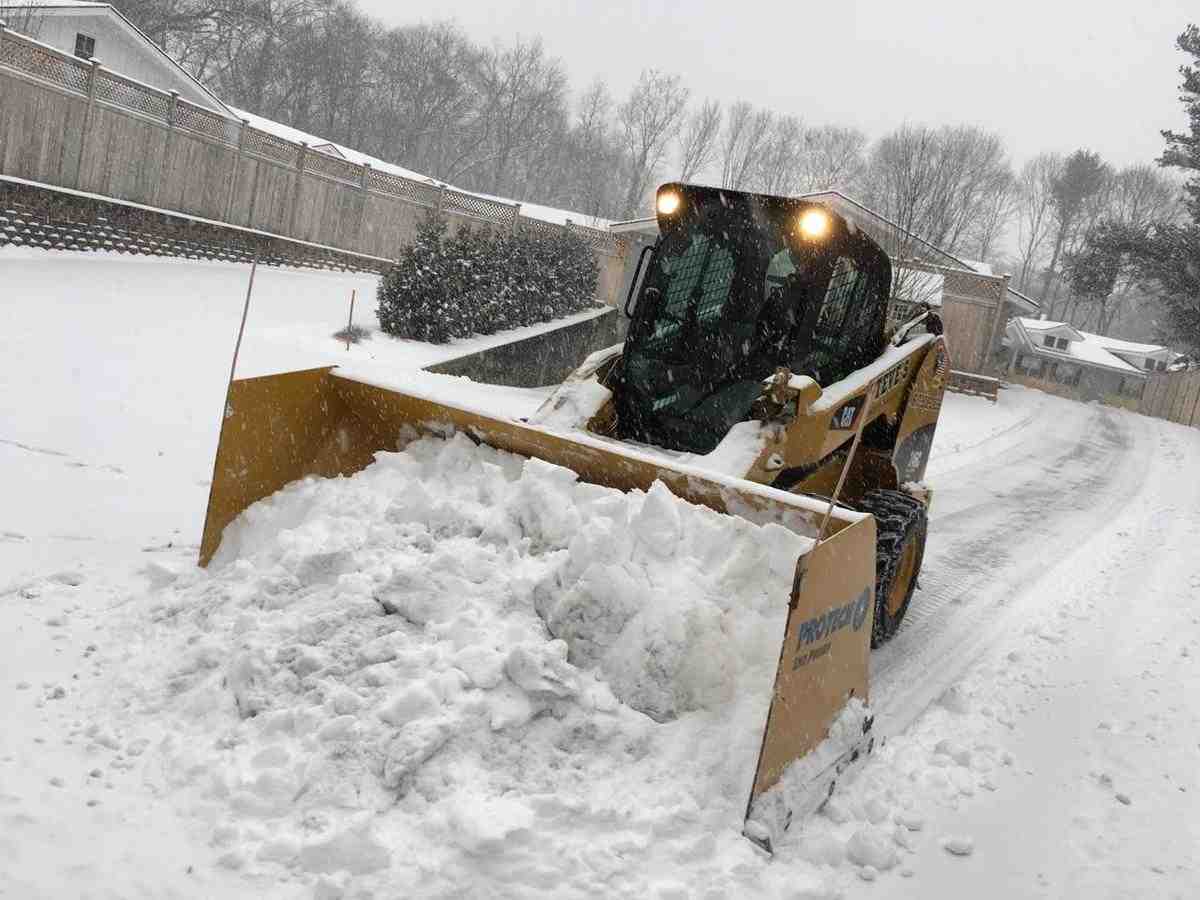
At our company, we’ve become experts at maximizing equipment utilization year-round. The skid steers that move mulch and soil during the green season become snow-clearing powerhouses in winter with simple attachment changes. You can learn more about various snow removal equipment options on our Machine to Remove Snow page.
Pricing Strategies That Protect Your Profits
Pricing snow removal services can feel like predicting the weather itself—there’s always an element of uncertainty. But with smart strategies, you can ensure profitability regardless of Mother Nature’s plans.
Calculate your true overhead first and foremost. I use this simple formula: (Monthly overhead ÷ Monthly sales) × 100. This percentage is crucial for understanding your break-even point.
Historical weather data is your friend. In our Massachusetts service area, we analyze past snowfall patterns to make educated predictions about the upcoming season.
Route density matters tremendously. The closer your clients are to each other, the more properties you can service in less time. When we plan routes at Steve’s Services, we aim for minimal drive time between properties.
Apply appropriate markup using this formula: Total price = Cost ÷ (1 – profit margin). Don’t be afraid to charge what you’re worth!
Include salt/material surcharges in your contracts. Salt prices can fluctuate wildly, and you need protection against unexpected increases.
Add escalation clauses for excessive snowfall. I learned this lesson the hard way during a particularly snowy winter when our seasonal contracts didn’t account for the extra work.
I remember one commercial property manager who balked at our $65,000 seasonal quote when they were used to paying around $25,000. After walking them through our calculations and showing the true cost of reliable service, they understood the value. Not every client will make this journey with you, but the ones who do become long-term partners.
For those looking to calculate precise pricing for commercial properties, our Commercial Snow Removal Pricing Calculator can help you develop accurate quotes.
Pricing Models Comparison:
| Pricing Model | Description | Pros | Cons | Typical Rates* |
|---|---|---|---|---|
| Per Push | Charge each time you clear snow | Simple to understand; Low risk for light winters | Unpredictable revenue; Client budgeting challenges | $30-$100 residential; $100-$500 commercial |
| Per Event | One price regardless of number of pushes needed | Better value perception; More predictable for clients | Requires clear “event” definition | $50-$200 residential; $200-$1,000 commercial |
| Seasonal Contract | Fixed price for entire season | Guaranteed revenue; Simplifies cash flow | Risk in heavy snow years | $200-$1,800 residential; $2,000-$15,000 commercial |
*These rates represent industry averages based on internet data, not Steve’s Services rates, and can vary significantly based on property size, location, and service level.
Finding the right pricing model often comes down to knowing your market and your risk tolerance. In our experience, a mix of all three models provides the best balance of stable income and growth potential. Most of our commercial clients prefer the predictability of seasonal contracts, while many residential customers opt for per-push pricing.
How to add snow removal services to a landscaping business successfully isn’t just about having the right equipment—it’s about pricing your services to ensure you’ll still be in business after a challenging winter!
Marketing, Branding, and Client Acquisition
Now that you’ve got your equipment ready and pricing strategy in place, it’s time for the fun part—connecting with potential clients. As a landscaper, you’ve already got a major advantage: an existing customer base who already knows and trusts you.
When we first expanded into snow removal at Steve’s Services, we were amazed at how receptive our summer clients were. After all, they already knew our quality of work—why wouldn’t they want that same reliability when the snow falls?
Effective Marketing Strategies
Start by reaching out to your current landscaping clients before the first snowflake appears. A simple email campaign with an early-bird discount can work wonders. One of our most successful approaches was sending personalized notes to clients in mid-September, resulting in a 45% conversion rate among our regular landscaping customers.
Door hangers are another surprisingly effective tool, especially in neighborhoods where you already maintain properties. There’s something about that tangible reminder hanging on a doorknob that email can’t match. We’ve found that including a QR code linking directly to your snow removal booking page makes it even more effective.
Neighborhood platforms like Nextdoor have been goldmines for local service providers. One of our team members shared that they gained nearly 20 new clients from a single well-timed post during the first forecast of snow last season. The key is positioning yourself as a helpful community member rather than just another service provider.
Capturing before-and-after photos of your snow removal work is marketing gold. Nothing sells your services better than a dramatic change from impassable driveway to perfectly cleared path. These images can be created using simple tools like the Jobber image maker to showcase your work.
Vehicle signage deserves special mention. During active snow events, your trucks become moving billboards in neighborhoods where people are actively thinking, “I wish someone would clear my driveway!” Magnetic overlays allow you to easily transition between your landscaping and snow removal branding seasonally.
As my friend Mike, who runs a successful operation in Connecticut, likes to say: “Your best marketing happens while you’re working. A neighbor watching you clear a driveway in 10 minutes while they’ve been shoveling for an hour is your most qualified lead!”
Cross-Selling to Your Landscaping Customers
Your existing client relationships are your most valuable asset when expanding into snow removal. These folks already know your quality of work and trustworthiness—they just need to understand how your snow services can make their winters easier.
Bundled contracts with year-round service discounts are particularly effective. We offer a 10% discount when clients sign up for both our landscaping and snow removal services, which not only increases winter business but also helps secure summer contracts earlier.
Loyalty programs that reward multi-service clients create a win-win situation. A simple system like offering priority service during major snow events to clients who also use your landscaping services can be a powerful incentive.
The timing of your outreach matters tremendously. At Steve’s Services, we send personalized renewal letters in early fall, well before the first snowfall prediction sends everyone into a panic. This approach lets clients budget appropriately and gives you time to plan your routes efficiently.
One approach that’s worked wonderfully for us is hosting a fall “Winter Prep” client appreciation event. We invite existing landscaping customers for cider and donuts while discussing winter services. The casual setting leads to natural conversations about snow removal needs, and we typically sign about 30% of attendees on the spot.
For more information on creating effective contractual relationships with clients, check out our guide to Commercial Snow Removal Contracts.
Digital Presence & Local SEO
When the first big storm is forecast, people don’t open the Yellow Pages anymore—they grab their phones and search “snow removal near me.” Will they find you?
Updating your Google Business profile with snow removal keywords, services, and winter photos is absolutely essential. This simple step alone can dramatically improve your visibility when local customers search for snow services.
Creating seasonal landing pages on your website allows you to target specific winter-related search terms. These pages should address the particular winter challenges in your service areas. For us in Massachusetts, that means discussing how we handle everything from light dustings to nor’easters.
Social media updates during snow events are incredibly effective. Nothing builds trust like showing your crews actively working during a storm while everyone else is snug at home. These real-time posts also serve as gentle reminders to those who haven’t yet secured snow removal services.
Local Services Ads through Google can be particularly effective for snow removal because they appear at the very top of search results and operate on a pay-per-lead rather than pay-per-click model. Learn more about leveraging these ads through Google’s Local Services Ads guide.
As our marketing director likes to remind us: “Don’t wait for the forecast to start marketing snow services. By then, you’re competing with every plow operator in town. The contracts are won in the fall, before the first flake falls.”
With thoughtful marketing to existing clients and strategic outreach to new prospects, adding snow removal services can transform your landscaping business from a seasonal operation to a year-round success story—keeping your team employed, your equipment working, and your bank account growing through every season.
Operations: Training, Scheduling, and Risk Management
When we added snow removal to our services at Steve’s Services, I quickly realized that success wasn’t just about having the right equipment—it was about having the right systems in place. Smooth operations during unpredictable winter weather demands careful planning and execution.
Crew Training and Certification
Nothing beats proper preparation when it comes to snow removal. Before the first flake falls, we make sure our teams are ready to tackle whatever winter throws at us.
We’ve found that comprehensive equipment training for all operators is absolutely essential—not just for efficiency but for safety. Many of our crew leaders have pursued SIMA (Snow & Ice Management Association) certification, which has liftd our service quality and given our clients additional peace of mind.
One of our most valuable practices is conducting pre-season site assessments with our entire team. Walking properties together in fall helps everyone visualize how to handle each unique space when it’s covered in snow. These visits inform our clear standard operating procedures for different property types, from tight residential driveways to sprawling commercial lots.
We also run through emergency response scenarios before winter arrives. As my operations manager likes to say, “It’s better to sweat in practice than bleed in battle.” This preparation has saved us countless headaches during actual storm events.
Route Optimization and Scheduling
Efficient routing isn’t just about saving fuel—it’s about delivering timely service to every client, even during the most challenging conditions.
We’ve invested in route planning software that helps us minimize travel time between properties. By grouping clients by geographic proximity and service priority, we can maximize the number of properties serviced per hour. This clustering approach has been especially effective in our denser service areas like Everett and Malden.
Winter storms don’t follow business hours, which is why we’ve established 24/7 dispatch protocols for emergency response. Our team relies on specialized weather forecasting apps for crew scheduling, helping us anticipate staffing needs before storms hit.
Perhaps most importantly, we plan for equipment breakdowns with backup resources. In the snow removal business, having a Plan B (and C) isn’t paranoia—it’s essential business practice. When a plow truck goes down during a major storm, having immediate access to replacement equipment can mean the difference between satisfied clients and canceled contracts.
Site Preparation
Proper site preparation before winter arrives is one of those invisible services that makes all the difference.
We mark property boundaries with snow stakes before the first snowfall, which prevents accidental damage to landscaping and helps our operators work efficiently even in low visibility conditions. Our teams also identify and document potential hazards like hidden curbs, fire hydrants, and delicate landscaping features.
Working with property managers, we designate snow stacking locations that comply with local regulations and won’t create drainage issues during melting periods. We’ve also established salt/sand storage areas at strategic locations throughout our service areas from North Reading to Woburn, ensuring we can respond quickly during ice events.
For new operators, we create detailed property maps showing all obstacles, priority areas, and special instructions. As one of our veteran plow operators told me, “Pre-season site visits are non-negotiable. We identify obstacles, take photos, and create detailed property maps. This preparation has saved us thousands in potential damage claims.”
Staffing & Safety Best Practices

Safety isn’t just a priority for us—it’s our foundation. Snow removal operations present unique hazards that require specific precautions.
We ensure all crew members use proper personal protective equipment (PPE) including insulated waterproof gloves, high-visibility clothing, slip-resistant footwear, appropriate eye protection, and hearing protection when operating loud equipment. This isn’t just about compliance—it’s about sending everyone home safely after each shift.
During major storm events, we implement shift rotations to prevent fatigue. Tired operators make mistakes, and in snow removal, mistakes can be costly—both in terms of property damage and personal injury.
We’ve invested time in training our crews on OSHA winter hazards and prevention strategies. All our vehicles contain first aid kits, and operators conduct pre-operation equipment checks before each shift. We’ve also developed clear breakdown protocols for equipment failures, ensuring no one is left stranded in dangerous conditions.
As one of our more colorful team members likes to say, “It’s all fun until someone loses an eye (or limb).” While that might sound a bit dramatic, it perfectly captures why we take safety so seriously in our snow operations at Steve’s Services.
Scheduling Both Green and White Seasons
Managing the transition between landscaping and snow removal is a balancing act that requires careful planning and good timing.
We’ve identified clear transition windows for equipment conversion and maintenance based on historical weather patterns in our Massachusetts service area. Our maintenance team follows a detailed calendar for equipment swaps, ensuring our plows and salt spreaders are ready before the first forecast storm.
To manage cash flow throughout the year, we’ve developed revenue forecasting models that account for seasonal fluctuations. We also maintain adequate cash reserves for those winters when the snow doesn’t materialize as expected—or when it exceeds all predictions.
The scheduling of off-season maintenance during predictable lulls has become a key part of our operational strategy. Nothing is worse than having equipment failures during peak demand periods, so we’re meticulous about preventative maintenance during shoulder seasons.
Finally, we’ve found that using specialized business management software for scheduling both services has dramatically improved our operational efficiency. The right software helps us track everything from crew assignments to equipment location to client communications, all in one place.
At Steve’s Services, our systematic approach to seasonal transitions ensures smooth operations year-round, allowing us to provide reliable Snow Management services alongside our landscaping work across all our service communities.
Frequently Asked Questions About Adding Snow Removal
When I first expanded Steve’s Services into snow removal, I had plenty of questions myself. After helping dozens of landscapers make this transition, I’ve noticed the same concerns pop up repeatedly. Let’s address the most common questions you might have about how to add snow removal services to a landscaping business.
What licenses or permits do I need?
The paperwork requirements vary widely depending on where you operate. Here in Massachusetts, I’ve found each community has its own specific rules. Generally, you’ll need:
Your basic business license updated to include snow removal services is the minimum requirement. If you’re operating larger equipment, your drivers may need commercial driver’s licenses – something we had to secure for our team members operating our larger trucks in Everett.
Some municipalities require environmental permits if you’re storing salt or other de-icing materials on your property. This became particularly important for us when we expanded services to communities with stricter environmental regulations.
And if you’re hauling snow off-site, special dumping permits might be necessary. When we service commercial properties in Revere, for example, the regulations differ from what’s required in Winchester.
The best approach? Contact the clerk’s office in each community you plan to serve. A quick phone call can save you from potential fines later.
How much should I budget for startup gear?
Starting small with residential services is the most affordable entry point. For a basic operation, you’ll want to set aside $10,000-$15,000 to cover the essentials:
A plow attachment for your existing truck will run between $3,000-$6,000 depending on quality and features. We started with a mid-range model that served us well for several seasons before upgrading.
Add a good commercial-grade snowblower for $1,000-$3,000 to handle walkways and tight spaces where plows can’t reach. A quality salt spreader ($500-$2,500) is essential for ice management, while basic hand tools and safety equipment will add another $500-$1,000.
Don’t forget to budget $1,000-$2,500 for insurance upgrades – this isn’t optional if you want to protect your business.
For serious commercial operations, your initial investment could reach $50,000-$100,000 when you factor in multiple vehicles, heavy-duty equipment, and proper salt storage solutions.
These are average costs based on internet data, not actual costs for Steve’s Services. In my experience, starting modestly and reinvesting profits into better equipment as you grow is the smartest approach.
Do I need to change my company name?
No, absolutely not! As one of my industry colleagues put it: “It’s basically assumed that a lawn care or landscaping company will also perform snow removal. Your company name doesn’t have to allude to every single service you provide.”
Rather than undertaking an expensive rebranding, consider these simpler approaches:
Adding “& Snow Removal” to your tagline during winter months creates seasonal relevance without permanent changes. Magnetic truck signs or temporary vehicle wraps can transform your green-season vehicles into winter warriors without permanent modifications.
Make sure to update your website and marketing materials to prominently feature both services when appropriate. At Steve’s Services Landscape Company, we’ve successfully maintained our core brand while effectively marketing snow management through seasonal adjustments to our messaging.
Many of our most loyal snow removal clients started as summer landscaping customers who appreciated the convenience of working with a single vendor year-round. Your existing brand equity is valuable – don’t discard it unnecessarily!

Conclusion
Changing your landscaping business into a year-round operation through snow removal services isn’t just smart business—it’s a pathway to financial stability and growth that can weather any season. Throughout this guide, we’ve walked through the steps that have helped businesses like Steve’s Services build thriving operations across all seasons.
Adding snow removal creates true year-round revenue, potentially contributing up to one-third of your annual earnings. This winter income isn’t just nice to have—it’s often what keeps landscaping businesses financially healthy during what would otherwise be lean months.
Your existing landscaping clients represent your most valuable resource when expanding into snow services. They already trust you with their properties and are naturally inclined to keep that relationship consistent throughout the year. When we began offering snow removal at Steve’s Services, we found that starting with our established client base provided both immediate revenue and valuable referrals.
While snow removal can be highly profitable, quality service requires proper investment. The right equipment and comprehensive training aren’t just operational necessities—they’re the foundation of your reputation in this service category. In snow removal, your work is highly visible (or, in the case of well-cleared surfaces, invisibly perfect), and your reputation builds with each storm you handle professionally.
Snow and ice management carries unique risks that require careful management. Proper insurance coverage and well-crafted contracts are non-negotiable elements of a successful operation. These protections aren’t just bureaucratic problems—they’re essential shields for the business you’ve worked so hard to build.
Perhaps most importantly, consistent marketing throughout the year, not just when snowflakes start falling, will set you apart from competitors who scramble at the last minute. The most profitable snow removal contracts are secured well before the first forecast, when property managers are planning their winter budgets.
At Steve’s Services Landscape Company, we’ve successfully integrated snow removal across our Massachusetts service areas, creating a seamless operation that serves our clients in every season. This approach has allowed us to maintain stable employment for our team, maximize our equipment investment, and build deeper client relationships that span the entire calendar.
Ready to learn more about adding snow management services to your property maintenance program? Contact our team for personalized guidance based on your specific needs and location.
With thoughtful planning and professional execution, snow removal won’t leave your business out in the cold—it will warm up your winter revenue and help your landscaping business thrive in every season. After all, beautiful properties deserve year-round care, and providing that consistent service is what transforms good landscaping companies into great ones.