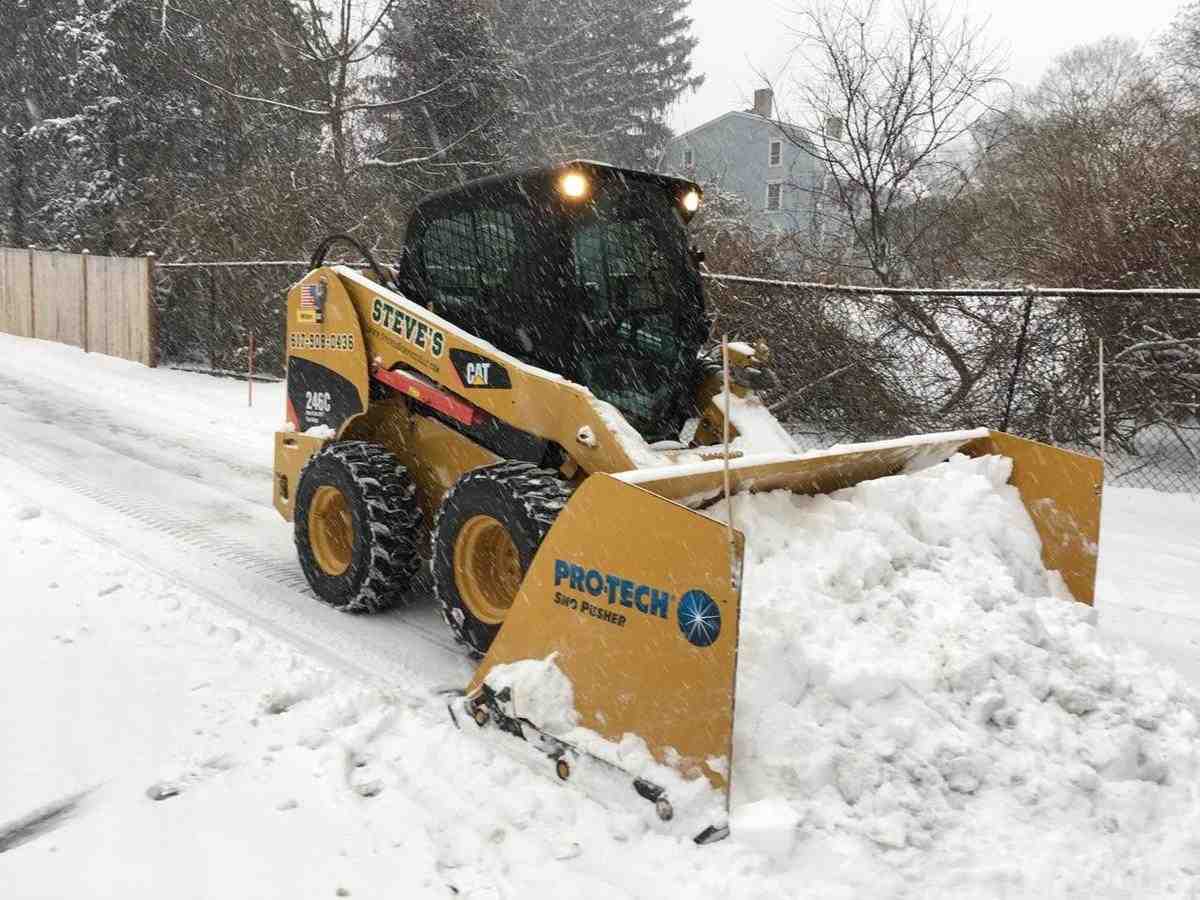
best snow removal equipment: 10 Powerful Picks for 2025
Winter Preparedness: Selecting the Right Snow Removal Tools
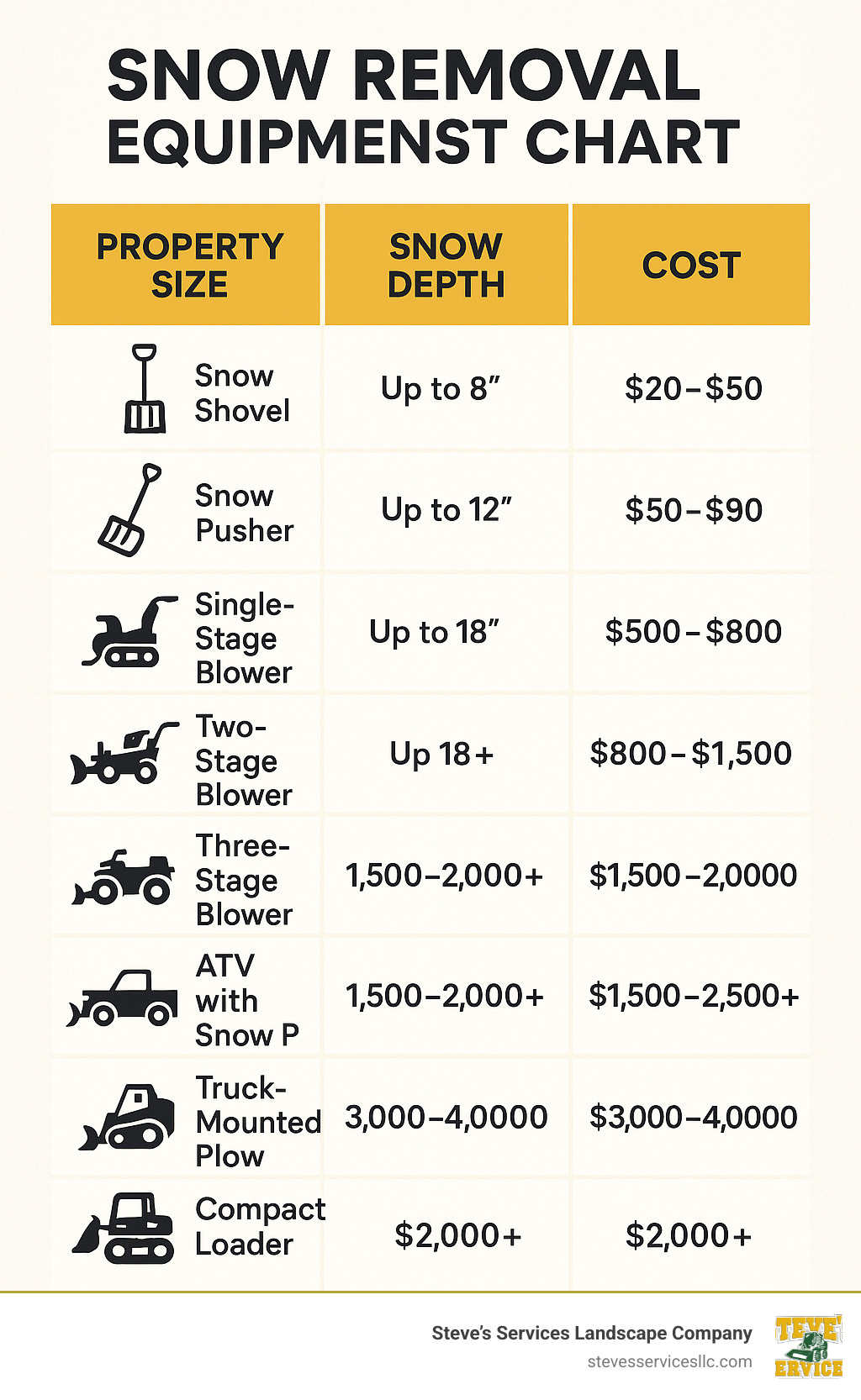
Looking for the best snow removal equipment for this winter? Here’s a quick overview of top options:
- Basic Residential Equipment:
- Snow shovels ($20-50) – Ergonomic designs reduce back strain
- Snow pushers ($50-90) – Ideal for light to medium snowfall
- Single-stage snow blowers ($500-800) – Effective for up to 8 inches of snow
- Mid-Range Solutions:
- Two-stage snow blowers ($800-1,500) – Handles up to 12+ inches of snow
- ATV snow plows ($1,500-2,500) – Great for longer driveways
- Salt spreaders ($150-400) – Even distribution of ice melt products
- Professional-Grade Equipment:
- Three-stage snow blowers ($1,500-2,000+) – Manages up to 18+ inches of snow
- Truck-mounted plows ($3,000-4,000) – Ideal for large areas
- Compact loaders ($2,000+) – Commercial-grade snow management
When winter storms hit, having the best snow removal equipment can mean the difference between being snowbound and maintaining safe, accessible property. The right tools not only save time and reduce physical strain but also provide peace of mind during the harshest weather conditions. Whether you’re a homeowner with a modest driveway or a property manager responsible for extensive commercial spaces, selecting appropriate snow removal tools is essential for efficient winter maintenance.
I’m Steve Sylva, owner of Steve’s Services Landscape Company with over 25 years of experience helping Massachusetts residents and businesses select the best snow removal equipment for their specific needs. My team and I have tested countless snow removal tools across diverse New England winter conditions, ensuring our clients receive expert guidance on equipment selection.
Best snow removal equipment glossary:
– commercial snow plowing
– commercial snow removal cost
– how to price commercial snow removal
What Counts as the Best Snow Removal Equipment?
When winter blankets Massachusetts with snow, having the right tools can make all the difference between a morning of backbreaking labor and an efficient clearing process. The best snow removal equipment isn’t necessarily the most expensive or powerful—it’s what works best for your specific situation.
Remember the infamous 1967 Chicago blizzard that dumped 23 inches of snow in just two days with winds up to 53 MPH? While we may not always see those extreme conditions here in Massachusetts, being prepared with appropriate equipment is essential for when Mother Nature decides to test us.
“Any snow and ice contractor will tell you, managing sidewalks has its own set of challenges,” one of our veteran team members often says. “Having the right equipment for each specific area is crucial.”
The best snow removal equipment generally includes snow shovels for lifting and moving snow, snow pushers designed to push without the back strain of lifting, snow blowers that throw snow away from your clearing path, and snow plows that attach to vehicles for larger areas. For commercial properties, you might also need loaders for moving substantial snow volumes, salt spreaders for ice management, and even specialized software for professional snow removal operations.
Power Source Considerations
Your choice of power source dramatically affects both performance and convenience. Gas-powered equipment offers mobility and raw power but requires regular maintenance and fuel. Electric corded options need less maintenance but keep you tethered to an outlet. Battery-powered tools provide cordless convenience but with limited runtime. And let’s not forget traditional manual tools—they need no power source but do require your personal energy.
Snow Blower Stages Explained
| Feature | Single-Stage | Two-Stage | Three-Stage |
|---|---|---|---|
| Best for snow depth | Up to 8 inches | Up to 12+ inches | Up to 18+ inches |
| Throw distance | 15-25 feet | 25-40 feet | Up to 50 feet |
| Surface type | Paved only | Paved or gravel | All surfaces |
| Self-propelled | No | Yes | Yes |
| Price range | $500-800 | $800-1,500 | $1,500-2,000+ |
| Best for | Sidewalks, small driveways | Medium driveways, moderate snow | Large areas, heavy snow |
“A two-stage snow blower can move up to 4,500 lbs of snow per minute and throw snow distances up to 40 feet,” our equipment specialist often tells clients. “That’s why they’re so popular for New England homes with larger driveways.”
Residential Must-Haves: best snow removal equipment for homeowners
For homeowners in communities like Melrose, Stoneham, or Winchester, winter becomes manageable with a few key tools.
An ergonomic snow shovel with a curved handle significantly reduces back strain—a worthwhile investment at $20-50. Look for models with non-stick blades that prevent snow from clinging and adding weight to each lift.
Electric or battery snow blowers ($500-800) are perfect for typical residential needs. “Electric blowers are best for beginners due to ease of use and maintenance,” notes our residential equipment specialist. They handle moderate snowfall with minimal upkeep, making them ideal for busy homeowners.
Don’t forget ice melt products ($5-35 per bag). Calcium chloride works in temperatures as low as -25°F, while magnesium chloride (effective to -20°F) offers a more eco-friendly alternative for households with pets or environmental concerns.
A roof rake ($30-60) is an often-overlooked essential that prevents dangerous roof load and ice dams by safely removing snow from your roof edge without requiring a ladder.

For more detailed information about different machine options for snow removal, check out our machine options guide.
Pro-Grade Essentials: fleet-ready tools
Commercial properties or large residential estates in areas like Burlington or Lynnfield require professional-grade equipment that delivers both efficiency and reliability.
A two-stage or three-stage snow blower ($800-2,000+) handles deep, heavy snow with impressive power. These workhorses make quick work of substantial snowfall, saving valuable time during storm cleanup.
V-plow attachments ($3,000-9,000) offer versatility that straight plows can’t match. “The V-Blade trip-edge rotates and translates to absorb impacts,” explains our commercial equipment specialist. “This design prevents damage when hitting hidden obstacles like manhole covers or uneven pavement.”
Compact loaders with attachments ($2,000-40,000+) provide incredible versatility. These machines can be fitted with plows, blowers, or buckets depending on the specific job requirements, making them valuable year-round investments.
For ice management, a drop spreader ($400-1,200) provides precise control of ice melt application, reducing waste and environmental impact. For larger properties, a de-icing brine system ($1,500-4,500) allows pre-treating surfaces before storms, preventing ice from bonding to pavement and reducing overall salt usage.
“One of our commercial clients in Woburn was able to reduce their salt usage by 30% after switching to a professional brine application system,” shares our commercial snow management supervisor—a win for both their budget and the environment.
Top Picks by Property Size & Snow Depth
Matching equipment to your specific needs is crucial for efficient snow removal. Here’s how we help clients across Massachusetts communities select the best snow removal equipment based on property characteristics and typical snowfall:
Small Yards & Walkways
For modest properties in urban areas like Malden or Revere, you don’t need massive equipment that eats up your storage space and budget. Our customers with smaller properties find that lightweight, maneuverable tools serve them perfectly.
Electric snow shovels ($100-200) have become incredibly popular with our clients in townhomes and condos. They’re lightweight enough for almost anyone to handle, and they make quick work of those pesky walkways that would otherwise leave you hunched over in the cold.
“I recommend single-stage snow blowers to nearly all my first-time homeowner clients,” says our residential specialist Tom. These machines ($500-800) strike the perfect balance between power and practicality for clearing up to 8 inches of fresh snow from paved surfaces.
For those who prefer simplicity, a good manual snow pusher ($50-90) can be surprisingly effective. One of our Revere clients swears by the ClearPlow design that attaches to a hand truck—innovative and space-saving for apartment dwellers.
When it comes to ice management, a simple handheld salt spreader ($25-75) ensures you’re not wastefully dumping ice melt in concentrated spots. And for those tired of extension cords or gas engines, cordless options ($200-800) have come a long way in recent years. Battery technology has improved dramatically, making these tools viable for most small property needs.
Suburban Driveways & Sidewalks — Best Snow Removal Equipment for Heavy Snow
When that nor’easter dumps a foot of snow on your Reading or Wakefield property, you’ll be grateful for equipment that can handle the challenge. Suburban homes with longer driveways need more substantial tools.
Two-stage gas snow blowers ($800-1,500) are the workhorses of suburban snow removal. Last February, when we had back-to-back blizzards, our service manager reported: “Our two-stage blowers were absolute lifesavers for our residential clients in Stoneham. They handled the heavy, wet snow when nothing else could.”

For those who already own ATVs, lawn tractors, or UTVs, adding a straight plow attachment ($1,500-4,000) transforms your existing equipment into a snow-clearing machine. The complete ATV with plow setup ($3,000-7,500 total) has become increasingly popular with our clients who have larger properties in North Reading and Wakefield.
“The Boss XT Snow Plow attachment for UTVs like the Kubota RTV has been flying off the shelves,” notes our equipment specialist. “Our clients love that their summer recreation vehicle becomes a winter workhorse.”
Don’t forget about ice management—calcium chloride ice melt ($15-45 per bag) works at much lower temperatures than standard rock salt, making it ideal for our New England winters. And for comfort during those long clearing sessions, heated grip accessories ($50-150) are a small investment that makes a huge difference when you’re out there for an hour or more.
Commercial Lots & Long Private Roads
Business owners in Danvers or Winchester, as well as estate owners in Lynnfield with lengthy driveways, need commercial-grade solutions that deliver professional results efficiently.
Truck-mounted plows ($3,000-9,000) are essential for clearing large areas quickly. “Our F650 trucks with Western V-Plows can clear a typical commercial lot in Woburn in about a third of the time it would take with a snow blower,” explains our commercial operations manager. When you’re paying staff hourly, this efficiency translates directly to cost savings.
The most powerful category of residential equipment, three-stage snow blowers ($1,500-4,500), can handle deep, heavy snow up to 18+ inches and throw it up to 50 feet away. These machines are ideal for property managers who need serious clearing power without investing in a full commercial setup.
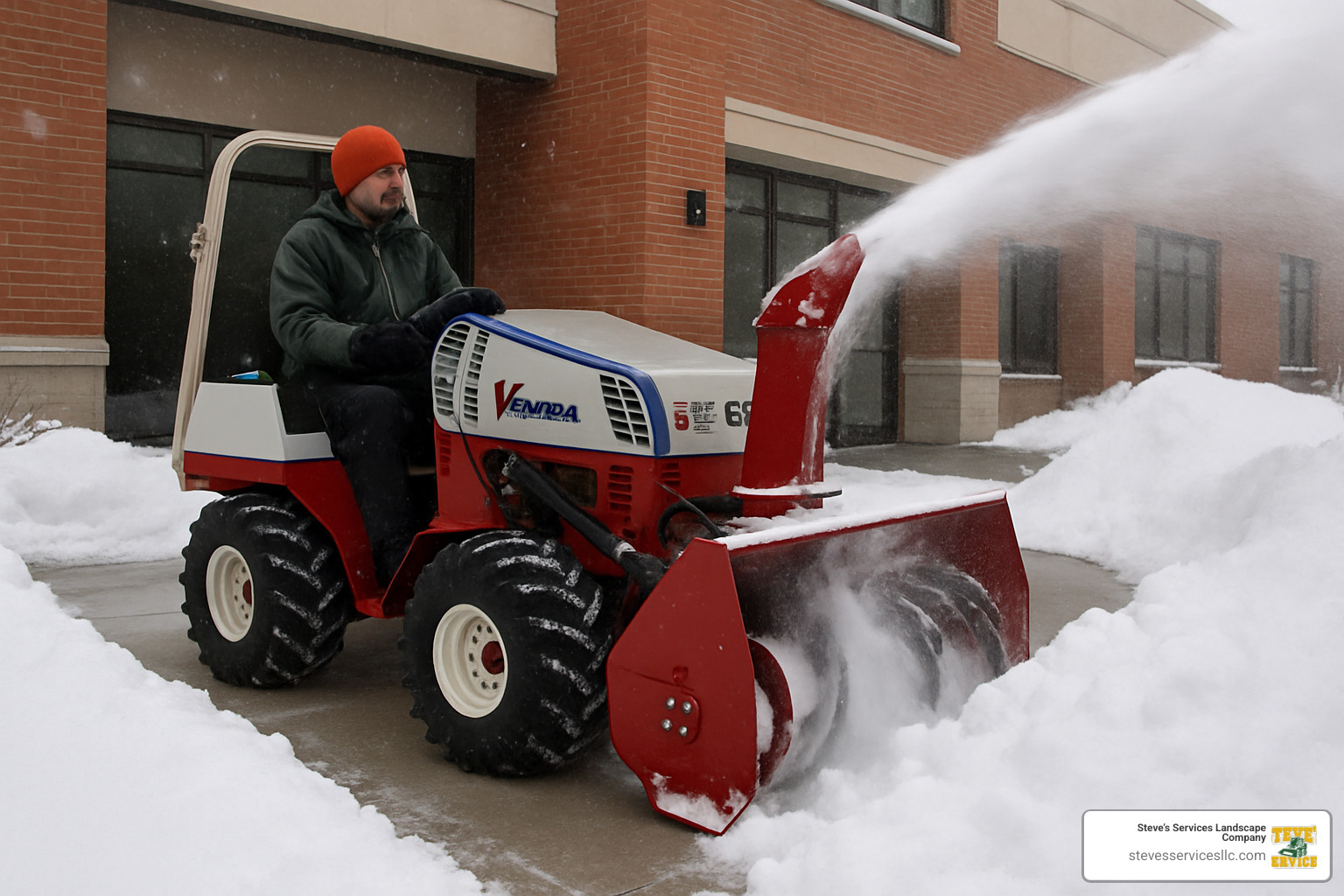
For serious snow management, an articulated loader ($10,000-40,000+) provides exceptional maneuverability and power. “The Ventrac 4520 tractor equipped with a box plow has become our go-to recommendation for estate owners,” notes our equipment specialist. “It’s compact and agile while still powerful enough to handle large snow volumes with minimal landscape damage.”
Forward-thinking commercial property managers are increasingly investing in brine application systems ($1,500-4,500). “Pre-treating surfaces with salt brine before a storm can reduce ice formation and overall salt usage by up to 30%,” explains our winter operations manager. “One of our retail clients in Burlington saw significant savings on both materials and labor after implementing this approach.”
For businesses looking for professional snow management rather than equipment purchases, learn more about our Commercial Snow Plowing services.
Pricing, Maintenance & Storage Guide
Investing in the best snow removal equipment requires understanding not just the initial purchase cost but also ongoing maintenance and proper storage to ensure longevity.
Average Equipment Costs (Internet Estimates)
These prices represent average market costs based on internet research and industry publications, not Steve’s Services pricing:
- Snow shovels & pushers: $20-150 (basic models start at $20, premium ergonomic designs can cost up to $150)
- Single-stage snow blowers: $500-1,500 (entry-level electric models start at $500, premium models can reach $1,500)
- Two-stage snow blowers: $800-2,400 (basic models start around $800, professional-grade models can reach $2,400)
- Three-stage snow blowers: $1,500-4,500 (starting models around $1,500, commercial-grade options up to $4,500)
- Snow plows (attachments): $1,500-12,000 (basic straight plows start at $1,500, commercial V-plows can reach $12,000)
- Loaders & specialized equipment: $2,000-60,000+ (small articulated loaders start around $2,000, commercial-grade equipment can exceed $60,000)
- Salt spreaders: $150-1,200 (handheld models start at $150, commercial walk-behind or truck-mounted options can reach $1,200)
- Ice melt products: $5-105 per bag (basic rock salt starts at $5, premium environmentally-friendly options can cost up to $105 per bag)
“Professional snow removal equipment can cost between $5,080–$12,490 for a full setup, not including a truck or ATV,” notes our equipment specialist based on industry publications. “Many of our clients start with essential equipment and gradually upgrade as their needs evolve.”
Budget-Saving Tips:
- Consider multi-season equipment like tractors with seasonal attachments
- Look for end-of-season sales (March-April) for significant discounts
- Properly maintain equipment to extend its lifespan
- For occasional use, quality manual tools may be more cost-effective than powered equipment
Maintenance Calendar & Longevity Hacks
Proper maintenance extends equipment life and ensures reliable performance when you need it most:
Pre-Season Checklist (October):
– Change oil and filters on gas-powered equipment
– Check and replace spark plugs if needed
– Test-start all equipment
– Inspect belts, cables, and augers for wear
– Check tire pressure and condition
– Apply rust inhibitor to metal surfaces
– Test batteries in electric models
“Clean all tools before off-season storage and drain fuel tanks on gas-powered equipment,” advises our maintenance technician. “This simple step prevents fuel system issues that account for nearly 70% of the snow blower repairs we see.”
Mid-Season Maintenance (January):
– Inspect and tighten bolts and screws regularly
– Lubricate moving parts
– Check skid shoes and scraper bars for wear
– Keep fuel fresh with stabilizer
– Clean equipment after each use to prevent salt corrosion
Off-Season Storage (April):
– Thoroughly clean all equipment
– Apply rust inhibitor to metal surfaces
– Store in a dry, covered area
– For gas equipment: either drain fuel completely or add stabilizer to a full tank
– For battery equipment: store batteries at 40-80% charge in a cool, dry place
– Cover equipment to protect from dust and moisture
For more comprehensive information about our snow management services, visit our Snow Management page.
“We’ve maintained some snow blowers for over 15 years of commercial use,” shares our head mechanic. “The key is consistent maintenance and proper storage.”
For those interested in eco-friendly ice melt options, check out this research on eco ice melt to understand the environmental impact of different products.
Safety Gear & Smart Tech for Efficient Clearing
The best snow removal equipment is only truly effective when paired with proper safety gear and modern technology. After all, what good is a powerful snow blower if you can’t operate it safely or efficiently?
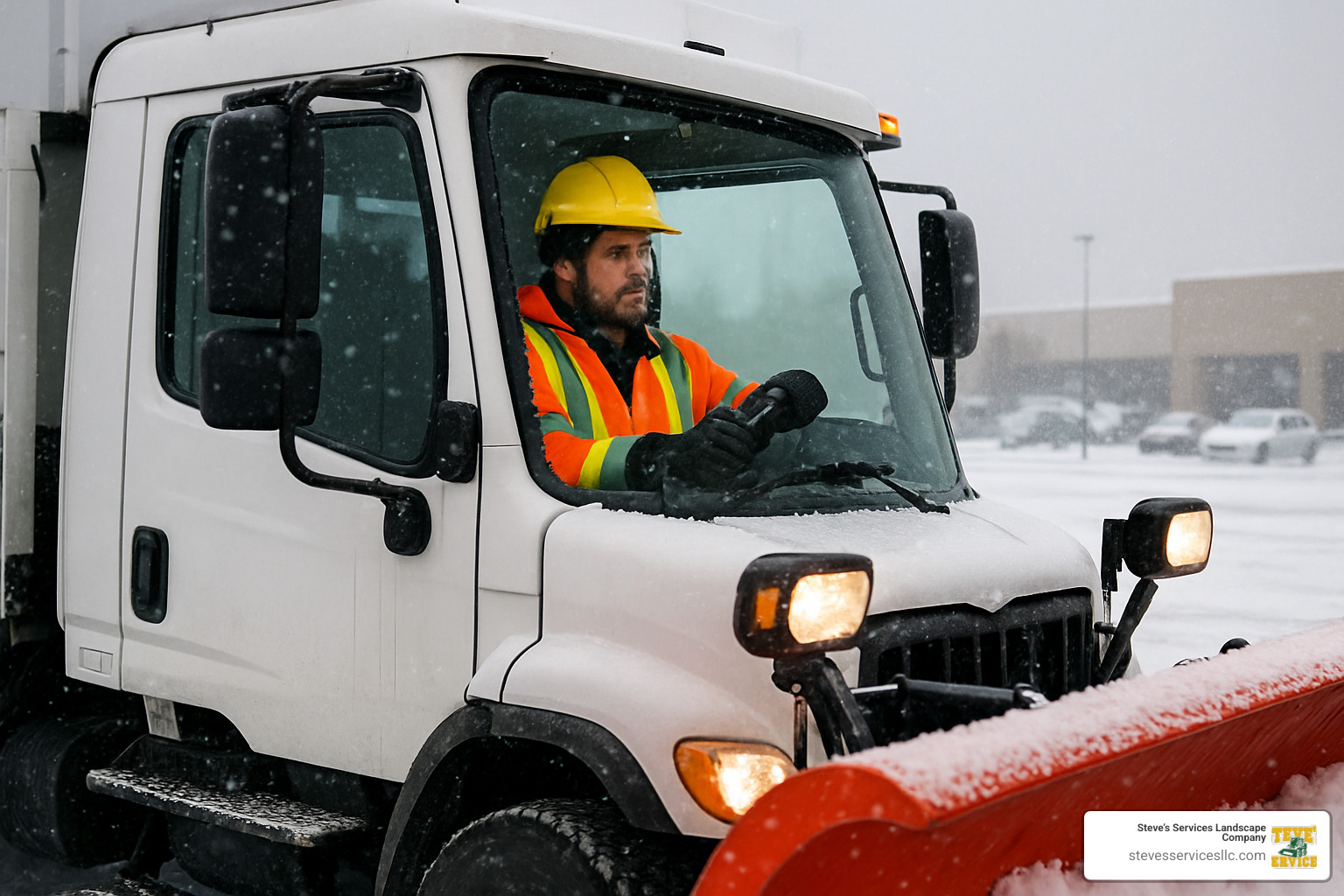
Must-Have PPE Checklist
When it comes to winter work, safety isn’t just a recommendation—it’s essential. The cold, slippery conditions create unique hazards that proper gear can help mitigate.
Slip-resistant, insulated boots are your foundation for safe snow clearing. Priced between $80-250, quality boots provide crucial traction on icy surfaces while keeping your feet warm and dry throughout long clearing sessions. As our safety coordinator often reminds our crews, “Your stability starts with your feet.”
High-visibility clothing might seem unnecessary in a snow-covered landscape, but it’s vital, especially during dawn, dusk, or stormy conditions. “All our field crews wear Class III safety vests, even in daylight,” our safety coordinator emphasizes. “It’s a non-negotiable safety standard.” These items typically cost between $30-150, but the visibility they provide is priceless.
Working with snow removal equipment for extended periods can take a toll on your body. Anti-vibration gloves ($25-75) reduce hand fatigue and potential nerve damage from equipment vibration—particularly important when operating gas-powered snow blowers for hours at a time.
Don’t forget eye and ear protection! Safety glasses ($15-50) shield your eyes from flying ice chunks and debris, while hearing protection ($15-60) preserves your hearing when working with noisy equipment. Our equipment specialist notes that gas snow blowers can produce noise levels exceeding 100 decibels—loud enough to cause hearing damage with prolonged exposure.
Layered, moisture-wicking clothing ($50-200) allows you to adjust to changing conditions and physical exertion levels. “You’ll work up a sweat even in below-freezing temperatures,” explains our winter operations manager. “Cotton clothing traps moisture against your skin, which can lead to dangerous cooling once you slow down.”
Our safety director points out an often overlooked aspect of winter safety: “One of the most overlooked safety items is proper footwear. We’ve seen a 40% reduction in slip-and-fall incidents since implementing our strict footwear requirements.”
For those interested in the science behind cold-weather protection, check out this resource on cold-weather PPE for the latest research.
Software & Sensors That Save Time
Modern technology has revolutionized snow management, especially for those handling multiple properties or commercial operations.
Route optimization software has transformed how we approach clearing multiple properties. Costing between $40-200 per month, these programs calculate the most efficient clearing routes, significantly reducing travel time and fuel costs. Our operations team reports saving up to 25% in fuel costs after implementing route optimization.
Weather prediction has come a long way from the days of relying on general forecasts. Real-time weather monitoring systems ($0-100/month) provide hyper-local forecasts and alerts, allowing crews to be deployed at precisely the right time. “Being able to predict snowfall start times within a 30-minute window has completely changed our pre-treatment strategy,” notes our winter operations supervisor.
For fleet management, equipment telematics ($20-100/month per vehicle) offers invaluable insights by tracking equipment location, usage patterns, and maintenance needs. These systems can alert managers when machines are idle too long or when maintenance is due, preventing costly breakdowns during critical storm events.
Teams managing multiple crews benefit enormously from subcontractor management platforms ($50-200/month) that coordinate work assignments and provide digital documentation of completed services. This technology has proven particularly valuable for liability protection and client communication.
“A snow removal business can average 30 driveways per hour using a Ventrac tractor with a smaller blower attachment,” our operations manager shares, citing a professional testimonial. “But that efficiency is only possible with proper route planning and real-time communication.”
Even homeowners can leverage technology through free or low-cost weather alert apps that provide advance storm warnings. These alerts allow for proactive ice melt application or ensuring equipment is fueled and ready before the first flakes fall.
“Time is money in this industry,” our commercial division manager emphasizes. “The right combination of equipment and technology allows us to serve our clients in Danvers, Everett, and across Massachusetts with maximum efficiency while keeping our teams safe.”
After all, the best snow removal equipment is only truly effective when operated safely by well-protected workers using smart systems to maximize efficiency. In the challenging winter conditions of Massachusetts, this combination isn’t just smart—it’s essential.
Frequently Asked Questions about Snow Removal Equipment
What’s the difference between single-, two- and three-stage snow blowers?
When clients visit our Everett showroom, this is often their first question. The differences are substantial and choosing the right type can make winter much easier.
Single-stage snow blowers use one auger that simultaneously collects snow and throws it out the chute in a single action. They’re lightweight machines that maneuver easily around tighter spaces, making them perfect for paved driveways and walkways with snowfall up to 8 inches.
“I always tell my Melrose and Medford customers that single-stage blowers are like the family sedans of snow removal,” laughs our equipment specialist Tom. “They handle your everyday snowfall beautifully, but might struggle during those bigger New England storms.”
Two-stage snow blowers represent a significant step up in power and capability. These machines use an auger to collect snow and then feed it to a separate impeller that throws it out the chute. The self-propelled design handles up to 12+ inches of snow, works effectively on various surfaces (including gravel), and can throw snow impressive distances—often up to 40 feet.
During a demonstration last winter, our commercial equipment manager showed how “a quality two-stage can move nearly 4,500 pounds of snow per minute. That’s why they’re the go-to choice for most serious homeowners in our service area.”
Three-stage snow blowers are the powerhouses of the snow removal world. They add an accelerator that moves snow from the augers to the impeller much more efficiently. These machines tackle the heaviest, wettest snow up to 18+ inches deep and can launch it up to 50 feet away.
“Three-stage blowers are like the luxury SUVs of snow removal,” our equipment specialist explains with a smile. “Most homeowners don’t need that much power, but for our Lynnfield estate clients with 300-foot driveways? They’re absolutely worth the investment.”
How do I choose between gas, electric and battery-powered tools?
This decision ultimately comes down to your specific property needs and personal preferences:
Gas-powered equipment delivers maximum power with unlimited runtime, making it ideal for larger properties and heavier snowfall. However, they require regular maintenance including oil changes, fuel stabilization, and proper winterization. The emissions and noise are also factors to consider.
During a recent workshop, our equipment manager noted, “Gas machines are still the workhorses for commercial applications and larger residential properties. When we need to clear a half-acre lot in Woburn after a nor’easter, we’re not reaching for anything else.”
Electric (corded) equipment offers consistent power with minimal maintenance requirements. The drawback? Your mobility is limited by cord length, typically maxing out around 100 feet. These machines excel at clearing small to medium properties close to electrical outlets, especially with light to moderate snowfall.
“Electric blowers are perfect for newcomers,” our residential specialist often tells first-time homebuyers in Revere and Malden. “They start with the push of a button, require almost no maintenance, and handle typical snowfall beautifully for smaller urban properties.”
Battery-powered equipment provides the cordless convenience many homeowners crave, along with quiet operation and minimal maintenance. The technology has improved dramatically in recent years, though runtime remains limited (typically 30-45 minutes per charge) and power output still lags behind gas models.
“The newest generation of battery snow blowers has really impressed me,” admits our equipment specialist who was initially skeptical. “They’re clean, quiet, and perfect for typical Massachusetts suburban homes with moderate snowfall. Just keep that spare battery charged!”
How do I store my equipment after the season ends?
Proper off-season storage isn’t just about convenience—it directly impacts equipment longevity and performance when winter returns. Here’s how to protect your investment:
For gas-powered equipment, start by addressing the fuel system. Either run the engine until completely empty or add fuel stabilizer to a full tank (never leave partially filled tanks over summer). Change the oil while the engine is still warm for better draining. Remove the spark plug and add a small amount of oil to the cylinder to prevent internal corrosion. Clean or replace air filters, apply rust inhibitor to metal parts, and store in a dry, covered location.
With electric or battery equipment, thorough cleaning comes first—remove all snow and salt residue which can cause corrosion. For battery models, store batteries at 40-80% charge (never fully discharged) in a cool, dry place, but avoid freezing temperatures which damage battery cells. Check cords for damage, apply rust inhibitor to metal components, and store everything in a dry area.
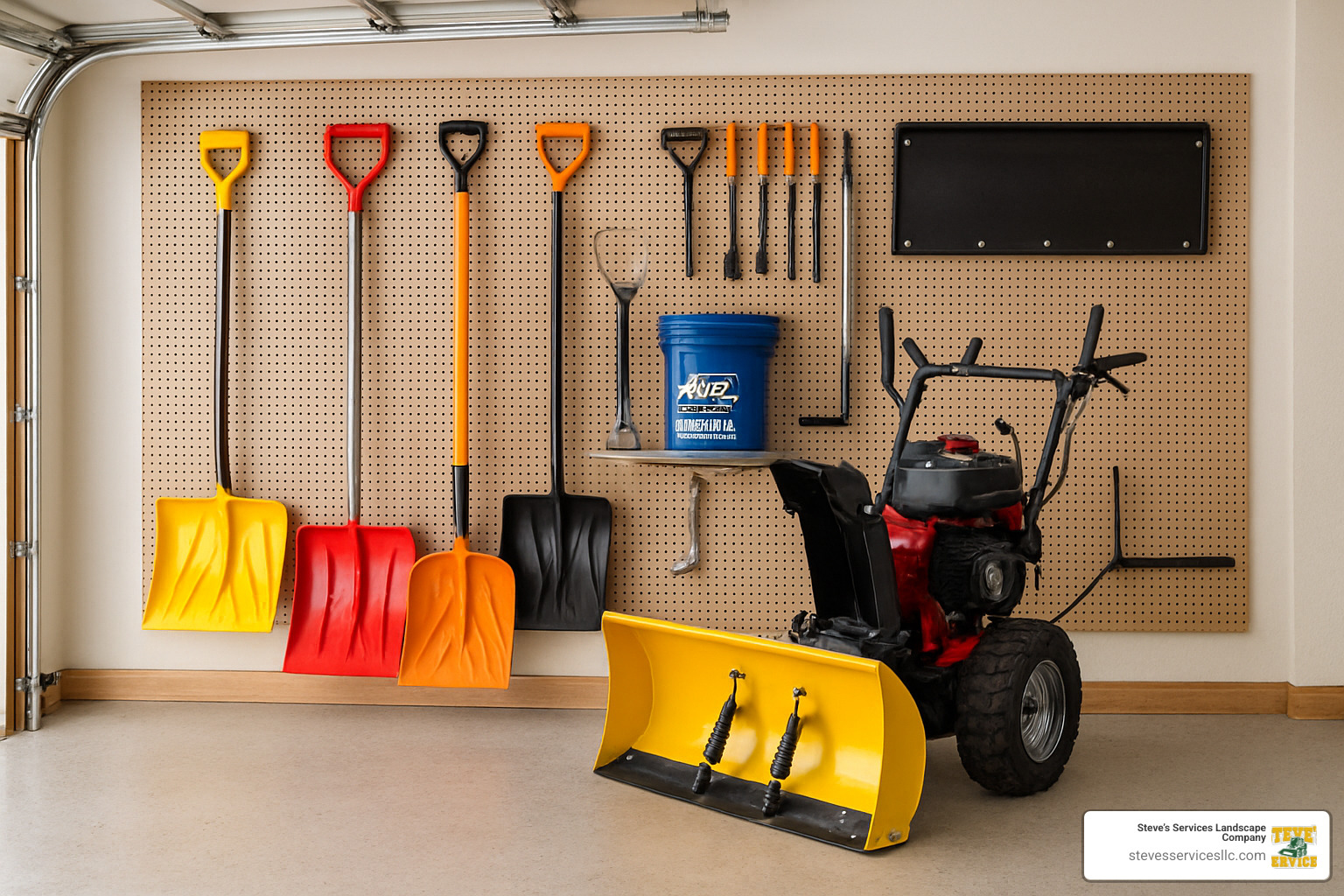
For manual tools like shovels and pushers, clean thoroughly after the season ends. Apply rust inhibitor to metal parts and consider a light coat of oil or silicone spray on wooden handles to prevent drying and cracking. “Always store these hanging rather than standing,” advises our maintenance technician. “Standing storage leads to warped handles and bent edges.”
“I’ve seen properly maintained snow blowers last 20+ years,” shares our senior technician who’s been with us since 1998. “The difference between equipment that lasts five years versus twenty often comes down to these simple end-of-season steps.”
The best snow removal equipment deserves proper care—and your future self will thank you when the first snowflakes start falling next winter.
Conclusion
When winter arrives in Massachusetts, being prepared with the best snow removal equipment isn’t just about convenience—it’s about safety, accessibility, and peace of mind. Throughout this guide, we’ve explored how matching the right tools to your specific property needs creates an efficient winter management strategy that saves time, reduces physical strain, and keeps your spaces usable even during the harshest weather.
The key to successful winter preparedness isn’t necessarily buying the most expensive equipment. Rather, it’s about making informed choices based on your property size, typical snowfall amounts, and budget considerations. Whether you’re clearing a small walkway in Melrose or managing extensive commercial properties in Burlington, understanding your specific requirements helps you invest wisely.
“After 25 years in this business, I’ve learned that winter readiness is all about having the right tools for your specific situation,” shares Steve Sylva, our founder. “The best snow removal equipment is whatever reliably handles your unique snow challenges while fitting your budget and storage capabilities.”

Safety should always remain your top priority when dealing with winter conditions. This means not only selecting equipment that reduces physical strain but also investing in proper protective gear and understanding safe operating procedures. Even the most powerful snow blower or plow becomes dangerous when used incorrectly or without appropriate safety precautions.
For many property owners across Massachusetts, the cost analysis between purchasing equipment and hiring professionals often tips in favor of professional services. At Steve’s Services Landscape Company, we bring commercial-grade best snow removal equipment and decades of expertise to every property we service throughout Burlington, Danvers, Everett, Lynnfield, Medford, Melrose, North Reading, Reading, Revere, Saugus, Stoneham, Winchester, Woburn, Malden, and Wakefield.
Our team understands the unique challenges New England winters present, from the heavy, wet coastal snow that hits Revere to the deeper accumulations that often affect inland communities like North Reading. This local knowledge, combined with our professional equipment and trained crews, ensures your property remains safe and accessible throughout the winter season.
For those who prefer to enjoy winter without the work of snow management, learn more about our comprehensive Snow Management services. We handle everything from pre-storm preparation to post-storm cleanup, allowing you to focus on what matters most to you.
The best time to prepare for winter isn’t when the forecast predicts the first storm—it’s well before snowflakes begin to fall. Whether you choose to invest in quality equipment for DIY snow management or partner with professionals like us, planning ahead ensures you’ll face winter with confidence rather than concern.
As we like to say to our clients: Winter in Massachusetts isn’t optional, but being unprepared for it certainly is. Make your choice today about how you’ll handle this winter’s challenges, and you’ll enjoy greater peace of mind when those inevitable storms arrive.