
Commercial Building Contractor: 2025 Essential Guide
Understanding What a Commercial Building Contractor Does
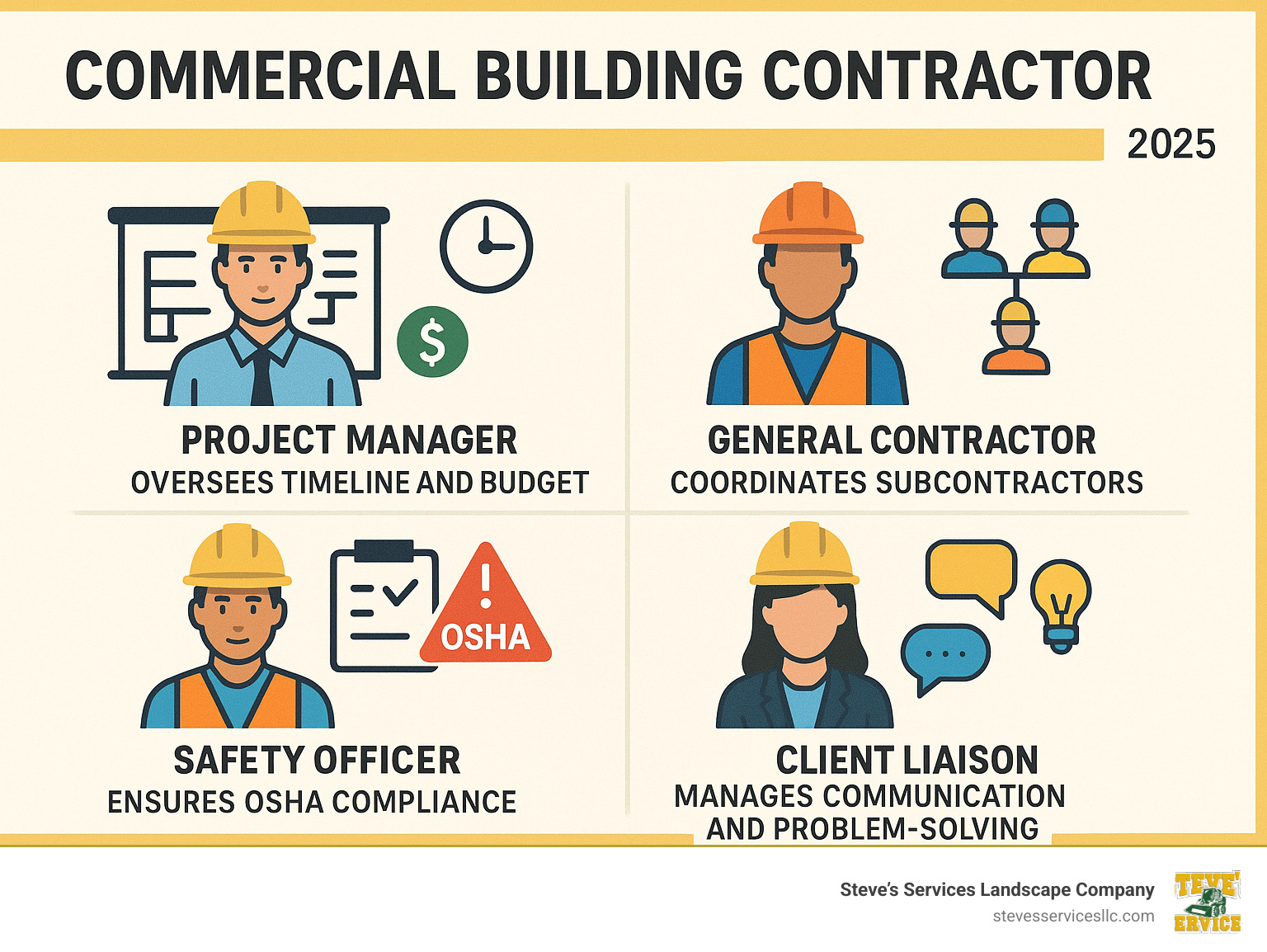
A commercial building contractor is a specialized professional who manages the construction, renovation, or expansion of non-residential buildings like offices, retail stores, warehouses, and medical facilities. These contractors coordinate all aspects of commercial construction projects from initial planning through final completion.
Key roles of a commercial building contractor:
- Project Management – Oversee timelines, budgets, and quality control
- Regulatory Compliance – Ensure all work meets commercial building codes and safety standards
- Subcontractor Coordination – Manage specialized trades like electrical, plumbing, and HVAC
- Client Communication – Serve as the primary point of contact throughout the project
- Problem Solving – Address issues that arise during construction quickly and efficiently
The commercial construction market is experiencing significant growth, with the U.S. market valued at $415.3 billion in 2022 and projected to reach $578.9 billion by 2029. This growth reflects the increasing demand for skilled commercial contractors who can handle complex projects that often involve stricter regulations, larger budgets, and more sophisticated building systems than residential work.
Unlike residential contractors, commercial building contractors must steer more complex permit processes, work with specialized materials, and coordinate with multiple stakeholders including property managers, municipal officials, and various regulatory bodies. They typically offer turnkey solutions that include everything from site development and design-build services to tenant improvements and major renovations.
As Steve Sylva, owner of Steve’s Services with over 25 years of construction and project management experience, I’ve worked alongside many commercial building contractor teams on large-scale projects and understand the critical importance of choosing the right partner for your commercial construction needs. The expertise required for commercial projects demands contractors who combine technical knowledge with proven project management skills.
Find more about commercial building contractor:
The Core Role and Services of a Commercial Contractor
When you’re planning a commercial construction project, a commercial building contractor becomes your most important partner. Think of them as the conductor of an orchestra, bringing together dozens of different specialists to create something beautiful and functional.
A skilled commercial building contractor does much more than just manage construction workers. They’re project managers, problem solvers, and your main point of contact throughout the entire process. From the moment you share your vision, they’re working to turn your ideas into reality while keeping everything on schedule and within budget.
What makes these contractors special is their ability to provide turnkey solutions. This means you can hand them your project and trust them to handle everything from permits to the final walkthrough. You focus on running your business while they manage the complex world of commercial construction.
Client collaboration is at the heart of what good contractors do. They listen to your needs, understand your business goals, and work closely with you to make sure the finished project serves your purposes perfectly. Whether you’re expanding an existing business or starting fresh, they adapt their approach to fit your specific situation.
Regulatory compliance might sound boring, but it’s crucial for commercial projects. A professional contractor knows the ins and outs of building codes, safety requirements, and permit processes. They work directly with city officials and inspectors to ensure everything meets strict commercial standards. This expertise can save you months of delays and thousands of dollars in potential violations.
Comprehensive Service Offerings
A professional commercial building contractor offers services that cover your entire project from start to finish. Let’s walk through what they typically provide.
Pre-construction services set the foundation for success. This includes detailed consultations where contractors assess your needs, study the feasibility of your project, and provide accurate cost estimates. Experienced contractors use their knowledge from hundreds of completed projects to give you realistic timelines and budgets upfront.
Design-build services streamline your project by putting design and construction under one roof. Instead of juggling separate architects and builders, you work with one team that handles both. This approach often saves time and money while reducing the chance of miscommunication between different parties.
As general contractors, they become your single point of contact for the entire project. They coordinate all the different trades – electricians, plumbers, HVAC specialists, and more – making sure everyone shows up when they’re supposed to and does quality work.
Construction management means they’re watching every detail of your project. They track progress, manage budgets, solve problems as they arise, and ensure quality standards are met. Think of them as your advocate on the construction site.
Site development is where it all begins. This involves preparing your land for construction, including proper drainage, utility connections, and foundational work. At Steve’s Services, we understand how important proper site preparation is, and our hardscaping services often complement this phase by providing foundational stability and aesthetic appeal around commercial properties.
Tenant build-outs customize spaces for specific businesses within larger commercial buildings. Whether it’s a medical office that needs special plumbing or a restaurant requiring commercial-grade electrical work, contractors adapt spaces to meet unique business needs.
Renovations and remodeling breathe new life into existing commercial spaces. Maybe your business has grown and you need more space, or perhaps you want to update your image with a fresh look. Contractors can transform your existing space while minimizing disruption to your daily operations.
Ground-up construction involves building entirely new commercial structures from scratch. This is where contractors really show their expertise, turning empty lots into functional business spaces that meet all your specifications.
Common Types of Commercial Projects
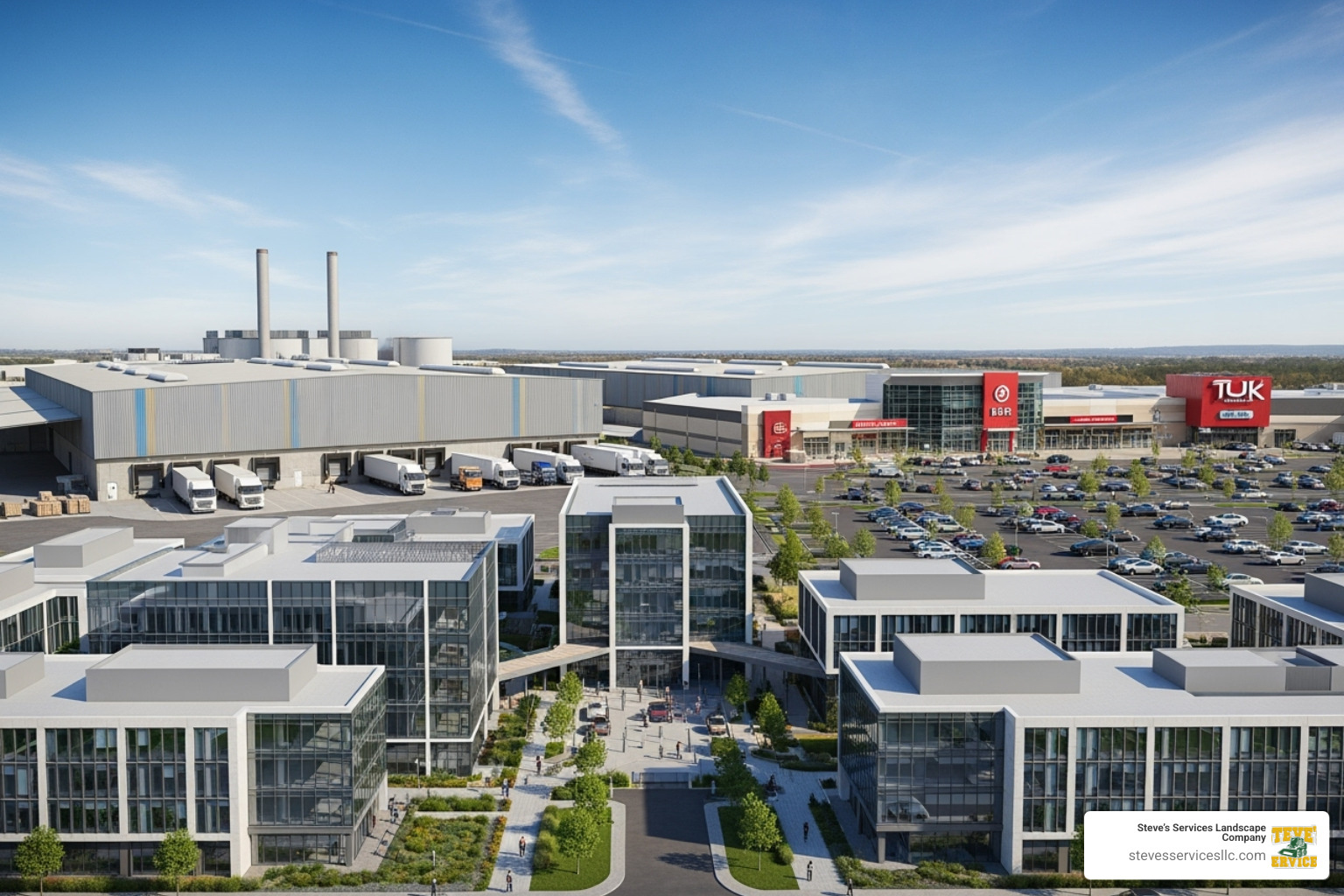
A skilled commercial building contractor works on an amazing variety of projects. Retail stores and shopping centers require special attention to customer flow and attractive displays. Office buildings need to balance functionality with a professional appearance that reflects well on the businesses inside.
Industrial facilities and warehouses present unique challenges with their need for heavy-duty electrical systems, specialized ventilation, and equipment that can handle serious wear and tear. Medical clinics and healthcare facilities must meet strict health and safety standards while creating welcoming environments for patients.
Restaurants and hospitality venues require contractors who understand the unique demands of food service, from commercial kitchen requirements to dining room ambiance. Institutional buildings like schools and community centers often involve working with public agencies and meeting additional regulatory requirements.
Mixed-use developments combine different types of spaces – maybe retail on the ground floor with offices above. These projects showcase a contractor’s ability to handle multiple building types within a single project.
For examples of the commercial projects we’ve been involved with, including business centers and office parks, check out more on our commercial projects.
The right commercial building contractor brings experience across all these project types, understanding the unique requirements each one presents and delivering results that help your business thrive.
Vetting Your Commercial Building Contractor: What to Look For
Finding the right commercial building contractor can make or break your project. It’s like choosing a business partner – you want someone who shares your vision, communicates clearly, and has the skills to turn your dreams into reality. We’ve seen projects soar with the right contractor and struggle with the wrong one.
The key is thorough due diligence. Don’t just look at the lowest bid or the flashiest website. Dig deeper into their reputation in the community. How do other business owners talk about them? Check their safety record – a contractor who cuts corners on safety might cut corners elsewhere too. Their financial stability matters enormously; you don’t want your contractor going out of business halfway through your project.
Think of it as hiring someone for your team. You wouldn’t hire an employee without checking references, and the same principle applies here. A good commercial building contractor will welcome your questions and provide detailed answers about their experience and approach.
Essential Qualifications for a commercial building contractor
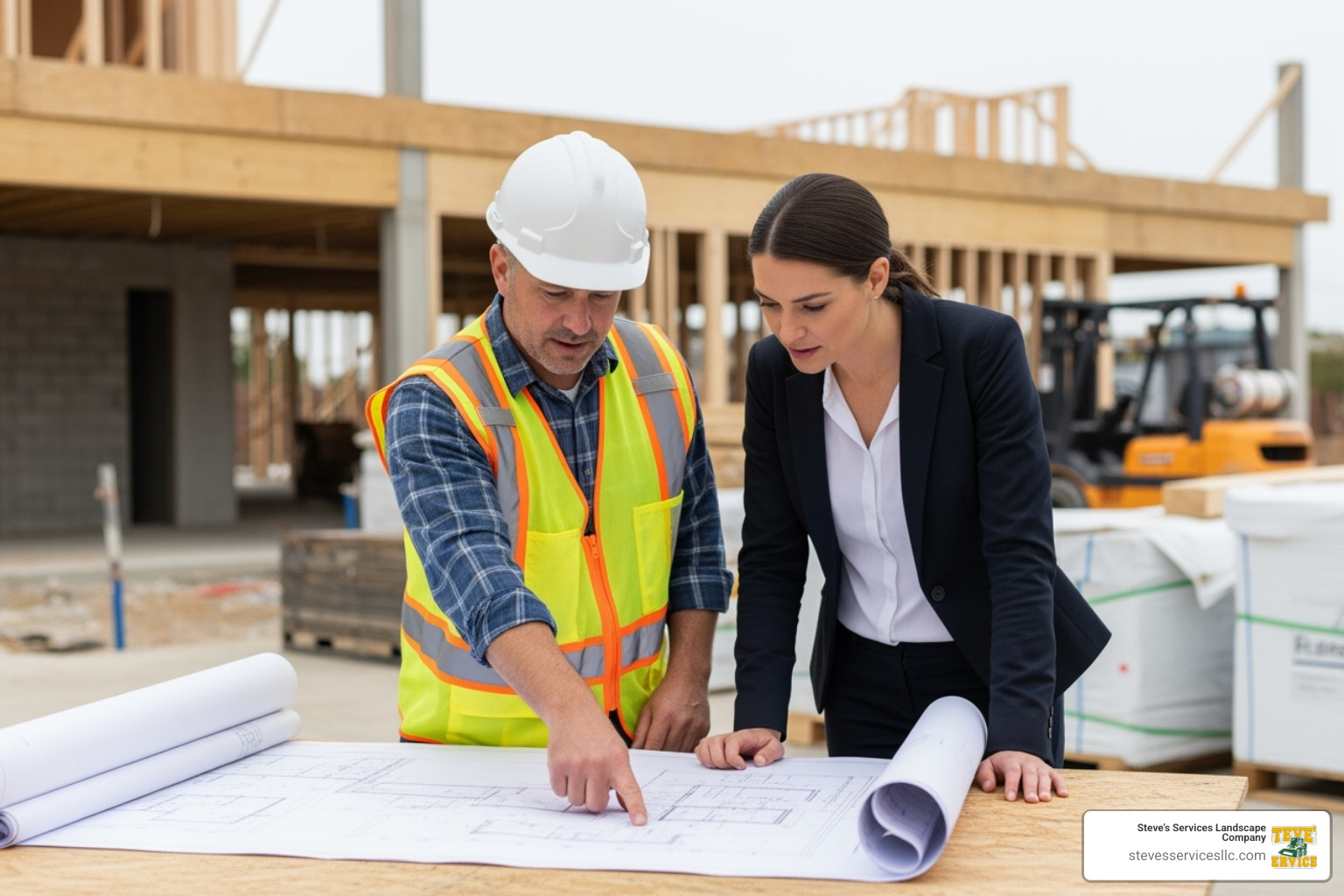
When evaluating a commercial building contractor, start with the basics. Licensing isn’t just a piece of paper – it shows they’ve met your state’s requirements and understand local building codes. Insurance protects everyone involved. If something goes wrong, you want to know you’re covered.
Bonding adds another layer of protection. It’s like having a safety net if the contractor can’t finish the job or doesn’t meet their obligations. Think of it as insurance for your peace of mind.
Look for certifications that show they stay current with industry standards. LEED certification means they understand green building practices, which can save you money on energy costs long-term. OSHA training demonstrates their commitment to keeping workers safe on your site.
Professional affiliations like membership in the Associated Builders and Contractors (ABC) or local builder groups show they’re connected to the industry and committed to best practices. These organizations often require members to follow ethical guidelines and continue their education.
Adherence to standards isn’t just about meeting minimum requirements – it’s about delivering quality work that will serve your business well for years to come. A contractor who takes pride in exceeding standards will likely exceed your expectations too.
Evaluating Experience and Portfolio
Numbers don’t lie, and a contractor’s portfolio tells their story. Ask to see past projects similar to yours. If you’re building a medical clinic, you want someone who understands the unique requirements of healthcare facilities, not just someone who’s built a lot of warehouses.
Client testimonials offer real insight into what it’s like to work with them. Look for mentions of clear communication, staying on budget, and solving problems creatively. We’ve noticed that the best contractors often have 85% or more repeat clients – that’s a strong vote of confidence.
Pay attention to their subcontractor relationships. A contractor with solid partnerships can often get better pricing and ensure skilled tradespeople work on your project. These relationships also mean smoother coordination and fewer delays.
Communication skills matter more than you might think. Construction involves countless decisions and unexpected challenges. You want someone who explains things clearly, returns calls promptly, and keeps you informed throughout the process.
Problem-solving ability separates good contractors from great ones. Every project hits snags – weather delays, permit issues, or unexpected site conditions. The right contractor sees these as challenges to solve, not excuses to make.
To see examples of quality commercial work and the attention to detail that makes a difference, View our portfolio.
The Commercial Construction Lifecycle: From Blueprint to Grand Opening
The journey from a conceptual idea to a fully operational commercial building is a carefully managed process. A commercial building contractor orchestrates this journey through distinct phases, ensuring every detail, from budget management to quality control, is handled with precision. It’s a complex dance where every step impacts the next, and effective coordination is key to avoiding missteps.

The Project Management Process
A structured project management process is the backbone of any successful commercial construction. Here’s how a typical project unfolds:
- Initial Consultation & Needs Assessment: This is where the contractor listens to your vision, goals, and constraints. They’ll assess project feasibility, discuss design preferences, and determine the scope of work.
- Planning & Design: Working with architects and engineers, the contractor develops detailed plans, precise work schedules, and identifies required infrastructure and trades. This phase also involves assessing site conditions and anticipating potential challenges.
- Permitting & Regulatory Compliance: Navigating the often-complex world of commercial permits and ensuring strict adherence to all local building codes and zoning regulations is a critical role of the contractor. They often work closely with municipal officials throughout this process.
- Subcontractor Coordination: The general contractor manages their network of verified subcontractors, coordinating their schedules and ensuring efficient workflow. This involves managing budgets, deadlines, and quotes for each specialized trade.
- Construction Execution: This is the hands-on phase where the building takes shape. The contractor oversees all construction activities, ensuring quality standards are met, and progress aligns with the schedule. Regular communication and field adjustments are vital here.
- Quality Control & Inspections: Throughout construction, rigorous quality control checks and regular inspections are performed. Deficiency lists are built to ensure all final details are properly finished upon project completion.
- Final Walkthrough & Project Completion: Before handover, a final walkthrough ensures everything meets the client’s expectations and contractual agreements. The contractor ensures a flawless handover and remains available for follow-up adjustments.
Key Differences: Commercial vs. Residential Construction
While both commercial and residential construction involve building structures, the differences are significant, influencing everything from design to regulation. We’ve seen how these distinctions shape a contractor’s expertise:
| Feature | Commercial Construction | Residential Construction |
|---|---|---|
| Building Codes | Stricter, more complex, and specific (e.g., fire, accessibility, structural integrity for public use) | Generally less stringent, focused on single-family dwelling safety |
| Project Scale | Typically much larger, involving multi-story buildings, vast footprints, or complex facilities | Smaller scale, primarily single-family homes or duplexes |
| Materials Used | Often specialized, industrial-grade, durable, and fire-resistant materials (e.g., structural steel, commercial-grade HVAC) | Common, readily available materials (e.g., wood framing, standard insulation) |
| Timelines | Can be significantly longer due to complexity, permitting, and scale; often involve multiple phases | Generally shorter, more predictable timelines |
| Stakeholders | Numerous: developers, investors, municipal officials, tenants, regulatory bodies, public | Fewer: homeowner, local building department |
| Equipment | Requires heavy machinery, specialized lifts, and industrial-grade tools | Often uses lighter equipment and standard construction tools |
How a commercial building contractor Ensures Quality and Safety
Quality and safety are non-negotiable in commercial construction. With more people potentially using the building and larger investments at stake, the standards are exceptionally high. A reliable commercial building contractor implements robust protocols:
- Safety Protocols & OSHA Standards: Adherence to Occupational Safety and Health Administration (OSHA) regulations is paramount. This includes comprehensive safety plans, regular safety meetings, proper personal protective equipment (PPE) usage, and maintaining a clean and safe working environment. We always ensure our teams and partners are OSHA trained and certified. For detailed safety information, resources from OSHA’s construction page are invaluable.
- Regular Inspections: Throughout the project, scheduled and unscheduled inspections are conducted by site supervisors, third-party inspectors, and regulatory bodies to ensure compliance with plans and codes.
- Quality Control Checks: This involves meticulous checks at every stage, from foundation pouring to final finishes. It includes verifying material quality, ensuring precise measurements, and confirming proper installation techniques.
- Deficiency Lists: Upon project completion, a detailed “deficiency list” or “punch list” is created, identifying any items that need correction or adjustment. The contractor ensures all these final details are properly finished before handover.
- Material Testing: For critical components, materials might undergo testing to ensure they meet specified strength, durability, and safety standards.
Understanding Project Timelines and Cost Factors
Project timelines and costs in commercial construction are influenced by a multitude of factors, making each project unique. Estimating these can be a complex endeavor:
- Project Complexity: Highly specialized buildings (e.g., laboratories, hospitals) or those with intricate designs will naturally have longer timelines and higher costs than simpler structures.
- Site Conditions: Unforeseen ground conditions, environmental concerns, or difficult access can add significant time and expense.
- Labor Costs: The availability of skilled labor and prevailing wage rates in the region directly impact costs. The construction industry in the U.S. employed approximately 8.1 million people in 2023, reflecting a robust labor market.
- Material Prices: Fluctuations in the cost of raw materials (steel, concrete, lumber) can significantly affect the overall budget. Rising construction costs are a constant concern, requiring contractors to find budget-friendly solutions.
- Permit Delays: Bureaucratic processes and unforeseen delays in obtaining necessary permits can extend timelines and indirectly increase costs.
- Economic Climate: The current economic climate means small profit margins for commercial contractors (average profit margins can range from 1% to 5%), underscoring the need for efficient project management and cost control.
Please note: The following costs are industry averages based on available data and not actual costs for Steves’s Services. Costs can range from $150 to over $600 per square foot depending on the project’s scope, location, and specific finishes. For example, a basic warehouse might be on the lower end, while a high-end medical facility or a sophisticated retail space would be on the higher end.
Frequently Asked Questions about Commercial Contractors
When you’re considering a major commercial project, it’s natural to have questions. Over the years, we’ve heard many of the same concerns from clients, and we’re happy to share what we’ve learned from working alongside skilled commercial building contractor teams on complex projects.
What are the benefits of hiring a specialized commercial contractor versus a general contractor?
The difference between a specialized commercial building contractor and a general contractor is like comparing a heart surgeon to a family doctor – both are skilled, but one has deep expertise in a specific area that can make all the difference for complex cases.
A specialized commercial contractor brings focused knowledge that goes far beyond basic construction. They understand the intricate world of commercial building codes, which are significantly more complex than residential requirements. When it comes to materials, they know which commercial-grade options will stand up to heavy use and meet fire safety standards that offices, retail spaces, and industrial facilities demand.
Their supplier relationships are a game-changer. These contractors have established connections with commercial-grade suppliers and specialized subcontractors who work exclusively in the commercial space. This network often translates to better pricing on materials, faster delivery times, and access to trades who understand the unique challenges of commercial work.
The efficiency difference is remarkable. While a general contractor might need to research commercial requirements or find new suppliers, a specialized contractor already has these systems in place. They’re also more familiar with the regulatory landscape, knowing which permits are needed and how to steer municipal approval processes smoothly.
How can clients effectively communicate their vision to a contractor?
Clear communication is absolutely critical for project success, and we’ve seen how the best outcomes happen when clients come prepared and stay engaged throughout the process.
Start with a comprehensive project brief before your first meeting. Think through your goals, realistic budget range, desired timeline, and most importantly, how the space needs to function. Will this be a high-traffic retail environment? A quiet office space? A specialized medical facility? The more specific you can be about operational needs, the better.
Visual communication is incredibly powerful. Don’t rely only on verbal descriptions. Gather photos of buildings you admire, create mood boards, or even sketch rough floor plans. If you’ve seen a layout that works well in another business, share that example. These visual references help bridge the gap between your vision and the contractor’s understanding.
Establish clear success metrics from the beginning. What does a successful project look like to you? Is it completing on time for a grand opening date? Staying within a specific budget? Achieving certain aesthetic goals? Define these expectations upfront to avoid misunderstandings later.
Maintain consistent communication throughout the project. Set up regular check-in meetings and designate a single point of contact from your team. This prevents mixed messages and ensures everyone stays aligned. Don’t hesitate to ask questions or raise concerns promptly – addressing issues early is always easier than fixing problems later.
What role does technology play in modern commercial construction?
Technology has revolutionized how commercial building contractor teams approach projects, making construction more accurate, efficient, and collaborative than ever before.
Building Information Modeling (BIM) is changing the planning phase. This technology creates detailed 3D digital models that allow everyone to visualize the finished building before breaking ground. BIM helps identify potential conflicts – like HVAC ducts running into structural beams – before they become expensive problems on-site.
Project management software keeps everyone connected and informed. These platforms track progress in real-time, manage budgets, store all project documents in one place, and facilitate communication between clients, contractors, and subcontractors. Instead of hunting through emails or file cabinets for the latest plans, everything is accessible and up-to-date.
Drones are becoming standard tools for site surveys and progress monitoring. They provide aerial views that help with planning and allow project managers to document progress without disrupting work on the ground. For larger sites, drones can survey areas that would be time-consuming or dangerous to inspect on foot.
Virtual and augmented reality are changing client involvement. VR allows you to “walk through” your building before construction begins, experiencing the space and making design changes when they’re still easy and affordable to implement. Some contractors use AR on-site to overlay digital plans onto the physical space, helping workers visualize exactly where components should be installed.
These technological advances don’t replace skilled craftsmanship – they improve it, leading to better outcomes and smoother project experiences for everyone involved.
Partnering for Success on Your Next Project
Your search for the right commercial building contractor isn’t just about finding someone to handle construction—it’s about choosing a partner who will protect your investment and bring your vision to life. After all the research, vetting, and planning we’ve discussed, the decision you make will impact your business for years to come.
The commercial construction industry’s impressive growth, with projections reaching $578.9 billion by 2029, means there are plenty of contractors to choose from. But as we’ve seen throughout this guide, due diligence is everything. The contractors who consistently earn repeat business—some achieving 85% client retention rates—do so because they understand that every project is a long-term investment in their client’s success.
What sets apart truly exceptional contractors is their commitment to being genuine partners rather than just service providers. They listen carefully during that initial consultation, communicate clearly throughout the process, and stand behind their work long after the final walkthrough. These are the professionals who understand that your commercial building isn’t just a structure—it’s the foundation where your business will grow and thrive.
At Steve’s Services, we’ve had the privilege of working alongside many outstanding commercial contractors on complex projects. From our landscape maintenance services that keep commercial properties looking professional year-round, to our involvement in site development and large-scale installations, we’ve witnessed what separates good contractors from great ones.
The best contractors share our philosophy of personalized solutions and exceptional customer service. They understand that no two projects are identical, and they adapt their approach to meet each client’s unique needs and timeline. Whether it’s a small tenant build-out or a ground-up construction project, they bring the same level of expertise and attention to detail.
Project success ultimately comes down to trust, communication, and expertise. When you find a contractor who demonstrates all three—through their licensing, insurance, portfolio, and client testimonials—you’ve found a partner worth investing in.
Ready to move forward with your commercial project? Whether you need site preparation, landscaping integration, or general contracting support, we’re here to help make your vision a reality. Contact us for your contracting needs and let’s discuss how our expertise can contribute to your next success story.
