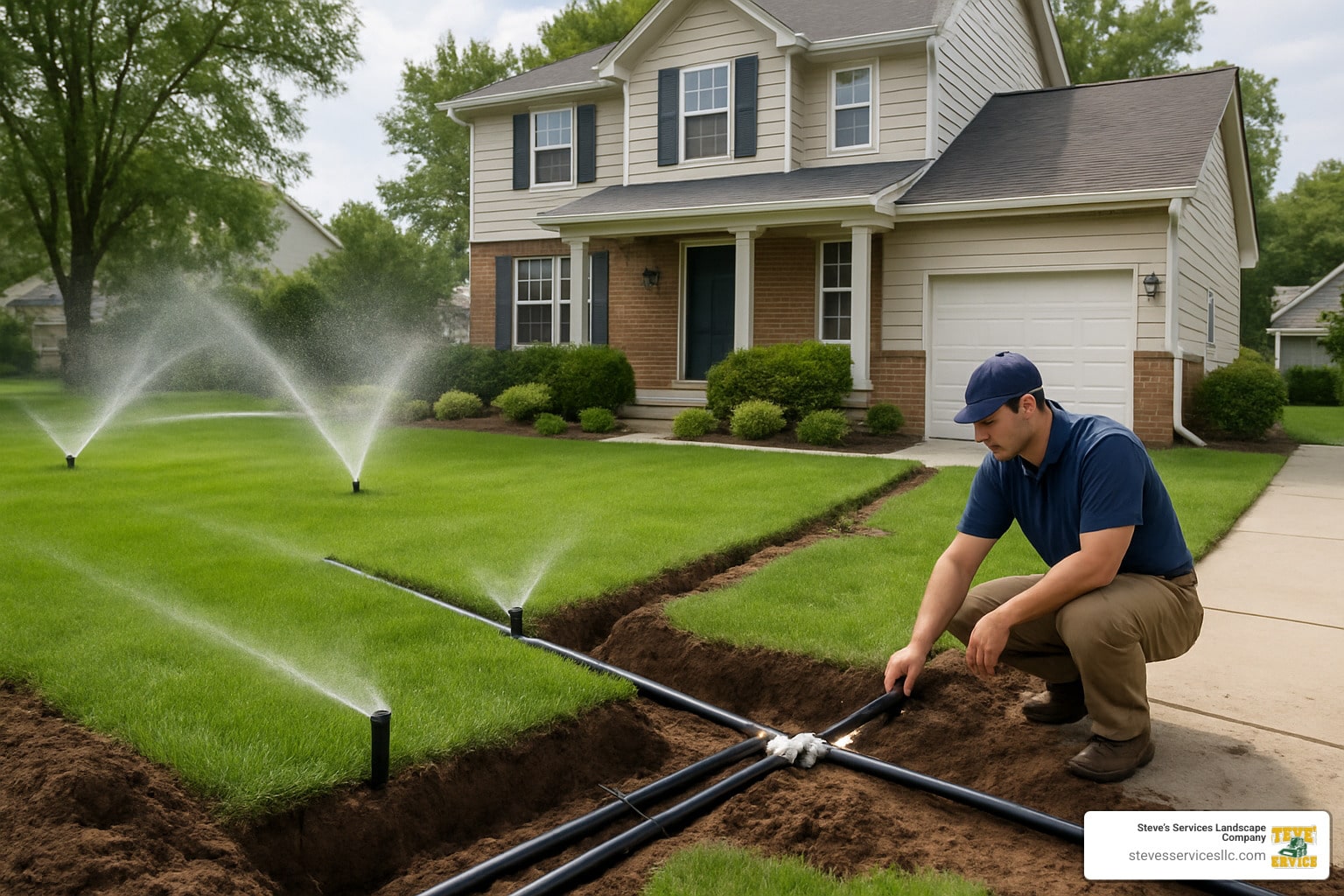
Average cost to install sprinkler system per square foot: 7 Powerful Facts for 2025
Understanding Sprinkler System Costs: What You Need to Know
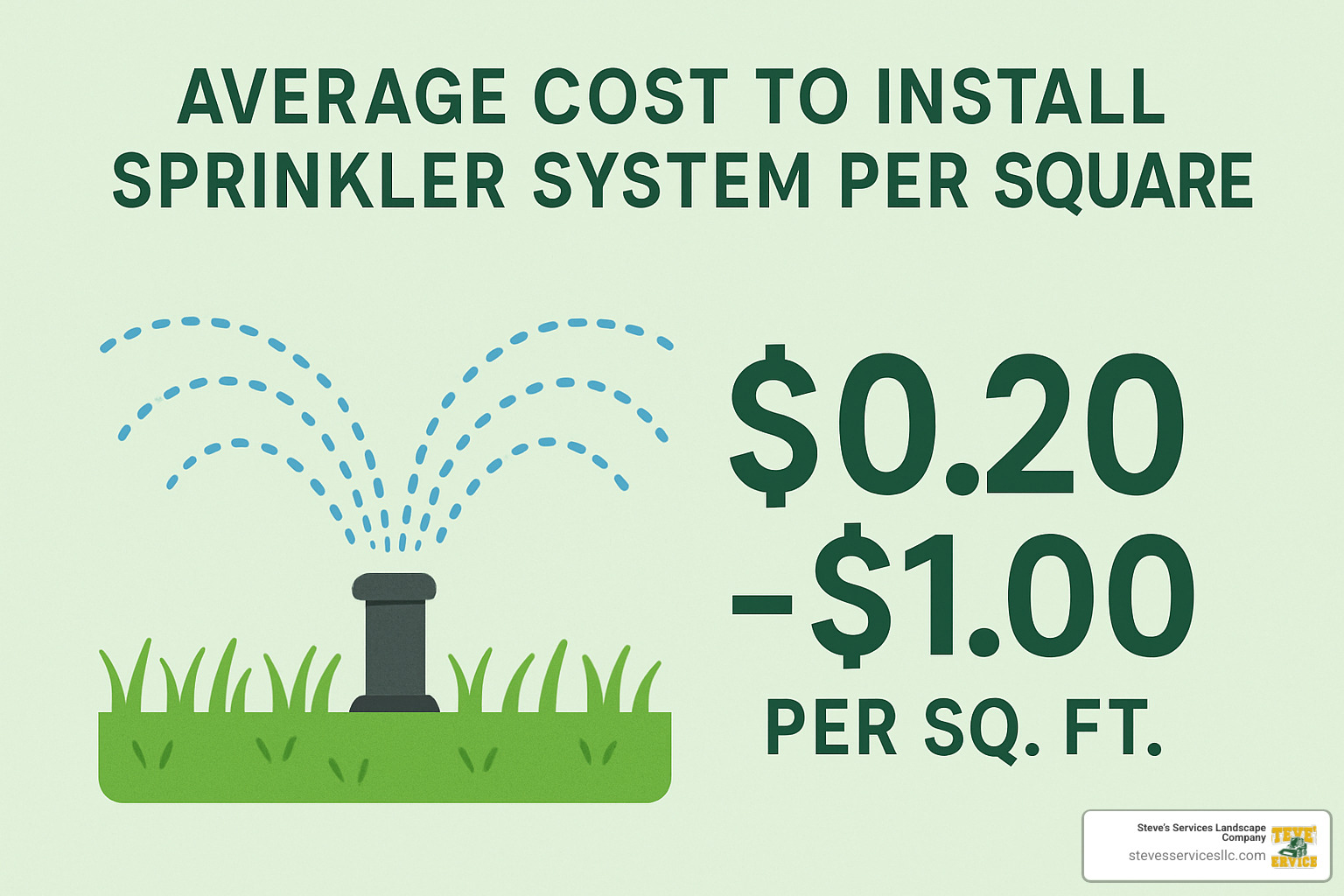
The average cost to install sprinkler system per square foot ranges from $0.20 to $1.00 for residential properties, with most homeowners paying between $0.50 and $0.75 per square foot for a professional installation. This translates to the following total costs:
| Property Size | Average Cost Range |
|---|---|
| 5,000 sq ft | $1,400 – $3,000 |
| 10,000 sq ft | $2,200 – $4,700 |
| 1/4 acre (≈10,890 sq ft) | $2,500 – $5,500 |
When planning your landscape irrigation needs, understanding the true cost of a sprinkler system installation is crucial for proper budgeting. While the average cost to install sprinkler system per square foot provides a helpful baseline, the final price depends on numerous factors including system type, property characteristics, and local conditions.
A quality sprinkler system is more than a convenience—it’s an investment in your property’s health and value. Proper irrigation ensures lush, green lawns and thriving gardens while potentially saving you money on water bills through efficient distribution. Unlike manual watering, which often leads to inconsistent coverage and wasted resources, an automated system delivers precise amounts of water exactly where and when it’s needed.
I’m Steve Sylva, owner of Steve’s Services Landscape Company with over 25 years of experience installing irrigation systems throughout Massachusetts, and I’ve seen how the average cost to install sprinkler system per square foot can vary based on property specifics and system requirements. Our team specializes in designing efficient, cost-effective irrigation solutions that provide lasting value for homeowners and property managers.
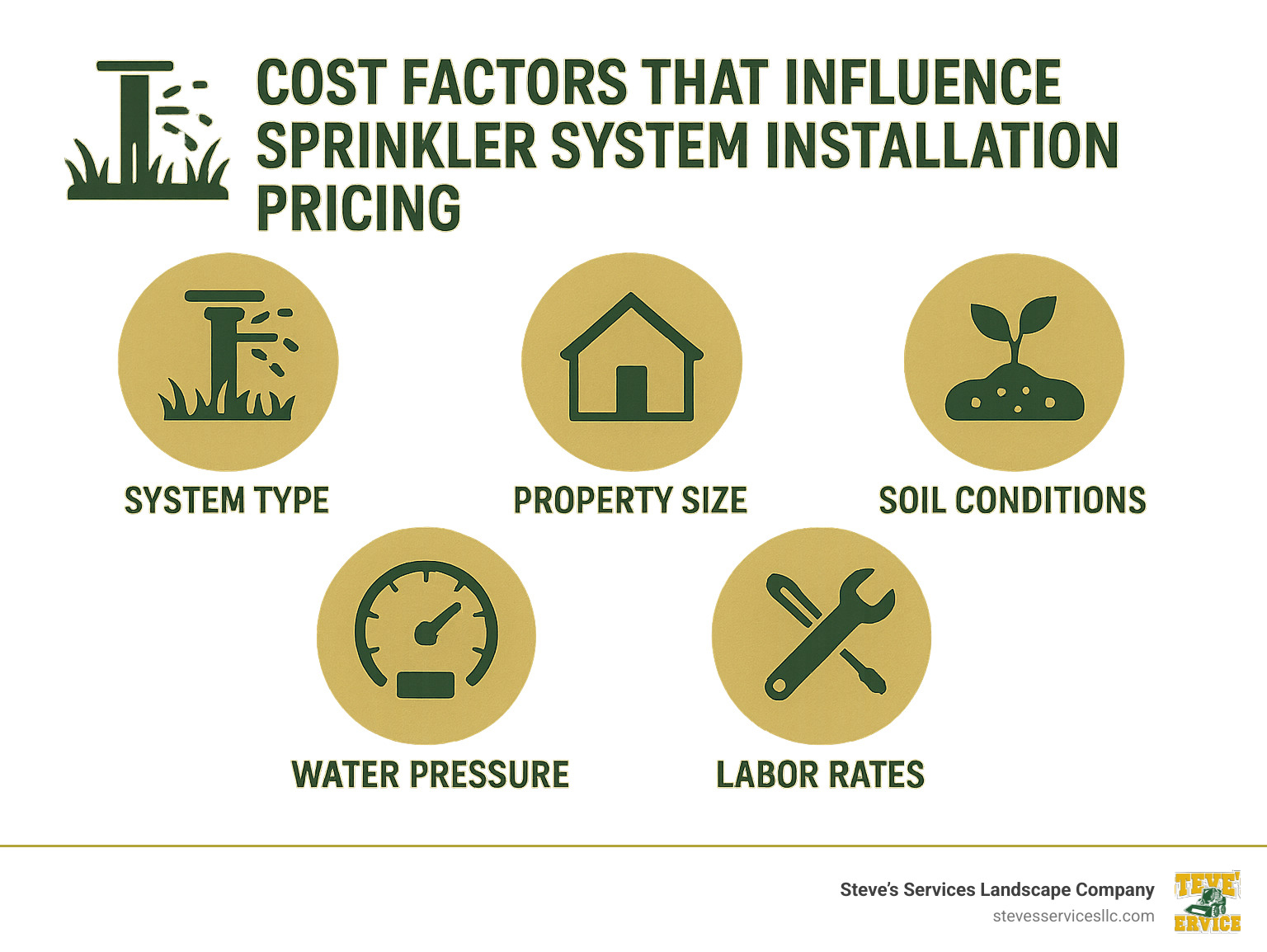
Average Cost to Install a Sprinkler System per Square Foot
When homeowners ask me about irrigation systems, the first question is almost always about cost. Nationally, the average cost to install sprinkler system per square foot typically ranges from $0.20 to $1.00 for residential properties, with most homeowners investing around $2,527 for a complete system. But don’t be surprised if your quote varies – system complexity and unique property features can push costs up to $2.00 per square foot or more, especially for commercial installations.
After installing hundreds of systems across Massachusetts, I’ve seen how different system types dramatically affect your investment:
| System Type | Cost Per Square Foot | Advantages | Best For |
|---|---|---|---|
| Above-Ground | $0.29 – $1.00 | Lower initial cost, easy DIY installation | Small yards, temporary solutions, budget constraints |
| In-Ground | $0.50 – $1.83 | Aesthetic appeal, durability, increased home value | Permanent installations, larger properties, aesthetic priority |
| Drip Irrigation | $1.70 – $4.80 | Water efficiency, targeted delivery, less evaporation | Gardens, flower beds, shrubs, water conservation areas |
I should mention that fire sprinkler systems operate on an entirely different cost scale than lawn irrigation. For fire protection, new construction typically runs $1.00 to $2.00 per square foot, while retrofitting existing buildings jumps to $2.00 to $7.00 per square foot. Historic buildings can reach a whopping $10.00 per square foot due to preservation requirements.
For our Massachusetts clients, we’ve noticed the average cost to install sprinkler system per square foot tends to run slightly higher than national averages. Our unique soil conditions, dramatic seasonal changes, and local labor rates all contribute to this difference. You can learn more about specific installation costs at our irrigation installation cost page. And here’s something interesting – homeowners with fire sprinklers can save up to 13% on insurance premiums.
Average cost to install sprinkler system per square foot for new builds vs. retrofits
Timing is everything when it comes to installation costs. If you’re building a new home, you’re in luck:
- New Construction: $0.50 – $0.75 per square foot
- Retrofit Installation: $0.75 – $1.50 per square foot
This significant price difference makes perfect sense. During new construction, the trenching work is much simpler because your landscape isn’t established yet. Your installation team can coordinate with other contractors, sometimes even sharing trenching costs with other utility installations. Plus, there’s no mature landscaping to work around or repair afterward.
When we retrofit an existing property, several factors drive up costs. We need to carefully steer around your established trees and gardens, deal with more complex trenching challenges, and often handle lawn repair and reseeding (which adds $0.09 – $0.18 per square foot). We also need to work cautiously around existing utility lines.
Don’t forget about permits! In Massachusetts towns like Burlington, Danvers, and Everett, permit fees typically range from $50 to $200 depending on your municipality. Working with a local company familiar with these regulations can save you significant headaches.
Commercial vs. residential—average cost to install sprinkler system per square foot
Commercial properties generally require a bigger investment than homes due to their increased complexity and durability requirements:
Residential Systems: $0.20 – $1.00 per square foot
Commercial Systems: $0.75 – $2.50 per square foot
Multi-Family Properties: $0.90 – $2.00 per square foot
Office Parks: $1.00 – $2.50 per square foot
For commercial fire sprinkler systems, the investment increases substantially. Commercial new construction typically costs $1.00 – $2.00 per square foot, while high-rise retrofits jump to $2.00 – $4.00 per square foot. Historic building retrofits can reach up to $10.00 per square foot due to preservation requirements and structural complexities.
Commercial installations demand more robust components and higher-capacity systems to handle larger areas. They also require more sophisticated zoning to accommodate varied landscape features – think about the different watering needs of an office park’s front entrance compared to its side lawns and garden areas. These systems often include more advanced control systems and need to meet specific code requirements throughout Massachusetts communities.
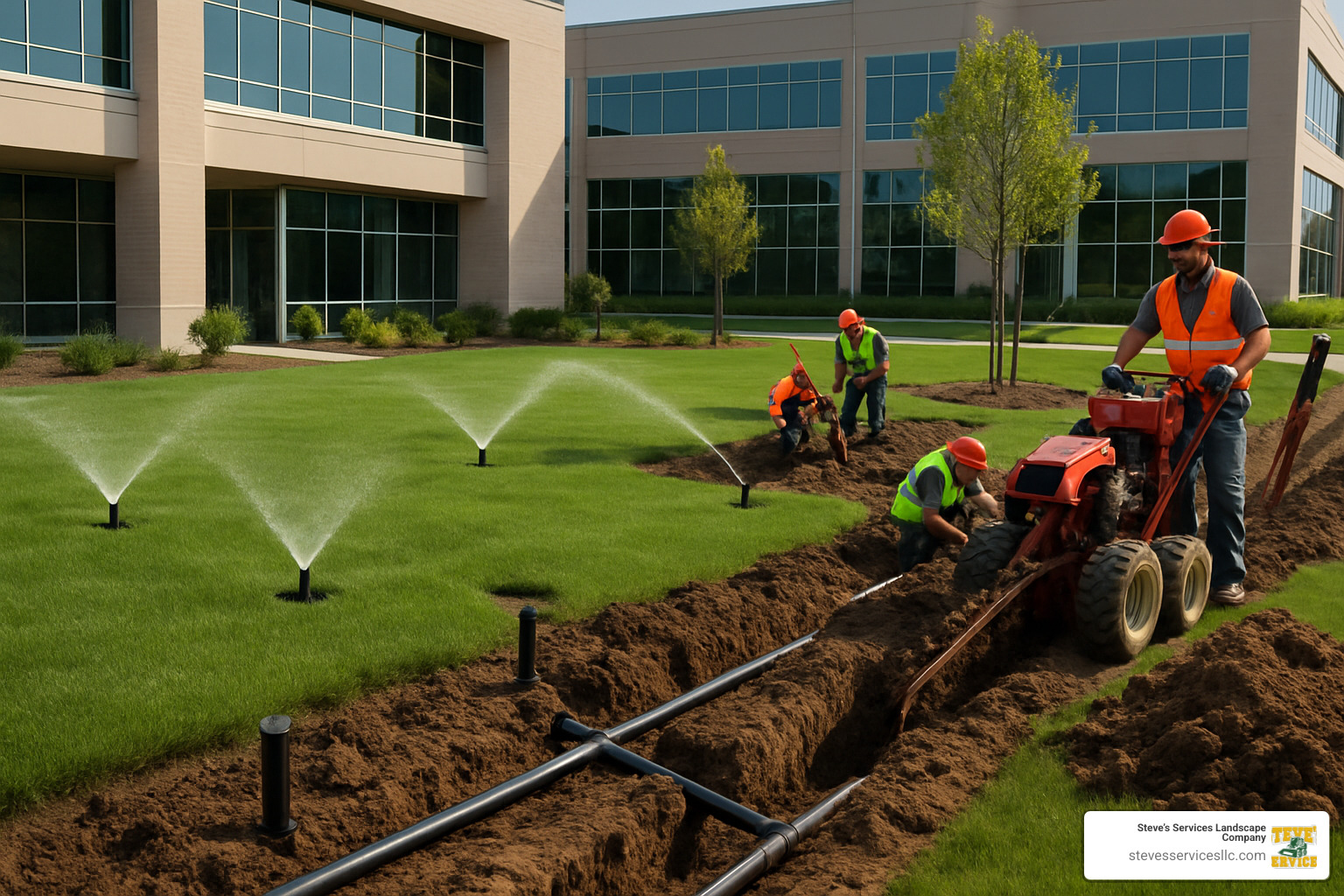
Key Factors That Influence Per-Square-Foot Pricing
Ever wonder why your neighbor got a completely different quote for their sprinkler system? The average cost to install sprinkler system per square foot can swing dramatically based on your unique property and system requirements. Let’s dig into what makes your situation special (and potentially more or less expensive).
Soil Type and Composition
What’s under your lawn makes a huge difference in how much work it takes to install your system. Here in Massachusetts, we see all kinds of soil conditions:
Sandy soil is like hitting the installation jackpot—it’s easy to dig through, which can keep your labor costs down. Clay soil, on the other hand, fights back against trenching equipment, potentially adding $0.20 – $0.40 per square foot to your bill. Rocky soil is even more challenging, requiring specialized equipment and potentially increasing your costs by up to $0.40 per square foot.
If you’ve got heavily compacted soil (common in newer developments where heavy machinery has been at work), we’ll need extra time to properly prepare the ground, which adds labor hours to your project.
Across our Massachusetts service areas, the soil profile changes dramatically—properties in Winchester have very different soil characteristics than homes in Revere or Saugus, affecting how we approach your installation.
Lawn Slope and Terrain
A perfectly flat yard is the simplest to irrigate, but many Massachusetts properties feature gentle to dramatic slopes. When your lawn isn’t level, we need to get creative:
Moderate slopes require pressure-compensating sprinkler heads to ensure water doesn’t just run downhill, typically adding $0.10 – $0.30 per square foot. For steeper terrain, we might recommend specialized drainage solutions like French drains (running $10 – $65 per linear foot) to prevent erosion and water pooling.
Terraced landscapes are particularly complex, requiring multiple carefully designed zones and precise pressure management to deliver even coverage across different elevations.
For optimal performance on sloped properties, we often recommend adding moisture sensors ($18 – $50 each) and smart controllers that can adjust watering times based on actual soil conditions rather than just a timer.
Water Pressure and Source
Your water supply fundamentally shapes your system design. Most Massachusetts homes use city water, which is generally reliable but requires backflow prevention devices ($250 – $550) to protect the municipal supply.
If you’re on well water, we’ll likely need to incorporate filtration systems and pressure regulation ($300 – $800) to protect your sprinkler components from sediment and pressure fluctuations.
Low water pressure is a common challenge, especially in older neighborhoods. This might require specialized low-pressure heads or, in some cases, a booster pump ($400 – $1,200) to ensure proper coverage. Conversely, extremely high pressure can damage system components over time, necessitating pressure-reducing valves ($100 – $300).
Throughout communities like Medford, Melrose, and North Reading, we’ve seen significant variations in water pressure even within the same neighborhood, which is why we always perform thorough testing before designing your system.
Number of Zones
Think of zones as the rooms in your irrigation “house”—each one serves a specific purpose and adds to the overall cost:
Your first zone typically costs $500 – $1,000 because it includes your controller and main system components. Additional zones run about $750 – $1,000 each. A typical quarter-acre property in Massachusetts usually requires 3-5 zones for proper coverage.
Why so many zones? Different areas of your landscape have different watering needs. Your front lawn, backyard, flower beds, and vegetable garden all require different amounts of water. Creating separate zones allows us to deliver precisely what each area needs without wasting water or drowning sensitive plants.
Local Labor Rates and Climate Considerations
Regional factors play a significant role in your final cost. Professional irrigation installers in our area typically charge $50 – $100 per hour for their expertise.
Our Massachusetts climate brings unique challenges too. Our frost-prone region requires deeper pipe burial (8-12 inches) than warmer climates to prevent freeze damage. This deeper trenching adds time and labor to your installation.
Timing matters too! If you’re flexible on your installation schedule, consider an off-season installation in late fall when demand is lower—you might score some savings. In the Northeast, including our Massachusetts service areas, installation costs average around $2,000, while Western U.S. installations run closer to $3,000 due to regional differences in labor rates and climate requirements.
System type drives cost
Your choice of irrigation system fundamentally shapes your budget and experience:
In-ground systems ($0.50 – $1.83 per square foot) represent the gold standard in lawn irrigation. With pipes buried 6-12 inches deep and sprinkler heads that disappear when not in use, these systems offer the perfect blend of performance and aesthetics. They’re built to last 15-20+ years with proper maintenance and significantly boost your property value. The investment pays off in both convenience and curb appeal.
Above-ground systems ($0.29 – $1.00 per square foot) offer a more budget-friendly option. Using hoses and portable sprinklers, these systems are visible when operating but can be stored away when not in use. While they typically last 5-10 years—less than half the lifespan of in-ground systems—they provide a lower-cost entry point for irrigation.
Drip irrigation ($1.70 – $4.80 per square foot) delivers water directly to plant roots through flexible tubing and targeted emitters. While more expensive per square foot, these systems use up to 50% less water than traditional sprinklers, making them ideal for gardens, flower beds, and shrub areas. By keeping foliage dry, they also reduce disease pressure and minimize weed growth between plants.
Automatic functionality adds convenience to any system type. Basic controllers run $43 – $294, while smart controllers that adjust to weather conditions range from $50 – $300. While most commonly paired with in-ground systems, this technology can transform even simple setups into water-efficient, hands-off solutions.
How zone count & sprinkler heads affect totals
The complexity of your irrigation design significantly impacts your final cost. Each zone requires its own valve, wiring, and piping network, creating a pricing structure that looks like this:
Your first zone typically costs $788 – $1,000 because it includes your system’s brain (the controller) and main components. Additional zones run approximately $750 each. For context, the average Massachusetts home requires 3-5 zones, bringing total system costs to $2,200 – $4,700.
Sprinkler head selection is equally important. Pop-up spray heads ($3 – $16) work well for smaller lawn areas with 3-15 foot coverage radius, while rotary heads ($5 – $20) cover medium-sized areas with 15-35 foot reach. For larger properties, impact rotors ($10 – $20) or gear-driven rotors ($10 – $35) provide coverage up to 150 feet.
Specialized areas might need bubbler heads ($5 – $10) for trees and shrubs or micro-misting heads ($2 – $10) for delicate plants and seedlings.
The number of heads you’ll need depends on their coverage pattern and the need for overlapping spray to avoid dry spots. A professional design ensures you get complete coverage without wasteful overspray, balancing performance with cost-efficiency.
For more information about installation considerations, visit our installation guide or learn about water-efficient options through the EPA WaterSense program.
Cost Breakdowns by Property Size, Zones & System Type
Understanding how costs scale with property size helps in budgeting appropriately for your irrigation project. While the average cost to install sprinkler system per square foot provides a useful baseline, total costs follow predictable patterns based on square footage.
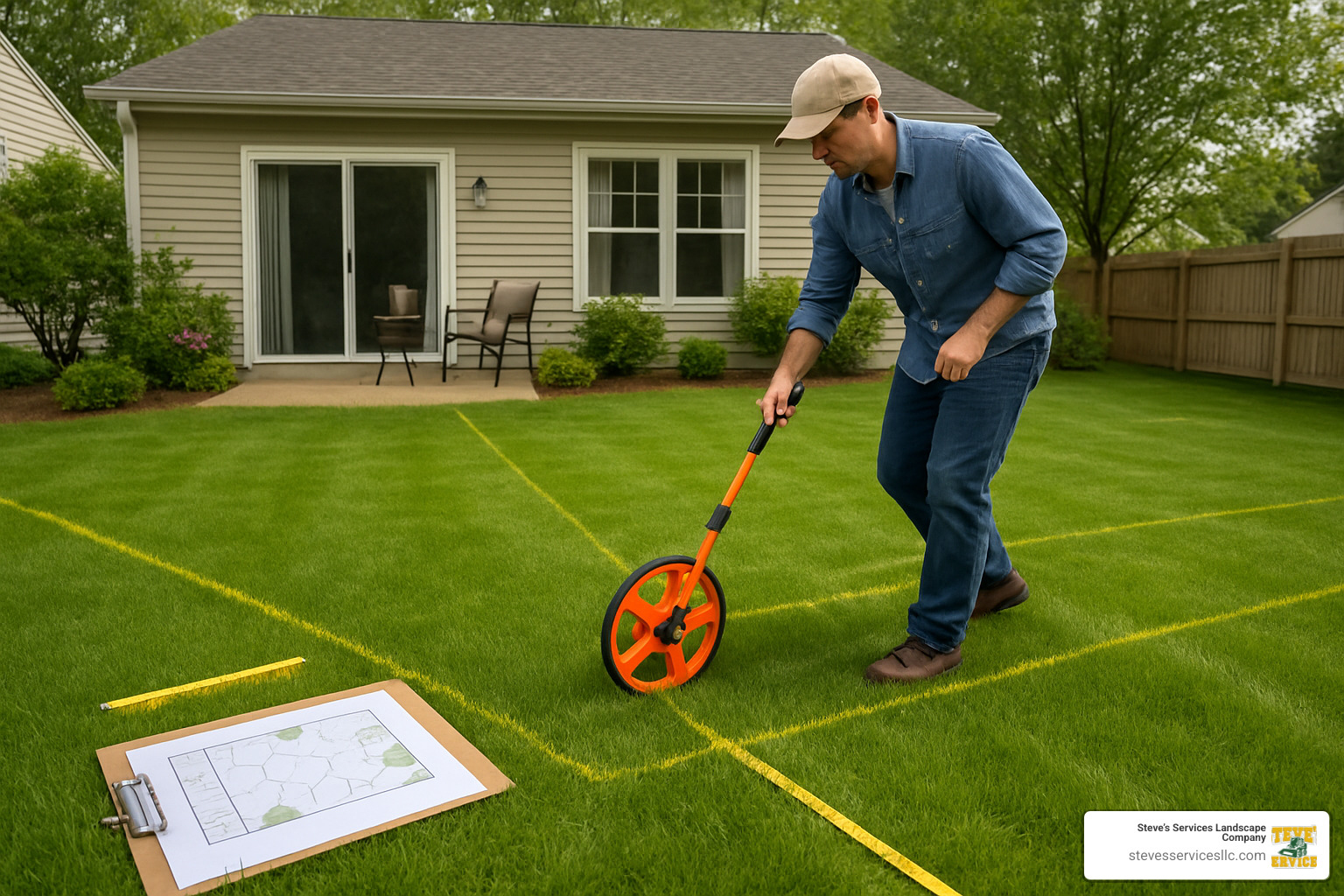
Before getting started with any estimates, measuring your yard correctly is essential. I always recommend to our Massachusetts clients that they divide their property into simple shapes like rectangles and triangles. Measure each section separately, add them together, and don’t forget to subtract your home’s footprint and any patios or driveways that won’t need watering. This approach gives you the most accurate square footage for proper system sizing.
Per-Square-Foot Costs for 5,000, 10,000 & 20,000 Sq. Ft. Lawns
One of the interesting things we’ve noticed over our 25+ years of installations is that as property size increases, the average cost to install sprinkler system per square foot typically decreases. It’s a bit like buying in bulk at the grocery store!
For a cozy 5,000 square foot property, expect to invest between $1,400 and $3,000 total, which works out to about $0.28 to $0.60 per square foot. These smaller yards usually need just 2-3 zones and can be completed in a single day. This size is common in many of the more densely populated areas we serve in Massachusetts.
Moving up to a 10,000 square foot property (roughly 1/4 acre), the price range shifts to $2,200 – $4,700 total, bringing your effective rate down to $0.22 – $0.47 per square foot. These medium-sized properties typically require 3-5 zones and take our crew 1-2 days to install properly. This is the most common size we see in suburbs like Reading and Saugus.
For larger 20,000 square foot properties (approximately 1/2 acre), you’re looking at $4,100 – $7,800 total, with the per-square-foot cost dropping further to $0.21 – $0.39. These installations need 5-8 zones and typically take 2-3 days to complete.
And for those with expansive one-acre properties (about 40,000 square feet), total costs range from $7,200 – $12,600, bringing the per-square-foot cost down to $0.18 – $0.32. These larger installations require 8-12 zones and our team usually completes them in 3-5 days.
This scaling effect happens because fixed costs like equipment setup, system design, and controller installation get spread across more square footage. Plus, our crews work more efficiently on larger projects once they establish a rhythm.
Average cost to install sprinkler system per square foot for drip vs. in-ground vs. above-ground
Each irrigation system type comes with its own distinct benefits and price points, and I’ve found that being transparent about these differences helps homeowners make the best choice for their needs.
In-ground sprinkler systems represent the gold standard for residential irrigation. Costing between $0.50 and $1.83 per square foot, they’re an investment in your property’s long-term value. For a typical 1/4 acre installation, expect to pay between $2,500 and $5,500 based on internet averages. What makes these systems worth considering is their impressive 15-20+ year lifespan when properly maintained.
The buried PVC piping and pop-up heads keep your landscape looking clean while providing consistent coverage. While they do require annual winterization ($50-$120) and spring startup ($75-$160) here in Massachusetts, this maintenance ensures your system stays reliable for decades. I’ve installed systems over 15 years ago that are still performing beautifully today!
Above-ground sprinkler systems offer a more budget-friendly alternative at $0.29 – $1.00 per square foot. For a 1/4 acre property, that translates to roughly $1,500 – $3,000. These systems consist of hoses and stationary sprinklers, sometimes with simple timers. With a shorter lifespan of 5-10 years and seasonal setup/takedown requirements, they’re best suited for temporary solutions or smaller properties where budget is the primary concern.
Drip irrigation systems are the water-conservation champions, delivering moisture directly to plant roots. At $1.70 – $4.80 per square foot, they’re more expensive per square foot, but since they’re typically used for targeted areas like gardens and not entire lawns, the total cost often remains reasonable ($450 – $650 for garden areas on a 1/4 acre property). The real benefit is in water savings – up to 50% less water usage compared to traditional sprinklers! Their 10-15 year lifespan makes them a smart investment for environmentally conscious homeowners.
For those looking to maximize efficiency, smart irrigation add-ons can transform any system type. Smart controllers ($50 – $300), rain sensors ($18 – $50), and soil moisture sensors ($20 – $80) can reduce water usage by 15-30% by automatically adjusting watering schedules based on actual conditions.
One Massachusetts client told me his smart controller paid for itself in the first season through water bill savings alone! Learn more about how these automated systems can save you money at our automatic sprinkler system installation page.
The EPA’s WaterSense program also offers valuable guidance on outdoor water efficiency that can help you maximize the value of your irrigation investment while minimizing environmental impact.
Beyond Installation: Maintenance, Repairs & Long-Term Savings
When budgeting for a sprinkler system, consider ongoing costs beyond the initial average cost to install sprinkler system per square foot. A comprehensive understanding of maintenance requirements and potential savings helps determine the true lifetime value of your irrigation investment.
Seasonal Maintenance Requirements
In Massachusetts, proper seasonal maintenance is crucial for system longevity:
- Spring Startup: $75 – $160 annually
- System inspection
- Pressure testing
- Controller programming
- Head adjustment and cleaning
- Winterization: $50 – $120 annually
- Complete system drainage
- Compressed air blowout
- Controller shutdown
- Backflow protection
These seasonal services are particularly important in our Massachusetts climate, where freezing temperatures can damage improperly winterized systems.
Common Repairs and Their Costs
Even well-maintained systems occasionally require repairs:
- Sprinkler Head Replacement: $2.50 – $35 per head plus labor
- Valve Repair/Replacement: $125 – $250
- Pipe Leak Repair: $150 – $350
- Controller Replacement: $150 – $500
- Backflow Preventer Repair: $150 – $300
The good news is that properly installed and maintained sprinkler systems are remarkably reliable. For fire sprinkler systems, the chance of accidental activation is approximately 1 in 16 million—about the same odds as winning the lottery.
Water Bill Impact and Conservation
A common concern among homeowners is how a sprinkler system will affect their water bill:
- Typical Increase: A few hundred dollars annually, varying by climate and lawn size
- Water Usage: Approximately 623 gallons per 1,000 square feet per watering cycle
- Conservation Options:
- Rain sensors reduce unnecessary watering by 15-20%
- Smart controllers can reduce water usage by 20-30%
- Proper zoning ensures efficient water distribution
- Scheduled watering during early morning hours minimizes evaporation
In Massachusetts communities like Stoneham, Winchester, and Woburn, water rates vary, affecting the ongoing operational costs of your system.
Insurance Considerations
For fire sprinkler systems, insurance discounts can offset installation costs:
- Typical Homeowner Insurance Discount: 5-13% annually
- Commercial Property Insurance Savings: Up to 60% in some cases
- Reduced Property Damage: Buildings with sprinklers suffer 50% less fire damage on average
While lawn irrigation systems don’t typically qualify for insurance discounts, they do protect your landscape investment from drought damage and can reduce potential claims related to foundation issues caused by inconsistent soil moisture.
Money-Saving Tips & Value Considerations
While the average cost to install sprinkler system per square foot gives you a baseline for budgeting, there are several smart strategies to maximize your investment without cutting corners on quality. After all, a sprinkler system is a long-term investment in your property’s health and value.
Smart Technology Investments
Modern irrigation technology might seem like an added expense initially, but these upgrades often pay for themselves surprisingly quickly through water conservation.
Smart controllers priced between $50 and $300 connect to your home’s Wi-Fi, allowing you to manage your system from your smartphone whether you’re at work or on vacation. These intelligent devices adjust watering schedules based on local weather conditions, reducing water usage by 20-30% compared to traditional timers. For Massachusetts homeowners dealing with our variable weather patterns, this means your system won’t run during a rainstorm just because it was scheduled to.
Rain sensors are perhaps the most affordable smart upgrade at just $18 to $50, automatically preventing your system from watering during or after rainfall. The return on investment can be realized in less than one season in most cases, making them a no-brainer addition to any system.
For properties with clay-heavy soils that retain moisture longer, soil moisture sensors ($20 to $80) prevent both over and under-watering by measuring actual soil conditions rather than following a rigid schedule. Your plants get exactly what they need, when they need it.
Installation Timing and Preparation
Timing your installation strategically can lead to significant savings. Many irrigation contractors offer discounted rates during their slower periods, typically late fall or early spring. In Massachusetts, scheduling installation just after the ground thaws in spring or before the first freeze in fall can sometimes secure better pricing.
While we don’t recommend complete DIY installation for most homeowners, some preparation work can reduce labor costs. However, proceed with extreme caution if considering trench preparation yourself – always have utilities marked professionally before digging to avoid damaging underground lines, which could result in dangerous and costly repairs.
For those building new homes or planning major landscape renovations, coordinating your irrigation installation with other construction work presents a golden opportunity for savings. Sharing trenching expenses with other contractors can significantly reduce the average cost to install sprinkler system per square foot.
Property Value and ROI Considerations
A professionally installed irrigation system adds tangible value to your property that extends beyond a beautiful lawn. Real estate professionals estimate that a quality sprinkler system can increase home values by 7-15%, with homeowners recouping approximately 86% of installation costs in added property value.
The marketability advantage is clear as well – surveys show that 74% of potential buyers are more likely to purchase a home with an existing sprinkler system than one without. In competitive Massachusetts real estate markets like Malden and Wakefield, this edge can mean the difference between a quick sale and a lingering listing.
Beyond monetary value, there’s the daily quality-of-life improvement of having a consistently lush, green landscape without the hassle of dragging hoses and setting up portable sprinklers. That time savings alone is worth considering when evaluating the true return on your irrigation investment.
Rebate Programs and Incentives
Don’t overlook potential savings through local rebate programs. Many water districts offer financial incentives for installing water-efficient irrigation systems:
- Smart controller rebates typically range from $50 to $200 depending on the program
- Water-efficient system components may qualify for additional rebates
- Products carrying the EPA WaterSense label often qualify for special incentives
Massachusetts communities vary in their conservation programs, so it’s worth checking with your local water authority to see what’s available in your area. These incentives can significantly offset the initial average cost to install sprinkler system per square foot.
For homeowners looking to maximize both immediate savings and long-term value, combining strategic timing, smart technology, and available rebates creates the ideal approach to irrigation system installation. More info on automatic systems can help you understand the full range of options available for your property.
Frequently Asked Questions About Sprinkler System Pricing
Let’s tackle some of the questions I hear most often from homeowners who are considering an irrigation system. These concerns come up in almost every consultation, and understanding them can help you make a more confident decision about your landscape investment.
How much will my water bill rise with a new system?
This is probably the most common question I hear, and it’s a valid concern. Yes, your water bill will increase, but perhaps not as dramatically as you might fear.
For a typical quarter-acre property in Massachusetts, you can expect an increase of a few hundred dollars annually. However, this figure varies widely depending on several factors. Local water rates in different Massachusetts towns can vary significantly—what you’d pay in Everett differs from rates in Wakefield or Malden. Your landscape size, the types of plants you’re watering, our unpredictable New England weather patterns, and your system’s efficiency features all play important roles in determining your actual costs.
The good news? Smart irrigation technology can substantially offset these increases. By installing rain sensors, soil moisture sensors, or weather-based controllers, you can reduce water usage by 20-30% compared to traditional timer-based systems. Many of our clients find that the lush, healthy landscape and the time saved from manual watering far outweigh the additional water costs. Plus, you’re protecting your landscape investment from costly drought damage that might require complete replanting.
What permits are required and how much do they cost?
Navigating permit requirements can be confusing, especially since they vary by location. In most Massachusetts communities, you’ll need at minimum:
A standard irrigation permit ($50-$200) and a backflow prevention inspection ($40-$75). Depending on your specific situation, you might also need electrical permits for controller installation, plumbing permits for water line connections, or special permits if you’re in a historic district.
Each Massachusetts town has its own quirks when it comes to permitting. Burlington’s requirements differ from Danvers’, which differ from Everett’s. This is where working with a local, experienced irrigation contractor really pays off—we handle the permitting process regularly and know exactly what’s needed in each community.
Don’t forget to check with your homeowner’s association if you have one. Some HOAs have specific requirements or restrictions regarding irrigation system installation that go beyond municipal codes.
Do sprinkler systems really add resale value to my home?
The short answer is a resounding yes! Irrigation systems consistently add significant value to residential properties. Real estate data shows a typical value increase of 7-15% of your property value, with approximately 86% return on investment when you sell your home.
Beyond the numbers, market appeal is significant—about 74% of potential buyers prefer homes with existing sprinkler systems. Why? Because they recognize the value of having healthy, established landscaping without having to worry about installation headaches or maintenance learning curves.
In Massachusetts’ competitive real estate market, properties with well-maintained landscapes supported by efficient irrigation systems typically sell faster and at higher prices than comparable properties without irrigation. When potential buyers drive up to a home with a lush, green lawn and thriving gardens (especially during our dry summer months when non-irrigated lawns often turn brown), it creates an immediate positive impression that carries through the entire showing.
Even if you’re not planning to sell soon, you’ll enjoy the benefits of a beautiful, effortlessly maintained landscape for years to come—and when you do decide to sell, your irrigation system will be a significant selling point.
Conclusion
When planning your sprinkler system installation, understanding the average cost to install sprinkler system per square foot provides an essential starting point—but it’s just one piece of a larger picture. As we’ve explored throughout this guide, residential irrigation costs typically range from $0.20 to $1.00 per square foot, with variations based on your property’s unique characteristics and the system you choose.
For a typical quarter-acre property here in Massachusetts, you’re looking at an investment between $2,500 and $5,500 for a complete in-ground system. Yes, that’s a significant upfront cost, but it comes with annual maintenance of just $125-$280—a small price to pay for the peace of mind that comes with knowing your landscape is receiving consistent, efficient care.
I’ve spent over two decades watching how properly installed irrigation systems transform properties across Burlington, Danvers, Everett and our other Massachusetts communities. The lush, healthy lawns that result from proper irrigation do more than just look beautiful—they add tangible value to your home, conserve water through targeted application, and free up countless hours you’d otherwise spend dragging hoses around your yard.
The most cost-effective systems are always those custom to your specific property. Factors like soil composition, sun exposure, plant varieties, and even the subtle slopes in your yard all influence how your system should be designed for maximum efficiency and performance.
While the initial price tag might cause some sticker shock, I encourage homeowners to consider the long-term value. A quality sprinkler system installed by professionals will provide 15-20+ years of reliable service. When you break that down annually, it’s a modest investment for protecting and enhancing your landscape—often your home’s most visible asset.
If you’re considering an irrigation system for your Massachusetts property, I recommend getting multiple quotes from licensed contractors who understand our local conditions—from our clay-heavy soils to our distinct seasonal needs. A reputable installer will walk your property, ask about your specific concerns, and design a system that balances upfront costs with long-term performance.
The cheapest quote rarely delivers the best value. The right system—one properly designed and installed with quality components—will pay dividends in lower water bills, reduced maintenance, and a healthier, more beautiful landscape for years to come.
More info about professional lawn sprinkler installation