
Backyard Excavation: 7 Powerful Ways to Save Big in 2025
Understanding Backyard Excavation: The Foundation of Outdoor Change
Backyard excavation is the process of removing earth to prepare your outdoor space for construction projects like patios, pools, walkways, or drainage systems. If you’re looking to hire excavation services, here’s what you need to know:
- Cost: Average backyard excavation costs range from $1,000 for basic projects to $20,000+ for complex work
- Common projects: Pools ($400-$15,000), patios ($1,000-$2,500), drainage solutions ($1,500-$10,000)
- Depth requirements: Walkways/patios (8 inches), driveways (12 inches), pools (varies by design)
- Professional benefits: Safety compliance, proper utility detection, appropriate equipment, structural stability
Many homeowners underestimate the complexity of backyard excavation, viewing it simply as “digging a hole.” In reality, it’s a carefully engineered process that forms the foundation of nearly every outdoor improvement project. When done correctly, proper excavation prevents future problems like settling, drainage issues, and structural instability.
As one excavation professional noted, “It can be annoying to step outside your home and into a mud puddle.” This simple statement captures why proper excavation matters – it’s about creating functional, beautiful spaces that improve your property’s value and your quality of life.
I’m Steve Sylva, owner of Steve’s Services Landscape Company with over 25 years of experience handling backyard excavation projects throughout Massachusetts, from simple garden beds to complex pool installations. My team specializes in efficient, cost-effective backyard excavation that creates the perfect foundation for your outdoor dreams without breaking your budget.
What Is Backyard Excavation & Why It Matters
When we talk about backyard excavation, we’re referring to much more than just digging holes. It’s the careful process of removing earth, rock, and debris to create a solid foundation for your outdoor projects. Think of it as preparing the canvas before an artist begins their masterpiece – without this crucial first step, even the most beautiful landscape designs are bound to fail.
At its core, proper excavation ensures the stability and longevity of everything built upon it. Here in Massachusetts, where we experience significant freeze-thaw cycles and varying soil conditions, a well-executed excavation job becomes even more critical. Our team has seen countless beautiful patios that began to sink or crack within a year simply because the foundation work wasn’t done right.
Backyard excavation directly impacts your property’s drainage patterns, soil stability, and erosion control. When we excavate properly, we’re not just preparing for today’s project – we’re protecting your investment for years to come. The work we do beneath the surface often determines how long your beautiful outdoor spaces will last without requiring expensive repairs.
Many homeowners in Everett, Melrose, and Winchester are surprised to learn that proper excavation can actually increase property value. Beyond preventing future problems, it creates the opportunity for stunning outdoor changes that potential buyers will notice immediately.
The Role of Proper Grading in Backyard Excavation
Grading might not be the most exciting part of your landscape change, but it’s arguably one of the most important. Proper grading during backyard excavation shapes your land to control water runoff and create stable surfaces for construction.
Water is both a landscape’s best friend and worst enemy. With strategic grading, we direct rainwater away from your home’s foundation, preventing basement flooding and moisture issues that could cost thousands to repair. In areas like Revere where properties might sit lower, we often need to create more aggressive slopes to ensure water doesn’t pool around structures.
The slope design we implement depends entirely on your property’s natural topography and your specific project goals. For instance, a property in Winchester with natural hills requires different grading approaches than a flat lot in Everett. We carefully assess each site to determine the optimal grading solution that balances aesthetics with practical water management.
Backyard Excavation: Determining The Right Depth
“How deep should we dig?” is one of the first questions we address in any backyard excavation project. The answer isn’t one-size-fits-all – it depends on several critical factors that vary from project to project.
Your soil type plays a major role in determining excavation depth. Clay soils, common in parts of Massachusetts, often require different approaches than sandy or loamy soils. We test your soil composition before beginning any excavation work to ensure we’re planning appropriately.
Load requirements also factor heavily into our depth calculations. Areas that will bear significant weight, like driveways that support vehicles, need substantially deeper foundations than a garden pathway. Here’s what we typically recommend:
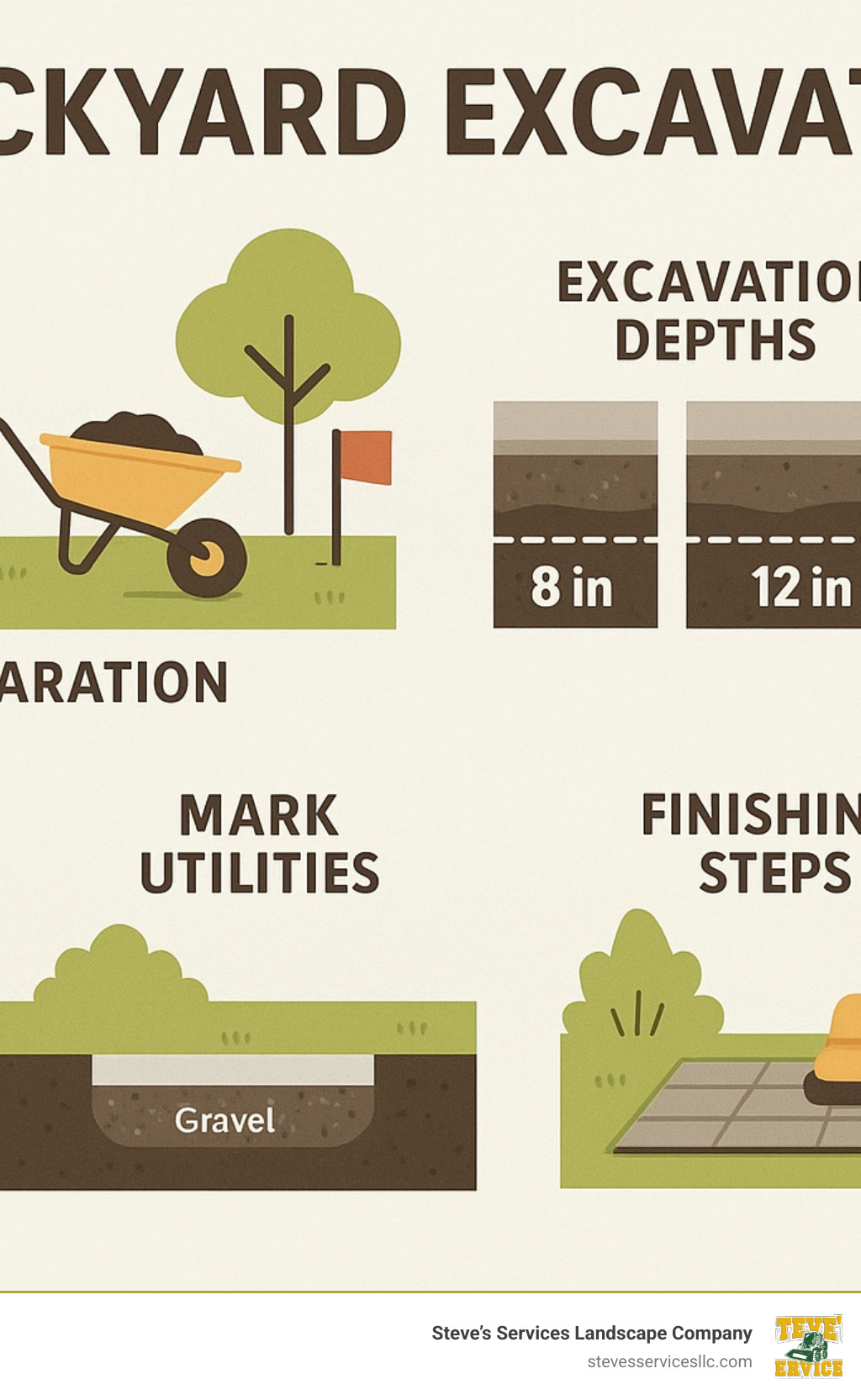
For patios and walkways, we generally excavate about 8 inches total – enough for a 4-6 inch base layer, an inch of sand, plus the thickness of your pavers. Driveways require deeper excavation, usually around 12 inches, to handle the heavier loads they’ll support. Swimming pools vary dramatically based on design, but typically require excavation of 4-8 feet.
The Massachusetts climate introduces additional considerations. Our frost line means footings for structures like retaining walls must extend at least 12 inches below the frost depth to prevent seasonal movement and damage.
Every property is unique, which is why our team conducts thorough site assessments before determining the precise excavation requirements for your specific project. This attention to detail is what ensures your outdoor spaces remain beautiful and functional for years to come.
Backyard Excavation Projects That Transform Your Space
Backyard excavation isn’t just about moving dirt—it’s about creating possibilities. Every stunning outdoor space you’ve ever admired started with this essential first step. Throughout our Massachusetts service areas, we’ve helped countless homeowners transform their ordinary yards into extraordinary retreats through careful excavation work.

Pools & Water Features
There’s nothing quite like stepping into your own backyard oasis on a hot summer day. In-ground pools represent one of our most challenging—and rewarding—excavation projects. When we dig that first scoop of earth for your pool, we’re already thinking several steps ahead.
The process goes far beyond simply digging a hole. We carefully excavate to depths between 4-8 feet (depending on your pool design), creating precise contours that will eventually cradle your family’s summer memories. Managing hydrostatic pressure through strategic drainage systems is crucial—without this, groundwater can literally push against your pool structure over time.
After installation, the backfilling process is equally important. We carefully add layers of fill dirt (never topsoil) and compact each layer thoroughly. This might seem tedious, but it’s this attention to detail that prevents the settling and shifting that can damage your pool walls years later.
Whether we’re working in the established neighborhoods of Lynnfield or navigating the unique terrain in Winchester, our team brings the same careful approach to every pool excavation project.
Patios & Outdoor Living Spaces
A great patio feels like an extension of your home—and it starts below ground. We typically excavate 7-9 inches for patio installations, creating room for the foundation that will support decades of family gatherings, quiet morning coffees, and evening entertainment.
This excavation depth allows us to install 4-6 inches of compacted crushed stone, followed by an inch of leveling sand, plus the thickness of your chosen pavers. This might seem excessive, but in our Massachusetts climate where freeze-thaw cycles can wreak havoc on improperly installed hardscapes, this foundation is your patio’s insurance policy.
In communities like Melrose and Reading, where outdoor living spaces add significant property value, our meticulous excavation work translates to patios that maintain their beauty and stability for generations.
Driveways & Walkways
Your driveway endures thousands of pounds of vehicle weight daily, which is why we excavate deeper for these surfaces—typically around 12 inches. This additional depth accommodates the substantial base material needed to prevent shifting and cracking over time.
Walkways require a bit less at about 8 inches of excavation, but both need careful grading to ensure water flows away from your home and other structures. There’s nothing more frustrating than a beautifully installed walkway that becomes a puddle collector after the first rainfall!
Utility Trenches
Today’s outdoor living often involves bringing the comforts of indoors outside. We regularly excavate utility trenches for landscape lighting, irrigation systems, gas lines for fire features, or electrical conduits for outdoor kitchens. These trenches typically run 18-24 inches deep to meet code requirements and protect your utility lines from accidental damage or weather exposure.
Gardens & Landscaping Features
Even seemingly simple garden beds benefit tremendously from proper excavation. When we prepare planting areas, we’re not just digging holes—we’re creating environments where your plants can thrive. This often means removing poor-quality soil, establishing proper drainage channels, creating clean boundaries, and preparing for irrigation installation.
The difference between a garden that struggles and one that flourishes often comes down to what happened below ground before the first plant went in.
Retaining Walls
Many properties throughout our service area feature challenging slopes that limit usable space. Retaining walls solve this problem beautifully, but they require serious excavation work to function properly and last for decades.
We dig below the frost line for footings, create perfectly level base trenches, and prepare drainage systems behind the wall to prevent water pressure buildup. Without this careful preparation, even the most attractive retaining wall can fail prematurely.
At Steve’s Services, we understand that when you look at your beautiful new backyard landscaping, you’re not thinking about the excavation work that made it possible—and that’s exactly as it should be. Our job is to handle the critical foundation work that allows your outdoor dreams to become reality.
Backyard Excavation for Pools & Water Features
Pool excavation is truly in a category of its own. As one industry expert put it, “Pool excavation can be pretty difficult”—which might be the understatement of the year! The challenges we steer include managing groundwater pressure that can literally push against your pool walls, creating exact dimensions and slopes for proper function, addressing different soil stability issues, and often figuring out how to get heavy equipment into tight spaces.
When we tackle pool projects in communities like North Reading and Saugus, our process is methodical. We start with comprehensive site assessment and soil testing, create precise layout markings, and carefully select the right equipment based on your property’s access points. Throughout the excavation, we constantly verify measurements to ensure everything is proceeding according to plan.
After excavation, we install proper drainage systems to manage groundwater and thoroughly compact surrounding soil before pool installation begins. This foundation work might be invisible when your pool is completed, but it’s what allows you to enjoy worry-free summers for years to come.
Backyard Excavation Vs. Grading: Know The Difference
These terms are often used interchangeably, but they represent different aspects of the site preparation process:
Excavation is primarily about removal—taking away earth to create space for new structures or features. When we excavate for your patio or pool, we’re creating the void that will be filled with something new.
Grading focuses on shaping and contouring the land surface to achieve specific slopes and elevations. It’s about creating the right foundation and managing water flow across your property.
Most projects require both services in different proportions. A pool installation involves substantial excavation (removing large volumes of soil) with some grading to ensure proper drainage around the pool area. A lawn renovation might be primarily grading (reshaping the surface) with minimal excavation.
Our Bobcat Services are instrumental in both processes, allowing us to work efficiently while maintaining precision. At Steve’s Services, we coordinate these processes seamlessly to ensure your project has both the space it needs and the proper contours for functionality and drainage.
The Professional Excavation Process Step-by-Step
When you hire Steve’s Services for your backyard excavation project in Massachusetts, you’re not just getting a crew with shovels. You’re partnering with experienced professionals who follow a carefully crafted process that’s been refined over 25 years of changing backyards throughout Everett, Burlington, and beyond.

Pre-Dig Checklist
Before our team breaks ground, we do our homework. Think of this as the “measure twice, cut once” philosophy that prevents costly mistakes.
First, we conduct a thorough site assessment where we walk your property to understand its unique characteristics. We’re looking at everything from soil type to access points, noting existing trees, structures, and slopes that might impact our work.
Safety comes next with our mandatory underground utility location process. We always call 811 (“Call Before You Dig”) to have public utilities marked, because nobody wants to accidentally hit a gas line or water pipe! For private lines like irrigation systems or landscape lighting, we might recommend additional private locating services to make sure you locate these underground utilities before digging.
The permitting process can be a headache for homeowners, but our team knows the ins and outs of local requirements whether you’re in Melrose, Saugus, or anywhere else we serve. We’ll help steer this paperwork so your project stays on the right side of local regulations.
We’ll also conduct property surveys and staking, precisely marking excavation boundaries so there’s no confusion about what gets dug and what stays untouched. When necessary, we’ll even test your soil to determine its composition and drainage characteristics – crucial information for ensuring long-term project success.
Based on what we find, we’ll select the right equipment for your specific job. Sometimes that’s a nimble mini-excavator that can squeeze through a garden gate, other times it’s larger machinery for extensive projects. Throughout this planning phase, we’re also developing strategies to protect your existing landscape features and structures.
Digging & Haul-Off
Once the preparation is complete, the change begins. Our operators carefully remove soil to the required specifications, constantly checking measurements to ensure we’re creating exactly what was planned.
We’re thoughtful about soil management too. When possible, we separate valuable topsoil (which can often be reused elsewhere on your property) from subsoil and debris. Depending on your project needs and preferences, excavated material might be:
- Stockpiled on-site for later landscaping use
- Redistributed to level other areas of your property
- Hauled away for proper disposal
The logistics of soil removal can be particularly challenging in tighter neighborhoods like Medford or Malden. Our team coordinates efficient removal with dump trucks positioned for minimal disruption to your property and neighborhood. We understand that you still need to live in your home during the project, so we work to keep things as tidy and accessible as possible.
For deeper excavations like pools or large retaining walls, we implement temporary stabilization measures to maintain the integrity of the dig site – an important safety consideration that also protects neighboring structures.
Finishing & Preparation for Hardscapes
After the primary excavation is complete, we don’t just pack up and leave. This crucial finishing phase creates the perfect foundation for whatever comes next in your outdoor change.
For patios, walkways, and driveways, we install and carefully compact the appropriate base materials – typically crushed stone – creating a stable foundation that will prevent settling and cracking for years to come. The depth and composition of this base varies by project type, with driveways requiring more substantial support than garden pathways.
Proper drainage installation is often overlooked but absolutely essential. We install systems like French drains, catch basins, or perforated pipes as needed to ensure water flows away from your home and hardscapes, preventing future problems.
We shape the surrounding areas through rough grading to create gentle slopes that direct water where it should go rather than pooling where it shouldn’t. For paver installations, we’ll add edge restraints to maintain the integrity of your new patio or walkway, followed by a perfectly leveled sand bed as the final base layer.
This attention to detail in the finishing phase is what separates amateur excavation from professional work. It’s the difference between a patio that starts sinking after a year and one that looks beautiful for decades. At Steve’s Services, we’re building foundations for lasting outdoor enjoyment, not quick fixes.
Looking to take the next step with your excavation project? Learn more about our comprehensive Bobcat Services or explore the full range of our excavation services.
Safety, Permits & Environmental Best Practices
When it comes to Backyard Excavation, safety isn’t just a checkbox—it’s the foundation of everything we do at Steve’s Services. After all, we’re not just moving dirt; we’re reshaping your property while navigating a complex underground world of utilities and regulations.
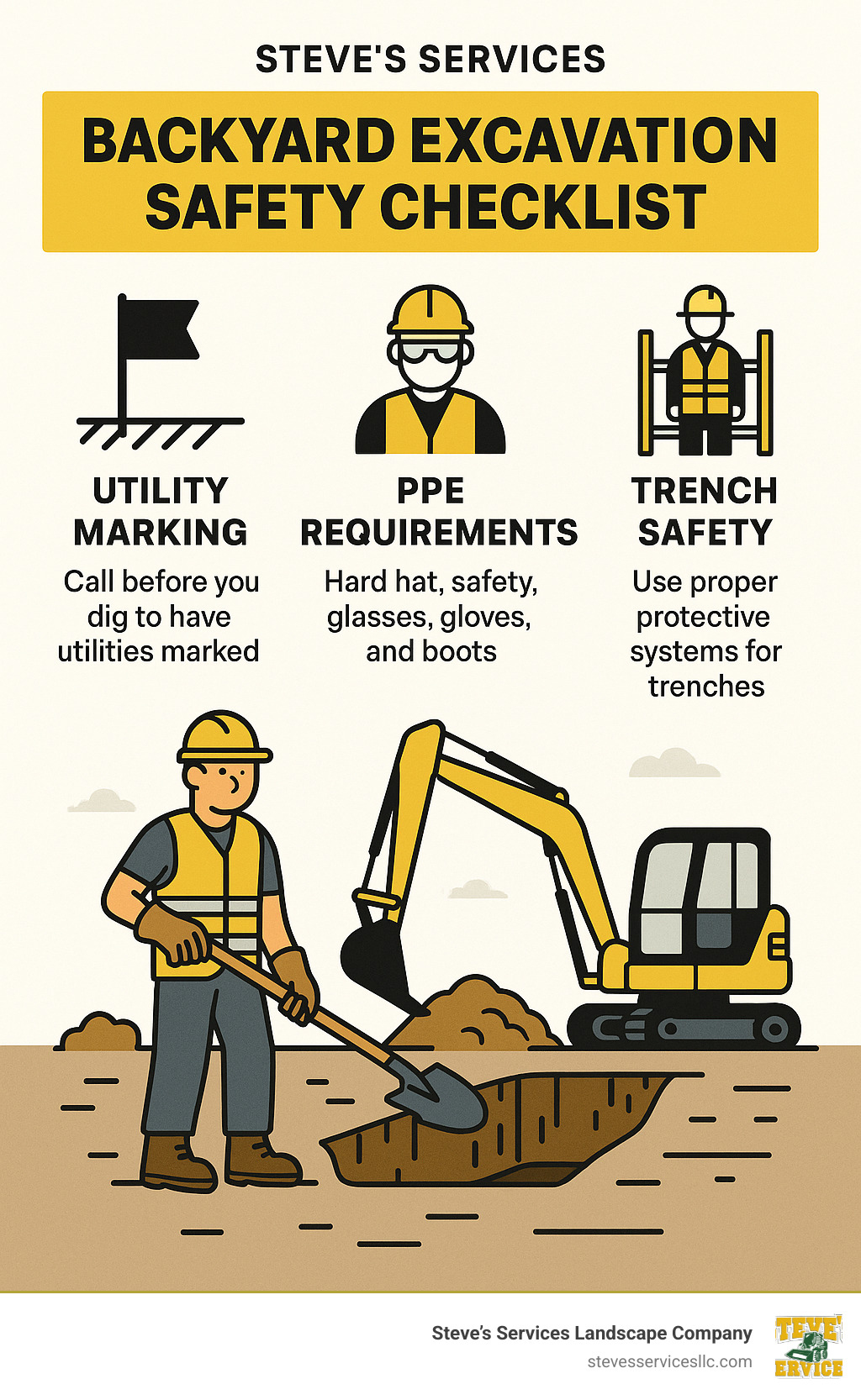
The safety gear you’ll see our crews wearing isn’t just for show. Those hard hats, safety glasses, gloves, and steel-toed boots have protected our team members through thousands of excavation projects. For deeper digging, we implement proper shoring and sloping techniques that prevent cave-ins—because even a small trench collapse can have devastating consequences.
You might notice orange fencing or caution tape around our work areas. That’s intentional—keeping curious neighbors and especially children safely away from excavation zones is something we take seriously. Our equipment undergoes regular maintenance checks because a mechanical failure at the wrong moment isn’t something we’re willing to risk.
Utility Location
“Call before you dig” isn’t just a catchy slogan—it’s potentially life-saving advice. I can’t tell you how many times I’ve seen homeowners narrowly avoid disaster by properly marking utilities before digging.
Before our excavators break ground on your property, we always contact 811 to have public utilities marked. Those colorful spray lines you see aren’t just decorative—they’re mapping out gas lines, water pipes, electrical cables, and communication lines that run beneath your yard. You need to locate these underground utilities before digging to avoid costly and potentially dangerous accidents.
For non-public lines like irrigation systems or landscape lighting, we often recommend private utility locating services. When working near marked utilities, we’ll often put away the heavy machinery and dig by hand—it takes longer, but it’s worth avoiding a neighborhood blackout or water main break!
Permit & Zoning Essentials
Permit requirements can feel like navigating a maze, especially since each Massachusetts town has its own specific rules. In some communities we serve, like Melrose or Malden, you might need multiple approvals before moving even a small amount of earth.
Most substantial Backyard Excavation projects require general excavation permits. Some towns enforce depth restrictions, limiting how deep you can dig without special approval. If your property is near wetlands (which is common in many Massachusetts communities), you’ll likely need Conservation Commission approval.
Properties with significant drainage changes often require drainage impact studies. This might sound like bureaucratic red tape, but these requirements exist for good reason—improper excavation can redirect water onto neighboring properties or overwhelm municipal storm systems.
The good news? Our team knows the specific requirements for each community we serve. We handle the permitting process from start to finish, ensuring your project moves forward without regulatory hiccups.
Sustainable Backyard Excavation
Being environmentally responsible isn’t just good for the planet—it often saves money too. When we excavate your backyard, we carefully separate and preserve your topsoil whenever possible. That rich, organic material took nature years to create, and it’s perfect for reuse in garden beds or lawn areas after construction.
For sloped properties, we implement erosion control measures like silt fences or straw bales to prevent soil runoff. This keeps your valuable soil on your property and protects local waterways from sedimentation.
We’re big fans of stormwater management solutions like swales and rain gardens. These features capture rainwater, allowing it to naturally filter into the ground rather than rushing off your property. They not only help the environment but can transform drainage problems into beautiful landscape features.
Whenever possible, we reuse excavated soil on-site. This reduces truck traffic through your neighborhood and lowers disposal costs. When we do need to remove soil, we ensure it’s disposed of properly according to Massachusetts regulations.
At Steve’s Services, we believe that good Backyard Excavation practices can improve your property while respecting the environment. It’s not just about digging holes—it’s about creating sustainable, beautiful outdoor spaces that will thrive for generations.
Budgeting & Hiring A Pro Without Breaking The Bank
Let’s talk money – because we all know that’s what’s really on your mind when considering backyard excavation. Understanding costs upfront helps you plan effectively and prevents those dreaded “by the way” conversations mid-project.
The truth is, excavation pricing isn’t one-size-fits-all. Your neighbor’s patio project might have cost significantly less than what you’re facing for your pool installation. Here’s why:
Cost Factors
Your property tells its own unique story. Is it easily accessible, or tucked away with a narrow side yard? Is your soil sandy or packed with Massachusetts’ famous rocky terrain? These factors significantly impact your bottom line.
Access challenges often become the unexpected budget-buster. When our equipment can’t easily reach your backyard, we may need specialized compact machinery or additional manual labor. Similarly, hitting unexpected rock or dealing with clay soil slows the process considerably.
Soil disposal fees can vary dramatically based on volume and distance to disposal sites. In some communities like Melrose or Winchester, these fees have increased substantially in recent years.
The season matters too. While we work year-round in Massachusetts, winter excavation sometimes requires additional steps to deal with frozen ground, potentially affecting timeline and cost.
Then there’s the paperwork – permit fees vary widely across our service areas, from minimal in some towns to substantial in others with stricter conservation requirements.
Based on industry data (not specific to Steve’s Services), here’s what homeowners typically invest in various backyard excavation projects:
- Patio or walkway excavation: $1,000-$2,500
- Driveway excavation: $1,500-$4,500
- Pool excavation: $400-$1,500 for straightforward sites, up to $15,000 for challenging properties
- Drainage solutions: $1,500-$10,000 depending on complexity
- Land clearing: $1,400-$5,800
- Trenching for utilities: $1,500-$10,000
These reflect national averages and can swing significantly based on your specific location and project requirements.
Backyard Excavation: Determining Depth & Price
“How deep do we need to go?” This question directly impacts both your immediate costs and long-term satisfaction.
For patios and walkways, we typically excavate about 8 inches total. This allows space for the crushed stone base, sand setting bed, and the pavers themselves. Skimp on this depth, and you’ll likely face settling and shifting within a few New England freeze-thaw cycles.
Driveways require deeper excavation – generally 12 inches – to support vehicle weight without cracking or sinking over time. Pool excavations vary dramatically by design, ranging from 4 feet for simple wading pools to 8+ feet for diving pools.
Deeper digging means more soil removal, increased labor hours, and higher disposal costs. But here’s where experience pays off: At Steve’s Services, we help you balance these considerations without compromising structural integrity. We won’t dig deeper than necessary, but we’ll never cut corners that might lead to premature failure.
When to Call in the Pros
I’ve seen many DIY excavation attempts in my years serving Massachusetts communities. While the initiative is admirable, the results often aren’t.
Professional excavation services offer significant advantages that typically outweigh the perceived cost savings of DIY. Our team brings specialized equipment expertise that prevents the common DIY mistakes that can turn a weekend project into a month-long headache.
Safety compliance is another critical factor. Professional excavators understand and follow safety regulations that protect both workers and your property. We know how to properly shore trenches, work around utilities, and handle unexpected site conditions.
Speaking of utilities – hitting an unmarked gas line or electrical cable isn’t just expensive; it’s dangerous. Professionals have the experience to work safely around underground services, even when marking isn’t perfect.
When calculating the true cost comparison, consider:
- Equipment rental (a mini-excavator runs $200-$400 per day, plus delivery fees)
- Your valuable time (what could have been a single day with professionals might take you multiple weekends)
- Potential repair costs if things go wrong (fixing a damaged sewer line or irrigation system isn’t cheap)
- Long-term costs of improper excavation (settling, drainage issues, structural failures)
For most substantial backyard excavation projects throughout our Massachusetts service areas, professional services provide better value, results, and peace of mind than DIY approaches. We’ve been helping homeowners in communities like Everett, Medford and surrounding areas transform their outdoor spaces for over 25 years – and we’d love to help you too.
Frequently Asked Questions About Backyard Excavation
How long will my backyard excavation take?
When clients ask about timelines for their backyard excavation projects, I always explain that it depends on several key factors. Most basic patio excavations wrap up in just 1-2 days, while more involved projects like pool excavations typically take 3-5 days to complete.
Your specific timeline will vary based on your property’s unique characteristics. Rocky soil can slow things down considerably, as can limited access points for our equipment. Mother Nature occasionally throws us curveballs too—heavy rain can temporarily halt excavation work to prevent soil erosion and ensure worker safety.
One factor homeowners sometimes overlook is the permit process. Some towns in our Massachusetts service area process permits quickly, while others might take a week or more. At Steve’s Services, we build these variables into our project timelines, including a buffer for unexpected challenges. This way, you’ll have realistic expectations from the start rather than facing disappointing delays.
Do I need separate permits for utilities and drainage?
The permit landscape can be confusing, and it varies significantly across the communities we serve in Massachusetts. In general, yes—different aspects of your backyard excavation project may require separate permits.
Most substantial excavation work requires a basic excavation permit from your local building department. However, if you’re installing new utilities, you’ll likely need additional permits from the relevant utility companies. For example, gas line installations require specific permits and inspections to ensure safety compliance.
Drainage modifications present another layer of permitting, especially if your project will change how water flows across your property. Many towns now require stormwater management permits to prevent neighborhood flooding issues. And if your property sits near wetlands or conservation areas (which is common in towns like Winchester and Reading), you’ll need approvals from the conservation commission before breaking ground.
Don’t worry about navigating this maze alone. Our team knows the specific requirements in each community we serve and handles the entire permitting process as part of our service.
What maintenance is required after excavation is complete?
A successful backyard excavation project isn’t just about the initial work—it’s about ensuring your outdoor space continues to function properly for years to come. Proper maintenance protects your investment and prevents costly repairs down the road.
For drainage systems, periodic checks are essential, especially after major storms. Clear leaves and debris from catch basins and drains at least twice yearly (spring and fall). This simple step prevents water backup that could undermine your hardscapes or cause basement flooding.
Keep an eye on graded areas around your property, particularly after heavy rainfall. Small erosion channels can quickly become bigger problems if not addressed promptly. A little topsoil and seed applied early can prevent more extensive repairs later.
If your project included retaining walls, inspect them annually for any signs of shifting, bulging, or cracking. These early warning signs are much easier to address before structural issues develop.
For areas around pools or other major excavations, some settling is normal during the first year. If you notice significant dips or depressions, additional compaction might be needed to prevent further settling.
When we complete your project, we’ll provide specific maintenance recommendations custom to your property’s needs. And remember, our team is always available for follow-up maintenance services throughout our Massachusetts service area. Many of our excavation clients become regular maintenance customers because they appreciate the peace of mind that comes with professional care.
Conclusion & Next Steps
Backyard excavation truly is the unsung hero of your outdoor change story. Like a strong foundation for a house, proper excavation ensures everything built upon it stands the test of time—protecting your investment and preventing those headache-inducing problems that can emerge years later.
Here at Steve’s Services Landscape Company, we’ve been digging in Massachusetts soil for over 25 years, from the hilly properties of Winchester to the urban landscapes of Everett. We’ve seen how proper excavation makes the difference between a patio that stays level for decades and one that starts to sink after a few seasons.
What makes our approach different? We understand that excavation isn’t just about moving dirt—it’s about creating possibilities. Our process brings together:
Thoughtful planning that considers your property’s unique characteristics
The right equipment for your specific project (no one-size-fits-all approaches here)
Operators who treat your property with respect while working efficiently
Careful attention to those seemingly small details like slope and drainage that make huge differences long-term
Full compliance with local regulations—because we know the permitting maze in every town we serve
Earth-friendly practices that minimize environmental impact
Seamless coordination with whatever comes next in your landscape journey
Perhaps most importantly, we see excavation as just the beginning of our relationship. As a full-service landscape company, we can guide your project from that first scoop of soil through to the final touches of your outdoor living space. No handoffs between contractors, no communication gaps—just one team seeing your vision through from start to finish.
Ready to build your outdoor dreams on a solid foundation? Contact Steve’s Services today for a conversation about your project. We serve communities throughout Massachusetts with the kind of careful, thoughtful excavation work that stands the test of time.
Quality excavation isn’t merely an expense—it’s an investment in your property’s future. Let’s get it right from the ground up.
More info about excavation services
