Commercial Building Landscaping: 5 Proven Success Tips
The Strategic Business Asset: Commercial Landscaping
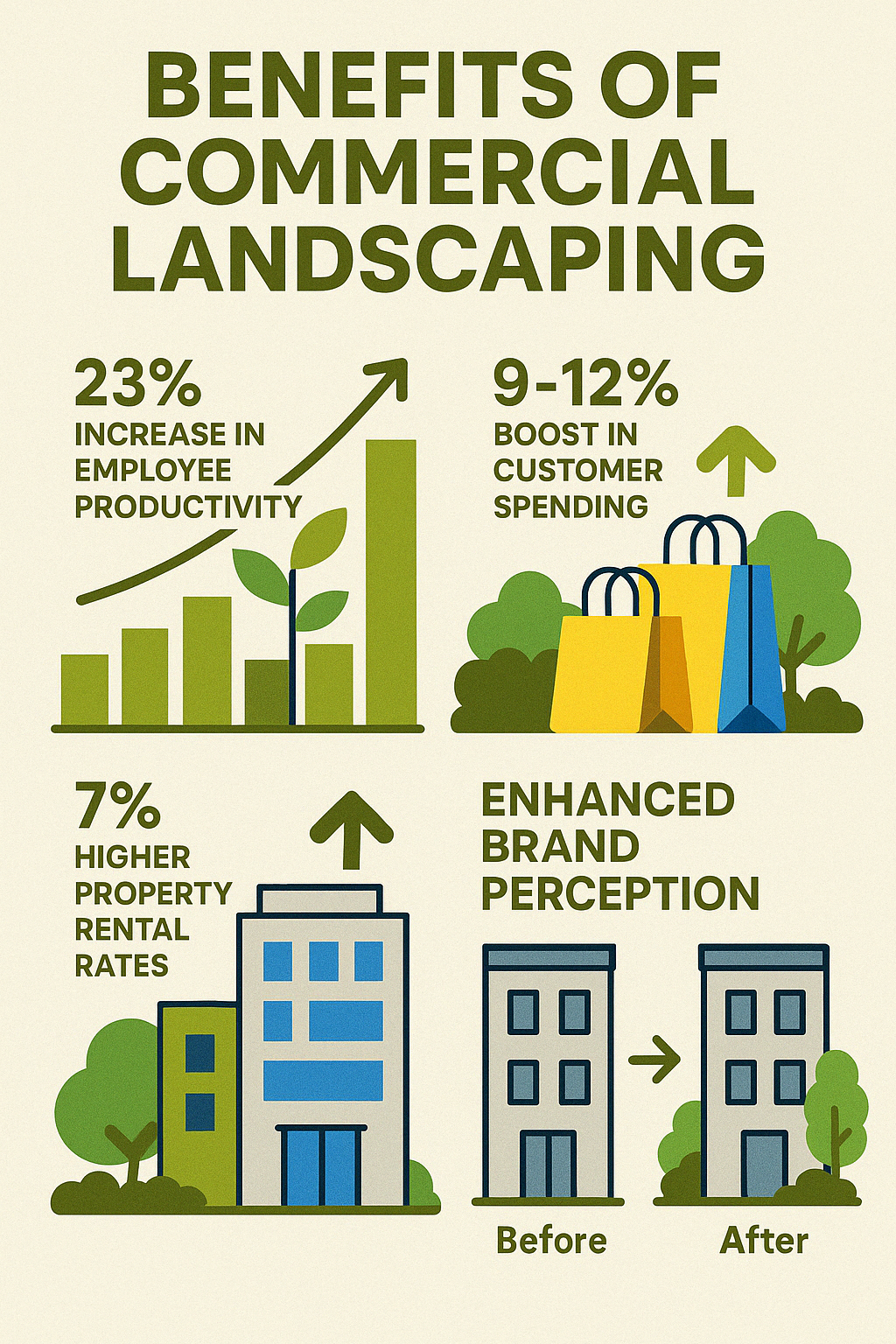
Commercial building landscaping is a strategic investment that transforms your property’s exterior into a powerful business asset. Here’s why it matters:
| Key Benefits of Commercial Landscaping |
|---|
| ✓ Increases employee productivity by up to 23% |
| ✓ Boosts customer spending by 9-12% in areas with quality landscaping |
| ✓ Raises property rental rates by up to 7% |
| ✓ Improves brand reputation and first impressions |
| ✓ Demonstrates environmental commitment to customers |
Although the initial cost of commercial landscaping may seem high, a well-designed landscape not only improves your business premises but also delivers measurable returns on investment. Your outdoor space is the first thing customers and employees experience, creating lasting impressions that directly impact your bottom line.
When done right, commercial landscaping tells your company’s story through thoughtful design elements that reflect your brand identity. It creates clear pathways that guide visitors, provides welcoming spaces that boost employee morale, and showcases your commitment to quality and attention to detail.
I’m Steve Sylva, with over 25 years of experience providing commercial building landscaping services throughout Massachusetts, helping businesses transform their exteriors into functional, beautiful spaces that drive success and create positive first impressions.
The Importance and Benefits of Commercial Building Landscaping
Commercial building landscaping is much more than just planting a few trees and flowers. It’s a strategic investment that transforms the entire environment around your business property. Whether you’re managing an office complex, retail center, industrial facility, or corporate campus, thoughtful landscaping creates spaces that work harder for your business every single day.
Good landscaping combines plants, trees, walkways, seating areas, and decorative elements into a cohesive environment that makes people feel something when they see your property. And those feelings translate directly into business results in ways you might not expect.
Boosting Employee Productivity and Concentration
Want to get more from your team without spending a fortune on consultants or fancy productivity systems? The answer might be right outside your window.
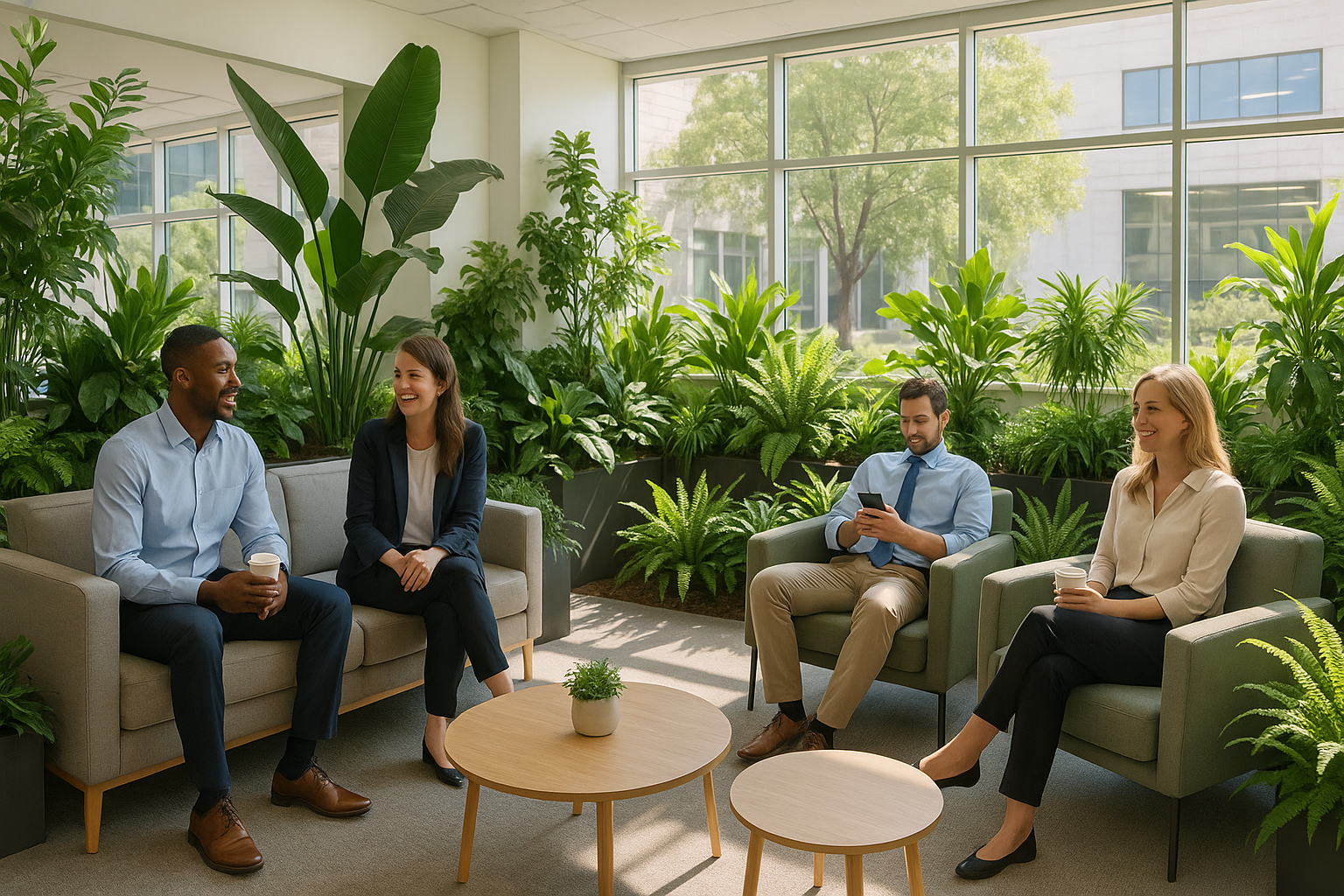
Research shows that simply being around plants and natural elements helps people feel less stressed and more focused at work. In fact, studies have found that concentration levels can increase by up to 23% when employees have access to green spaces. That’s nearly a quarter more brain power just from improving your outdoor areas!
“When employees have access to green spaces, even just through a window view of landscaped areas, they report lower stress levels and higher job satisfaction,” explains workplace researcher Dr. Rachel Thompson.
We’ve seen this with our Massachusetts clients. One office complex in Burlington saw sick days drop by 15% after we redesigned their outdoor break areas with comfortable seating surrounded by flowering plants and shade trees. Employees weren’t just happier—they were healthier too.
Smart businesses are creating outdoor spaces that serve multiple purposes:
– Collaborative meeting areas where teams can brainstorm in fresh air
– Quiet garden spots where employees can recharge during breaks
– Walking paths that encourage movement throughout the workday
– Shaded seating that provides comfortable outdoor lunch options
These aren’t luxury items—they’re practical tools that help your team perform at their best every day.
Attracting More Customers and Enhancing Revenue
Your landscape isn’t just affecting your team—it’s influencing your customers’ wallets too.
Here’s a number that should catch your attention: shoppers claim they’ll spend 9-12% more on products and services in areas with quality tree canopy. That’s potentially thousands in additional revenue simply because your property looks inviting and well-maintained.
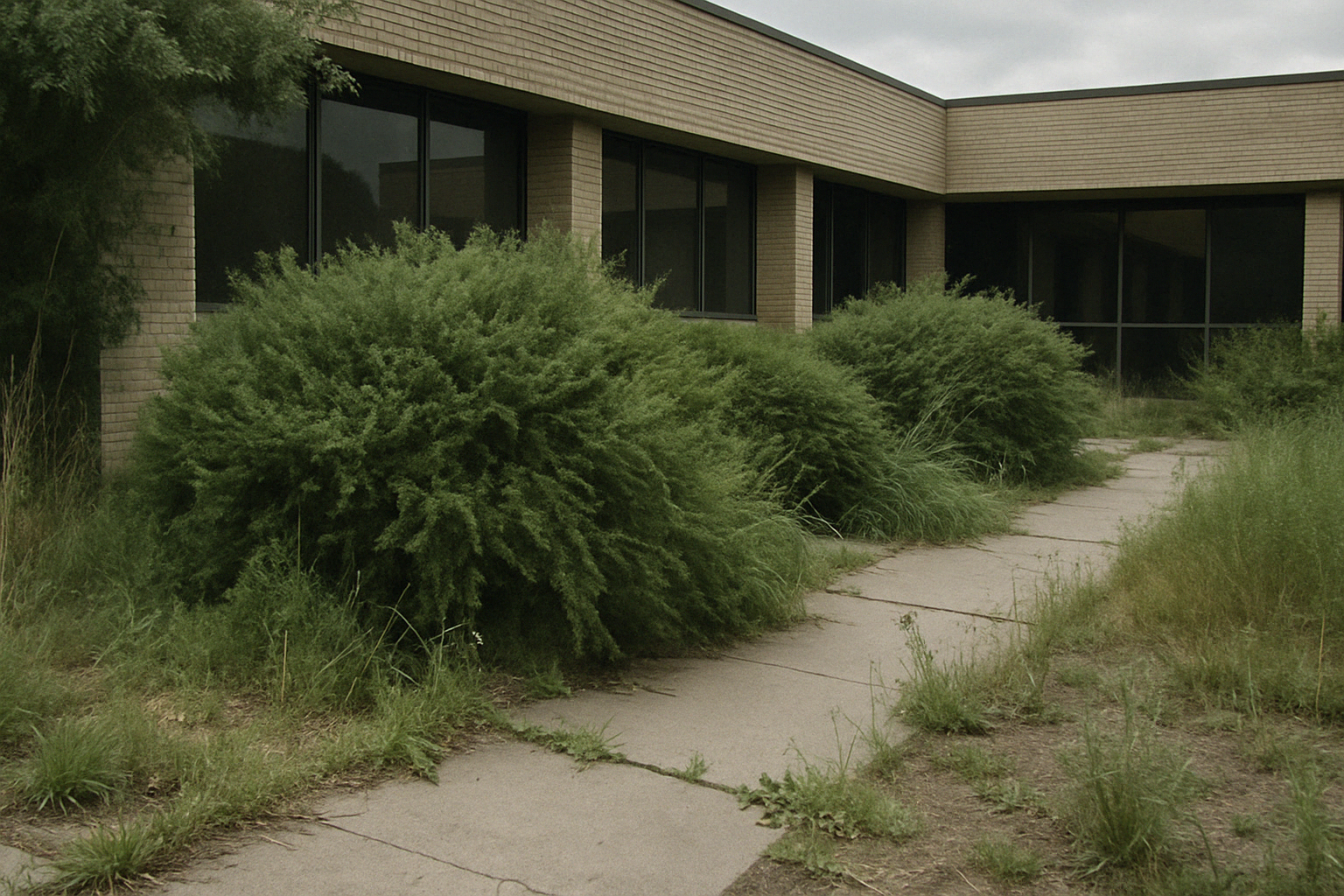
Think about your own experiences as a consumer. When you see a business with overgrown bushes, patchy grass, and neglected exteriors, don’t you wonder if they’re cutting corners elsewhere too? First impressions happen before anyone walks through your door, and they’re surprisingly hard to change once formed.
For restaurants, attractive outdoor dining spaces surrounded by thoughtful landscaping can increase seating capacity while creating an atmosphere that justifies premium pricing. Hotels with striking entrance landscapes set expectations for luxury before guests even check in.
Property owners and managers take note: commercial properties with superior landscaping command rental rates up to 7% higher than similar properties with basic exteriors. Over a building’s lifetime, that premium adds up to significant additional income.
Increasing Property Value and Brand Reputation
Unlike many business expenses that depreciate over time, commercial building landscaping is an investment that actually appreciates. As trees and plants mature, they become more visually impressive and increase in actual dollar value. Professional landscaping can boost property values by up to 20%, making it one of the most reliable property improvements for long-term returns.
Your landscape also tells a powerful story about your brand values. In today’s environmentally conscious world, demonstrating commitment to sustainability through thoughtful landscaping resonates strongly with consumers. Studies show approximately 80% of consumers prefer brands with a positive approach to environmental sustainability.
“The exterior of your business is essentially a billboard for your brand,” notes marketing expert Sandra Martinez. “When clients see a beautifully maintained landscape with sustainable elements like native plantings and efficient irrigation, they’re more likely to view your company as forward-thinking and socially responsible.”
This is especially important in environmentally conscious Massachusetts communities like Lynnfield, Medford, and Winchester, where aligning your visible values with community priorities creates meaningful competitive advantages.
When you invest in commercial building landscaping, you’re not just spending money on plants and mulch—you’re investing in employee performance, customer perception, property value, and brand reputation. It’s one of the few business improvements that works in so many different ways at once.
Research on economic benefits of landscaping
Effective Strategies for Commercial Building Landscaping
Now that we understand the substantial benefits of commercial building landscaping, let’s explore specific strategies to maximize its impact. The most effective commercial landscapes balance aesthetic appeal with practical functionality, creating spaces that work as hard as they look good.
Designing an Enticing Entrance
Your property’s entrance creates critical first impressions that set the tone for every visitor interaction. Think of it as your business’s handshake – you want it firm, welcoming, and memorable.
When we redesigned the entrance for a financial services firm in North Reading, they were stunned by the results – a 22% increase in walk-in consultations after we transformed their understated entrance with bold seasonal plantings and clear pathway lighting. Their location became more visible and inviting from the street, proving that entryways truly matter.
The magic happens when you incorporate symmetrical planters that frame your doorway, creating balance and professionalism. Adding bright, colorful plants that change with the seasons keeps your entrance fresh year-round while demonstrating your attention to detail. We often recommend plants like hydrangeas that provide long-lasting blooms and dramatic seasonal changes.
Clear pathways are equally important – they should gently guide visitors toward your entrance without confusion. For a medical office in Stoneham, we installed a series of graduated planters that naturally led patients to the main doors, reducing confusion and creating a sense of journey.
Don’t forget about prominent signage surrounded by complementary landscaping. Your company name should stand out against a backdrop that improves rather than competes with it. Sometimes, the simplest approaches work best – like when we used low-growing evergreens to frame a technology company’s sign in Burlington, incorporating their signature blue and green colors into both the flowers and decorative stone.
Incorporating Hardscaping and Lighting
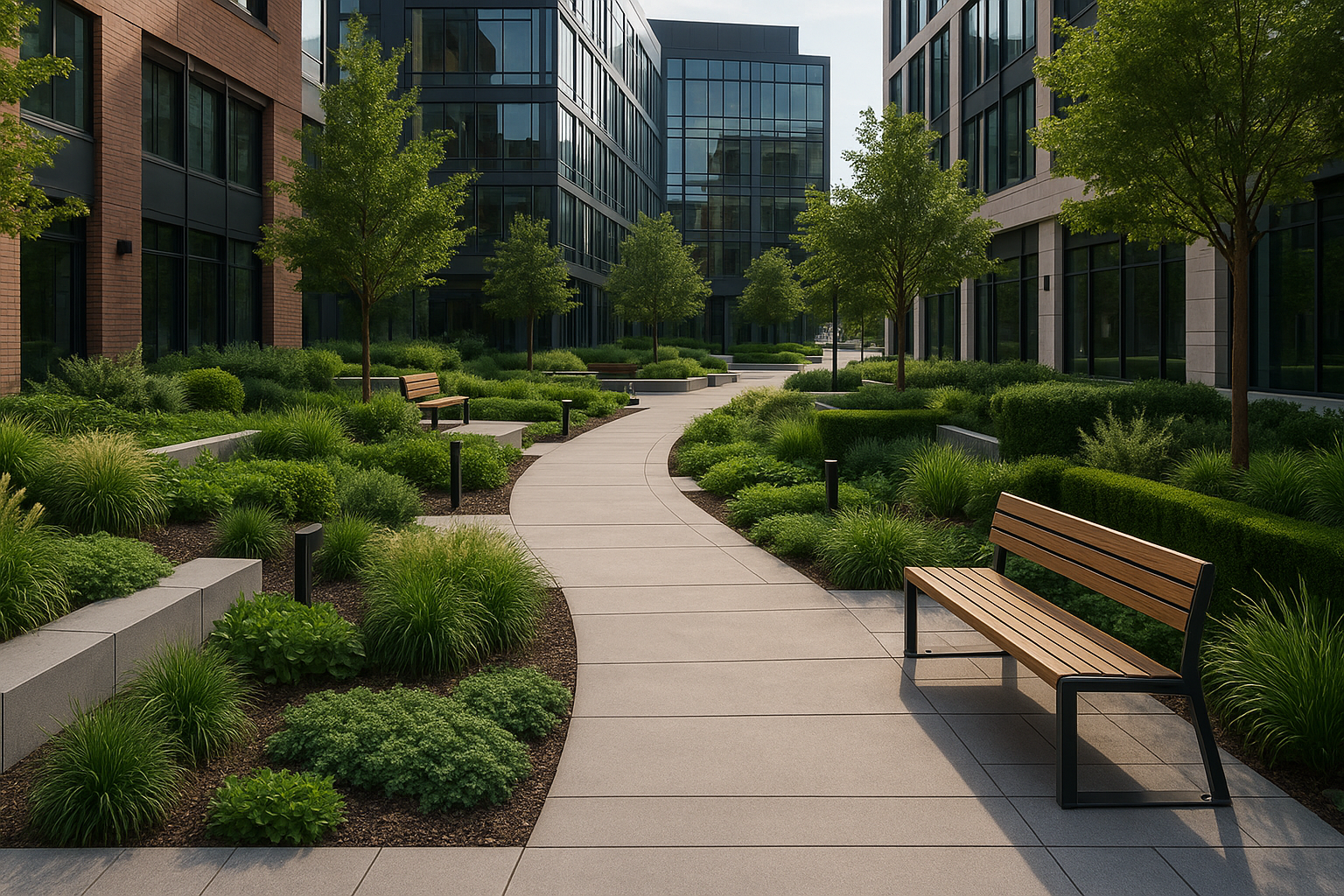
The best commercial building landscaping creates a perfect harmony between plants and hardscaping elements. Think of hardscaping as the backbone of your landscape – it provides structure, function, and year-round appeal when Massachusetts weather turns challenging.
Well-designed patios and seating areas extend your usable business space outdoors. One of our clients, a creative agency in Medford, saw remarkable results when we created an outdoor meeting space with comfortable seating surrounded by fragrant herbs and flowering perennials. They reported that client meetings held in this space consistently led to more creative solutions and higher client satisfaction.
Walkways deserve special attention – they should be wide enough for comfortable passage (at least 4 feet for commercial settings), made of durable materials that withstand freeze-thaw cycles, and designed to complement your building’s architecture. Natural stone offers timeless appeal, while concrete pavers provide endless design possibilities at various price points.
Landscape lighting is often the unsung hero of commercial properties. As Steve often tells clients, “Your landscape doesn’t disappear after sunset – with proper lighting, it transforms into something entirely new.” When we installed energy-efficient LED lighting for a medical building in Woburn, it not only highlighted their mature oak trees but ensured safe passage for staff during evening shifts. The property manager was delighted when patients began complimenting the building’s nighttime appearance.
Good lighting serves multiple purposes: improving safety for evening visitors, extending the usability of outdoor spaces beyond daylight hours, highlighting architectural features, and reinforcing your brand through thoughtful fixture selection. And with today’s energy-efficient options, the operational costs are surprisingly manageable.
Implementing Eco-Friendly Practices
Today’s most successful commercial building landscaping projects incorporate sustainable practices that benefit both the environment and your bottom line. These approaches not only reduce maintenance costs but demonstrate corporate responsibility that resonates with environmentally conscious customers and employees.
Native plants are the workhorses of sustainable landscapes in Massachusetts. Black-eyed Susans, coneflowers, and switchgrass require significantly less water, fertilizer, and pest management than exotic alternatives because they’ve evolved to thrive in our specific climate conditions. They also provide essential habitat for local wildlife and beneficial insects that naturally control pest populations.
Drought-tolerant species complement natives perfectly in commercial settings. When we redesigned the landscape for a retail center in Lynnfield, we incorporated ornamental grasses and Russian sage that maintain visual appeal even during dry periods, reducing irrigation needs by nearly 40%.
Implementing smart water management systems makes good business sense. A large office park in Revere saw their investment in our comprehensive water management system pay for itself within 18 months through reduced utility costs. Rain sensors, drip irrigation, and strategic plant groupings by water needs (a technique called hydrozoning) can dramatically reduce water consumption.
Sustainable materials like recycled pavers, locally sourced stone, and composite decking reduce environmental impact while often providing superior durability in our challenging New England climate. When clients see how these materials stand up to harsh winters while maintaining their appearance, the initial investment makes perfect sense.
A technology campus in Danvers experienced a 34% reduction in summer cooling costs after we implemented a strategic tree planting program that shaded key building facades during peak afternoon hours. This perfect example shows how thoughtful landscaping directly impacts operational costs beyond just looking beautiful.
At Steve’s Services, we believe sustainable landscaping isn’t just good for the planet – it’s good business. Your customers notice these efforts, your employees appreciate them, and your budget benefits from the long-term savings.
More info about Commercial Landscape Management
Factors to Consider for Successful Commercial Landscaping
Creating impactful commercial building landscaping requires careful planning and consideration of numerous factors. Understanding these elements helps you make informed decisions that maximize your investment while avoiding costly mistakes.

Understanding Cost Factors
When clients ask me about costs, I always tell them that commercial landscaping is an investment that varies widely based on your specific needs and vision. While basic improvements might start around $5,000, comprehensive designs for larger properties can reach $75,000 or more.
Your total square footage naturally plays a major role in determining costs, though there’s good news here – economies of scale often kick in for larger properties, bringing down your per-square-foot costs. The complexity of your design vision matters too. A simple lawn with basic plantings costs significantly less than an elaborate design featuring water features or specialized lighting systems.
Plant choices dramatically impact your budget. Those gorgeous mature specimen trees and rare plant varieties come with premium price tags, while standard nursery stock offers more economical options. I’ve seen clients save thousands by being flexible on initial plant sizes, knowing they’ll mature beautifully over time.
Material quality represents another important decision point. Premium hardscaping materials like natural stone typically cost 3-5 times more than concrete alternatives. However, they often provide superior longevity and timeless appeal that concrete simply can’t match.
Site conditions can throw unexpected curveballs into your budget. Properties with limited access, steep slopes, or poor soil conditions require additional labor and engineering solutions. One of our Medford clients finded this when their hillside location required extensive terracing work before we could even begin the decorative elements.
For planning purposes, commercial landscaping typically falls into these general categories:
| Package Level | Starting Cost | Typical Elements | Best For |
|---|---|---|---|
| Basic Commercial Landscaping | $5,000+ | Simple lawn areas, basic plantings, minimal hardscaping | Small office buildings, basic curb appeal improvement |
| Basic Landscape Renovation | $20,000+ | Upgraded plant materials, modest hardscaping, basic irrigation | Medium-sized properties seeking improved appearance |
| Average Landscape Renovation | $35,000+ | Comprehensive planting scheme, quality hardscaping, lighting elements | Larger facilities wanting significant visual impact |
| High-End Landscape Renovation | $75,000+ | Premium materials, mature specimen plants, extensive hardscaping, water features | Corporate headquarters, high-end retail, hospitality |
These are industry averages based on internet data, not actual costs for Steve’s Services. The wide range reflects the tremendous variability in project scope and requirements. We work closely with each client to develop solutions that maximize impact within their specific budget constraints.
Avoiding Common Mistakes in Commercial Building Landscaping
Even well-intentioned commercial building landscaping projects can fall short without proper planning. I’ve seen countless properties make the same mistakes, but they’re all avoidable with the right approach.
The biggest misstep? Not having a designed purpose for your landscape. Too many businesses treat landscaping as purely decorative rather than functional. Every element should serve specific purposes—guiding visitors to your entrance, creating comfortable outdoor meeting spaces, enhancing security, or highlighting your building’s best architectural features. Without clear objectives, you’re essentially throwing money at pretty plants without maximizing returns.
Planting the wrong plants is another expensive mistake I see regularly. Massachusetts has unique climate challenges, and selecting plants unsuited to our conditions leads to poor performance and high replacement costs. I remember one Reading office complex that insisted on installing southern magnolias despite our recommendations. Within two harsh winters, they’d lost nearly all of them and ended up spending twice to replace them with more appropriate native options.
Many commercial properties look spectacular in spring but become drab and uninspiring by fall. Not adding color for all seasons is a missed opportunity to maintain year-round appeal. Strategic planning should incorporate a mix of deciduous and evergreen plants, along with seasonal color rotations that keep your property looking fresh throughout the year.
Improper drainage design causes headaches that extend far beyond just landscaping. Poor drainage leads to numerous problems, from plant failure to foundation damage and serious liability issues from ice formation in winter. One Winchester property learned this lesson the hard way when improperly directed runoff created dangerous ice patches on their main walkway, resulting in a customer slip-and-fall incident that could have been prevented.
Safety hazards often get overlooked in the pursuit of aesthetics. Uneven walkways, inadequate lighting, and plants that obstruct visibility all create liability risks. Professional designs can prioritize safety while maintaining visual appeal.
Before any digging occurs, locate requests for underground utilities must be completed. Skipping this critical step can result in dangerous and costly utility strikes. A Melrose office complex learned this lesson the hard way when their previous landscaper damaged a fiber optic line during a simple planting project, resulting in business disruption and expensive repairs.
Selecting the Right Commercial Landscaping Partner
The success of your commercial building landscaping project largely depends on choosing the right professional partner. This decision impacts not only the initial installation but also long-term maintenance and the overall return on your investment.
Start by assessing experience with similar projects. Commercial landscaping differs significantly from residential work, requiring specialized knowledge of safety regulations, accessibility requirements, and solutions that stand up to high-traffic use. Ask potential partners specifically about projects they’ve completed for businesses similar to yours.
Always verify licenses, insurance, and certifications. Any reputable contractor should willingly provide proof of proper state licensing, comprehensive insurance coverage (including liability and workers’ compensation), and relevant industry certifications. These credentials protect both parties and demonstrate professional commitment to quality and safety.
Pay close attention to their design process. Quality commercial landscaping begins with thorough site analysis and collaborative planning. The right partner will take time to understand your business goals, budget constraints, and maintenance capabilities before proposing solutions. Be wary of any company that jumps straight to recommendations without first asking thoughtful questions about your specific needs.
Even the most beautiful landscape will deteriorate without proper ongoing care, so evaluate maintenance capabilities carefully. Assess whether the provider offers comprehensive maintenance services aligned with your property’s needs. One of our Medford clients had previously hired a company that created a stunning initial installation but lacked the staff to properly maintain it, resulting in an expensive landscape that quickly lost its impact.
Don’t skip checking references and portfolios. Request references from current commercial clients, particularly those with properties similar to yours. A quality provider will happily share contact information for satisfied customers and examples of similar successful projects. Take the time to actually call these references – you’ll often get valuable insights that wouldn’t come up otherwise.
Understanding their communication approach prevents headaches down the road. Clear, consistent communication prevents misunderstandings and ensures your landscape continues to meet your needs as your business evolves. Discuss how the provider handles project updates, maintenance scheduling, and emergency response before signing any contracts.
Finally, review contract terms thoroughly. Ensure all services, timelines, warranties, and payment terms are clearly documented. Quality providers offer comprehensive contracts that protect both parties and clearly outline responsibilities. If something seems vague or confusing, ask for clarification – reputable companies welcome these questions.
At Steve’s Services, we pride ourselves on transparent communication and detailed planning that aligns our work with each client’s specific business objectives. Our comprehensive approach ensures that landscapes not only look beautiful at installation but continue performing well throughout the seasons.
Frequently Asked Questions about Commercial Building Landscaping
How does commercial landscaping boost employee productivity?
When you invest in commercial building landscaping, you’re not just beautifying your property—you’re actually creating a more productive workplace. It’s fascinating how nature affects our brains. Being around plants and natural elements actually reduces stress hormones like cortisol while boosting our mood, which directly impacts how well we can think and focus.
The research backs this up in impressive ways. Workplaces with views of landscaped areas or access to green spaces see up to a 23% improvement in employee concentration. Imagine what that could mean for your business—fewer errors, higher quality work, and tasks completed more efficiently.
“We installed a small meditation garden outside our break room last year,” shares Maria, an office manager at a Medford accounting firm. “Now I regularly see staff members taking their laptops outside or just spending five minutes there between meetings. They come back noticeably refreshed.”
The benefits extend well beyond just concentration. Employees in green workplaces typically take fewer sick days, show improved creativity and problem-solving skills, and collaborate more effectively. Many of our clients report that outdoor meeting spaces encourage more dynamic team interactions that simply don’t happen in traditional conference rooms.
One tech company in Wakefield that we worked with transformed their central courtyard into a native perennial garden with comfortable seating areas. Their leadership team now regularly schedules brainstorming sessions in this space and has noticed their teams generating noticeably more innovative solutions compared to their indoor meetings. The natural setting seems to remove mental barriers and encourage more open thinking.
What eco-friendly practices can be incorporated into commercial landscaping?
Sustainable commercial building landscaping isn’t just good for the planet—it’s good for your budget too. By reducing resource consumption and maintenance requirements, eco-friendly practices create beautiful spaces that cost less to maintain over time.
Smart water management should be at the top of your sustainability list. Weather-based irrigation controllers can adjust watering schedules based on actual conditions rather than rigid timers, while drip irrigation delivers water directly to plant roots, reducing waste by up to 60%. For a medical office in Winchester, we installed a comprehensive water management system that cut their irrigation needs almost in half.
Choosing the right plants makes a tremendous difference too. Native Massachusetts plants are already adapted to our local rainfall patterns and resist regional pests naturally. They typically require less water, fewer fertilizers, and minimal pest control compared to exotic species. Plus, they provide essential habitat for local birds, butterflies, and beneficial insects.
“The native meadow we installed at our Revere office park has eliminated our need for weekly mowing in that area,” explains a property manager. “It’s not only saved us money but created this amazing habitat that employees love watching change through the seasons.”
Chemical reduction is another key area where many of our clients are making significant changes. Implementing integrated pest management (IPM) focuses on preventing problems before they start and uses chemicals only as a last resort. Many properties are switching to organic fertilizers and soil amendments that build soil health naturally rather than creating dependency on synthetic products.
Energy conservation can be addressed through strategic tree placement too. Deciduous trees planted on southern and western exposures provide cooling shade in summer but allow warming sunlight in winter after their leaves fall. This natural climate control can significantly reduce a building’s energy consumption. And for landscape lighting, LED fixtures with timers and motion sensors minimize energy use while still providing security and visual appeal.
When we work with clients on sustainable landscaping plans, we find that these approaches not only reduce operating costs but also align perfectly with many companies’ environmental goals and employee wellness initiatives.
How can I budget effectively for a commercial landscaping project?
Creating a realistic budget for your commercial building landscaping project requires thinking about both immediate impact and long-term value. After helping hundreds of Massachusetts businesses with their landscapes, we’ve developed some practical strategies to maximize your investment.
First, prioritize your high-visibility areas. The entrance to your building, main walkways, and areas visible from primary roads create the strongest impressions on visitors and employees. Allocating a larger portion of your budget to these zones typically delivers the greatest return on investment. For a restaurant in Melrose, we focused 60% of their initial budget on their entrance and outdoor dining area, creating immediate impact where it mattered most.
Consider implementing your landscape plan in strategic phases over multiple years. This approach spreads costs while ensuring cohesive results. We often work with clients to develop master plans that address immediate needs first while building toward a comprehensive vision. A property management company in Woburn took this approach with a three-year implementation plan that transformed their entire office park without straining annual budgets.
When evaluating costs, look beyond just installation expenses to consider the full lifecycle. Sometimes paying more upfront actually saves money long-term. For example, larger caliper trees cost more initially but establish faster and require less intensive care than smaller specimens. Similarly, investing in quality soil preparation might not be visible to visitors, but dramatically improves plant health and reduces replacement costs.
“The most common mistake I see is cutting corners on infrastructure to save money upfront,” shares Steve Sylva. “Proper drainage, quality soil, and efficient irrigation systems prevent costly problems down the road. These investments may be less visible but they’re absolutely critical.”
Timing your project strategically can also yield significant savings. In Massachusetts, fall installation often provides better value than spring. Plants establish root systems during winter and require less intensive watering the following summer. Additionally, nurseries sometimes offer better pricing on remaining inventory in late season.
When reviewing proposals, always request detailed line-item estimates. This transparency helps identify areas where adjustments can be made to align with budget constraints. Don’t hesitate to ask questions about specific costs and explore alternative materials or approaches that might better fit your budget while achieving similar results.
At Steve’s Services, we work with clients throughout Massachusetts to develop customized budgeting strategies that maximize impact while respecting financial constraints. Our transparent approach ensures you understand exactly where your investment is going and the returns you can expect.
Conclusion

When you walk past a building with stunning landscaping, you probably don’t think about the return on investment it’s generating. But that’s exactly what commercial building landscaping delivers—real, measurable benefits that go straight to your bottom line.
Think about it: employees working in environments with quality landscaping show up to 23% better concentration. Your customers aren’t just admiring those flowering trees—they’re actually spending 9-12% more at businesses with attractive exteriors. That’s not just pretty plants; that’s profit.
I’ve seen this change throughout Massachusetts. A medical office in Danvers that struggled with staff retention completely turned things around after we redesigned their dreary concrete entrance with a vibrant mix of native plants and comfortable seating areas. Six months later, their HR director told me, “People actually enjoy coming to work now. It’s changed our whole culture.”
The beauty of professional landscaping is how it works on multiple levels simultaneously. The same design elements that create that powerful first impression also support sustainability goals, reduce maintenance costs, and create functional outdoor spaces your team can actually use. It’s a rare business investment that keeps delivering returns season after season, year after year.
For businesses in our Massachusetts communities—whether you’re in Lynnfield facing harsh winter winds or Medford dealing with summer heat islands—professional landscaping creates a competitive advantage uniquely suited to our challenging climate. When your property looks inviting and well-maintained even during our notorious February slush season, it speaks volumes about your attention to detail and commitment to quality.
At Steve’s Services Landscape Company, we’ve spent over 25 years helping businesses throughout Massachusetts create outdoor spaces that truly work for them. We understand that every dollar you invest needs to deliver real value, which is why we focus on solutions that balance immediate visual impact with long-term performance.
Whether you’re looking to refresh an aging landscape that’s seen better days or planning a complete change of your commercial property, our team brings the expertise, creativity, and follow-through to make it happen. We handle everything from initial concept to ongoing maintenance, ensuring your landscape continues performing beautifully through all four seasons.
Ready to transform your commercial property into a powerful business asset? Let’s talk about how we can help your landscape work as hard as you do.
Contact us for Commercial Landscape Services