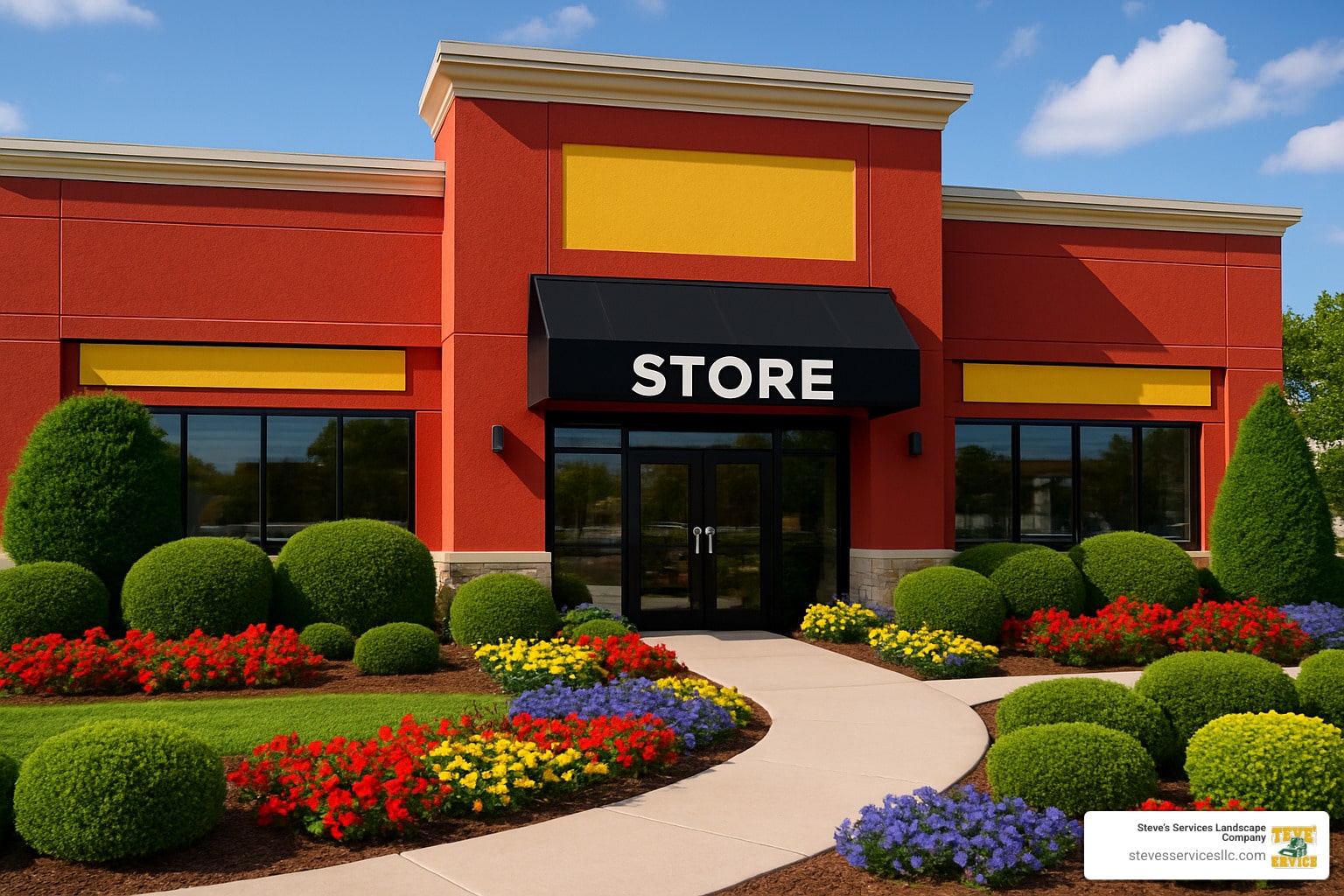
commercial landscape design for retail properties: 5 Powerful Trends for 2025 Success
First Impressions: The Power of Commercial Landscape Design for Retail Properties
Ever notice how you’re drawn to certain stores while completely overlooking others? That’s no accident. Commercial landscape design for retail properties creates that magnetic first impression that can make or break your business.
I’ve seen it countless times in my work across Massachusetts – retailers who transform their outdoor spaces don’t just improve aesthetics; they transform their bottom line. The numbers tell a compelling story: a thoughtfully designed landscape isn’t a luxury expense – it’s a strategic investment with measurable returns.
When potential customers drive by your store, they’re making split-second judgments. An impressive 80% of consumers admit they’ll enter a store specifically because its exterior caught their eye. That curb appeal translates directly into foot traffic, and foot traffic translates to sales.
Beyond just attracting customers, quality landscaping keeps them around longer. Shoppers linger 9-12% longer at retail locations with appealing outdoor environments. And when customers stay longer, they spend more – up to 12% more in businesses with attractive exteriors.
The financial benefits extend beyond immediate sales. Professional landscaping can boost your property value by up to 20%, while buildings with well-designed outdoor spaces command approximately 7% higher rental rates. That’s real equity building with every planter and pathway.
Commercial landscape design for retail properties isn’t simply about planting pretty flowers or keeping the grass trimmed. It’s about creating a complete environment that tells your brand story before customers even step through your doors. Your landscape serves as a powerful, silent salesperson working 24/7 to draw people in.
In today’s competitive retail landscape, where online shopping continues to challenge brick-and-mortar stores, creating a distinctive, welcoming physical environment isn’t optional – it’s essential for survival and success.
My name is Steve Sylva, and for over 25 years, I’ve helped Massachusetts retailers transform their ordinary outdoor spaces into extraordinary business assets. Through thoughtful commercial landscape design for retail properties, we create environments that don’t just look good – they work hard to attract customers and drive revenue growth.
Why Landscape Design Matters for Retail Success
Have you ever walked past a store and been instantly drawn in by its beautiful exterior? That’s not an accident. In today’s competitive retail world, the outside of your business has become just as important as what’s inside. Modern shoppers aren’t just looking for products—they’re seeking complete experiences, and that experience begins the moment they spot your storefront.
“Whether you’re a business owner or manage a commercial property, the design of your landscape sends a powerful message to your customers,” explains landscape architect Michael Thompson, who has designed numerous retail spaces across New England. “It communicates your attention to detail and commitment to quality before customers even step inside.”
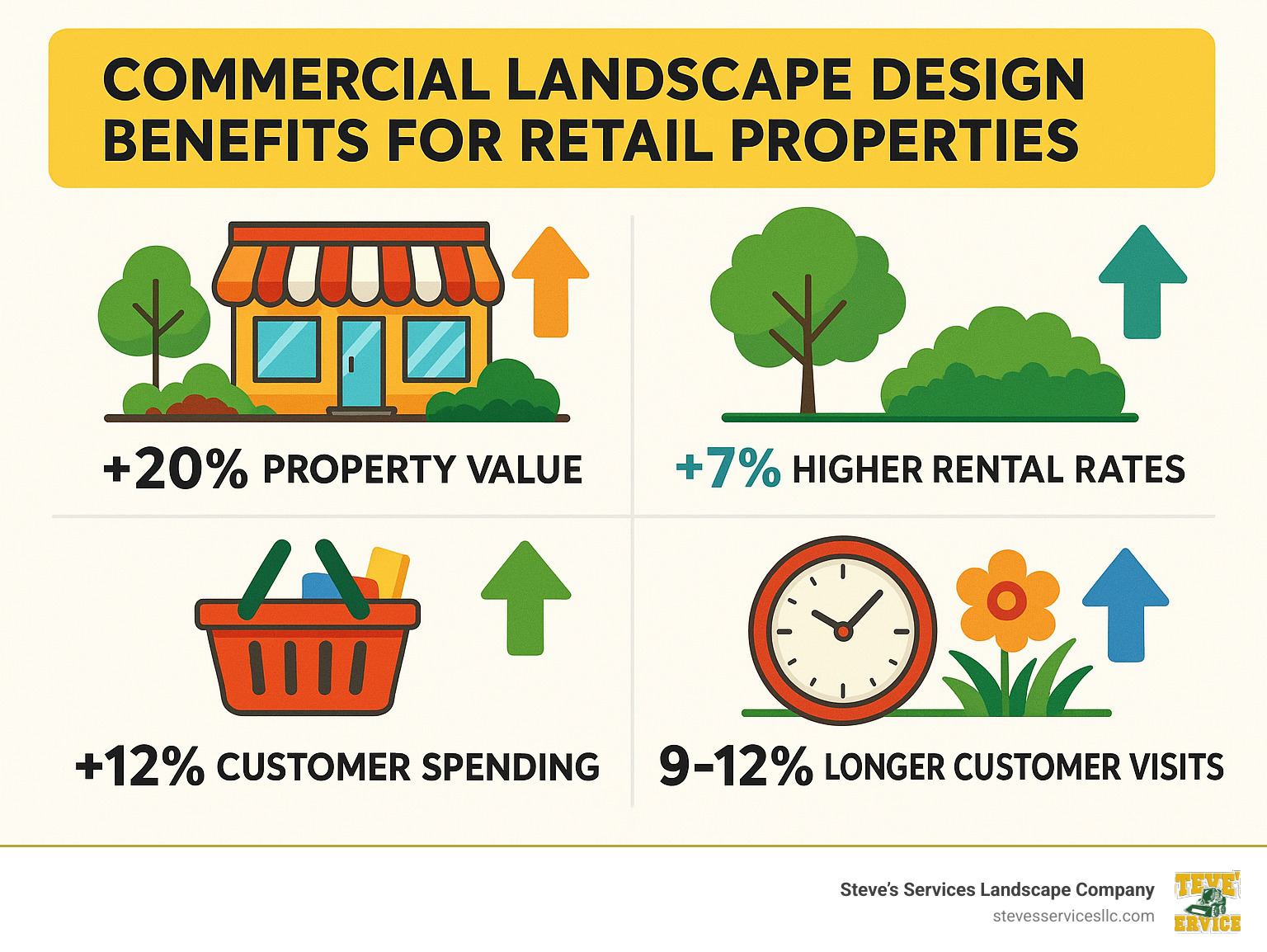
This isn’t just nice theory—it’s backed by hard numbers. Research shows that about 80% of consumers say they would enter a store because of an attractive exterior. Properties with thoughtful landscape design make customers spend 9-12% more time browsing and shopping. And with that extended dwell time comes increased opportunities for sales and deeper customer connections. Additionally, buildings with appealing landscaping command approximately 7% higher rental rates compared to those without such features.
Want to see how landscape design directly affects business traffic? External research on curb appeal and business traffic reveals some eye-opening connections between outdoor aesthetics and your bottom line.
What Is Commercial Landscape Design for Retail Properties?
Commercial landscape design for retail properties is much more than just planting some flowers and keeping the grass cut. It’s a strategic approach to creating outdoor environments that actively support your retail operations while providing beauty that aligns with your brand.
Think of it as a holistic system that blends both hardscape elements (walkways, seating areas, lighting, signage) and softscape components (trees, shrubs, flowers, lawn areas) to create a cohesive, branded experience that draws people in.
Unlike residential landscaping, retail landscape design must consider several unique factors:
– How customers naturally flow through your space
– Your specific brand identity and messaging
– Accessibility requirements for all customers
– Safety considerations throughout all seasons
– Practical maintenance needs
– Flexibility for seasonal changes
– Measurable return on your investment
A truly effective retail landscape doesn’t just look pretty—it solves real business challenges. For example, at one New England shopping center, we transformed an uninviting concrete entrance into a vibrant, plant-filled gateway that increased foot traffic by 18% in just the first month after completion.
Bottom-Line Benefits Backed by Data
Let’s talk money—because that’s what really matters to your business. The financial benefits of investing in commercial landscape design for retail properties are substantial and measurable:
Property value increases are perhaps the most dramatic benefit—professional landscaping can boost commercial property value by up to 20%. That’s serious equity building through smart outdoor design.
Your customers will actually spend more money when surrounded by beautiful landscaping. Studies show shoppers will pay up to 12% more at businesses with attractive outdoor spaces. They’ll also stay longer, with retail properties featuring good landscape design encouraging customers to spend 9-12% more time on site.
For property managers, the news gets even better. Buildings with appealing landscaping earn approximately 7% higher rental rates than similar properties without thoughtful exterior design.
“Companies with well-defined business plans that include strategic landscaping grow 30% faster than those without,” notes retail analyst Jennifer Kline. “The exterior environment sets expectations for what customers will find inside.”
Here at Steve’s Services, we’ve seen these benefits firsthand. One of our clients, a struggling strip mall in Medford, MA, experienced a 22% increase in foot traffic within just three months of our landscape redesign. We focused on creating welcoming entryways, comfortable outdoor seating areas, and strategic lighting improvements that made the property feel safer and more inviting.
Ready to learn more about how professional landscape design can transform your retail property? Check out our Commercial Landscape Design Company page for a deeper look at what we offer.
The Retail Design Playbook: Principles, Elements & Brand Integration
When it comes to commercial landscape design for retail properties, there’s a real art and science to creating spaces that don’t just look good, but actually work hard for your business. Think of your landscape as a silent salesperson – one that’s working 24/7 to welcome customers and reinforce your brand.
Core Elements Every Storefront Needs
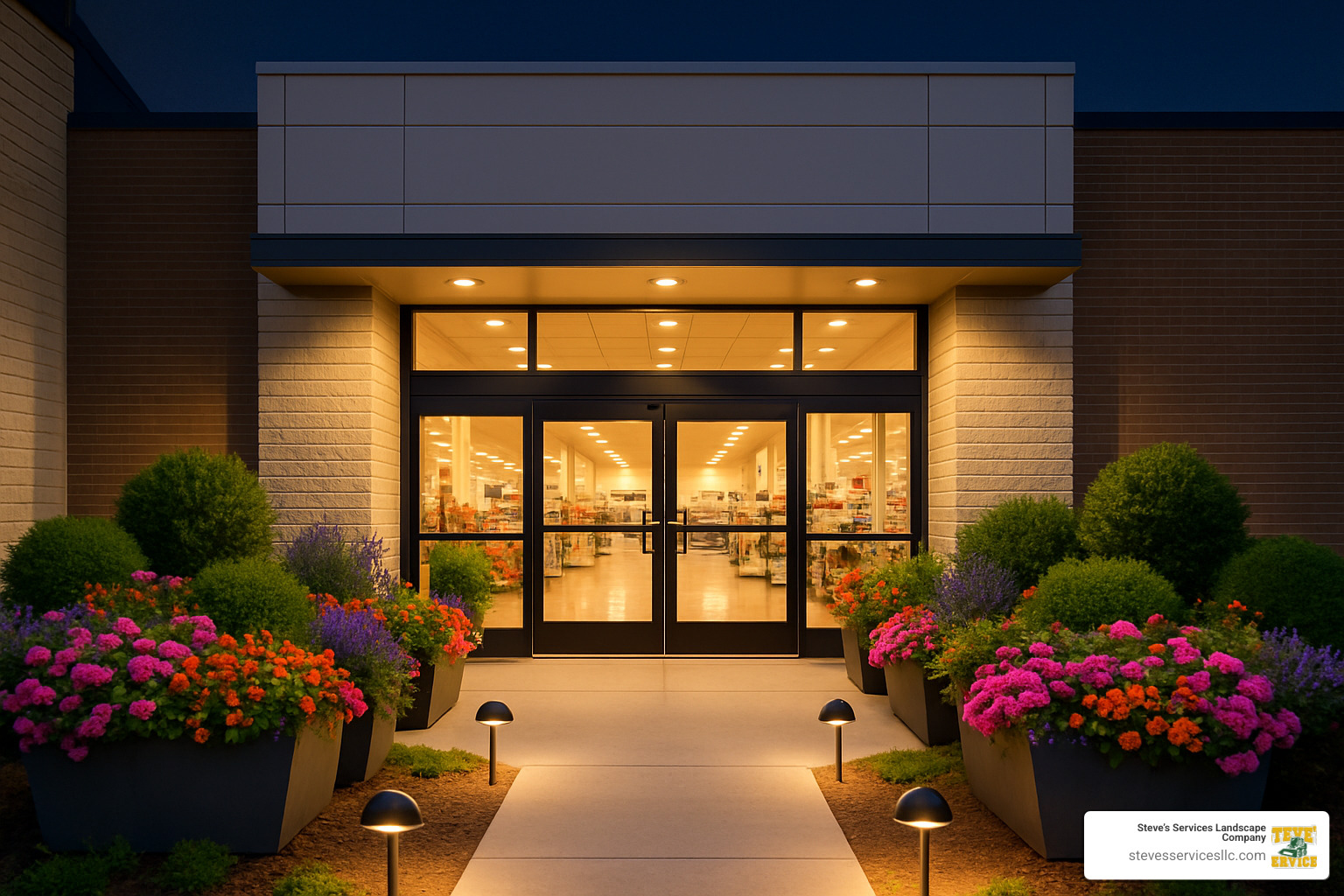
Your store’s entrance creates that crucial first impression. I’ve seen businesses transform their foot traffic simply by adding large, attractive planters that frame their doorways. As retail design consultant Mark Williams puts it, “Your entrance is your handshake with the customer—it should be confident, welcoming, and memorable.” This couldn’t be more true!
Clear, intuitive pathways do more than just look pretty – they actually guide your customers where you want them to go. We often line these paths with seasonal flowers that not only add beauty but subtly direct traffic flow. For many of our Massachusetts clients, we recommend durable pavers that stand up to our New England winters while still looking fantastic.
Have you noticed how the best retail spaces invite you to linger? That’s no accident. Strategic seating areas give shoppers a chance to rest, which often leads to longer visits and bigger purchases. “Keeping visitors on your property longer is never a bad thing when you’re trying to make a sale,” retail landscape designer Sarah Chen tells her clients – and she’s absolutely right. We typically suggest placing benches in both sunny and shaded spots to accommodate different preferences.
Smart lighting is something I’m particularly passionate about. Good landscape lighting does triple duty: it extends your business hours, improves safety, and highlights your property’s best features. Modern LED options have come so far in recent years, offering beautiful illumination while keeping energy costs manageable.
In Massachusetts, we deal with dramatic seasonal changes, which is why I always recommend planning for year-round visual interest. This means selecting plants with staggered bloom times and interesting winter characteristics. Even in January, your landscape can make a statement!
Many of our clients have found that water features create a surprisingly powerful effect on the shopping experience. The gentle sound of water creates a calm environment that masks traffic noise and encourages customers to slow down – which is exactly what retailers want. Even simple bubbling fountains can become focal points that draw attention and create memorable experiences.
Designing With Your Brand in Mind
Your landscape shouldn’t just be pretty – it should tell your brand’s story. This is where commercial landscape design for retail properties becomes truly strategic.
Color coordination is one of the easiest ways to reinforce your brand identity. If your logo features blue and green, we can select plants and materials that echo those colors throughout the seasons. One craft retailer we work with uses planters in their signature purple, creating instant brand recognition from the street.
Your industry should influence your design choices too. A bookstore might benefit from cozy outdoor reading nooks, while a sporting goods store could incorporate demonstration areas or active spaces. These thematic elements make your landscape work harder for your specific business.
Don’t forget that great landscapes engage all the senses. The fragrance of herbs outside a restaurant, the sound of wind chimes at a wellness center, or textural elements that invite touch – these sensory branding techniques create deeper connections with customers.
I’m reminded of a cosmetics retailer in Burlington we worked with last year. We designed custom planters shaped like their signature product packaging, and the response was incredible. Not only did it strengthen their brand recognition, but customers started posting photos on social media – free marketing that came from thoughtful landscape design!
As landscape architect David Rodriguez notes, “The retail environment is changing into an experiential setting. Your landscape should tell your brand story and create moments worth sharing on social media.” At Steve’s Services, we couldn’t agree more. The right landscape doesn’t just beautify your property – it becomes an extension of your marketing strategy and a powerful tool for business growth.
Trend Watch 2025: Sustainable, Tech-Forward Retail Landscapes
The landscape world never stands still, and what’s happening with commercial landscape design for retail properties is truly exciting right now. As we look toward 2025, we’re seeing retail spaces transform with sustainability, smart technology, and designs that welcome everyone. The forward-thinking store owners we work with are already embracing these changes to stay ahead of their competition.
Green, Smart & Inclusive
Have you noticed how many stores are bringing nature directly inside? That’s biophilic design in action, and it’s revolutionizing retail spaces. Living walls, green roofs, and abundant plantings aren’t just pretty—they actually reduce customer stress and improve wellbeing. This naturally encourages shoppers to linger longer and return more often.
Water conservation has come a long way too. Modern irrigation systems now monitor weather conditions and soil moisture to water plants exactly when needed—no more, no less. Many of our retail clients love that they can control these systems right from their smartphones, adjusting settings while sitting in their office or even while on vacation.
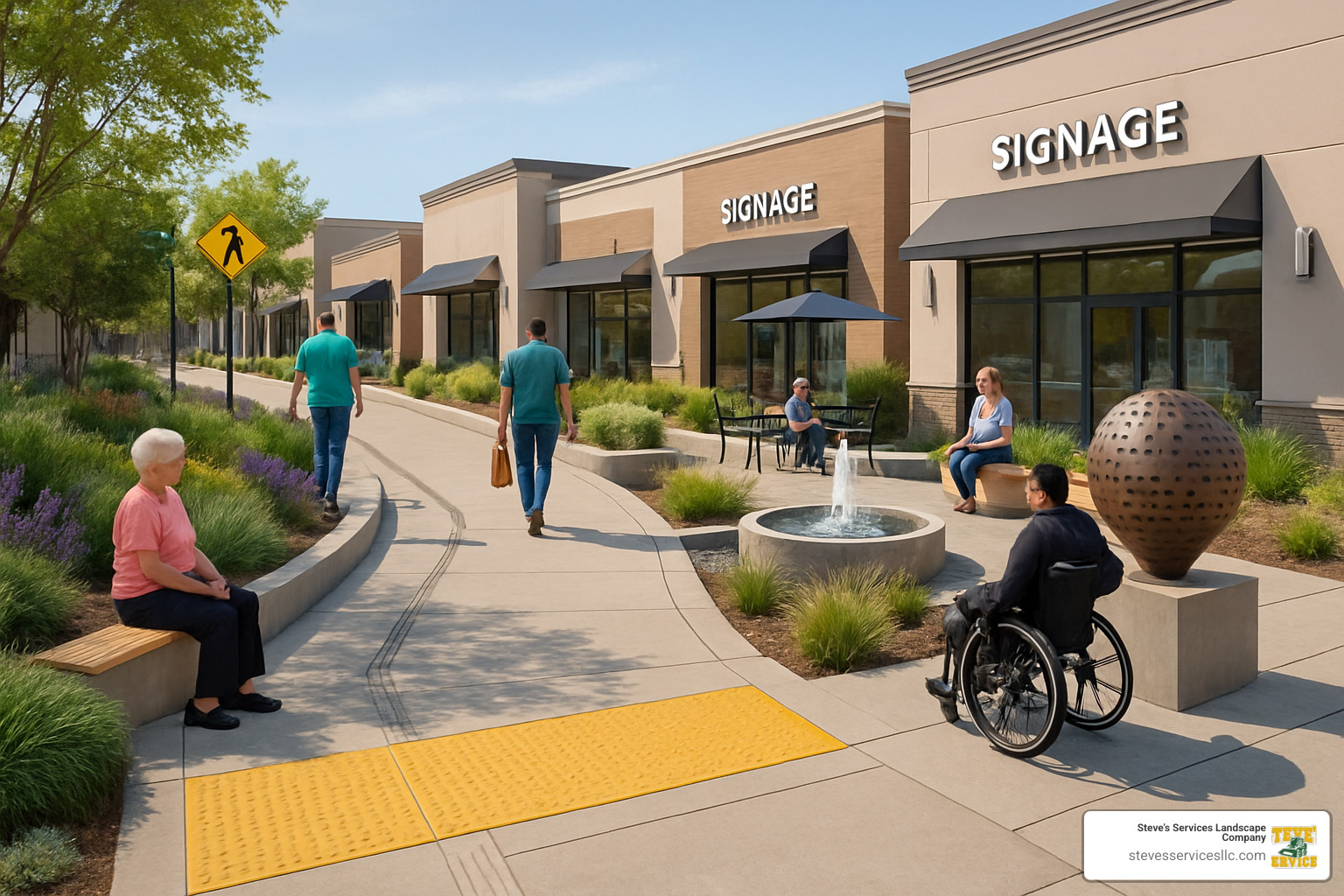
The pandemic changed how we think about outdoor spaces, and retailers have taken notice. “Post-pandemic, we’ve seen a surge in demand for outdoor workspaces and gathering areas,” explains retail trend analyst Michael Foster. Wi-Fi-enabled plazas and charging stations built into seating areas are becoming must-haves for the connected shopper. Smart retailers are creating outdoor spaces where customers can work on laptops, meet friends, and shop—all in one visit.
Inclusive design isn’t just a buzzword anymore; it’s becoming central to landscape planning. We’re designing spaces that welcome everyone, regardless of mobility challenges. This means clear wayfinding, gentle slopes instead of stairs where possible, and varied seating options for different needs.
The most innovative retail landscapes are engaging all five senses. Sensory design expert Lisa Chen points out that even subtle details matter: “Pathways designed to crunch underfoot create an improved sensory experience.” These thoughtful touches create shopping memories that bring customers back again and again.
Future-Proofing Against Climate Shifts
New England weather keeps us on our toes, and climate resilience has become essential in commercial landscape design for retail properties. Smart retailers aren’t just adapting to climate change—they’re actively working to mitigate it.
Regenerative landscaping goes beyond just being “green”—it actively improves soil health and supports local wildlife. These approaches actually require less maintenance over time while providing real environmental benefits. It’s a win-win that more and more of our retail clients are embracing.
With water restrictions becoming more common, drought-tolerant plants are gaining popularity. At Steve’s Services, we’ve developed specialized plant lists for Massachusetts retail properties that balance beautiful appearances with practical water needs. Native plants that evolved to thrive in our local conditions often need minimal irrigation once established.
Have you walked across pavement that actually absorbs water? Permeable pavement solutions allow rainwater to soak into the ground rather than running off and causing flooding. We’ve seen fantastic results with these systems—The Shops at Park Lane implemented permeable pavers that reduced roof runoff by 37% during heavy rain events.
Rooftop spaces are becoming valuable retail assets. Green roofs not only provide insulation and reduce stormwater runoff, but they create additional usable space—sometimes even becoming attractions themselves. One mixed-use retail development in Revere, MA incorporated an extensive green roof covering 56% of a cafe roof with modular trays and drought-tolerant grasses, creating a stunning dining atmosphere that customers love.
In tight urban settings like many Massachusetts communities, vertical gardens maximize greenery in limited space. These living walls improve air quality while creating Instagram-worthy backdrops that attract shoppers. Environmental designer James Wilson notes, “Vertical landscapes are taking a front-row seat in future trends.”
These forward-thinking approaches don’t just prepare retail properties for climate challenges—they often result in real savings through reduced water bills, lower maintenance needs, and hardscapes that last longer. For retail property owners looking to stay competitive in the coming years, these sustainable, tech-forward landscape solutions aren’t just nice to have—they’re becoming essential.
You can learn more about outdoor design trends in this Forbes article on landscape ideas and trends.
From Plan to Payoff: Budgeting, Implementation & ROI
Implementing effective commercial landscape design for retail properties requires strategic planning, appropriate budgeting, and clear metrics for measuring success. Here’s how to approach the process systematically.
Measuring ROI of Commercial Landscape Design for Retail Properties
The return on investment for landscape improvements can be measured through several key performance indicators:
- Property Valuation: Professional appraisals before and after landscape improvements can document increased property value. Properties with high-quality landscaping have shown valuations up to 23% higher within a quarter mile of high-quality commercial corridors.
- Rental Rate Increases: Track changes in lease rates following landscape improvements. Buildings with appealing landscaping consistently earn approximately 7% higher rental rates.
- Customer Dwell Time: Use people-counting systems or observational studies to measure how long customers stay on your property. Retail properties with quality landscaping see customers spending 9-12% more time on site.
- Sales Per Square Foot: Compare sales figures before and after landscape improvements to quantify direct revenue impact. Customers typically spend up to 12% more at businesses with attractive outdoor environments.
- Customer Feedback: Collect direct input through surveys, social media engagement, and review monitoring. According to retail analysts, 88% of businesses rate customer satisfaction metrics as vital to understanding landscape ROI.
“Smart commercial landscape design ideas can increase property values by up to 20% while significantly boosting foot traffic and customer participation,” notes commercial real estate expert Robert Thompson. “The key is tracking the right metrics from the beginning.”
Average Cost Ranges & Funding Tips
Investment in commercial landscape design for retail properties varies widely based on property size, scope of work, and regional factors. Based on internet data (not Steve’s Services pricing), here are general ranges to consider:
- Site Analysis and Design: $3,000-$15,000
- Basic Installation: $5-$25+ per square foot
- Smart Technology Integration: $3,000-$30,000
- Annual Maintenance: $0.50-$2.50 per square foot
Industry experts recommend allocating 25-35% of your overall project budget for commercial landscaping, covering both installation and long-term maintenance.
To maximize your landscape investment:
- Phase Implementation: Break larger projects into strategic phases that allow immediate impact while spreading costs over time.
- Focus on High-Impact Areas: Prioritize entrances and high-visibility zones for initial improvements.
- Balance Hardscape and Softscape: Hardscape elements (pavers, walls, structures) typically have higher upfront costs but lower maintenance requirements compared to plantings.
- Consider Lifecycle Costs: Evaluate long-term maintenance requirements when selecting materials and plants. Native species typically require less water, fertilizer, and general upkeep.
At Steve’s Services, we help retail clients throughout Massachusetts develop phased implementation plans that deliver immediate curb appeal while managing budget constraints. For example, we worked with a strip mall in Woburn to develop a three-year change plan that began with entrance improvements and gradually expanded to include parking lot islands, pedestrian pathways, and seating areas.
Keeping It Thriving: Maintenance, Safety & Accessibility Essentials
The most stunning commercial landscape design for retail properties can quickly lose its appeal without proper ongoing care. Think of your landscape as a living, breathing business asset that requires attention to maintain its value and effectiveness.
Low-Maintenance, High-Impact Strategies
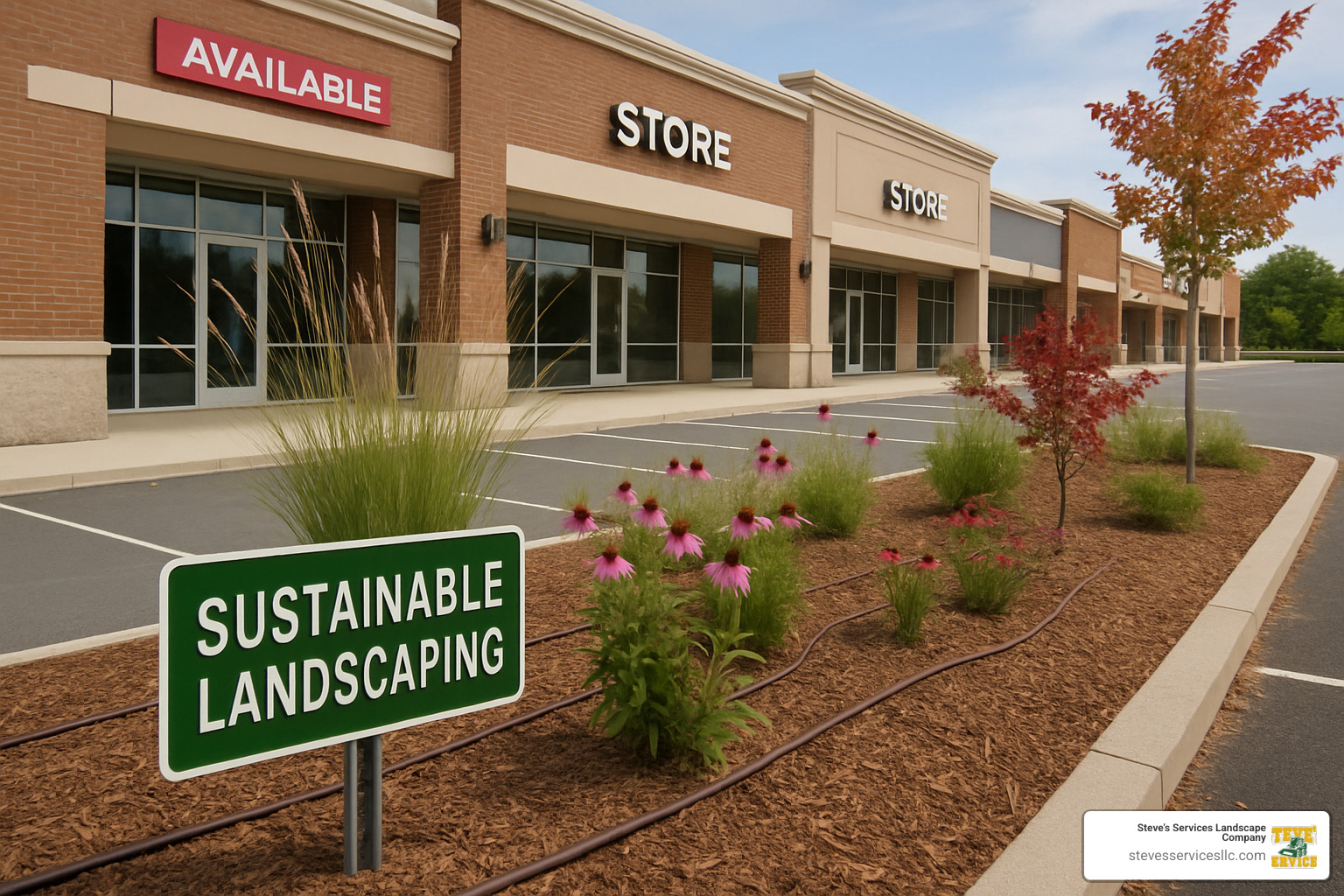
Smart planning from the beginning can dramatically reduce your maintenance needs while maximizing visual impact. Massachusetts retailers often ask us, “How can we keep our landscape looking great without breaking the bank on upkeep?” The answer lies in strategic choices.
Native plants are your secret weapon against high maintenance costs. These Massachusetts-friendly species have adapted to our local climate over thousands of years, meaning they generally require less water, fertilizer, and babysitting than exotic alternatives. Plus, they’re naturally resistant to many local pests and diseases that might devastate non-native plantings.
Water management is another critical factor. Drip irrigation systems deliver moisture directly to plant roots where it’s needed most, rather than spraying it into the air where much is lost to evaporation. When paired with smart controllers that adjust based on recent rainfall and soil conditions, these systems can reduce water usage by up to 60% while keeping your landscape lush.
Good old-fashioned mulch remains one of the most cost-effective maintenance tools in our arsenal. Beyond creating that clean, finished look customers appreciate, quality mulch suppresses weeds, retains soil moisture, and gradually improves your soil as it breaks down. A fresh layer each spring instantly refreshes your property’s appearance while saving countless hours of weeding and watering.
For hardscape elements, investing in quality materials up front pays dividends for years to come. Permeable pavers not only look beautiful but allow rainfall to infiltrate naturally, reducing puddling and ice formation during our tricky New England winters. This means fewer slip-and-fall incidents and less maintenance than traditional impervious surfaces.
Many of our retail clients have found success with focused seasonal color programs that concentrate flowering plants in high-visibility areas near entrances and signage. This approach creates maximum visual impact where it matters most, while limiting the labor-intensive areas of your landscape to manageable proportions.
Safety & Year-Round Functionality
Massachusetts weather throws everything at us—from summer heat waves to nor’easters dumping feet of snow. Your retail landscape needs to function safely and effectively through all these conditions.
Clear sightlines aren’t just about aesthetics; they’re a crucial safety feature. Regular pruning ensures security cameras have unobstructed views, eliminates hiding spots that could create security concerns, and helps drivers spot pedestrians in parking areas. This is particularly important during holiday shopping seasons when foot traffic peaks.
The materials beneath your customers’ feet deserve special attention. Slip-resistant walkway surfaces can dramatically reduce accident risks, particularly during our wet and icy New England winters. We often recommend textured pavers or brushed concrete finishes that provide traction even when wet.
Strategic lighting serves triple duty: enhancing security, extending the usable hours of your outdoor spaces, and showcasing your retail property after dark. Modern LED fixtures provide reliable illumination with significantly lower energy costs than older lighting technologies. We’ve seen retailers reduce exterior lighting costs by up to 75% while actually improving illumination quality.
Winter in Massachusetts brings special challenges. A comprehensive snow and ice management plan is essential for retail properties in our region. At Steve’s Services, we develop custom winter maintenance programs that include pre-treatment before storms, prompt clearing during and after weather events, and ongoing monitoring to prevent dangerous refreezing. Many of our retail clients tell us that reliable winter maintenance has been crucial to maintaining sales during the challenging winter months.
Don’t forget about your employees! Outdoor break areas with appropriate shade and seating can significantly boost staff morale and productivity. Research suggests employees with access to outdoor spaces during breaks are up to 23% more productive and report higher job satisfaction. Happy employees create better customer experiences, creating a virtuous cycle for your business.
Accessibility isn’t just a legal requirement—it’s good business. Your landscape should welcome customers of all abilities with pathways at least 36 inches wide, slopes no steeper than 1:20 for wheelchair access, seating at various heights, adequate lighting for those with visual impairments, and winter snow storage plans that don’t block accessible routes.
At Steve’s Services, we provide comprehensive landscape maintenance services for retail properties throughout Massachusetts. Our team understands the unique challenges of maintaining commercial landscapes in our region—from summer drought to winter storms—and we’re committed to keeping your property safe, accessible, and visually appealing year-round.
Frequently Asked Questions about Retail Landscape Design
How long does a typical retail landscape project take?
One question we hear all the time from retail property owners is about timing. The truth is, commercial landscape design for retail properties follows a rhythm that varies with each project’s unique needs.
For most of our Massachusetts retail clients, the design phase typically takes 2-6 weeks. This gives us time to really understand your space, develop concepts that align with your brand, and create detailed plans that will bring your vision to life.
The permitting process can sometimes test your patience—usually taking 2-8 weeks depending on your local regulations. Some towns in Massachusetts move quickly, while others… well, let’s just say they’re thorough!
Once we break ground, installation generally runs 2-12 weeks. I always tell our retail clients to think of this as the “visible change” period. This is when customers start noticing positive changes happening at your property.
After installation comes what I call the “settling in” period—the 3-12 months when your plants establish their root systems and truly make themselves at home. It’s like watching a new employee gradually become part of the team.
For businesses that can’t afford disruption (and who can?), we often recommend phasing projects strategically. We might start with your entrance—giving you that immediate curb appeal boost—before gradually expanding to parking areas and peripheral improvements.
Here in Massachusetts, our prime installation season runs April through November. Many of our savviest retail clients use winter months for planning, allowing us to hit the ground running when spring arrives.
What sustainable features offer the quickest payback?
When it comes to getting the most bang for your buck with sustainable elements in commercial landscape design for retail properties, some investments simply work harder than others.
Smart irrigation systems are the overachievers of the sustainable landscape world. They typically pay for themselves within 1-3 years through reduced water usage. For larger retail properties, these savings add up quickly—both in water bills and in labor costs for manual adjustments.
LED landscape lighting might cost more upfront, but they’re the marathon runners of the lighting world. Using up to 80% less energy while lasting significantly longer than traditional options, most of our retail clients see payback within 2-4 years. Plus, they provide more consistent illumination, enhancing both safety and aesthetics.
Native plants start proving their worth in their second season after installation. They require approximately 70% less maintenance than non-native alternatives—a difference you’ll definitely notice in your maintenance budget. As one of our retail clients in Medford joked, “They’re like good employees—they know the local environment and don’t need much supervision!”
While permeable pavement requires a larger initial investment, it reduces stormwater management costs and extends pavement life by minimizing freeze-thaw damage. The typical break-even point falls around 5-7 years, but the benefits continue long after.
Strategic shade trees are nature’s air conditioners, reducing cooling costs for adjacent buildings by 15-35%. These benefits begin appearing within 3-5 years and only increase as trees mature. One shopping plaza in Burlington saw their summer cooling costs drop noticeably after we installed mature shade trees near their west-facing storefronts.
How do I choose the right design partner?
Finding the right partner for your commercial landscape design for retail properties is a bit like hiring a key employee—you need someone who understands your business, not just plants and pavers.
First, look closely at their relevant experience with retail environments. Ask for case studies and before/after photos of projects similar to yours. A designer who understands how customers move through retail spaces will create landscapes that improve the shopping experience, not just look pretty.
Consider whether you want a one-stop shop or are comfortable managing multiple vendors. At Steve’s Services, we provide comprehensive solutions from initial design through installation and ongoing maintenance. This approach ensures continuity and gives you one point of accountability throughout your project’s lifecycle.
Local knowledge matters tremendously in landscape design. Massachusetts presents unique challenges—from our distinct seasons to specific municipal regulations. A partner with deep roots in your community will steer these waters more efficiently. Our 25+ years working throughout Massachusetts communities has taught us which plants thrive in which microclimates, which materials stand up to our winters, and which design approaches resonate with local shoppers.
Pay attention to communication style during your initial consultations. Does the potential partner listen carefully to your goals? Do they translate your ideas into practical solutions? Clear, consistent communication throughout the process isn’t just nice—it’s essential for project success.
“The best landscape partners recognize that every design decision impacts customer behavior and business performance,” shared one of our long-term retail clients in Woburn. “They’re thinking about your bottom line, not just creating something beautiful.”
Before making your final decision, speak with other retail property owners who have worked with the firm. Ask specific questions about timeline adherence, budget management, and how they handled inevitable challenges. Their experiences will tell you much more than any portfolio or proposal ever could.
Conclusion
The retail world never stands still, and neither should your landscape. What we’ve finded throughout this guide is that commercial landscape design for retail properties isn’t just about pretty flowers and trimmed hedges—it’s a powerful business strategy that directly affects your bottom line.
Think about it: when customers approach your store, what do they see first? Not your amazing products or your helpful staff, but your exterior space. This first impression sets the tone for their entire shopping experience.
The numbers tell the story clearly. Well-designed landscapes create environments where customers naturally want to linger longer (9-12% more time on average), spend more money (up to 12% more), and return more frequently. Your property value increases (by up to 20% in many cases), and if you’re a landlord, you can command higher rents (about 7% more) from your retail tenants.
At Steve’s Services, we’ve watched this change happen countless times across Massachusetts. A strip mall in Medford that struggled with vacancy suddenly becoming a destination after landscape improvements. A boutique in Burlington that saw Instagram mentions skyrocket after we installed custom branded planters. These aren’t coincidences—they’re the predictable results of strategic landscape investments.
What makes a retail landscape truly effective? It’s the thoughtful integration of practical elements (clear pathways, adequate lighting, comfortable seating) with brand-specific touches that tell your unique story. It’s creating spaces that function beautifully through all four New England seasons. And increasingly, it’s incorporating sustainable features that not only reduce operating costs but resonate with environmentally-conscious consumers.
The landscape trends we’re seeing emerge—biophilic design, smart irrigation, tech-enabled outdoor spaces—aren’t just passing fads. They represent the future of retail environments, where the line between indoor and outdoor experiences continues to blur, and where every square foot of your property must work harder to attract and retain customers.
For 25 years, we’ve been helping retail properties throughout Massachusetts steer these challenges. From initial design through installation and ongoing maintenance, our team understands the unique demands of retail environments and the specific challenges of our local climate.
Ready to transform your retail property into a customer-attracting, revenue-generating asset? Let’s talk about how our expertise in commercial landscape design for retail properties can help your business thrive in today’s competitive marketplace.
Learn more about our Commercial Landscape Services