Where Should Snow Be Piled on a Commercial Property to Limit Refreezing?
Learn how to choose snow-storage areas that keep meltwater away from pedestrian routes and what to review with your plowing contractor.
The short answer
- Choose locations where meltwater can reach suitable drainage without crossing entrances, walkways, or busy parking areas.
- Keep piles away from drains, accessible routes, sightlines, building walls, and emergency access points.
- Mark primary and backup storage areas on a shared site map before piles build up.
- Recheck runoff during thaws; even a well-placed pile can become a problem as it grows.
Choose the meltwater route before choosing the pile location
The best snow-storage location is an area where melting snow can drain away without sending water across entrances, sidewalks, ramps, or other frequently traveled surfaces. A convenient corner may be a poor choice if it sits uphill from your front door. Start by asking where water will go when the pile melts, then decide where the plow should push snow.
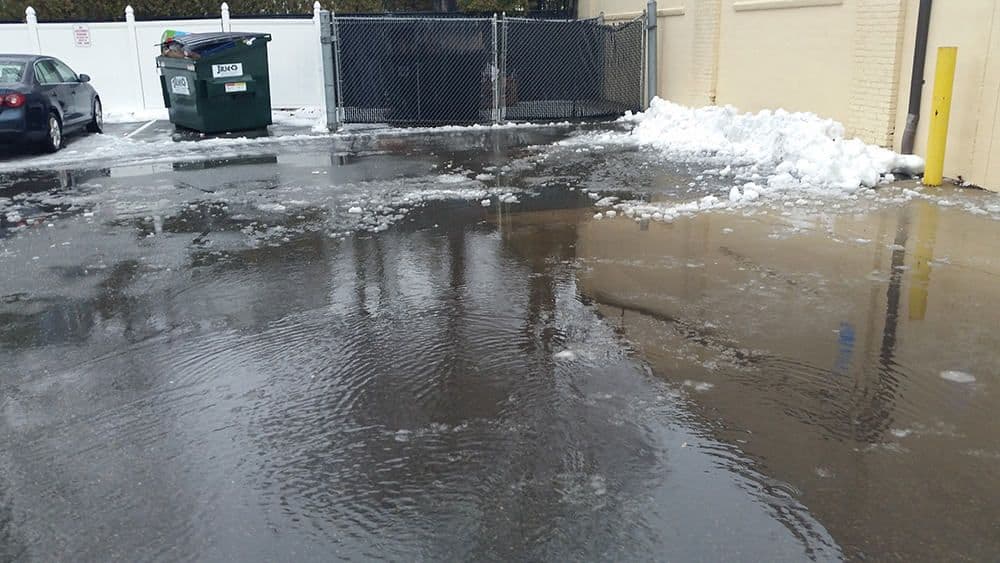
Think about the entire route between the pile and its drainage destination. Water might follow a curb, cross a driveway apron, collect in a pavement depression, or run through an accessible parking access aisle. A nearby drain can still leave a refreezing risk if runoff must cross a pedestrian route to reach it.
For example, an island beside the main entrance may offer plenty of storage space but slope toward the entrance walkway. A more distant storage area could be the better candidate if its runoff reaches suitable drainage without crossing that walkway. The actual surface slope matters more than the distance from the door.
Steve's Services LLC offers commercial snow and ice management. For a property in Saugus, a useful starting point for the planning conversation is a sketch showing entrances, walking routes, drainage features, and possible storage areas.
Good placement reduces exposure to refreezing; it cannot eliminate it. Rain, roof runoff, blocked drainage, and changing temperatures can still create slippery surfaces that need separate attention.
Read the property before snow hides its drainage
Late fall is a useful time to review the site while curbs, pavement depressions, and drainage structures remain visible. If snow has already arrived, use existing photos and maintenance records, then have the contractor review the exposed areas. Do not enter an active plowing area or walk onto ice to investigate.
From safe, designated walking areas, note the following details. Leave any assessment requiring access to traffic lanes, drain structures, or unstable ground to the appropriate professional.
- Known puddles: Record where water lingers after rain or previous thaws. Those spots may become recurring ice patches.
- Surface slopes: Look for broad downhill directions and curb channels. Subtle grades may need a professional assessment rather than a visual guess.
- Drainage destinations: Identify visible catch basins, channels, or established drainage areas without lifting covers or entering structures.
- Other water sources: Note downspout outlets, roof-drip areas, and neighboring runoff that could combine with snowmelt.
- Pedestrian movements: Include the routes people actually use between parked cars and doors, not just the formal front sidewalk.
Sun exposure is a secondary consideration. A sunny location may melt sooner, but that can also produce more daytime runoff that freezes after temperatures drop. A shaded location may retain snow longer without solving the drainage problem. Neither choice is automatically better.
Also ask whether a proposed landscaped storage area remains usable when its soil is frozen or saturated. Grass alone does not make an area a dependable place for meltwater to soak in.
Never assume a grassy island will absorb snowmelt when the ground is frozen.
Rule out locations that create new hazards
Once you understand the likely flow paths, screen each candidate location for conflicts. An area can drain acceptably and still be unsuitable because a growing pile blocks visibility, pedestrian access, or building equipment.
- Entrances and pedestrian routes: Keep storage away from door approaches, stairs, ramps, sidewalks, and the spaces people need to move between vehicles and walking routes. Include accessible parking spaces and their access aisles in the review.
- Drainage structures: Do not designate a catch basin or drainage channel as the pile footprint. Snow, ice, and accumulated debris can obstruct the very route intended to carry water away.
- Vehicle sightlines: Consider views at driveways, intersections within the lot, and pedestrian crossings. A small early-season pile can become a substantial visual barrier after additional storms.
- Building edges and equipment: Avoid pushing snow against doors, vents, utility equipment, fences, or retaining walls. Have the contractor assess nearby structures rather than assuming they can support stored snow.
- Emergency access: Keep hydrants, emergency exits, and emergency access routes available. Review site-specific access needs with the people responsible for the property.
- Property boundaries: Avoid plans that send stored snow or its meltwater onto neighboring property, public sidewalks, or roadways.
Landscaped areas need their own screening. Identify shrubs, young trees, sprinkler components, and other features that snow could conceal. If an otherwise promising location would bury vulnerable features or obstruct a drainage swale, choose another area or ask a professional to assess an alternative.
Do not approve a pile simply because it is outside the striped parking stalls. Unmarked pavement may still serve deliveries, turning vehicles, pedestrian travel, or drainage.
Plan for piles to grow and drainage conditions to change
Snow storage needs change over a season. Repeated storms can expand a pile's footprint, close a gap beside a curb, or push its melting edge closer to a walking route. A location that worked for the first storm may need a different approach later.
Watch for practical limits rather than treating every remaining opening as usable storage. Warning signs include runoff crossing a walkway, snow narrowing a travel route, reduced driver visibility, and meltwater collecting where parked cars conceal it. A pile that repeatedly produces ice deserves reassessment even if there is still room to add snow.
Ask the contractor what options are feasible when the designated areas reach those limits. Depending on the site, a qualified contractor may recommend a different storage area, professional relocation, or removal from the property. These options require planning; they should not be assumed to be included in the existing service arrangement.
Leave pile reshaping and relocation to professionals. Do not climb piles, tunnel into them, or have staff chip out channels beside operating equipment. Snowbanks can hide hard debris, uneven ground, and unstable sections.
If a blocked or damaged drainage feature is contributing to the problem, arrange an appropriate professional assessment. Moving snow may expose the issue without fixing the underlying drainage. Likewise, spreading de-icer across a recurring runoff path does not correct where that water is coming from.
Check the plan during thaws and document what changes
The most useful test comes when the stored snow begins melting. Arrange for observations during safe conditions, especially when daytime thawing is followed by colder temperatures. Staff should observe from secure, designated areas and avoid entering active vehicle lanes or approaching operating snow equipment.
Look for water leaving the pile, where it first reaches pavement, and whether it crosses a pedestrian route before reaching drainage. Pay attention to shaded entrances and low spots where a thin film can remain after surrounding pavement dries. Do not wait for someone to slip before reporting a recurring wet area.
Document concerns in a consistent way:
- Identify the location: Use a door name, parking row, or marked point on the shared map.
- Describe the source: Explain whether water appears to come from the pile, a downspout, another part of the lot, or an uncertain source.
- Record safe observations: Take photos only from a secure position, and note whether conditions were melting, wet, or already frozen.
- Request a placement review: Ask whether changing the pile location would prevent the same crossing during the next thaw.
If an icy area affects access, keep people away through the property's established safety procedures and notify the responsible manager and contractor. Do not direct pedestrians into moving traffic as an improvised detour.
Keep the updated map and observations for the next planning review. After the snow disappears, compare problem locations with the exposed pavement and drainage features; that is the time to distinguish a storage-placement problem from a depression, damaged curb, or drainage issue needing professional attention.
A photo showing where meltwater crosses a walkway is more useful than a general report that the entrance keeps icing up.
Common questions
Should snow piles always be placed downhill from walkways?
A location downhill from a walkway can be a good candidate if its meltwater continues toward suitable drainage without affecting another traveled area. Being downhill is only one part of the decision. The pile also needs to preserve access, visibility, and drainage.
Can we pile snow beside a catch basin?
Possibly, but keep the pile footprint off the basin and preserve the water's approach to it. The contractor should evaluate whether the location leaves drainage usable as the pile grows. A nearby basin may still freeze, become obstructed, or receive more runoff than it can handle.
What if our parking lot has no good snow-storage location?
Ask the contractor to evaluate the site's storage limits and discuss alternatives before more snow accumulates. Professional relocation or off-site removal may be necessary, depending on the property. Confirm the scope of any additional work rather than assuming it is included.
Should tenants move snow piles that are blocking a walkway?
Tenants should report the obstruction to property management rather than reshaping a plowed pile themselves. Compacted piles can conceal ice, debris, and unstable sections. Management should coordinate professional correction and a safe temporary access arrangement.