
Commercial Snow Removal Contracts: Top Tips for 2024
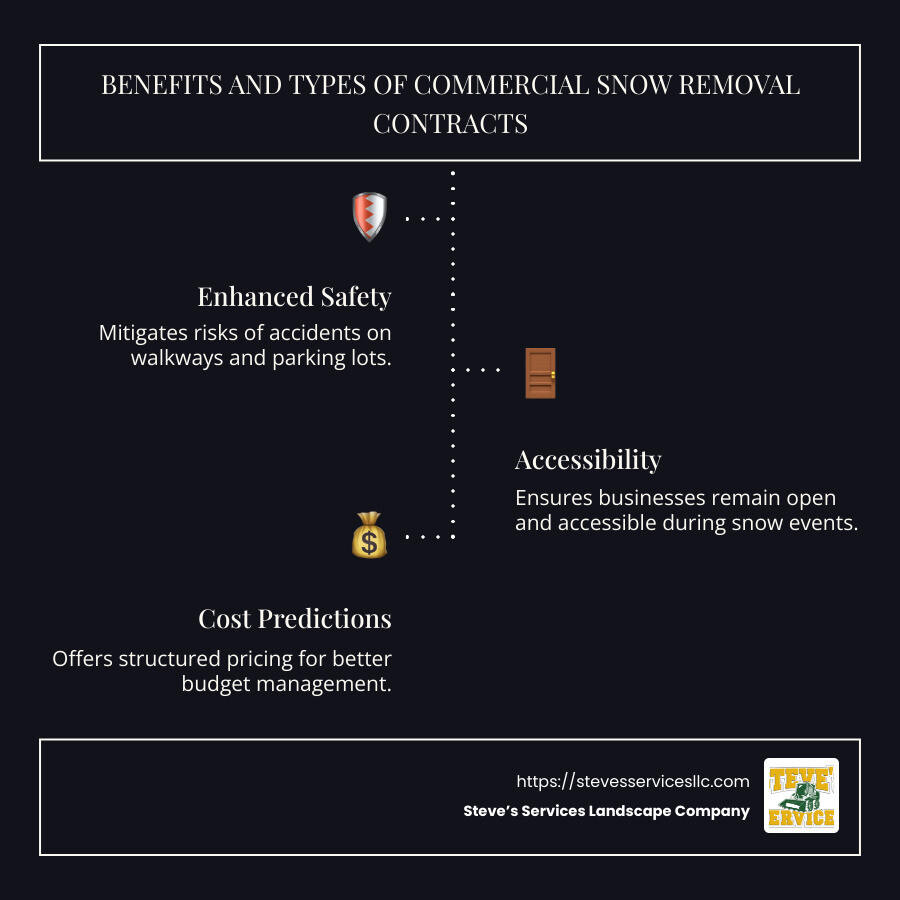
In the frigid months of winter, commercial snow removal contracts become paramount for businesses. These contracts play a pivotal role in maintaining safe and accessible environments during snowfall. By securing professional snow management, property managers ensure that their premises remain welcoming and accident-free, safeguarding both their clientele and staff. Here’s a quick overview of what you should know if you’re exploring these contracts:
- Purpose: Improve safety and accessibility during winter.
- Types: Seasonal, per-event, and time-based agreements.
- Benefits: Helps avoid liability claims and maintains business operations.
Navigating the harsh New England winters presents unique challenges for commercial properties. From treacherous walkways to piled-high parking lots, snow can severely disrupt daily operations. Effective snow removal is not just about aesthetics—it’s vital for safety and ensuring business continuity.
My name is Steve Sylva, and with over 25 years of experience in the landscaping industry, I understand the critical need for custom solutions in commercial snow removal contracts. As the owner of Steve’s Services, I ensure that businesses in Massachusetts are well-equipped to face winter’s toughest challenges.
For more insights, continue exploring how commercial snow removal contracts can safeguard your property. You’ll find detailed explanations of contract types, pricing strategies, and much more.
Simple commercial snow removal contracts glossary:
– commercial snow removal pricing calculator
– how to price commercial snow removal
– machine to remove snow
Understanding Commercial Snow Removal Contracts
Types of Snow Removal Contracts
When it comes to commercial snow removal contracts, understanding the various types available is crucial. These contracts are agreements between service providers and clients that outline the terms and conditions for snow removal services. They ensure that both parties are clear on expectations, pricing, and responsibilities.
1. Time and Material Contract
In a time and material contract, the cost fluctuates based on the actual work done. This includes the time spent, labor involved, and materials used, such as salt or sand. This type of contract can lead to financial uncertainty, as income depends heavily on the weather. For areas with unpredictable snowfall, this might not be the best choice.
2. Per Inch Contract
Also known as a per-event contract, this type charges based on the amount of snow accumulation. For example, there could be different rates for less than 3 inches, 3 to 5 inches, and so on. This structure allows for a more precise billing method but requires accurate measurement of snowfall.
3. Pay Per Push Contract
This contract offers financial stability by charging a fixed rate for each snow removal occurrence. Regardless of the snowfall amount or time spent, the rate remains constant. This is a popular choice for many because it provides a clear understanding of costs and services. For instance, clearing driveways might be included, while deicing could be an extra charge.
4. Seasonal Contract
A seasonal contract, or fixed-fee contract, is an agreement for a set fee covering all snow removal services for a specific period, typically a winter season. This type of contract is beneficial for budgeting, as it offers predictability regardless of how much it snows. However, it might include a cap on the number of pushes, with additional fees for extra services.
Key Elements of a Snow Removal Contract
When drafting a commercial snow removal contract, several key elements should be included to ensure clarity and legal compliance:
- Extent of Work: Clearly define what areas will be serviced, such as parking lots, driveways, and sidewalks. Specify any additional services like deicing or roof shoveling.
- Services Provided: Detail the specific tasks included in the contract. This might include snow plowing, salting, sanding, and any other related services.
- Property Description: Include a detailed description of the property to be serviced. This helps in planning and executing the snow removal efficiently.
- Guarantee: Outline any guarantees regarding response times or service standards. This helps manage client expectations and ensures accountability.
- Contract Pricing: Clearly state the pricing structure, whether it’s per inch, per push, or seasonal. Include any additional fees for services not covered under the main contract.
- Snow Event Definition: Define what constitutes a snow event. This could be based on specific snowfall measurements or other criteria agreed upon by both parties.
- Payments: Specify payment terms, including billing frequency and due dates. Also, include terms for late payments or penalties.
- Legal Compliance: Ensure the contract complies with local regulations and includes necessary insurance details. This protects both the service provider and the client.
Understanding these elements helps both service providers and clients steer the complexities of commercial snow removal contracts. With the right contract in place, businesses can ensure smooth operations even during the harshest winter conditions.
Pricing Strategies for Commercial Snow Removal
When it comes to pricing commercial snow removal contracts, there are several strategies to consider. Each has its own benefits and challenges, so it’s crucial to choose the one that best fits your business model and client needs.
Flat Fee
A flat fee contract offers a straightforward approach. Clients pay a set amount for the entire snow season, regardless of how much snow falls. This option provides predictable budgeting for clients but can be risky for service providers if the winter is harsher than expected.
Hourly Rate
Charging by the hour means billing clients based on the time spent on snow removal. This can be beneficial if snow events are unpredictable, as it ensures you’re compensated for your time. However, clients may find it challenging to budget due to variable costs.
Per Inch
The per inch model charges clients based on the depth of snow. For example, you might have different rates for 0-3 inches, 3-6 inches, and so on. This method allows for precise billing but requires accurate snowfall measurement. It’s ideal for clients who want to pay only for the actual snow accumulation.
Pay Per Push
A pay per push contract charges a fixed rate each time snow is removed. This provides financial stability for both parties, as clients know exactly what they’ll pay per snow event. It’s a popular choice because it offers clarity on costs and services.
Seasonal Pricing
Seasonal pricing involves setting a fixed fee for the entire winter season. This structure is beneficial for budgeting, as clients know upfront what they’ll pay, regardless of snowfall amounts. However, it’s important to include terms that cover exceptionally heavy snowfall, like a cap on the number of pushes.
How to Quote Commercial Snow Removal
When quoting for commercial snow removal, consider the following:
- Initial Fee: Start with a base rate that covers basic services.
- Additional Inches: Include rates for extra inches of snow beyond the initial coverage.
- Average Cost: Research local averages to ensure your pricing is competitive.
- Pricing Examples: Provide clear examples to help clients understand potential costs.
Budgeting for Snow Removal
Effective budgeting is key to managing snow removal costs. Here are some tips:
- Cost Estimation: Use historical data to estimate potential costs for the season.
- Budgeting Tips: Set aside funds for unexpected snow events or equipment repairs.
- Seasonal Budget: Allocate a specific budget for the entire winter, considering possible fluctuations.
- Cost Multipliers: Consider factors like property size and location, which can affect costs.
By understanding these pricing strategies and budgeting techniques, you can create commercial snow removal contracts that meet both your business needs and those of your clients. This ensures a smooth winter season, with clear expectations and financial stability for all parties involved.
Marketing Your Snow Removal Business
Tips for Winning Commercial Snow Removal Contracts
Marketing your snow removal business effectively is key to securing lucrative commercial snow removal contracts. Here are some strategies to help you stand out:
Email Marketing
Email marketing is a powerful tool to keep your business top-of-mind. Send seasonal reminders to existing and potential clients before winter hits. Highlight the importance of early booking and the benefits of your services. Use clear and engaging content to convert leads into contracts.
Converting Leads
To convert leads, personalize your communication. Tailor your proposals to address specific client needs and concerns. Offer case studies or testimonials from satisfied clients to build trust. A well-crafted proposal can be the difference between winning a contract and losing out.
Customer Retention
Once you’ve secured a client, focus on retention. Keep in touch throughout the season with updates on service schedules and any potential weather impacts. Offer loyalty discounts for clients who renew their contracts for multiple seasons. This builds a long-term relationship and ensures steady business.
Big Proposals
To land major contracts, think big. Submit proposals to large commercial entities like hospitals, universities, and stadiums. These require detailed planning and often a consultant’s touch. The effort can lead to substantial business growth if you secure one of these contracts.
Invest in ATVs
Consider investing in fleets of ATVs for snow removal. They are cost-effective and can steer tight spaces better than large trucks. This can lower your operational costs, making your bids more competitive.
Preventative Maintenance
Ensure your equipment is in top shape with regular preventative maintenance. This reduces downtime and repair costs, keeping your operations smooth during peak snow events. Clients appreciate reliability, and it can set you apart from competitors.
Real-Time Tracking
Use real-time vehicle tracking to maximize efficiency. GPS tracking helps optimize plowing routes and ensures timely service. It also provides valuable data to clients, demonstrating your commitment to transparency and efficiency.
By leveraging these marketing strategies, you can position your business as a leader in the snow removal industry and secure those crucial commercial snow removal contracts.
Frequently Asked Questions about Commercial Snow Removal Contracts
How to Write a Snow Removal Contract?
Writing a snow removal contract involves several key steps to ensure clarity and legal compliance. Here are the essential elements you should include:
- Scope of Work: Clearly define the services you will provide. Specify whether you are responsible for snow plowing, snow removal, deicing, or other related tasks. Mention the equipment you will use and the areas you will service.
- Payment Terms: Outline how and when payments will be made. This could be a flat fee, per push, or based on the amount of snow removed.
- Contract Duration: State the start and end dates of the contract. Include provisions for renewal or cancellation.
- Legal Compliance: Ensure your contract complies with local regulations and includes clauses for breach of contract. This protects both you and your client in case of disputes.
- Clear Terms: Use simple language to avoid misunderstandings. Define terms like “snow event” and specify what happens in extreme weather conditions.
Including these elements will help you create a robust contract that protects your business and satisfies your clients.
How to Market My Snow Removal Business?
Marketing your snow removal business effectively can help you secure more contracts. Here are some strategies to consider:
- Email Marketing: Use email campaigns to remind clients about your services as winter approaches. Highlight the benefits of early booking and offer special promotions.
- Customer Conversion: Personalize your marketing efforts. Use testimonials and case studies to build trust with potential clients. Tailor your proposals to address their specific needs.
- Seasonal Campaigns: Launch marketing campaigns that align with the changing seasons. Offer discounts or incentives for clients who sign up for multi-year contracts.
These marketing strategies can help you attract new clients and retain existing ones, ensuring a steady stream of business.
How to Budget for Snow Removal?
Budgeting for snow removal is crucial for both your business and your clients. Here’s how to approach it:
- Cost Estimation: Calculate the costs associated with equipment, labor, and materials. Consider the average number of snow events in your area to estimate seasonal expenses.
- Budgeting Tips: Set aside funds for unexpected expenses, such as equipment repairs or unusually heavy snowfall. This ensures your business can handle any surprises.
- Seasonal Budget: Work with clients to develop a seasonal budget that aligns with their financial goals. Offer options like flat fees or per-event pricing to accommodate different preferences.
By following these budgeting tips, you can manage your finances effectively and provide clients with reliable service.
Conclusion
At Steve’s Services Landscape Company, we understand the critical role that professional snow removal plays in maintaining safety and accessibility during harsh New England winters. Our commitment to excellence ensures that commercial properties remain operational, safe, and accessible, no matter the weather conditions.
Professional Snow Removal Matters
Snow and ice can pose significant risks to both safety and business operations. Slippery walkways and parking lots not only endanger individuals but also expose businesses to potential liabilities. By choosing a professional service provider like us, you ensure that your property is cleared efficiently and effectively, minimizing the risk of accidents and disruptions.
Ensuring Safety and Accessibility
Our skilled team at Steve’s Services is equipped with the expertise and tools necessary to handle any snow event. We offer comprehensive snow management services, custom to meet the unique needs of each client. Our proactive approach, which includes pre-treatment and round-the-clock monitoring, ensures that your property remains safe and accessible throughout the winter season.
Planning and Budgeting for Snow Removal
Effective planning and budgeting are crucial for managing snow removal costs. By working closely with our clients, we help develop customized plans that fit their financial and operational needs. Whether you prefer a flat fee, per push, or seasonal pricing, we offer flexible options to accommodate your budget. Our goal is to provide reliable service without unexpected financial surprises.
In conclusion, partnering with Steve’s Services Landscape Company for your commercial snow removal needs means choosing a dedicated team that prioritizes safety, accessibility, and customer satisfaction. Let us help you steer the challenges of winter with confidence.
For more information about our snow management services, visit our Snow Management page.
