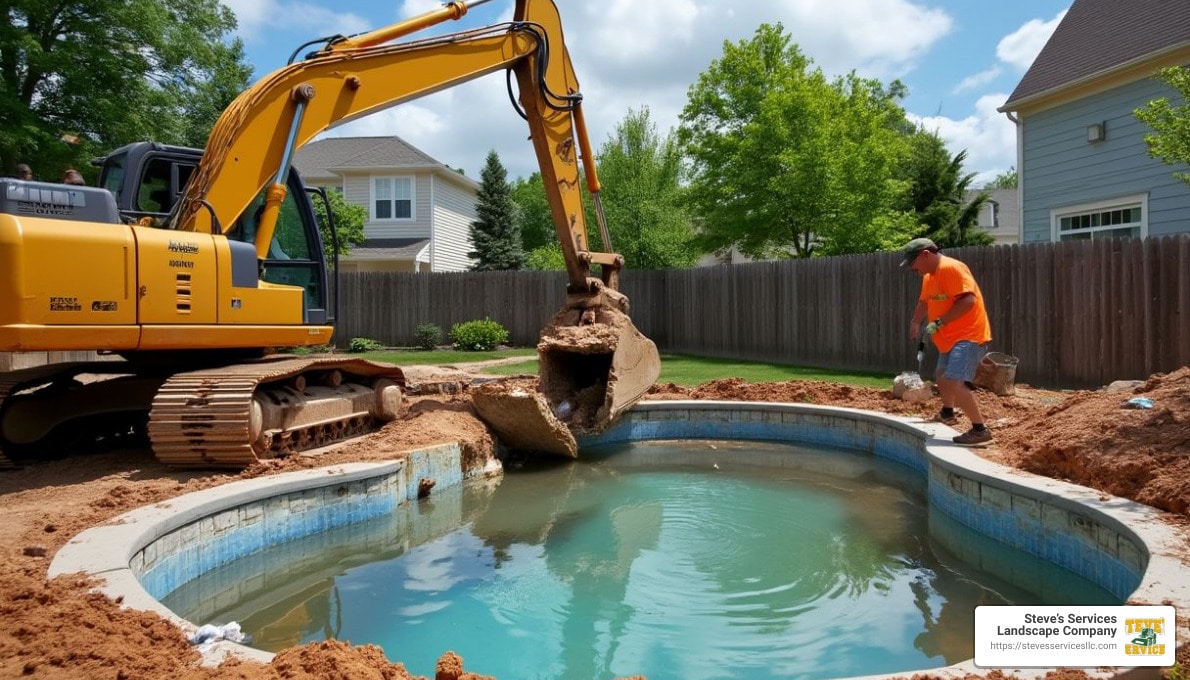
Cost to Get Rid of Inground Pool: Top Guide 2024
Thinking about the cost to get rid of inground pool can feel overwhelming. But understanding the factors can help you make an informed decision without all the stress. Here’s a quick breakdown of what influences costs:
- Pool size & type: Bigger or concrete pools tend to cost more to remove.
- Location & access: Hard-to-reach pools might increase expenses.
- Demolition method: Full removals usually cost more than partial ones.
- Local fees: Costs can vary based on local disposal and living expenses.
- Who you hire: Different contractors have different rates and service levels.
Considering removing your inground pool can be a strategic decision for many homeowners in Massachusetts, whether motivated by lifestyle changes, maintenance costs, or simply reclaiming outdoor space. This process, though seemingly complex, can be simplified with the right knowledge. It’s important to evaluate the associated costs, impacts, and the choice of the right professionals.
I’m Steve Sylva, and with over 25 years in landscaping services, I’ve helped numerous homeowners steer the cost to get rid of inground pool. My experience ensures a seamless journey from planning to completion.
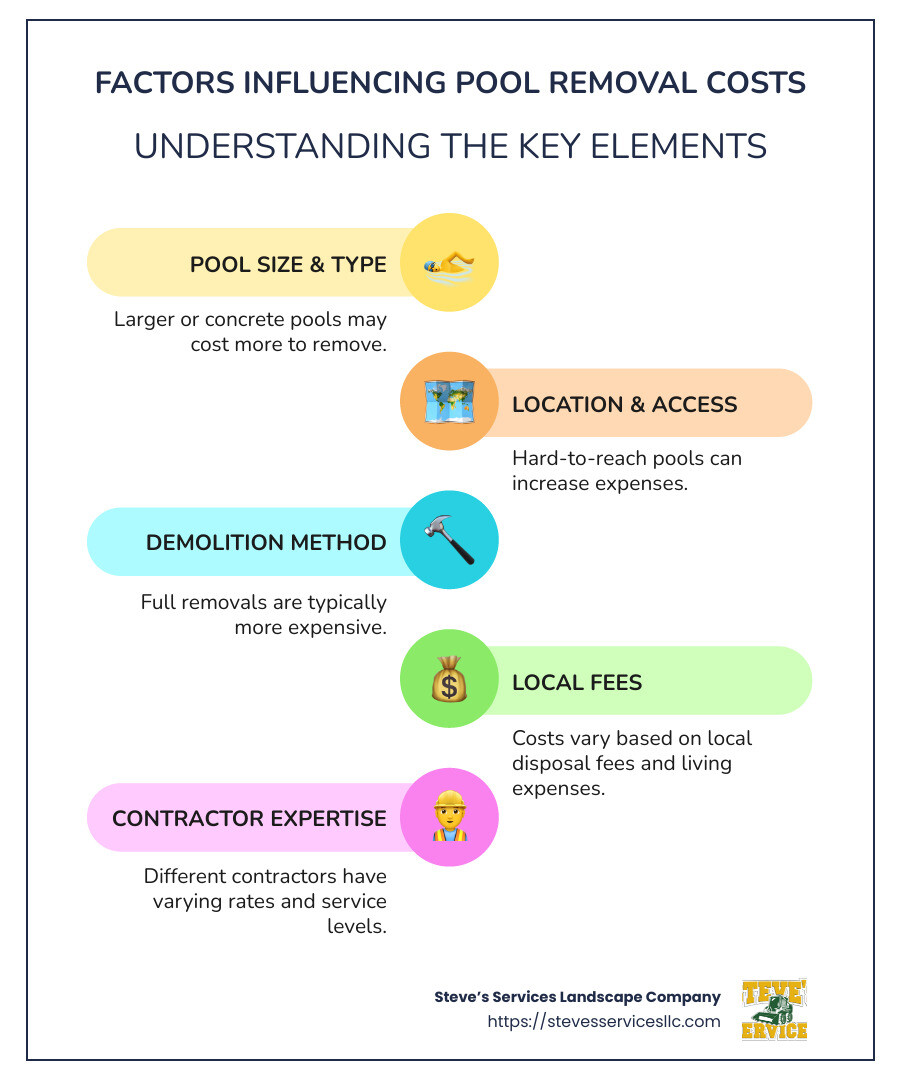
Cost to get rid of inground pool terms you need:
– how much does it cost to close a pool
Factors Influencing the Cost to Get Rid of Inground Pool
Understanding the factors that influence the cost to get rid of inground pool is crucial. These factors vary widely and can significantly impact your overall expenses. Let’s break them down.
Pool Type, Size, and Depth
The type of pool you have is one of the biggest cost drivers. Concrete pools, for instance, are more expensive to remove due to their durability and the heavy machinery required. In contrast, vinyl liner and fiberglass pools are generally less costly to remove.
Size and depth matter too. Larger and deeper pools require more labor and materials for removal and backfilling, increasing the cost.
Pool Draining
If your pool is still filled with water, you’ll need to factor in the cost of safely draining it. This process must comply with local environmental regulations, which can vary in complexity and cost.
Access and Location
The location and accessibility of your pool can significantly impact removal costs. Pools in hard-to-reach areas might require specialized equipment, increasing labor costs. Additionally, local cost-of-living and disposal fees can affect the price. If you’re in an area with high disposal fees, expect higher costs.
Demolition Method
There are two primary methods for pool removal: partial and full demolition. Partial removal involves breaking down the top layers and filling in the pool, while full removal involves taking out all materials. Full removal is more expensive but may be necessary if you plan to build on the site.
Material Disposal
The type of materials used in your pool and surrounding structures (like decking or fencing) will also influence costs. Heavier materials like concrete are costlier to dispose of than lighter ones like vinyl.
Permits and Regulations
Securing the necessary permits and adhering to local regulations is essential. Permit costs can vary widely depending on your location. Some areas might require inspections during the removal process, adding to the expense.
Geographic Location
Your geographic location plays a dual role. Not only does it affect local disposal fees, but it also influences labor costs. Areas with higher living costs typically have higher service fees.
Contractor Expertise
Hiring the right contractor is crucial. Experienced contractors might charge more but can ensure the job is done correctly, preventing future issues. It’s wise to get multiple quotes and check references to find the best balance of cost and quality.
Cleanup and Site Restoration
After the pool is removed, the site needs to be restored. This could include leveling the ground, adding topsoil, and potentially landscaping. These additional steps will add to your overall costs but are essential for restoring your yard’s appearance and functionality.
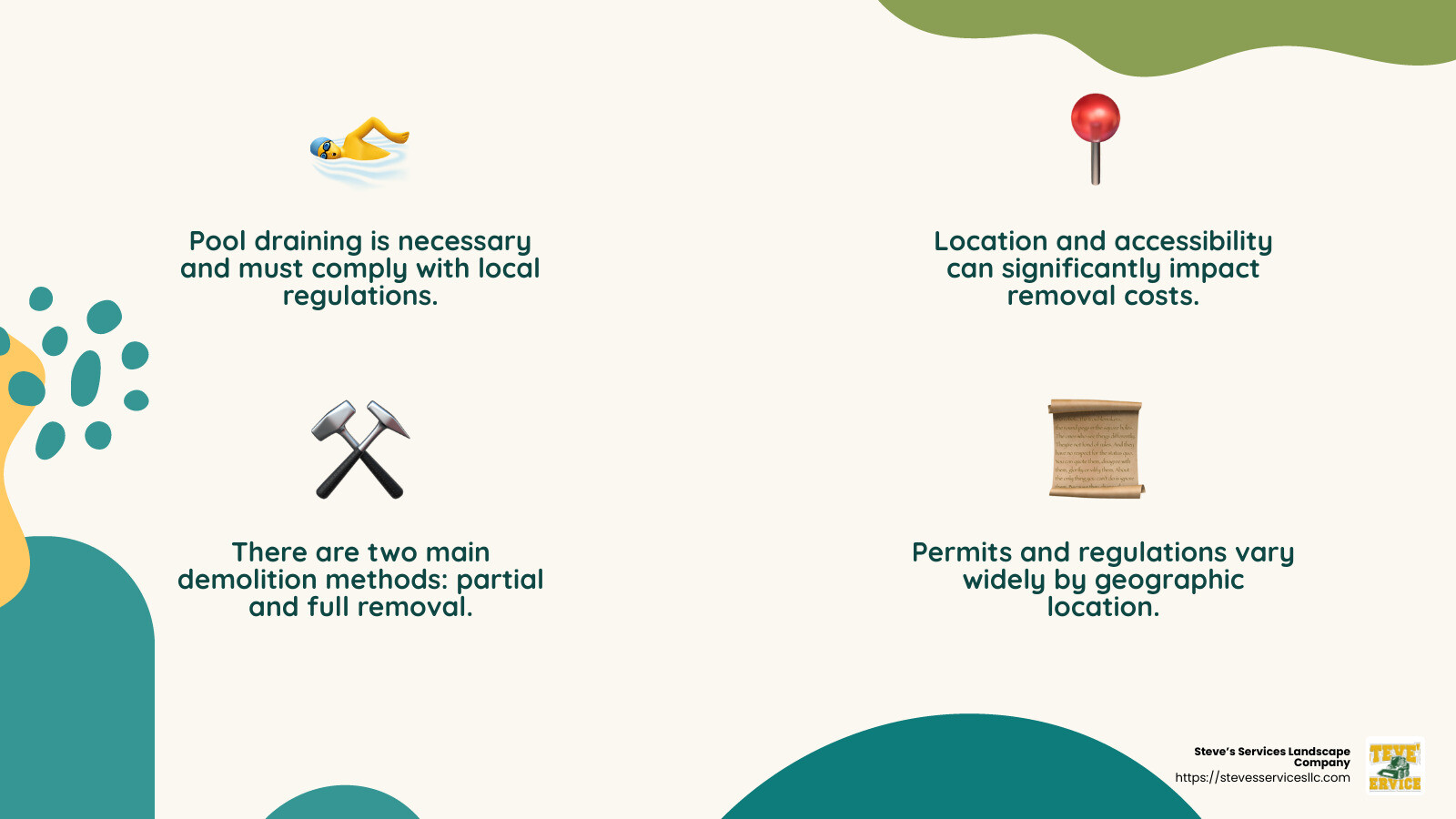
Understanding these factors helps you anticipate the cost to get rid of inground pool and plan accordingly. With this knowledge, you can make informed decisions and work with your contractor to manage expenses effectively.
Next, we’ll dive into the specific costs associated with different types of pool removals, helping you understand what to expect for your particular situation.
Cost Breakdown for Different Pool Types
When considering the cost to get rid of inground pool, understand how the type of pool and the method of removal will affect the overall price. Here’s a detailed breakdown of costs for various pool types and removal methods.
Inground Pool Removal Costs
Inground pools are a popular choice for many homeowners, but removing them can be a significant investment. The cost varies based on whether you opt for partial or full removal.
- Partial Removal: This involves breaking up the top layer of the pool and filling it in with dirt and rubble. It’s a less expensive option, typically ranging from $4,000 to $10,000. However, it may limit future use of the area, such as building structures.
- Full Removal: This method entails removing all pool materials, ensuring no future settling issues. Full removal is more comprehensive and ranges from $7,000 to $16,000.
Above-Ground Pool Removal Costs
Above-ground pools are generally easier and cheaper to remove compared to inground pools.
- Pool Only: Removing just the pool itself costs between $400 and $900.
- Pool and Deck: If there’s an attached deck, removal costs rise to $1,000 to $7,000.
- Pool, Deck, and Backfill: Including backfill can bring the total to $2,000 to $5,500.
Fiberglass Pool Removal Costs
Fiberglass pools require full removal because their materials can’t be left in the ground.
- Full Removal: Costs range from $6,000 to $16,000. If the shell is intact, removal is easier and cheaper. However, if the shell is damaged, costs increase due to the need for breaking it into smaller pieces.
Vinyl Liner Pool Removal Costs
Vinyl liner pools also require complete removal, which involves dismantling the liner and any supporting structures.
- Full Removal: The cost typically falls between $4,000 and $11,000. This includes removing all components, such as aluminum or steel supports.
Concrete Pool Removal Costs
Concrete pools are the most expensive to remove due to their durability and the labor involved.
- Partial Removal: This option is less costly, ranging from $4,000 to $16,000, but isn’t ideal if you plan to build on the site later.
- Full Removal: Expect to pay more for full removal due to the intensive work required to break down and dispose of concrete.
Understanding these costs is crucial for budgeting your pool removal project. Each pool type and removal method has its own set of challenges and expenses. Choose the option that best fits your future plans for the space and your budget.
Next, we’ll explore the costs associated with different pool removal methods, helping you decide which approach is right for your situation.
Cost of Pool Removal Methods
When planning to remove an inground pool, understanding the cost to get rid of inground pool is crucial. The method of removal plays a significant role in determining the overall expense. Let’s explore the two primary methods: full pool demolition and partial pool demolition.
Full Pool Demolition
Process: Full pool demolition is a comprehensive method that involves completely removing all pool materials, including concrete, fiberglass, or vinyl liner. The pool area is then backfilled and compacted, ensuring the ground is stable for future use.
Cost Range: This method is thorough but more costly, typically ranging from $7,000 to $16,000. The higher cost is due to the labor-intensive nature of the work and the need for heavy machinery.
Benefits: The primary benefit of full pool demolition is that it eliminates any risk of future ground settling issues. It also allows for more flexibility in future landscaping or construction projects on the site. Homeowners planning to build new structures or sell their property often prefer this method due to its thoroughness.
Partial Pool Demolition
Process: Partial pool demolition involves breaking up the top layer of the pool, usually around 18 inches below the surface, and leaving the rest in place. The pool is then backfilled with dirt and rubble. This method is quicker and less expensive than full demolition.
Cost Range: The cost for partial removal typically falls between $4,000 and $10,000. The lower price point reflects the reduced labor and equipment needs.
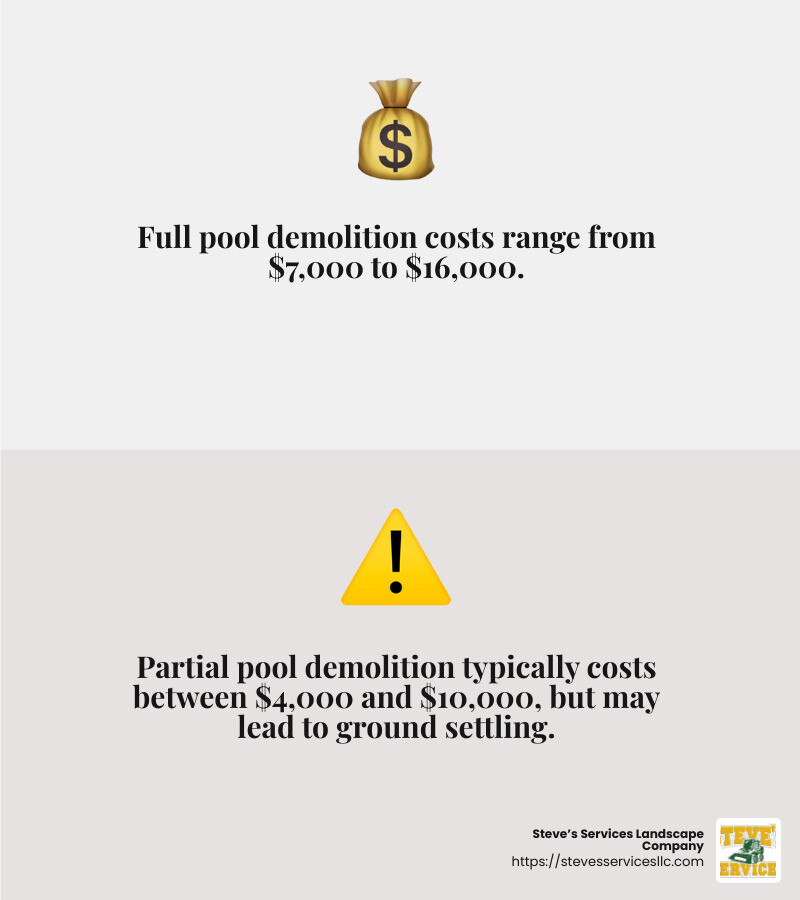
Drawbacks: While partial demolition is less costly, it comes with certain drawbacks. The leftover materials can lead to ground settling over time, which might limit future use of the space. Additionally, if you plan to sell your home, this method must be disclosed to potential buyers, as it can affect property value.
Cost Comparison
| Method | Cost Range | Key Considerations |
|---|---|---|
| Full Pool Demolition | $7,000 – $16,000 | Best for stability and future construction |
| Partial Pool Demolition | $4,000 – $10,000 | Less expensive but limits future use |
Choosing between full and partial demolition depends on your future plans for the space and budget considerations. Full demolition is ideal for those looking to ensure long-term stability and maximize property value, while partial demolition suits those seeking a cost-effective solution with fewer immediate plans for the area.
In the next section, we’ll discuss additional costs and considerations that can impact your pool removal project, such as permits, labor, and site restoration.
Additional Costs and Considerations
When planning the cost to get rid of inground pool, it’s important to consider several additional expenses beyond the basic demolition. These can significantly impact your budget, so let’s break them down:
Permits
Before any demolition begins, you’ll likely need permits. These ensure the project complies with local regulations. Permit costs can start at $400 but vary based on location and project specifics. Always check with your local government to understand the requirements.
Pool Draining
If your pool is still full of water, it must be safely drained. This process can add about $200 to the project. It’s crucial to handle this step properly to avoid environmental issues.
Fill Materials
After demolition, the pool area must be backfilled. The materials used, such as dirt, gravel, or even broken-up concrete, can range from $600 to $8,000. The choice of fill material affects both cost and the stability of the filled area.
Labor
Labor is one of the biggest expenses in pool removal. Expect to pay between $1,500 and $4,000+ for professional labor, depending on the complexity and size of the project.
Licensed Engineer
In some cases, hiring a licensed engineer may be necessary to ensure the structural integrity of the filled site. This can add $600 to $1,200+ to your costs but is an important investment for safety and compliance.
Dumpster Rental and Debris Haul-Off
Removing debris requires a dumpster, costing $300 to $600 per week. Additionally, hauling off the debris can cost between $200 and $400. The total depends on the volume and type of materials being disposed of.
Removing Pool Enclosure and Deck
If your pool has a surrounding enclosure or deck, these must also be removed. Pool enclosures can cost $1,000 to $3,000 to dismantle, while deck removal ranges from $600 to $2,000. These costs depend on the materials and size of the structures.
Landscaping
After the pool is removed, you might want to restore or redesign your landscape. Landscaping costs can vary widely, typically ranging from $5 to $15 per square foot. This step is crucial for improving the aesthetics and usability of your outdoor space.
Considering these additional costs ensures a well-rounded understanding of the total investment needed for inground pool removal. By planning ahead, you can avoid unexpected expenses and make informed decisions for your project.
Up next, we’ll explore cost-saving tips for pool removal, helping you manage expenses without compromising on quality.
Cost-Saving Tips for Pool Removal
When considering the cost to get rid of inground pool, there are several strategies to help you save money without sacrificing quality. Let’s explore some practical tips:
Multiple Estimates
One of the simplest ways to save money is to get multiple estimates from different contractors. This not only ensures competitive pricing but also helps you understand the scope of work involved. By comparing quotes, you can make an informed decision and potentially negotiate better terms.
Salvageable Materials
Before starting the demolition, ask your contractor about salvageable materials. Sometimes, parts of your pool, like metal rebar or equipment, can be recycled or sold. This could offset some of the removal costs. Contractors may offer recycling services or direct you to facilities that accept these materials.
Recycling
Incorporating recycling into your pool removal process can be both environmentally friendly and cost-effective. Many materials can be repurposed or recycled, reducing disposal costs. Discuss with your contractor how recycling can fit into your project to save money and reduce waste.
By considering these cost-saving tips, you can manage the expenses associated with pool removal more effectively. Next, we’ll address frequently asked questions about pool removal, providing further insights and guidance.
Frequently Asked Questions about Pool Removal
How hard is it to remove an inground pool?
Removing an inground pool can be a complex task, but it’s manageable with the right help. The difficulty depends on several factors, such as the pool’s size, type, and location.
Concrete and gunite pools are more challenging to remove compared to vinyl or fiberglass pools. These materials require heavy machinery and more labor to break down. Accessibility can also affect the process. If the pool is in a tight spot, it might be harder to get equipment in and out.
Hiring a professional contractor is crucial. They have the expertise and equipment needed to safely and efficiently remove the pool. A licensed and insured contractor will ensure that surrounding structures, like fences and landscaping, are not damaged during the process.
Does removing an inground pool decrease home value?
The impact of pool removal on home value can vary. In some cases, removing a pool can increase property value. This is especially true if the pool was old, in poor condition, or not a desirable feature for potential buyers.
Many homebuyers prefer a larger yard or a space that can be used for other purposes, like a garden or play area. In these situations, removing the pool can make the property more appealing. However, in neighborhoods where pools are common and expected, removal might not add value.
It’s important to consider the local real estate market and talk to a real estate agent to understand how pool removal could affect your home’s value.
Is it worth it to get rid of a pool?
Deciding if it’s worth it to remove a pool involves weighing several factors. Maintenance costs, safety concerns, and personal preferences play a big role. Pools require regular upkeep, which can be costly and time-consuming. If you find that you’re not using the pool enough to justify these expenses, removal might be a good option.
Safety is another consideration. Families with young children might prefer a yard without the risks associated with a pool. Additionally, if you’re planning to sell your home and believe that a pool might deter potential buyers, removal could be beneficial.
The decision should align with your personal circumstances and future plans for the property. Consulting with both a pool removal expert and a real estate professional can provide valuable insights.
Next, we’ll explore the conclusion and final thoughts from Steve’s Services Landscape Company.
Conclusion
Removing an inground pool is a significant decision with many factors to consider. From pool type and removal method to contractor expertise and additional costs, each element can influence the overall expense and complexity of the project. It’s crucial to evaluate these factors carefully to make an informed choice that aligns with your goals.
At Steve’s Services Landscape Company, we understand the challenges and considerations involved in such a project. Our skilled team is dedicated to providing personalized solutions that meet your unique needs. With our comprehensive services and commitment to exceptional customer service, we ensure that your pool removal process is as smooth and stress-free as possible.
Whether you’re looking to transform your outdoor space into a lush garden or a vibrant play area, we’re here to help. Our expertise in excavation and landscaping allows us to bring your vision to life with precision and care.
If you’re considering removing your inground pool, we invite you to learn more about our excavating services. Let us partner with you to create a beautiful and functional outdoor space that improves your property.
In the end, the decision to remove a pool should reflect your personal circumstances, preferences, and future plans. By working with experienced professionals like us at Steve’s Services, you can ensure a successful project that meets your expectations and adds value to your home.