
Cost to Hydroseed: Top Benefits in 2024 Explained
Cost to hydroseed is often cited as one of the most affordable solutions for establishing a vibrant, green lawn. Whether you’re looking to refresh your backyard or cover large commercial spaces, hydroseeding presents a budget-friendly alternative to traditional methods like sod installation. Typically, the average cost to hydroseed ranges from $0.06 to $0.20 per square foot, making it an economical choice for both homeowners and businesses.
Hydroseeding combines grass seed, mulch, and water, providing a quick and effective lawn coverage option. Not only does it ensure even growth, but factors like ease of installation and ability to customize grass types contribute to its cost-effectiveness in the field of lawn care. This guide will explore how hydroseeding can fit your needs without stretching your budget.
My name is Steve Sylva, and I’ve been guiding Massachusetts residents in achieving beautiful, cost-effective lawns for over 25 years. Cost to hydroseed remains a primary focus of my efforts, ensuring high-quality results that cater to your unique landscaping goals.
Cost to hydroseed vocabulary:
– cost of hydroseeding a lawn
– hydro grass seeder
– liquid grass
Understanding the Cost to Hydroseed
When considering the cost to hydroseed, it’s important to understand the various factors that influence pricing. This section will break down the costs and help you estimate what you might pay based on your specific needs.
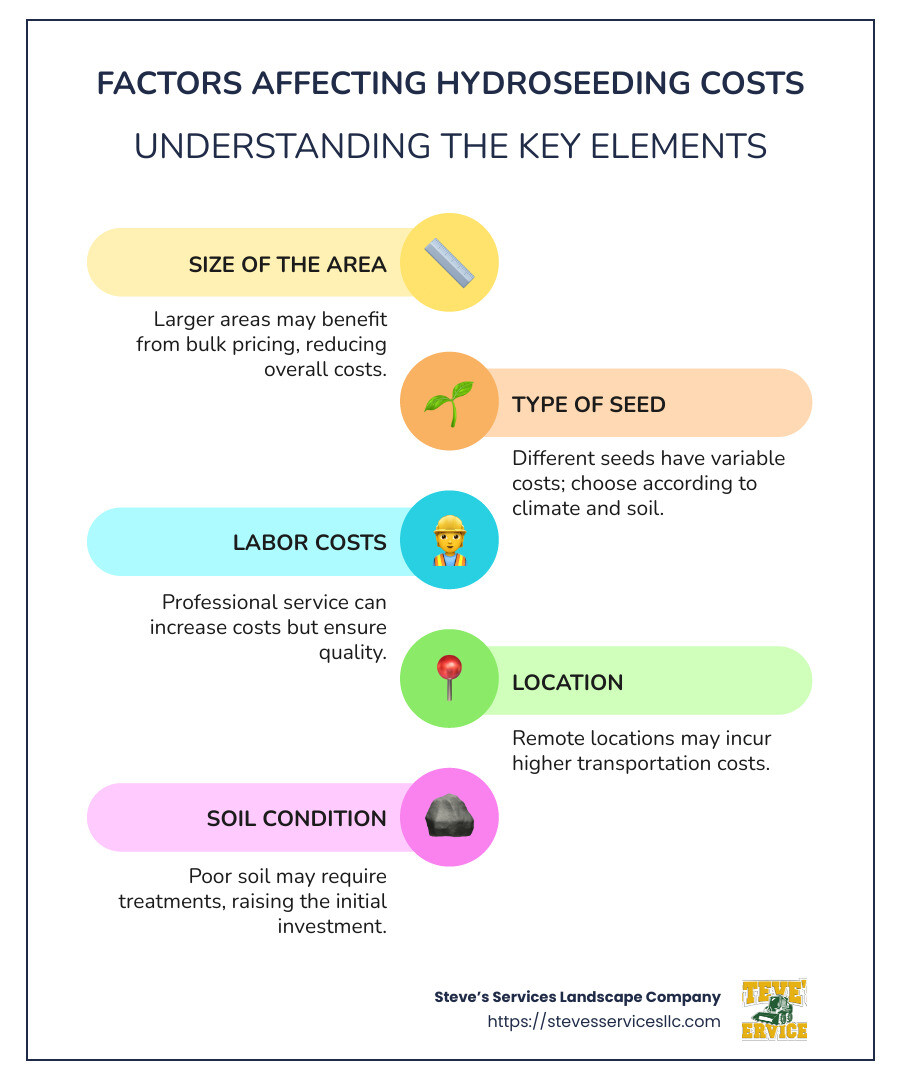
Factors Affecting Hydroseeding Costs
Several key factors can impact the overall expense of hydroseeding:
- Yard Size: The size of the area you want to hydroseed is one of the biggest cost drivers. Larger areas typically benefit from a lower cost per square foot due to economies of scale. For example, while smaller jobs might cost around $0.10 per square foot, larger projects can go as low as $0.06 per square foot.
- Seed Type: The type of grass seed you choose affects the price. Some seeds are more expensive due to their growth characteristics or suitability for specific climates.
- Labor Costs: Hiring professionals can vary in cost depending on the complexity of the job and local labor rates. If your yard has steep slopes or difficult terrain, expect higher labor costs due to the increased effort required.
- Location: Prices can differ based on your geographic location. For instance, hydroseeding costs in New England might be slightly lower than in other parts of the country, with rates around $0.08 per square foot.
- Soil Condition: Poor soil conditions might require additional preparation, such as adding topsoil or compost, which can increase the total cost.
Cost Estimator by Lawn Size
To give you a better idea of potential costs, here’s a simple estimator based on lawn size:
- Small Yard (up to 5,000 sq. ft.): Expect to pay between $300 and $500. These smaller projects often have a minimum charge due to setup and travel costs.
- Medium Yard (5,000 to 10,000 sq. ft.): Costs typically range from $500 to $1,000, depending on the factors mentioned above.
- Large Areas (1 acre or more): For larger spaces, hydroseeding can cost around $3,200 to $3,500 per acre, offering a more cost-effective solution compared to smaller jobs.
These estimates provide a general idea, but actual costs can vary. For precise pricing, it’s best to contact a local hydroseeding professional who can assess your specific project needs.
Benefits and Drawbacks of Hydroseeding
Hydroseeding is a popular choice for many homeowners and businesses looking to establish a lush, green lawn. But like any method, it has its pros and cons. Here’s a closer look at the advantages and disadvantages of hydroseeding.
Advantages of Hydroseeding
Quick Method: One of the standout benefits of hydroseeding is its speed. Once applied, the grass begins to grow within a week. In just 4 to 6 weeks, you’ll have a lawn ready to mow. This is much faster than traditional seeding.
Erosion Control: The hydroseeding process is excellent for controlling erosion. The slurry used in hydroseeding forms a protective mat over the soil, which helps prevent erosion from wind and rain. This makes it ideal for areas with steep slopes or loose soil.
Faster Growth: Hydroseeding promotes rapid growth due to the combination of seeds, mulch, and fertilizer in the slurry. This mixture holds moisture well, which speeds up germination and leads to healthier, stronger grass.
Even Distribution: The slurry is sprayed evenly across the soil, ensuring uniform coverage. This helps avoid bare patches that are common with hand seeding or sod installation.
Difficult Conditions: Hydroseeding is versatile and can be used in challenging conditions, such as slopes or areas with poor soil. The tackifier in the mix helps the slurry stick to the ground, even on inclines.
Disadvantages of Hydroseeding
Water Needs: While hydroseeding retains moisture well, it still requires regular watering, especially in the first few weeks. This can be a drawback in areas with water restrictions or during dry seasons.
Terrain Limitations: Although hydroseeding is suitable for most terrains, it can struggle in areas with a lot of rocks or very steep slopes where the mixture might wash away before taking root.
Initial Costs: While generally more cost-effective than sod, hydroseeding still requires an upfront investment. The cost can vary depending on the size of the area and the specific requirements, such as seed type and soil preparation.
Understanding these pros and cons can help you decide if hydroseeding is the right choice for your lawn project. Next, we’ll compare professional hydroseeding with other methods like sod installation and traditional seeding.
Professional Hydroseeding vs. Other Methods
Comparing Costs and Results
When it comes to creating a beautiful lawn, you have a few options: hydroseeding, sod installation, traditional seeding, and artificial grass. Each method has its pros and cons, especially when it comes to costs, results, and maintenance needs.
Sod Installation: If you want a green lawn right away, sod is the way to go. It’s like rolling out a carpet of grass, and you get instant results. However, this convenience comes at a higher price. Sod is more expensive than hydroseeding, but less than artificial grass. Maintenance is similar to hydroseeding, as it requires regular watering and care to establish strong roots.
Traditional Seeding: This is the most budget-friendly option. You spread seeds over prepared soil and wait for them to grow. It’s cheaper upfront, but it takes time to see results. You might wait weeks or months for the grass to fill in, and there’s a risk of patchy growth. Maintenance involves regular watering and protecting the seeds from birds and other pests.
Artificial Grass: This is the most expensive option but requires the least maintenance. Once installed, you have a green lawn all year round without worrying about watering or mowing. However, the initial cost can be quite high, and it doesn’t provide the natural feel of real grass.
Immediate Results vs. Long-Term Savings:
- Immediate Results: Sod and artificial grass provide instant gratification. You get a lush lawn right away, which is perfect if you’re in a hurry.
- Long-Term Savings: Hydroseeding and traditional seeding are more cost-effective in the long run. While they require patience, they also offer savings over time with lower initial costs and maintenance needs.
Maintenance Needs:
- Hydroseeding: Needs regular watering initially but offers a uniform lawn with fewer weeds.
- Sod: Requires careful watering to establish roots.
- Traditional Seeding: Needs protection and consistent care to ensure even growth.
- Artificial Grass: Minimal maintenance, but initial installation is costly.
Choosing the right method depends on your budget, timeline, and lawn care commitment. Hydroseeding often strikes a balance, offering good results at a reasonable cost. Next, we’ll answer some common questions about hydroseeding to help you decide if it’s the right choice for you.
Frequently Asked Questions about Hydroseeding
Is hydroseeding worth the cost?
Hydroseeding is a cost-effective option, especially for large areas. If you have a big yard or need to cover a lot of ground, it can save you money compared to sodding. It’s also great for difficult soil conditions. The mixture of seed, mulch, and fertilizer helps grass grow even in tough spots. This method offers good value for its price, balancing affordability and effective results.
What time of year is best for hydroseeding?
Timing is crucial for the best results. Late summer and early fall are ideal for hydroseeding. During these times, the weather is cooler, and there’s usually more precipitation. This helps the seeds germinate and grow without needing as much extra watering. Spring can also work well, but avoid hydroseeding in the winter when grass growth slows down.
How long does it take for hydroseed to grow?
You’ll start seeing growth within about one week. With proper watering and care, the grass can grow to about 3 inches tall in a month. Watering is key—keep the soil moist by watering three times a day for the first few weeks. After 4 to 6 weeks, you can reduce watering to once a day. Mowing can start around this time, too, once the grass has established itself.
Understanding these factors can help you decide if hydroseeding is the right choice for your lawn. Whether you’re covering a large area or dealing with tricky soil, hydroseeding offers a practical solution.
Conclusion
At Steve’s Services Landscape Company, we understand that every lawn is unique. That’s why we offer personalized solutions custom to your specific needs. Hydroseeding is one of the many ways we help our clients achieve lush, green lawns efficiently and cost-effectively.
Our team of experts in Everett, MA, is dedicated to providing exceptional customer service and expert advice. With years of experience in lawn care and landscape maintenance, we ensure that your lawn receives the best care possible. Whether you’re dealing with challenging soil conditions or looking to cover a large area quickly, we’re here to help.
Choosing hydroseeding with us means choosing a method that balances affordability with effective results. It’s a smart investment for those looking to improve their property’s curb appeal and value.
For more information on how we can transform your lawn with hydroseeding, visit our Hydroseeding Services page. Let Steve’s Services be your trusted partner in creating a beautiful and thriving lawn.
