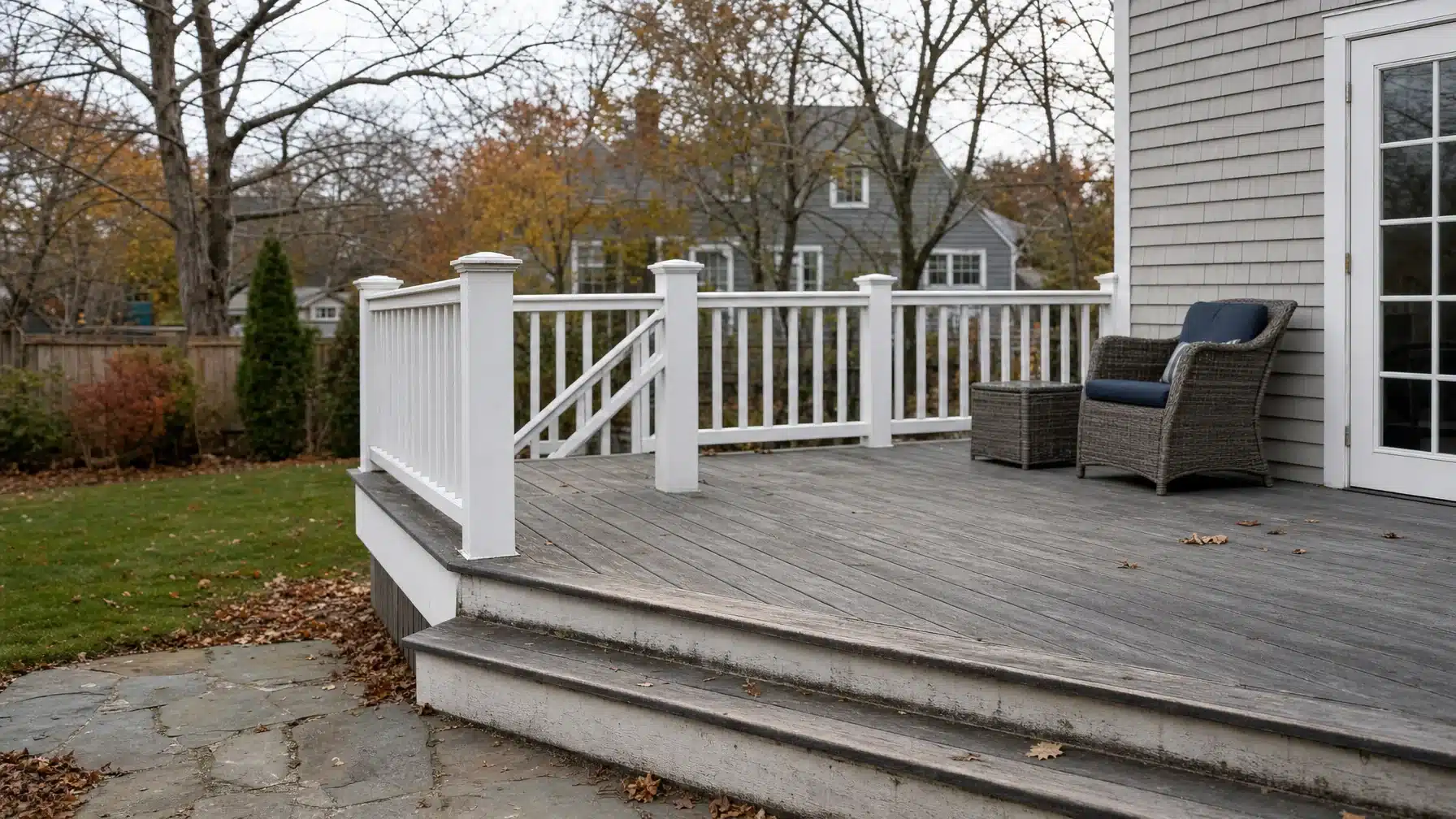
Before a Deck Restoration Assessment: A Visible-Condition Photo Checklist
Before requesting a deck restoration and staining assessment, photograph the deck’s overall layout, then pair close-ups of visible concerns with wider views that show their locations. Add short labels describing what you see—not what you think caused it. The goal is a clear record of current conditions that helps you explain your concerns.
A photo packet can help organize that conversation, but it cannot establish structural safety, identify hidden damage or determine whether staining alone is appropriate. Leave those questions open for an in-person assessment.
Start with accessible overview views
Begin from safe, accessible positions where you can show how the deck is arranged. Include recognizable features so the assessor can connect later close-ups to the right area. You do not need to reach every surface to make the packet useful.
- Walking surface: Show the deck’s layout and its relationship to the house door or another fixed landmark.
- Railings and perimeter: Capture visible sections from accessible positions, keeping their location recognizable.
- Stairs and landings: Include their relationship to the main deck where they are safely visible; do not use questionable stairs to obtain a view.
- Separate deck areas: Label distinct levels or sections so similar-looking surfaces do not become confused.
Note Do not enter an area you suspect is unsafe, climb, lean over a railing or crawl beneath the deck for a photograph. Mark anything you cannot safely capture as “not photographed—unsafe or inaccessible” and describe its location to the professional. An incomplete photo packet is preferable to taking a risk.
Pair visible concerns with wider location views
For each concern, take a wider image that establishes the location and a closer image that shows the visible detail, if you can do so safely. Keep a shared landmark in the images where practical. An isolated close-up may show texture clearly while leaving its location uncertain.
Use these observation prompts for your photo notes, leaving out anything that does not apply.
- Peeling finish: Where is the visible peeling, and which wider image shows that location?
- Darker patch: Where is the patch, and which close-up records its appearance?
- Exposed-looking area: Which surface are you documenting, and where does it sit relative to a recognizable landmark?
- Visible crack: Which image shows the detail, and which image locates it on the deck?
Keep the images unfiltered and check that the detail is in focus. If glare, shadow or an obstruction prevents a clear view, note that limitation rather than altering the image to make the condition look more pronounced. Do not scrape, sand, wash, probe or disturb suspect materials to reveal more for the camera.
Choose location labels and observation wording
Use the same area name in filenames and notes. Identify a fixed landmark, such as the house door, outer railing or stair landing, instead of writing “over here.” If you use left and right, state where you were standing and which direction you faced.
Copy this label format for each image: Area or landmark: ___; View—wide or close-up: ___; Visible observation: ___.
Keep your concern separate from a diagnosis. “I want this peeling area assessed” identifies the question. “The coating failed because the wrong product was used” asserts a cause the photo cannot establish. Likewise, a visible crack does not tell you what repair is needed or whether the deck is safe.
Keep current photos separate from finish-history records
Keep this packet focused on what the deck looks like now. Store older photos, product information and maintenance records separately so they are not mistaken for current conditions. If you also need to organize those records, use the existing-finish history guide. Do not infer the current coating’s identity from its appearance.
Build a compact photo inventory
Copy the fields below into a document or message and repeat them for each area of concern. Keep the notes brief enough that the connection between the image, location and question stays clear.
- Area or landmark: Where is this concern on the deck?
- Image filenames: Which files show the wider location view and the close-up?
- Visible observation: What can you see without assuming a cause?
- Concern to discuss: What would you like the professional to assess?
- Limitations or missing views: Was anything obscured, unclear, unsafe or inaccessible?
Confirm how to share the packet
Before sending files, ask the contractor whether photos would be helpful and what submission method they prefer. Keep the inventory with the images and retain the original files. Do not assume that sending photos provides a remote diagnosis, an estimate or confirmation that restoration can proceed.
Steve’s Services provides deck restoration and staining services to homeowners in the North Shore Massachusetts area. When requesting an assessment, explain your visible concerns and ask how to make your labeled photo packet available.