Do It Yourself Hydromulch: Ultimate 3-Step Guide
Why Homeowners Are Turning to Hydromulch for Lush Lawns
Many homeowners looking for a lush lawn quickly learn about hydromulch, a process that involves spraying a slurry of seed, mulch, fertilizer, and water onto bare soil. While the idea of a do it yourself hydromulch project can be tempting, it’s a complex task with significant challenges. Here’s a brief overview:
- The Method: A spray-on mixture of grass seed, mulch, fertilizer, water, and a tackifier is applied to prepared soil.
- The Benefits: Hydromulch offers faster germination, superior erosion control, and better moisture retention than traditional seeding.
- Common Uses: It’s ideal for large bare areas, slopes, and new construction sites, but not for patching small spots in existing lawns.
- The Costs: A DIY attempt involves equipment rental ($300-$500/day) plus materials, while professional services range from 8-60 cents per square foot.
Important note: While a DIY approach is technically possible, it demands specialized equipment, precise technique, and considerable physical labor. Most homeowners find that hiring a professional yields better, more reliable results.
Traditional seeding takes weeks, hand-seeding leaves patches, and sod is expensive. Hydromulch addresses these issues by creating a protective, nutrient-rich environment where seeds can sprout in as little as a week. The mulch layer retains moisture, the tackifier prevents erosion, and the fertilizer provides an immediate nutrient boost.
However, the reality is that hydroseeding requires professional-grade equipment and expertise. Many homeowners underestimate the complexity of mixing ratios and achieving even coverage. An improperly executed project often leads to disappointing results.
I’m Steve Sylva, owner of Steve’s Services with over 25 years of landscape experience in Massachusetts. I’ve seen some successful DIY hydromulch projects, but I’ve also seen many that required professional correction—ultimately costing homeowners more time and money than hiring a pro from the start.
What is Hydromulch and Why Use It?
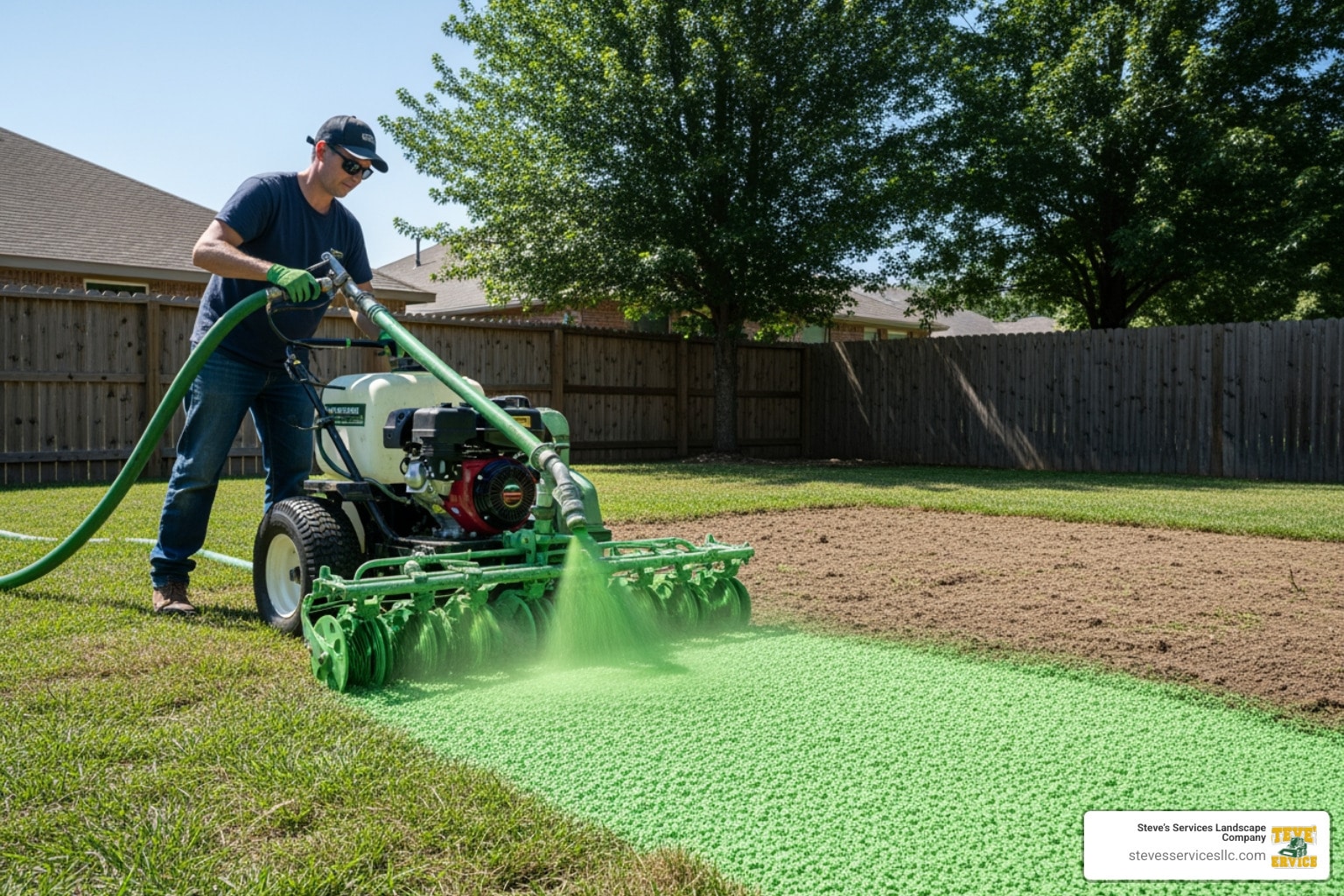
Also known as hydroseeding, hydromulch is a method that sprays a specialized mixture directly onto prepared soil. This engineered slurry contains everything seeds need to thrive. The process combines grass seed, water, fertilizer, and a tackifying agent (a type of glue) with a fibrous mulch material. Everything is blended and applied in one efficient step.
This integrated approach delivers impressive advantages. First is faster germination, often within 5 to 7 days, compared to the 3 to 4 weeks typical with hand-seeding. The superior moisture retention is another key benefit. The mulch acts like a sponge, holding water against the seed, which is crucial during the early days of growth and reduces the need for constant watering.
Then there’s erosion control. The fibrous mulch and tackifier create a protective crust over the soil, shielding seeds from wind and rain, which is especially important on slopes. According to the Erosion Control Toolbox: Hydroseed and Hydromulch, this method is specifically designed to protect developing turf while facilitating quick establishment.
You’ll also get better coverage than hand-seeding, as the hydraulic application distributes seeds uniformly for a dense, even lawn. Compared to sod, hydroseeded lawns are often healthier in the long run. The grass develops deeper, stronger roots in your existing soil, creating a more resilient lawn that can handle New England’s weather.
Key Benefits of Hydromulch
The advantages of hydromulch are significant. Quick establishment means your lawn sprouts in as little as a week, reducing the risk of weeds taking over. The deeper roots that develop create a more drought-resistant lawn that requires less maintenance over time. You’ll also experience reduced seed loss, as the protective mulch layer shields seeds from birds, wind, and heavy rain. This leads to a denser lawn without the need to overseed.
Furthermore, the mulch’s ability to retain moisture means less watering is required compared to traditional seeding, saving you time and conserving water. Hydromulch also allows for customizable seed blends, so you can use shade-tolerant varieties under trees and drought-resistant types in sunny spots. Finally, it’s a cost-effective lawn solution, especially for larger areas, as the efficiency and reduced waste lead to overall savings.
Common Applications for Hydromulch
Hydromulch is particularly effective in situations where traditional seeding struggles. For residential lawns, it provides an efficient path to a lush, green yard. Large properties benefit from the speed and uniformity of the application, which drastically cuts down on labor. Steep slopes are a prime application, as the erosion control capabilities stabilize hillsides and prevent soil and seed from washing away.
You’ll also see hydromulch used for parks, golf courses, and post-construction revegetation, where quick, uniform growth is essential for restoring landscapes and preventing erosion. If you’re planning a major landscaping project, hydromulch offers a powerful solution. For more information on creating the lawn you’ve been dreaming about, check out our insights on new lawn installs.
Understanding the Components and Prep Work for a Hydromulch Project
Before exploring the details, it’s important to be realistic. While I’m explaining how a do it yourself hydromulch project works, this is one of those jobs where calling a professional often makes more sense. The equipment is expensive to rent, mixing ratios must be precise, and application errors can lead to a patchy lawn that costs more to fix than hiring a pro from the start. In my 25+ years in this business, I’ve corrected more DIY hydromulch projects than I’ve seen succeed.
That said, understanding the process is valuable, even if you plan to hire someone. Here’s what the work entails.
The Slurry Components
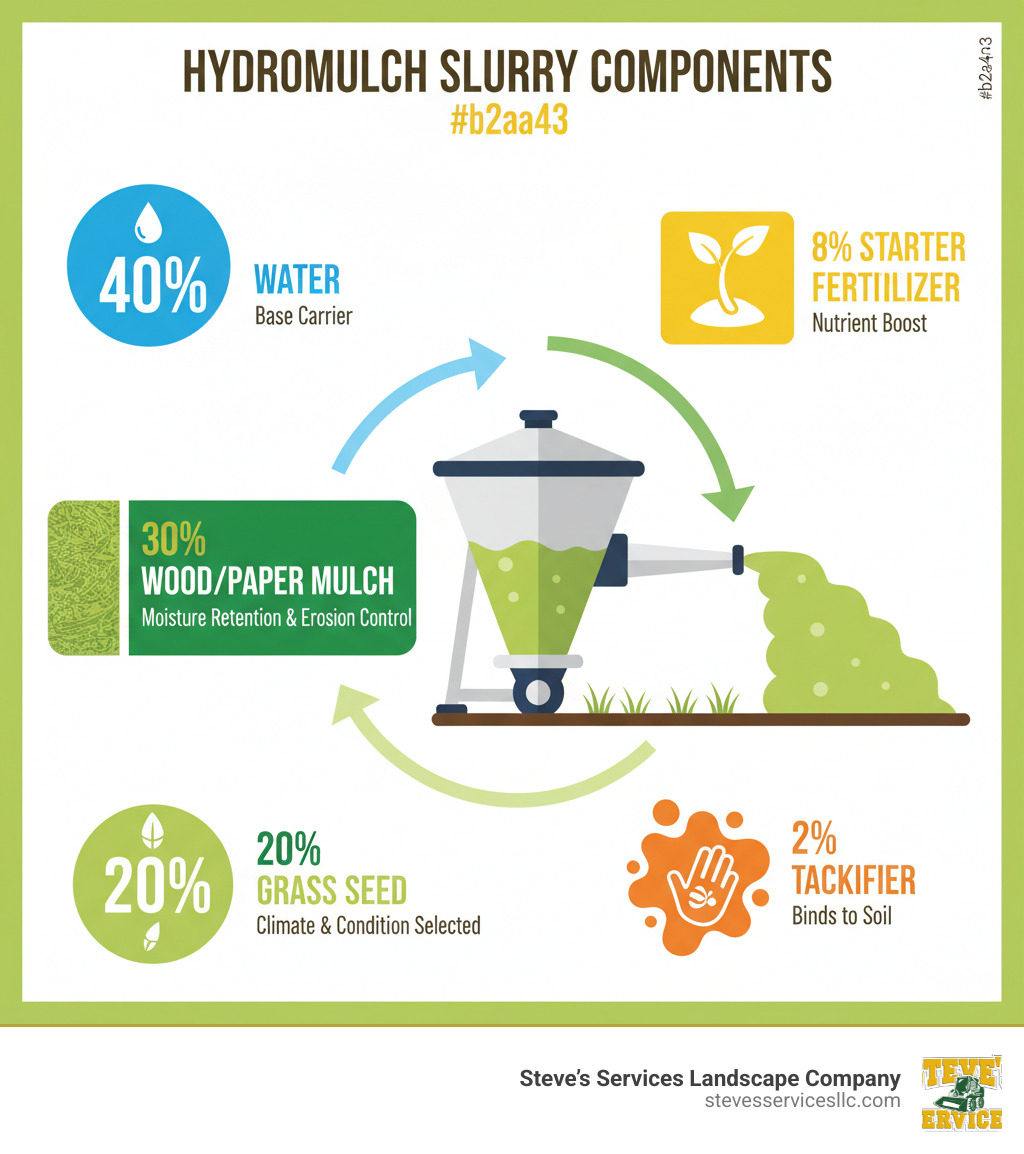
Each component in the hydromulch slurry has a specific job, and the right balance is critical for success.
Grass seed selection is the foundation. In Massachusetts, cool-season grasses like Kentucky bluegrass, perennial ryegrass, and fescues are used because they thrive in our climate. The USDA Plant Hardiness Zone Map is a useful resource for determining what grows best in your area. The right seed blend also accounts for shade, foot traffic, and drainage.
Mulch types vary. Paper mulch is inexpensive but breaks down quickly, making it suitable only for flat ground. Wood fiber mulch is the professional standard due to its excellent moisture retention and ability to adhere to slopes. A blended mulch (wood and paper) offers a middle-ground option. For extreme erosion control, Bonded Fiber Matrix (BFM) is used, but it’s expensive and requires professional-grade equipment. As noted in the Erosion Control Toolbox: Hydroseed and Hydromulch guidelines, choosing the right mulch is critical.
Starter fertilizer provides essential nutrients for early growth, while tackifying agents (often made from guar gum) act as a glue, binding the mulch and seed to the soil to prevent washout. Most commercial hydromulch products include a tackifier.
Essential Site Preparation
Proper preparation is arguably the most critical phase of any hydroseeding project and where many DIY attempts fail.
Soil testing is the first step to determine pH and nutrient levels. Most grasses prefer a pH between 6.0 and 7.0, and amendments like lime or sulfur can be added to correct imbalances.

Next, the area must be cleared of all debris, including rocks, roots, and weeds. Any existing grass must be removed completely, as hydromulch requires direct seed-to-soil contact to be effective. Spraying over existing grass will result in seed failure.
Grading the soil is necessary to ensure proper drainage and prevent water from pooling near foundations. The area should be graded 2.5 to 3 inches below the desired final lawn height. Then, about 3 inches of quality topsoil and compost should be added and tilled into the existing soil to a depth of 4-6 inches. This creates a nutrient-rich bed for the new seeds.
Finally, the lawn must be leveled with a rake to create a smooth, even surface. This prevents low spots where water can collect and high spots that dry out too quickly, ensuring a uniform result.
If this level of site prep sounds overwhelming, you’re not alone. The physical labor involved is a primary reason many homeowners opt for professional help. Our spring yard clean ups can handle this groundwork, preparing your property for a successful hydroseeding application.
An Overview of the Hydroseeding Application Process
Frankly, while I’m outlining what a do it yourself hydromulch application entails, I strongly advise most homeowners against attempting it. After 25 years in landscaping, I’ve seen too many DIY projects fail, costing more in the long run than hiring a professional. The equipment is unwieldy, the mixing is precise, and application errors lead to patchy results that are hard to fix.
For those who are still curious about the process, here is an overview of what’s involved.
Equipment Requirements
The biggest hurdle is the specialized equipment. A standard garden sprayer is not sufficient.
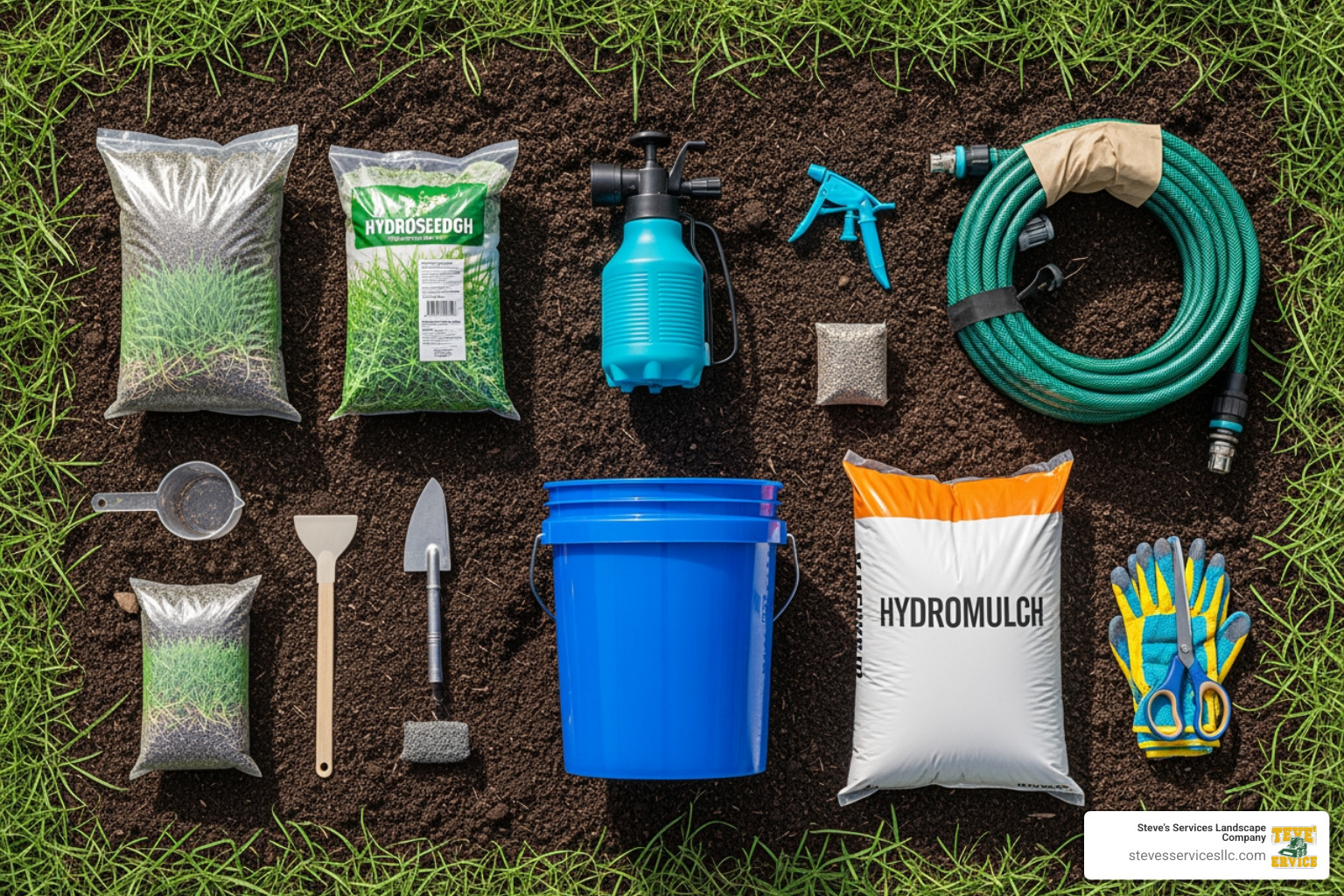
For very small patches, DIY hydroseeding kits that attach to a garden hose are available, but their effectiveness is limited. For a typical lawn, renting equipment is the only feasible option. Professional-grade hydroseeders cost $300 to $500 per day to rent. These machines include a large tank (50-300 gallons), a powerful pump, hoses, nozzles, and a crucial agitation system. Without constant agitation, the heavy materials settle, resulting in an uneven spray and poor coverage.
Some have attempted to build homemade hydroseeders, but this requires significant mechanical skill and is rarely cost-effective for a one-time project.
Mixing and Application
Getting the slurry mixture right is a science. The process typically involves filling the tank with water first, then adding the seed, starter fertilizer, and mulch in a specific order to prevent clumping. The mixture must be agitated until it reaches a smooth, thick consistency.

The spraying technique requires a steady hand and patience. The nozzle is held about three feet from the ground to create a wide spray pattern. The operator must walk slowly and overlap each pass to avoid gaps. This is physically demanding work, best done on a calm, cool day to prevent the wind from scattering the slurry and heat from drying it out too quickly.
Post-Application Lawn Care
This is where many DIY projects fail. The work isn’t over after the slurry is sprayed; the next eight weeks are critical.
The watering schedule is intense. For the first two weeks, the lawn needs to be watered 2-3 times daily for short durations to keep the top inch of soil consistently moist. For the next six weeks, daily watering is still required. An automated irrigation system is invaluable for maintaining this schedule.
Mowing should not occur until the grass is 3-4 inches tall. The first mow should be on the highest setting, removing only the top third of the blade. A follow-up fertilizer is needed after about 30 days, but weed control chemicals must be avoided for at least three months as they can harm new grass.
Finally, all foot traffic must be avoided for at least the first four weeks. Any pressure on the delicate seedlings can create permanent bare spots.
Our professional landscape maintenance services can manage this critical aftercare, ensuring your investment grows into a healthy, beautiful lawn.
DIY vs. Professional Hydroseeding: Is It Worth the Effort?
After learning about the do it yourself hydromulch process, you might be tempted to try it. Before you commit, it’s important to have an honest conversation about what the project truly entails. As a landscaper with over 25 years of experience, I’ve seen ambitious homeowners succeed, but I’ve also seen many projects that ended up requiring a professional fix.
The Pros and Cons of a DIY Hydromulch Project
Potential cost savings are the main appeal of DIY. Renting equipment for a day might cost $300-$500, and materials could add a few hundred more. For a 5,000 sq. ft. lawn, a DIY project might total $600-$1,000, whereas professional services can range from $400 to $3,000. There’s also the satisfaction of doing it yourself.
However, the downsides are significant. The physical labor is intense, involving hauling heavy materials and operating bulky equipment. The equipment hassle is another factor—transporting, learning to use, and cleaning a large hydroseeder is a major undertaking. Most importantly, the potential for costly errors is high. An incorrect mix, uneven application, or poor site prep can lead to a failed lawn, wasting both time and money.
Professional hydroseeding brings expertise that can’t be rented. Professionals know the right seed blends for Massachusetts microclimates, understand local soil conditions, and use calibrated, commercial-grade equipment. A professional crew can also complete the job in a few hours, whereas a DIY project can consume an entire weekend.
When to Call a Professional
Certain situations strongly favor hiring a professional:
- Large areas (over 10,000 sq. ft.) are difficult to manage with rental equipment and limited manpower.
- Steep slopes or difficult terrain require specialized tackifiers and application techniques to prevent washout.
- Complex soil issues, such as heavy clay or extreme pH imbalances, need an expert diagnosis and treatment plan.
- Guaranteed results are a key benefit of professional services. If a DIY project fails, the investment is lost.
- Lack of time is often the deciding factor. Professionals handle the entire process, allowing you to enjoy your weekend.
At Steve’s Services, we’ve refined our hydroseeding process over decades, serving communities like Everett, Reading, and Stoneham. We know Massachusetts soil and how to get great results.
Understanding the Costs
To make an informed decision, let’s look at the numbers. DIY costs for a 5,000 sq. ft. lawn include materials ($175-$350) plus equipment rental ($300-$500), for a total of roughly $600-$1,000. These are average costs based on internet research and current rental rates in Massachusetts.
Professional hydroseeding costs, according to national data, average between 8 to 60 cents per square foot. This means a 5,000 sq. ft. lawn could cost anywhere from $400 to $3,000, with most residential projects falling in the $800-$1,500 range. Please note these are industry averages, not a quote from Steve’s Services.
Prices vary based on lawn size, slope difficulty, soil condition, and site access. The real question isn’t just cost—it’s value. A professional job done right the first time, with a guarantee, is often a better investment than a risky DIY attempt.
Want to know the actual cost for your property? The best way is to get a detailed quote. We can assess your site and provide an honest estimate. For a flawless lawn without the hassle, consider professional hydroseeding services in Massachusetts. Sometimes the smartest DIY decision is knowing when to call an expert.