Fertilizing Newly Laid Sod: Top 10 Tips
Fertilizer should be applied to newly laid sod at just the right time to ensure a vibrant, thriving lawn. Here’s the quick answer: wait 4-6 weeks after installation to apply the first round of fertilizer. This crucial step supports the sod in developing a strong root system and absorbing nutrients effectively.
Caring for new sod is crucial for changing your outdoor space into a lush, green oasis. Fertilization plays a key role in this process, providing essential nutrients that help young grass roots anchor deeply into the soil. This foundation encourages strong growth and resilience, paving the way for a healthy lawn for years to come.
With over 25 years of landscape expertise, I, Steve Sylva, founder of Steve’s Services Landscape Company in Massachusetts, am dedicated to sharing my experience in ensuring your newly laid sod receives the attention it deserves. In the following sections, we’ll dive into the best practices and tips for achieving a picture-perfect lawn that will be the envy of your neighborhood.
Fertilizer should be applied to newly laid sod. basics:
– fertilizer 16 4 8
– super sod 16 4 8
Fertilizer Should Be Applied to Newly Laid Sod
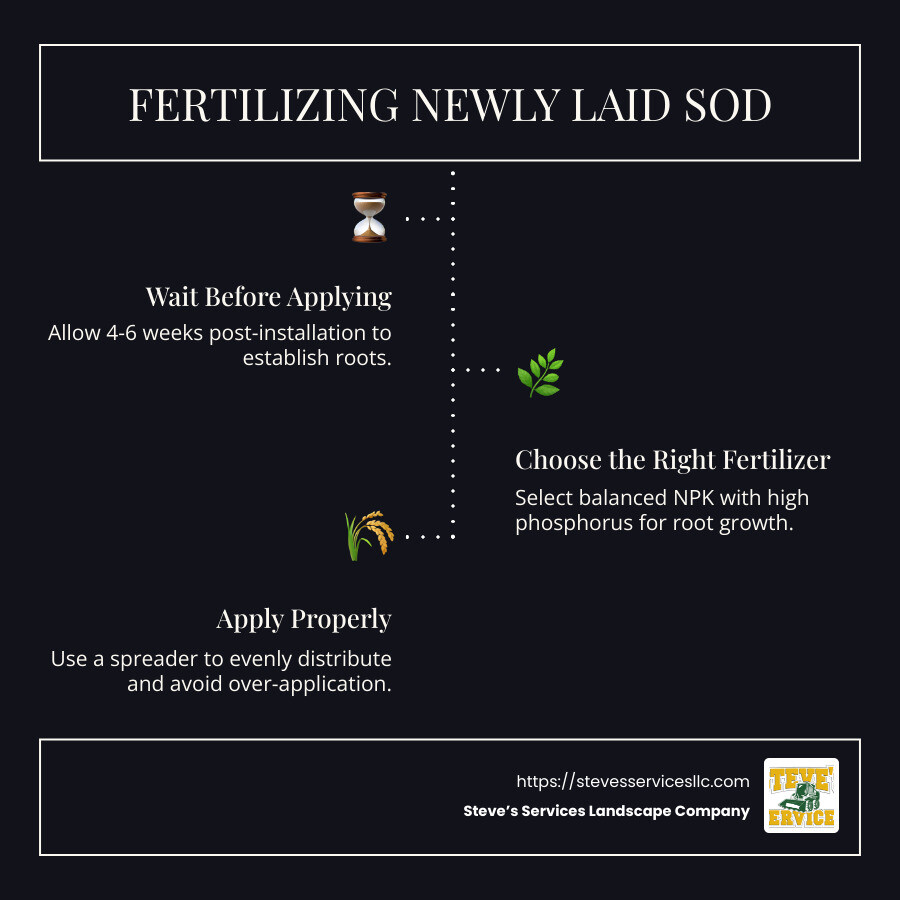
Fertilizer timing is crucial when establishing new sod. Wait about 4-6 weeks after installation before applying fertilizer. This allows the sod to start rooting into the soil, ensuring it can absorb nutrients effectively.
Importance of Phosphorus
Phosphorus is vital for root development. It helps the grass establish a strong foundation by encouraging roots to grow deep into the soil. A well-rooted lawn is more resilient and can better absorb nutrients and water.
For new sod, choose a fertilizer with a higher phosphorus content. This supports the early stages of growth when the roots are developing rapidly. Look for NPK ratios like 10-20-20 or 15-15-15, where the middle number (phosphorus) is higher or balanced.
Choosing the Right Fertilizer
When selecting a fertilizer for new sod, understanding NPK ratios is key. These numbers represent the percentage of Nitrogen (N), Phosphorus (P), and Potassium (K) in the fertilizer.
- Nitrogen (N): Promotes lush, green growth.
- Phosphorus (P): Encourages strong root development.
- Potassium (K): Boosts overall plant health and disease resistance.
A balanced NPK ratio, such as 16-16-16 or 15-15-15, provides a good mix of nutrients to support both root and leaf growth.
You also have a choice between organic and synthetic fertilizers:
- Organic Fertilizers:
- Made from natural materials like bone meal or manure.
- They improve soil health and release nutrients slowly.
- They can be more expensive and require more frequent application.
- Synthetic Fertilizers:
- Chemically derived and fast-acting.
- Usually more affordable and readily available.
- They must be applied carefully to avoid soil degradation over time.
Choosing the right fertilizer is essential for providing your new sod with the nutrients it needs to thrive. By understanding the importance of phosphorus and selecting the appropriate NPK ratio, you set the stage for a healthy, vibrant lawn.
Best Practices for Fertilizing New Sod
Proper fertilization is key to ensuring your new sod establishes well and grows into a lush, green lawn. Let’s explore the best practices for fertilizing newly laid sod.
Timing Your First Application
When to Apply: Wait 4-6 weeks after installing your sod before applying fertilizer. This waiting period is crucial as it allows the sod to develop initial root systems and better absorb nutrients.
Seasonal Considerations: Early spring, late spring, and early fall are ideal times for fertilizing. These seasons provide optimal growing conditions, helping your lawn get the nutrients it needs for robust growth.
Application Techniques
Use a Spreader: Always use a mechanical spreader for even fertilizer distribution. This prevents over-fertilizing certain areas, which can lead to burnt patches.
Spreader Settings: Follow the manufacturer’s guidelines for spreader settings. For the first application, set your spreader to half the recommended rate. For instance, if the bag suggests setting your spreader to 13, set it to 6.5 instead. This gentle approach gives your sod a nutrient boost without overwhelming it.
Avoid “Chicken Feeding”: Never apply fertilizer by hand. This method, known as “chicken feeding,” can cause uneven application and result in nutrient-deficient areas or burnt patches.
Avoiding Common Mistakes
Fertilizer Burn: Over-fertilization can lead to fertilizer burn, where nitrogen salts dehydrate plant tissues. Avoid this by using a slower-release product and watering thoroughly after application.
Over-Application: More is not always better. Applying too much fertilizer can dry out the soil and damage or kill your lawn. Always follow label directions and start with less if your lawn hasn’t been consistently maintained.
Fertilizer Stripes: Uneven application can cause discolored stripes on your lawn. To prevent this, ensure consistent alignment with each pass of the spreader, and consider fertilizing in two directions at half the application rate for even coverage.
By following these best practices, you’ll set the foundation for a healthy, resilient lawn. Up next, we’ll discuss how to maintain your sod post-fertilization, including watering and mowing tips.
Watering and Maintenance Post-Fertilization
Once you’ve applied fertilizer to your new sod, focus on proper watering and maintenance. This ensures that your lawn grows strong and healthy.
Transitioning Watering Frequency
Initial Watering: Right after fertilizing, water your lawn deeply. This helps the nutrients penetrate the soil and reach the roots. Aim to moisten the soil to a depth of about 6 inches.
Gradual Reduction: For the first two weeks, water your sod 3 to 4 times daily with short sessions to keep the soil moist but not soggy. After two weeks, begin to reduce the frequency while increasing the duration. This encourages the roots to grow deeper, making your lawn more drought-resistant.
Deep Watering: As your lawn becomes established, focus on deep watering once a week. This promotes strong root growth and helps your lawn withstand dry spells.
Mowing Techniques
First Mow: Wait until your sod reaches about 3 inches in height before mowing. This ensures the roots are strong enough to handle the stress of mowing.
Blade Sharpness: Always use sharp mower blades. Dull blades can tear the grass, leading to ragged edges and increased vulnerability to disease.
Mowing Patterns: Change your mowing pattern each time you mow. This prevents the grass from leaning in one direction and reduces soil compaction. It also helps promote upright growth and uniform appearance.
Mowing Height: Follow the one-third rule: never cut more than one-third of the grass height at a time. This minimizes stress on the grass and keeps it healthy.
By following these watering and mowing practices, you’ll support the health of your newly fertilized sod and help it thrive. Next, we’ll address some frequently asked questions about fertilizing new sod.
Frequently Asked Questions about Fertilizer for New Sod
What is the best fertilizer for newly laid sod?
When it comes to fertilizing newly laid sod, choosing the right fertilizer is crucial. A balanced NPK ratio like 15-15-15 or 16-16-16 is ideal. These numbers represent the amounts of Nitrogen (N), Phosphorus (P), and Potassium (K) in the fertilizer.
Phosphorus is particularly important for new sod because it helps in root development. A good choice is a starter fertilizer with a higher P value, such as 5-24-24. This will promote strong roots and overall plant health, ensuring your sod establishes quickly and effectively.
How often should new sod be fertilized?
Timing is key when it comes to fertilizing new sod. You should wait 4-6 weeks after laying your sod before applying the first round of fertilizer. This waiting period allows the sod to establish its roots in the soil.
Once you start fertilizing, follow the directions on the fertilizer bag but apply it at half the recommended rate. This helps avoid “burning” the new grass. Regular fertilization every 6-8 weeks during the growing season will keep your lawn lush and healthy. Seasonal timing is also important; early spring, late spring, and early fall are the best times to fertilize your new sod.
Can I use liquid fertilizer on new sod?
Yes, you can use liquid fertilizer on new sod. Liquid fertilizers are often easier to apply and can be absorbed more quickly by the grass. They provide an immediate nutrient boost, which can be beneficial for new sod that needs to establish quickly.
Quick Tip: Follow a schedule. For instance, apply liquid fertilizer once during the first week, again in the second week, and then in the third week. This staggered approach ensures that your new sod gets a steady supply of nutrients. However, be cautious not to over-apply, as this can lead to nutrient burn.
By understanding these aspects of fertilizing new sod, you’ll be able to make informed decisions that support your lawn’s health and vitality. Next, we’ll discuss some best practices for applying fertilizer to new sod.
Conclusion: Fertilizing
At Steve’s Services Landscape Company, we know that every lawn is unique, and that’s why we offer personalized lawn care solutions custom to your specific needs. Our team of experts, based in Everett, MA, is dedicated to helping you achieve the lush, healthy lawn of your dreams.
Why Choose Steve’s Services?
- Expert Knowledge: With over 25 years of experience, we understand the intricacies of different grass types, soil conditions, and local climates. This allows us to provide customized care that ensures your lawn thrives.
- Comprehensive Services: From sod installation to ongoing maintenance, we offer a full range of services to keep your lawn looking its best. Our services include soil preparation, sod installation, and detailed maintenance tips.
- Personalized Solutions: We conduct soil tests and choose the right fertilizers to match your lawn’s needs. Whether it’s a balanced NPK fertilizer for new sod or a high-potassium mix for winter prep, we ensure your lawn gets exactly what it needs.
- Exceptional Customer Service: We pride ourselves on building lasting relationships with our clients. Our commitment to exceptional service means you can rely on us for consistent and reliable lawn care.
Investing in professional lawn care not only saves you time and effort but also improves your property’s curb appeal and value. Let us help you create and maintain a beautiful, healthy lawn that will be the envy of your neighborhood.
Ready to transform your outdoor space? Contact Steve’s Services Landscape Company today for a custom lawn solution that fits your needs. Your dream lawn is just a call away!