
Foundation digging services: Top 5 Best Picks 2025 Reviewed
Why Foundation Digging Services Are Critical for Your Building Project
Foundation digging services are the backbone of any successful construction project, providing the precise excavation and site preparation needed for stable, long-lasting structures. Whether you’re building a new home, adding a garage, or constructing a commercial building, proper foundation excavation determines the structural integrity of your entire project.
Top Foundation Digging Services Quick Reference:
- Slab Foundations: $1,500-$6,000* (shallow excavation, minimal spoil removal)
- Crawl Space Foundations: $3,000-$10,000* (pier footings, ventilation prep)
- Full Basement Excavation: $5,000-$15,000* (deep dig, wall shoring, drainage)
- Hillside/Challenging Terrain: $5,000-$20,000+* (benching, erosion control)
*Average internet-based ranges; actual costs vary by location and project specifics
As one contractor noted in our research: “Foundation drilling is our whole business. There is no room for errors or do-overs.” This sentiment captures why professional excavation matters – your foundation literally supports everything built above it.
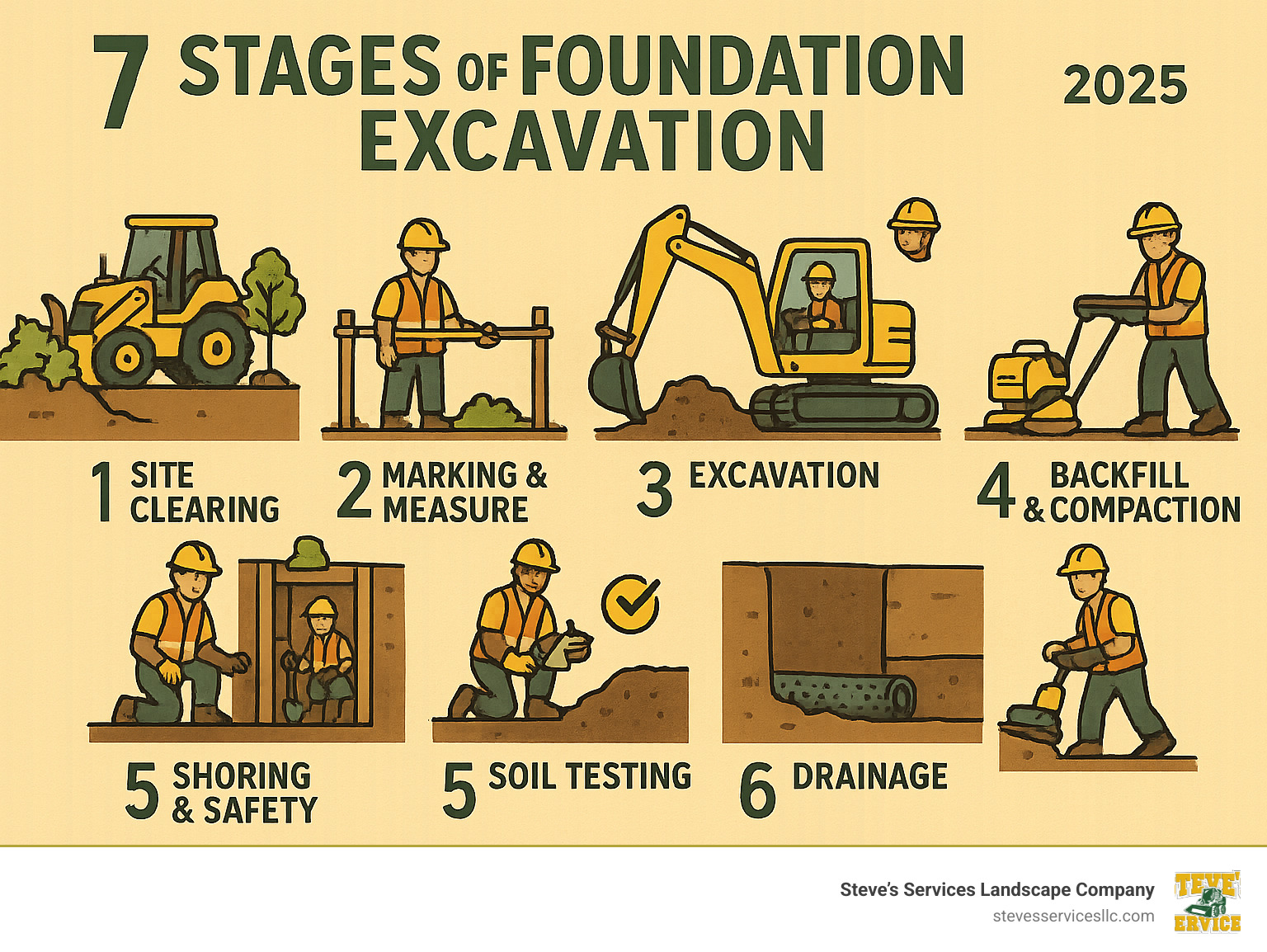
The excavation process involves much more than just digging a hole. Professional crews handle site clearing, precise measurements, soil testing, drainage planning, and safety protocols that protect both workers and your investment.
I’m Steve Sylva, owner of Steve’s Services Landscape Company, and I’ve spent over 25 years helping Massachusetts homeowners and contractors with excavation and site preparation projects. My team has handled everything from simple slab preparations to complex foundation digging services on challenging hillside lots.
Key Foundation digging services vocabulary:
– Basement excavation contractors
– Driveway excavation contractors
What Makes Great Foundation Digging Services
After 25 years in the excavation business, I’ve learned that exceptional foundation digging services aren’t just about having the biggest bulldozer on the block. The difference between a contractor who gets the job done right and one who creates expensive headaches comes down to expertise, proper equipment, and understanding the science behind what’s happening underground.
Licensed and insured crews should be your first non-negotiable requirement. In Massachusetts, excavation contractors must carry proper licensing, and comprehensive insurance protects both you and the workers on your property. Don’t let anyone touch your property without proper credentials.
The ability to perform geotechnical analysis separates true professionals from basic diggers. Understanding soil composition, load-bearing capacity, and drainage characteristics prevents foundation failures that can cost tens of thousands to repair later. Scientific research on type of soil reveals how different soil types require completely different excavation approaches and foundation designs.
Modern equipment makes a massive difference in both precision and efficiency. Quality contractors invest in excavators with GPS guidance systems, laser-guided grading equipment, and specialized attachments for different soil conditions. The right equipment means cleaner cuts, better accuracy, and faster completion times.
Precision grading ensures proper water management around your foundation from day one. Professional crews maintain exact elevations and slopes to direct water away from the structure, preventing moisture problems that cause foundation settling and basement flooding.
Trench shoring and safety protocols protect workers and prevent cave-ins that can damage nearby structures or utilities. OSHA requires specific safety measures for trenches deeper than 5 feet, and professional contractors follow these rules religiously.
Why Proper Foundation Excavation Matters
Your foundation has one job: transferring your building’s entire weight safely to the earth below. Poor excavation creates weak spots, uneven settling, and structural problems that can cost $20,000 or more to repair later.
Structural longevity depends on stable, properly prepared soil underneath your foundation. Professional excavation removes organic materials that decompose over time, compacts the base to prevent settling, and creates the precise dimensions needed for proper concrete placement.
Water management starts with excavation, not with gutters and downspouts. Proper grading and drainage prevent hydrostatic pressure against foundation walls, basement flooding, and frost heave damage. Here in Massachusetts, where we deal with significant seasonal temperature changes, water management can make or break a foundation’s long-term performance.
Frost protection requires excavating below the frost line – typically 4 feet deep in our area. Shallow foundations that don’t account for frost depth suffer from heaving and cracking when the ground freezes and thaws.
Primary Steps in Professional Digging
Professional foundation digging services follow a systematic approach that ensures quality results and prevents costly mistakes.
Site clearing removes all vegetation, debris, and obstacles within the work area. This includes tree and stump removal, utility marking, and establishing clear access routes for equipment.
Staking and survey work establishes exact foundation boundaries using stakes and string lines. Professional crews use transit levels and GPS equipment to ensure square corners and proper elevations.
Bulk excavation removes the majority of soil to rough dimensions while maintaining stable soil conditions. Experienced operators work systematically to prevent cave-ins and separate topsoil for reuse in final grading.
Footing trenches require hand-finishing to exact depths and widths specified in foundation plans. Even small variations in footing dimensions can cause structural problems.
Dewatering handles groundwater that enters the excavation using sump pumps, wellpoints, or drainage systems depending on local water table conditions.
Backfill and compaction happen after foundation walls cure completely. Professional crews use proper backfill materials and compact in lifts to prevent settling while installing drainage systems during backfill operations.
Foundation Digging Services – Reviewed & Compared

Not all foundation digging services are created equal, and the type of foundation you’re building makes a huge difference in what you’ll need. After working on hundreds of excavation projects across Massachusetts, I’ve learned that matching the right approach to your specific foundation type saves both time and money.
Slab foundations need precise shallow work with laser-guided grading. Crawl spaces require careful attention to pier footings and ventilation planning. Full basements demand deep dig expertise with rock removal capabilities. And challenging terrain projects call for specialized equipment and erosion control mastery.
Based on internet research, you might pay anywhere from $1,500 for a simple slab to $20,000 or more for a complex hillside basement. These are ballpark figures, and your actual costs depend on soil conditions, access, and local market rates.
| Foundation Type | Excavation Depth | Key Challenges | Average Cost Range* |
|---|---|---|---|
| Slab | 6-12 inches | Precise grading, drainage | $1,500-$6,000 |
| Crawl Space | 18-24 inches | Pier accuracy, ventilation | $3,000-$10,000 |
| Full Basement | 7-9 feet | Rock removal, shoring | $5,000-$15,000 |
| Challenging Terrain | Varies | Access, erosion control | $5,000-$20,000+ |
*Average internet-based ranges; not quotes from Steve’s Services
Best for Slab Foundations – Precision Shallow Cuts
Slab foundations are all about precision in the details. We’re talking about excavating just 6-12 inches deep, but every inch needs to be perfect. The beauty of slab excavation lies in its efficient grading approach using laser-guided equipment to create a perfectly level base.
Minimal spoil removal keeps costs down since most excavated dirt can stay on your property for final grading. The fast turnaround makes slab foundations attractive – most residential projects wrap up in 1-2 days.
Average costs range from $1,500 to $6,000 based on internet research, though rocky soil or tricky access can push prices higher. For homeowners in Burlington, Danvers, Everett, and surrounding Massachusetts communities, our backyard excavation services handle residential slab projects with precision.
Best for Crawl Spaces – Ventilated Stability
Crawl space excavation hits the sweet spot between simple slab work and complex basement digging. You’re looking at shallow trenching for perimeter footings, typically 18-24 inches deep, plus careful planning for ventilation and moisture control.
Pier footing accuracy becomes absolutely critical here. These concentrated load points transfer your entire building’s weight to stable soil, so there’s zero room for error. We use string lines and transit levels to ensure every footing sits at identical elevations.
Vapor barrier preparation starts during excavation, not as an afterthought. We grade the crawl space floor to proper elevations and remove any organic materials that could cause moisture problems later.
Internet research suggests $3,000 to $10,000 for crawl space excavation, with costs varying based on soil conditions and the number of interior piers needed. Our excavation services cover the specialized techniques needed for quality crawl space preparation.
Best for Full Basements – Deep Dig Specialists
Full basement excavation separates the pros from the weekend warriors. At 7-9 feet deep, these projects require specialized safety equipment, rock removal expertise, and experience that only comes from handling complex excavations year after year.
Rock removal becomes a reality for many Massachusetts projects. Our area is famous for its ledge and boulders, which means professional contractors need hydraulic hammers, rock wheels, or sometimes controlled blasting capabilities.
Wall shoring isn’t optional – it’s required by OSHA for excavations deeper than 5 feet. We use trench boxes, slope stabilization, or other approved methods to protect workers and prevent cave-ins.
Sump layout planning happens during excavation because sump pits need to be formed before concrete placement. Smart contractors coordinate with plumbers and waterproofing specialists early.
Based on internet research, full basement excavation typically runs $5,000 to $15,000, though complex projects with significant rock removal can cost much more. Our basement excavation contractors page provides detailed information about professional basement excavation services.
Best for Challenging Terrain – Hillside & Tight-Access Pros
Challenging terrain projects require specialized techniques that go way beyond standard foundation digging services. Hillside lots, tight access situations, and unstable soil conditions demand expertise.
Benching techniques create stable working platforms on steep slopes by cutting terraced levels into the hillside. This prevents dangerous soil slides and gives equipment operators safe working conditions.
Custom rigs become necessary when standard excavators simply can’t reach the work area. We’re talking about compact equipment for tight residential lots, long-reach excavators for difficult access situations, and specialized attachments for specific conditions.
Erosion control takes center stage on hillside projects where disturbed soil can wash away during the next rainstorm. Professional contractors install silt fences, erosion blankets, and temporary drainage systems.
Internet research suggests $5,000 to $20,000 or more for challenging terrain excavation, with the wide range reflecting how much site conditions can vary.
Remember: These are average internet-based ranges and not quotes from Steve’s Services. Your actual costs will depend on specific site conditions, local market rates, and project requirements.
Cost & Budget Checklist for Foundation Digging Services
Understanding excavation pricing helps you budget accurately and compare bids effectively. Foundation digging services use different pricing models, and costs vary significantly based on site conditions and project complexity.
After 25 years in the excavation business, I’ve learned that the biggest budget surprises come from homeowners who don’t understand how contractors price their work. Let me break down the real costs so you can plan properly and avoid sticker shock.
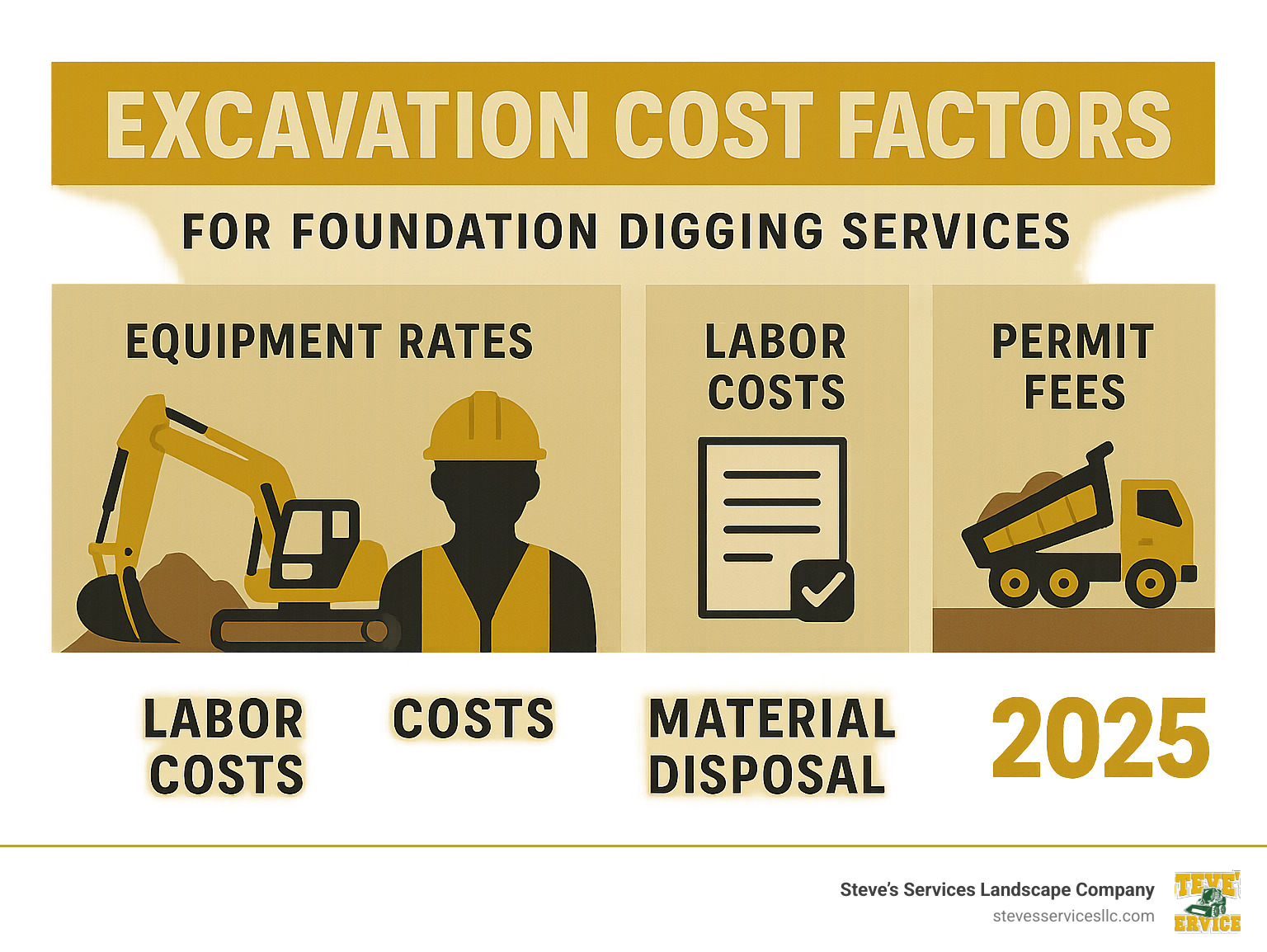
Most contractors use one of three pricing models for foundation excavation. Hourly rates work best for smaller jobs where conditions are uncertain – expect anywhere from $100 to $300 per hour for heavy equipment based on our research. Cubic yard pricing makes sense for larger excavations, typically running $2.50 to $15.00 per cubic yard. Some contractors prefer flat project fees that include everything from start to finish.
Permit fees add another $50 to $400 to most foundation projects, depending on your local building department requirements. Haul-off costs for excess soil can surprise homeowners – expect to pay $8 to $25 per cubic yard to dispose of excavated material, though clean fill costs less than contaminated soil.
Equipment costs reflect both machine size and specialization. Off-season discounts might be available during slower periods, though weather limitations can create delays. Dirt reuse strategies offer the biggest potential savings by using excavated soil for landscaping instead of hauling it away.
The Latest research on excavation cost factors confirms what we see in the field – proper planning and site analysis prevent cost overruns that often double original estimates.
Factors That Push Prices Higher
Rocky soil conditions top the list of budget busters. When we hit ledge or large boulders, standard excavation becomes specialized rock work requiring hydraulic hammers, rock wheels, or even controlled blasting. These techniques can triple excavation costs compared to digging in soft soil.
High water table conditions create muddy nightmares that slow everything down. We need dewatering pumps, special backfill materials, and often extended timelines to manage groundwater.
Limited access sites force us to use smaller, specialized equipment that works much slower than full-size machines. This labor-intensive work can increase costs by 200-400% compared to open sites.
Deep frost line requirements in Massachusetts mean all footings must extend at least 4 feet below grade to prevent frost heave. Utility relocation becomes necessary when existing lines interfere with planned excavation, adding weeks to schedules and thousands to budgets.
Smart Ways to Save Without Cutting Corners
Bundle site work by combining foundation excavation with other site preparation needs like driveway installation, utility trenching, or major landscaping. This maximizes equipment efficiency and reduces mobilization costs.
Schedule early in your planning process to avoid rush charges and ensure availability during optimal weather conditions. Reuse spoils for final grading eliminates disposal costs and reduces imported fill needs.
Compare at least three bids from licensed, insured contractors to ensure competitive pricing. However, the lowest bid isn’t always the best value if it compromises quality or safety.
Safety, Permits & Compliance Essentials
Excavation work can be dangerous, and professional foundation digging services make safety and compliance their top priority from day one. Every year, workers are seriously injured or killed in preventable excavation accidents.
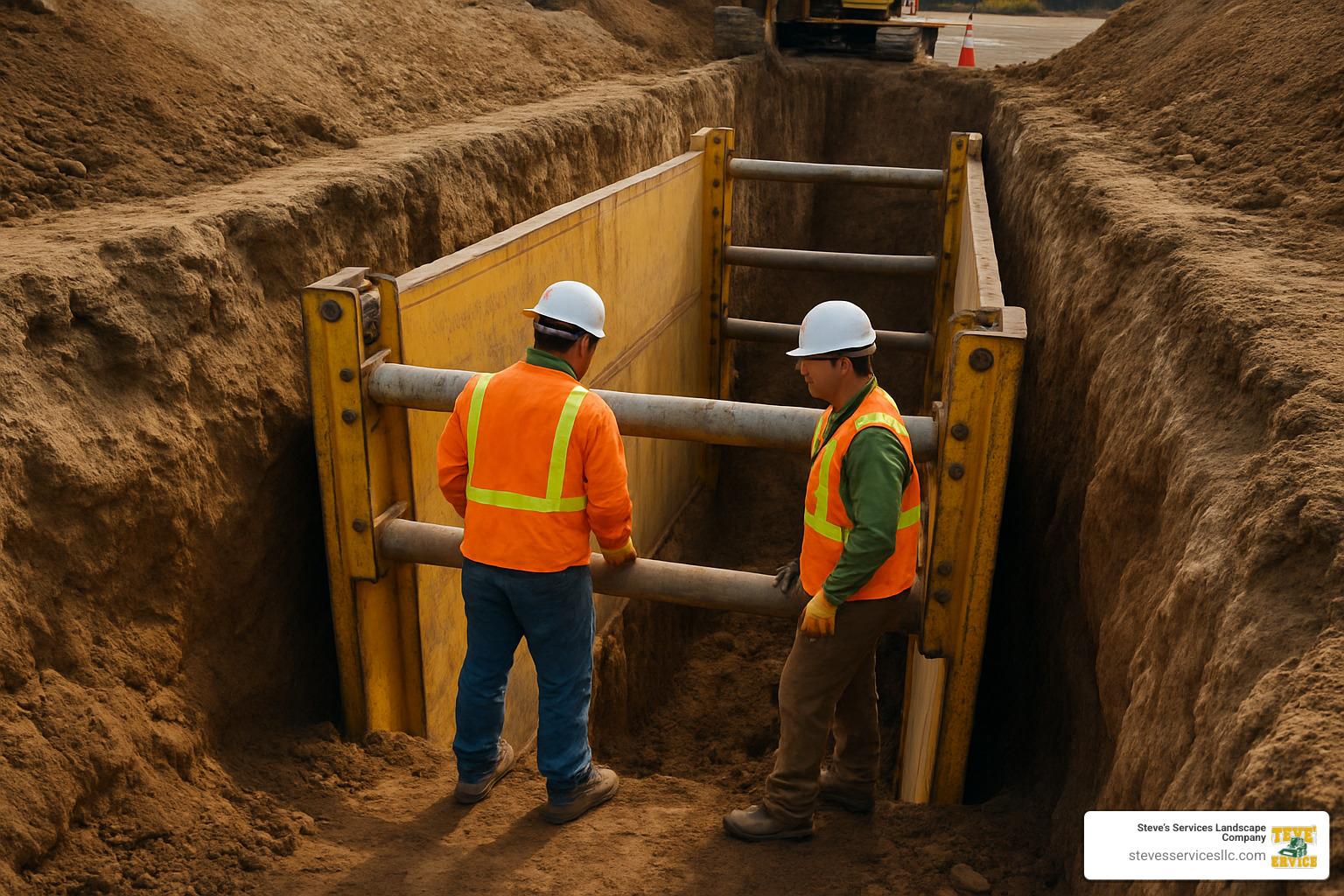
OSHA trench rules aren’t suggestions – they’re federal law that can shut down your project instantly if violated. Any excavation deeper than 5 feet requires specific safety measures like proper sloping, shoring systems, or benching.
Shoring systems literally save lives by preventing cave-ins. We use trench boxes, hydraulic shores, or slope stabilization depending on soil conditions and excavation depth. Before we move dirt, utility locating through Dig Safe (811) marks every underground line on your property. Gas explosions, electrical shocks, and massive repair bills result from utility strikes that could have been prevented.
Dust control protects everyone on site and neighbors from breathing harmful particles. PPE requirements mean hard hats, safety glasses, steel-toed boots, and high-visibility clothing for everyone in the excavation area.
The paperwork side matters just as much. Local building permits vary between Massachusetts communities but typically require plot plans, soil reports, and specific inspection schedules. Erosion-control BMPs prevent excavated soil from washing onto neighboring properties during rainstorms.
Must-Have Safety Measures in Every Dig
Every excavation includes sloped walls cut at proper angles to prevent cave-ins in shallow digs. OSHA specifies maximum slope angles based on soil type – typically 1.5:1 for most conditions we encounter in Massachusetts.
When sloping isn’t practical in deeper excavations, trench boxes provide the protection workers need. These steel or aluminum systems resist tons of soil pressure and create safe working spaces inside the excavation.
Access ladders must be positioned within 25 feet of any worker in trenches 4 feet or deeper. Daily inspections by trained personnel identify changing conditions before they become deadly. Weather monitoring keeps us ahead of conditions that can rapidly destabilize soil.
Regulatory Checklist Before You Break Ground
Plot plan approval from your local building department confirms that your planned excavation complies with setback requirements, easements, and zoning restrictions. Excavation permits may be required separately from building permits, especially for larger or complex projects.
Soil report filing becomes necessary in areas with known geotechnical challenges or environmental concerns. Site SWPPP (Stormwater Pollution Prevention Plan) requirements apply to larger projects and environmentally sensitive areas.
Call-before-you-dig tickets through Dig Safe (811) must be obtained at least 72 hours before any excavation begins. This free service brings utility companies out to mark their underground lines with colored flags and spray paint.
Frequently Asked Questions about Foundation Digging Services
When homeowners start planning foundation work, they naturally have questions about equipment, timelines, and costs. After 25 years in the excavation business, I’ve heard these questions countless times.
What equipment do professionals use?
The right equipment makes all the difference in foundation digging services. Excavators form the backbone of most foundation work, ranging from compact mini-excavators that can fit through a standard gate to full-size machines that move serious amounts of earth.
Backhoes offer incredible versatility for smaller foundation projects, combining digging power with loading capability. Bulldozers handle the heavy lifting when it comes to site clearing and rough grading. Compactors ensure your foundation sits on properly prepared soil using different types depending on the area.
Laser levels and GPS guidance systems bring precision to modern excavation work, helping us maintain exact elevations across your entire foundation area.
How long does a typical excavation take?
Project timelines depend on several factors, but I can give you realistic expectations based on our experience. Slab foundation excavation typically takes 1-2 days for most residential projects. Crawl space excavation usually requires 2-4 days because of additional trenching needed for perimeter and pier footings.
Basement excavation generally takes 3-7 days, though this varies significantly based on depth, soil conditions, and rock encounters. Weather dependency affects every excavation schedule in New England – rain stops work immediately for safety and to prevent soil damage.
Soil conditions dramatically impact timelines. Rocky soil requires specialized equipment that slows progress. High water tables demand pumping and special handling.
Can I stay on budget with unexpected rock?
Rock encounters happen frequently in Massachusetts foundation digging services, and smart planning helps you handle these situations without breaking your budget.
Include rock clauses in your excavation contract that specify exactly how rock removal will be priced if we encounter it. Request change-order pricing before work begins so you understand costs if rock removal becomes necessary. Rock work typically runs $15-45 per cubic yard depending on hardness and removal method.
Consider rock-wheel attachments for moderate rock conditions. These specialized tools can handle fractured ledge and large boulders more efficiently than traditional hydraulic hammers. Budget contingencies of 10-20% help cover unexpected conditions including rock, high water tables, utility conflicts, or access issues.
I always tell customers that rock isn’t necessarily bad news – it often indicates excellent bearing capacity for your foundation. The key is planning for the possibility and working with contractors who have the equipment and experience to handle rock efficiently.
Conclusion
Your foundation literally supports everything that gets built on top of it – which is why choosing the right foundation digging services isn’t just important, it’s absolutely critical. I’ve seen too many projects where cutting corners on excavation led to cracked walls, flooded basements, and repair bills that cost more than doing it right the first time.
After 25 years in this business, I can tell you that quality excavation work prevents problems you never want to face. Proper foundation digging protects your investment, maintains your property value, and gives you the peace of mind that comes from knowing your building sits on solid ground.
At Steve’s Services Landscape Company, we’ve handled everything from simple slab preparations to complex basement excavations on some pretty challenging Massachusetts terrain. Every project teaches us something new, but the fundamentals never change – precision, safety, and attention to detail make all the difference.
We’re proud to serve homeowners and contractors throughout the greater Boston area, including Burlington, Danvers, Everett, Lynnfield, Medford, Melrose, North Reading, Reading, Revere, Saugus, Stoneham, Winchester, Woburn, Malden, and Wakefield. Our local knowledge of New England soil conditions, permitting requirements, and seasonal challenges helps us deliver results that last.
Whether you’re planning a new home foundation, adding a garage, or tackling a commercial project, professional excavation combines technical expertise with proper equipment and safety protocols. It’s not just about moving dirt – it’s about creating the stable, properly drained foundation that your entire project depends on.
The investment in quality foundation digging services pays dividends for decades. Your structure will be more stable, your basement will stay dry, and you’ll avoid the headaches that come from foundation problems down the road.
Ready to start your project on solid ground? Contact our More info about Excavating Contractors team today for a detailed evaluation and personalized quote. We’re here to help you build with confidence, knowing your foundation work is done right the first time.
As we always tell our clients: there’s no room for do-overs when it comes to foundation work. Choose experienced professionals who understand this responsibility and have the skills to deliver lasting results.
