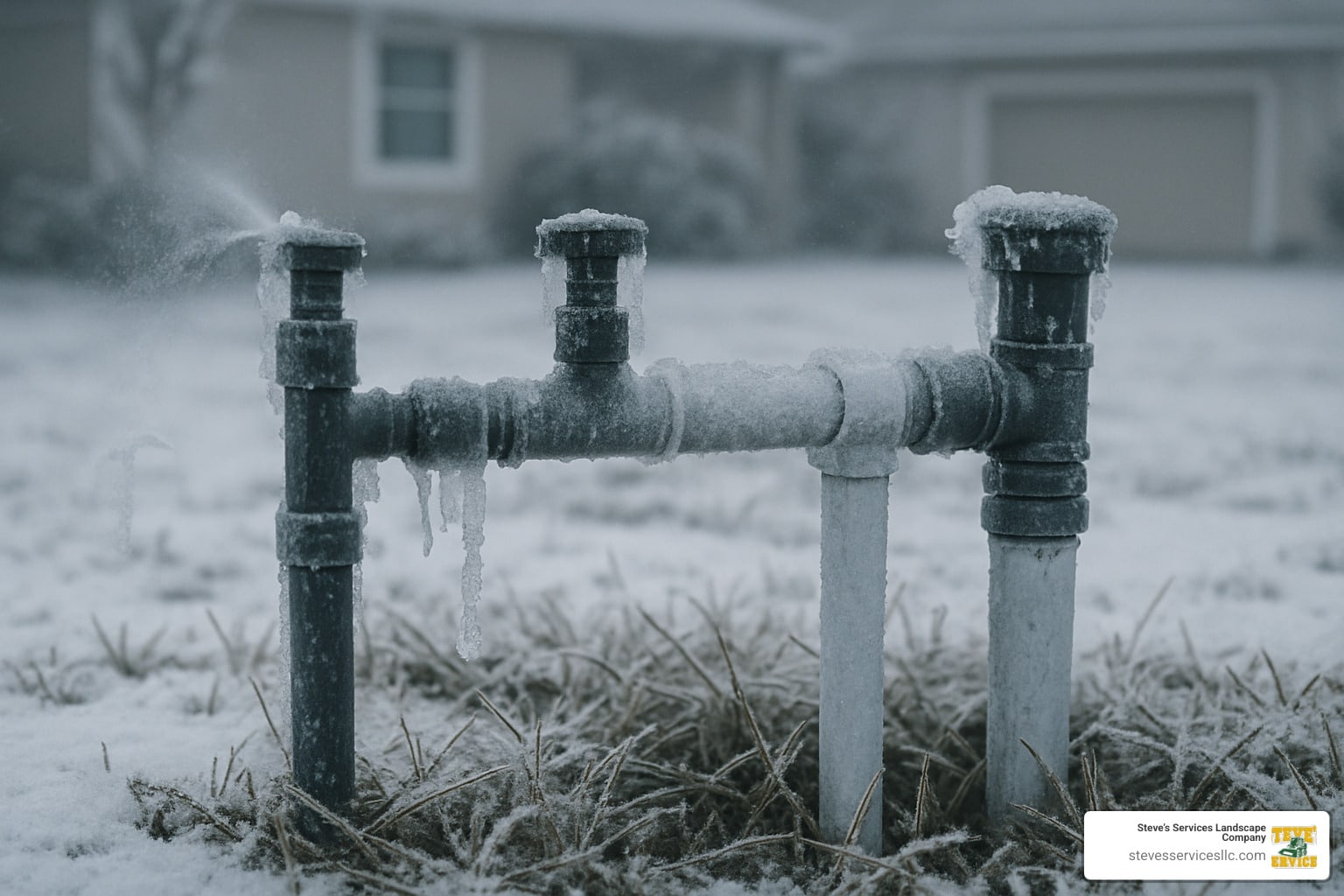
Frozen Irrigation System: 7 Proven Steps to Prevent Costly Damage
Understanding the Cold Reality of Frozen Irrigation Systems
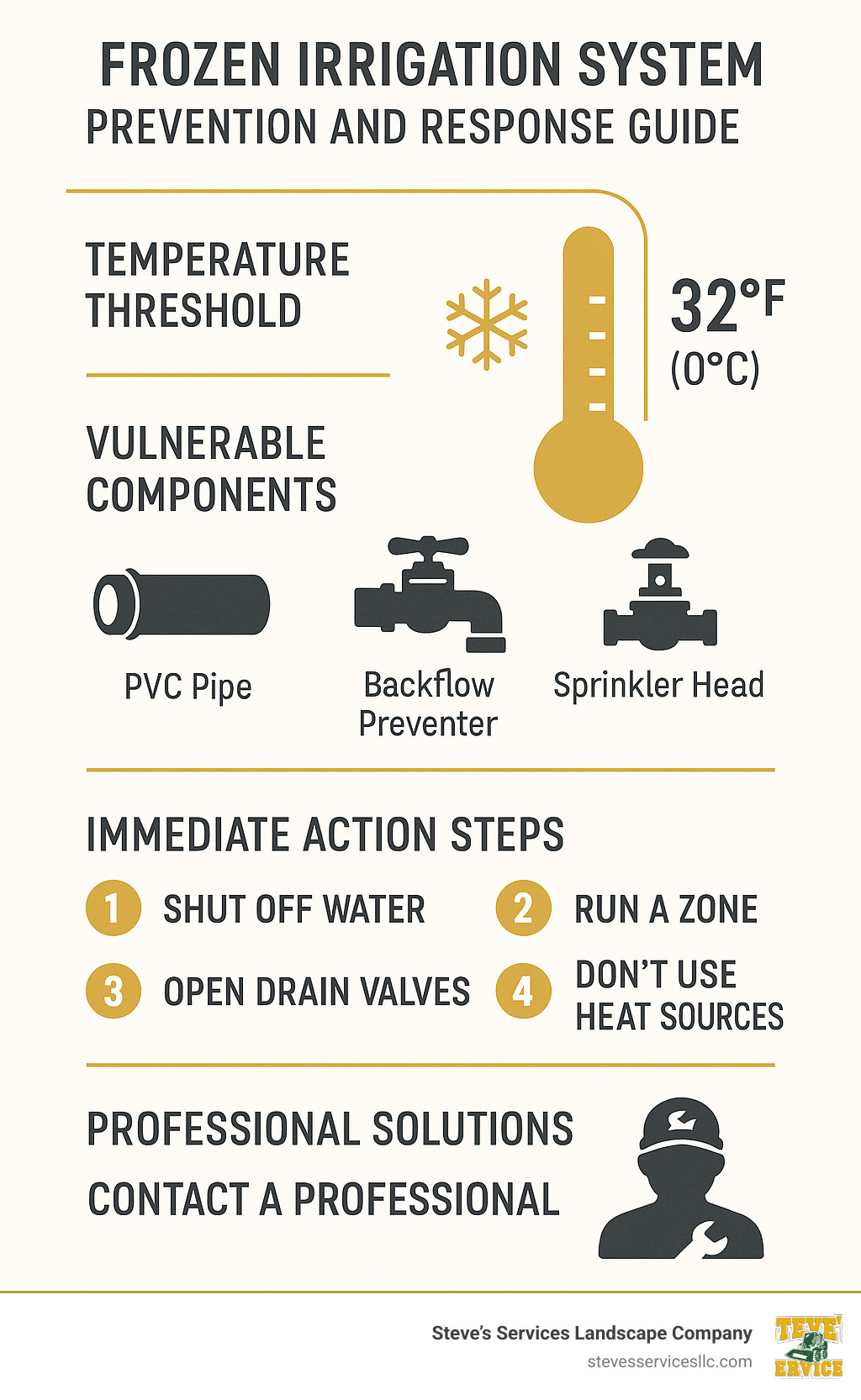
If you’re dealing with a frozen irrigation system, here’s what to do immediately:
- Shut off the main water supply to your irrigation system
- Run a zone for 2 minutes to relieve pressure
- Open drain valves to remove remaining water
- Don’t use heat sources like space heaters or open flames
- Contact a professional if you suspect pipe damage
A frozen irrigation system occurs when water inside your sprinkler pipes freezes, expands, and puts pressure on pipe walls. This common winter problem affects thousands of homeowners in Massachusetts each year, with repair costs often ranging from $150 to over $1,000 depending on the extent of damage.
When water freezes inside irrigation pipes, it expands by approximately 9%, creating enough pressure to crack PVC pipes, damage backflow preventers, and ruin sprinkler heads. Without proper winterization, pipes that are more than half full of water will almost always crack when frozen, leading to costly system-wide failures come spring.
The risks of a frozen system extend beyond just broken pipes. Leaking water can damage your foundation, create hazardous ice patches, and lead to shocking water bills. Most importantly, attempting DIY repairs with improper heating methods can create fire hazards or carbon monoxide poisoning risks.
I’m Steve Sylva, owner of Steve’s Services Landscape Company with over 25 years of experience diagnosing and repairing frozen irrigation systems throughout Massachusetts, and I’ve seen how proper winterization can save homeowners thousands in emergency repairs.
What Makes Irrigation Systems Freeze in the First Place?
Ever wonder why your sprinkler pipes burst when temperatures drop? It’s actually simple physics at work. Water expands by about 9% when it freezes, creating enormous pressure inside your irrigation pipes—sometimes over 600 PSI! Since most residential systems use PVC or polyethylene pipes rated for much lower pressures, they simply can’t handle this expansion.
As our senior technician with 15+ years of experience servicing communities like Burlington and Danvers puts it: “Without proper winterization, PVC pipes that are more than half full of water will almost always crack if frozen.”
Your irrigation system is particularly vulnerable because of several key factors:
Trapped water that can’t drain properly becomes ice that expands and cracks pipes. Poor drainage in systems without proper slope or drain valves is practically asking for trouble. Here in Massachusetts, the frost depth often penetrates deeper than many irrigation pipes are buried. And while PVC pipes are cost-effective, they’re much more prone to cracking than polyethylene when frozen. Those sudden cold snaps we get in New England? They leave little time for emergency preventative measures.
Temperature & Soil Factors Behind a Frozen Irrigation System
The risk of a frozen irrigation system varies dramatically based on local conditions. Throughout Massachusetts communities like Lynnfield, Medford, and Melrose, the frost line typically extends 48-52 inches below ground during harsh winters.
This matters tremendously for your sprinkler system. Most irrigation lines are installed just 12-18 inches deep to avoid lawn maintenance damage, but that’s nowhere near deep enough to escape our New England frost line. When temperatures plummet rapidly, the ground doesn’t have time to release heat gradually, putting your system at serious risk.
Wind chill is another sneaky culprit. Those exposed corners of your yard or above-ground risers cool much faster than protected areas, creating freeze risks even when temperatures haven’t dropped below 32°F. And if your soil is particularly wet, watch out—moisture conducts cold more efficiently than dry soil, increasing both freeze depth and speed.
One of our North Reading clients learned this lesson the hard way: “We thought our system was safe because the pipes were buried, but after that three-day cold snap with temperatures dropping to -5°F, we had four separate line breaks come spring.”
Hardware Weak-Spots That Ice Targets
Not all parts of your irrigation system freeze equally. Knowing the vulnerable points helps you protect what matters most:
Backflow preventers are particularly susceptible, as they’re often installed above ground or in shallow boxes. Their complex brass bodies contain multiple chambers where water gets trapped, and when frozen, can crack completely—requiring expensive replacement.
Valves and manifolds contain rubber diaphragms and plastic components that become brittle in freezing temperatures. Their location in shallow valve boxes makes them easy targets for frost.
Above-ground risers that connect to your sprinkler heads freeze before anything else simply because they’re exposed to air temperature. Similarly, check valves in modern sprinkler heads prevent drainage—which is helpful during normal operation but disastrous when water gets trapped before a freeze.
Even your controller wiring isn’t safe—the expansion of frozen soil can damage buried electrical lines, creating mysterious system failures that are difficult to diagnose.
“Last year in Winchester, we responded to an emergency call where a client’s backflow preventer had split completely in half after a hard freeze,” our service manager recalls. “The replacement cost was over $800, all because the device wasn’t properly insulated or drained.”
Understanding these vulnerable points is your first step toward preventing costly damage and ensuring your irrigation system survives winter intact.
Recognizing a Frozen Irrigation System Before Damage Spreads
Early detection of a frozen irrigation system can save you thousands in repairs and prevent landscape damage. Like a doctor spotting early symptoms of illness, knowing what to look for helps you catch problems before they turn into costly disasters.
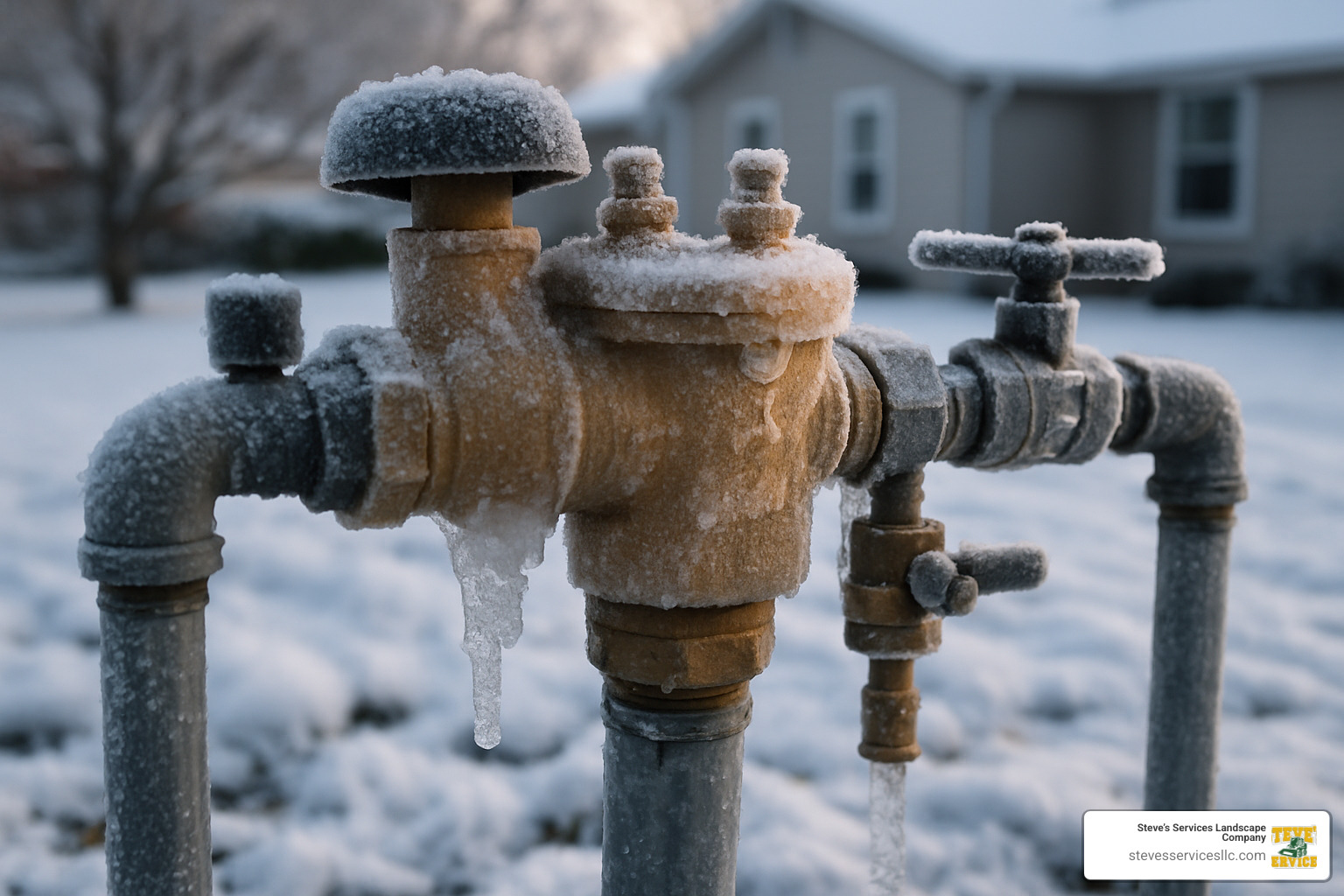
I remember walking a property in Medford last January with a homeowner who noticed something “just didn’t look right” with their backflow preventer. That keen observation saved them over $600 in potential repairs. The thin layer of frost forming on the device was our early warning to take action before pipes burst.
According to scientific research on pipe freeze pressure, water expands with tremendous force when freezing—creating pressures that no residential irrigation system is designed to withstand. This makes early detection absolutely critical.
Red Flags Your Frozen Irrigation System Needs Immediate Attention
Your irrigation system can’t speak, but it does send clear distress signals when freezing occurs. Here’s what to watch for:
Visible frost or ice formations on any part of your system is nature’s most obvious warning sign. Even a light frost coating on backflow preventers or exposed pipes indicates freezing has begun inside the components.
Unusual sounds tell a story too. That strange hissing, gurgling, or crackling when you attempt to run a test cycle? That’s ice blocking water flow or worse—pipes already starting to crack under pressure.
Reduced or inconsistent water flow is another telltale sign. If some zones work while others don’t during testing, ice is likely blocking specific sections of your system.
I’ve had Revere homeowners call us after noticing unexpected puddles or wet spots in their yard during winter months. As one client put it, “I thought it was just melting snow at first, but the spot never dried up, even during freezing temperatures.” That persistent moisture almost always indicates a cracked pipe from freezing.
Perhaps the most expensive warning sign is an unexplained spike in your water bill. One Saugus family contacted us after their January water bill tripled—only to find multiple irrigation line breaks leaking water 24/7.
How to Safely Confirm the System Is Frozen—Without DIY “Heroics”
When you suspect freezing, resist the urge to become an amateur plumber. We’ve seen too many well-intentioned homeowners turn a simple freeze into a costly disaster through improper thawing attempts.
Instead, perform a non-invasive inspection by simply looking for visible signs without dismantling anything. Take photos of any concerning areas—they’ll help professionals assess the situation and could prove valuable for insurance claims.
A handheld infrared thermometer (available at most hardware stores) can be incredibly useful for identifying cold spots in your system without physical contact. Temperature readings below 32°F on components indicate freezing.
Always verify your main shut-off valve is closed if you suspect freezing. This prevents water from flowing into potentially damaged pipes once thawing occurs naturally or professionally.
Your system controller can provide clues too. Try running a test cycle from your controller—but don’t panic if zones don’t activate. This often simply means water isn’t flowing due to ice blockages rather than electrical problems.
“We always remind our Burlington and Stoneham customers that patience beats panic,” says our service manager. “The worst freeze damage we see comes from homeowners using blowtorches, space heaters, or hot water to thaw components. These methods not only damage the system further but create serious safety hazards.”
For more detailed guidance on identifying potential issues with your irrigation system, visit our comprehensive irrigation troubleshooting guide for professional insights.
Emergency Steps When Your Frozen Irrigation System Shuts Down
When you find your frozen irrigation system, quick action can save you thousands in repair costs and prevent water damage to your property. The first moments after finding ice in your system are critical.
Start by locating and closing the main shut-off valve to your irrigation system. This simple step stops additional water from flowing into potentially cracked pipes – something our emergency response team sees overlooked far too often. Next, turn off your controller and unplug any booster pumps to protect these expensive electrical components from damage.
If you notice water already leaking, grab some towels or buckets to contain the mess while you wait for help. One of our Wakefield customers did exactly this during last February’s brutal cold snap, and their quick thinking prevented what could have easily been thousands in water damage to their finished basement.
“Taking photos of any visible damage or ice formation isn’t just helpful for us when we arrive – it’s essential documentation for your insurance claim,” explains our service manager. “Many homeowners skip this step and regret it later when discussing coverage with their provider.”
The final and most important step? Call a professional irrigation specialist. While it might be tempting to attempt repairs yourself, proper assessment requires specialized equipment and expertise that most homeowners simply don’t have.
Why You Should Avoid Space Heaters & Open Flames
The desperation that comes with a frozen irrigation system sometimes leads to dangerous DIY solutions. We’ve seen it all – from hair dryers pointed at backflow preventers to propane torches used on exposed pipes.
These methods create serious hazards. Space heaters and open flames near buildings or dry vegetation pose obvious fire risks. One client in Malden learned this lesson the expensive way when their propane torch not only cracked their backflow preventer from thermal shock but also melted nearby control wiring – turning a simple freeze into a $1,200 repair job.
Even more concerning is the carbon monoxide danger. Fuel-burning heaters used in enclosed spaces like valve boxes produce deadly CO gas. Safety data shows carbon monoxide fatalities peak during winter months, often due to improper heating equipment use while attempting to thaw frozen pipes.
Beyond safety concerns, excessive or uneven heating can warp PVC pipes, damage rubber components, and destroy wire insulation. Many Massachusetts municipal codes explicitly prohibit using open flames for pipe thawing near structures – not to mention that damage caused by improper thawing attempts may void your homeowner’s insurance coverage.
When to Call a Professional vs. Waiting for Natural Thaw
Not every frozen irrigation system requires an emergency service call. The decision depends on several factors that our technicians evaluate hundreds of times each winter across Woburn, Burlington, and beyond.
Call us immediately if you spot water leakage or unusual wet spots (signs pipes have already burst), if your backflow preventer shows visible damage or ice formation, or if the freeze has persisted more than 24 hours. You’ll also want professional help if weather forecasts predict continued freezing temperatures, if you rely on your system for commercial purposes, or if you notice water pressure issues in your home plumbing (which may indicate backflow problems).
You might reasonably wait for a natural thaw when temperatures are predicted to rise above freezing within 24 hours, when no visible damage has occurred yet, when your system was properly winterized but caught by a surprise freeze, or when only above-ground components show minor frost without ice expansion.
Industry data shows professional winterization services reduce freeze damage risk by over 90% – which explains why many of our clients throughout Massachusetts schedule annual blow-outs. This preventative service uses compressed air to remove water from irrigation lines before winter hits.
If you’re facing a frozen irrigation system emergency right now, our team at Steve’s Services is ready to help. We’ve seen and fixed every type of freeze damage imaginable across our decades of service. Learn more about our irrigation system repairs and how we can get your system back to perfect working order.
Professional Thawing, Repair & Average Costs
When a frozen irrigation system requires professional intervention, understanding the process and potential costs helps you make informed decisions.

Compressed-Air Blow-Out: What the Pros Do Differently
You might wonder why professional blow-outs are so effective compared to DIY attempts. The difference comes down to equipment, expertise, and methodology.
Professional technicians like our team at Steve’s Services use industrial-grade air compressors that deliver 125-250 CFM (cubic feet per minute) of air volume—something your garage compressor simply can’t match. We carefully regulate pressure, typically starting at 50 PSI and never exceeding 80 PSI, to protect your system components from damage.
“I was amazed at how quickly and efficiently your team cleared my system,” shared one of our Reading clients. “What would have taken me all day with my small compressor took your technician less than an hour.”
Our systematic approach follows a specific sequence, usually working from higher elevation zones downward, ensuring complete water evacuation. Rather than one continuous blast, we perform multiple short cycles on each zone to prevent heat buildup from air friction that could damage components.
During the process, our technicians carefully inspect your backflow preventers, valves, and other components for existing damage. As Texas A&M University notes in their winterization guidelines, “In areas where the frost level extends below the depth of installed pipe, draining the irrigation system is essential to prevent freeze damage, as repeated freezing and thawing can weaken pipes and lead to fractures over time.”
Typical Repair Pricing After a Freeze Event
The million-dollar question: “How much will this cost me?” The truth is, repair costs for a frozen irrigation system vary widely depending on damage severity, system complexity, and accessibility.
While we don’t publish our specific pricing (as each system requires individual assessment), industry averages suggest repairs typically range from $150 for minor fixes like a single cracked fitting up to $1,000 or more for major repairs involving multiple broken pipes or backflow replacement. Complete system reconstruction can run anywhere from $2,000 to $6,000+. These ranges reflect industry averages based on internet data and not actual costs for Steve’s Services.
What drives these costs? Material quality makes a significant difference—higher-grade replacement parts cost more but offer better long-term reliability. Accessibility matters too—components buried deep underground require more labor to reach. System complexity plays a role, as multi-zone systems with specialized components naturally cost more to repair.
Then there’s emergency timing—after-hours or holiday service often includes additional charges. And of course, the extent of damage is crucial—widespread freezing typically affects multiple components throughout your system.
“Last winter after that extended cold snap, we had a Lynnfield client whose system had over a dozen breaks in various zones,” our senior technician shared. “While the parts themselves weren’t expensive, the labor to locate and repair each break drove the total cost to nearly $1,800.”
Upgrades That Pay Off After a Freeze
After dealing with freeze damage, many of our Massachusetts customers decide it’s time to upgrade their systems. These investments often pay for themselves by preventing future problems.
Automatic drain valves top our recommendation list. These clever devices automatically open when system pressure drops, allowing water to drain naturally without any intervention. At $30-$50 per valve plus installation, they’re an affordable insurance policy against future freezes.
Smart controllers with freeze sensors represent another worthwhile upgrade. These modern marvels can automatically shut down your system when temperatures approach freezing, preventing those “I forgot to winterize” moments that lead to damage. Depending on features, they range from $150-$500.
For exposed components, insulated backflow enclosures provide crucial protection. These purpose-built insulated covers shield vulnerable backflow preventers from freezing temperatures, with quality options ranging from $100-$300.
More ambitious homeowners sometimes opt for deeper pipe installation. While costly ($2,000-$8,000 depending on system size), relocating pipes below the frost line provides permanent protection against freezing.
“After repairing freeze damage to a client’s system in Danvers last year, we installed automatic drain valves at strategic points,” explains our installation manager. “This winter, despite similar temperatures, their system remained protected—an investment of $350 that saved them potentially thousands in repairs.”
To learn more about beneficial system upgrades that can protect your irrigation investment, visit our page on irrigation system upgrades.
Preventing the Next Freeze Catastrophe
Preventing a frozen irrigation system is far more cost-effective than repairing one. With proper preparation, you can protect your irrigation investment through even the harshest Massachusetts winters.
Winterization Checklist for New England Lawns
The key to winter irrigation protection starts with proper preparation. For Massachusetts homeowners, mid-October is your target date for winterization – don’t wait until that first unexpected frost warning has you scrambling!
Professional winterization should be your first priority. Our Steve’s Services team has seen the difference this makes across communities like Melrose and North Reading, where properly winterized systems are 90% less likely to suffer freeze damage compared to DIY attempts.
Make sure your system includes a dedicated shut-off valve that remains accessible year-round. This simple addition can be a lifesaver during emergency situations. Once shut off, remember to set your controller to “rain mode” – this clever setting preserves all your custom programming while preventing the system from activating during winter months.
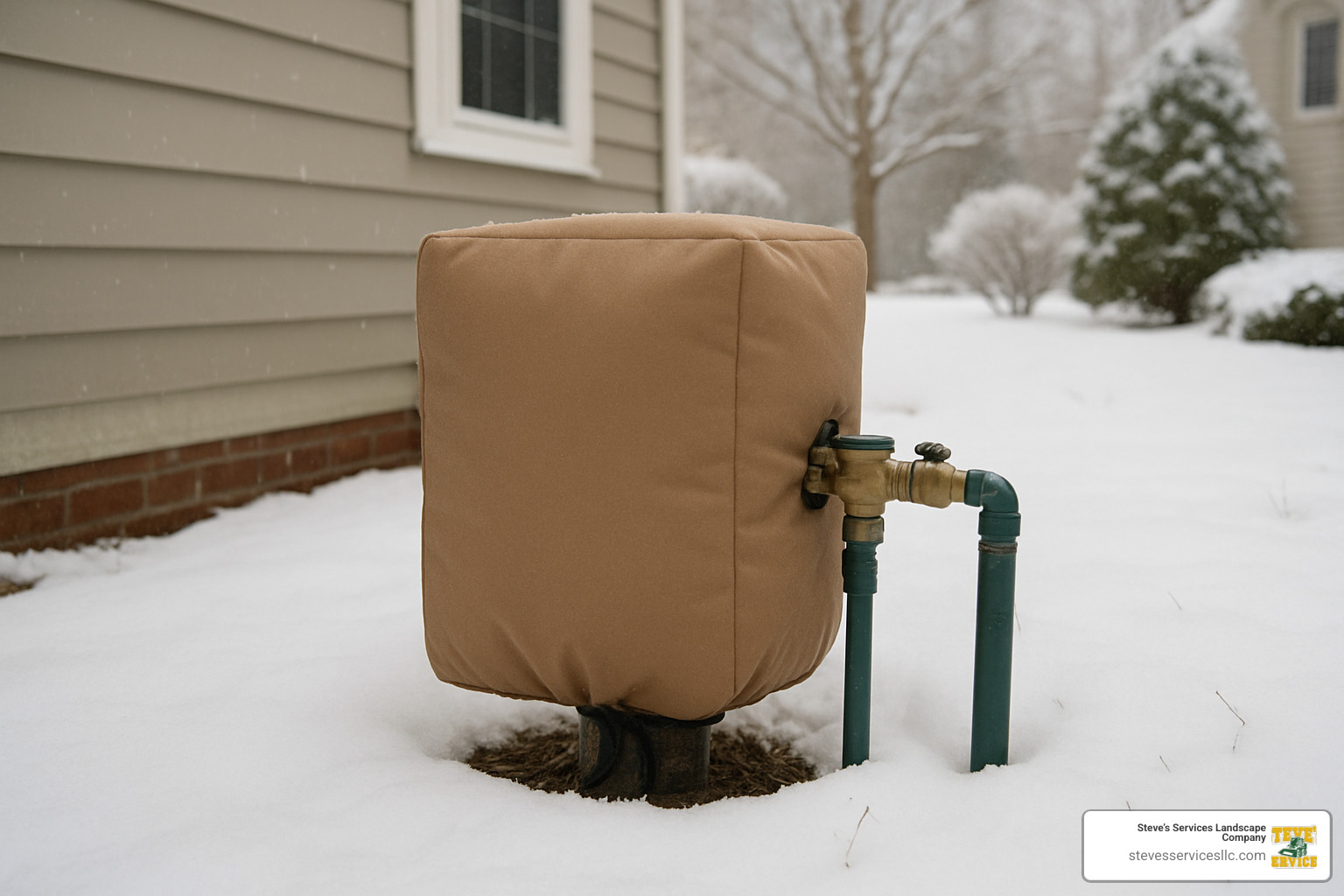
Don’t cut corners on insulation materials. Proper pipe insulation sleeves provide far better protection than makeshift solutions like newspaper or old rags. All exposed pipes should be thoroughly wrapped, with special attention to backflow preventers – these expensive components benefit from purpose-designed insulated bags for maximum protection.
Before the snow flies, take a few minutes to mark your sprinkler head locations with small flags. This simple step prevents accidental damage during snow removal. While you’re at it, sketch a quick map showing valve and zone locations – you’ll thank yourself when spring reactivation comes around.
Finally, don’t forget to schedule your spring inspection well in advance. Our calendar fills quickly as warm weather approaches, and a professional evaluation before reactivation can catch any winter damage before it becomes a bigger problem.
| Winterization Needs | Cold Climates (New England) | Warm Climates (Southern States) |
|---|---|---|
| Timing | Mid-October | Late November/December |
| Method | Complete blow-out required | Partial drainage may suffice |
| Depth concern | Frost line 48-52″ | Frost line 0-24″ |
| Component protection | All components need protection | Focus on exposed components |
| Duration | 5-6 months of protection needed | Short-term protection for brief freezes |
| Professional service | Highly recommended | Optional for mild areas |
Special Considerations for Drip Lines, Booster Pumps & Backflow Devices
Not all irrigation components are created equal when it comes to winter vulnerability. Your frozen irrigation system risk varies significantly depending on what equipment you have installed.
Drip irrigation lines require special attention during winterization. These smaller diameter tubes can trap water in ways conventional systems don’t. Be sure to remove all end caps to allow complete drainage, and use reduced air pressure (30-40 PSI maximum) during blow-out to prevent damage to these delicate components. Many of our Winchester clients find it worthwhile to remove filters entirely and store them indoors until spring.
Booster pumps contain multiple freeze-vulnerable components. Our Revere customers have learned (sometimes the hard way) that disconnecting power is just the first step. You’ll need to drain all water from the pump housing and impellers, and remove drain plugs (store these in a labeled bag so you can find them in spring!). While insulation helps, ensure there’s still ventilation to prevent condensation buildup inside.
“The backflow preventer is almost always the first casualty of winter,” explains our senior technician. “These devices are both the most vulnerable and the most expensive to replace.” Proper winterization includes shutting off isolation valves on both sides, opening test cocks to drain water, and wrapping with foam insulation (while being careful not to block air vents). An insulated backflow bag provides excellent secondary protection, and in extreme climates, some homeowners choose to remove and store these devices indoors.
The pressure vacuum breaker (PVB) and reduced pressure zone (RPZ) valves are particularly susceptible to freeze damage. We’ve seen numerous cases across Winchester and Revere where these were the only damaged components after a freeze, yet replacement costs typically range from $300-$900.
Last-Minute Protection During an Unexpected Cold Snap
Sometimes winter catches us by surprise. If you’re facing an unexpected freeze before proper winterization, don’t panic – take these emergency steps.
First and most importantly, shut off the main water supply to your irrigation system immediately. This single step can prevent catastrophic damage. Next, run a zone for about 2 minutes using your controller – this relieves pressure in the lines and allows some water to drain.
Open the outside irrigation supply spigot fully to help drain remaining water, and use a flat-head screwdriver to open the mini valves on your backflow preventer. Remember to unplug any booster pumps or put controllers in rain mode to prevent accidental activation.
For truly urgent situations, apply emergency insulation to exposed components. Foam insulation is ideal, but in a pinch, blankets or towels secured with duct tape can buy you valuable time. As one of our Melrose customers told us after a surprise November freeze: “I wrapped my backflow in an old beach towel and duct tape at 11pm when the forecast suddenly changed. It looked ridiculous, but it saved me hundreds in repairs!”
If temperatures will remain below freezing for more than 24 hours, don’t hesitate to contact Steve’s Services for emergency assistance. Our emergency line has saved countless irrigation systems during unexpected cold snaps.
For more detailed information on proper blow-out procedures, visit our guide on how to blow out irrigation systems.
Frequently Asked Questions About Frozen Irrigation Systems
Why did my system freeze if the pipes are buried?
Many of our Massachusetts clients are surprised when their underground irrigation pipes freeze. “But they’re buried!” is a common reaction we hear in towns like Burlington and Lynnfield.
The truth is, while buried pipes have some natural insulation, they’re still vulnerable during harsh New England winters. In our region, the frost line typically plunges 48-52 inches below ground during severe cold snaps, yet most irrigation pipes sit just 12-18 inches deep to avoid damage during routine lawn maintenance.
Think of it this way: your pipes are actually more freeze-prone than the surrounding soil for several reasons. First, irrigation pipes contain pure water, which freezes more readily than soil moisture with its mineral content. Second, plastic and metal pipes conduct cold more efficiently than dirt. And third, once your system shuts down for winter, that standing water in your pipes becomes an easy target for freezing temperatures.
As we tell our Wakefield customers, “Mother Nature doesn’t care how deep your pipes are if they’re above the frost line.” This is precisely why professional winterization remains essential even for buried systems.
Can I pour hot water on frozen sprinkler heads?
While you technically can pour warm (not boiling) water over frozen sprinkler heads, I’d strongly caution against relying on this method.
Here’s why: this approach only addresses the visible “tip of the iceberg” – those exposed sprinkler heads – while doing nothing for the underground pipes where most costly freeze damage occurs. Any warming effect is extremely temporary, and in our Massachusetts winters, that water will likely refreeze within minutes, potentially creating dangerous ice patches around your yard.
Even worse, the sudden temperature change can cause thermal shock, potentially cracking your components. One of our Stoneham clients learned this lesson the hard way last winter when their DIY hot water fix cracked three sprinkler heads, turning a simple freeze into a more expensive spring repair.
If you absolutely must try this as a temporary emergency measure while waiting for professional help, use only warm water (never hot or boiling), work methodically from your water source toward the frozen area, and have towels ready to dry components afterward. But please remember – this is merely a band-aid solution that requires professional follow-up.
How soon should I schedule spring inspection after a freeze?
The ideal timing for a post-freeze inspection is 2-3 weeks before you plan to activate your system for the spring season. This window gives us enough time to identify any hidden damage, order necessary parts, and complete repairs before you need your system operational.
Frozen irrigation system damage isn’t always immediately obvious. As one of our Medford clients finded, “What looked like a perfectly fine system in March revealed four separate line breaks when we activated it in April.” That early inspection saved them from significant lawn flooding and a shocking water bill.
Spring inspections are particularly crucial after freezing winters. Our comprehensive check includes visual inspection of all components, pressure testing each zone, backflow testing and certification, controller programming updates, and thorough sprinkler head cleaning and adjustment.
The peace of mind from knowing your system is properly repaired before the growing season begins is invaluable. Many of our Reading and Melrose customers make this inspection an annual tradition – and their lush, problem-free lawns show the difference this proactive approach makes.
Scheduling early helps you beat the spring rush when our calendar fills quickly with emergency repairs from homeowners who skipped the inspection step. A little planning now means your lawn gets the consistent watering it needs right from the start of growing season.
Conclusion
The harsh reality of a frozen irrigation system is something too many Massachusetts homeowners find the hard way. When water freezes and expands inside your irrigation components, it creates a silent destroyer that often remains hidden until spring reveals the costly damage.
Over my years serving communities like Burlington, Danvers, Everett, and Lynnfield, I’ve witnessed how proper winterization makes all the difference. The numbers don’t lie – professional winterization services reduce freeze damage risk by over 90%. That’s not just a statistic; it represents thousands of dollars saved for our clients and the peace of mind that comes with protecting your landscape investment.
If you find yourself facing a frozen system despite your best efforts, remember these crucial steps: shut off your water supply immediately, relieve pressure in the system, document any visible damage for insurance purposes, and most importantly – resist the temptation to attempt DIY repairs that could create safety hazards or worsen the damage.
At Steve’s Services Landscape Company, we’ve built our reputation on being there for our clients through all seasons. Our comprehensive winterization process goes beyond the basics with thorough system blow-outs, detailed component inspections, and personalized recommendations for upgrades that prevent future freeze damage.
Don’t wait for the temperature to drop before thinking about protecting your irrigation investment. The time to schedule your professional winterization service is now – before that first unexpected freeze catches you unprepared. Our team is ready to help you maintain a healthy, efficient irrigation system year-round, with service locations throughout Massachusetts communities.
You can learn more about our approach and schedule your appointment by visiting our complete irrigation services page.
I’ve seen too many homeowners learn this lesson the expensive way: when it comes to frozen irrigation systems, prevention isn’t just cheaper than repairs – it’s the difference between starting spring with a functioning system or facing weeks of repairs and landscape recovery. Let us help you protect your irrigation investment before winter arrives.