General Home Improvement Contractors: 7 Powerful Success Tips 2025
Why Understanding General Home Improvement Contractors Is Your First Step to Renovation Success
General home improvement contractors are licensed professionals who oversee and manage renovation projects from start to finish. They coordinate all aspects of construction including permits, subcontractors, materials, and timelines while serving as your single point of contact throughout the project.
Key things to know about general contractors:
- What they do: Obtain permits, hire subcontractors, source materials, manage timelines, ensure code compliance
- When you need one: Projects over $15,000, structural changes, multi-trade work, permit-required renovations
- How much they cost: $50-$150 per hour or 10-20% markup on total project cost
- What to verify: State license, general liability insurance, worker’s compensation, references
- Red flags to avoid: No written estimates, pressure tactics, cash-only payments, missing insurance
The home renovation process can feel overwhelming when you’re juggling multiple contractors, permits, and timelines. A qualified general contractor becomes your project manager, handling the complex coordination so you can focus on the exciting parts like choosing finishes and seeing your vision come to life.
According to industry data, homeowners typically seek general home improvement contractors for projects costing $15,000 and up, where the complexity and risk make professional oversight essential. The right contractor doesn’t just build – they protect your investment, ensure safety compliance, and deliver results on time and within budget.
I’m Steve Sylva, owner of Steve’s Services with over 25 years of experience working alongside general home improvement contractors on landscape and hardscaping projects that complement home renovations. My team regularly coordinates with general contractors to ensure outdoor spaces integrate seamlessly with indoor renovation projects.
What Does a General Contractor Do?
Imagine your renovation project as a symphony orchestra. You’ve got plumbers, electricians, painters, and flooring specialists all ready to play their parts. But without a conductor, you’d have chaos instead of beautiful music. That’s exactly what a general home improvement contractor does – they conduct your renovation orchestra.
Your general contractor becomes the central hub for everything happening in your home. They’re juggling project oversight while making sure permits get filed on time, subcontractors show up when they’re supposed to, and materials arrive before they’re needed. It’s like having a personal project manager who actually knows the difference between a load-bearing wall and a regular one.
One of the biggest advantages? Material sourcing power. While you might pay retail prices at the home improvement store, contractors often get materials 20-30% cheaper through their supplier relationships. They’re buying in bulk and have established accounts that regular homeowners simply can’t access.
But here’s the real kicker – when you hire a general home improvement contractor, they’re taking on the liability for your entire project. If something goes wrong, from code violations to worker injuries, they’re responsible. That’s a huge weight off your shoulders, but it’s also why choosing a licensed, insured professional matters so much.
Core Responsibilities Explained
Planning and budgeting form the foundation of any successful renovation. Your contractor breaks down every cost category so you understand exactly where your money goes. They create realistic timelines that account for permit delays, material delivery schedules, and the natural flow of construction work.
Site safety isn’t just about hard hats and safety glasses. Your contractor maintains secure work conditions, organizes materials to prevent accidents, and ensures cleanup happens regularly.
Projects That Absolutely Need a GC
Home additions top the list of projects requiring general contractor oversight. You’re dealing with foundation work, structural integration with existing systems, and extensive permitting requirements.
Structural changes like removing walls or adding support beams need engineering expertise and careful coordination. One wrong move and you could literally bring the house down.
Multi-trade remodels like kitchen and bathroom renovations require precise sequencing. The plumber needs to rough in pipes before the electrician runs wires, but both need to finish before the drywall goes up.
At Steve’s Services, we regularly coordinate with general home improvement contractors on projects where outdoor spaces need to integrate with indoor renovations. These partnerships show me daily how valuable professional project management really is.
When & Why You Need General Home Improvement Contractors
The moment of truth arrives when you’re staring at your renovation plans, wondering whether to tackle it yourself or call in the professionals. Most homeowners find themselves crossing into general home improvement contractor territory when their project hits the $15,000 mark – that’s typically where complexity, risk, and sheer logistics make professional oversight worth every penny.
The complexity threshold becomes crystal clear when you start counting permits and trades. If your project needs multiple permits, involves moving walls, or requires coordinating three or more different specialists, you’ve entered the zone where acting as your own general contractor becomes a second job.
Think about it this way: when you hire general home improvement contractors, you’re not just paying for construction skills. You’re buying back your weekends, your sanity, and your relationships. The time commitment to manage subcontractors, chase down materials, and handle the inevitable hiccups can easily consume 20-30 hours per week during active construction phases.
Risk reduction might be the most compelling reason to hire a professional. Licensed contractors carry both general liability and workers’ compensation insurance, creating a protective buffer between you and potential disasters. If a worker gets injured on your property or if work doesn’t meet code requirements, your contractor’s insurance steps in.
The ROI benefits often surprise homeowners. While you’ll pay for professional management, the value added through proper execution, code compliance, and quality workmanship typically exceeds the cost.
Benefits Over DIY or Single Trades
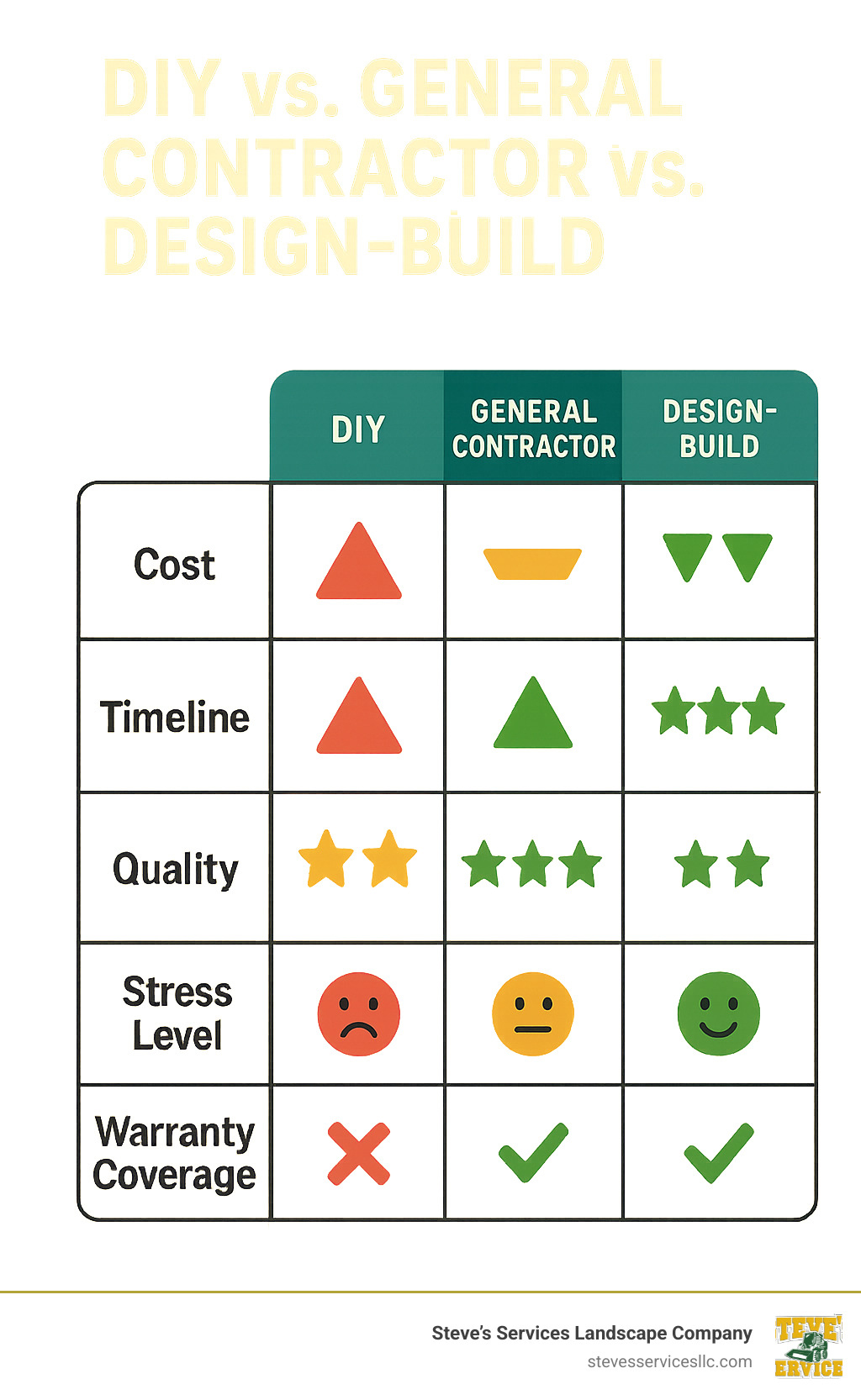
The single point of accountability advantage cannot be overstated. Instead of juggling phone numbers for your plumber, electrician, tile guy, painter, and flooring installer, you have one primary contact who orchestrates the entire symphony.
Cost efficiencies emerge in ways you might not expect. Yes, you’ll pay a markup for your contractor’s services, but experienced professionals often achieve significant savings through established supplier relationships, bulk purchasing power, and efficient scheduling that prevents costly delays.
The stress relief factor alone justifies the investment for many families. Professional contractors handle the daily coordination, problem-solving, and quality control that can turn renovation dreams into relationship nightmares.
General Home Improvement Contractors vs Design-Build Firms
Traditional general contractors work from plans you provide, whether created by an architect, designer, or even sketched out yourself. They focus their expertise on construction execution and project management, assuming you’re happy with the design direction.
Design-build firms offer integrated services, providing both design development and construction under one roof. This streamlined approach can reduce overall project timelines and eliminate the potential finger-pointing that sometimes happens when designers and builders work separately.
The choice often comes down to your comfort level and project complexity. If you’ve already fallen in love with a specific architect’s vision or have detailed design ideas, a traditional general contractor might be perfect. If you prefer one-stop shopping and integrated project delivery, design-build could simplify your entire experience.
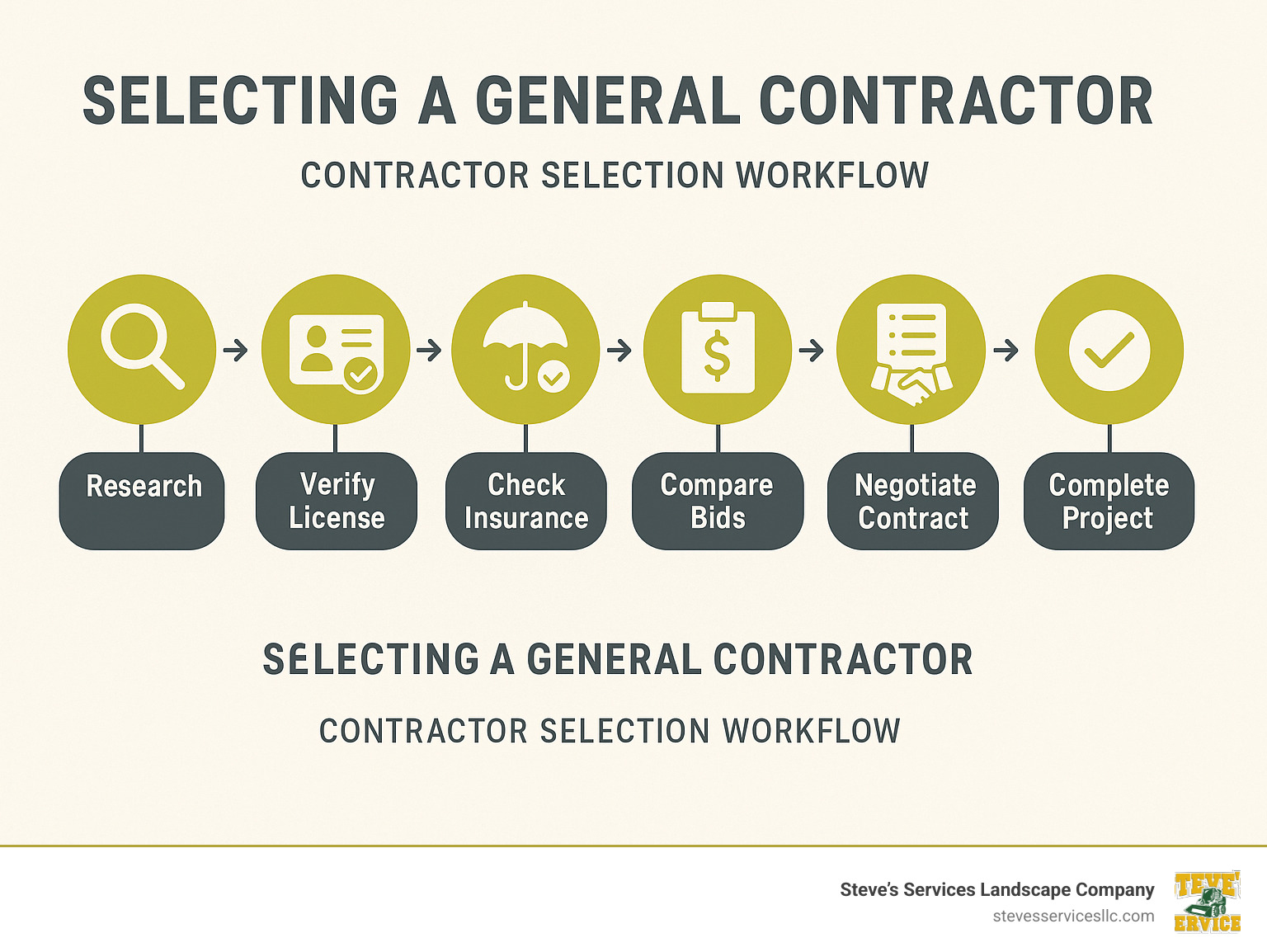
Hiring Smart: How to Vet and Choose General Home Improvement Contractors

Finding the right general home improvement contractor can feel like searching for a needle in a haystack. With thousands of contractors advertising their services, the real challenge isn’t finding options – it’s identifying the professional who’ll turn your renovation dreams into reality without turning your life into a nightmare.
The secret to contractor selection success lies in systematic vetting. You wouldn’t hire a babysitter without checking references, so why would you hand over your home renovation to someone without doing your homework?
Licensing verification should be your starting point. Every state maintains databases where you can confirm a contractor’s license status. This isn’t just bureaucratic box-checking – it’s your first line of defense against unqualified workers who could create expensive problems down the road.
Insurance documentation comes next, and this is where many homeowners make costly mistakes. Don’t just ask if they have insurance – verify a pro’s insurance by requesting certificates directly from their insurance company. General liability coverage protects against property damage, while worker’s compensation shields you from liability if someone gets injured on your property.
References and reviews tell the real story of a contractor’s performance. Ask for recent projects similar to yours, then actually call those references. A contractor who built beautiful decks might struggle with kitchen renovations, so relevant experience matters.
Having worked alongside general home improvement contractors throughout the greater Boston area for over 25 years, I’ve seen how the right contractor partnership can make or break a project. At Steve’s Services, we regularly coordinate with general contractors on projects where outdoor spaces complement indoor renovations.
Top Qualifications General Home Improvement Contractors Must Have
State licensing forms the foundation of contractor credibility. This isn’t optional paperwork – it’s legal proof that your contractor understands local building codes, safety requirements, and professional obligations.
General liability insurance should carry minimum coverage of $1 million, though many experienced contractors carry higher limits for larger projects. This protects against property damage and accidents that can occur during construction.
Worker’s compensation coverage is required in most states when contractors have employees. This protects you from massive liability if workers are injured on your property.
Trade certifications, while not always legally required, demonstrate ongoing education and expertise. Contractors who invest in manufacturer training and industry certifications typically deliver higher quality work.
Red Flags When Interviewing General Home Improvement Contractors
Missing written estimates signal unprofessional operations. Legitimate contractors provide detailed, written proposals that break down labor, materials, permits, and other costs.
High-pressure sales tactics should make you run, not walk, away. Contractors who demand immediate decisions or claim their price is only good “today” are using manipulative techniques.
Cash-only payment requests often indicate tax avoidance or lack of proper business structure. Professional contractors accept checks and credit cards, providing you with payment protection and proper documentation.
Evasive insurance responses are deal-breakers. If contractors can’t immediately provide insurance certificates or seem uncomfortable discussing coverage, they either don’t have adequate protection or aren’t properly licensed.
Questions to Ask Before Signing
Timeline and supervision planning deserve detailed discussion. Ask about expected project duration, daily supervision arrangements, and how delays will be handled.
Change order policies need clarification upfront because scope changes are common in renovations. Understand how modifications are approved, priced, and documented.
Warranty coverage varies significantly between contractors. Standard warranties typically cover workmanship for one year, though some professionals offer longer protection.
Communication expectations should be established before work begins. Determine the best methods for updates, how often you’ll receive progress reports, and who handles questions or concerns.
Working With Your Contractor: Budgets, Permits & Timelines

The real work begins after you’ve hired your general home improvement contractor. This is where planning meets reality, and your contractor’s expertise becomes invaluable in navigating the complex world of budgets, permits, and scheduling.
Smart budget management starts with understanding that renovations rarely go exactly as planned. Industry research consistently shows that homeowners should build a contingency fund of 10-15% into their total budget for unexpected issues.
Your contractor should provide a detailed line-item budget that breaks down every cost category. This includes permits, disposal fees, and even the cost of protecting your existing home during construction. When you see everything laid out clearly, you can make informed decisions about where to splurge and where to save.
Payment schedules protect both you and your contractor. A reasonable down payment typically ranges from 10% to 25% of the total project cost. The remaining payments should be tied to specific milestones – never pay significantly ahead of completed work.
Communication makes or breaks contractor relationships. Establish a regular check-in schedule that works for both of you. Weekly progress meetings work well for most projects, with more frequent contact during critical phases.
Writing a Solid Contract
Your contract isn’t just paperwork – it’s your roadmap to project success. Think of it as a detailed conversation about expectations, written down so everyone remembers what was agreed upon.
The scope of work section should be so detailed that someone unfamiliar with your project could understand exactly what’s being built. Vague descriptions like “update kitchen” lead to disputes.
Payment terms should be crystal clear and tied to measurable progress. A typical schedule might include the down payment, payments at rough-in completion, drywall completion, and final payment after punch list items are finished.
Material responsibility needs explicit definition. Who orders materials? Who’s responsible if they arrive damaged? Where are they stored? Address these questions upfront to avoid confusion later.
Change order procedures are crucial because changes happen on virtually every renovation. Establish how modifications will be approved, priced, and documented.
Managing Subcontractors & Inspections
Your general home improvement contractor orchestrates a complex dance of subcontractors, inspections, and material deliveries. Understanding this process helps you stay informed and spot potential issues early.
Schedule sequencing follows a logical progression that can’t be rushed or rearranged. Plumbers and electricians complete their rough work before insulation goes in. When subcontractors don’t show up as scheduled, it creates a domino effect that your contractor must manage.
Quality control happens continuously throughout the project, not just at the end. Your contractor should be checking work at each phase, ensuring everything meets both code requirements and your quality expectations.
Inspection coordination requires careful timing and preparation. Building inspectors have busy schedules, and failed inspections can delay your project significantly.
The final punch list represents the last phase of your project. This detailed walkthrough identifies any remaining items that need attention. A good contractor takes pride in completing every punch list item promptly.
Costs, Fees & Regional Price Ranges (What to Expect)
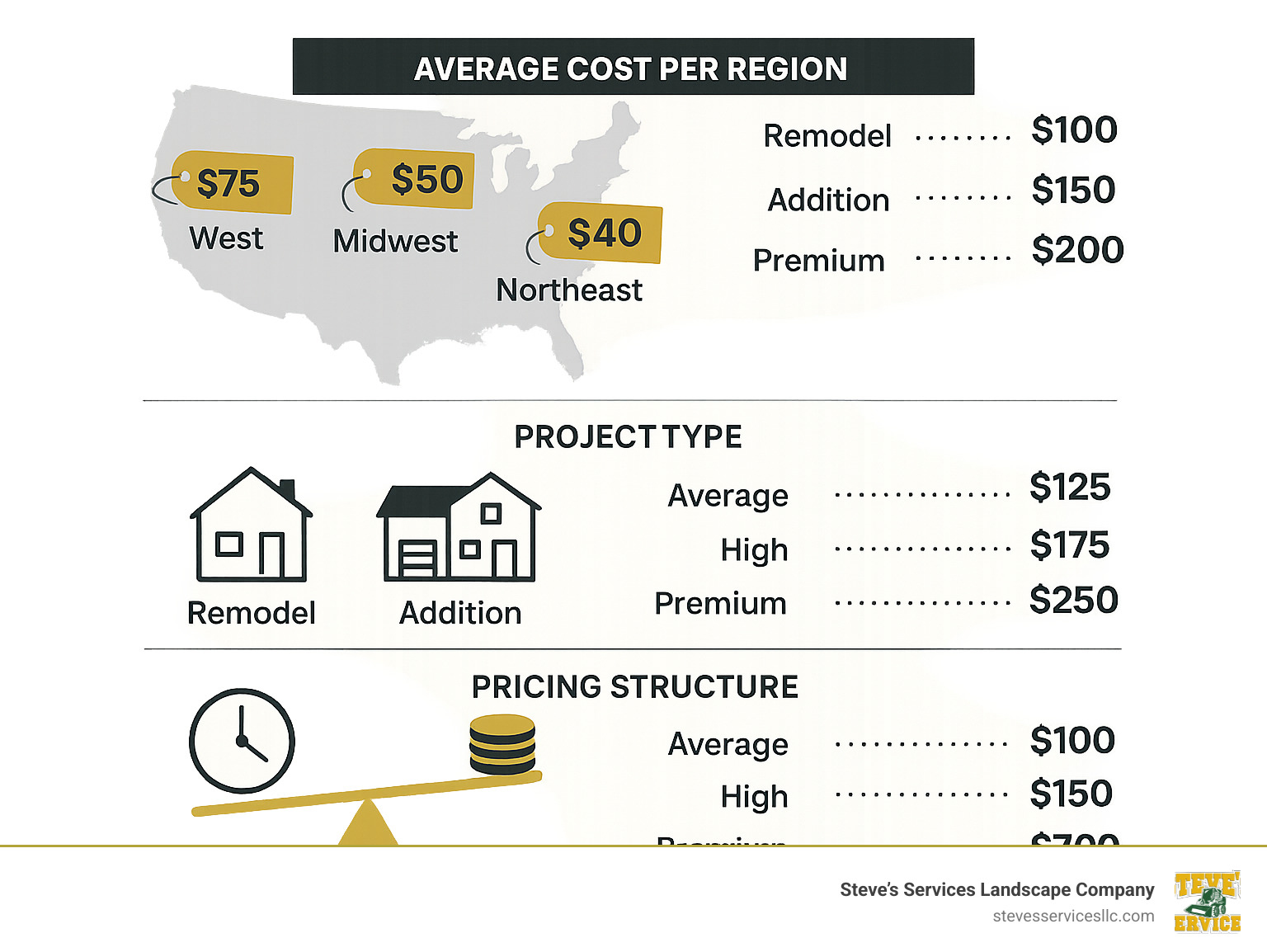
Understanding contractor pricing helps you budget appropriately and evaluate bids fairly. General home improvement contractors typically charge between $50 and $150 per hour, though not every contractor charges hourly. Many prefer project-based pricing with a 10% to 20% markup on construction costs.
Hourly Rates: On average, general contractors charge around $50 per hour, with ranges from $30 to $150 depending on geographical location and project complexity. However, hourly billing is less common for major renovations.
Project-Based Pricing: Most contractors bid per project, breaking down costs by square foot or providing lump-sum pricing that covers labor, materials, equipment, and project management.
Regional Variations: Location significantly impacts pricing. For example, a home addition in San Francisco averages $250-$750 per square foot, while new home construction in smaller markets averages $100-$300 per square foot.
Note: These are average costs based on internet data and not actual costs for Steve’s Services. Our landscape and hardscaping services are priced separately and complement your home renovation projects.
Factors That Drive Pricing Up or Down
Labor Market Conditions: Areas with high demand for skilled trades typically see higher contractor rates. Seasonal demand also affects pricing, with spring and summer often commanding premium rates.
Material Grade and Availability: Your choice of materials significantly impacts total project cost. Premium finishes and specialty materials can increase costs substantially.
Site Access and Complexity: Difficult access, tight spaces, or complex integration with existing systems increases labor requirements and project complexity, driving up costs.
Project Size and Scope: Larger projects often achieve better per-square-foot pricing due to economies of scale, while small projects may carry higher relative overhead costs.
Staying Within Budget
Itemized Estimates: Request detailed breakdowns that separate labor, materials, permits, and other costs. This transparency helps you understand where your money goes and identify potential savings opportunities.
Contingency Planning: Build 10-15% contingency into your budget for unexpected issues like hidden damage or code upgrade requirements.
Change Order Discipline: Resist the temptation to make changes once work begins. Change orders typically carry premium pricing and can significantly impact your budget and timeline.
Financing Options: Many contractors work with financing companies to help homeowners manage large project costs. Understand your options before work begins to avoid payment stress during the project.
Frequently Asked Questions about General Home Improvement Contractors
After 25 years of working alongside general home improvement contractors on projects throughout Massachusetts, I’ve heard the same questions come up again and again. Here are the answers to the most common concerns homeowners have when considering hiring a contractor.
What licenses and insurance should a contractor carry?
This is honestly the most important question you can ask – and any contractor who gets defensive about it should be crossed off your list immediately.
Every general home improvement contractor must hold a valid state license that matches the work they’re doing. Massachusetts has specific licensing requirements, and what’s required in our state might be different from neighboring areas. You can verify any contractor’s license through your state’s licensing board website in just a few minutes.
Insurance is where things get serious. Your contractor needs general liability coverage – typically at least $1 million, though many carry more. This protects your home and your financial future if something goes wrong during the project.
Worker’s compensation insurance is equally critical. If someone gets hurt on your property and your contractor doesn’t have proper coverage, you could be on the hook for medical bills and more.
Here’s a pro tip: don’t just ask about insurance, request the actual certificates directly from their insurance company. Any legitimate contractor will provide this without hesitation.
How can I avoid surprise costs during my renovation?
Nothing ruins the excitement of a home renovation quite like unexpected costs that blow your budget out of the water. The good news is that most surprise costs are actually preventable with the right approach.
Start with detailed, written estimates that break everything down by category. You want to see exactly where every dollar is going – labor, materials, permits, cleanup, the works.
The smartest homeowners I work with always plan for contingencies by adding 10-15% to their budget. Renovation projects have a way of revealing hidden issues. That water damage behind the bathroom wall or the electrical system that needs upgrading to meet current codes – these findings are common, not exceptional.
Make all your material decisions before the first hammer swings. I’ve seen too many projects where homeowners fall in love with upgraded tile or fixtures halfway through construction. Those change orders can turn a $30,000 kitchen into a $45,000 kitchen faster than you can say “carrara marble.”
Communication is your secret weapon here. Talk regularly with your contractor about any concerns or questions. Small issues caught early stay small. Small issues ignored until later? They tend to grow expensive legs and run away with your budget.
What warranty or guarantee is standard?
This is where you separate the professionals from the fly-by-night operators. Reputable general home improvement contractors stand behind their work with warranties, and they’re happy to explain exactly what’s covered.
The industry standard is typically one year on workmanship. This covers defects in the actual construction work – things like improper installation or faulty craftsmanship. It doesn’t cover normal wear and tear or damage you cause after the project is complete.
Some contractors offer extended warranties on specific types of work. Waterproofing and structural work often carry longer guarantees because the stakes are higher.
Here’s something many homeowners don’t realize: material warranties come from manufacturers, not your contractor. However, a good contractor will help you understand what’s covered and assist with warranty claims if problems pop up down the road.
The golden rule? Get all warranty terms in writing as part of your contract. Verbal promises have a funny way of being “misremembered” when problems arise months later.
Conclusion
Successful home renovations start with understanding what general home improvement contractors do and how to work with them effectively. The right contractor becomes your partner in changing your vision into reality while protecting your investment and ensuring quality results.
Think of this process as building a relationship, not just hiring someone to do work. The best renovation experiences happen when homeowners and contractors work together as a team, each bringing their strengths to the project. You provide the vision and decision-making, while they bring the expertise and execution skills.
The partnership mindset is crucial. When you approach contractor selection with the goal of finding a true partner rather than just the lowest bidder, everything changes. You’ll focus on communication skills, reliability, and shared values rather than just price comparisons.
Take time to verify credentials, check references, and establish clear expectations upfront. These steps might seem tedious when you’re excited to start your project, but they’re what separate smooth renovations from renovation nightmares.
Your dream home is within reach, and the right contractor partnership makes all the difference in getting there. Whether you’re planning a kitchen remodel, bathroom renovation, or major addition, the principles we’ve covered will guide you through the contractor selection and management process successfully.
For outdoor projects that complement your home renovation, our team at Steve’s Services serves as your trusted local resource throughout Massachusetts. We regularly coordinate with general home improvement contractors to ensure your landscape and hardscaping integrate seamlessly with your indoor renovation projects.
When your indoor renovation is complete, don’t forget that your outdoor spaces deserve the same attention to detail. Steve’s Services Landscape Company has been helping homeowners in Everett, Burlington, Danvers, Lynnfield, Medford, Melrose, North Reading, Reading, Revere, Saugus, Stoneham, Winchester, Woburn, Malden, and Wakefield create beautiful outdoor living spaces that perfectly complement their newly renovated homes.
The renovation journey can feel overwhelming at times, but with the right contractor partnership and clear expectations, it becomes an exciting journey in creating the home you’ve always wanted.