Why Understanding Underground Sprinkler System Costs Matters for Your Property
How much does a underground sprinkler system cost? Based on national averages from internet research, expect to invest between $2,000 and $13,000+ for a professionally installed system. Here’s the quick breakdown:
- Small lawns (5,000 sq ft): $1,400 – $4,500
- Medium lawns (10,000 sq ft): $2,200 – $7,000
- Quarter-acre property: $2,500 – $8,000
- Large lawns (20,000 sq ft): $4,100 – $13,000
- Per square foot: $0.28 – $1.00
- Per zone: $600 – $1,800
Note: These are average costs based on internet data and not actual costs for Steve’s Services.
If you’ve ever stood outside with a hose on a hot summer evening, watching your neighbors’ automated sprinklers do the work for them, you know the appeal of an underground system. But the price tag often comes as a surprise to homeowners.
The cost varies dramatically based on your property size, terrain complexity, soil conditions, and the features you choose. A basic system for a modest suburban yard might run $3,000, while a sophisticated setup with smart controllers and challenging terrain could exceed $12,000.
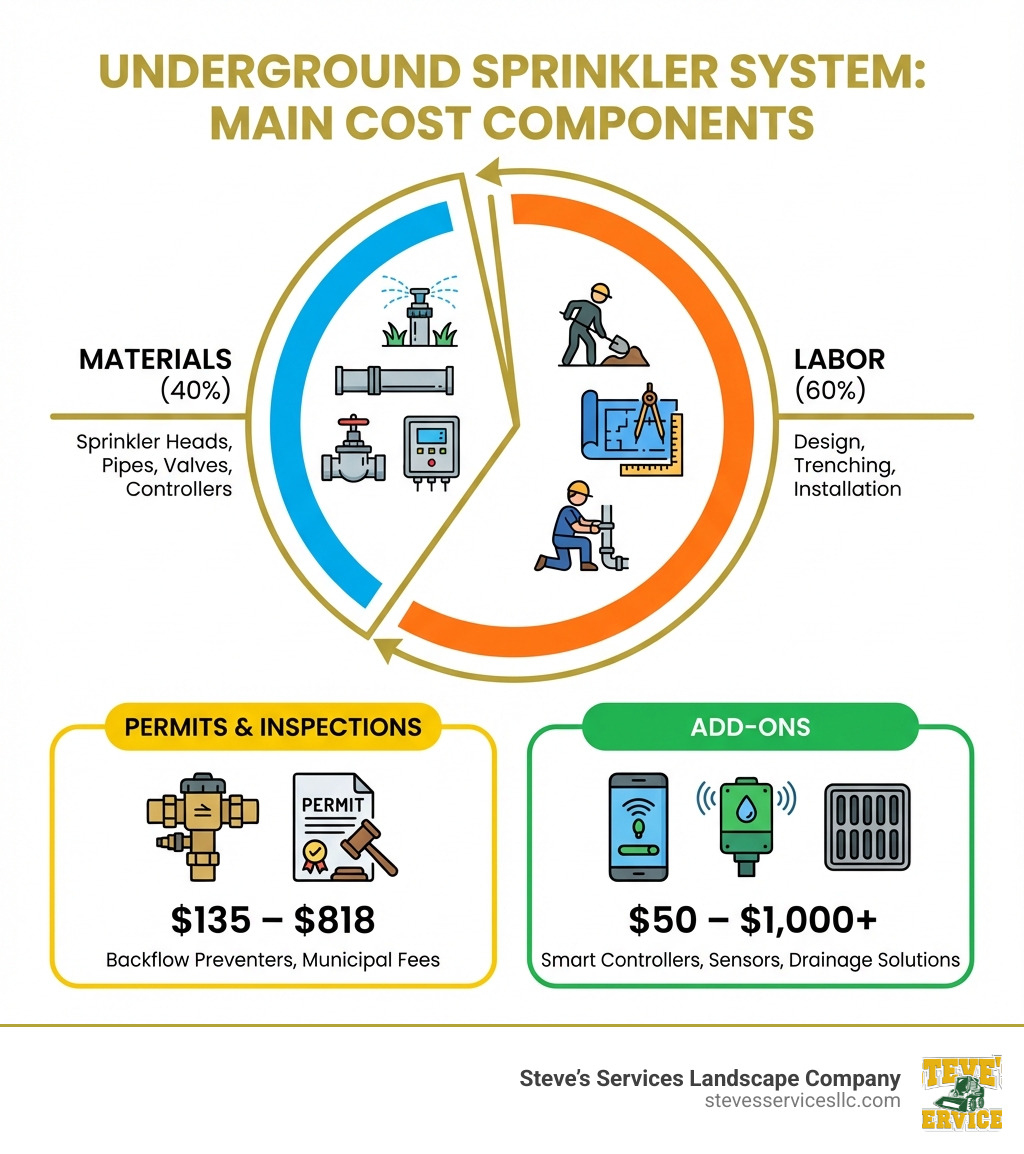
Labor typically accounts for about 60% of your total investment. You’re also paying for materials like sprinkler heads ($2 – $40 each), controllers ($50 – $400), backflow preventers ($100 – $600), and the expertise to design zones that actually keep your lawn healthy.
Massachusetts homeowners face additional considerations. Rocky New England soil can add $0.15 – $0.50 per square foot to installation costs. Permit fees in local communities typically range from $35 – $268. And you’ll need annual winterization ($50 – $230) to prevent freeze damage.
But here’s the good news: a well-designed system can reduce water usage by 20-50% compared to manual watering. The National Association of Realtors reports these systems recoup 83% of their cost at resale and can increase property value by 7-15%.
I’m Steve Sylva, owner of Steve’s Services, and I’ve spent over 25 years helping Massachusetts homeowners understand how much does a underground sprinkler system cost for their specific properties. From Burlington to Woburn, I’ve designed systems that balance efficiency with budget, accounting for our region’s unique soil conditions and climate demands.
Sprinkler System Cost by the Numbers: National Averages
When we talk about how much does a underground sprinkler system cost, these are average costs based on internet data and not actual costs for Steve’s Services. Just like buying a car, there’s a wide range of options and features that influence the final price. However, understanding these national averages can help us set realistic expectations for your investment.
The average cost to install an in-ground sprinkler system nationwide typically falls between $2,500 and $8,000 for a standard residential property. However, for more complex systems or larger properties, this cost can easily reach $10,000 or even higher. For properties that are an acre or more, we often see rates range from $6,000 to $20,000 per acre.
When breaking it down by area, the average cost for installation can be anywhere from $0.28 to $1.65 per square foot. This broad range accounts for varying complexities and regional labor costs. You can dive deeper into this specific metric with our guide on the Average Cost to Install Sprinkler System Per Square Foot.
Another common way professionals price these systems is by the watering zone. Each zone is a section of your yard that can be watered independently, allowing for custom irrigation. The cost per watering zone typically ranges from $585 to $1,800. A standard quarter-acre yard, which is common in many of our Massachusetts communities, often requires between 4 to 7 watering zones to ensure comprehensive coverage.
Cost Breakdown by Lawn Size
The size of your lawn is one of the most significant factors influencing how much does a underground sprinkler system cost. Naturally, a larger area requires more materials (pipes, heads) and more labor for installation. Here’s a general breakdown based on national averages:
- Small lawns (around 5,000 sq ft): For these cozy spaces, you can expect installation costs to be in the range of $1,400 to $4,500.
- Medium lawns (around 10,000 sq ft): As we move up in size, the costs for a medium lawn typically range from $2,200 to $7,000.
- Large lawns (around 20,000 sq ft): For more expansive properties, the investment can be between $4,100 and $13,000.
- Extra-large lawns (around 40,000 sq ft): These larger yards might see costs from $7,200 to $22,000.
It’s interesting to note the “economy of scale” here. While a larger lawn costs more overall, the cost per square foot often decreases as the size of the project increases. This is because certain fixed costs, like permits and initial setup, are spread across a greater area.
Cost Breakdown by Watering Zone
Beyond square footage, the number of watering zones is a crucial determinant of the total cost. Think of zones like rooms in a house – each one needs its own setup to function effectively.
The first irrigation zone in your system typically costs between $550 and $1,700. This initial zone includes the primary connection to your water source and the main control components. Each additional zone will then run in a similar range, often averaging between $600 and $1,800. So, if your yard needs, say, five zones, you’re looking at an estimated $2,950 to $8,900 for just the zoning aspect.
This zoning approach, also known as hydrozoning, is a smart way to manage your landscape. It allows us to group plants with similar water needs into separate zones. For instance, your sunny lawn area might need more water than a shady garden bed, and a drip irrigation line for shrubs would be a distinct zone. This precision not only keeps your plants healthier but also conserves water. Learn more about how we optimize watering with Automatic Lawn Sprinkler Systems.
How Much Does an Underground Sprinkler System Cost? Key Factors Explained
The overall cost of your underground sprinkler system is a mosaic of many individual pieces, from the components themselves to the intricacies of installation. It’s not just about digging trenches; it’s about a well-thought-out system designed for your specific property. High-quality system components, for example, from reputable brands, might cost a bit more upfront but offer greater reliability and longevity.
Your water source also plays a role. Whether you’re connecting to city water, a private well, or even a lake, the available flow rates and pressure will influence the design and potentially require specific pumps or pressure regulators, adding to the complexity and cost. Understanding these elements is central to effective Irrigation System Installation.
Sprinkler Head and Component Costs
The unsung heroes of your sprinkler system are the heads themselves. They come in various types, each designed for specific watering needs, and their cost varies accordingly. These are national averages from internet sources, not Steve’s Services pricing.
Here’s a look at typical sprinkler head costs:
- Bubbler Sprinklers: These deliver water slowly and directly to a small area, perfect for individual plants or shrubs. They typically cost $1 to $10 each.
- Micro Sprinklers: Ideal for delicate garden beds or containers, these emit a fine spray over a small radius, costing around $3 to $10 per head.
- Pop-up Sprinklers: The most common type for lawns, these retract into the ground when not in use. They can range from $3 to $15 each.
- Fixed Sprinklers: These spray water in a static pattern, suitable for smaller, regularly shaped lawn areas, costing $10 to $40 per head.
- Rotary Sprinklers: Designed for larger lawn areas, these heads rotate to cover a wide radius, typically priced between $10 and $35 each.
- Impact Rotors: A more robust, older style of rotary sprinkler, often used for very large areas, costing $20 to $65.
- Gear-Driven Rotors: Quieter and more efficient than impact rotors, these are also for larger areas and can cost $10 to $40 per head.
Overall, you can expect sprinkler heads to range from $1.50 to $40 per head, depending on the type and brand. For specific areas like garden beds or intricate landscaping, we might incorporate Drip Irrigation Systems, which use a network of emitters to deliver water directly to the plant roots, offering precise and efficient watering.
Beyond the heads, a critical component is the backflow preventer. This device stops irrigation water from flowing back into your home’s potable water supply, a requirement in most Massachusetts municipalities for safety. A backflow preventer valve typically costs between $100 and $600 per piece, not including installation or the annual testing often mandated by local regulations.
Smart Technology and Upgrades
Our sprinkler systems can be as smart as our phones! Integrating smart technology and upgrades can significantly improve efficiency and convenience, though it adds to the initial how much does a underground sprinkler system cost calculation.
- Smart Controllers: These sophisticated devices can connect to Wi-Fi and be managed from your smartphone. They can adjust watering schedules based on local weather forecasts, soil moisture levels, and even plant types. A Wi-Fi and phone-compatible controller typically costs between $50 and $400. Investing in one of these is like having a meteorologist manage your lawn!
- Rain Sensors: A simple yet effective upgrade, rain sensors automatically shut off your system when it detects rainfall, preventing unnecessary watering. These handy devices generally cost $10 to $100.
- Soil Moisture Sensors: Taking efficiency a step further, these sensors measure the moisture content in your soil and only activate the system when water is truly needed. This prevents overwatering and ensures your lawn gets exactly what it requires. Soil moisture sensors typically range from $18 to $350.
The biggest benefit of these smart technologies is water conservation. By watering only when necessary and in optimal amounts, a Water Efficient Sprinkler System can reduce your water usage by 20-50% compared to traditional systems or manual watering. This not only saves you money on your water bill but also contributes to environmental sustainability, something the EPA actively promotes through initiatives based on Scientific research on outdoor water use.
Beyond the Parts: Installation, Labor, and Other Expenses
While the components are vital, the expertise and effort involved in installation make up a significant portion of the total cost. Professional installation ensures that your system is designed correctly, installed efficiently, and operates flawlessly for years to come. This means less hassle, fewer repairs, and optimal performance for your lawn. When considering Lawn Sprinkler System Installation Companies Near Me, you’re investing in peace of mind.
How much does an underground sprinkler system cost in labor and permits?
Labor is often the largest single expense when calculating how much does a underground sprinkler system cost. On average, labor accounts for about 60% of the total project cost. Please note, these figures are based on national averages from internet research and are not actual costs for Steve’s Services. Professional installers typically charge between $45 and $150 per hour. For a typical residential installation, which can take one to three days, labor costs might range from $400 to $1,600. This covers everything from system design and trenching to pipe laying, head installation, and final system testing.
Permits are another essential, often overlooked, expense. Most municipalities in Massachusetts, including our service areas like Everett, Medford, and Woburn, require permits for sprinkler system installation, especially if it connects to the city’s water supply. These fees ensure that the installation complies with local building codes and water safety regulations. Permit fees typically range from $35 to $268, varying by municipality. We always recommend checking with your local town or city hall to understand their specific requirements.
How much does an underground sprinkler system cost with challenging terrain?
Not all yards are created equal, and challenging terrain can definitely increase the overall cost of your sprinkler system.
- Soil Type Impact: Our New England soil can be, shall we say, “character-rich.” Rocky or hard clay soil, common in areas like Stoneham or Reading, makes digging trenches significantly more difficult and time-consuming. This can add an extra $0.15 to $0.50 per square foot to the installation cost, as special equipment or more manual labor may be required.
- Sloped Yard Considerations: A sloped yard isn’t just a pretty feature; it requires careful engineering for effective irrigation. Slopes can lead to water runoff, uneven distribution, and erosion. To counteract this, systems on sloped yards might need more zones, specialized sprinkler heads, or even drainage solutions like French drains, which can cost $10 to $65 per linear foot. Smart features like timers and rain sensors also become even more crucial to prevent overwatering and runoff.
- Existing Landscaping Challenges: Already have mature trees, intricate garden beds, or hardscaping like patios and walkways? These features can complicate the installation process, requiring careful planning and manual digging around obstacles. Tree roots, in particular, can be a formidable foe for trenching machines, adding to labor time and cost.
- Trenching Costs: The act of digging the trenches for pipes is a foundational cost. While professionals use trenching machines to speed up the process, challenging soil or obstacles can slow things down. Trenching costs can range from $4 to $12 per linear foot, with an average of about $400 to $1,200 per 100 feet.
The Long-Term Payoff: ROI and Ongoing Maintenance
While the initial investment for how much does a underground sprinkler system cost might seem substantial, it’s crucial to look at the long-term benefits and return on investment (ROI). A beautifully irrigated lawn isn’t just a joy to behold; it’s a smart property improvement.
A professionally installed sprinkler system significantly increases your property’s value, often by 7% to 15%. This boost in curb appeal makes your home more attractive to potential buyers, and studies show that these systems can recoup 83% of their cost at resale. Beyond the financial gains, you’ll save countless hours that would otherwise be spent dragging hoses around, giving you more time to enjoy your lush, green oasis.
While your water bill will reflect the usage, a well-designed system is far more efficient than manual watering. During peak summer months, you might see an increase of $50-$150 monthly, but smart controllers can reduce water consumption by 30% or more, potentially offsetting much of that increase. It’s an investment in the health and beauty of your landscape. We truly believe in The Importance of Irrigation System Installation for a Healthy Lawn.
Sprinkler System Maintenance and Repair Costs
Like any valuable asset, your underground sprinkler system requires ongoing care to operate efficiently and extend its lifespan. Budgeting for maintenance and potential repairs is a key part of understanding the true cost of ownership. The following costs are national averages based on internet data and not actual prices for Steve’s Services.
Regular Irrigation System Maintenance is essential. Many homeowners opt for annual maintenance packages, which typically cost between $100 and $300. These packages often include a spring start-up and winterization.
- Spring Start-up Cost: As the New England winter gives way to spring, we need to carefully reactivate your system. This involves checking for any winter damage, adjusting heads, and ensuring proper water flow. Spring start-up services typically range from $75 to $250.
- Winterization Cost: This is a non-negotiable service in Massachusetts. To prevent pipes from freezing and bursting during our cold winters, the system must be properly drained or “blown out.” This crucial service typically ranges from $50 to $230 annually. Neglecting this step can lead to costly repairs in the spring. You can learn more in our guide on How Much Does It Cost to Winterize Sprinkler System.
- Average Repair Costs: Even with proper maintenance, components can wear out or get damaged. Common repairs include fixing broken heads, leaky pipes, or electrical issues. Most sprinkler repairs typically cost between $130 and $450. However, more significant issues, like replacing a backflow prevention device, can cost between $350 and $700. For more detailed information, check out How Much Does Sprinkler System Repair Cost.
Frequently Asked Questions about Sprinkler System Costs
We often hear similar questions from homeowners curious about how much does a underground sprinkler system cost. Let’s address some of the most common ones.
How many sprinkler zones will my yard need?
The number of sprinkler zones your yard needs depends on several factors, not just its overall size. We consider your water pressure and flow rate, the layout of your yard (slopes, shaded areas, garden beds, sunny spots), and the types of plants you have. Different plants have different watering requirements, so we group them into zones to ensure optimal hydration without waste (hydrozoning). For example, a quarter-acre property in one of our Massachusetts service areas typically requires 4 to 7 zones for efficient and effective coverage.
How long does a professional sprinkler installation take?
Most residential sprinkler system installations are completed within 1 to 3 days. The exact timeline can vary based on your lawn size, the complexity of the system design, local soil conditions (like rocky terrain in Stoneham or Lynnfield), and even the weather. A larger, more intricate system on challenging terrain will naturally take longer than a basic system on a flat, easily workable lawn.
Will a sprinkler system increase my water bill?
Naturally, any increase in water usage will be reflected on your bill. Please note, these figures are based on national averages from internet research and are not actual costs for Steve’s Services. Most homeowners see an increase of $50-$150 monthly during peak summer watering periods. However, a professionally installed system is designed to be far more efficient than manual watering. It delivers water precisely where and when it’s needed, minimizing waste. Smart controllers and rain/soil moisture sensors can further reduce water consumption by 30% or more, potentially leading to lower overall bills compared to inefficient hand-watering. Plus, regular checks for leaks and damage can prevent unexpected spikes in your bill.
Your Next Step to a Greener Lawn
Understanding how much does a underground sprinkler system cost is the first step toward achieving the lush, vibrant lawn you’ve always dreamed of. While it represents an investment, the long-term benefits in time savings, water conservation, and increased property value are undeniable.
A professionally designed and installed system is crucial. Our team at Steve’s Services understands the unique challenges and opportunities presented by Massachusetts landscapes, from the rocky soil to our varied climate. We pride ourselves on creating personalized solutions that balance efficiency with your budget.
Ready to transform your lawn and simplify your life? Contact us for a professional sprinkler system estimate today, and let’s design the perfect solution for your landscape.