
How to Care for Lawn After Hydroseeding: Top 10 Secrets
How to care for lawn after hydroseeding is a common question for many homeowners and property managers keen on establishing a lush, green lawn. Successfully caring for a hydroseeded lawn involves understanding and implementing key practices right from the start. Here’s a quick guide to get you started:
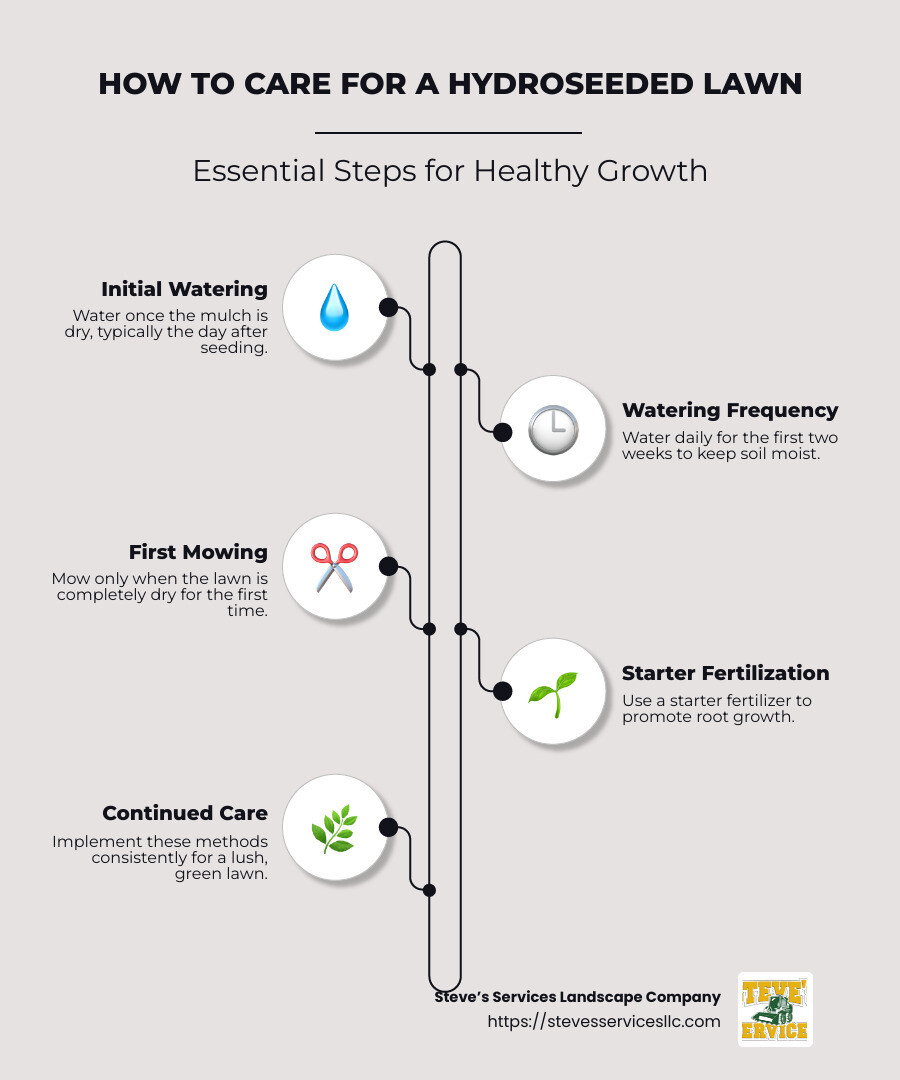
- Initial Watering: Begin watering your newly hydroseeded lawn once the mulch has dried, typically the day after application.
- Frequency and Duration: For the first two weeks, aim to water every day, keeping the soil consistently moist to encourage germination.
- Mowing and Fertilization: Wait until the lawn is fully dry before mowing and use a ‘starter’ fertilizer to promote root growth.
Starting on this journey with your newly hydroseeded lawn offers the promise of a thriving outdoor space if managed with care and consistency.
I’m Steve Sylva, with over 25 years in the landscaping industry. At Steve’s Services, we’ve mastered how to care for lawn after hydroseeding to help our clients achieve beautiful, verdant lawns. Let’s explore these key strategies together.
How to care for lawn after hydroseeding vocab to learn:
– cost of hydroseeding a lawn
– how often to water hydroseeded lawn
– when can i walk on hydroseeded lawn
Essential Early Watering Techniques
Optimal Watering Schedule for Hydroseeded Lawns
When you first hydroseed your lawn, keeping it moist is crucial for the seeds to sprout. Hydroseed moisture is the secret sauce to a lush, green lawn. But how do you get it just right?
Watering Frequency:
For the first two weeks, water your lawn every day. This keeps the soil moist and helps the seeds germinate faster. Water each section for about 10 to 20 minutes. If you notice water pooling, reduce the watering time.
Best Times to Water:
Early morning is the best time to water your hydroseeded lawn. The cool morning air helps the soil absorb water without too much evaporation. If needed, a light watering in the midday and late afternoon can help, but avoid watering during the hottest parts of the day.
Avoiding Water Pooling:
Pooling can drown your seeds. Make sure to adjust your watering to prevent water from collecting in low spots. If runoff happens, it may wash away seeds and nutrients.
Seasonal Adjustments:
In cooler weather, you might not need to water as often. But in hot, dry seasons, you may need to increase the frequency. Always watch for signs of drying out, like browning or wilting.
How to care for lawn after hydroseeding starts with mastering these early watering techniques. A well-watered lawn is a happy lawn, ready to grow strong and healthy.
Next, we’ll dive into mowing strategies to keep your new grass looking its best.
Professional Mowing Strategies for New Hydroseeded Grass
When to Start Mowing Your Hydroseeded Lawn
Mowing your newly hydroseeded lawn is a crucial step in ensuring it grows strong and healthy. However, timing and technique are key, and professional care can make all the difference.
Initial Mowing:
The first mow should occur when your grass reaches about 3 inches tall. This height ensures that the grass is sturdy enough to handle the mower without being uprooted.
First Mow Timing:
It’s important to wait until the grass is dry before mowing. Wet grass can lead to clumping and uneven cuts, which can stress your new lawn.
Mowing Frequency:
Initially, you might need to mow twice a week. This frequent mowing helps encourage root growth and keeps weeds at bay. Always let the grass dry out a bit before each mow.
Height Settings:
Set your mower to the highest setting for the first few mows. This helps protect the grass blades and keeps the soil cooler, which is important for preventing weed seeds from germinating. Never cut more than one-third of the grass height in a single mowing session.
Gradual Mowing:
Gradually lower the mower height over several weeks. This slow adjustment helps your lawn adapt without causing stress or damage.
Clipping Management:
You don’t need to pick up the clippings unless they’re smothering the grass. Clippings can provide nutrients as they decompose, acting as a natural fertilizer. However, if they pile up, they can block sunlight and air, which are essential for growth.
By entrusting these strategies to professionals, your hydroseeded lawn will thrive, growing strong and lush. Next up, we’ll explore the best fertilizing practices to give your lawn the nutrients it needs.
Fertilizing Your Hydroseeded Lawn
Choosing the Right Fertilizer
Fertilizing your newly hydroseeded lawn is crucial for its growth and health. At Steve’s Services Landscape Company, we recommend using starter fertilizers to kickstart this process. These fertilizers are rich in nitrogen and often phosphorus, which are essential nutrients for young grass.
Nitrogen Needs:
Nitrogen is vital for lush, green growth. It helps your grass develop strong leaves and stems. A high-nitrogen fertilizer ensures your lawn grows thick and vibrant.
Phosphorus Importance:
Phosphorus supports root development. A good starter fertilizer with phosphorus will help your grass establish a robust root system, which is vital for the long-term health of your lawn.
Fertilizing Schedule:
Our experts suggest beginning fertilization about 30 days after hydroseeding. This timing helps the young grass get the nutrients it needs once it’s past the fragile germination phase. Apply fertilizer every 6-8 weeks during the growing season to maintain nutrient levels.
Fertilizer Brands:
While there are many brands available, it’s important to choose one that suits your lawn’s specific needs. Look for products labeled as “starter” or high in nitrogen and phosphorus. Always follow the manufacturer’s instructions to avoid over-fertilization, which can harm your lawn.
By selecting the right fertilizer and sticking to a consistent schedule, your hydroseeded lawn will have a strong foundation for healthy growth. With these nutrients in place, next, we’ll address how to care for your lawn after hydroseeding.
How to Care for Lawn After Hydroseeding
Maintaining Your Hydroseeded Lawn Long-Term
Caring for your hydroseeded lawn is an ongoing process that ensures it remains lush and healthy over time. Here are some expert tips to help you maintain your lawn effectively:
Watering Depth:
Deep watering is crucial for encouraging roots to grow deeper into the soil. Aim for watering that penetrates 6-8 inches deep. This practice promotes strong roots and helps your lawn withstand dry spells.
Mowing Tips:
When your grass is ready for mowing, set your mower blades high to keep the grass cool and minimize stress. Mow only when the grass is dry and avoid cutting more than one-third of the grass blade at a time.
Fertilizing Intervals:
Adhere to a regular fertilizing schedule. After the initial fertilization, continue applying nutrients every 6-8 weeks during the growing season. This keeps your lawn green and dense.
Weed Control:
Delay weed control until after the lawn has been mowed 3-4 times. This ensures the grass is established enough to handle herbicides. Use products that support grass health while targeting weeds.
Deep Watering:
Infrequent but deep watering is key. Water your lawn deeply 1-2 times a week rather than shallow watering daily. This encourages deeper root growth and makes your lawn more drought-resistant.
Infrequent Mowing:
As your lawn matures, mow less often to reduce stress on the grass and maintain a healthy lawn. Adjust mowing frequency based on the growth rate and season.
Seasonal Fertilizing:
Adjust your fertilizing routine based on the season. Use a balanced fertilizer in the spring and fall, and a high-nitrogen one in the summer to support active growth.
Professional Care:
For specialized treatments like aeration or overseeding, consider hiring a professional lawn care service. They can provide expertise and tools that ensure your lawn stays in top condition.
By following these expert tips, your hydroseeded lawn will remain vibrant and resilient. Proper care and maintenance are essential, and next, we’ll explore how to address common challenges and questions you may encounter.
Addressing Common Challenges and Questions
FAQ: Best Practices for Hydroseeded Lawn Care
Hydroseeding is a fantastic way to establish a lush lawn, but it can come with its own set of challenges. Here, we tackle common questions and issues to help you achieve the best results.
Germination Issues:
If your seeds aren’t sprouting, the problem could be with moisture. Newly hydroseeded lawns need to stay consistently moist. Water lightly but frequently to keep the soil damp. Avoid watering during hot, humid conditions over 85°F, as this can harm the seeds.
Uneven Growth:
Patchy areas often result from uneven slurry application. Ensure your hydroseeder is calibrated correctly. If you notice bare spots, reseed these areas promptly and maintain consistent watering.
Color Changes:
If your grass turns brown or yellow, it may be due to overwatering or underwatering. Ensure your lawn gets 1-2 inches of water weekly. Adjust based on weather conditions, increasing during dry spells and decreasing during rainy periods.
Weed Management:
Weeds can be a nuisance in new lawns. Avoid herbicides until you’ve mowed the grass at least 3-4 times. This allows the grass to establish without being stressed by chemicals. Once ready, choose a weed control product that targets weeds but is safe for young grass.
How Often to Water:
Initially, water your hydroseeded lawn 2-3 times a day for short periods to keep the soil moist. After the first mowing, reduce frequency but water deeply to encourage root growth.
When to First Mow:
Your first mow should be when the grass reaches about 3 inches in height. Ensure the ground is dry to prevent compaction and set your mower blades high to avoid stressing the young grass.
When to Fertilize:
Fertilize your lawn about six weeks after hydroseeding using a starter fertilizer high in nitrogen and phosphorus. Follow up with regular fertilization every 6-8 weeks during the growing season to keep your lawn healthy and green.
By following these guidelines, you can effectively manage common challenges and ensure your hydroseeded lawn thrives. Next, we’ll dig into long-term care strategies to keep your lawn looking its best year-round.
Conclusion
Caring for a hydroseeded lawn is a journey that requires dedication and attention, but the rewards are well worth it. By following the right strategies, you can ensure your lawn remains lush and healthy for years to come.
Continued Care
The journey doesn’t end after the initial growth phase. Consistent care is key to maintaining the vibrancy of your lawn. Regular watering, mowing, and fertilizing are essential practices that should become part of your routine. Your lawn is a living system that thrives on care and attention.
Steve’s Services Landscape Company
At Steve’s Services, we understand the nuances of lawn care and are here to support you every step of the way. Our expertise in hydroseeding and comprehensive lawn care services means we can help you achieve the lawn of your dreams. Whether you need advice or hands-on support, our skilled team is ready to assist.
Professional Support
Sometimes, the best way to ensure long-term success is to enlist professional help. Our team can provide custom solutions and ongoing maintenance to keep your lawn in top condition. From soil testing to customized fertilization plans, we offer a range of services designed to meet your lawn’s specific needs.
Long-Term Strategies
For long-term success, focus on deep watering and infrequent mowing to encourage strong root growth. Adjust your care routine with the seasons, increasing attention during peak growing periods and preparing for dormancy in colder months. By adopting a strategic approach, you can enjoy a beautiful lawn year-round.
For more information on how we can assist you with hydroseeding and lawn care, visit our Hydroseeding Services page. We look forward to helping you achieve and maintain the perfect lawn!