
How to Care for New Sod: 7 Vital Tips for Success
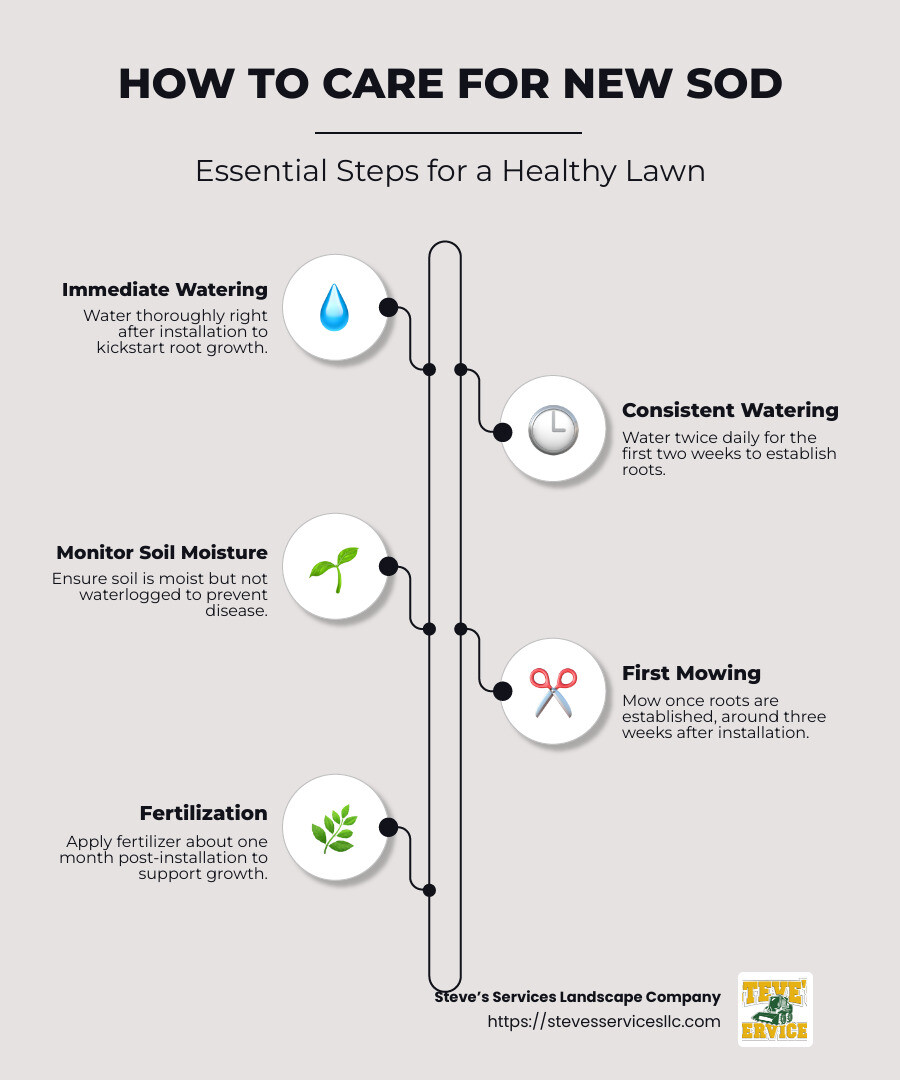
How to care for new sod is a frequent question homeowners face after investing in a lush green lawn. If you’ve just installed new sod, the key steps to ensure a thriving lawn include:
- Water immediately and thoroughly post-installation. Your new sod needs plenty of moisture to start strong.
- Maintain a consistent watering routine twice a day during the first two weeks to help root establishment.
- Monitor soil moisture to avoid overwatering, which can lead to disease.
- First mowing should occur once roots are established, typically around the three-week mark.
- Fertilize your lawn approximately one month after installation to support growth.
At Steve’s Services Landscape Company, we specialize in helping Massachusetts homeowners maintain vibrant outdoor spaces. With over 25 years of experience in the landscaping industry, I, Steve Sylva, am dedicated to providing you with expert guidance on how to care for new sod, ensuring your lawn remains healthy and beautiful. Whether you’re in Burlington, Malden, or any of the surrounding areas, our team is here to assist you with personalized solutions and exceptional support.
Simple guide to how to care for new sod:
– fertilizer for new sod
– when to mow new sod
– how to prep for sod
Preparing the Soil Before Installation
Before you lay down new sod, the soil needs some prep work to ensure your lawn thrives. Dry soil can quickly sap moisture from your new sod, leading to dehydration and stress. So, it’s crucial to address this before installation.
Pre-watering the soil is a simple yet effective step. Lightly mist the ground to keep it damp—not soggy. This helps cool down the soil temperature, reducing the shock for new sod roots. Think of it as creating a welcoming environment for your new grass.
Adding nutrients before installation can also make a big difference. Consider using Bolero™ Sod & Seed Starter. This product enriches the soil, giving your sod a nutrient boost right from the start. It’s like providing a hearty meal to your lawn before it begins its new life.
When preparing the soil, ensure it’s loose and well-drained. Compact soil can hinder root growth, while good drainage prevents waterlogging, which can drown roots.
By taking these steps, you set the stage for a lush, healthy lawn. Proper soil preparation is the foundation for successful sod installation and long-term lawn health.
How to Care for New Sod
Watering Tips for New Sod
Proper watering is essential for a healthy lawn, and new sod requires special attention to establish strong roots.
Morning Watering: Water your sod early in the morning to maximize absorption before the sun rises. Cooler temperatures reduce evaporation, ensuring your sod benefits from every drop.
Evening Watering: If additional watering is needed, opt for a light session in the early evening. Avoid watering too late to prevent fungus growth from prolonged moisture overnight.
Irrigation Systems: Consider using an irrigation system for consistent moisture. Set it on a timer to provide the right amount of water throughout the day, reducing the need for manual watering.
Soil Type Considerations: Adjust your watering schedule based on soil type. Sandy soils require more frequent watering, while clay soils retain moisture longer, necessitating less frequent watering.
Preventing Overwatering
Avoiding overwatering is crucial for the health of new sod.
Short Roots: New sod has short roots that need oxygen. Overwatering can fill the soil with water, displacing air and suffocating the roots, which hinders growth.
Oxygen Deprivation: Roots need oxygen to thrive. Excessive water can lead to oxygen deprivation and root rot, where roots decay due to too much moisture.
Root Rot and Disease Prevention: To prevent root rot, water your sod in short, controlled bursts. This keeps the soil moist but not soggy. Check the soil a few minutes after watering; if it’s still soggy, you may be overwatering.
By following these watering tips and avoiding common pitfalls, you’ll help your new sod establish strong roots and flourish into a lush lawn.
Encouraging Root Growth
Best Fertilizers for New Sod
Fertilizing new sod is crucial for encouraging root growth and ensuring a lush, vibrant lawn. The right nutrients give your sod the boost it needs to establish quickly and thrive.
Nutrients Needed: New sod requires a balanced mix of nutrients, primarily nitrogen, phosphorus, and potassium. These nutrients help in root development, disease resistance, and overall growth.
Fertilizer Application: Apply fertilizer carefully to avoid burn. It’s best to start with a granular starter fertilizer. This type slowly releases nutrients, giving your sod a steady supply as it establishes roots.
Organic Options: For those who prefer natural solutions, organic fertilizers are a great choice. They improve soil structure and provide nutrients without synthetic chemicals. Compost and bone meal are popular organic options.
Liquid Fertilizers: Liquid fertilizers, like Lawnifi Grow, can be applied for quick nutrient absorption. They are especially useful in the early stages when the sod is establishing.
Bolero™ Lawn Food: This is a specialized product designed for new sod. It provides essential nutrients and promotes robust root growth. It’s an excellent choice for those looking for a reliable fertilizer.
Fertilizing Schedule: Start fertilizing about two weeks after installation. Follow up with regular applications every 6-8 weeks during the growing season. This schedule ensures your sod gets the nutrients it needs to grow strong and healthy.
By using the right fertilizers and following a consistent schedule, you’ll support your new sod’s root growth, setting the stage for a beautiful, resilient lawn.
When and How to Mow New Sod
Mowing new sod is a crucial step in maintaining a healthy lawn. But timing and technique matter a lot.
First Mowing: Wait until your new sod reaches about 3 inches in height. This usually happens around 2-3 weeks after installation. By this time, the roots should be well-established, helping the sod stay in place during mowing.
Mowing Height: Set your mower to the highest setting for the first few cuts. This means you’re only trimming the tips of the grass blades, which reduces stress on the plant. Over time, you can gradually lower the mower height.
Sharp Mower Blades: Always use sharp mower blades. Dull blades can tear the grass, making it look ragged and increasing the risk of disease. Sharp blades ensure a clean cut, promoting faster recovery and healthier grass.
Mowing Frequency: The frequency of mowing depends on the growth rate of your grass. Typically, you should mow every 7-14 days. Follow the “one-third rule”—never cut more than one-third of the grass blade at a time. This practice helps keep your lawn healthy and lush.
By following these simple guidelines, you’ll ensure your new sod stays healthy and vibrant. Proper mowing encourages strong root growth and helps your lawn resist weeds and diseases.
Avoiding Common Mistakes
When it comes to how to care for new sod, avoiding common mistakes is just as important as following the right steps. Here are some key pitfalls to watch out for:
Walking on New Sod
One of the biggest mistakes is walking on new sod too soon. The roots are delicate and need time to establish. Walking on the sod can cause the roots to break or fail to grow properly. Keep pets and children off the grass until you’ve mowed it for the first time, which should be about 2-3 weeks after installation.
Pet Contact
Pets are wonderful, but their playful antics can harm new sod. Their movements, digging, or even bathroom habits can lead to soil compaction and damage the grass. If possible, create a temporary barrier or designate a separate area for your pets until the sod is firmly rooted.
Soil Compaction
Avoiding soil compaction is crucial for healthy root development. Compacted soil limits water, air, and nutrient flow to the roots. Keep heavy items like furniture or equipment off the sod, and avoid unnecessary foot traffic. This allows the soil to stay loose and healthy for the new roots to grow.
Root Failure
Root failure can happen if the sod doesn’t get the right care. Overwatering or underwatering are common causes. To prevent this, follow a consistent watering schedule. Water lightly but often in the first few weeks, then gradually increase the intervals as the roots establish. Watch for signs of stress, like yellowing or browning, and adjust your care routine accordingly.
By steering clear of these common mistakes, you’ll give your new sod the best chance to grow into a lush, healthy lawn. Proper care from the start sets the stage for a beautiful outdoor space.
Frequently Asked Questions about New Sod
How often should newly laid sod be watered?
Watering newly laid sod is crucial for its survival and growth. Consistency is key.
- First 2 Weeks: Water the sod 3-4 times daily. Each session should be brief, just enough to keep the soil moist without waterlogging it. This helps the roots begin to establish themselves.
- After 2 Weeks: Gradually reduce the watering frequency but increase the duration. This encourages deeper root growth.
Soil type and climate play a role. Sandy soil drains faster and may require more frequent watering. In hot, dry climates, you might need to water more often to prevent dehydration.
Can you overwater new sod?
Yes, overwatering is a common mistake. New sod has short roots, making it easy to drown them.
- Signs of Overwatering: Soggy soil, standing water, and a spongy feel underfoot. If the sod turns yellow or brown, it might be getting too much water.
- Proper Techniques: Water lightly and allow the surface to dry slightly between sessions. This ensures the roots get oxygen and prevents root rot.
Overwatering can lead to disease and poor root establishment. Keep an eye on the weather and adjust your watering schedule accordingly.
How long does it take for sod to take root?
Root establishment is a gradual process and varies based on several factors:
- Timeline: Typically, sod begins rooting within the first week of installation. Full root establishment usually takes 2-3 weeks.
- Seasonal Variations: In cooler months, the process might take longer due to slower growth rates.
- Soil Quality: Healthy, nutrient-rich soil promotes faster root growth. Before installation, ensure your soil is well-prepared and amend it if necessary.
Be patient and avoid walking on the sod until it’s well-rooted. This helps prevent root damage and ensures a strong foundation for your lawn.
Conclusion
At Steve’s Services Landscape Company, we understand that caring for new sod is crucial to achieving a lush, vibrant lawn. Our team of professionals is dedicated to providing expert lawn care that ensures your new sod thrives. We offer personalized solutions custom to your lawn’s specific needs, considering factors like soil type, climate, and grass variety.
Our exceptional customer service sets us apart. We listen to your concerns and provide guidance every step of the way, from installation to maintenance. Whether you’re in Burlington, Danvers, or any of the other Massachusetts communities we serve, our skilled team is ready to transform your outdoor space into a beautiful oasis.
Choosing professional lawn care from Steve’s Services means investing in the health and longevity of your lawn. We use our expertise to avoid common pitfalls like overwatering and ensure your sod establishes strong roots. Our commitment to quality and customer satisfaction ensures that your lawn remains a source of pride and enjoyment for years to come.
For more information on how we can help you achieve the perfect lawn, visit our New Lawn Installations page. Let us handle the complexities of sod care so you can enjoy a beautiful, healthy lawn with ease.
