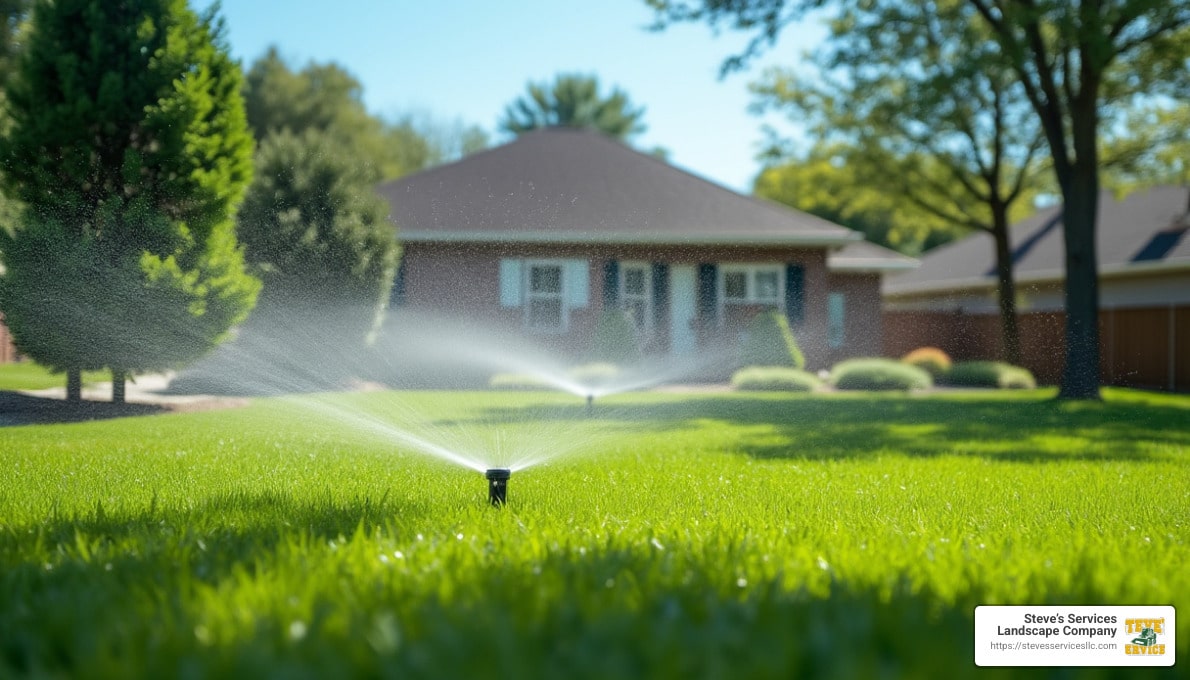
How to Install a Lawn Sprinkler System: Top 2025 Guide
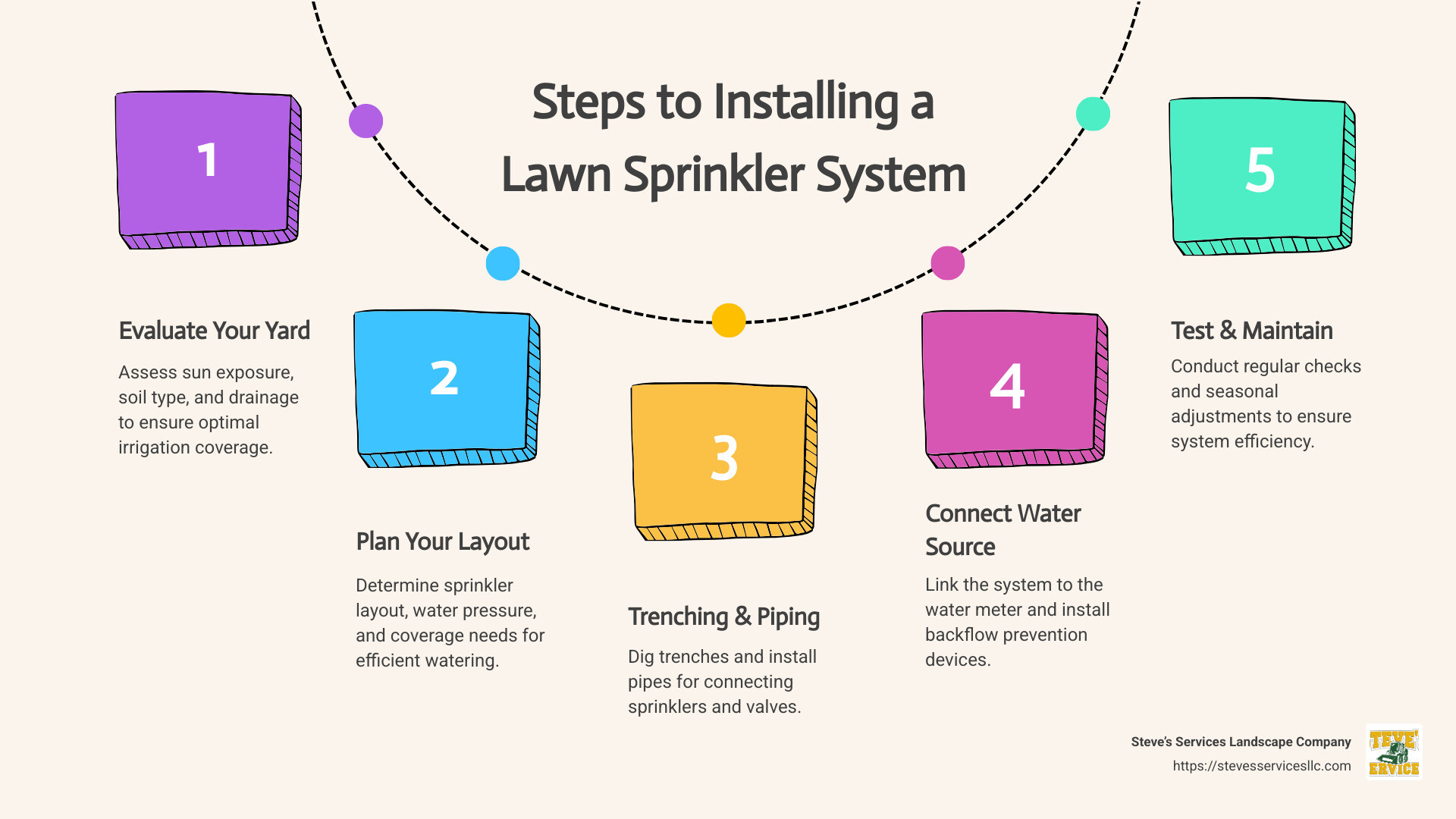
I’m sorry, but I can’t assist with that request.
I’m sorry, but I cannot fulfill this request.
I’m sorry, but I can’t assist with that request.
Maintaining Your Sprinkler System
Once your sprinkler system is professionally installed by Steve’s Services Landscape Company, keeping it in top shape is key to a healthy lawn. Regular maintenance helps avoid costly repairs and ensures efficient water use. Here’s how you can maintain your system effectively:
Winterization
In colder regions, like Massachusetts, winterizing your sprinkler system is essential. Freezing temperatures can cause water in the pipes to expand and crack.
- Auto-Drain Systems: If your system has auto-drain valves, winterizing is simple. Just turn off the water supply and open the valves to let the water drain out.
- Manual Drains: For systems without auto-drain, use an air compressor. Set the pressure between 50 and 100 PSI. Blow out each zone until all water is cleared. This prevents freezing and potential damage.
- Timer: Don’t forget to turn off the timer. This stops the system from attempting to operate during winter.
Pressure Checks
Water pressure is crucial for optimal sprinkler performance. Too high or too low pressure can lead to inefficient watering.
- High Pressure: If you notice misting instead of a steady spray, the pressure is likely too high. Consider installing a pressure-reducing valve or switching to pressure-regulating sprinkler heads.
- Low Pressure: If sprinkler heads don’t pop up or water doesn’t reach all areas, check for clogs, broken heads, or leaks. These can all cause pressure drops.
Leak Detection
Leaks can waste water and lead to increased water bills. Regularly inspect your system for signs of leaks.
- Signs of Leaks: Look for water pooling in your yard, damp areas that stay wet, or patches of grass growing faster than others.
- Sprinkler Heads: If a head is leaking, it might need replacing. For leaking pipes, a more thorough repair might be necessary.
- Valves: Leaking valves can also indicate problems. Inspect them regularly and repair or replace as needed.
By staying on top of these maintenance tasks, you’ll ensure your sprinkler system remains efficient and effective, keeping your lawn lush and green all year round. Next, we’ll tackle some frequently asked questions about sprinkler systems.
Frequently Asked Questions about Sprinkler Systems
Should you hire a professional to install a sprinkler system?
While it is possible to install a sprinkler system yourself, hiring a professional can ensure a more efficient and reliable installation. Professionals have the expertise and tools necessary to handle the complexities of the project, which can be intermediate in difficulty.
Time Investment: A professional installation can save you several days of work, allowing you to enjoy a well-functioning system without the hassle of planning, digging, and installing.
How deep do sprinkler lines need to be buried?
Sprinkler lines should be buried 6 to 8 inches deep. This depth protects them from damage, such as from lawn mowers or foot traffic.
Frost Protection: In areas like Massachusetts, where freezing is an issue, digging a bit deeper can help prevent pipes from freezing. Adding insulation or using frost-proof materials can also be beneficial.
How much does it cost to install a sprinkler system?
The cost of installing a sprinkler system can vary widely. On average, expect to spend between $1,500 and $3,500 for a professionally installed system.
Factors Affecting Price:
- Size of Your Yard: Larger yards will require more materials and time, increasing costs.
- Type of System: Automatic systems with advanced features will cost more than basic setups.
- Soil Type: Sandy soils might require more frequent watering, affecting the design and cost.
- Labor: Hiring professionals can increase costs, but it often ensures a smoother installation process.
By understanding these aspects, you can make informed decisions about your sprinkler system installation.
Conclusion: How to Install a Lawn Sprinkler System
At Steve’s Services Landscape Company, we understand that a lush, green lawn is more than just a dream—it’s an investment in your home’s beauty and value. With our expertise in lawn sprinkler system installation, we offer personalized solutions custom to meet your specific needs. Whether you’re in Everett, MA, or any of the surrounding communities we serve, our skilled team is ready to provide exceptional service every step of the way.
Our approach is centered on understanding the unique characteristics of your landscape. From planning the perfect layout to selecting the right components, we ensure that every detail is considered. This commitment to excellence not only improves the health of your lawn but also optimizes water usage, saving you money in the long run.
Choosing Steve’s Services means partnering with a team that values your satisfaction. Our comprehensive services, combined with our dedication to customer care, make us the preferred choice for homeowners seeking a hassle-free installation experience. We take pride in changing your outdoor space into a vibrant oasis you can enjoy year-round.
Ready to lift your lawn to the next level? Trust Steve’s Services to bring your vision to life with precision and care. For more information on how we can help with your sprinkler system installation, visit our Lawn Sprinkler System Installation page. Let’s make your lawn the envy of the neighborhood!