
Why Your HOA Landscaper Can Make or Break Your Community’s Curb Appeal
A reliable hoa landscaper is one of the most important vendors your community association will ever hire. Here’s a quick overview of what that means for your HOA:
- What they do: Maintain common areas like entrances, parks, and shared green spaces
- Who manages them: Usually an HOA landscape committee or property manager
- What it costs: Most HOAs spend between $45,000 and $60,000 per year on landscaping (some much more)
- What to look for: Licensed, insured, experienced, and communicative companies with HOA-specific knowledge
- Why it matters: Landscaping can consume up to 50% of a total HOA budget and directly affects property values
Think about the last time you drove through a neighborhood and immediately thought, “Wow, this place is well-kept.” Chances are, a professional landscaping team was behind it. Now think about the opposite — overgrown shrubs, patchy grass, broken sprinkler heads spraying sidewalks. That’s what happens when an HOA hires the wrong landscaper, or worse, doesn’t hold them accountable.
Getting this hire right isn’t just about appearances. It’s about protecting property values, keeping residents happy, and making sure your landscaping budget — which is likely your largest line item — actually delivers results.
I’m Steve Sylva, owner of Steve’s Services Landscape Company, and with over 25 years managing HOA and commercial landscaping in Malden, MA and surrounding communities, I’ve seen what separates a dependable hoa landscaper from one that simply doesn’t show up. In this guide, I’ll walk you through exactly how to find and keep the right one.
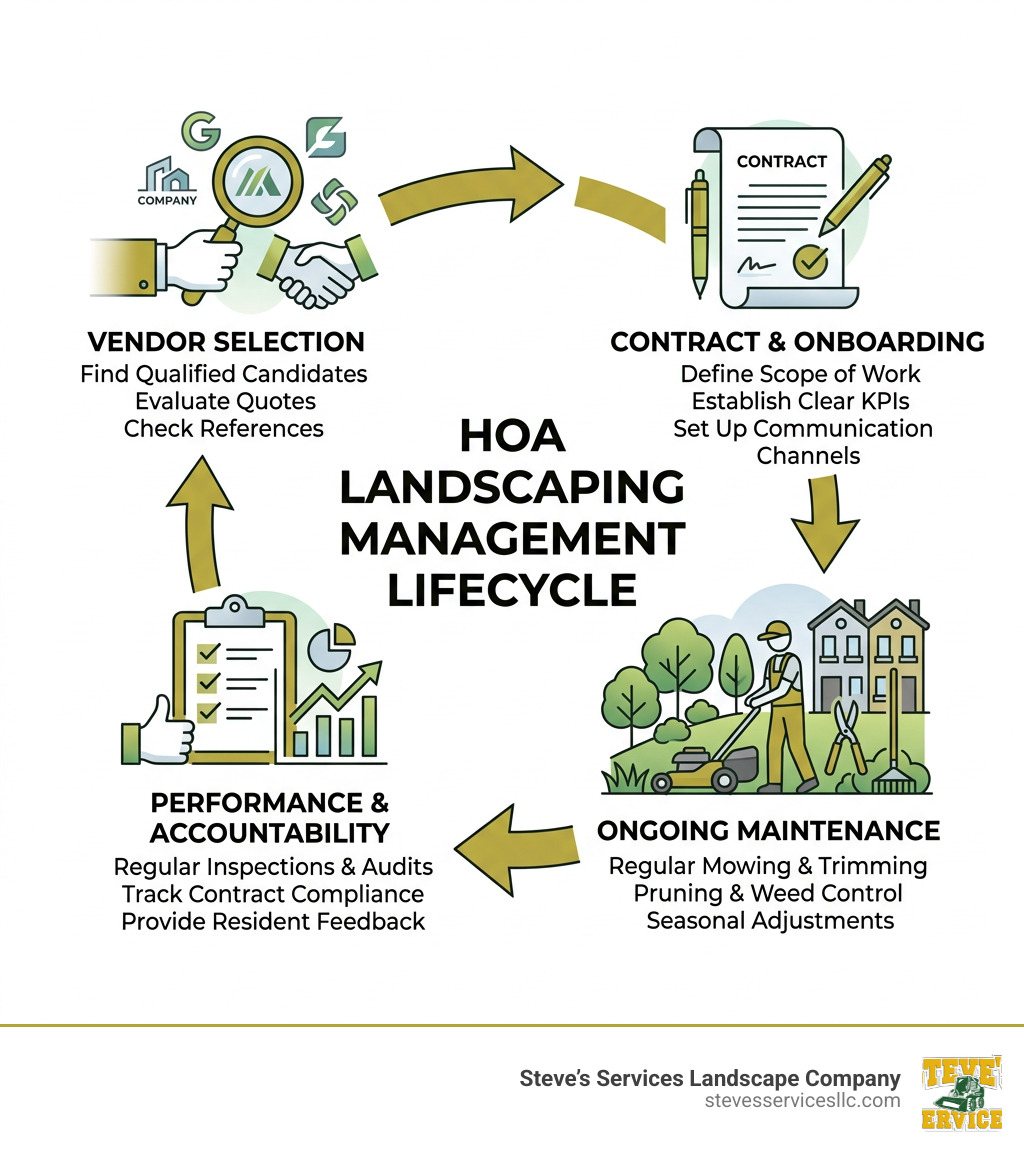
Related content about hoa landscaper:
The Role of the HOA Landscape Committee in Vendor Oversight
In many of the communities we serve, from Melrose to Reading, the unsung heroes are the members of the HOA landscape committee. This group acts as the bridge between the Board of Directors, the residents, and us—the hoa landscaper.
The importance of these committees is growing alongside the industry. In fact, the landscaping services industry is expected to reach $153 billion in 2024. This massive scale is partly driven by the 15.7% growth in 2023, proving that more communities are prioritizing professional management of their green spaces.
The committee’s primary role is oversight. They ensure that the money being spent actually translates into healthy turf and trimmed hedges. They handle resident requests—like a fallen branch in a common area or a request for new plantings—and they work with the landscaper to develop a maintenance schedule that keeps the property looking its best year-round. Without a dedicated committee, accountability often slips through the cracks, and that’s when the “no-shows” start to happen.
Establishing Clear Communication Channels
One of the biggest complaints we hear from HOA boards is that they feel “left in the dark.” Effective oversight requires a two-way street of information. We recommend that the committee and the hoa landscaper establish a formal communication rhythm.
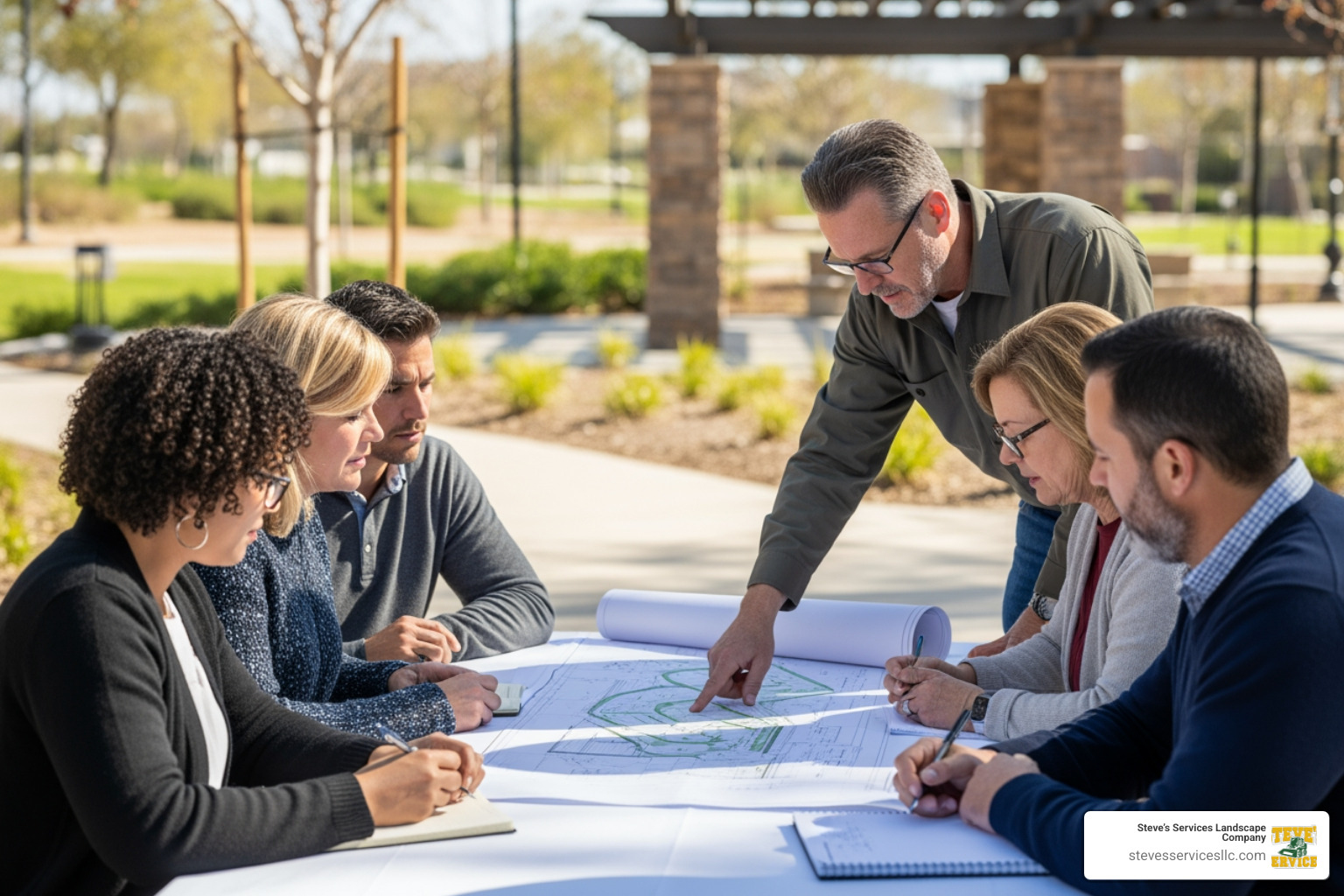
Whether it’s a monthly walkthrough or a shared digital portal, clear channels help resolve issues before they become expensive problems. For example, if a resident notices a drainage issue after a heavy rain in Winchester, the committee should have a direct line to the landscaper to address it immediately. This level of alignment ensures that the property manager isn’t bogged down by minor landscaping complaints and that the board stays focused on high-level community governance.
How to Vet and Hire a Reliable HOA Landscaper
With the landscaping industry employing over 1 million people across hundreds of thousands of businesses, the options can feel overwhelming. However, not every “guy with a mower” is equipped to handle the complexities of an HOA contract.
When you start the vetting process, your first non-negotiable should be licensing and insurance. A professional hoa landscaper must carry general liability and worker’s compensation insurance. Without these, the HOA could be held liable for any accidents that occur on the property.
We always suggest collecting referrals specifically from other HOAs of a similar size. If you’re managing a condo complex in Everett, ask a potential vendor for references from other commercial landscaping for condos they currently maintain.
Vetting Questions to Ask:
- How many other HOAs do you currently service in the Malden/North Reading area?
- Do you use subcontractors, or is all work performed by your own employees?
- What is your typical response time for emergency irrigation repairs?
- Can you provide a detailed schedule of services (mowing, pruning, fertilization) for the entire year?
Key Certifications for an HOA Landscaper
Beyond basic licenses, look for certifications that demonstrate a commitment to the craft. There are over 661,000 businesses in this field, but only a fraction invest in specialized training.
For instance, an ISA (International Society of Arboriculture) Certified Arborist is essential if your community has a significant tree canopy. Trees are a major asset to any community, and improper pruning can lead to disease or safety hazards. Additionally, look for certifications from trade associations which indicate the company stays updated on the latest grounds maintenance techniques and safety standards. A company with a strong safety record and professional credentials is far less likely to be a liability to your association.
Why Choose a Full-Service HOA Landscaper?
Many HOAs make the mistake of hiring one company for mowing, another for irrigation, and a third for snow removal. This “fragmented” approach often leads to finger-pointing when something goes wrong. If the grass is dying, the mower blames the irrigation guy, and the irrigation guy blames the fertilizer company.
Choosing a full-service provider simplifies everything. When one company handles property maintenance holistically, you get:
- Single-source accountability: One phone call fixes any problem.
- Cost efficiency: Bundling services often results in better rates than hiring individual contractors.
- Coordinated care: The team knows exactly when the sprinklers were last checked and can time fertilization or aeration accordingly.
Essential Responsibilities for Common Area Maintenance
The “common areas” are the heart of an HOA. These include the main entrance, clubhouses, parks, and the strips of grass along the sidewalks. A standard hoa landscaper contract should cover the “big three”: mowing, weed control, and fertilization.
However, a truly professional service goes deeper. It includes bed maintenance (mulching and weeding), shrub pruning, and seasonal color displays (flowers). In our region—places like Lynnfield and Saugus—winter is also a major factor. Your landscaper should be able to transition seamlessly into commercial snow management to keep the community safe and accessible.
One of the most critical,, responsibilities is irrigation system management. A broken pipe or a misaligned head can waste thousands of gallons of water and kill expensive turf in a matter of days. Regular inspections of the “guts” of your landscape are just as important as the weekly mow.
Differentiating HOA vs. Resident Duties
Confusion between what the HOA covers and what the resident is responsible for is a leading cause of neighborhood disputes. Clear policies are the solution. Most associations are responsible for everything “outside the walls” in condo settings, while in single-family HOAs, the association might only handle the entrances and community parks.
To help your residents understand the boundaries, we recommend creating a “Landscaping Responsibility Table” in your community newsletter.
| Feature | HOA Responsibility | Resident Responsibility |
|---|---|---|
| Common Area Turf | Mowing, fertilizing, aeration | Reporting any visible leaks/issues |
| Street Trees | Pruning, health assessments | Watering during extreme droughts |
| Private Gardens | N/A (unless specified) | Weeding, planting, and maintenance |
| Irrigation | Main lines and common zones | Individual unit heads (if applicable) |
| Snow Removal | Main roads and common sidewalks | Private driveways and entry stairs |
Establishing an “approved plant palette” is another great way to maintain community aesthetics. This prevents one resident from planting invasive bamboo that eventually spreads into the common areas, creating a headache for the hoa landscaper.
Budgeting for HOA Landscaping and Maintenance Costs
Landscaping is often the largest line item in an HOA budget, sometimes consuming up to 50% of the total annual dues. Given that the median revenue per customer in the landscaping industry is $16,413, it’s clear that these are significant financial commitments.
Based on internet data, most HOAs spend between $45,000 and $60,000 per year on landscape maintenance. However, this is a broad average and not necessarily reflective of the actual costs for Steve’s Services. Depending on the size of the community and the level of service required, annual costs can range widely from $45,000 to $180,000+ per year.
When we look at commercial landscape services, we always advise boards to plan for a 3% annual increase. This covers rising labor costs, equipment maintenance, and material prices (like mulch and fertilizer). Avoiding the “lowest bidder” is usually the best way to save money in the long run; low bids often lead to cut corners, which eventually results in expensive “catch-up” maintenance.
Understanding the Factors That Influence Pricing
Why does one HOA in Medford pay $50k while another in Stoneham pays $100k? It usually comes down to three factors:
- Property Size and Turf Complexity: A flat field is easy to mow. A property with steep hills, tight corners, and hundreds of ornamental trees requires more man-hours and specialized equipment.
- Irrigation Age: Older systems require more frequent repairs and manual monitoring.
- Service Inclusions: Does the contract include “extras” like seasonal flower rotations, aeration, or hydroseeding?
Best Practices for Sustainability and Technology
The modern hoa landscaper is more than just a person with a lawnmower; they are a resource manager. Sustainability is no longer just a trend—80% of gardeners now plan to continue investing in eco-friendly practices. For HOAs, this means looking into xeriscaping (low-water landscaping) and smart irrigation.
Smart irrigation controllers use local weather data to adjust watering schedules automatically. If it rained in Burlington last night, the system won’t turn on this morning. This saves the HOA money on water bills and prevents overwatering, which can lead to fungal diseases in the grass.
Technology also helps with accountability. We use GPS tracking on our vehicles and digital management tools to provide “proof of service.” This allows the board to see exactly when we arrived, what tasks were completed, and even view photos of the finished work. This level of transparency is exactly how you ensure your landscaper “actually shows up.” Check out more about our landscape maintenance services to see how we integrate these tools.
Frequently Asked Questions about HOA Landscaping
How often should an HOA landscaper visit the property?
For most communities in the Malden and Wakefield area, a weekly visit is standard during the growing season (April through October). This ensures that the grass stays at a managed height and that trash or debris in common areas is picked up regularly. During the “dormant” months, visits may drop to bi-weekly or monthly for leaf removal and winter prep.
What should be included in a standard HOA landscaping contract?
A comprehensive contract should clearly define the scope of work. At a minimum, it should include:
- Mowing frequency and height.
- A fertilization and weed control schedule (usually 4-6 applications per year).
- Spring and fall clean-up dates.
- Shrub and tree pruning (specifying how many times per year).
- Irrigation start-up, monthly checks, and winterization.
- A clear process for “out-of-scope” work (like storm damage repair).
How can an HOA resolve recurring irrigation or drainage issues?
Recurring issues usually point to a design flaw rather than a maintenance failure. If you have a “swampy” spot in a common area in Woburn, it might require a French drain or a regrading project. A good hoa landscaper will provide a long-term solution rather than just continuing to mow over the mud. Regular landscape maintenance inspections are the best way to catch these issues before they cause property damage.
Conclusion
Choosing the right hoa landscaper is about more than just finding someone to cut the grass. It’s about finding a partner who understands the unique needs of your community, respects your budget, and uses modern technology to stay accountable.
At Steve’s Services Landscape Company, we’ve built our reputation on being the team that actually shows up and does the job right the first time. Whether your community is in Malden, Burlington, Everett, Lynnfield, Medford, Melrose, Reading, Revere, Saugus, Stoneham, Wakefield, Winchester, or Woburn, we are here to help you enhance your community’s beauty and value.
If you’re ready to move away from the “no-show” landscapers and toward a professional partnership, let’s talk. We specialize in everything from commercial landscaping for condos to complex hardscaping projects. Your community deserves to look its best—let us help you get there.
