
Installing Irrigation System: Flawless 2025
The Foundation of a Healthy, Water-Smart Lawn
Installing irrigation system components properly is the key to achieving a lush, green landscape while conserving water. A professionally installed system can save hundreds of gallons of water daily, as experts estimate that improper or manual watering methods can waste up to 50% of all water used outdoors through inefficiency and overwatering.
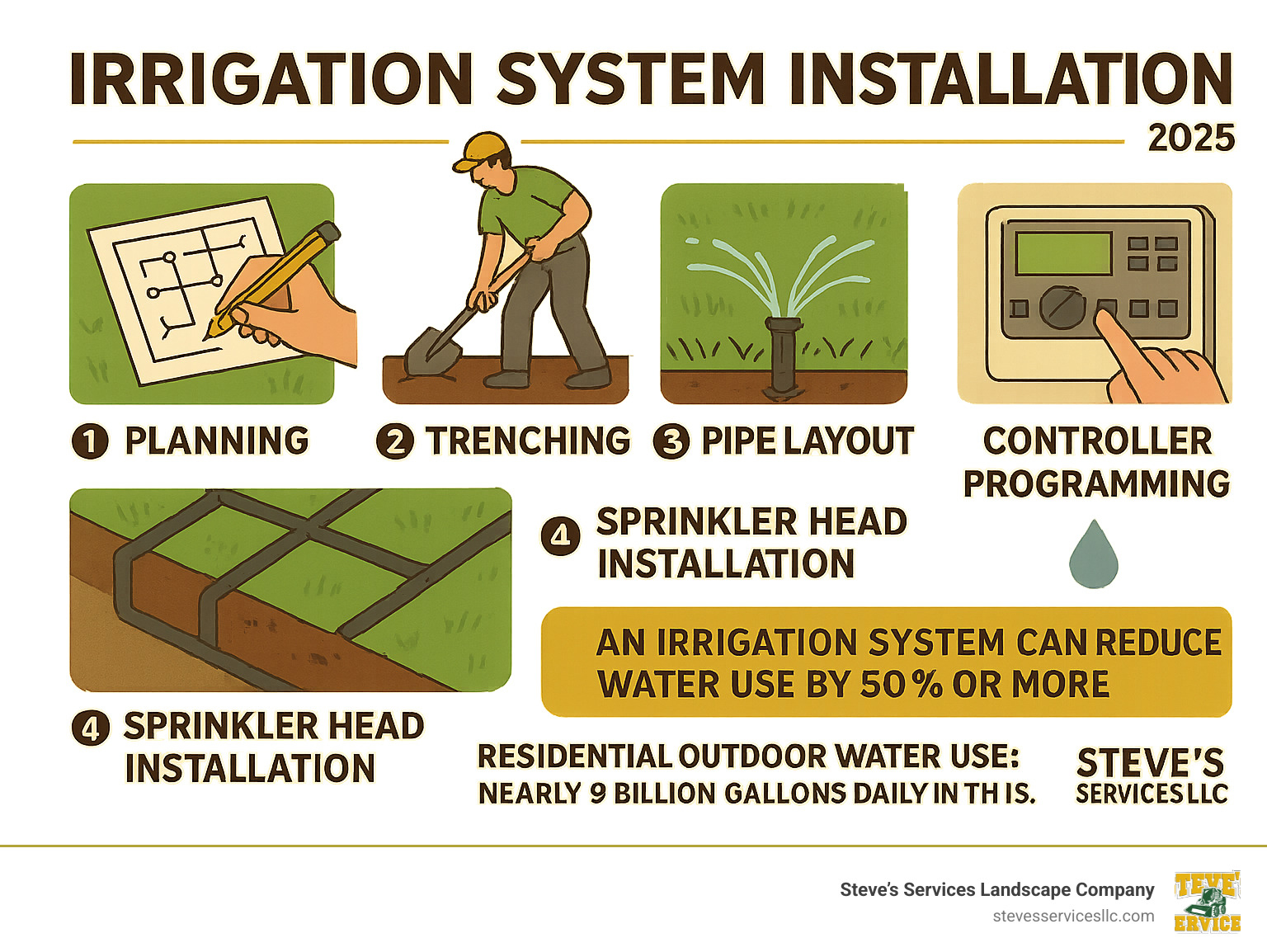
Essential Steps for a Professional Irrigation System Installation:
- Planning and Design: Assess the landscape, test water pressure, and create zones based on plant needs.
- Permits and Prep: Check local requirements and call 811 to mark underground utilities.
- Trenching: Dig trenches 6-12 inches deep to protect pipes from damage and freezing.
- Water Source Connection: Install a backflow preventer and connect to the main water supply.
- Pipe Installation: Lay PVC or poly pipes along planned routes with proper fittings.
- Sprinkler Head Placement: Install appropriate heads for each zone (rotors, sprays, or drip emitters).
- System Testing: Check for leaks, adjust spray patterns, and ensure proper coverage.
- Controller Programming: Set watering schedules and install smart features for efficiency.
The difference between a successful installation and a costly mistake often comes down to professional expertise. I’m Steve Sylva, owner of Steve’s Services, with over 25 years of experience installing irrigation system solutions throughout Massachusetts. My team has helped hundreds of homeowners in Everett, Malden, Medford, and surrounding communities achieve beautiful, water-efficient landscapes through proper irrigation system design and installation.
Installing irrigation system terms you need:
- sprinkler backflow preventer replacement cost
- water efficient sprinkler system
- water sprinkler repair cost
Pre-Installation Planning: The Blueprint for Success
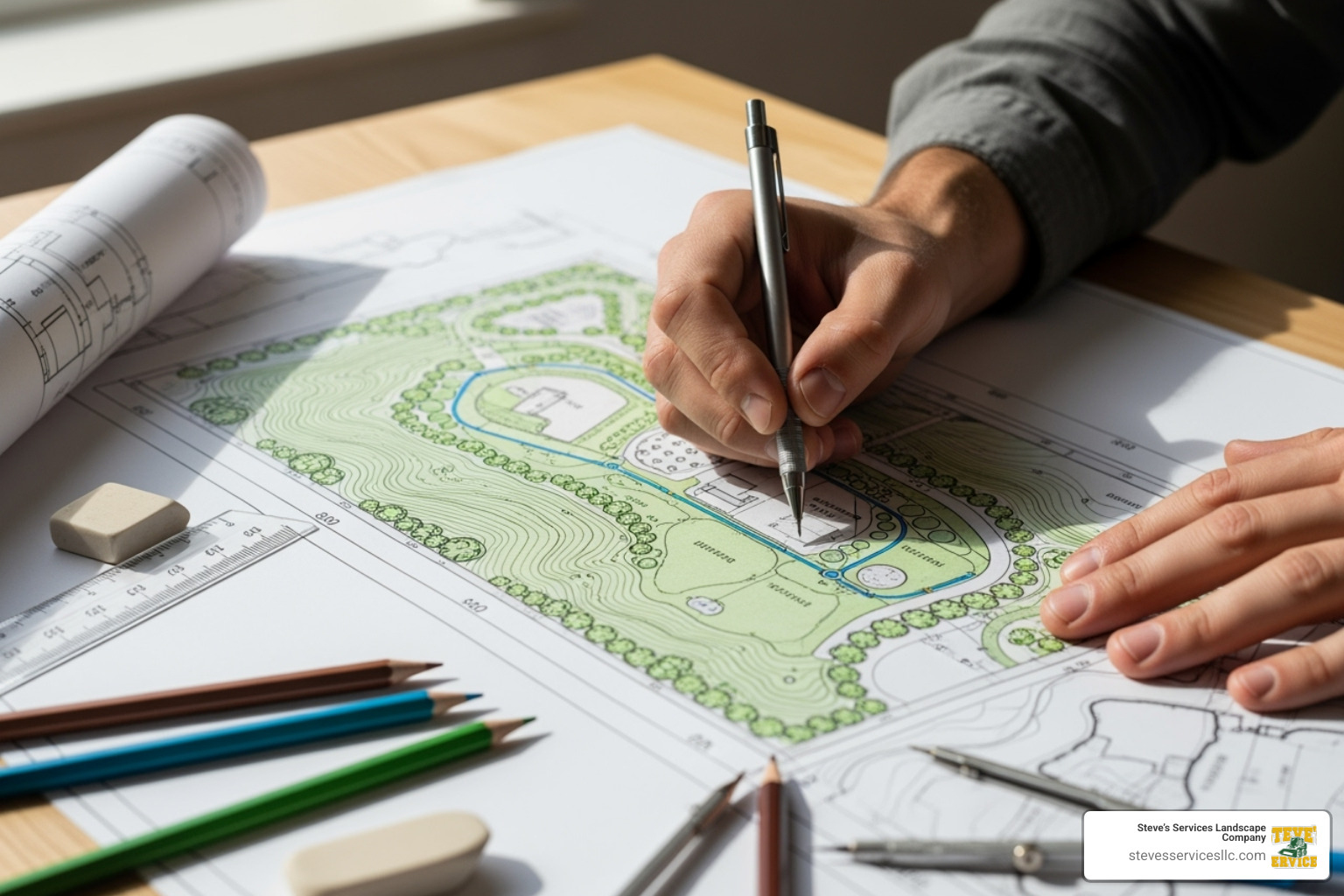
Proper planning is the most critical phase when installing irrigation system components. At Steve’s Services, we start every project with a comprehensive site assessment, measuring your property, mapping key features, and noting sun exposure, slopes, and potential drainage issues. We also perform a soil type analysis, as sandy soils require different watering schedules than dense clay soils.
Next is the water source evaluation, where we test your water pressure (PSI) and water flow rate (GPM). These measurements are essential for designing a system where every sprinkler head performs as intended. Low pressure can prevent heads from popping up, while high pressure causes misting and water waste.
With this data, we create your system design and a smart zoning strategy. This involves grouping plants with similar water needs together—for example, separating a sunny lawn from a shaded garden bed. Each zone receives a customized watering schedule, maximizing efficiency. How do Irrigation Systems Work? explains more about how these zones function together.
Key Considerations Before Installing an Irrigation System
Before any digging begins, we address several critical details:
- Permit Requirements: We handle all necessary plumbing permits required by your town for connecting to the main water supply, ensuring your system meets all local codes.
- Local Watering Restrictions: We design your system’s schedule to comply with any municipal rules on watering days or times, especially during drought conditions.
- Calling 811: This is a non-negotiable safety step. We contact call811.com to have all underground utility lines (gas, electric, etc.) marked on your property before trenching.
- Water Pressure and Flow Rate: These measurements dictate the type and number of sprinkler heads that can run on a single zone. Spray heads typically need 30 PSI, while rotors require around 45 PSI.
- Soil, Sun, and Shade Mapping: Analyzing these factors allows us to program watering cycles that deliver the right amount of moisture without overwatering shaded areas or underwatering sunny spots.
Choosing the Right Irrigation System
Selecting the right components is crucial for an effective system.
- In-Ground Sprinkler Systems: For large lawn areas, we use rotor heads that rotate a single stream of water over distances of 15-30 feet, or spray heads that deliver a fan-shaped spray for smaller, irregular-shaped areas.
- Drip Irrigation Systems: For garden beds, shrubs, and trees, drip irrigation is the most efficient choice. It delivers water directly to the plant roots, minimizing evaporation and waste. Our Drip Irrigation System page has more details.
- Bubblers: These are ideal for individual shrubs or small trees, providing more water than a dripper but in a targeted, gentle pattern.
The key is matching system type to landscape needs. We design a hybrid system that gives your lawn the broad coverage it needs while providing precise, targeted watering for your garden beds. See our guide to the Best Lawn Sprinkler System to learn how we match components to your landscape.
The Professional Process for Installing an Irrigation System
Once planning is complete, our experienced crew transforms the design into a functioning system. The system’s main lines carry water from the source to different areas, while smaller lateral lines branch off to deliver water to individual sprinkler heads in each zone.
The valve manifold acts as the control center, directing water to different zones. We assemble these in weatherproof underground boxes for easy maintenance access. A critical safety component is the backflow preventer, which is required by Massachusetts law to prevent irrigation water from contaminating your home’s drinking water supply. Our team ensures every installation meets or exceeds local safety codes.
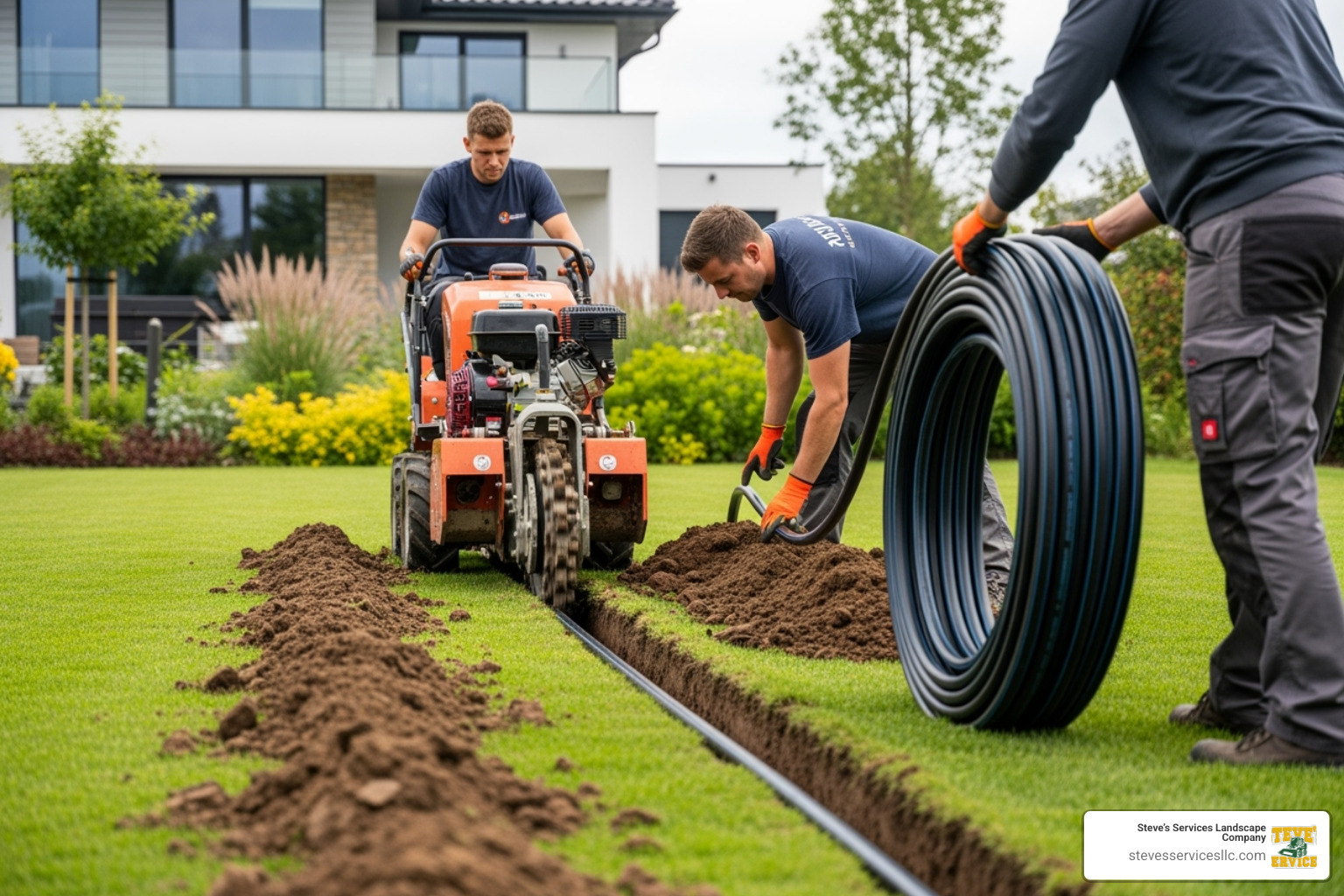
We use professional techniques and equipment, like vibratory plows, to install pipes with minimal disruption to your existing lawn and landscape.
Trenching and Pipe Layout
The foundation of a reliable system is properly installed pipe. We bury pipes 6 to 12 inches deep—leaning toward the deeper end in Massachusetts to protect against winter freeze-thaw cycles and prevent cracked pipes. The trenching method depends on your property; we use power trenchers for open areas and less invasive methods like vibratory plows near established gardens.
Safety is paramount. Even after 811 has marked utilities, we hand-dig near marked areas to prevent accidents. We use two primary pipe materials: rigid PVC for durable main lines and flexible poly pipe for lateral lines, laying each carefully to avoid kinks that could restrict water flow.
Assembling and Connecting the System
This phase requires precision to create a leak-free system. Connecting to your main water source is handled by a licensed plumber to ensure it’s done safely and to code. This is when the backflow preventer is installed, along with shut-off valves for easy maintenance and winterization.
We assemble the valve manifold in an underground box with a gravel base for drainage, ensuring valves are spaced for easy future access. All pipe connections are made using professional-grade primers, cements, and clamps to ensure long-term reliability. Sprinkler heads are installed using flexible swing pipe, which allows for precise positioning and protects the head from damage.
Every connection is tested under full pressure before we backfill the trenches. This thorough approach to installing irrigation system components ensures your investment provides reliable service for years. For more on our process, see our lawn sprinkler system installation page.
System Activation and Fine-Tuning
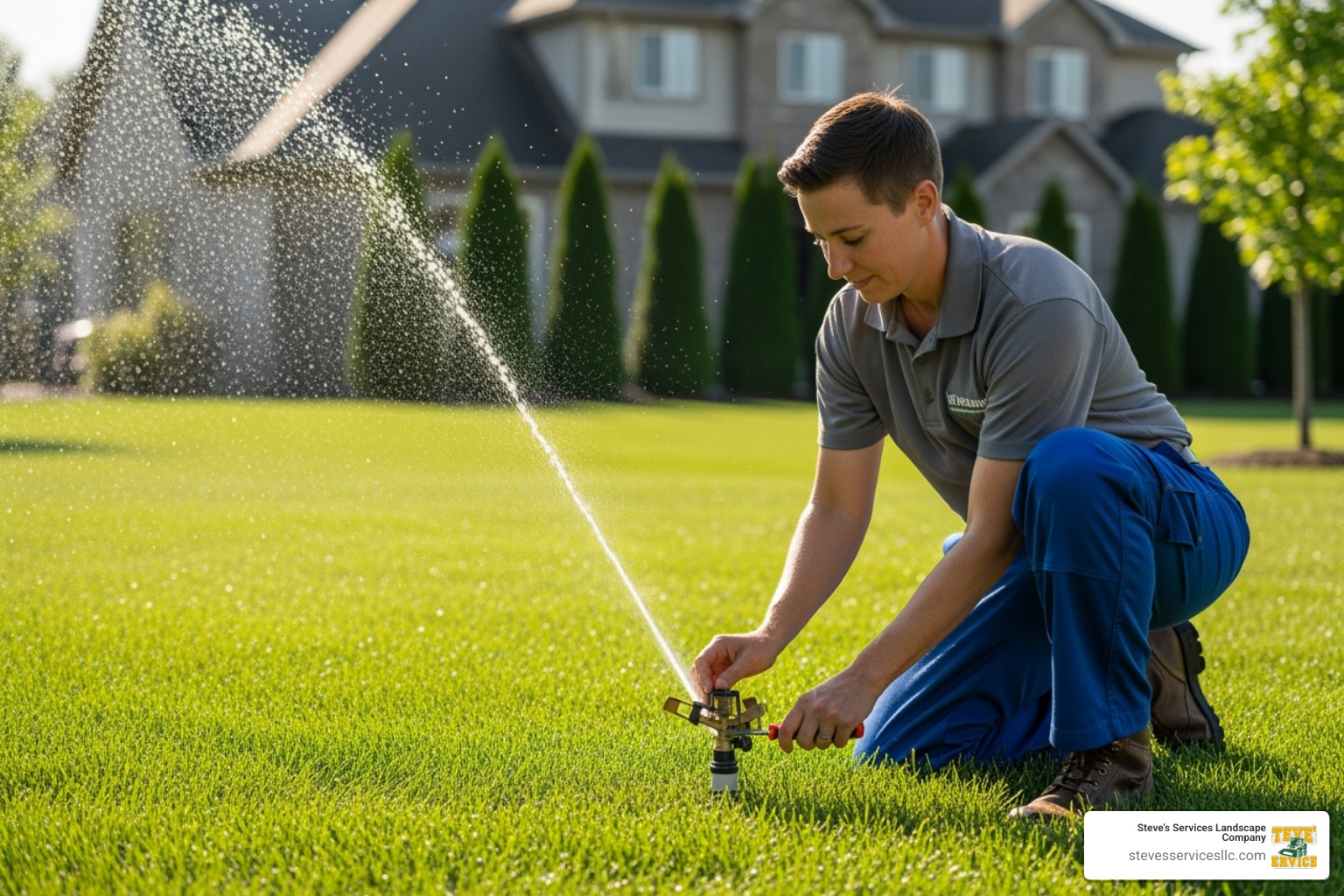
After installation, we bring your new irrigation system to life. The first step is to flush the entire system, clearing out any dirt or debris from the pipes to prevent clogged sprinkler heads.
Once the system is clean, we connect all sprinkler heads and emitters and begin testing. We activate each zone individually, checking for proper water pressure and inspecting every connection for leaks. The final step is adjusting the spray patterns to achieve head-to-head coverage, where the spray from one sprinkler reaches the next. This ensures even watering and eliminates dry spots. We carefully set each head’s arc and spray distance, ensuring they sit just above ground level to avoid damage from lawnmowers.
If you notice any issues later on, our irrigation system repair team is always ready to help.
Programming and Preventing Overwatering
Proper controller programming is the key to an efficient system. We set systems to water in the early morning, typically between 4 AM and 6 AM. This minimizes water loss from evaporation and wind and helps prevent fungal diseases that thrive on foliage that stays wet overnight.
Preventing overwatering is crucial for plant health and your water bill. We achieve this through precise scheduling based on your soil and plant needs, and by calibrating the system to deliver the exact amount of water required.
The biggest advancement in water conservation is smart technology. Smart controllers from brands like Rain Bird and Rachio use Wi-Fi to access local weather data, automatically adjusting watering schedules based on rainfall and temperature. These systems can save up to 50% on water usage. Rain sensors provide a simpler solution, shutting off the system when it rains, while soil moisture sensors only allow watering when the ground is actually dry. A properly designed system with these features can save hundreds of gallons of water daily. Learn more about these money-saving technologies in our guide to water-efficient sprinkler systems.
Long-Term Care, Costs, and Advanced Technology
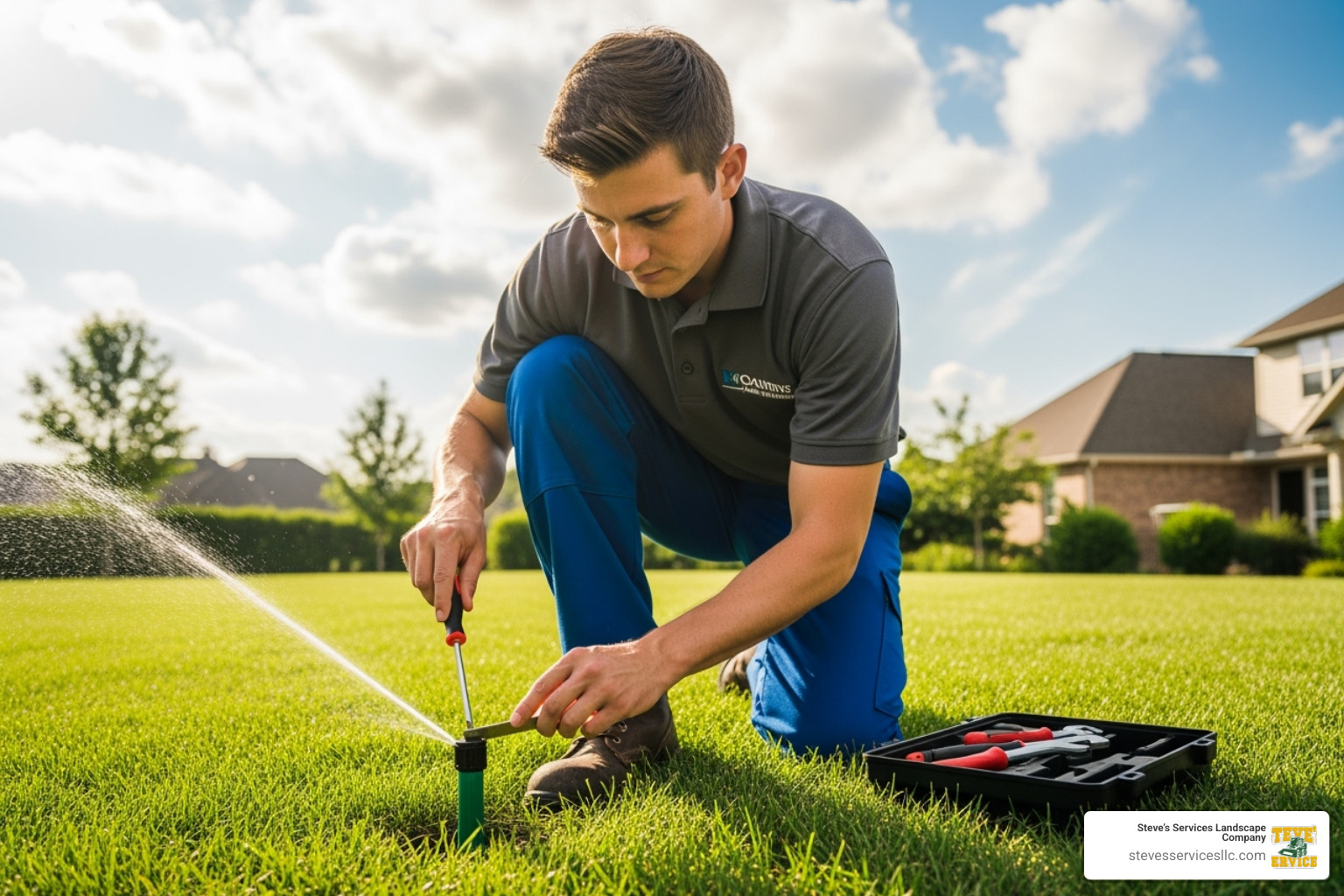
Your investment in installing irrigation system components is protected by regular maintenance. A well-cared-for system can last 15-20 years, while neglected ones can fail in just a few seasons. Regular upkeep ensures your system runs at peak efficiency, preventing small issues like clogged nozzles from wasting hundreds of gallons of water. Our guide on maintaining your irrigation system tips and tricks covers essential care.
Essential System Maintenance
- Spring Start-Up: We gradually restore water pressure to check for freeze damage, inspect all components, clean heads, and make adjustments. This is more than just turning on the water; it’s a full system health check. Learn about the spring activation process.
- Mid-Season Checks: During peak watering months, we check for leaks, clean filters, and ensure the system is operating efficiently to prevent high water bills.
- Winterization: This is critical in New England. Our blow-out service uses an air compressor to remove all water from pipes, valves, and heads. This prevents water from freezing, expanding, and cracking components like a frozen backflow preventer.
Understanding Installation Costs and Common Mistakes
The cost of installing irrigation system components varies based on property size, complexity, and other factors.
| Installation Method | Typical Cost Range (National Averages) | What’s Included |
|---|---|---|
| Materials Only | $500 to $2,000 | Basic components for smaller properties, not including tools, permits, or labor |
| Professional Installation | $3,500 to $15,000+ | Complete system design, materials, installation, permits, and warranty |
Please note: these are national averages for installing irrigation system components and not quotes from Steve’s Services. Actual costs vary significantly based on property size, soil conditions, and system complexity.
Factors that influence the final price include property size, landscape complexity, soil conditions, system type, and local permit requirements. The most common and costly mistakes we see from improper installations are:
- Improper head spacing, creating dry spots and waste.
- Mismatched components that lead to poor performance.
- Ignoring local codes and permit requirements.
- Skipping the 811 call before digging, which can lead to dangerous utility line damage.
- Poor planning without proper water pressure tests or zone design.
The true cost of irrigation installation includes long-term value from water savings, convenience, and increased property value.
Frequently Asked Questions about Irrigation Installation
Over my 25 years of installing irrigation system components in Massachusetts, I’ve answered many questions from homeowners. Here are the most common ones.
How deep should irrigation pipes be buried?
For best results, irrigation pipes should be buried 6 to 12 inches deep. This depth protects them from lawnmowers, aeration equipment, and surface traffic. In the New England climate, we recommend burying pipes closer to the 12-inch mark to provide better protection against frost and prevent costly damage from freeze-thaw cycles during our harsh winters.
What permits are needed to install an irrigation system?
Permit requirements vary by municipality in Massachusetts. Most towns require a plumbing permit to connect the system to your home’s main water supply, and many mandate that a licensed plumber perform this work. There are also often specific regulations for installing backflow prevention devices, which are essential for safety. When you work with a professional installer like Steve’s Services, we handle all the necessary permits and paperwork to ensure your system is fully compliant with all local codes.
How do smart controllers save water and money?
Smart controllers are a game-changer for water conservation. They use Wi-Fi to access local weather data and automatically adjust your watering schedule based on real-time conditions like rain, temperature, and humidity. If it has rained recently, the controller will skip the next cycle, preventing waste. This intelligent watering can reduce water usage by up to 50%, leading to significant savings on your water bill. By preventing overwatering, these controllers also promote deeper, healthier root systems for your lawn and plants. Leading brands like Rain Bird and Rachio offer user-friendly apps for remote control and detailed water usage reports.
Achieve a Flawless Lawn with Professional Installation
Installing irrigation system components correctly is a complex project that transforms landscape maintenance. A professional installation delivers significant returns through water savings, reduced labor, and a major boost to your property’s curb appeal and value. The process requires accounting for water pressure, soil type, plant needs, and local regulations—details where professional expertise makes all the difference.
A properly designed system with smart technology can save hundreds of gallons of water daily. This translates to real money back in your pocket and the peace of mind that comes from a lush, healthy landscape without the hassle. The increased property value alone often makes it a sound financial investment.
For homeowners throughout Burlington, Danvers, Everett, Lynnfield, Malden, Medford, Melrose, North Reading, Reading, Revere, Saugus, Stoneham, Winchester, Woburn, and Wakefield, choosing Steve’s Services means partnering with specialists who understand Massachusetts’ unique climate. We handle everything from frost line considerations to local permits, ensuring your system performs flawlessly.
With 25 years of experience, we combine comprehensive planning and skilled installation to create a water-efficient system that keeps your lawn green for years to come. Ready to transform your landscape? Contact Steve’s Services today for an expert consultation on your lawn sprinkler system installation and achieve sprinkler success that lasts.
