Lawn Feed for New Lawn: 7 Powerful Tips for Stunning Results 2025
Why New Lawns Need Specialized Feeding
Lawn feed for new lawn is different from regular fertilizer because newly seeded or sodded grass needs extra phosphorus to develop strong roots. Here’s what you need to know:
Quick Answer for New Lawn Feeding:
- When to apply: Before seeding or immediately after sodding
- Best type: Starter fertilizer with high phosphorus (NPK ratios like 24-25-4 or 6-9-6)
- How much: 0.5-1 lb of nitrogen per 1,000 sq ft
- Second feeding: Wait 4-8 weeks after establishment
- Avoid: Weed-and-feed products until grass is fully established (3-4 months)
Starting a new lawn is like preparing for a job interview – you need the right preparation for success. New grass faces unique challenges that established lawns don’t experience. Poor soil conditions, competition from weeds, and the stress of establishing roots all work against your new seedlings or sod.
Regular lawn fertilizer won’t cut it for new grass. Starter fertilizers contain higher phosphorus levels – the middle number in NPK ratios – which promotes strong root development. Research shows that properly fed new lawns grow 70% thicker and establish 35% quicker compared to unfed grass.
The difference between success and failure often comes down to timing and the right nutrient balance. Too much nitrogen can burn tender seedlings, while too little phosphorus leaves roots weak and shallow.
I’m Steve Sylva, owner of Steve’s Services with over 25 years of landscape experience in Massachusetts. Throughout my career, I’ve seen countless homeowners struggle with lawn feed for new lawn selection, which is why proper fertilization is crucial for every lawn installation we complete.
What Is Lawn Feed and Why New Lawns Need It
Think of lawn feed as a multivitamin for turf. Every bag contains three primary nutrients:
- Nitrogen (N) – fuels green, leafy growth.
- Phosphorus (P) – drives root development and seed germination.
- Potassium (K) – boosts overall stress tolerance.
A brand-new lawn, whether seeded or sodded, lacks the deep roots that let established grass mine nutrients from the soil. Construction often leaves topsoil compacted and stripped of organic matter, so seedlings must fend for themselves in poor conditions while weeds race to fill the void.
Why ordinary fertilizer isn’t enough
Regular “maintenance” fertilizers focus on nitrogen for color and top growth. That works once a lawn is mature, but too much nitrogen too soon forces weak, shallow roots and can burn tender shoots. Starter fertilizers flip the script: they supply extra phosphorus (often 15-25 %) and only a modest, slow-release dose of nitrogen. University trials have shown starter formulas increase root mass by 40-60 % and speed up establishment by roughly one-third compared with unfed turf.
The science in a nutshell
- Phosphorus stays put in the soil, so it must be incorporated near the seed or sod roots at installation.
- Controlled-release nitrogen feeds gently for 6-8 weeks, preventing the growth spurt/crash cycle that stresses young grass.
- Balanced nutrition early on builds a root system that later supports thicker, drought-tough turf with fewer weeds.
That’s why every new-lawn project Steve’s Services installs across Everett, Medford, and surrounding communities starts with a soil test and a properly balanced starter fertilizer.
Choosing the Right Lawn Feed for New Lawn
A fertilizer label’s three numbers (N-P-K) tell you everything. For new lawns, look for higher phosphorus than you’d use later on:
- Standard starter blends: 24-25-4 or 22-23-4
- Gentle options: 6-9-6
- Phosphorus-heavy for very poor soil: 10-18-10
Read the label like a pro
- The word “Starter” or “New Lawn” should be on the front.
- Aim for 15 %+ phosphorus.
- Check that at least half of the nitrogen is slow-release.
- Confirm bag coverage so you buy enough – most cover 1,000–5,000 sq ft.
Soil testing is worth the small cost
A $20–$30 lab test reveals pH, nutrient levels, and organic matter so you can fine-tune fertilizer rates and avoid guesswork. For example:
- Acidic clay (pH < 6): add lime plus a 10-20-10 starter.
- Alkaline sand (pH > 7): a 6-9-6 blend with elemental sulfur works better.
- Neutral loam: standard 24-25-4 usually suffices.
Organic vs. synthetic
Organic fertilizers improve long-term soil health but need warm, biologically active soil to break down. Cool-season seeding in early spring or late fall around Boston often benefits from a synthetic starter so nutrients are available immediately.
Whether you choose granular or liquid, staying within recommended rates is more important than brand. Over-application wastes money and risks runoff into local waterways like the Mystic River.
When and How Much to Apply Lawn Feed for New Lawn
- Seeded lawns: work starter fertilizer into the top 2–3 inches right before or during seeding.
- Sodded lawns: spread fertilizer immediately after the sod is laid.
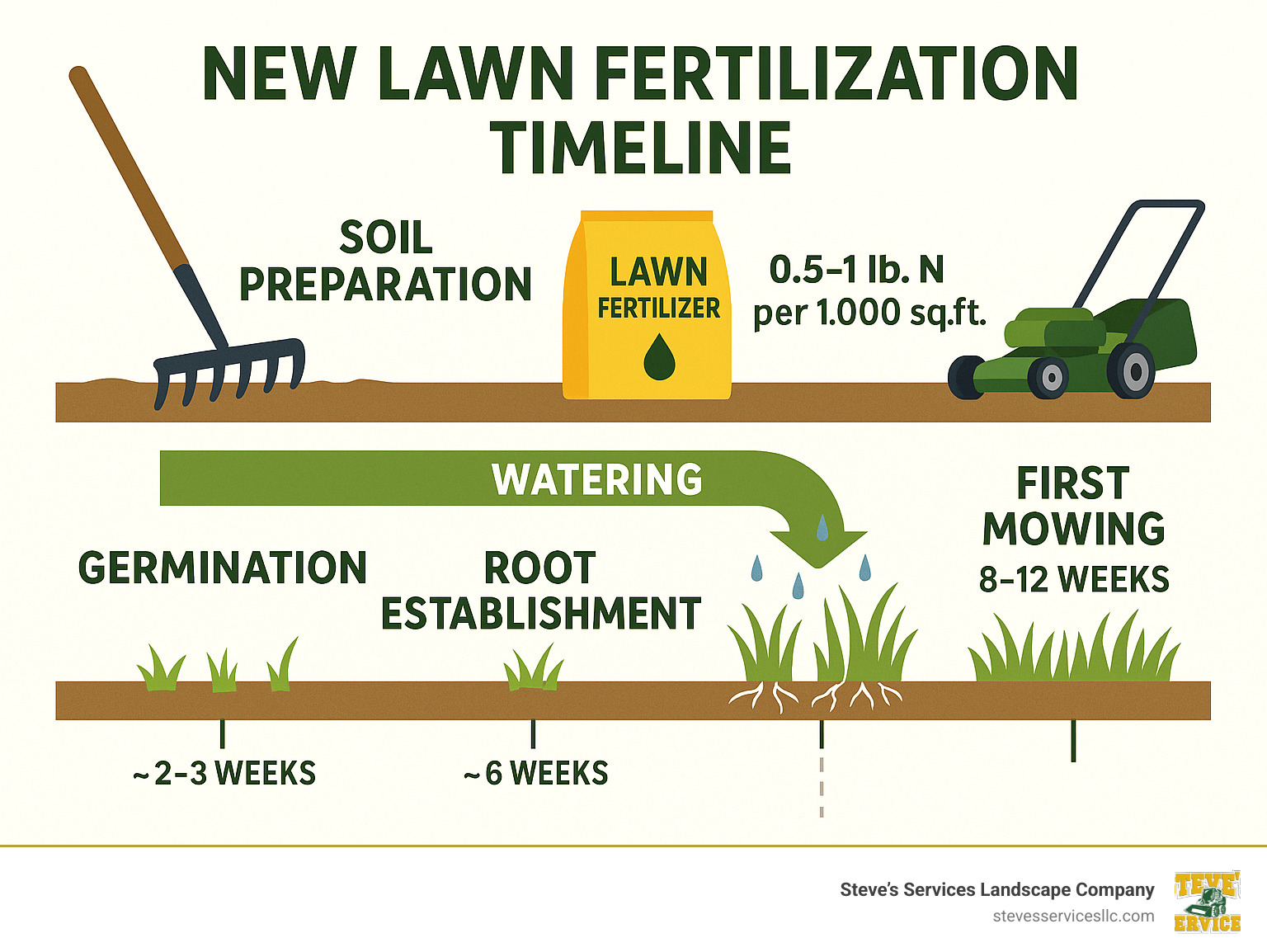
Apply 0.5–1 lb of actual nitrogen per 1,000 sq ft. With a 24-25-4 product, that’s 2–4 lbs of fertilizer; with a 6-9-6 product, it’s 8–16 lbs. Always calibrate your spreader—guessing invites burn.
Plan a second, lighter feeding 4–8 weeks later (seed) or 2–4 weeks later (sod) once roots have grabbed hold.
Common pitfalls to avoid
- More is not better. Over-fertilized seedlings show rapid top growth but weak roots and often brown tips.
- Skip weed-and-feed for at least three mowings; its herbicide stops seeds from germinating.
- Watch the weather. Heavy rain within 24 hours washes nutrients away; drought or 85 °F+ heat increases burn risk.
- Sweep stray granules off pavements to keep them out of storm drains and waterways.
Watering, Mowing, and Ongoing Care After Feeding
Proper after-care locks in the benefits of your starter fertilizer.
Watering
- Seed: keep the surface consistently moist with 5–10-minute light sprinkles 2–3 times daily for the first week, then taper to once a day.
- Sod: soak thoroughly after installation, then water daily for two weeks. Use a screwdriver test—if it penetrates 6–8 inches easily, moisture is adequate.
First mowing
Wait until grass reaches 3–4 inches, then mow high (≥ 3 in.) with a sharp blade, removing no more than one-third of height. Avoid mowing wet turf.
Foot traffic
Keep kids and pets off newly seeded areas for 6–8 weeks and off new sod for 4–6 weeks.
Graduating to regular fertilizer
Around 8–12 weeks, once turf is dense, uniformly green, and firmly rooted, transition to a standard maintenance program focused on nitrogen for color and growth. Continuing high-phosphorus starter beyond this point can create nutrient imbalances and environmental concerns.
Frequently Asked Questions About Lawn Feed for New Lawns
How soon can I re-fertilize?
- Seeded lawns: 4–8 weeks after germination, once you’ve mowed at least once.
- Sodded lawns: 2–4 weeks post-installation, but only after sod resists a gentle tug.
Use about 0.5 lb N/1,000 sq ft for this follow-up feeding.
Can I use weed-and-feed on a new lawn?
No. The herbicides prevent seed germination and can injure young grass. Wait until you’ve mowed 3–4 times (roughly 3–4 months) and then spot-treat weeds instead of blanket-applying chemicals.
When do I switch to regular fertilizer?
Most lawns are ready 8–12 weeks after establishment—or the following spring for fall seedings—when turf is dense, deeply green, and withstands gentle tugging. Start with a moderate-nitrogen blend and follow a seasonal schedule rather than continuing high-phosphorus starter products.
Conclusion
Getting lawn feed for new lawn right from the start makes all the difference between a lawn that thrives and one that barely survives. After 25 years of helping Massachusetts homeowners establish beautiful lawns, I’ve seen how proper fertilization during those crucial first months sets the stage for decades of healthy growth.
The foundation of any successful new lawn starts with understanding what your grass actually needs. Those tender seedlings or newly laid sod pieces are essentially babies – they need gentle, consistent nutrition rather than the heavy feeding that mature lawns can handle. Starter fertilizers with high phosphorus levels give developing roots the energy they need to dig deep and establish strong anchoring systems.
Timing truly is everything in the fertilizer world. Apply your lawn feed for new lawn too early and spring rains wash it away before seeds even germinate. Wait too long and your grass struggles to compete with weeds that seem to pop up overnight. The sweet spot is right before seeding or immediately after sodding when nutrients can get exactly where growing roots need them most.
I’ve watched too many homeowners get excited and over-fertilize their new lawns, thinking more nutrition equals faster results. The reality is that young grass can’t handle heavy feeding – it’s like giving a toddler an adult-sized meal. Gentle, consistent nutrition through properly formulated starter fertilizers prevents burn while supporting steady, healthy establishment.
Professional installation and ongoing guidance eliminate the guesswork that often derails lawn projects. At Steve’s Services, our comprehensive approach starts with soil testing to understand your specific conditions and continues through proper fertilizer selection, precise application timing, and transition to maintenance feeding. We’ve refined these processes across communities from Medford to Burlington, adapting our techniques to local soil conditions and climate patterns.
Environmental responsibility goes hand-in-hand with effective lawn care. Proper fertilization means applying the right nutrients at the right time in the right amounts – preventing waste, protecting local waterways, and building healthier soil biology that supports your lawn naturally. When you feed your new lawn correctly, you’re investing in both beauty and sustainability.
Your new lawn represents hope for outdoor enjoyment, increased property value, and pride in your home’s appearance. Whether you’re planning a seeding project or considering professional installation, understanding lawn feed for new lawn principles helps ensure that investment pays off. The few extra dollars spent on quality starter fertilizer and proper application saves hundreds in potential renovation costs down the road.
The satisfaction of watching your new lawn transform from bare soil to lush green carpet never gets old. Give your grass the nutritional foundation it deserves during establishment, and you’ll enjoy the results every time you look out your window.
More info about Lawn Installation Services