
Why Proper Sprinkler Valve Installation Is the Foundation of a Healthy Lawn
Sprinkler valve installation is the heart of any automated irrigation system. A properly installed valve system is the difference between a healthy, efficiently watered lawn and one that suffers from constant issues. Understanding the professional process helps you make informed decisions about your property’s irrigation needs.
The Professional Approach to Sprinkler Valve Installation
A professional installation is a multi-step process that ensures long-term performance. It involves:
- System Design – Selecting the right valve type (anti-siphon or in-line) and correctly sizing valves and pipes based on your property’s specific water flow rate (GPM).
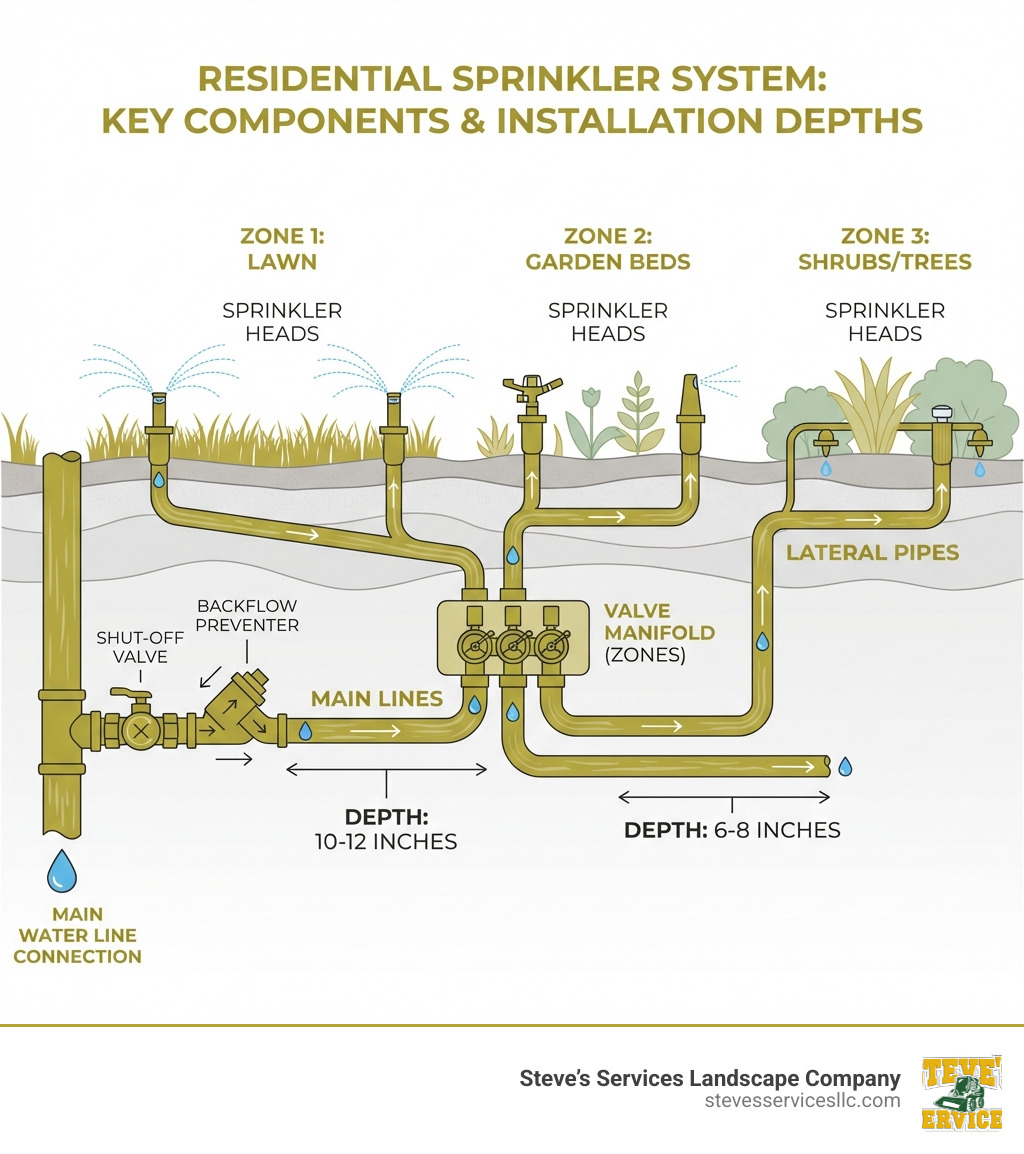
- Site Preparation – Safely excavating trenches to the proper depth (10-12 inches for main lines, 6-8 for laterals) and preparing the valve box location.
- Precise Assembly – Connecting the system to the water supply with a dedicated shut-off valve and a code-compliant backflow prevention device.
- Expert Wiring – Connecting valves to the controller with waterproof connections using 18-gauge direct burial wire to prevent electrical failures.
- Thorough Testing – Flushing the system, carefully checking for leaks, and verifying every zone operates correctly.
The difference between a system that runs flawlessly for years and one that requires constant repairs often comes down to the installation quality. From selecting the correct valve size to ensuring proper orientation, each step matters for long-term performance.
I’m Steve Sylva, and over my 25+ years at Steve’s Services, I’ve seen countless irrigation systems—both DIY installations and professional setups. While sprinkler valve installation might seem straightforward, the technical details around pipe sizing, electrical connections, and local code compliance make professional installation a smart choice for most property owners.
Basic sprinkler valve installation glossary:
Understanding the Essentials: Professional Component Selection
A successful sprinkler valve installation hinges on using the right components for the job. At Steve’s Services, our professionals are equipped with specialized tools like power trenchers, PVC cutters, and multimeters to ensure every installation in communities like Burlington, Danvers, and Everett is precise and efficient. More importantly, we select the ideal materials for performance and longevity.
Valve, Pipe, and Fitting Selection
The components form the core of your system, and each must be chosen carefully based on your property’s unique needs.
- Valve Type and Placement: The two main types are anti-siphon valves, which must be installed above ground, and in-line valves, which are installed below ground in a protective valve box. We strategically place valves in accessible manifolds, often with extra connections for future expansion. For in-line valves, we create a gravel base within the valve box to ensure proper drainage and prevent freeze damage.
- Valve and Pipe Sizing: This is perhaps the most critical aspect of system design. Before any work begins, we assess your home’s water pressure (psi) and flow rate (GPM). This data dictates the correct pipe and valve size. Using components that are too small leads to pressure loss and poor sprinkler performance, while oversized components can be inefficient.
- Valves: 3/4-inch valves are typically used for zones with flow rates under 10 GPM, while 1-inch valves are for zones requiring over 10 GPM.
- Pipes: We generally use durable Schedule 40 PVC pipe. A 3/4-inch pipe can handle up to 8 GPM, while a 1-inch pipe is suited for up to 13 GPM. Matching pipe diameter to the zone’s flow rate is essential to prevent friction loss.
- Fittings: We use high-quality fittings like tees and elbows to build the valve manifold. A key detail is using nipples with “cut” threads rather than molded ones, as they provide a more consistent and secure connection, minimizing the risk of leaks.
Preparing the Site for Installation
Proper site preparation is a non-negotiable first step for safety and system integrity.
Calling 811: Before any digging, we always call 811 (Dig Safe in Massachusetts). This free service marks underground utility lines, preventing dangerous and costly accidents. It’s an essential safety measure for any project in Woburn, Reading, or any other town we serve.
Trenching: Once the area is marked safe, we excavate trenches. Main lines, which are under constant pressure, are buried 10-12 inches deep for protection. Lateral lines, pressurized only when a zone is active, are typically buried 6-8 inches deep. For in-line valves, we excavate a space for the valve box, lining the bottom with several inches of gravel to promote drainage and protect the valves from water damage and freezing, a crucial consideration in our Massachusetts winters.
The Professional Sprinkler Valve Installation Process
At Steve’s Services, our professional sprinkler valve installation process is designed for durability and efficiency, handling each step with expertise from the main water supply to the final connection.
Main Water Supply Connection and Backflow Prevention
The first step is tapping into the main water supply, a critical point where expertise is vital. We install a dedicated shut-off valve for the irrigation system, allowing it to be isolated for maintenance or winterization without affecting your home’s water.
Crucially, we install a backflow prevention device. This is a non-negotiable component required by code in Massachusetts communities like Stoneham, Winchester, and Malden. It protects your drinking water from contamination by preventing irrigation water, which may contain fertilizers or pesticides, from siphoning back into your home’s water lines. Professional installation is essential to ensure compliance and safety.
Assembling the Valve Manifold
A group of valves, called a manifold, is carefully assembled to control the different zones of your landscape.
- Spacing for Maintenance: We ensure adequate spacing between valves for easy access should a repair ever be needed.
- Line Connections: The manifold is connected to the main water line (often 1-inch Schedule 40 PVC) running from the backflow preventer. From the manifold, individual lateral lines branch out to serve each zone.
- Future Expansion: We often include extra capped connections in the manifold, making it simple and cost-effective to expand your system in the future.
Key Steps for a Secure Sprinkler Valve Installation
A secure sprinkler valve installation relies on meticulous attention to detail at every connection.
Pipe and Valve Connections: For PVC, clean cuts and proper sealing with primer and cement are essential for a watertight bond. A common DIY mistake is incorrect valve orientation; every valve has a flow arrow that must point away from the water source. For threaded connections, we prefer using Teflon paste over tape, as it creates a more reliable seal without stressing the valve body. Our technicians know to hand-tighten fittings and then use a wrench for a final quarter-turn, avoiding over-tightening that can cause cracks.
Wiring Best Practices for Sprinkler Valve Installation
Proper wiring is as critical as plumbing for a reliable system. We use direct burial irrigation wire (typically 18-gauge for runs under 800 feet) to connect the valves to the controller. Each valve has a common wire and a unique zone wire.
The most critical step is creating waterproof electrical connections. Many DIY installations fail here. We use silicone-filled wire nuts to join the solenoid wires to the irrigation wire. This protects the connection from moisture and corrosion, which can cause high electrical resistance, leading to intermittent failures or damage to the controller. This professional step ensures a long-lasting, reliable electrical system.
Advanced Techniques and Best Practices for Durability
Beyond the basic steps, certain advanced techniques and best practices ensure your sprinkler valve installation is not just functional but also durable and trouble-free for years to come. These insights come from our extensive experience serving residential and commercial properties throughout Massachusetts.
Sealing Threaded Connections: The Debate
We touched on this earlier, but it bears repeating: proper sealing of threaded connections is vital. The choice between Teflon paste and Teflon tape is often debated, but our preference leans towards Teflon paste for specific reasons, as highlighted by industry leaders like Hunter.
- Teflon Paste: This paste effectively fills the microscopic voids between threads, creating a robust, leak-free seal. It allows for a precise tightening, where you hand-tighten and then add just a 1/4 turn with a wrench.
- Teflon Tape: While widely used, tape can add dimension to the nipple. If too much tape is applied, it can make the fit excessively tight, potentially stressing and even splitting the valve body when over-tightened. If using tape, we apply three full wraps, hand-tighten, and then add a 1/2 turn with a wrench.
The key takeaway? Never use both paste and tape together, and always avoid over-tightening. This nuanced approach to sealing is a hallmark of a professional sprinkler valve installation.
Climate Considerations: Preparing for Massachusetts Winters
Living in Massachusetts, from Lynnfield to Malden, we know all about freezing temperatures. This makes climate considerations a critical part of any sprinkler valve installation.
- Freezing Climates: If valves are installed above ground (like anti-siphon valves) or in valve boxes that aren’t sufficiently drained, they are vulnerable to freezing. When water freezes, it expands, which can easily crack PVC pipes and valve bodies, leading to costly repairs.
- Winterization: For systems in freezing climates, proper winterization is essential. This involves draining all water from the system before the first deep freeze. We achieve this through a combination of:
- Drain Valves: Installing automatic drain valves at the low points of each zone, which passively drain water when the system is shut off.
- System Blow-Out Procedure: For comprehensive winterization, we use an air compressor to “blow out” any remaining water from the pipes and valves. This ensures the entire system is dry and protected against freeze damage. This service is crucial for protecting your investment every fall.
Common Mistakes to Avoid
Through our years of experience, we’ve identified common pitfalls that often lead to system failures. Avoiding these mistakes is why professional installation is such a valuable investment.
- Improper Gluing: Insufficient primer or cement, or not holding the joint long enough, can lead to weak, leaky connections.
- Incorrect Wiring: Non-waterproof connections, incorrect wire gauge, or miswiring can cause electrical shorts, blown fuses, or valves that simply don’t operate.
- Leaky Fittings: Often a result of improper sealing of threaded connections or over-tightening.
- Wrong Valve Orientation: Installing a valve backward means it won’t function, leading to a frustrating search for the problem.
- Insufficient Trench Depth: Pipes buried too shallow are susceptible to damage from lawn aeration, digging, or even freezing.
These mistakes, while seemingly minor, can compromise the entire system, leading to inefficient watering, higher water bills, and expensive repairs.
System Activation: Testing and Troubleshooting
Once the physical sprinkler valve installation is complete, we move to the crucial phase of system activation and testing to guarantee flawless operation. Before installing any sprinkler heads, we flush the entire system by manually activating each valve. This vital step removes any dirt or debris from the pipes that could clog the sprinkler heads.
After flushing, we pressurize the system and carefully inspect every pipe, fitting, and valve for leaks. We then test each zone from the irrigation controller, verifying that valves open and close correctly, water pressure is adequate, and all sprinkler heads are providing proper coverage. During this phase, we make precise adjustments to the arc and radius of each head to ensure optimal water distribution, preventing dry spots and water waste. Only after we are confident that the system is leak-free and operating perfectly do we carefully backfill the trenches, compacting the soil to prevent future settling and restore your lawn’s smooth surface.
Frequently Asked Questions about Sprinkler Valve Installation
We often hear similar questions from our clients in Massachusetts when discussing sprinkler valve installation. Here are some of the most common ones, along with our expert answers.
How much does professional sprinkler valve installation cost?
The cost of professional sprinkler valve installation can vary significantly based on several factors, including the complexity of your system, the number of zones, site conditions, and local labor rates. Based on internet data, the average cost for a two-zone sprinkler system is estimated to be between $1,000 to $1,400. However, for more extensive or complex systems, costs can range anywhere from $500 to over $3,000.
Factors influencing the price include:
- Number of Zones: More zones mean more valves, more piping, and more wiring.
- Type of Valves: While prices are similar, specific features can add to the cost.
- Site Accessibility: Difficult terrain or obstructions can increase labor time.
- Existing Infrastructure: If you’re replacing valves in an existing system versus installing a brand new one, the scope of work changes.
- Backflow Preventer Requirements: The specific type of backflow preventer required by local codes can impact the overall cost.
At Steve’s Services, we provide detailed, transparent quotes custom to your specific needs after a thorough assessment of your property.
What is a backflow preventer and why is it required?
A backflow preventer is a critical safety device required by plumbing codes in most municipalities, including all the towns we serve in Massachusetts. Its primary purpose is to protect your potable (drinking) water supply from contamination.
Here’s why it’s so important:
- Preventing Contamination: Without a backflow preventer, there’s a risk that non-potable water from your irrigation system could flow backward into your home’s main water supply. This “backflow” can occur due to changes in water pressure, such as a sudden drop in municipal pressure or a burst pipe. Water in your sprinkler system, particularly after passing through sprinkler heads, can pick up fertilizers, pesticides, animal waste, and other contaminants.
- Siphoning: If backflow occurs, these contaminants could be siphoned into your drinking water, posing a serious health risk.
- Local Building Codes: Because of these risks, local building codes mandate the installation of specific types of backflow prevention devices. These devices are designed to allow water to flow only in one direction, preventing any reverse flow.
Proper installation and regular testing (often required annually by local authorities) of backflow preventers are essential. This is a job best left to professionals to ensure compliance and, most importantly, the safety of your water supply. You can find more info about irrigation systems and their components on our website.
Can I mix different types of sprinkler heads on the same valve zone?
While technically possible, we strongly advise against mixing different types of sprinkler heads (e.g., large-area rotors with small-area spray heads) on the same valve zone. This is a common mistake that leads to highly inefficient watering and an unhealthy lawn.
Here’s why:
- Matched Precipitation Rates: Different types of sprinkler heads have vastly different precipitation rates (the rate at which they apply water). For example, spray heads typically apply water much faster than rotor heads.
- Uneven Watering: If you mix them on the same zone, areas covered by the faster-applying heads will be overwatered, leading to runoff, wasted water, and potential plant disease. Conversely, areas covered by the slower-applying heads will be underwatered, resulting in dry spots and stressed turf.
- Water Waste: To adequately water the area with the slowest precipitation rate, you’d have to run the system for an extended period, significantly overwatering other areas and wasting precious water.
Best practice: Always design your system with separate zones for different types of sprinkler heads. This allows us to program your irrigation controller to run each zone for the appropriate duration, ensuring every part of your landscape receives the precise amount of water it needs. This approach promotes water conservation and a healthier, more vibrant lawn.
Ensuring a Flawless System: Why Professional Installation Matters
As we’ve explored, sprinkler valve installation is a detailed process that goes far beyond simply connecting pipes. From understanding water dynamics and local codes to executing precise electrical connections and preparing for freezing climates, each step impacts the efficiency, longevity, and safety of your entire irrigation system.
The complexities of proper sizing, ensuring leak-free connections, adhering to electrical safety standards, and navigating local regulations underscore why professional installation is not just a convenience, but a smart investment. A professionally installed system minimizes the risk of common mistakes like improper gluing, incorrect wiring, and leaky fittings, which can lead to costly repairs and wasted water down the line.
At Steve’s Services, we bring over 25 years of experience and a team of expert technicians to every project in Burlington, Danvers, Everett, Lynnfield, Medford, Melrose, North Reading, Reading, Revere, Saugus, Stoneham, Winchester, Woburn, Malden, and Wakefield, MA. We provide comprehensive irrigation system services that ensure your system is designed, installed, and maintained to the highest standards.
Choosing Steve’s Services means choosing peace of mind. You’re investing in a system that will reliably deliver water to your landscape, conserve resources, and keep your lawn and gardens thriving for years to come.
Ready to ensure your landscape receives the best care possible? Contact us today for a consultation, and let us put our expertise to work for you.
