
Mowing Hydroseeded Lawn: 5 Best Tips for Success 2025
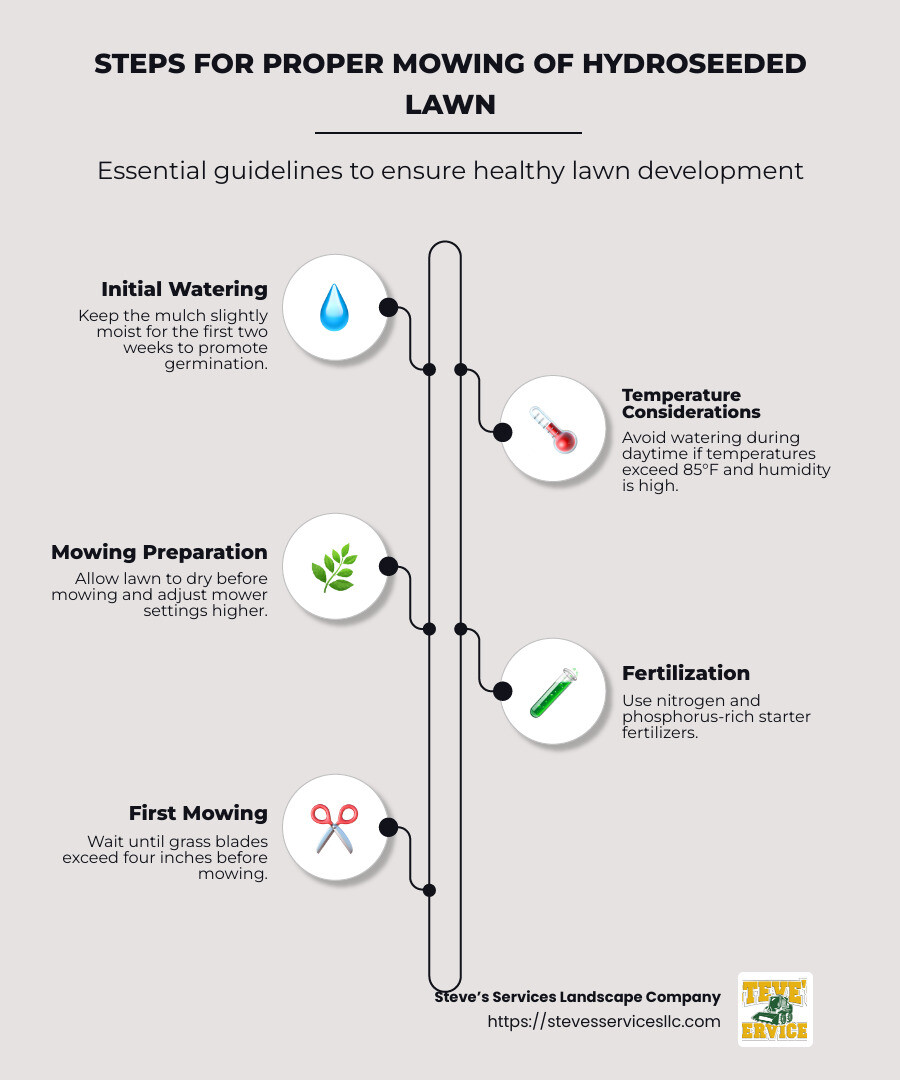
When it comes to maintaining a mowing hydroseeded lawn, understanding the essentials of its care and development is crucial. Hydroseeding is a popular and efficient method for establishing a lush, vibrant lawn, but it requires specific care practices to ensure optimal growth. Here’s a quick guide to help you get started:
- Initial Watering: Keep the mulch slightly moist for the first two weeks to promote germination.
- Temperature Considerations: Avoid watering during daytime if temperatures exceed 85°F and humidity is high. This can prevent grass from cooking.
- Mowing Prep: Allow your new lawn to dry before mowing and adjust mowers to higher settings to promote deeper root growth.
- Fertilization: Use ‘starter’ fertilizers rich in nitrogen and phosphorus to support a new lawn’s development.
- First Mowing: Wait until the grass blades are over four inches before attempting the first mow.
As the owner of Steve’s Services, with over 25 years of experience in landscaping, I’m here to help you steer the nuances of mowing hydroseeded lawns. Our team specializes in tailoring solutions for each unique landscape challenge. Let’s dive further into the key steps to prepare your lawn for that first rewarding mow.
Mowing hydroseeded lawn helpful reading:
– how to care for a hydroseeded lawn
– when can i walk on hydroseeded lawn
– hydroseeded lawn patchy
Key Steps Before Mowing Your Hydroseeded Lawn
Watering Schedule
The foundation of a healthy hydroseeded lawn is a consistent watering schedule. For the first two to three weeks, it’s crucial to keep the mulch moist. Watering should occur in the early morning and late afternoon to avoid the heat of the day, which can cause evaporation and stress the young grass.
Avoid puddling by adjusting the duration of watering sessions. If you notice water pooling, stop immediately to prevent root rot and other issues. As the grass begins to germinate, you can gradually reduce the frequency but increase the duration to encourage deeper root growth.
Fertilizing Your Lawn
Fertilization is another critical step in preparing your lawn for its first mow. Initially, the hydroseeding process includes a starter fertilizer, which supports growth for the first four to five weeks. After this period, apply a high-nitrogen fertilizer to continue feeding your lawn.
Nitrogen levels are key. The first number on a fertilizer bag indicates the nitrogen content, essential for lush, green growth. Plan to fertilize every six to eight weeks throughout the growing season to maintain a dense and healthy lawn.
Managing Weeds
Weeds are inevitable, especially in newly seeded lawns. They thrive in hot, dry conditions and often grow faster than grass. To manage weeds, set your mower at its highest setting and trim them before they go to seed. This allows your grass to thicken and naturally suppress weed growth over time.
Mowing height is crucial. Keeping the grass taller helps shade the soil, reducing weed germination and promoting stronger root systems. Over time, a thick lawn will naturally suppress weeds, reducing the need for chemical treatments.
By following these key steps, you’ll set the stage for a successful first mow and a thriving hydroseeded lawn. Now, let’s explore the best practices for that crucial initial cut.
Mowing Hydroseeded Lawn: The First Cut
When to Perform the First Mow
The first mow of your hydroseeded lawn is a significant step in its care. Timing is essential. Wait until your grass reaches about 3 inches tall. This height ensures that the grass is strong enough to withstand mowing without uprooting the seedlings.
Growth Check: Regularly check the height of your grass. Avoid mowing when the soil is wet. Dry conditions are ideal to prevent compaction and damage to the young grass.
Height Requirement: Aim for a height of 3 inches before the first cut. This allows the grass to establish a robust root system.
Mowing Techniques for Hydroseeded Lawns
Proper mowing techniques are crucial for maintaining a healthy lawn.
Mower Preparation: Ensure your mower blades are sharp. Dull blades can tear the grass, causing stress and potential disease. Set your mower to its highest setting for the first few cuts to avoid cutting too much at once.
Clipping Management: After mowing, let the grass clippings remain on the lawn. These clippings act as a natural fertilizer, returning nutrients to the soil.
Mower Settings: Start with the mower blade set high and gradually lower it over time. This gradual lowering helps the grass adjust and promotes thicker growth.
Clipping Recycling: Leaving clippings on the lawn helps retain moisture and adds organic matter to the soil. However, ensure the clippings are not too thick, as they can smother the grass.
By following these steps, you’ll ensure your newly hydroseeded lawn gets off to a healthy start. For professional assistance and ongoing maintenance strategies, consider reaching out to Steve’s Services Landscape Company to keep your lawn thriving.
Ongoing Lawn Maintenance After Mowing
After you’ve given your new hydroseeded lawn its first cut, transition into a regular maintenance routine. This ensures your lawn remains lush and healthy.
Transitioning to Regular Lawn Care
Deep Watering: Once your lawn is established, you can reduce the frequency of watering but increase the duration. Aim for about 1 to 2 inches of water per week. This encourages deeper root growth, making your lawn more drought-resistant.
Regular Fertilizing: Fertilizing is crucial for maintaining lawn health. Start with a balanced fertilizer about six weeks after hydroseeding. Follow up every 6-8 weeks during the growing season. This provides essential nutrients that support thick, green grass.
Seasonal Adjustments: As the seasons change, so should your lawn care routine. In summer, avoid watering during the hottest part of the day to prevent evaporation. In fall, prepare your lawn for winter by applying a winterizing fertilizer that supports root growth.
Common Challenges and Solutions
Water Reduction: As your lawn matures, gradually reduce watering. Overwatering can lead to shallow roots and fungal diseases. Monitor weather conditions and adjust your watering schedule accordingly.
Fertilizer Schedule: Stick to a regular fertilizing schedule to keep your lawn healthy. Use a soil test to determine the specific needs of your lawn and adjust your fertilizer type and frequency as needed.
Monitoring Growth: Keep an eye on your lawn’s growth. Look for signs of patchiness, color changes, or thinning areas. These can indicate issues like nutrient deficiencies or pest problems.
Patchiness: If you notice patchy areas, reseed them promptly. Ensure good soil contact and keep them moist until new grass establishes.
Color Changes: Yellowing or browning can signal nutrient deficiencies or overwatering. Adjust your watering and fertilizing practices to address these issues.
Thinning Areas: Thinning can occur due to compacted soil or poor drainage. Aerate your lawn annually to relieve compaction and improve nutrient absorption.
By following these maintenance practices, you can ensure your hydroseeded lawn remains vibrant and healthy year-round. Next, we’ll explore advanced tips to further improve your lawn’s beauty and resilience.
Advanced Tips for a Lush Hydroseeded Lawn
Once your hydroseeded lawn is thriving, it’s time to lift your lawn care routine with some advanced strategies. These tips will help you maintain a lush and healthy lawn throughout the year.
Using the Right Equipment
Push Mower and Sharp Blades: For the best results, use a push mower with sharp blades. Sharp blades ensure clean cuts, reducing stress on the grass and preventing disease. Regularly check and sharpen your mower blades to maintain their effectiveness.
Proper Mower Settings: Adjust your mower settings based on the season and grass growth. In the early stages, keep the blade high to protect the young grass. As your lawn matures, gradually lower the blade to encourage thicker growth.
Seasonal Lawn Care Adjustments
Your lawn care routine should adapt to the changing seasons to keep your lawn looking its best.
Summer Care: During the hot summer months, water your lawn deeply but less frequently. This encourages deep root growth and reduces the risk of drought stress. Aim to water early in the morning to minimize evaporation.
Fall Preparation: As fall approaches, prepare your lawn for the colder months. Apply a winterizing fertilizer to boost root growth and resilience. This will help your lawn withstand the winter and bounce back in spring.
Winter Tips: In winter, reduce foot traffic on your lawn to prevent soil compaction. Avoid using salt-based de-icers, as they can damage your grass. Instead, opt for sand or kitty litter to provide traction without harming your lawn.
Enhancing Lawn Health
Mulching: Instead of bagging grass clippings, leave them on the lawn to decompose. This process, known as mulching, returns nutrients to the soil, promoting healthier grass.
Aeration: Aerate your lawn at least once a year, preferably during the growing season. Aeration involves creating small holes in the soil to improve air, water, and nutrient flow. This process reduces soil compaction and improves root growth.
Professional Services
For optimal results, consider enlisting professional lawn care services. Experts can provide custom solutions, ensuring your lawn receives the best care possible. They can also help with tasks like aeration and soil testing, giving you peace of mind and a thriving lawn.
By incorporating these advanced tips into your lawn care routine, you’ll enjoy a lush, healthy lawn that’s the envy of the neighborhood. With the right equipment and seasonal adjustments, your hydroseeded lawn will remain vibrant and resilient year-round.
Conclusion
Choosing Steve’s Services Landscape Company means partnering with a team dedicated to the long-term beauty and health of your outdoor space. We understand that every lawn is unique, and that’s why we offer personalized solutions custom to meet your specific needs. Our expertise in hydroseeding and lawn care ensures that your lawn not only starts strong but stays lush and vibrant throughout the seasons.
Our commitment to customer service sets us apart. We believe in building lasting relationships with our clients, and that means being available to answer your questions and address your concerns. Whether you’re curious about the best mowing practices or need advice on seasonal lawn care adjustments, our team is here to guide you every step of the way.
At Steve’s Services, we don’t just create beautiful lawns; we create peace of mind. Let us help you achieve the lawn of your dreams with our expert care and attention to detail. Contact us today to learn more about our services and how we can assist you in maintaining a thriving hydroseeded lawn.
Frequently Asked Questions about Mowing Hydroseeded Lawns
When is the Best Time to Mow a Newly Hydroseeded Lawn?
Timing is crucial when it comes to giving your hydroseeded lawn its first mow. You should wait until the grass reaches a height of about 3 inches. This ensures that the young grass has developed enough strength to withstand mowing without getting damaged. Mowing too early can harm the tender blades and potentially disrupt the growth process.
Remember: Always check the weather conditions before mowing. Mowing when the grass is dry will prevent clumping and ensure a clean cut.
How Often Should I Mow My Hydroseeded Lawn in the First Few Months?
In the first few months, mowing frequency will depend on the growth rate of your lawn. Generally, you should mow your lawn every 7 to 10 days. However, focus more on the grass height rather than sticking strictly to a schedule. Never cut more than one-third of the grass blade at a time. This practice will keep your lawn healthy and reduce stress on the new grass.
Tip: Keep your mower blades sharp to avoid tearing the grass, which can lead to disease and stress.
Can I Use a Riding Mower on My Newly Hydroseeded Lawn?
Using a riding mower on a newly hydroseeded lawn is not recommended during the initial stages. The heavy weight of a riding mower can compact the soil and damage the young grass. Instead, opt for a lightweight push mower until your lawn is well-established. Once the grass has matured and the root system is strong, you can consider using a riding mower.
For more detailed guidance on maintaining your hydroseeded lawn, consider exploring our Hydroseeding Services. Our team at Steve’s Services Landscape Company is here to help you every step of the way!
