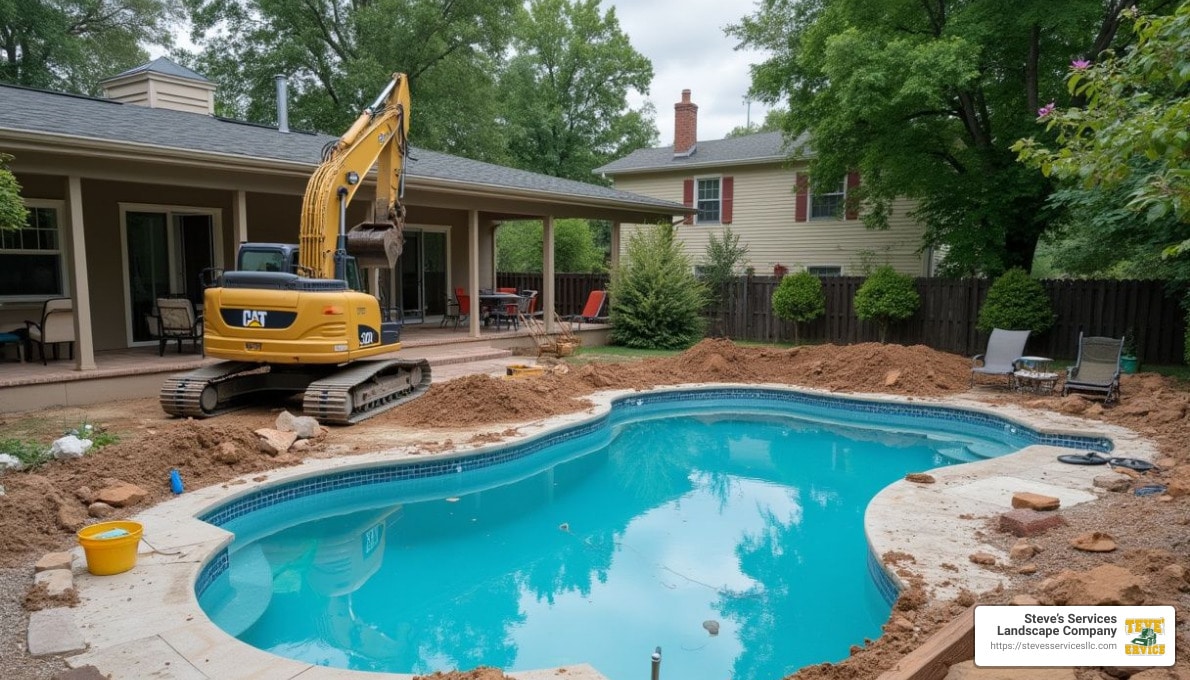
Pool Demolition Guide 2024: Top Tips, Costs & Safety
The Ultimate Guide to Swimming Pool Demolition
A pool demolition project can transform your outdoor space, reclaim your yard, and potentially increase your property value. If you’re looking to remove an old, unused, or damaged pool, understanding the basics of pool demolition is crucial. Let’s break down the key aspects you need to know:
- Overview: Pool demolition involves comprehensive or partial removal of a pool, including site cleanup and backfilling.
- Importance: Removing an outdated pool can improve your property’s usability and curb appeal.
- Safety: Professional expertise ensures compliance with safety regulations and environmental standards.
My name is Steve Sylva, and with over 25 years of landscaping experience, I ensure every pool demolition is handled with precision and care. Our team at Steve’s Services is dedicated to providing top-notch service for all your pool removal needs.
Understanding Pool Demolition
When it comes to pool demolition, there are various types and methods to consider. Each has its own procedures and implications for your property. Let’s explore these in detail.
Types of Pool Demolition
Inground Pool Demolition
Inground pools are built into the ground and typically involve concrete, fiberglass, or vinyl. These pools are more complex to remove due to their construction and the need for heavy machinery.
Above-Ground Pool Demolition
Above-ground pools are easier to dismantle and remove. They usually involve less labor and equipment since they are not embedded into the ground.
Methods of Pool Demolition
Partial Pool Removal
Partial pool removal, also known as pool fill-in, involves breaking down the top layer of the pool and filling the remaining structure with dirt and soil. This method is faster and less expensive but may limit future use of the space for building.
Steps Include:
1. Draining the Pool: Remove all water safely to avoid flooding or damage.
2. Breaking the Top Layer: Usually 18-36 inches of the pool structure are broken.
3. Filling with Dirt: The remaining structure is filled with dirt and compacted.
Complete Pool Removal
Complete pool removal involves demolishing the entire pool structure and removing all materials. This method is more thorough and allows for future construction on the site.
Steps Include:
1. Draining the Pool: All water is removed.
2. Shell Removal: The entire pool shell, whether concrete, fiberglass, or vinyl, is demolished.
3. Debris Removal: All debris is hauled away.
4. Backfilling and Compaction: The site is filled with soil or gravel and compacted to ensure stability.
Procedures for Pool Demolition
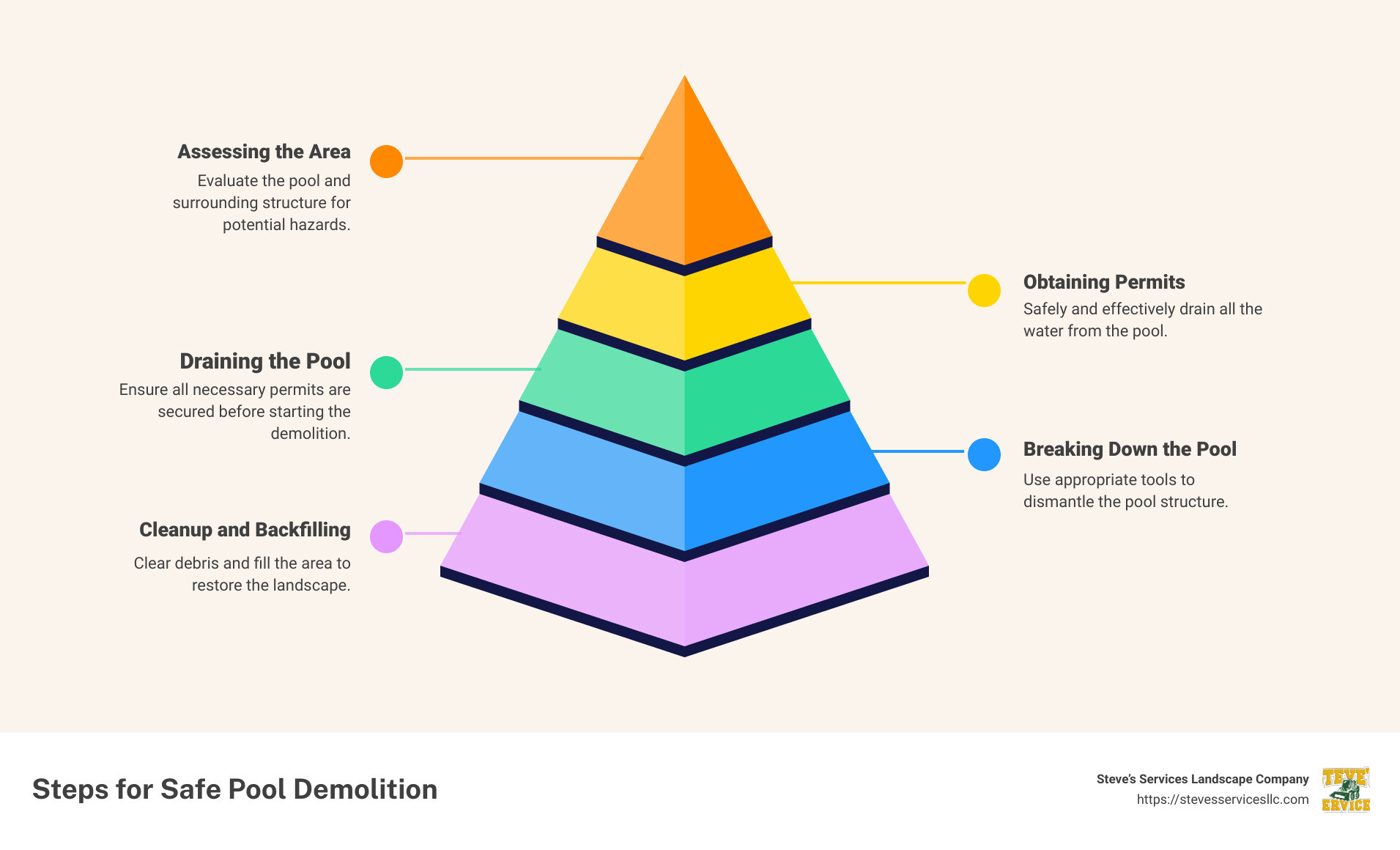
- Initial Consultation and Demolition Assessment: A professional team assesses the pool and plans the demolition.
- Obtaining Necessary Permits: Permits are required for legal compliance and safety.
- Execution of Demolition: The demolition process is carried out using advanced equipment and techniques.
- Site Cleanup and Restoration: The area is cleaned and restored, ready for new landscaping or construction.
Understanding these types and methods ensures you choose the right approach for your specific needs. Whether you opt for partial or complete removal, professional guidance is crucial for a safe and efficient process.
Safety Protocols in Pool Demolition
When dealing with pool demolition, safety is paramount. This section covers why hiring professionals is essential and what safety equipment is necessary for a safe and efficient demolition process.
Importance of Hiring Professionals
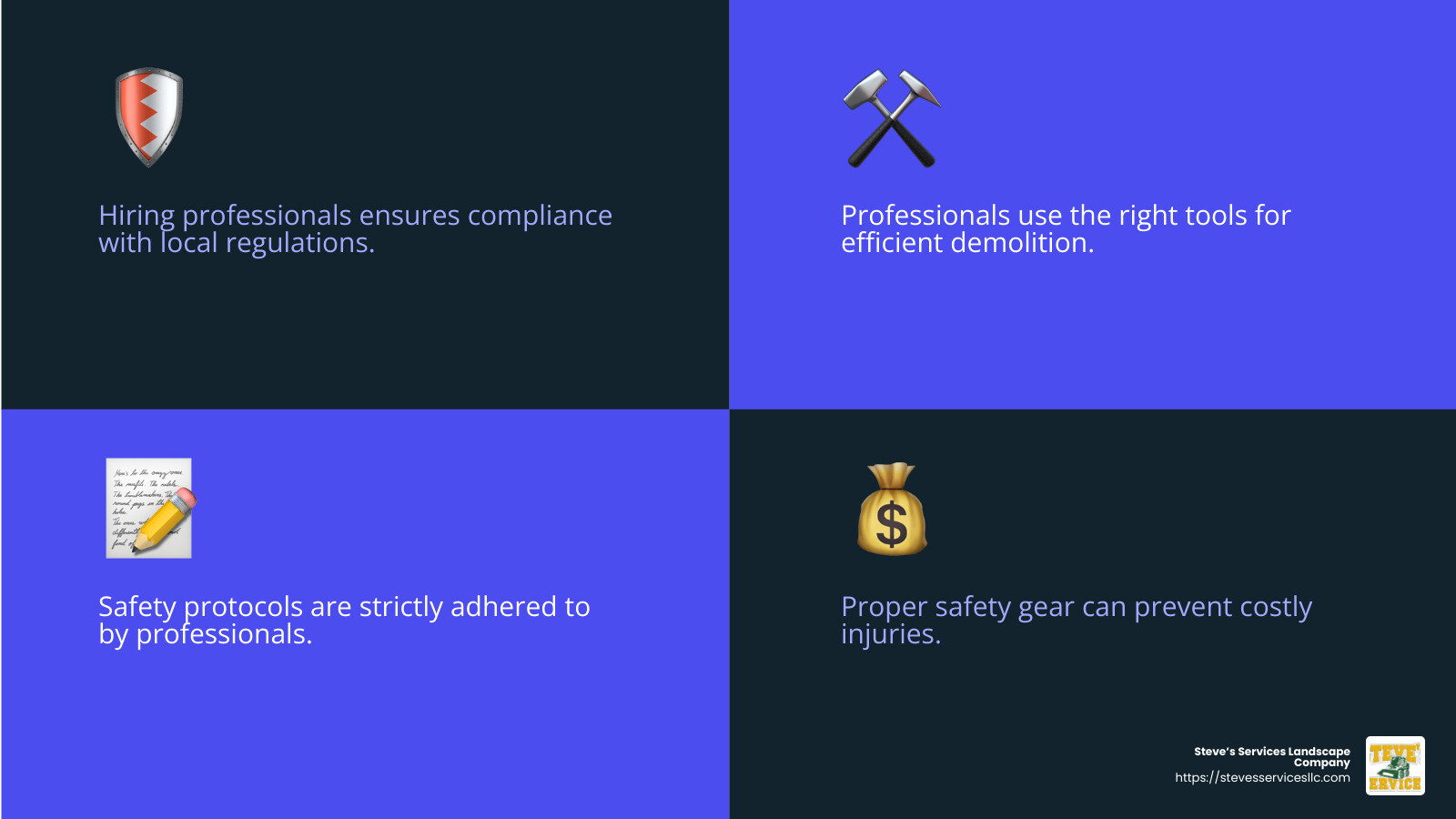
Hiring professionals for pool demolition isn’t just about convenience; it’s about ensuring safety, efficiency, and compliance with local regulations.
- Safety: Professionals are trained to handle heavy machinery and hazardous materials safely. They follow strict safety protocols to protect both workers and property.
- Efficiency: Experienced contractors can complete the job faster and more efficiently. They know the best techniques and have the right equipment to get the job done.
- Compliance: Demolition pros handle all the necessary permits and ensure the process complies with local laws and environmental regulations. This saves you from potential legal issues and fines.
Necessary Safety Equipment
Proper safety gear is essential to protect workers during the demolition process. Here’s a list of must-have safety equipment:
- Helmets: Protects against head injuries from falling debris and machinery.
- Gloves: Shields hands from sharp objects and abrasive materials.
- Goggles: Prevents eye injuries from dust, debris, and flying particles.
Other important equipment includes high-visibility clothing to ensure workers are easily seen, respiratory masks to protect against dust and harmful particles, and harnesses and safety lines for working at heights or in trenches.
Regulations and Professional Guidance
Regulations: Local laws often require specific permits for pool demolition. Professionals handle these permits, ensuring that the project complies with all legal requirements.
Professional Guidance: Expert contractors provide valuable guidance throughout the project. From the initial assessment to the final site cleanup, they ensure that every step is performed safely and effectively.
By following these safety protocols and using the right equipment, you can ensure a smooth and secure pool demolition process. Up next, we’ll discuss the costs associated with pool demolition and how to manage them effectively.
Costs Associated with Pool Demolition
When considering pool demolition, understanding the costs involved is crucial. This section will break down the factors influencing cost and ways to save on demolition costs.
Factors Influencing Cost
Several factors can affect the overall cost of pool demolition:
- Size of the Pool: Larger pools require more labor and materials to demolish, which increases the cost. For example, a standard residential pool demolition can range from $3,000 to $7,000, depending on its size.
- Type of Pool: Inground pools are typically more expensive to demolish than above-ground pools. The complexity of removing concrete or fiberglass structures adds to the cost.
- Location: Accessibility plays a significant role in the cost. If your pool is in a hard-to-reach area, it may require specialized equipment and more labor, driving up the price.
- Permits and Regulations: Obtaining necessary permits can add to the cost. In some areas, permits can cost a couple of hundred dollars. Professionals usually handle this, ensuring compliance with local laws.
- Additional Services: If you need extra services like landscaping or debris removal, these will add to the overall cost.
Ways to Save on Demolition Costs
While pool demolition can be costly, there are ways to manage and reduce expenses:
- Recycling Materials: Some materials from your old pool can be recycled. Concrete, for example, can be crushed and reused, which can offset some costs. Discuss recycling options with your contractor.
- Choosing the Right Contractor: Not all contractors offer the same rates or quality of work. Get multiple quotes and check reviews to find a contractor who offers a balance of cost and quality. This can save you money and ensure the job is done right.
- Combining Projects: If you plan to install a new structure like a deck or patio, hiring the same contractor for both the demolition and new construction can often result in a discount.
- Timing: Sometimes, scheduling your demolition during the off-season when contractors are less busy can result in lower costs. Always ask about seasonal discounts.
By considering these factors and tips, you can better manage the costs associated with pool demolition. Next, we’ll dive into the procedures for pool demolition, from obtaining permits to the step-by-step process.
Procedures for Pool Demolition
When it comes to pool demolition, knowing the right procedures is essential for a smooth and safe process. This section covers obtaining necessary permits and the step-by-step demolition process.
Obtaining Necessary Permits
Before starting any demolition, you need the right permits. Here’s what you need to know:
- Local Laws and Regulations: Each city or municipality has specific rules for pool demolition. Check with your local government to understand the requirements. Some areas may have zoning ordinances that dictate how the pool should be removed.
- Cost of Permits: Permit costs can vary based on your location. Typically, they range from a couple of hundred dollars. Always budget for this expense.
- Hiring Professionals: Experienced contractors usually handle the permit process for you. They ensure all paperwork is filed correctly, saving you time and hassle.
Step-by-Step Demolition Process
Once you have the necessary permits, the demolition process can begin. Here’s a step-by-step guide:
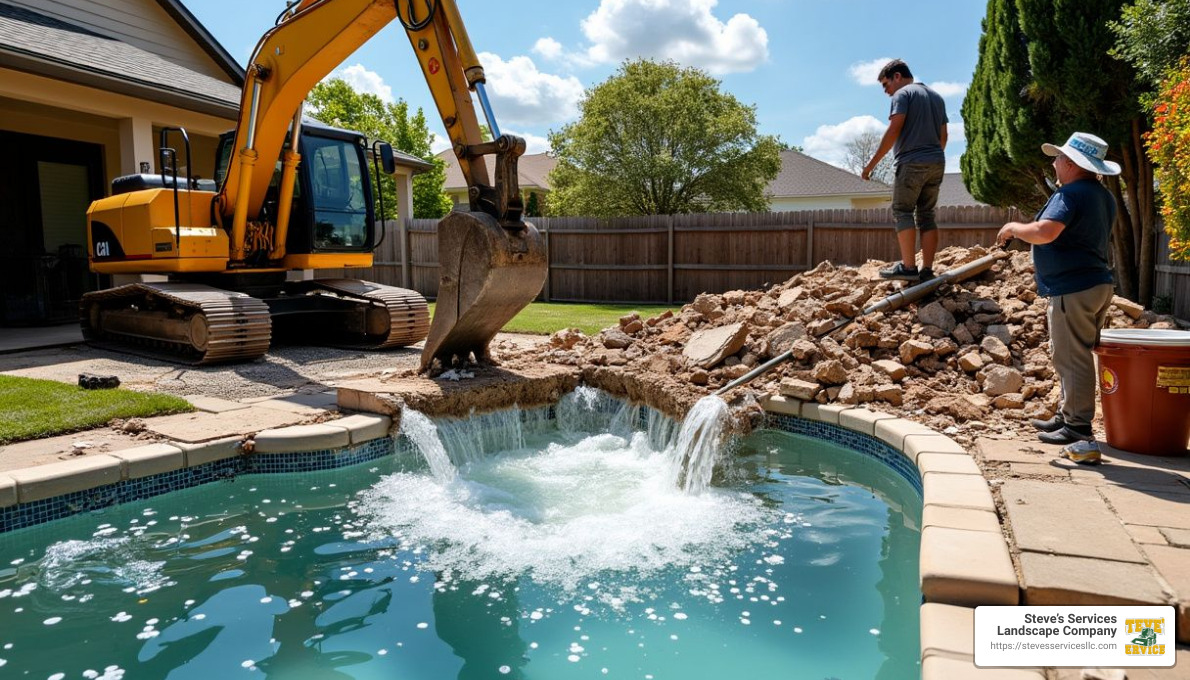
- Draining the Pool:
- Initial Step: The process starts with draining all the water from the pool. This can be done using a submersible pump.
- Safety Tip: Ensure the drained water is disposed of properly, following local guidelines to avoid any environmental issues.
- Breaking the Pool Structure:
- Concrete Pools: Use heavy machinery like jackhammers or excavators to break down the concrete shell.
- Fiberglass Pools: Cut the fiberglass into manageable pieces for removal.
- Liner Pools: Remove the liner and dismantle the supporting structure.
- Removing Debris:
- Hauling Away: All broken materials, including concrete, fiberglass, and liners, need to be hauled away. This is typically done using dumpsters or large trucks.
- Recycling: Some materials can be recycled. For example, concrete can be crushed and reused, which can save costs and help the environment.
Post-Demolition
After the pool is demolished and debris removed, the area needs to be restored:
- Filling the Hole:
- Materials: Fill the hole with a mix of soil and gravel. This ensures proper drainage and stability.
- Compaction: Compact the fill material to prevent future settling. This step is crucial to avoid sinkage issues later.
- Restoring the Area:
- Topsoil: Add a layer of topsoil to prepare the area for landscaping.
- Landscaping Options: You can transform the space into a garden, lawn, or even build a shed. Most municipalities consider the area non-buildable for permanent structures.
By following these steps, you can ensure a safe and efficient pool demolition. Next, we’ll address some common questions about the demolition process in our FAQs section.
Pool Demolition FAQs
Is DIY Pool Demolition Advisable?
No, DIY pool demolition is generally not advisable. Here’s why:
- Complexity: Pool demolition involves multiple steps, like draining the pool, breaking the structure, and removing debris. Each step requires specialized skills and equipment.
- Safety Risks: Using heavy machinery like jackhammers or excavators without proper training can be dangerous. There’s also the risk of hitting underground utility lines.
- Environmental Concerns: Improperly draining a pool can harm local water systems. Professionals know how to safely and legally dispose of pool water.
- Legal Issues: DIY projects often overlook local regulations and permit requirements, which can result in fines or legal complications.
For these reasons, hiring professionals is the safest and most efficient option.
What Permits are Needed for Pool Demolition?
Before you start your pool demolition, you need to obtain the necessary permits. Here’s what you should know:
- Local Regulations: Each city or municipality has its own set of rules. Check with your local government to find out what permits are required.
- Cost: Permit costs typically range from a couple of hundred dollars. Always budget for this expense.
- Professional Help: Experienced contractors usually handle the permit process for you. They ensure all paperwork is filed correctly, saving you time and hassle.
How to Dispose of Demolition Materials?
Proper disposal of demolition materials is crucial for both safety and environmental reasons. Here’s how to do it:
- Concrete: Concrete can be crushed and recycled. Many demolition companies offer recycling services, which can save costs and help the environment.
- Fiberglass: Fiberglass pieces should be taken to a landfill that accepts construction debris. Some facilities may also offer recycling options.
- Liners and Other Materials: Pool liners and other non-recyclable materials should be disposed of at a local landfill.
- Professional Services: Hiring a professional demolition company ensures that all materials are disposed of properly. They have the resources and knowledge to manage debris responsibly.
By following these guidelines, you can ensure a smooth and compliant pool demolition process.
Conclusion
Benefits of Pool Demolition
Removing an old or unused pool offers numerous benefits. First, it reclaims valuable space in your yard, allowing for new landscaping, gardening, or even additional structures. Second, it can increase your property value by eliminating a potential liability and maintenance burden. Finally, it promotes safety by removing a potential hazard, especially if the pool is damaged or not properly maintained.
Reclaiming Your Space
Once the pool is gone, you have a blank canvas to create your dream outdoor space. Whether you want a lush garden, a cozy patio, or a play area for kids, the possibilities are endless. With the right planning and execution, you can transform your yard into a functional and beautiful area that improves your lifestyle.
Contact Steve’s Services Landscape Company for Professional Assistance
When it comes to pool demolition, hiring professionals is the best way to ensure a safe, efficient, and compliant process. At Steve’s Services Landscape Company, we specialize in comprehensive pool demolition services. Our experienced team handles everything from obtaining necessary permits to site cleanup and restoration.
Ready to reclaim your space? Contact us today for a consultation and let us help you start your project off right.