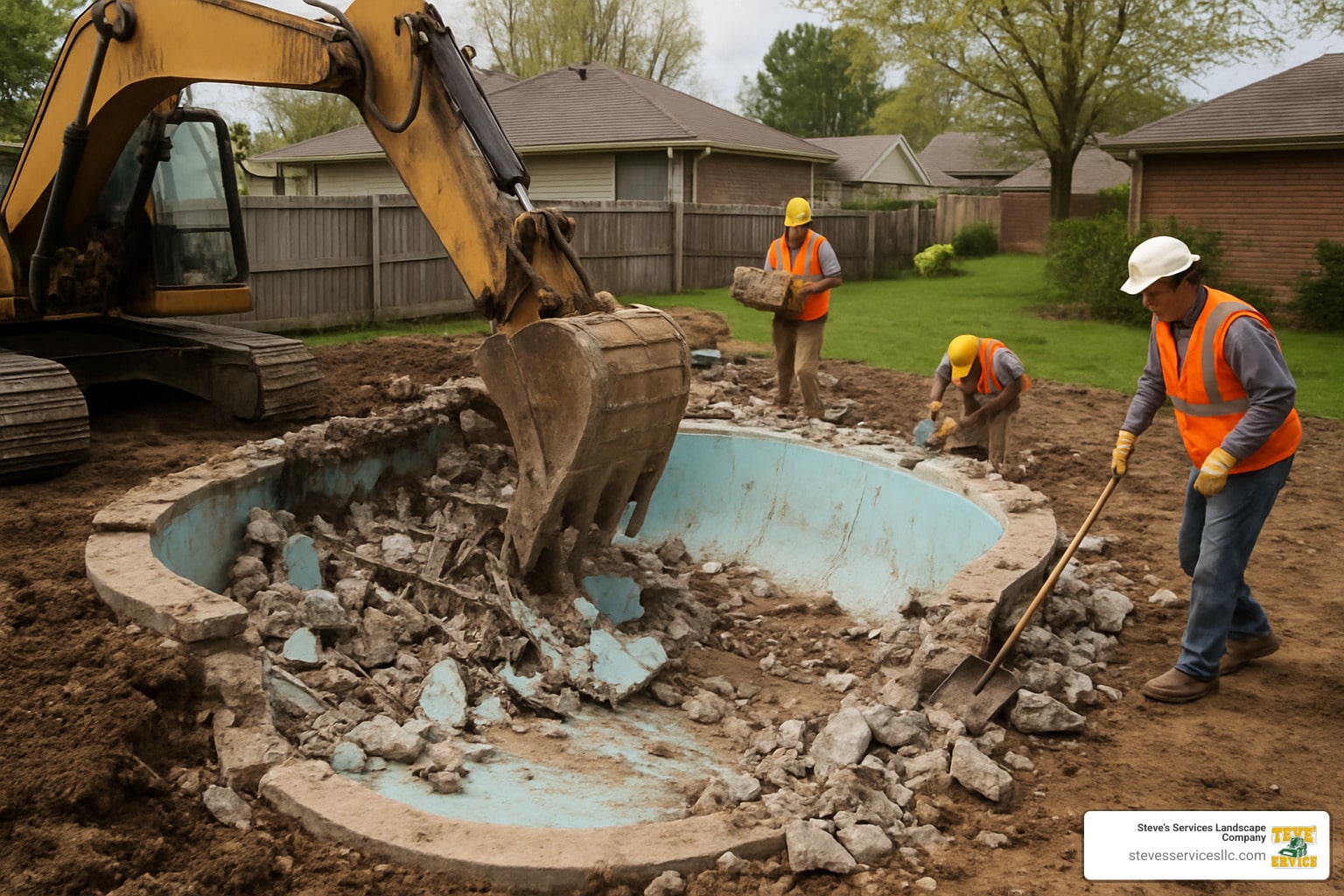
Pool Demolition Services: 5 Powerful Tips for Stress-Free Removal
Why More Homeowners Are Saying Goodbye to Their Pools
Pool demolition services involve removing an existing swimming pool from your property, either partially or completely, to reclaim your yard space for other uses. If you’re considering this option, here’s a quick overview of what you need to know:
| Pool Demolition Basics | What to Know |
|---|---|
| Average Cost | $7,000 to $25,000 depending on size, type, and method |
| Types | Full removal (complete demolition) or partial removal (fill-in) |
| Timeline | Typically 2-7 days to complete |
| Benefits | Reclaimed yard space, eliminated maintenance costs, reduced insurance premiums |
| Required Permits | Local demolition permits ($200-$500 on average) |
Is that old swimming pool becoming more of a headache than a joy? You’re not alone. Many homeowners are trading in their aging, costly pools for usable yard space. An unused pool doesn’t just take up valuable real estate in your backyard—it continues to drain your wallet through maintenance costs, which can average $1,200 to $1,800 annually, even when you’re not using it.
Beyond the financial burden, there are safety considerations, property value implications, and the simple desire to reclaim your outdoor space for gardens, patios, or play areas. Whether your pool is cracked, leaking, outdated, or simply unused, professional pool demolition offers a path to a more functional and manageable backyard.
I’m Steve Sylva, owner of Steve’s Services Landscape Company with over 25 years of experience coordinating pool demolition services throughout Massachusetts, helping homeowners transform problematic pools into beautiful, functional outdoor spaces. My team and I understand that removing a pool is a significant decision, which is why we’ve put together these five easy tips to help you find the right pool demolition service for your needs.
Find more about Pool Demolition Services:
– above ground pool demolition cost
– concrete pool demolition
– swimming pool demolition contractors
Why Removing a Pool Is on More Homeowners’ Radars
The trend toward pool removal has been gaining momentum across Massachusetts and beyond. Several factors are driving this shift:
- Cost Savings: Eliminating ongoing maintenance costs can save homeowners between $1,200 and $1,800 annually in chemicals, equipment, repairs, and energy costs.
- Insurance Benefits: Many homeowners see immediate drops in their insurance premiums after pool removal, as pools are considered liability risks by insurance companies.
- Water Conservation: In regions experiencing drought or water restrictions, maintaining a pool can be both expensive and environmentally questionable.
- Real Estate Flexibility: While pools once universally boosted home values, today’s market is more nuanced. Many buyers see pools as maintenance burdens rather than amenities, particularly in the Northeast where swimming seasons are shorter.
As one Melrose homeowner told us after we completed their pool removal project: “We used the pool maybe three weeks a year, but paid for it twelve months straight. Now we have a beautiful patio and garden that we enjoy from spring through fall.”
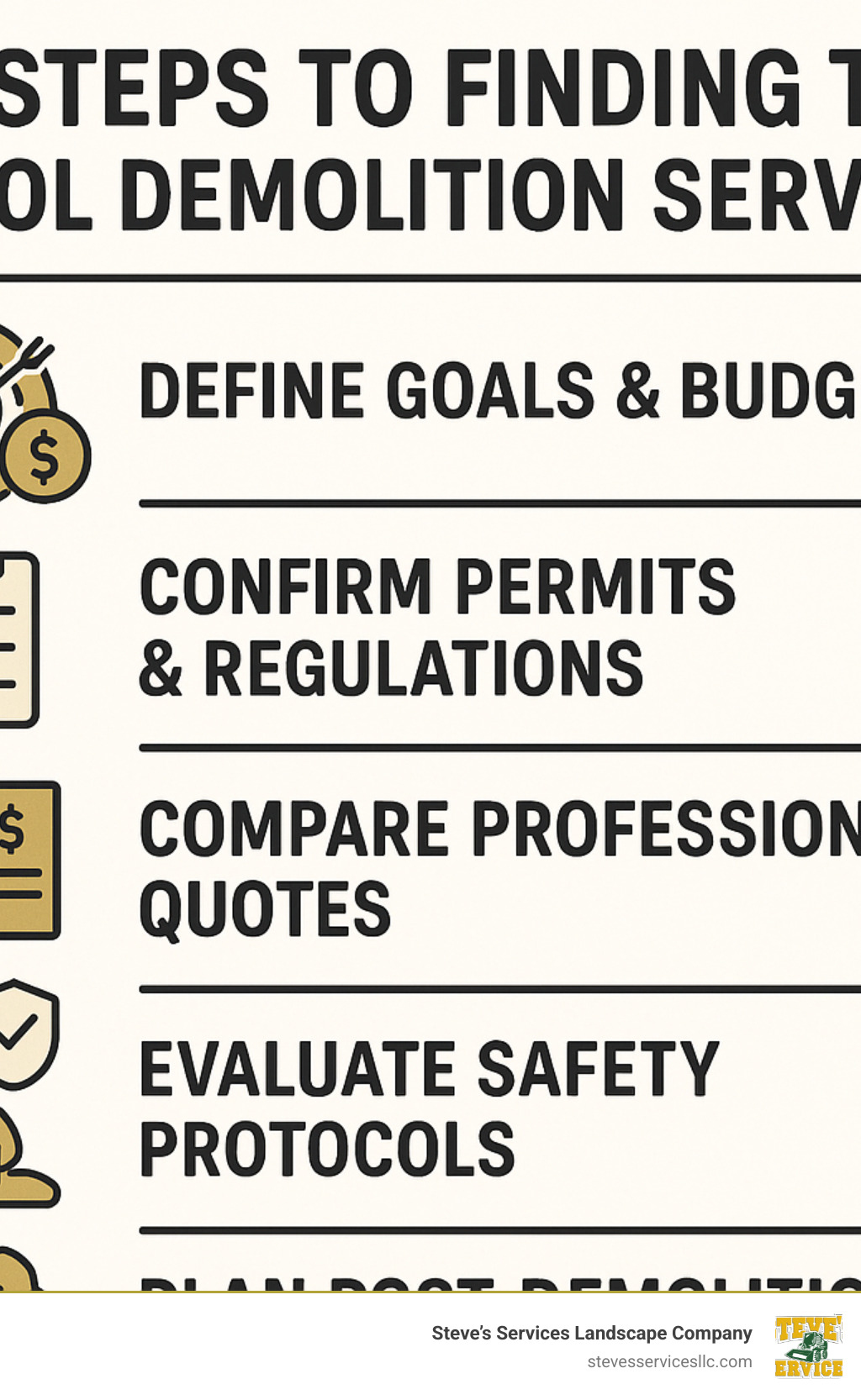
Tip 1: Define Your Demolition Goals & Budget First
Before contacting any pool demolition services, you need to determine exactly what you want to accomplish and how much you’re willing to invest. This clarity will save you time and help you get more accurate quotes.
Start by asking yourself these key questions:
- Do you want a full or partial pool removal?
- What will you use the space for after demolition?
- Is your timeline flexible or do you need it completed by a specific date?
- Are you planning to sell your home in the near future?
Your answers will guide your demolition approach and budget requirements.
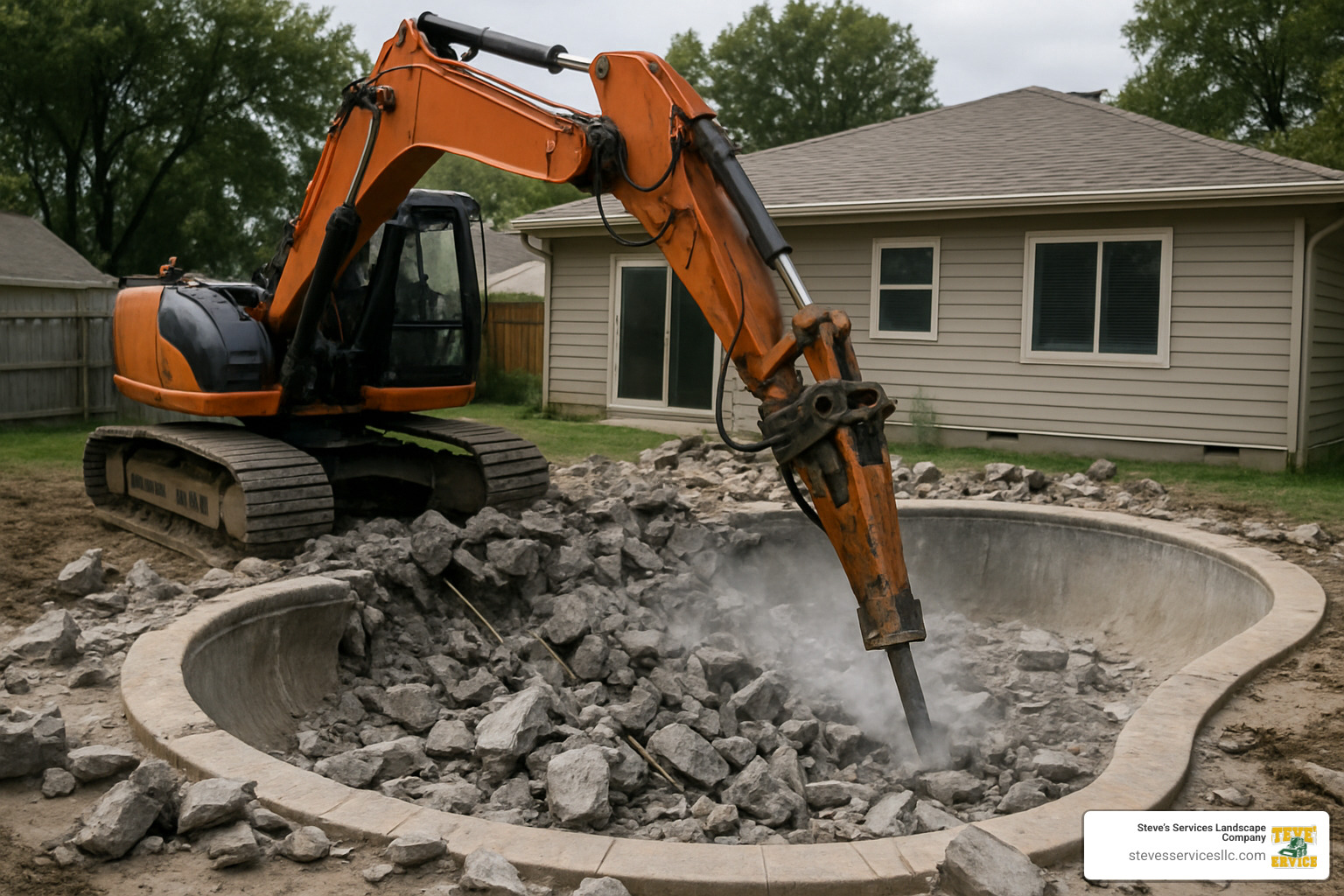
Full vs. Partial Pool Removal: Understanding the Difference
There are two primary approaches to pool demolition, each with distinct benefits and costs:
| Aspect | Full Removal | Partial Removal (Fill-In) |
|---|---|---|
| What It Involves | Complete removal of all pool materials, including concrete, rebar, plumbing, and equipment | Breaking up the bottom for drainage, removing top portion of walls, and filling with clean material |
| Average Cost | $15,000-$25,000 for standard residential pools | $3,000-$7,000 for standard residential pools |
| Best For | Future construction plans, complete yard redesign | Budget-conscious homeowners, simple yard reclamation |
| Timeline | 5-7 days typically | 2-4 days typically |
| Soil Stability | Excellent when properly compacted | Good for landscaping, may have limitations for structures |
| Disclosure Requirements | None in most states (completely removed) | Must disclose to future buyers in most states |
The choice between full and partial removal often depends on your future plans for the space. If you’re considering building a structure where the pool once stood, a full removal is typically necessary. For creating gardens, lawns, or simple patios, a partial removal may be sufficient and more economical.
Average Price Ranges & Key Cost Drivers
Based on internet data (not actual costs for Steve’s Services), pool demolition services typically range from $7,000 to $25,000. This wide range reflects several key variables:
- Pool Size and Type: Larger pools and those made of gunite or concrete are generally more expensive to remove than smaller vinyl or fiberglass pools.
- Access Issues: Limited access to your backyard can significantly increase costs, as it may require specialized equipment or manual labor.
- Disposal Fees: Local disposal regulations and fees vary widely. Some areas have strict requirements for concrete disposal, which can increase costs.
- Regional Factors: Labor costs and permit fees differ by municipality. In Massachusetts, particularly in communities like Lynnfield, Winchester, and Melrose, permit costs typically range from $200-$500.
- Backfill Requirements: The type and amount of material needed to fill the void left by your pool can significantly impact your budget.
These are average costs based on industry data. For specific pricing for your project, we recommend requesting a detailed, written estimate from qualified pool demolition services.
Learn more about the cost of removing a pool
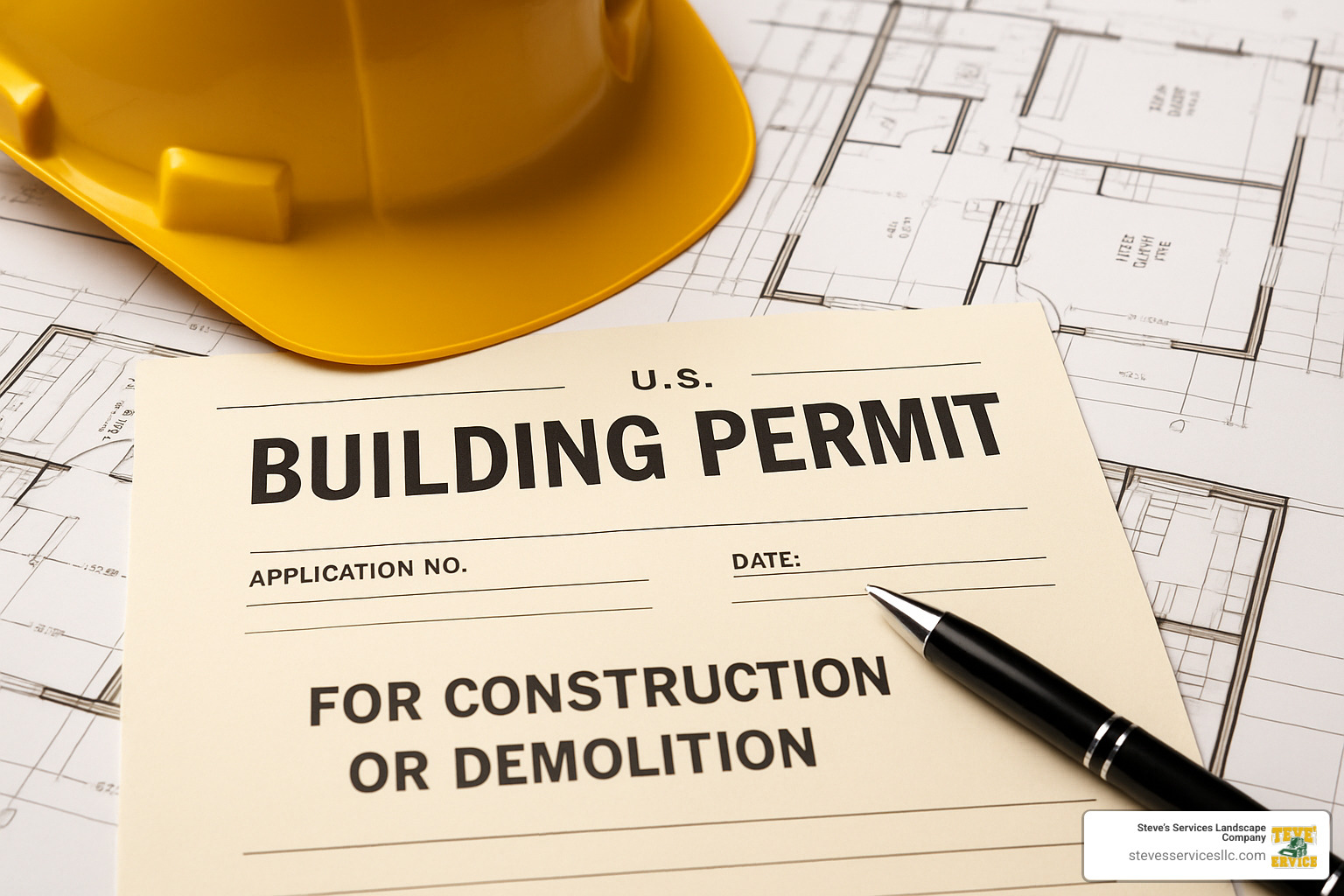
Tip 2: Confirm Permits, Codes & Environmental Rules Up Front
Nothing can derail your pool removal project faster than permit problems. Trust me, I’ve seen it happen too many times! Before any excavator touches your property, you need to get familiar with your town’s specific requirements.
Here in Massachusetts, the rules can change dramatically just by crossing town lines. Whether you’re in Burlington, Danvers, or Woburn, most towns will ask for:
- A demolition permit (typically costing $200-$500)
- Proof that utilities have been properly disconnected
- Site plans showing your pool’s location and what you plan to do with the space
- Soil compaction specifications (90% compaction is the magic number most inspectors look for)
- Plans showing how water will drain from the area after the pool is gone
One requirement that catches many homeowners by surprise involves drainage holes. For partial demolitions, building departments typically require 2-3 foot diameter holes in the pool bottom. These aren’t just bureaucratic hoops to jump through – they prevent your yard from becoming a hidden underground bathtub that could cause serious problems down the road.
Environmental regulations add another layer to consider. If your pool sits near wetlands (which are surprisingly common in Massachusetts), special setback rules may apply. And that concrete from your old pool? Many communities now have specific disposal guidelines, with recycling being the environmentally preferred option – and sometimes the legally required one.
Avoid Delays With a Permit Checklist
Want to keep your project moving smoothly? Create a simple permit checklist before you begin. Start by gathering all the necessary application forms from your local building department – each town has its own versions.
Next, contact your utility companies to properly disconnect and cap any electrical, gas, or water lines connected to the pool. Most towns require documentation proving this was done correctly.
Understanding inspection timelines is crucial too. Pool demolition services typically require inspections at multiple stages – before work begins, during the demolition process, and after completion. Missing an inspection can result in costly do-overs.
Don’t forget to prepare all your documentation ahead of time. This includes photographs of your existing pool, detailed site plans, and any specialized forms your town requires. Some municipalities even require you to notify your neighbors before demolition begins – a courtesy that can prevent complaints later.
At Steve’s Services, we handle all these permitting headaches for our clients in every Massachusetts community we serve, from Revere to Saugus to Stoneham. Our team knows the local regulations inside and out, which saves time and prevents those frustrating (and expensive) delays that can plague DIY permit-seekers.
Latest research on concrete disposal
Tip 3: Compare Professional Pool Demolition Services Quotes
When it comes to Pool Demolition Services, not all contractors offer the same quality, experience, or value. Looking beyond just the price tag can save you headaches and unexpected costs down the road.
Before signing on the dotted line, take time to verify these essential credentials:
- Proper Licensing: Massachusetts contractors should have their Home Improvement Contractor (HIC) registration at minimum. For larger demolition projects, they should also possess a Construction Supervisor License (CSL).
- Insurance Coverage: Never work with a contractor who can’t provide proof of robust liability insurance (at least $1 million) and workers’ compensation insurance. This protects both you and them if something goes wrong.
- OSHA Training: Safety should be non-negotiable. Ask if their crews have completed OSHA-10 or OSHA-30 safety certifications, which shows they’re properly trained in construction safety protocols.
- Recycling Practices: Environmentally responsible contractors will recycle up to 100% of concrete and metal components from your pool. This not only reduces landfill impact but often reduces disposal costs too.
- Timeline Guarantees: Vague promises won’t help when your yard is torn up longer than expected. Look for specific completion timelines in writing.
How to Shortlist Pool Demolition Services Online
Finding quality contractors doesn’t have to be overwhelming. Start by doing some digital detective work:
Browse through online portfolios and look for extensive photo galleries of completed pool demolition projects. Before-and-after photos tell you a lot about the quality of their work. Pay special attention to projects similar to yours in scope and pool type.
Customer reviews can be goldmines of information – but focus on the detailed ones. The most helpful reviews mention specifics about the demolition process, whether the contractor stuck to the timeline, and how thorough they were with cleanup.
Don’t just take their word for it when it comes to credentials. Take a few minutes to verify contractor licenses through the Massachusetts Division of Professional Licensure website. It’s a small step that could save you from hiring an unqualified operator.
Always get at least three detailed, itemized estimates to compare. This gives you a feel for the market rate and helps identify any outliers that might be cutting corners or padding costs.
Finally, have a direct conversation about liability coverage. A reputable contractor should be able to explain exactly how their insurance will protect your property and neighboring properties if accidents happen.
Reading Between the Lines of Pool Demolition Services Contracts
The contract is your protection – so read it carefully before signing anything.
Scope clarity is essential. Your contract should spell out whether you’re getting a full or partial removal and detail exactly what will be removed and what will remain. Vague language here often leads to disputes later.
Watch for sneaky hidden fees hiding in phrases like “additional charges may apply” or references to “unforeseen circumstances.” While some surprises are genuinely unexpected, too much wiggle room in the contract language can be a red flag.
The backfill specifications might not sound exciting, but they’re crucial for your yard’s future. The contract should clearly state the type and quality of fill material and compaction standards – ideally 90% or higher to prevent future settling.
Look for warranty terms that protect against settling or drainage issues for at least one year. A contractor confident in their work won’t hesitate to stand behind it.
Never agree to a payment schedule requiring full payment upfront. That’s a huge red flag. A typical fair arrangement includes a deposit (usually 25-30%), progress payments at defined milestones, and final payment only after you’re satisfied with the completed work.
At Steve’s Services, we believe in transparency. Our contracts clearly outline every aspect of the pool demolition process, giving our clients in communities like North Reading, Reading, and Winchester complete peace of mind about what they’re getting and what it will cost.
Swimming Pool Demolition Contractors
Tip 4: Evaluate Safety Protocols, Heavy Equipment & Debris Disposal
Safety isn’t just a checkbox when it comes to pool demolition services—it’s the foundation of a successful project. When that excavator rolls into your backyard, you’ll want confidence that everything from your property to the neighborhood kids is properly protected.
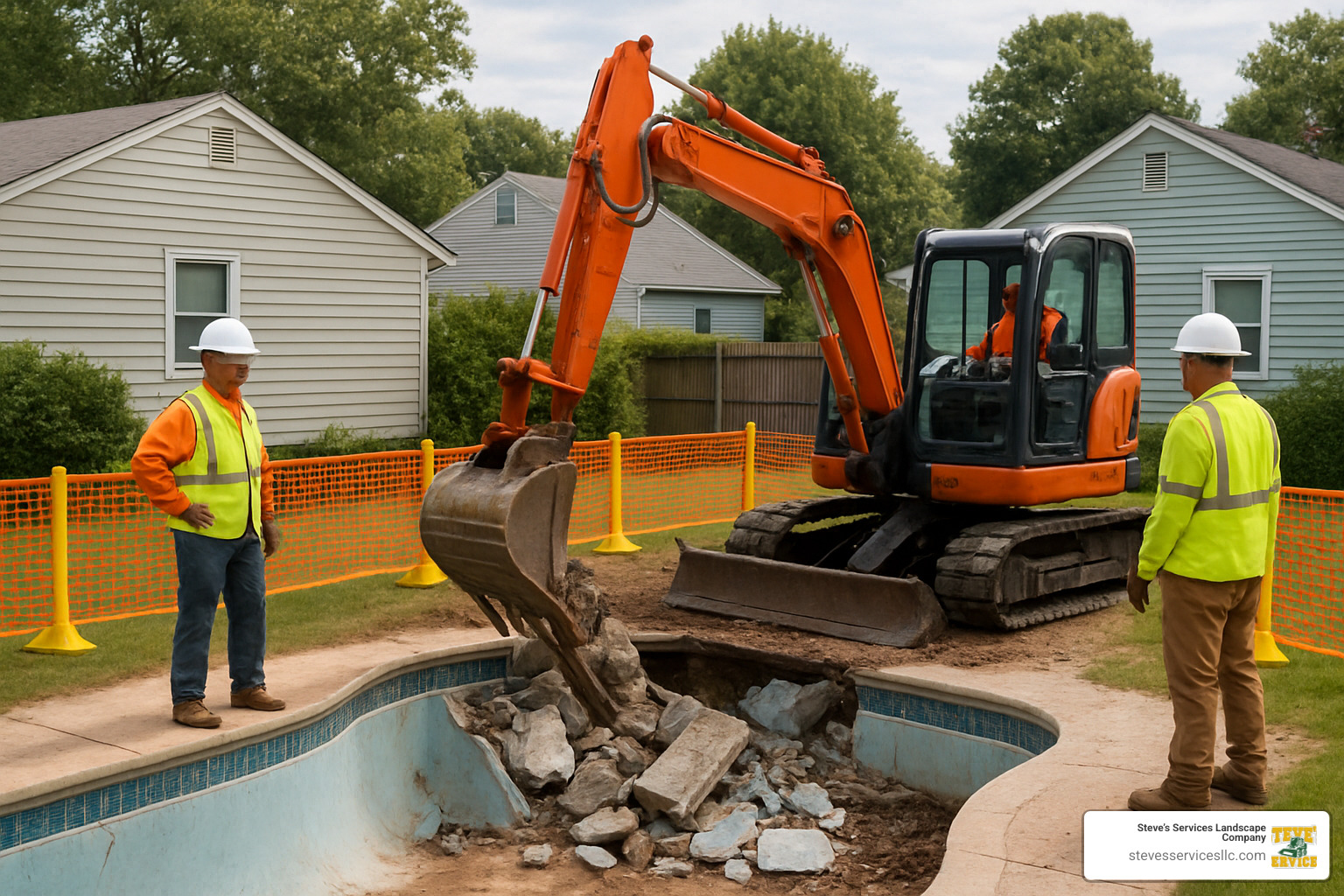
Essential Safety Equipment and Protocols
When I meet with homeowners in Malden or Winchester, they’re often surprised by how much goes into pool demolition safety. It’s not just about wearing hard hats (though those are certainly important!).
Professional crews should be decked out in OSHA-compliant PPE—that’s personal protective equipment for those of us who don’t speak construction. This includes helmets, safety glasses, proper gloves, and those bright vests that make workers visible from a mile away. When concrete dust is flying, respiratory protection becomes non-negotiable.
The equipment itself matters tremendously. That aging backyard pool requires serious machinery—mini-excavators, concrete breakers, and properly-sized hauling vehicles. I always recommend asking potential contractors: “Is your equipment right-sized for my property?” Nothing’s worse than finding a massive excavator can’t fit through your side yard access on demolition day.
Dust control deserves special attention. Breaking up concrete creates an impressive amount of dust that nobody wants drifting through the neighborhood. Quality contractors use water suppression systems—essentially keeping everything damp enough to keep particles from becoming airborne. Your neighbors will thank you for this consideration!
What happens to all that concrete, metal, and plumbing once it’s torn out? Responsible pool demolition services recycle up to 100% of pool concrete, turning yesterday’s eyesore into tomorrow’s road base. The metal components—reinforcement bars, plumbing pipes, pump parts—contain valuable materials that should never see a landfill. When evaluating quotes, ask specifically about recycling rates and where materials actually end up.
On-Site Safety Checklist for Crews & Neighbors
A professional demolition site shouldn’t look like chaos—it should be organized, contained, and clearly marked. Proper barriers around the work zone keep curious children and pets safely away from heavy equipment and demolition areas.
In Massachusetts communities like Wakefield and Woburn, noise limitations are taken seriously. Reputable contractors respect local ordinances, typically working between 7 AM and 7 PM on weekdays. If someone promises to work “around the clock” to finish faster, that’s actually a red flag!
The end of each workday brings an important safety ritual: daily cleanup. The site should be secured and tidied before crews leave, preventing overnight hazards and keeping your property as presentable as possible during the project.
Every professional contractor should have clear emergency procedures in place. This includes not just contact information, but specific protocols for handling unexpected situations—from utility line encounters to weather emergencies.
Finally, good contractors consider neighbor impact at every stage. They’ll maintain access routes, control dust and debris, and generally minimize disruption to surrounding properties. After all, you still have to live next door to these folks long after the pool is gone!
At Steve’s Services, we prioritize safety across every project in communities like Malden, Wakefield, and Woburn. Our crews come fully trained and equipped to ensure your pool demolition proceeds safely and efficiently, with minimal disruption to your family and neighbors.
Proper disposal of demolition materials
Tip 5: Plan Post-Demolition Landscaping & Soil Compaction Early
Imagine this: the pool is gone, and you’re standing there looking at a blank canvas of dirt. Now what? The most successful pool removal projects don’t end with demolition—they seamlessly transition into creating your dream outdoor space. That’s why thinking about “what comes next” should happen long before the first piece of concrete is removed.
Final Grading and Site Preparation
After your pool vanishes, the real change begins. Professional pool demolition services don’t just leave you with a hole in the ground—they prepare your yard for its next chapter.
A quality contractor will ensure proper grading that directs water away from your home’s foundation—something that’s absolutely crucial in Massachusetts where spring rains can be relentless. They’ll add 4-6 inches of quality topsoil that will nourish whatever you decide to plant. If a lush lawn is in your future, the soil will be properly prepared for either seed or sod. Planning a patio instead? The ground beneath needs specific compaction to support that structure without settling later.
I’ve seen too many homeowners focus entirely on getting rid of their pool without thinking about drainage solutions for the new space. You’re removing a giant basin from your yard—that water has to go somewhere when it rains!

Hiring Pool Demolition Services for Landscaping Changes
There’s a significant advantage to working with a company like ours that handles both pool removal and landscape installation. Think of it as one-stop shopping for your yard change. This integrated approach creates a seamless transition—no waiting around with an unsightly dirt patch while you search for a landscaper.
When the same team understands your vision from demolition through final planting, you get consistency that’s hard to beat. Plus, it’s typically more cost-effective than hiring separate contractors, and you’ll only need to communicate with one point of contact throughout the project. That alone can save you countless headaches!
In Massachusetts, we’ve transformed former pool areas into some beautiful spaces:
Native plant gardens have become incredibly popular, offering beauty with less maintenance and environmental benefits. Outdoor living spaces with patios, fire pits, and seating areas effectively extend your home’s living space—especially valuable in our region where we cherish every moment of good weather. For families, play areas provide safe spaces for children and pets, while environmentally-conscious homeowners often opt for rain gardens that responsibly manage water runoff.
Convert Swimming Pool to Patio
Why Proper Compaction Protects Future Projects
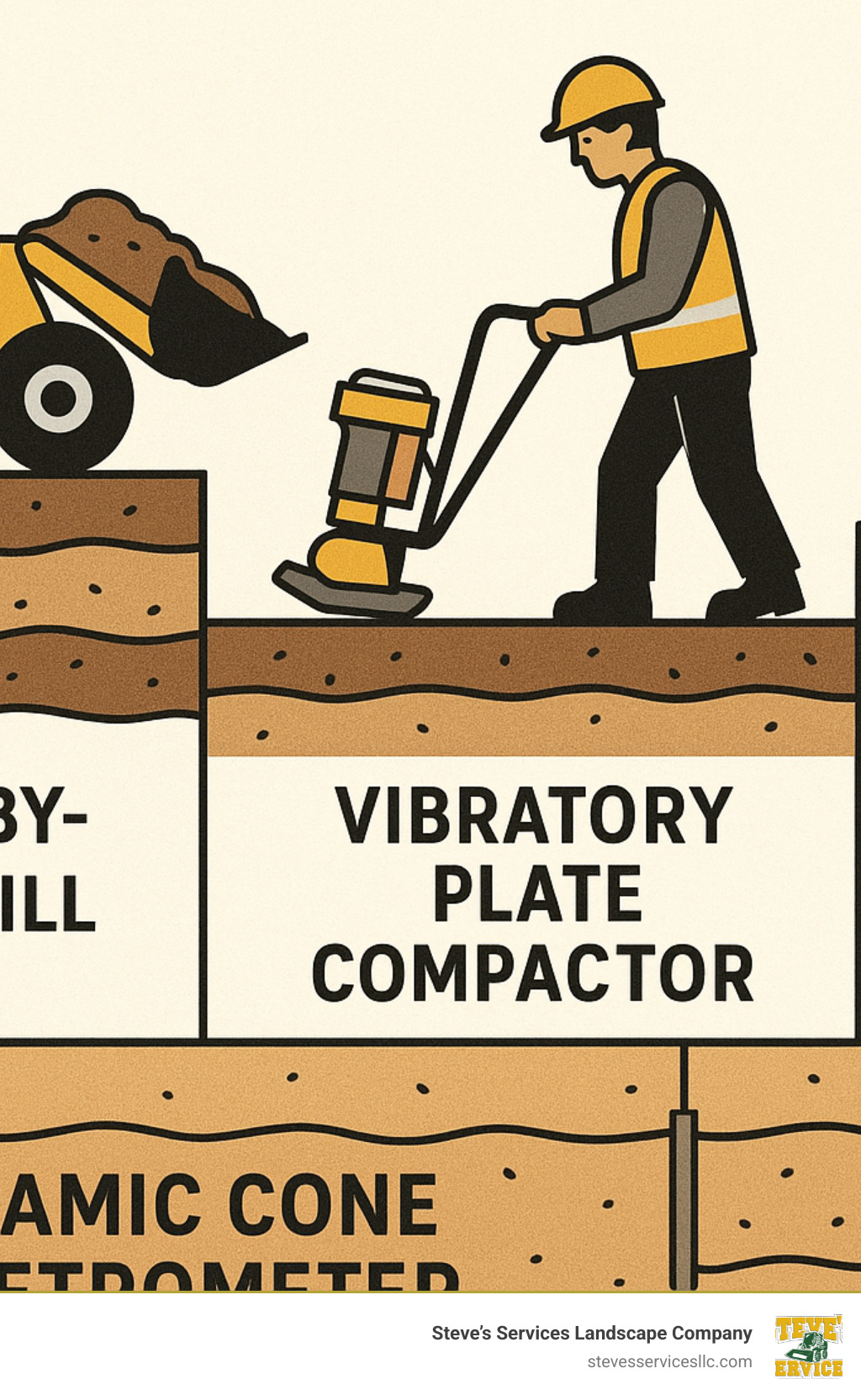
Here’s something many contractors don’t talk about enough: soil compaction isn’t just a technical detail—it’s the foundation of your yard’s future. Without proper compaction (industry standards require at least 90%), you risk future settling that can create depressions or even sinkholes in your yard.
Proper compaction isn’t simply dumping dirt into the hole and calling it a day. It requires layer-by-layer filling, where material is added and compacted in 6-12 inch layers. Professional compaction equipment must be used—not just backfilling with an excavator and hoping for the best.
For areas where you might eventually build structures, geotechnical testing provides peace of mind by verifying the soil meets necessary standards. Think of proper compaction as insurance for whatever you decide to do with that space in the future.
At Steve’s Services, we take this process seriously because we’ve seen the long-term headaches that can result when it’s not done right. Our experienced crews ensure your former pool area provides a stable foundation, whether you’re planning a garden now or might want to add a shed or outdoor kitchen years down the road.
Frequently Asked Questions about Pool Demolition Services
How long will the process take from start to finish?
The nuts and bolts of pool demolition services typically take just 2-7 days for the actual demolition work. That said, don’t expect the entire project to wrap up quite that quickly! The complete timeline, including getting all your permits in order, usually stretches to 2-4 weeks from start to finish.
If you’re in a Massachusetts community like Burlington, Danvers, or Everett, you’ll want to budget about 5-10 business days just for permit approval. And Mother Nature gets a vote too—winter demolitions can face delays when the ground freezes solid, making excavation more challenging.
At Steve’s Services, we understand waiting can be frustrating, which is why we provide detailed timelines upfront and keep you in the loop throughout the process. Our crews work efficiently to minimize disruption to your daily life while ensuring quality work that meets all local requirements.
Can I build a new structure where the pool used to be?
Yes, you absolutely can—but there are some important considerations that shouldn’t be overlooked.
If you’re dreaming of a new garage, home addition, or shed where your pool once splashed, you’ll almost certainly need a full pool removal. Partial removals simply don’t provide the structural support needed for new construction. It’s like trying to build a house on a sponge—not a great foundation!
Even with complete removal, proper soil compaction is critical. Most building codes require at least 90% soil compaction for new construction, which should be verified through professional testing. Think of compaction as the difference between building on packed sand versus loose sand at the beach.
Some Massachusetts municipalities also impose waiting periods—typically 6-12 months—before allowing construction on former pool sites. This gives the ground time to settle naturally, preventing future structural issues.
Before making plans, we recommend a two-step approach: first, check with your local building department about specific regulations, and second, consult a structural engineer for professional guidance on your particular situation.
What percentage of the debris can actually be recycled?
With the right contractor and proper planning, you might be surprised to learn that up to 100% of your pool demolition materials can avoid the landfill. Here’s the breakdown of how different pool components can find new life:
Pool Demolition Services like ours prioritize concrete recycling—the bulkiest material from most pool demolitions. This concrete gets crushed and transformed into aggregate for new construction projects or road base material. The steel reinforcement bars (rebar) and metal components like ladders and equipment get separated and sold as scrap metal, achieving nearly perfect recycling rates.
Even the plumbing has a second act! PVC pipes can often enter specialized plastic recycling programs. Vinyl liners and fiberglass shells present more challenges but can still be processed through specialized facilities rather than ending up in landfills.
At Steve’s Services, environmental responsibility is baked into our demolition process. We’ve built relationships with recycling facilities throughout Massachusetts to ensure maximum recycling rates for all pool materials. When you choose us, you’re not just getting rid of an unwanted pool—you’re making an environmentally responsible choice that minimizes waste and gives materials new purpose.
Conclusion
Removing a swimming pool is more than just a demolition project – it’s a change of your property that opens up a world of possibilities. After guiding countless Massachusetts homeowners through this process, I’ve seen how following our five-tip approach leads to successful outcomes and beautiful new outdoor spaces.
When you work with professional pool demolition services like ours, you’re not just eliminating an unused feature – you’re making a smart investment in your property’s future. Homeowners throughout communities like Revere, Saugus, and Stoneham consistently tell us about the benefits they’ve experienced after removing their pools:
“We’re saving nearly $1,500 a year on maintenance costs we used to spend on a pool we barely used,” shared one Melrose client, echoing what we hear from many families. Beyond those immediate savings, many homeowners see noticeable drops in their insurance premiums once the liability of a pool is gone.
The reclaimed space becomes a blank canvas for creating something truly useful – whether that’s a lush garden retreat, an expansive patio for entertaining, or simply a safe play area where children and pets can roam freely without the constant worry of water safety.
What surprises many of our clients is how the removal can actually increase their property’s appeal. While pools were once universally considered a selling point, today’s market is different. Many buyers specifically look for homes without pools to avoid the maintenance burden – something worth considering if you might sell in the coming years.
At Steve’s Services Landscape Company, we pride ourselves on providing truly comprehensive solutions. From the first permit application through demolition and final landscaping, our experienced team handles every aspect of your project with care and attention to detail. We understand that this is more than just removing concrete – it’s about creating a space that better serves your family’s needs and lifestyle.
Whether you’re in Burlington watching an unused pool collect leaves, in Danvers dreaming of a vegetable garden where your pool now sits, or in Everett wanting to reclaim your yard for family gatherings, we’re here to help make that vision a reality.
Ready to reclaim your yard space and say goodbye to those endless maintenance bills? Let’s talk about how our professional pool demolition services can transform your outdoor space into something you’ll truly enjoy for years to come.
More info about swimming pool demolition services