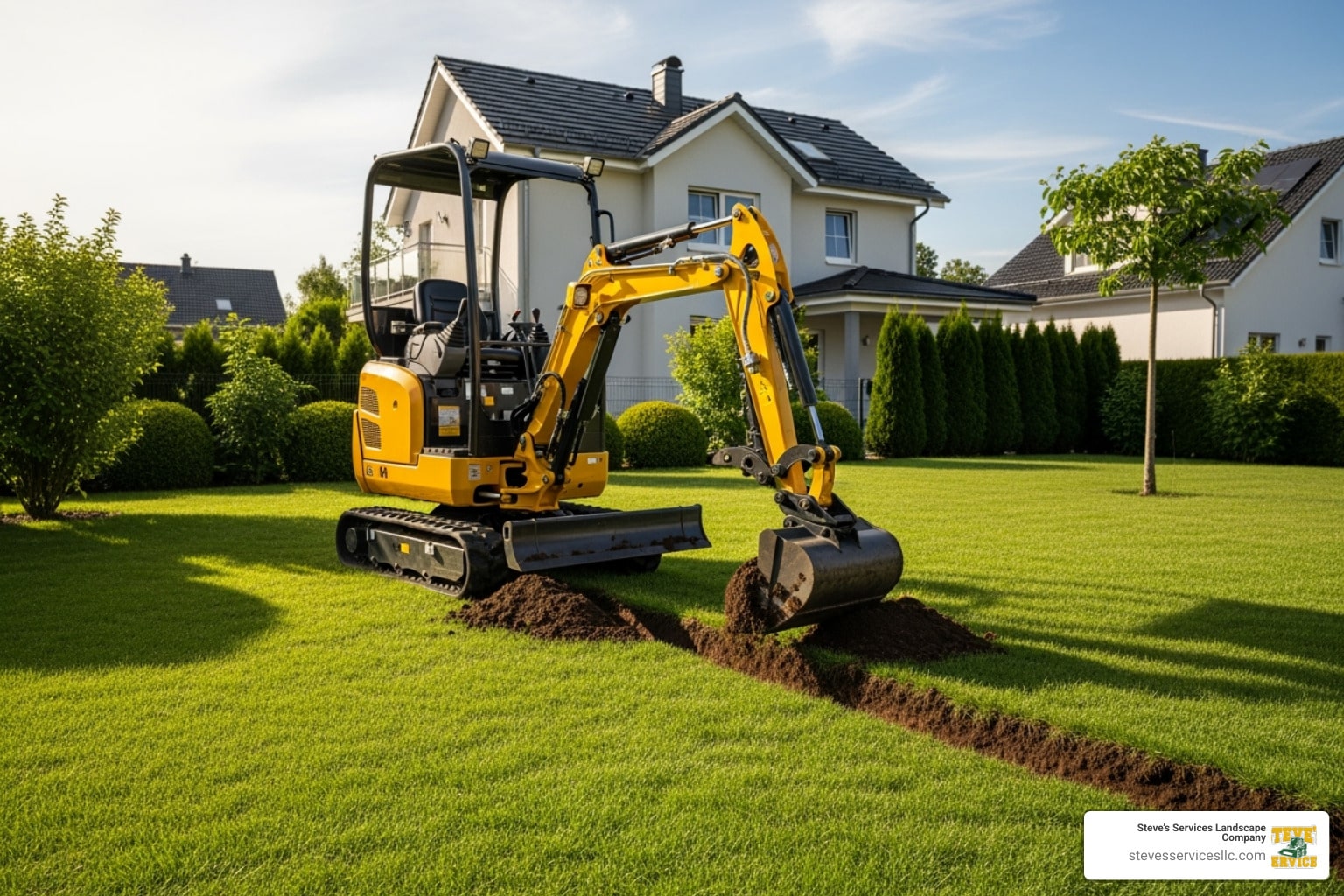
Small Job Excavating: 5 Steps to Precision
Why Small Job Excavating is Key for Property Owners
When it comes to improving your property, small job excavating is often the unseen backbone that brings your vision to life. This involves moving earth, rocks, or other materials on a smaller scale, usually for home improvements, landscaping, or minor construction.
If you’re wondering what small job excavating entails, here’s a quick overview of typical projects and why professional help is crucial:
- What it is: Excavation work that involves compact equipment and precise digging for specific, limited-scope tasks.
- Common Projects:
- Trenching for new utility lines (water, electrical, drainage)
- Small foundation digging for sheds, additions, or retaining walls
- Land grading for improved drainage or landscaping
- Stump removal or preparing a small area for planting
- Small pool or pond excavation
- Why hire a professional:
- Expertise: Professionals understand soil types, site complexities, and potential hazards like underground utilities.
- Efficiency: They use the right equipment to complete the job quickly and accurately.
- Safety: They adhere to strict safety protocols, protecting your property and themselves.
- Compliance: They steer permits and local regulations, ensuring your project is legal and up to code.
This guide will walk you through everything you need to know about preparing for, understanding the costs of, and successfully completing a small excavation project.
As Steve Sylva, owner of Steve’s Services, I’ve seen how crucial small job excavating is for countless projects across Massachusetts. With over 25 years in the landscape industry, my team and I bring precision and care to every dig, ensuring a solid foundation for your property’s improvements. Let’s dig into the details.
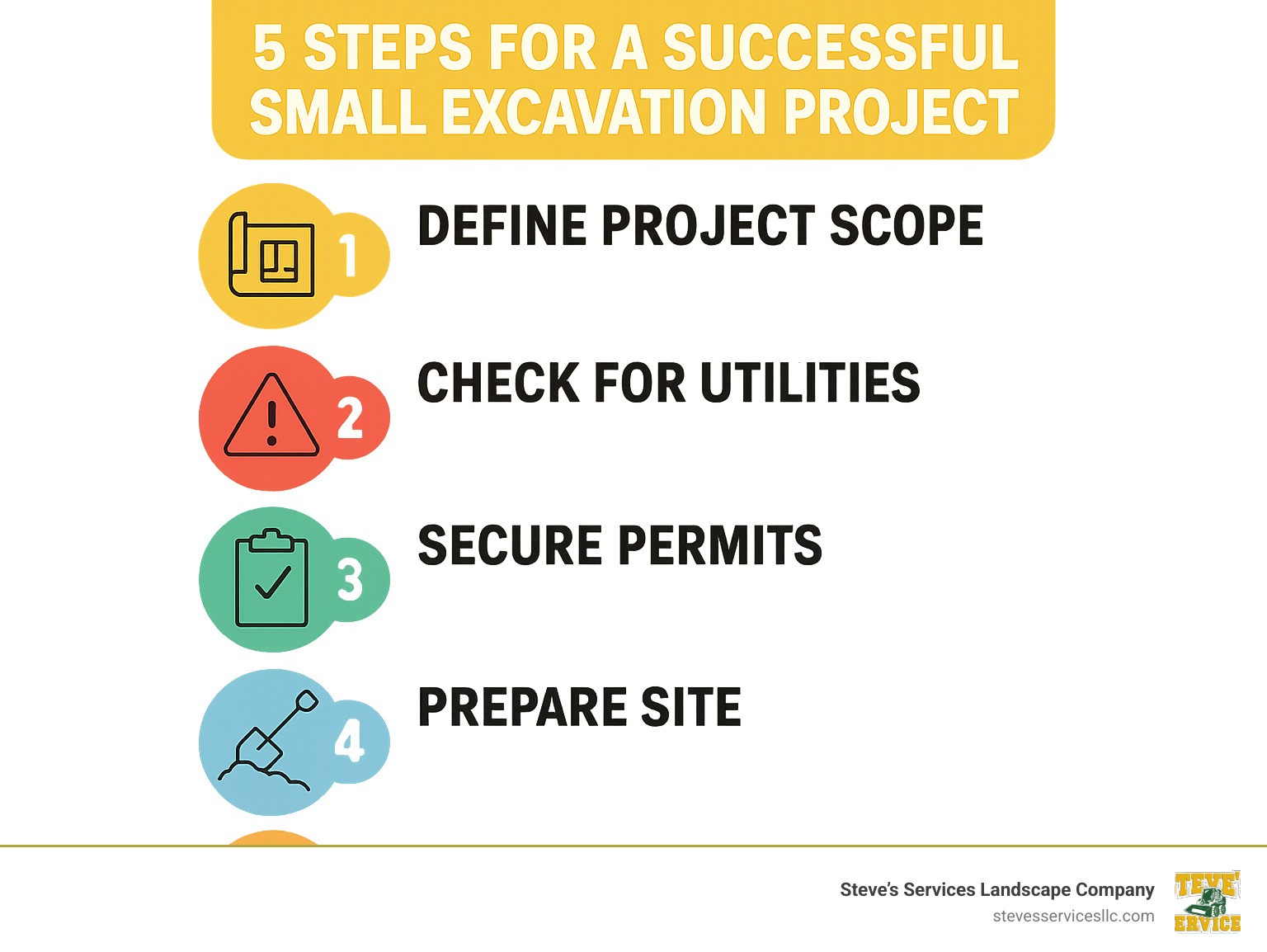
Small job excavating terminology:
What is Small Job Excavating? Defining the Scope and Common Projects
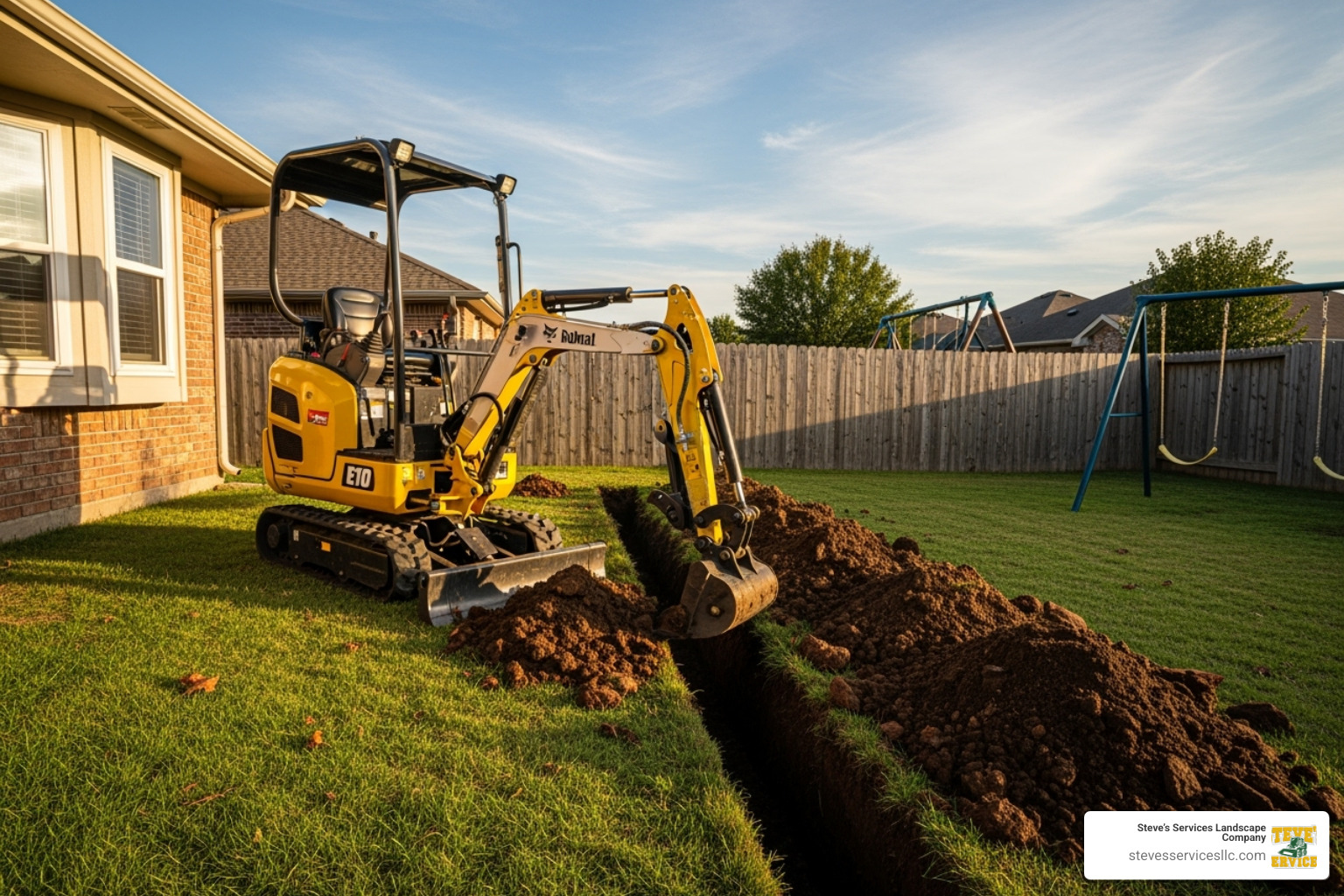
Picture this: you need some digging done around your home, but you don’t need a massive construction crew with giant machinery tearing up your entire yard. That’s where small job excavating comes in – it’s like the precision tool of the earthmoving world.
Small job excavating focuses on targeted, efficient digging projects that require finesse rather than brute force. We’re talking about work that gets done with compact equipment, minimal disruption to your property, and a focus on getting in, getting the job done right, and getting out. These projects typically happen in residential settings where every square foot of your yard matters, and where neighbors appreciate a quieter approach.
The beauty of this type of work is that it’s designed around your life, not the other way around. Most projects wrap up quickly – some in just a day, others might take up to a week. This means you’re not dealing with months of construction chaos in your backyard.
What Defines a ‘Small Job’ in Excavation?
When we talk about what makes an excavation job “small,” we’re really talking about scale, not importance. These projects might be smaller in scope, but they’re often crucial for your property’s functionality and value.
The key difference lies in the equipment we use. Instead of those massive excavators you see on highway construction sites, we work with mini excavators and versatile machines through our Bobcat Contracting services. These compact powerhouses can squeeze through tight spaces – some as narrow as 2 feet 4 inches – while still packing enough punch to handle serious digging.
The timeline is another defining factor. Most small job excavating projects are completed within one day to one week. A simple trenching job might be done by lunchtime, while more complex foundation work could take a few days. This quick turnaround is possible because we’re not moving mountains – we’re making precise, calculated moves.
Our residential focus means we understand the unique challenges of working around your home. We know how to protect your prized rose bushes, steer around that swing set the kids love, and keep noise to a minimum so your neighbors stay happy. The equipment we choose is specifically selected for these residential environments – powerful enough to get the job done, but compact and quiet enough to work in your backyard without turning it into a construction zone.
Common Types of small job excavating Projects
The variety of projects that fall under small job excavating might surprise you. Let’s walk through some of the most common requests we handle, and you’ll probably recognize a few that could benefit your property.
Trenching for utilities is probably our most frequent call. Whether you’re installing a new irrigation system to keep that lawn green, running electrical lines to a new shed, or fixing drainage issues that turn your yard into a swamp after every storm, precise trenching is essential. Our Dig a Trench in Backyard service ensures these vital systems are installed safely and efficiently, without turning your entire yard upside down.
Foundation digging is another specialty that requires precision and expertise. Maybe you’re adding a garage, building a shed for all that outdoor equipment, or installing a retaining wall to deal with a sloping yard. Each of these projects needs a solid foundation, and that starts with expertly prepared ground. Our Foundation Digging Services provide the stable base your new structures need to last for decades.
Sometimes the job involves taking things away rather than building them up. Swimming pool demolition is a perfect example – when that old pool becomes more trouble than it’s worth, we can remove it completely and restore your backyard to usable space. Our Swimming Pool Demolition Contractors handle everything from breaking up the concrete to backfilling and compacting the area for new landscaping.
Land grading might not sound exciting, but it’s absolutely crucial for a healthy property. Poor drainage can lead to water damage, foundation issues, and landscaping problems. We reshape your land to ensure water flows where it should, creating the proper slopes and contours your property needs. This work typically wraps up in just 1-2 days, but the benefits last for years. Check out our Land Clearing and Grading services for comprehensive solutions.
Driveway preparation is another area where precision matters tremendously. Before any new driveway goes in – whether it’s concrete, asphalt, or beautiful paving stones – the foundation needs to be perfect. We excavate and grade the area, creating a properly compacted sub-base that will support your driveway for years to come. Our Driveway Excavation Contractors ensure your new driveway starts with a solid foundation.
These projects all share common threads: they require specialized equipment, limited access capabilities, and precise execution. The project duration is typically short, but the impact on your property is long-lasting. Most importantly, they’re designed around residential needs, respecting your existing landscape while improving your property’s functionality and value.
For comprehensive Backyard Excavation needs, we bring the right combination of compact equipment, experienced operators, and attention to detail that makes small job excavating such an effective solution for homeowners.
Preparing Your Site for a Successful Dig
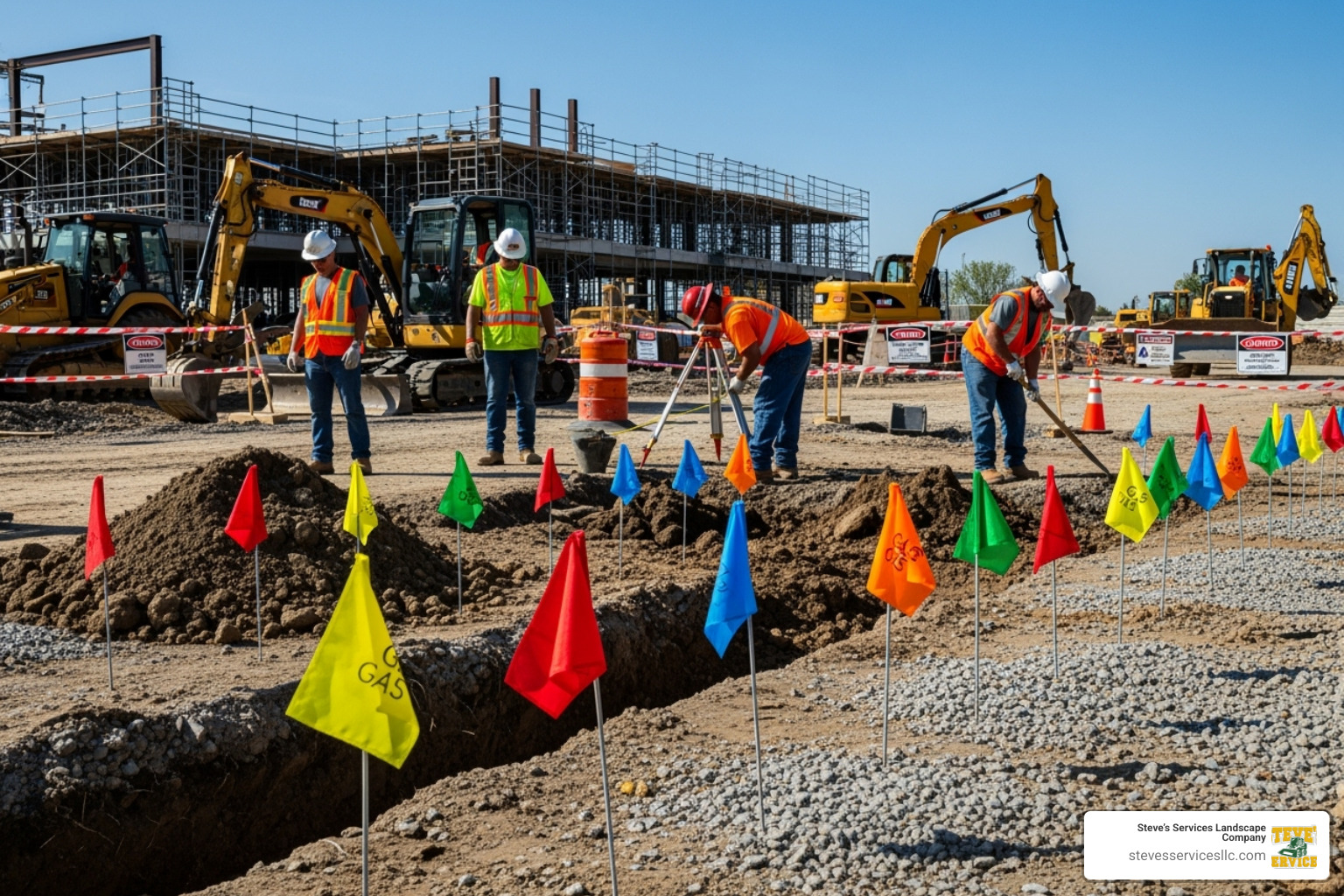
Think of preparing your site for small job excavating like setting the stage for a play. Everything needs to be just right before the curtain goes up! This isn’t just about getting our equipment in place; it’s a super important step to keep everyone safe, protect your property, and make sure your project goes smoothly without any unexpected hiccups.
Skipping these early steps can lead to costly delays, damage to your beautiful yard, or even serious accidents. We take this part of the job very seriously because a successful dig always starts with thorough preparation.
Pre-Excavation Site Checklist
Before our shovels even touch the ground, we go through a careful checklist to get your site ready. It’s all about making sure the area is safe and clear for the work ahead.
First, we focus on clearing obstacles. This means moving anything that could get in the way, like large rocks, garden decorations, or piles of debris. It creates a nice, clear space for us to work. Then, we think about ensuring equipment access. Our mini excavators are great at squeezing into tight spots, but we still need a clear path to bring them onto your property without disturbing your existing landscape too much.
Next, we get very precise by marking the dig site. We’ll clearly outline exactly where we need to dig. This helps us stay on target and protects the areas around your project from any accidental disturbance. We also prioritize property protection. This might involve laying down special coverings or setting up temporary barriers to safeguard nearby structures, plants, or pavement. Our goal is to leave your property looking as good, if not better, than we found it.
For bigger or more complex projects, we sometimes dive into understanding your property plans. This can give us valuable insights into property lines, existing structures, and anything else unique about your land. If you’re curious about property plans, you can find More on reading property plans online.
The Critical Step: Utility Location
Alright, listen up, because this is perhaps the most critical part of preparing for any excavation. Before we dig even an inch, we absolutely must know where all buried utility lines are hiding. We’re talking gas lines, water pipes, sewer lines, electrical cables, and even telecommunications wires.
Why is this so crucial? Hitting an unmarked utility line can be incredibly dangerous. It could lead to severe injuries, widespread service interruptions for you and your neighbors, and even huge repair bills.
That’s why we always follow the golden rule: Call Before You Dig. In the United States, you simply dial 811. This free service connects you to your local utility notification center. They’ll then alert the utility companies, who will send technicians to mark the approximate location of their underground lines on your property, usually with colored paint or flags. This process is often a legal requirement and always a safety necessity. It helps us with several key things:
- Preventing Accidents: Keeping our team, your family, and your property safe from harm.
- Avoiding Service Interruptions: Ensuring your lights stay on, your water keeps flowing, and your internet stays connected.
- Legal Compliance: Making sure your project follows all local and federal regulations, helping you avoid hefty fines and legal headaches.
- Safety First: Our commitment to safety is unwavering, and this step is non-negotiable for us.
Do You Need a Permit for Small Excavation?
The question of whether you need a permit for small job excavating is a common one, and the honest answer is: it depends! Regulations vary quite a bit from one town to another, and also depend on how big and what kind of project you’re planning.
For instance, a tiny trench for a new garden sprinkler might not need a permit. But if you’re planning something bigger, like major earth moving, changing how water drains on your property, connecting to public utility lines, or digging for a new foundation, you’ll almost certainly need one.
Permits might seem like extra paperwork, but they’re actually there for very good reasons:
- Regulatory Compliance: They make sure your project fits within local zoning rules, building codes, and environmental guidelines.
- Safety Assurance: Permit reviews often check that your planned work is safe and won’t cause structural issues for your home or property.
- Topography Protection: For projects that change the land significantly, permits help protect the natural landscape and prevent problems like erosion or poor drainage that could affect your neighbors.
To figure out exactly what permits your specific project needs, the best step is to contact your local building department. They can give you all the precise information on what permits are necessary, how to apply, and what documents you’ll need. Don’t worry, our team is very familiar with the permitting processes in the Massachusetts communities we serve, including areas like Burlington, MA. We can help guide you through the process. For more details on local services, visit our Excavation Contractor Burlington MA page.
Understanding Costs and Factors for Small Job Excavating
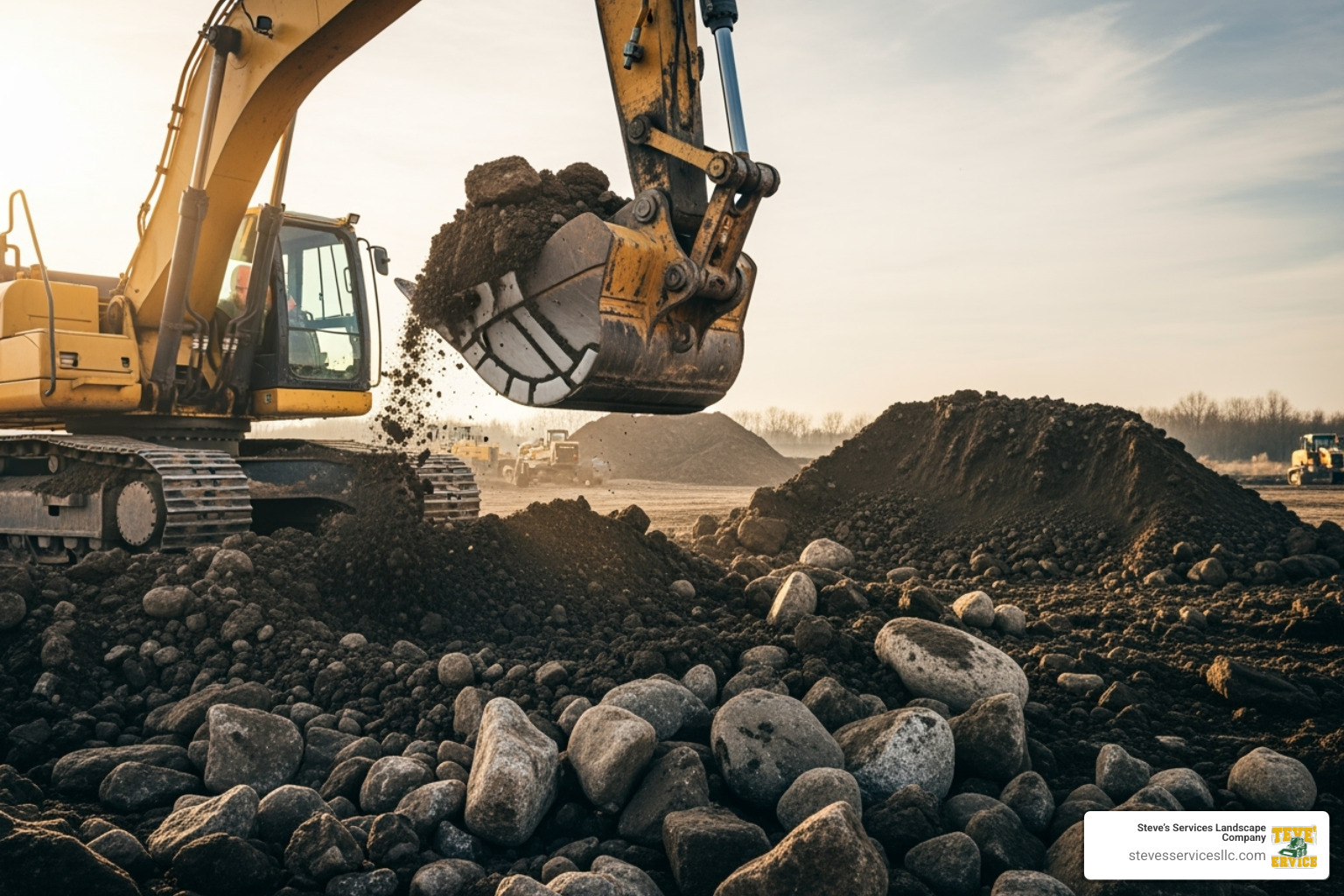
Let’s be honest – one of the first things you’re wondering is, “What’s this going to cost me?” It’s a fair question, and understanding how small job excavating costs work doesn’t have to be a mystery. While every project has its unique challenges, there are standard ways we calculate pricing, and several key factors that can influence your final bill.
The truth is, excavation pricing isn’t one-size-fits-all. A simple trench for a sprinkler line is very different from digging out a foundation or dealing with rocky soil. That’s why we always provide detailed estimates after assessing your specific site and project needs.
How Are Excavation Costs Calculated?
Disclaimer: The following are average costs based on industry data and do not represent a quote from Steve’s Services. For an accurate estimate, please contact us directly.
Most excavation companies, including ours, use several different pricing methods depending on what makes the most sense for your project. Understanding these approaches can help you better prepare for your investment.
Hourly labor rates are common for smaller or unpredictable jobs where it’s hard to estimate exactly how long things will take. Industry data shows these rates can range anywhere from $50 to $100 per hour for basic work, but don’t be surprised if specialized equipment or complex projects push costs up to $300+ per hour. Factors like tight access areas, specialized equipment needs, or urgent timelines can all bump up hourly rates.
For clearly defined tasks, we often prefer per-project pricing. This works great for jobs like specific trenching work or stump removal where we can accurately predict the scope. It gives you cost certainty and eliminates any surprises about how long the work might take.
When we’re moving a specific amount of earth – like digging a foundation or excavating for a small pond – volume-based pricing makes the most sense. We calculate this per cubic yard or cubic foot of material. For example, if you need a 10x10x2 foot area excavated, that’s 200 cubic feet of material we’ll be moving.
For larger surface areas like land grading or site preparation, area-based pricing works best. Industry averages start around $1.50 per square foot, though this can vary significantly based on site conditions and complexity.
Here’s a simple example of how costs might break down: Let’s say you need a small foundation dug. The excavation work might be estimated at $300, labor at $75 per hour for 8 hours ($600), and if we hit particularly hard soil, that could add another $100. Your total estimate would be around $1,000. Of course, these are just illustrative numbers – every project is different.
Our Bobcat Services Reading MA team always provides transparent estimates that break down exactly how we arrived at your project cost.
Key Factors That Influence the Final Price
While our calculation methods give us a starting point, several factors can significantly impact your final small job excavating cost. We always assess these during our initial site visit to give you the most accurate estimate possible.
Soil type is probably the biggest game-changer when it comes to excavation costs. Digging through soft, sandy soil is like cutting through butter compared to dense clay or hitting ledge rock. Clay soil requires more time and can be tough on equipment, while rocky conditions might need special tools or techniques. Sand is generally the easiest to work with, but even then, very wet or unstable sand can present its own challenges.
Site accessibility can make or break a project budget. If we can drive our equipment right up to the work area, great! But if we need to steer through narrow gates, around delicate landscaping, or across areas that can’t support heavy equipment, costs will increase. Sometimes we need to use smaller, less efficient equipment or even hand-dig certain areas to protect your property.
Existing landscaping features often require special care and protection. If you have mature trees, established gardens, or decorative elements near the work area, we’ll need to take extra precautions. This might mean more careful excavation techniques, protective barriers, or working around root systems – all of which take additional time and care.
Debris and soil removal is another cost factor that varies widely between projects. Sometimes we can reuse excavated soil right on your property for backfill or grading. Other times, especially with contaminated soil, old concrete, or excess material, we need to haul everything away. Soil removal and disposal fees can add up quickly, particularly if special disposal methods are required.
Project complexity encompasses everything from unusual shapes and precise depth requirements to working around existing utilities or structures. A straightforward rectangular dig is much simpler than creating curved edges or working around multiple underground obstacles.
The weather and season can also play a role. Frozen ground in winter or waterlogged soil after heavy rains can slow progress and increase costs. That’s why we always factor in current site conditions when preparing your estimate.
At Steve’s Services, we’ve learned that being upfront about these factors from the beginning saves everyone time and frustration. We’d rather give you a realistic estimate that accounts for potential challenges than surprise you with unexpected costs later. For more information about different soil types and drainage considerations, you can find helpful details at Information on soil types.
Our team uses modern, well-maintained equipment and experienced operators to keep your small job excavating project efficient and cost-effective. Whether it’s a quick trenching job or more complex grading work, we focus on getting it done right the first time.
Conclusion
As we wrap up this comprehensive guide, it’s clear that small job excavating is truly the unsung hero of property improvements. Whether you’re dreaming of a new deck, planning better drainage, or simply need to run utilities to that perfect spot in your yard, the right excavation work makes it all possible.
Throughout this guide, we’ve covered the essential elements that make these projects successful. We started by defining what small job excavating actually means – those precise, compact jobs that require skill and the right equipment rather than massive machinery. We explored common projects like trenching for utilities, foundation digging, and land grading, showing how versatile this field really is.
The importance of proper preparation cannot be overstated. From calling 811 to locate utilities (seriously, never skip this step!) to understanding when permits are needed, these preparatory steps are what separate a smooth project from a potential disaster. We’ve seen how factors like soil type, site accessibility, and project complexity all play into the final cost, helping you understand what goes into those estimates.
Perhaps most importantly, we’ve highlighted why professional expertise matters so much in this field. It’s not just about having the right mini excavator or Bobcat – though that certainly helps. It’s about the experience to handle unexpected underground obstacles, the knowledge to steer tight spaces without damaging your prized rose bushes, and the skill to complete the job efficiently and safely.
At Steve’s Services, we’ve been perfecting the art of small job excavating across Massachusetts for over 25 years. We understand that your property is more than just dirt and grass – it’s your home, your sanctuary, your investment. That’s why we approach every project, no matter how small, with the same level of care and professionalism.
Our team takes pride in turning what could be stressful excavation projects into smooth, predictable experiences. We handle everything from the initial site assessment to the final cleanup, ensuring your property looks better than when we started. Because at the end of the day, we’re not just moving earth – we’re helping build the foundation for your dreams.
Ready to turn your outdoor vision into reality? Contact us for your excavation service needs today. Let’s dig in and create something amazing together – safely, efficiently, and with the personal touch that makes all the difference.