Snow Removal Commercial Contracts: Ironclad 2025
Why Your Business Can’t Afford a Poor Snow Removal Contract
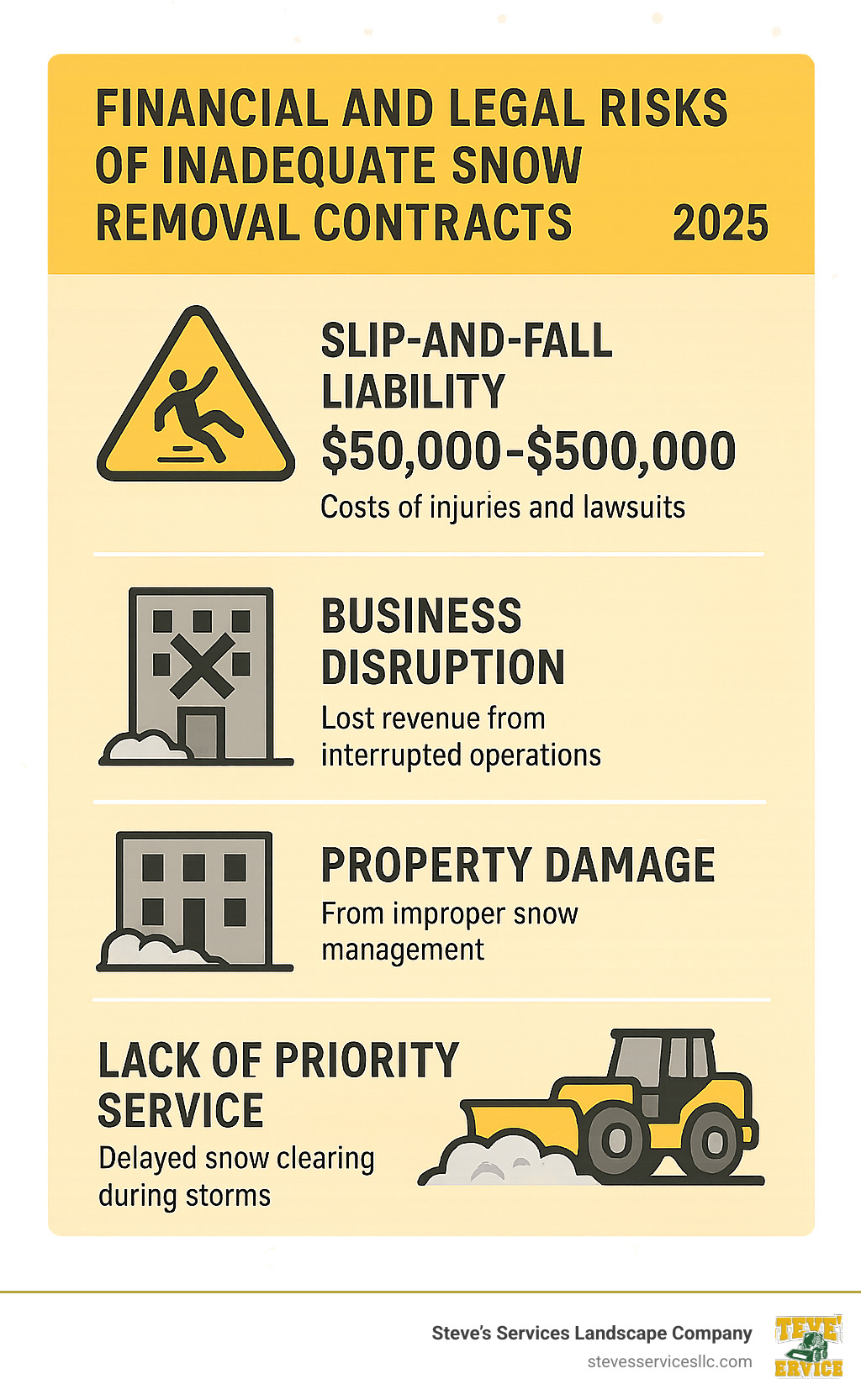
When winter storms hit Massachusetts, a single slip-and-fall incident can lead to costly lawsuits, while blocked access can shut down business operations. Snow removal commercial contracts are legally binding agreements designed to prevent these issues by ensuring safe, accessible property conditions. The difference between a handshake deal and a comprehensive contract often determines whether your property stays protected or becomes a liability nightmare.
Key contract elements include service triggers (e.g., 1-3 inches of snow), insurance minimums ($1-2 million liability), response times (1-6 hours), a detailed scope of work, and liability clauses. However, the biggest problem isn’t the snow itself—it’s poor planning. Many businesses wait until fall to secure services, finding that the best providers are booked, leading to higher prices and unfavorable terms.
Without clear service definitions, proper insurance, and liability protection, even a reliable contractor can leave your business exposed to significant financial risk.
I’m Steve Sylva, owner of Steve’s Services in Malden, MA. For over 25 years, I’ve helped commercial property managers steer snow removal commercial contracts. I’ve seen how the right agreement protects businesses, while a poor one creates expensive headaches that last long after the snow melts.
Quick snow removal commercial contracts terms:
Decoding the Different Types of Commercial Snow Removal Contracts
When it comes to snow removal commercial contracts, there is no one-size-fits-all solution. The right contract depends on your property’s needs, risk tolerance, and budget. Understanding how these contracts are structured is the first step to making a smart decision for your business.
Contract Pricing Models Explained
Let’s break down the most common approaches:
- Seasonal Contracts: You pay a fixed rate for the entire winter, regardless of snowfall. Many clients prefer multi-year agreements (2-3 years) to lock in rates. The primary benefit is budget predictability. The downside is potentially overpaying in a mild winter, but this often balances out over multiple seasons against a heavy one.
- Per-Event Contracts (Per-Push): You are charged each time the property is serviced, typically triggered by 1-3 inches of snow. This model seems budget-conscious, as you only pay when it snows. However, costs can escalate quickly during winters with frequent storms, leading to budget overruns.
- Full-Service Contracts: This is an all-inclusive option covering plowing, shoveling, de-icing, and even snow hauling for a single seasonal rate. While the upfront cost is higher, it eliminates surprise charges for materials or extra services, offering complete budget certainty.
- Time and Materials Contracts: This model charges for actual hours worked plus the cost of materials used. While transparent, it creates highly unpredictable costs, as you won’t know the final bill until the work is complete.
| Contract Type | Cost Structure | Budget Predictability | Scope |
|---|---|---|---|
| Seasonal | Fixed rate for season | High | Defined services, often with limits |
| Per-Event | Per visit/push | Low | Defined services per visit |
| Full-Service | Fixed rate for season | Very High | Comprehensive, all-inclusive |
| Time & Materials | Hourly + materials | Very Low | As needed, charged by usage |
Based on internet research, seasonal contracts typically range from $2,000 to $15,000+ per season, while per-event pricing can vary from $75 to $500+ per visit. Full-service contracts generally range from $3,000 to $25,000+ per season. These are average costs based on internet data and not actual Steve’s Services costs.
For more detailed insights into pricing, you can explore commercial snow removal cost information.
The Benefits of a Seasonal or Multi-Year Agreement
While per-event contracts seem appealing, seasonal agreements often provide better value and peace of mind for commercial properties.
- Budget Predictability and Cost Averaging: You know your exact winter costs upfront. While you might pay more in a light winter, the fixed rate protects you from extreme costs during a heavy one. Over a 2-3 year term, these costs typically balance out.
- Priority Service and Stronger Relationships: During major storms, seasonal clients are serviced first. Over time, we learn your property’s unique needs, leading to more efficient service. Per-event clients may experience delays while committed accounts are handled.
- Peace of Mind and Guaranteed Service: You don’t have to monitor forecasts or call for service; it’s handled automatically. Signing a seasonal contract early (in spring or summer) guarantees you have a reliable provider before the best contractors are fully booked for the winter.
Anatomy of an Ironclad Contract: Key Components to Scrutinize
A detailed snow removal commercial contract is your business’s winter armor. A contract that’s only a page or two is a major red flag, as it’s likely missing critical protections. A well-crafted agreement eliminates guesswork and protects both parties.
Defining the Scope of Work (SOW)
The Scope of Work (SOW) details exactly what services will be performed, where, and when. It’s your winter game plan.
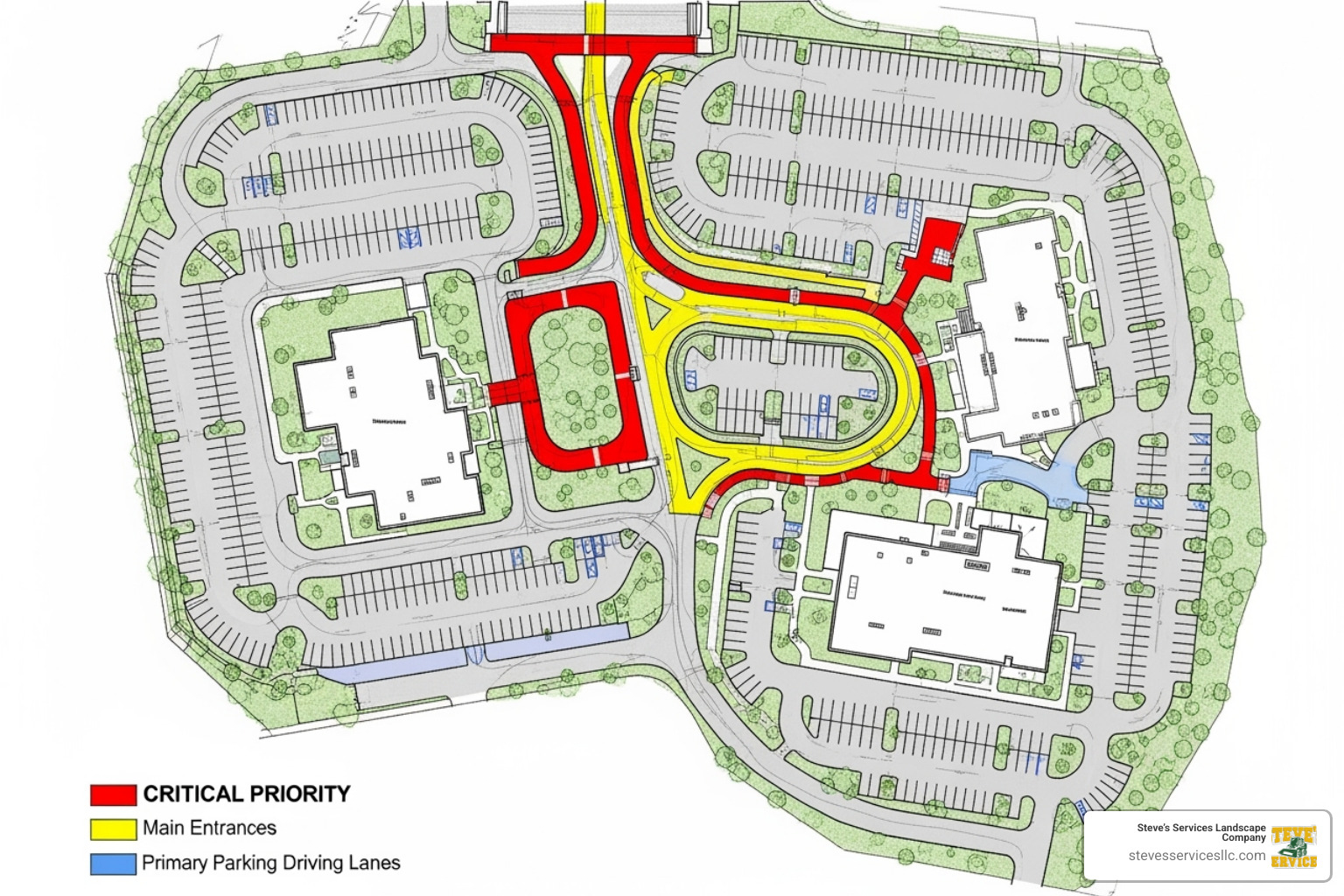
- Service Areas: The contract must clearly define all areas to be serviced, including parking lots, driveways, sidewalks, entrances, and emergency exits. For large properties, a detailed site map designating priority areas is essential.
- Service Triggers: This defines what constitutes a snow event. Most contracts use a 1- to 3-inch accumulation trigger, but some high-traffic properties require a “zero tolerance” policy for any snow or ice. The trigger should be explicitly stated.
- Response Time: This specifies how quickly your contractor will arrive after a trigger is met, typically ranging from 1 to 6 hours. This must align with your business’s operating hours.
- Type of Services: The contract should list all services, such as plowing for large areas, shoveling or snow blowing for walkways, and de-icing to melt ice. It should also specify if pre-treatment (anti-icing) is included.
- De-icing Materials: Specify what materials will be used (e.g., rock salt, calcium chloride) and whether they are included in the base price or billed separately.
- Exclusions: Clearly state what is not included, such as rooftop snow removal, to avoid surprises.
For comprehensive details on various snow management approaches, check out our Details on snow management services page.
Snow Piling, Banking, and Hauling
Your contract must address where the plowed snow will go.
- Designated Pile Locations: Identify and mark locations for snow piles in the contract to prevent blocked visibility, landscape damage, or access issues. A pre-season walkthrough is ideal for this.
- On-Site Banking vs. Off-Site Hauling: Snow banking (piling snow on-site) is cost-effective but can consume valuable space and cause refreeze issues as it melts. Snow hauling (trucking snow off-site) costs more but is essential for properties with limited space. The contract should clarify if hauling is included or an extra charge.
- Safety and Visibility: Large snow piles can create dangerous blind spots for drivers and pedestrians and may block emergency access. Proper placement is a critical safety issue.
Term, Insurance, and Liability Clauses
These clauses are the legal backbone of your contract.
- Contract Duration: Specify exact start and end dates (e.g., November 15 to April 1).
- Insurance Requirements: This is non-negotiable. The contractor must carry adequate General Liability ($1M+), Automobile Liability ($1M+), and Workers’ Compensation insurance. Request a Certificate of Insurance (COI) as proof.
- “Additional Insured” Status: Your business must be named as an “additional insured” on the contractor’s liability policies. This ensures their insurance provides primary coverage for claims related to their work.
- Indemnification and Hold Harmless: These clauses require the contractor to defend you and cover costs if their negligence leads to a claim.
- Communication and Damage Procedures: The contract should outline primary contacts, communication protocols during storms, and a clear process for reporting and repairing any property damage caused by the contractor.
For more comprehensive information on reducing winter-related risks, visit our page on Minimizing winter risks.
Understanding Pricing and Legal Considerations
For snow removal commercial contracts, understanding the financial and legal landscape is crucial for protecting your business. This knowledge helps you budget effectively and mitigate liability.
How Pricing for Commercial Snow Removal Contracts Works
The cost of commercial snow removal is driven by several key factors:
- Property Size and Complexity: A large retail center with intricate layouts costs more to service than a small, simple office lot.
- Type of Contract: Seasonal contracts offer fixed costs, while per-event contracts fluctuate with the weather. Full-service contracts have the highest upfront cost but include all services.
- Equipment and Labor: Properties requiring specialized equipment (skid steers, loaders) and larger crews will have higher costs. Labor often commands premium rates for overnight and weekend work during storms.
- Material Costs: The price of salt and de-icers can fluctuate based on market conditions.
- Local Market Rates: Costs vary by location, with denser urban areas often being more expensive.
Based on internet data (not Steve’s Services actual pricing), commercial snow removal can range from $50 to $500+ per event for per-push contracts, $2,000 to $25,000+ for seasonal agreements, and $3,000 to $30,000+ for comprehensive full-service contracts, depending on property size and complexity. For detailed pricing information, visit our commercial snow removal cost page. The BLS data on grounds maintenance worker pay provides context for labor costs in the industry.
Mitigating Risk: Insurance and Liability
Even with a professional contractor, property owners retain some liability. A solid contract is your primary tool for minimizing this exposure.
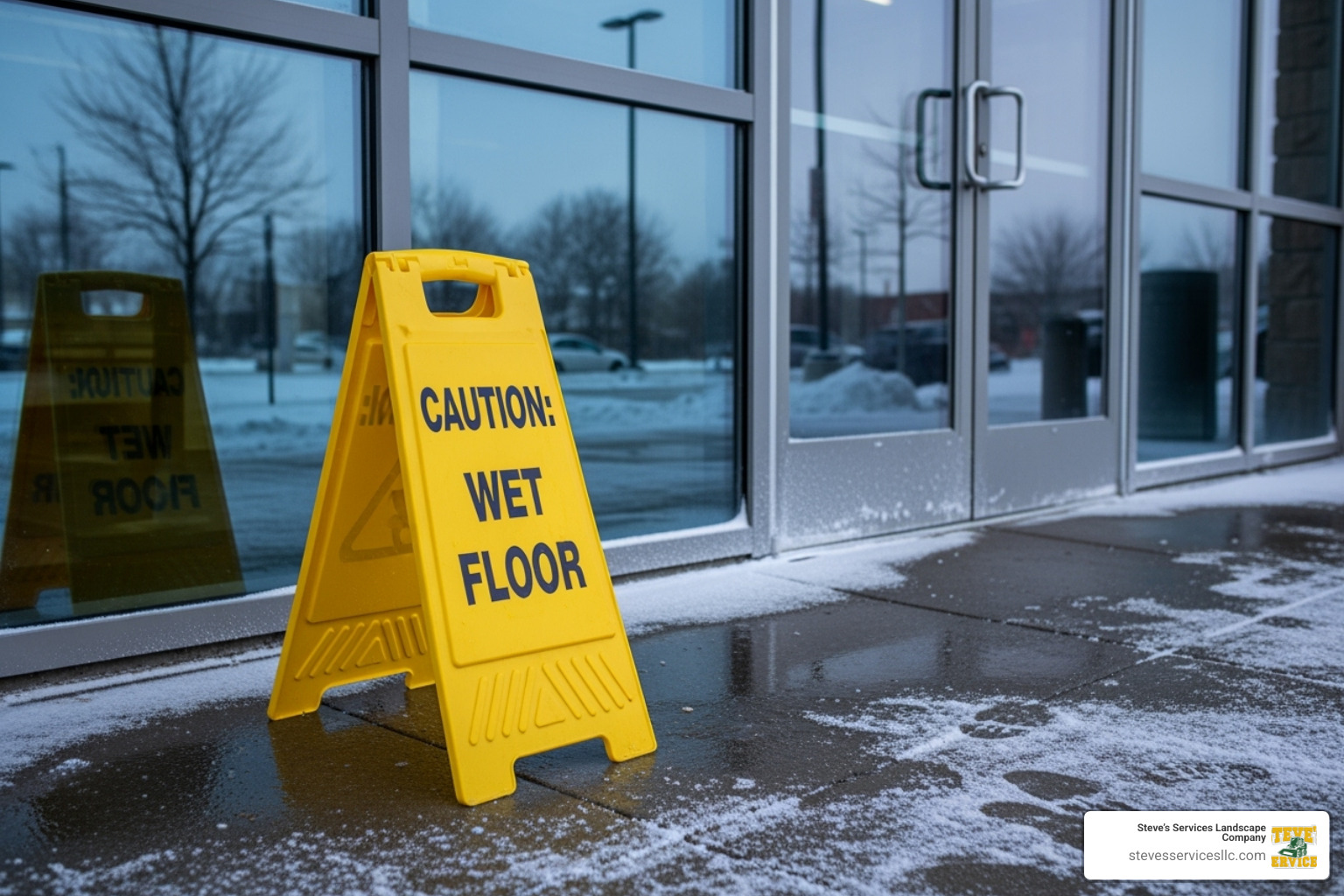
- Slip-and-Fall Lawsuits: These are the biggest winter threat, with claims potentially costing hundreds of thousands of dollars. Your contract is your first line of defense.
- Documentation: Your best defense is a thorough paper trail. Detailed service logs, photos, and weather reports prove you took reasonable care to keep your property safe.
- Insurance Verification: Your contract must require the provider to carry adequate General Liability ($1-2 million minimum), Auto Liability, and Workers’ Compensation insurance. Always get a current Certificate of Insurance.
- “Additional Insured” Status: Being named as an additional insured on your contractor’s policy is critical. It means their insurance responds first to claims arising from their work, protecting your own policy.
- Indemnification: A hold harmless clause transfers liability for the contractor’s negligence from you to them. This is vital but only effective if backed by proper insurance.
We strongly recommend having your snow removal commercial contracts reviewed by legal counsel to ensure all protective clauses are adequate.
Vetting and Managing Your Snow Removal Partner
An ironclad contract is useless if your contractor is unreliable. Vetting your snow removal partner is as important as negotiating the terms of the snow removal commercial contracts. We’ve built our reputation serving communities like Reading, Winchester, and Wakefield by understanding that we’re not just moving snow—we’re protecting your business.
How to Select a Qualified Contractor
Choosing the right contractor requires due diligence. Think of it as hiring a key employee for your winter operations.
- Ask Essential Questions: Inquire about their contract types, standard response times, and service triggers. This reveals their professionalism.
- Verify Insurance: Request current certificates for General Liability, Auto, and Workers’ Compensation. Crucially, confirm they will name your business as an “additional insured.”
- Assess Equipment: A professional will have a diverse, well-maintained fleet, including backup equipment for breakdowns during a storm.
- Check Safety Programs: Ask about operator training and safety protocols. A commitment to safety reduces your liability.
- Call References: Speak with current clients about the contractor’s reliability, communication, and problem-solving skills.
- Start Early: Begin your search in spring or early summer. Waiting until fall limits your options to less-desirable providers and terms.
For help finding reliable contractors in your area, check out our guide on reliable commercial snow removal companies.
Best Practices for Managing Your Commercial Snow Removal Contract
Effective contract management ensures you get the service you paid for.
- Pre-Season Walk-Through: Walk the property with your contractor before winter to identify hazards, document existing damage, and agree on snow pile locations.
- Create a Site Map: A detailed map showing priority zones, service areas, and obstacles ensures clarity for the crew, especially during a late-night storm.
- Establish Communication Protocols: Define primary contacts and how service notifications will be handled to prevent confusion.
- Require Post-Storm Reporting: Detailed reports on services performed and materials used are vital for billing verification and liability protection.
- Conduct a Post-Season Assessment: Inspect your property for damage with your contractor once the snow melts to resolve issues promptly and fairly.
The key is to treat your contractor as a business partner. A strong relationship benefits everyone when winter weather hits.
Frequently Asked Questions about Commercial Snow Removal Contracts
Here are answers to the most common questions property managers have about snow removal commercial contracts.
What is the most common trigger for service in a commercial snow removal contract?
The most common trigger is a specific snow accumulation depth, typically 2 inches. However, this can be adjusted from 1 to 3 inches based on your property’s needs. High-traffic facilities may require a 1-inch trigger or even a “zero tolerance” policy. Well-written contracts also include triggers for ice storms or freezing rain, which can create hazardous conditions with no snow accumulation.
What happens if a storm is much larger than anticipated?
How this is handled depends on your contract type:
- Per-Event Contracts: You are billed for each service visit. A large storm requiring multiple clearings will result in multiple charges.
- Seasonal Contracts: Many include a cap on total snowfall or service visits. If the cap is exceeded, services continue at a pre-agreed additional rate. This protects both parties from extreme weather.
- Full-Service Contracts: These are designed to cover all weather events, regardless of severity, for one fixed price. This offers the most budget certainty.
A good contract will have clear procedures for extreme weather events.
Can I be held liable if someone slips and falls even if I have a snow removal contractor?
Yes. Property owners have a “non-delegable duty” to maintain safe premises, meaning you cannot completely transfer your legal responsibility. If an injury occurs, both you and your contractor could be named in a lawsuit.
This is why your snow removal commercial contract is so critical. It should include:
- Strong indemnification clauses requiring the contractor to cover costs if their negligence caused the injury.
- A requirement that you be named as an “additional insured” on their liability policy, so their insurance responds first.
- Thorough documentation of all services performed. This paper trail is your best defense in a lawsuit.
A professional, properly insured contractor significantly reduces your risk, but it doesn’t eliminate it.
Conclusion
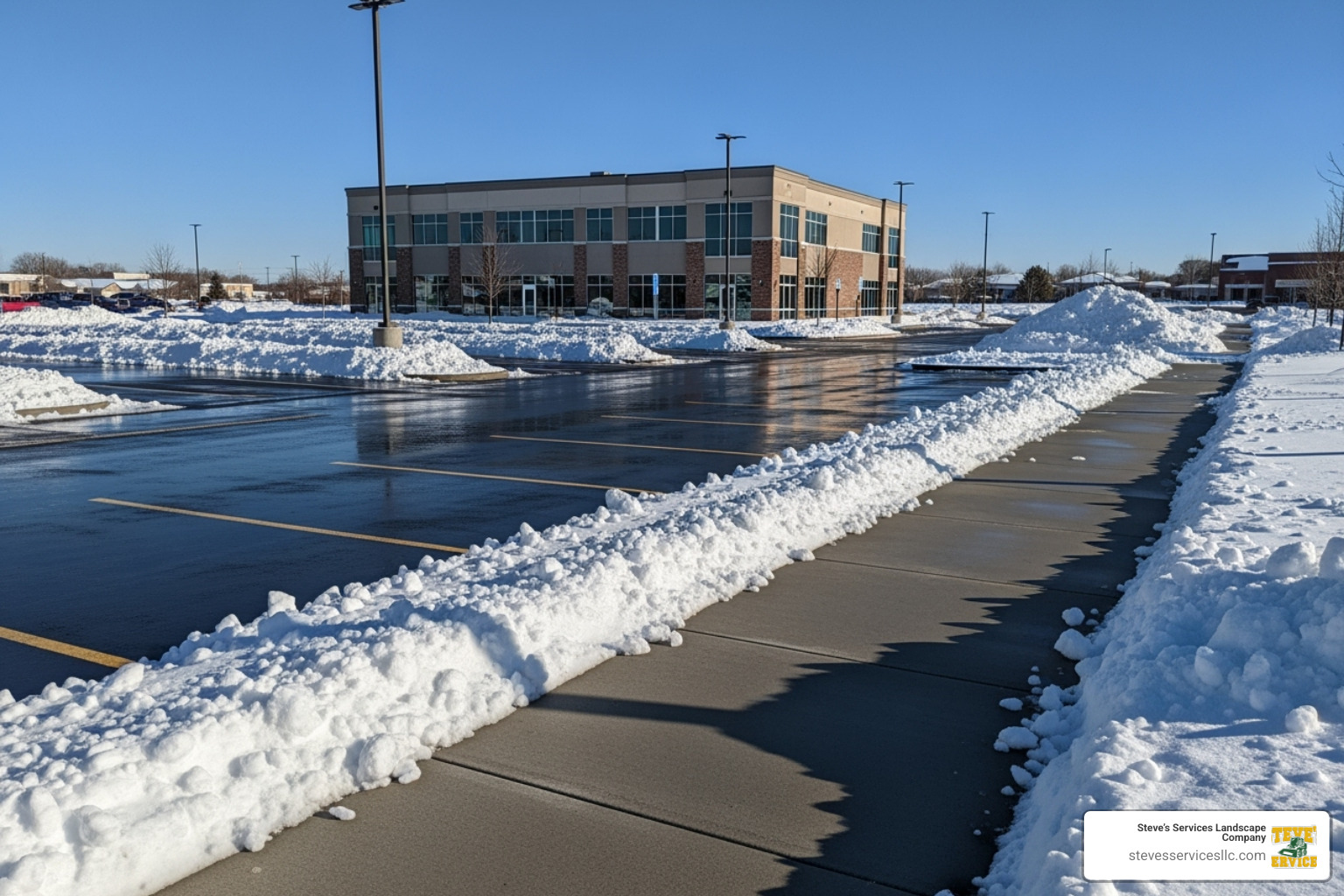
Winter doesn’t have to be a source of stress for your business. The difference between a winter disaster and smooth operations often comes down to one thing: contract clarity. A well-crafted snow removal commercial contract is your shield against liability, your guarantee of accessibility, and your path to predictable budgeting.
Risk mitigation starts with a clear agreement. Whether you choose a seasonal, per-event, or full-service plan, every detail—from service triggers to insurance requirements—must be defined. Business safety depends on a partner who understands your operational needs and provides the documentation to protect you long after the snow melts.
Choosing a professional partner means looking beyond the lowest bid to find a reliable company with proper insurance and clear communication. At Steve’s Services, we have built our reputation on being that partner for businesses throughout Everett, Malden, Reading, and surrounding communities.
Don’t wait for the first forecast of snow. The smartest property managers secure their partnerships in the spring and summer. For comprehensive winter services that protect your business, explore our professional snow management solutions. Preparation isn’t just smart—it’s everything.