What You Need to Know Before Starting a Lawn Install
A lawn install is one of the best investments you can make in your property. A healthy, green lawn boosts curb appeal, reduces erosion, and gives you usable outdoor space almost immediately.
Here is a quick overview of your main options:
| Method | Time to Establish | Best For |
|---|---|---|
| Sod | 30-60 days to root | Instant results, erosion control |
| Seed | 6-12 weeks to germinate | Budget-conscious, large areas |
| Hydroseeding | 4-8 weeks | Large or sloped areas |
| Artificial Turf | Immediate | Low-maintenance, water savings |
The right choice depends on your budget, timeline, soil conditions, sun exposure, and how much foot traffic your lawn will see.
Getting it right from the start matters. As one industry expert puts it: “A lawn is no stronger than its foundation.” Poor soil prep, wrong grass selection, or bad timing can turn a promising project into an expensive redo.
This guide walks you through everything – from choosing your lawn type and preparing the soil, to installation, watering schedules, and long-term care.
I’m Steve Sylva, owner of Steve’s Services, and with over 25 years of hands-on experience managing lawn install projects across Massachusetts, I’ve seen what separates a thriving lawn from a failed one. Whether you’re starting from bare dirt or replacing a damaged lawn, the principles in this guide will help you get it right the first time.
Lawn install word list:
Choosing the Right Method for Your Lawn Install
When we begin a lawn install project in communities like Everett or Malden, the first question homeowners ask is: “Which method is best for my yard?” There isn’t a one-size-fits-all answer. The choice between sod, seed, hydroseeding, and artificial turf depends on your goals for speed, durability, and maintenance.
Selecting Grass for the Massachusetts Climate
In Massachusetts, we live in a “cool-season” grass zone. This means we need turf that can survive frigid winters and humid summers. Choosing the right species is critical for long-term lawn establishment.
- Kentucky Bluegrass: The gold standard for a lush, dark green “show” lawn. it spreads via underground stems (rhizomes), making it great for repairing itself after heavy foot traffic. However, it loves the sun and requires more water and fertilizer than other types.
- Tall Fescue: This is a hardy, deep-rooted grass that handles heat and drought better than Bluegrass. It is excellent for “active” backyards where kids and pets play.
- Fine Fescues: These are the “shade specialists.” If you have a yard with mature trees in Melrose or Reading, a mix containing fine fescue is often the only way to keep grass growing where the sun doesn’t reach.
Benefits of Professional Sodding
If you want a “magazine-ready” yard by the weekend, sod installation services are the way to go. Sod is essentially a mature carpet of grass that has been grown for 12-18 months at a specialized farm.
The primary benefit is instant gratification. Beyond the looks, sod provides immediate erosion control—which is vital if your property has a slope. It also acts as a natural weed barrier; because the root system is already tight and established, it’s very difficult for weed seeds to find a place to sprout. While the upfront cost is higher than seeding, you save significantly on the labor and water required to baby a seeded lawn through its vulnerable first two months.
| Feature | Sod | Seed | Artificial Turf |
|---|---|---|---|
| Upfront Cost | High | Low | Very High |
| Establishment Time | 2-3 weeks | 6-12 months | Immediate |
| Durability | High (Instant) | Low (until mature) | Maximum |
| Maintenance | Moderate | High (initially) | Minimal |
Site Preparation: The Foundation of Success
We cannot stress this enough: you can buy the most expensive sod in the world, but if you lay it over bad soil, it will fail. In our experience across the North Shore, most failed lawn install projects happen because the homeowner skipped the prep work.
Soil Testing and Nutrient Density
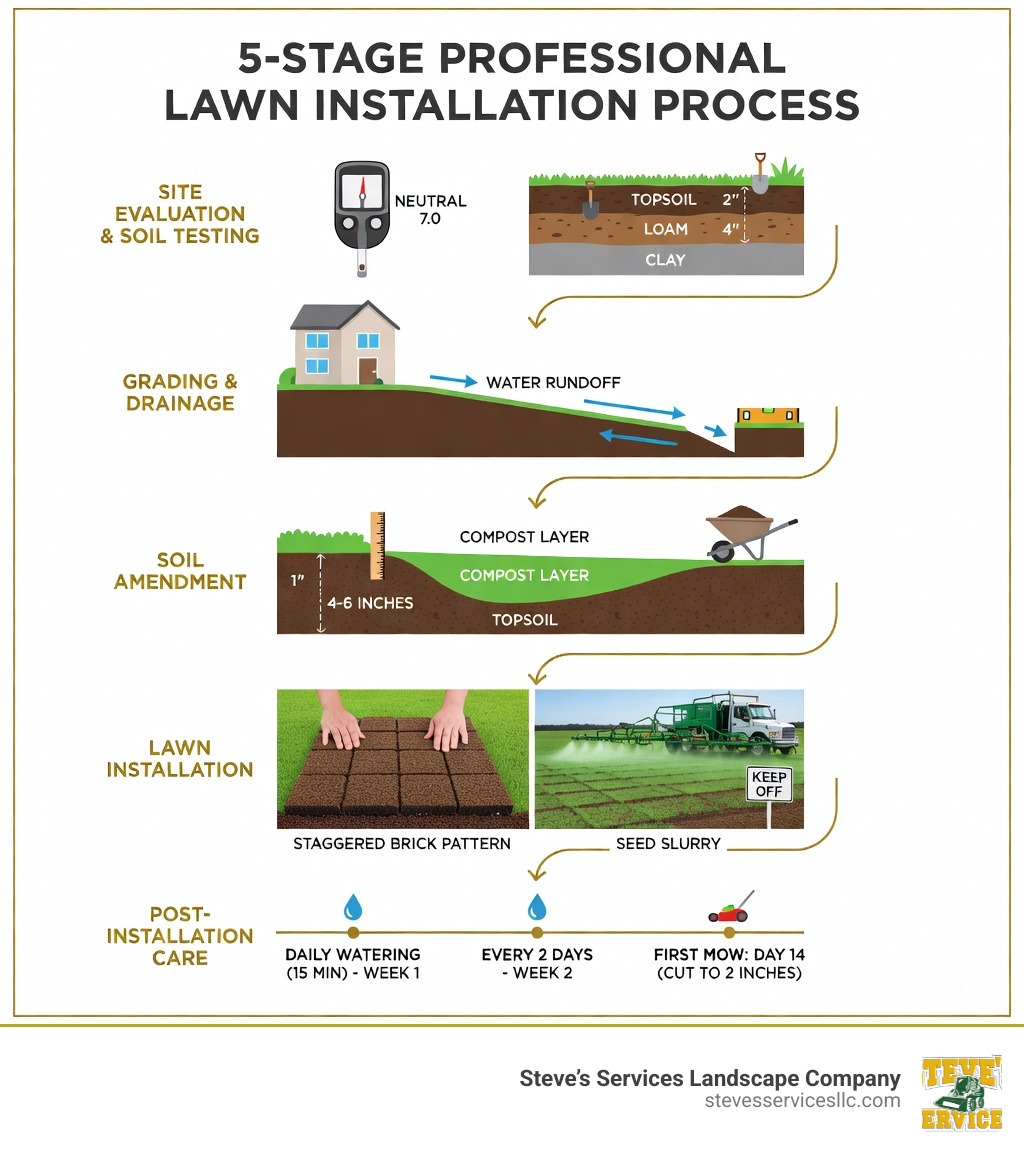
Before we move a single shovelful of dirt, we recommend soil testing. A laboratory test tells us the soil’s pH level and nutrient density. Most turfgrasses prefer a slightly acidic to neutral pH (6.0 to 7.0). If your soil is too acidic—a common issue in Massachusetts—we may need to incorporate lime to balance it out.
Grading and Drainage Requirements
Proper new lawn installation requires a “rough grade” and a “finish grade.” The goal is to ensure water flows away from your home’s foundation and doesn’t pool in the middle of the yard.
- The Slope: We aim for a 1-4% slope (about a 1 to 4-foot drop per 100 feet).
- Drainage: If your yard in Medford or Wakefield is naturally “soggy,” we may need to install drainage tiles or French drains before the grass goes down.
- Clearing Debris: All rocks larger than a golf ball, sticks, and old vegetation must be removed. Leaving old “clods” of grass creates air pockets that will kill new roots.
Soil Amendments and Topsoil
Most “native” soil in our area is either too sandy or too heavy with clay. To give your new lawn the best start, we often bring in high-quality sandy loam topsoil. We recommend a minimum of 4 to 6 inches of firmed topsoil for a successful lawn install.
We often incorporate organic matter or compost to improve moisture retention. Before the grass is laid or sprayed, we apply a starter fertilizer rich in phosphorus to encourage rapid root development. You can see the transformation of these prep steps in our new lawn installation photos.
The Professional Lawn Install Process
Once the “foundation” is ready, the actual installation begins. This is a high-speed process because sod is a living, breathing plant. Once it is cut at the farm, the clock starts ticking; it must be installed within 24 hours (and even faster in the summer heat).
Professional Sod Lawn Install Steps
When we install a new lawn, we follow a strict protocol to ensure every piece of turf survives.
- Measuring: We calculate the square footage and always add a 5-10% buffer for “waste.” This accounts for the odd angles and curves where sod must be trimmed.
- The Brick Pattern: We lay sod rolls in a staggered, brick-like pattern. This prevents long, continuous seams where water could wash away the soil or where the edges might dry out and curl.
- Tight Seams: Each piece is pushed tightly against the next—no gaps and no overlaps.
- Rolling: Once the sod is down, we use a weighted lawn roller. This is a critical step to eliminate air pockets and ensure the roots have 100% contact with the soil.
- Trimming: We use sharp sod knives to trim around walkways, flower beds, and sprinkler heads. A professional finish means the soil level is roughly 1/2 inch below the level of your paved surfaces so the grass sits flush.
Hydroseeding and Seed Lawn Install Techniques
For very large properties or steep embankments where sod might be cost-prohibitive, hydroseeding is an excellent alternative.
We spray a “slurry” mixture of seed, water, fertilizer, and green cellulose fiber mulch. This mulch acts like a wet blanket, keeping the seeds warm and moist. It sticks to the ground much better than traditional hand-seeding, which is why it’s the preferred method for erosion control on slopes. If we are doing a traditional broadcast seed install, we often use straw mulching to protect the seeds from birds and the baking sun.
Post-Installation Care and Maintenance
The first 30 days are the “make or break” period for your lawn install. Even a perfect installation will die in 48 hours if it isn’t watered correctly.
Critical Watering Schedules
New sod needs to stay as moist as a wrung-out sponge. We recommend new lawn maintenance that focuses on frequent, light watering rather than one heavy soaking.
- Weeks 1-2: Water every single day. In the heat of a Massachusetts summer, you may need to water 2-3 times a day (early morning is best). The goal is to keep the sod and the top inch of soil beneath it consistently wet.
- Weeks 3-4: Gradually transition to watering every other day. This encourages the roots to “stretch” deeper into the soil in search of moisture.
- Monitoring: You can check for root establishment by gently trying to lift a corner of the sod. If you feel resistance, the roots are doing their job!
For the best results, many of our clients in Saugus and Stoneham choose to install irrigation systems simultaneously with their lawn install to take the guesswork out of watering.
First Mowing and Long-Term Health
One of the most common mistakes is mowing too early or too short. You should wait until the grass reaches about 3.5 to 4 inches in height—usually around day 14 for sod or several weeks for seed.
- The One-Third Rule: Never remove more than one-third of the grass blade in a single mowing.
- Sharp Blades: Ensure your mower blades are professionally sharpened. Dull blades “tear” the grass, which creates a wound that invites disease.
- Traffic: Keep pets, kids, and heavy equipment off the new lawn for at least 3-4 weeks.
To keep that deep green color year-round, you’ll want to look into landscape maintenance plans that include scheduled fertilization and weed control.
Investment and Budgeting for a New Lawn
A new lawn is a perfect investment for your home. Not only does it make your property the envy of the neighborhood, but it also increases the actual resale value of your house. However, it is important to budget for more than just the grass itself.
Average Costs and Pricing Factors
Note: The following figures are average costs based on general internet data and do not represent actual pricing for Steve’s Services.
When calculating your lawn install budget, consider these variables:
- Site Accessibility: Can a forklift or Bobcat get into your backyard? If we have to move materials by hand or wheelbarrow, labor costs increase.
- Old Turf Removal: Stripping away an old, weed-choked lawn requires a sod cutter and disposal fees.
- Grading: Significant “cut and fill” work to fix drainage issues adds to the timeline.
- Topsoil: Quality topsoil delivery is usually charged by the cubic yard.
Estimated Price Ranges
To give you a rough idea of the market, here are some average price ranges based on internet data:
- Sod Pallet Installed: A standard pallet covers about 450 square feet. Depending on the grass type (Bermuda vs. Zoysia) and labor, costs can range from $650 to $2,100+ per pallet installed.
- Topsoil Delivery & Installation: Quality loam can range from $150 to $450+ per cubic yard depending on the amount of spreading and leveling required.
- Artificial Turf: Because of the intensive base preparation (excavation, crushed stone, and specialized infill), artificial turf typically ranges from $8 to $25+ per square foot.
For a precise quote tailored to your specific yard in Woburn or Danvers, you can check our lawn installation service details.
Frequently Asked Questions about Lawn Installation
When is the best time of year for a lawn install in Massachusetts?
The absolute best times are late summer/early fall (late August through September) and early spring. In the fall, the soil is warm, which encourages fast root growth, but the air is cool, which reduces stress on the plant. Spring is also great, though you have to compete with more weed pressure.
How long does it take for new sod to root?
Typically, new sod will reach maturity and be fully rooted in 30 to 60 days. However, it should be “knitted” to the soil well enough to withstand light activity within 14 to 21 days.
Should I choose sod or hydroseeding for my property?
If you have a standard residential lot and want an “instant” result with fewer weeds, sod is almost always the better choice. If you are trying to cover an acre of land or a very steep hill on a tighter budget, hydroseeding is a fantastic professional alternative.
Conclusion
At Steve’s Services Landscape Company, we believe that every homeowner deserves a lawn they can be proud of. Based in Everett, MA, we have spent over two decades perfecting the art of the lawn install. We don’t just “lay grass”; we build a biological system designed to thrive in our unique Massachusetts climate.
From the initial soil test to the first mow, our team provides personalized solutions and exceptional customer service to residents in Burlington, Danvers, Lynnfield, and across the North Shore.
Are you ready to transform your “dirt” into a dream lawn? Start your project with our new lawn install experts today and let us handle the heavy lifting!