Water Efficient Sprinkler System: 7 Powerful Ways to Save 2025
Why Water Efficient Sprinkler Systems Are Essential Today
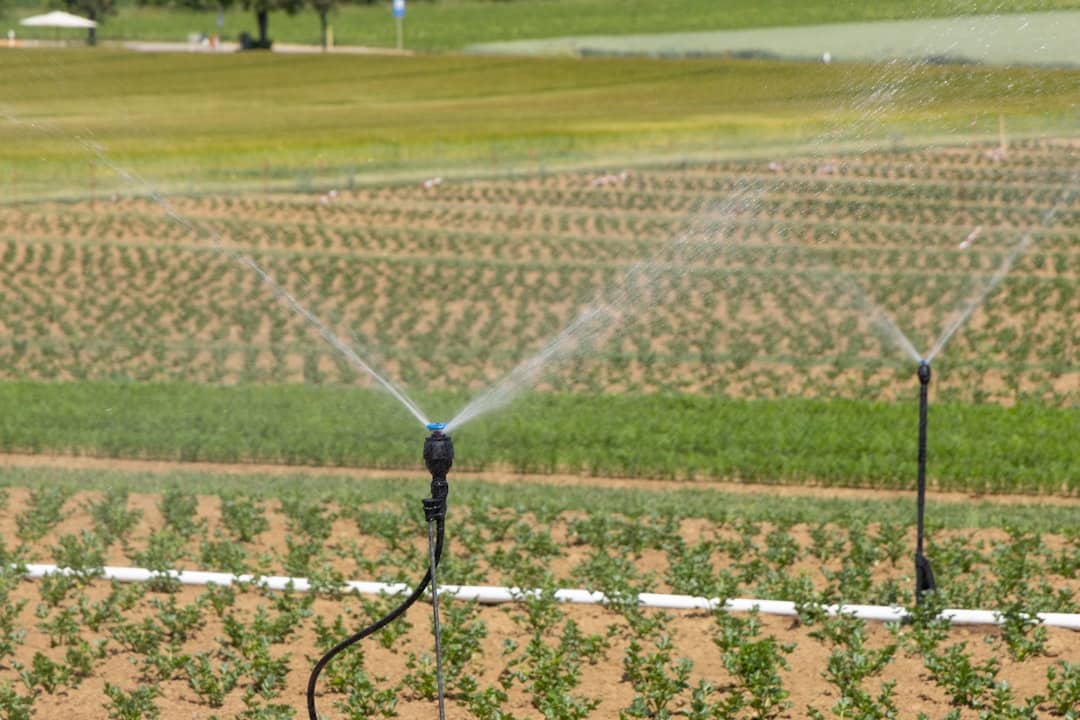
A water efficient sprinkler system uses advanced technology to reduce water waste while maintaining healthy landscapes. Key features include:
- Rotary nozzles that deliver large droplets at slower rates for better soil absorption
- Smart controllers that adjust watering based on weather and soil conditions
- Rain sensors that automatically shut off during wet weather
- Pressure regulation that prevents misting and ensures uniform coverage
- Drip irrigation zones for targeted watering of plants and garden beds
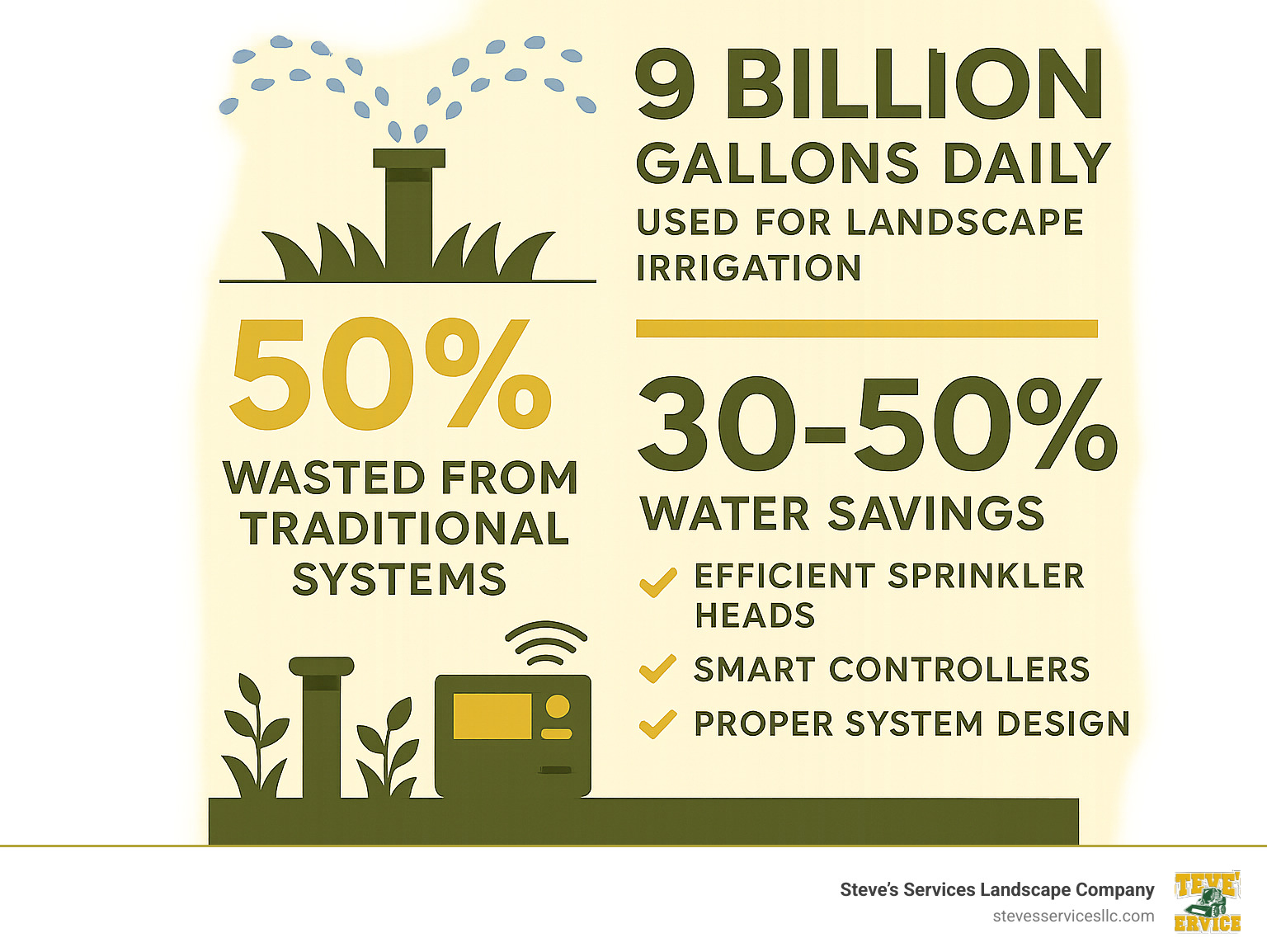
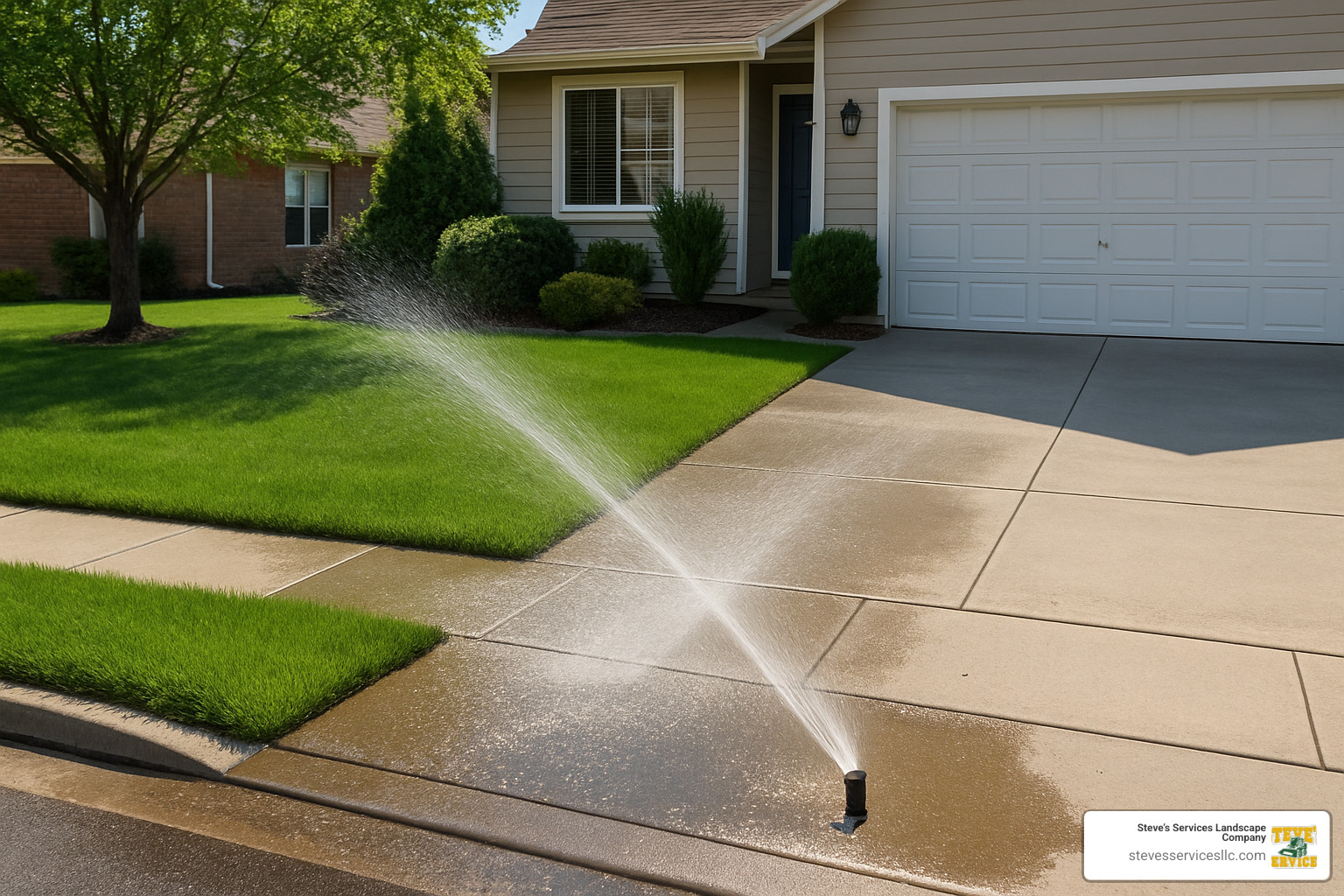
The numbers are staggering. Landscape irrigation uses about 9 billion gallons of water per day in the U.S., and roughly half of that goes to waste through evaporation, runoff, and poor system design. Traditional spray heads often apply water faster than soil can absorb it, leading to puddles on sidewalks instead of hydration for your lawn.
Water efficient systems solve this problem by applying water slowly and precisely. Multi-stream rotational sprinkler heads can reduce precipitation rates from over 2 inches per hour to just 1 inch per hour, while improving water distribution uniformity by 45%. This means less runoff, healthier plants, and dramatically lower water bills.
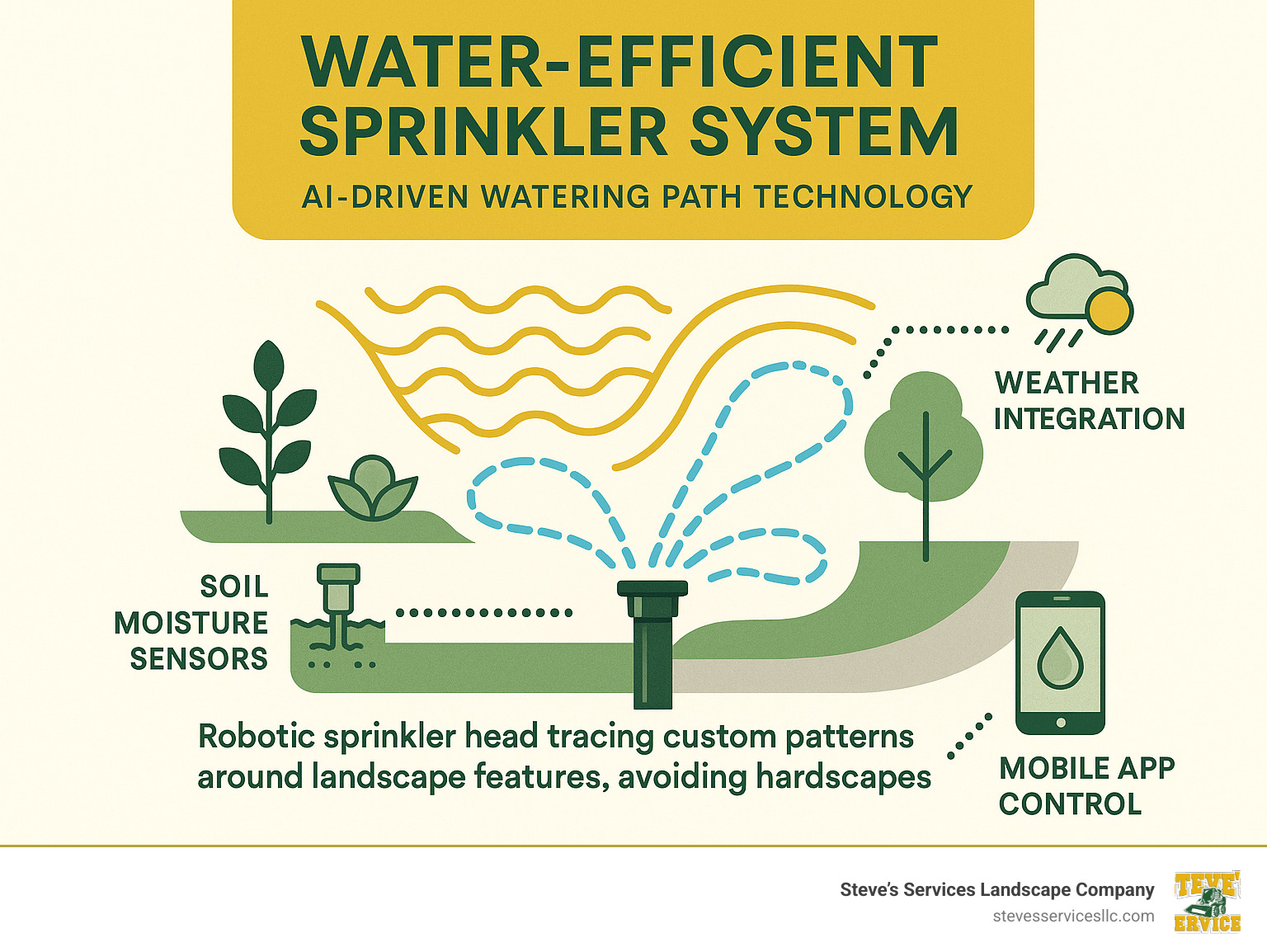
Modern technology takes efficiency even further. AI-powered systems can digitally map your landscape and save about half the water of traditional sprinklers. Smart controllers automatically adjust schedules based on local weather forecasts, while soil moisture sensors prevent overwatering by measuring actual ground conditions.
As Steve Sylva, owner of Steve’s Services with over 25 years of landscape experience, I’ve helped countless Massachusetts homeowners upgrade to water efficient sprinkler systems that cut their outdoor water use by 30-50%. Professional installation ensures these systems deliver maximum savings while keeping your landscape healthy and beautiful year-round.
Water efficient sprinkler system terms to remember:
– average cost to install sprinkler system per square foot
– how much does a water sprinkler system cost
Why Water Efficiency Matters in Landscape Irrigation
When you think about water conservation, your water efficient sprinkler system might not be the first thing that comes to mind. But outdoor irrigation has a bigger impact on our environment and communities than most people realize.
Every drop that hits the pavement is wasted. When traditional sprinklers spray water faster than your soil can drink it up, the excess runs into storm drains, carrying fertilizers and lawn chemicals with it. This runoff doesn’t just waste water—it pollutes our local waterways and creates problems for entire ecosystems.
In Massachusetts communities like Everett, Medford, and Winchester where we work with homeowners daily, managing stormwater runoff is a real challenge. Every property that reduces runoff through efficient irrigation helps the whole community.
Drought resilience isn’t just a nice-to-have anymore. Even here in New England, summer water restrictions have become the norm rather than the exception. When your town announces outdoor watering limits, properties with efficient irrigation systems keep their landscapes healthy while neighbors watch their lawns turn brown.
The EPA has found that 50% of outdoor water use goes completely to waste through evaporation, wind drift, and plain old overwatering. When you multiply this waste across thousands of properties in communities like Reading, Woburn, and Stoneham, we’re talking about millions of gallons that could be saved.
Your water use has a hidden carbon footprint too. All that water gets processed, pumped, and treated—processes that consume energy and create greenhouse gas emissions. When you reduce outdoor water consumption with efficient irrigation, you’re also reducing your environmental impact in ways you might not see on your monthly bill.
Healthy soil loves consistent, gentle watering. Overwatering doesn’t just waste resources—it actually hurts your landscape. Too much water too fast can damage soil structure, promote fungal diseases, and stress your plants. A properly designed efficient system delivers water at the perfect rate for soil absorption, encouraging deeper root growth and stronger, healthier plants.
For comprehensive information on sustainable irrigation practices, explore Latest research on efficient irrigation to understand how modern techniques can transform your landscape’s water use.
Choosing the Right Water Efficient Sprinkler System
Finding the best water efficient sprinkler system for your yard starts with matching technology to site conditionsnothing more, nothing less.
| System Type | Precipitation Rate | Typical Water Savings | Best For | Install Difficulty |
|---|---|---|---|---|
| Traditional Spray | 2+ in/hr | Baseline | Small turf | Low |
| Rotary Nozzles | 0.51 in/hr | ~30% | Mediumlarge turf | Moderate |
| MultiStream Rotors | 1 in/hr | 45% better uniformity | Large lawns | Moderate |
| Drip Irrigation | Variable | 2050% | Beds, shrubs, trees | High |
| Smart Systems | Varies | Up to 50% | Whole property | Pro only |
Rotary nozzles are the easiest upgrade for most Massachusetts lawns. They swap into existing spray bodies, throw larger droplets that resist wind, and slow the flow so compact soils can absorb the water.
Drip lines shine where plants grow close togetherthink foundation shrubs, vegetable beds, or perennial gardens. Because emitters deliver water right to the root zone, evaporation is almost zero.
Pressure regulation is a quiet hero. Heads that selfregulate avoid the fine mist that literally blows money away.
How a Water Efficient Sprinkler System Cuts Use by 3050%
- Larger droplets reach the ground instead of drifting.
- Lower precipitation matches your soils infiltration rate (often 0.5 in/hr in our clay soils).
- Uniform coverage eliminates the urge to overwater brown corners.
Professional Design & Installation
Proper design matters more than flashy hardware. Our team at Steves Services groups plants by water need (hydrozoning), sets headtohead coverage for even distribution, and installs required backflow protection. Explore the details in our Irrigation System Installation guide.
Smart Controllers, Sensors & AI Mapping
The brains of a modern water efficient sprinkler system live in the controller, not the sprinkler head. Todays devices pull live weather data, listen to buried moisture probes, and adjust run times automatically.
- Weatherbased controllers skip watering when rain is forecast or temperatures drop.
- Soil moisture sensors stop irrigation the moment the ground is already wet.
- Rain shutoff devices alone can cut annual use by nearly 40%.
Integrating Sensors
Adding a simple rain sensor or flow meter turns a timer into an intelligent system. Calibrate the sensor (usually 0.751 in of rain) and the controller pauses watering for several daysno more sprinklers running during storms.
Future Tech
- AI zone shaping creates custom spray patterns that hug plant beds and skip pavement.
- Singlehead robotics promise complete lawn coverage from one programmable nozzle, reducing trenching by up to 70%.
Want to see it in action? Test layouts with Design Your System with AI.
Costs, Savings, Incentives & Environmental Payback
Upgrading to a water efficient sprinkler system does cost moneybut it quickly pays you back.
- Retrofit heads: $800$2,400 for most homes (internet averages; highend projects can top $7,200).
- Full smart systems: $2,000$7,000 on average, with complex estates exceeding $21,000 (again, broad internet datanot Steves Services pricing).
Typical Massachusetts households trim outdoor use by 3050%, often saving $300$500 each year in water/sewer fees. At that pace, many systems hit breakeven in 37 years.
Utility rebates sweeten the deal: many local providers pay $35 per highefficiency head or $50300 for controllers. Check requirements before you buy; we help clients file the paperwork.
Measuring ROI Quickly
- Lower water bills start the day the controller is programmed.
- Healthier turf needs fewer chemical treatments.
- Efficient systems sail through drought restrictions, preventing fines and brown lawns.
For more ways to save, see our guide on Irrigation System Upgrades: How to Save Money and Improve Efficiency with Steve’s Services.
Best Practices for Operation & Maintenance
Even the smartest water efficient sprinkler system needs a little TLC.
- Seasonal schedules: Increase run time gradually in spring, peak in midsummer, taper in fall.
- Monthly walkthroughs: Look for tilted heads, clogged nozzles, or soggy spots that signal leaks.
- Winterization: In Massachusetts, blowing out lines before the first hard freeze is mandatory.
- Soil care: Annual aeration and compost topdressing help water soak in instead of running off.
Efficiency Killers to Avoid
- Mixing nozzle types in one zone.
- Highpressure misting that never reaches turf.
- Overriding rain sensors or forgetting seasonal adjustments.
Need help solving an issue? Visit our Irrigation System Troubleshooting resource.
Frequently Asked Questions about Water-Smart Irrigation
When homeowners consider upgrading to a water efficient sprinkler system, they naturally have questions about the real-world benefits and practical aspects of making the switch. Here are the most common questions we hear from Massachusetts homeowners, along with honest answers based on our 25+ years of experience in the landscape industry.
How much water and money will I really save?
The savings from a water efficient sprinkler system are substantial, but the exact amount depends on several factors including your current system’s condition, local climate, and how well the new system is installed and maintained.
Most homeowners see water usage reductions of 30-50% after upgrading to high-efficiency irrigation. For context, an average Massachusetts home using 100,000 gallons annually for outdoor watering would save 40,000 gallons per year with a 40% reduction. At typical combined water and sewer rates of $8-12 per 1,000 gallons in our service area, this translates to $320-480 in annual savings.
Over a system’s 15-20 year lifespan, these savings really add up. Total water cost savings can reach $6,000-9,600 or more, and that’s not counting the value of healthier plants, reduced maintenance, and avoided drought fines during water restrictions.
Are smart controllers difficult to use?
This is probably the question we hear most often, and I understand why. Smart controllers look complicated, but they’re actually easier to use than traditional timers once you understand the basics.
Think of it this way: old-fashioned controllers require you to be a weather forecaster, soil scientist, and plant expert all rolled into one. Smart controllers handle all that complexity automatically.
Most systems work by having you answer simple questions about each zone: What type of plants? What kind of soil? Full sun or shade? The controller then creates watering schedules based on local weather conditions and adjusts them automatically as conditions change.
The smartphone apps make everything more convenient, not more complicated. Most of our clients find this much easier than walking out to a control box and trying to remember which buttons to press. We always include setup and training with our installations, so you’ll be comfortable with your new system before we leave.
Can I get rebates in my area?
Yes, many Massachusetts communities offer rebates for water-efficient irrigation, though programs vary significantly by location. The rebate landscape changes frequently as utilities recognize the value of water conservation.
Common rebate types include per-head rebates of $3-5 for high-efficiency sprinkler nozzles, which can add up quickly if you’re replacing many heads. Some utilities offer controller rebates of $50-200 for smart irrigation controllers, and larger system rebates for comprehensive efficiency upgrades.
The catch is that rebate programs often require pre-approval or specific product certifications, so it’s important to check requirements before purchasing equipment. We help our clients steer these programs and can often recommend products that qualify for local rebates.
Contact your local water utility to learn about current programs in your area. In communities like Medford, Winchester, and Reading, we’ve helped many clients take advantage of available rebates to offset upgrade costs.
Conclusion
Choosing a water efficient sprinkler system isn’t just about upgrading your irrigation—it’s about making a smart investment that pays dividends for years to come. You’re not only saving money on water bills but also doing your part to protect our environment while keeping your landscape healthier than ever.
The numbers speak for themselves. When you can cut your outdoor water use by 30-50% while maintaining a beautiful lawn and garden, you’re looking at real savings that add up month after month. Those thousands of gallons you’ll save each year translate into lower utility bills and a smaller environmental footprint—something we can all feel good about.
Your landscape will actually thank you for the upgrade. Plants thrive when they receive water at the right rate and at the right time. No more overwatering that creates soggy spots and stressed plants. No more dry patches from inefficient coverage. Just healthy, vibrant landscapes that look great while using less water.
Professional installation makes all the difference. You might be tempted to tackle this as a weekend project, but proper system design requires understanding soil types, water pressure, plant needs, and local regulations. That’s where our 25 years of experience serving Massachusetts communities really matters.
At Steve’s Services, we’ve helped countless homeowners in Everett, Medford, Winchester, Woburn, and surrounding communities transform their irrigation systems. We know the local soil conditions, understand Massachusetts water regulations, and have seen how the right system can completely change a property’s water usage.
The technology keeps getting better. Smart controllers that adjust for weather, sensors that prevent waste, and AI mapping that creates custom watering patterns—these aren’t science fiction anymore. They’re proven technologies that are making irrigation more efficient every day.
Your investment protects your property value while demonstrating environmental responsibility. Buyers increasingly appreciate homes with efficient, well-designed irrigation systems. You’re not just saving money today—you’re adding value for tomorrow.
The future of landscape irrigation is efficient, sustainable, and surprisingly affordable when you factor in rebates and long-term savings. Every gallon you save helps preserve water resources for our communities and future generations.
Ready to see how much you could save with a water efficient sprinkler system? We’d love to show you what’s possible for your property. Visit our comprehensive resource at More info about irrigation services to explore all the ways we can help transform your landscape irrigation.
Contact Steve’s Services today to discuss how we can design and install a system that saves water, reduces costs, and keeps your Massachusetts landscape looking its absolute best. Your wallet and your plants will thank you.