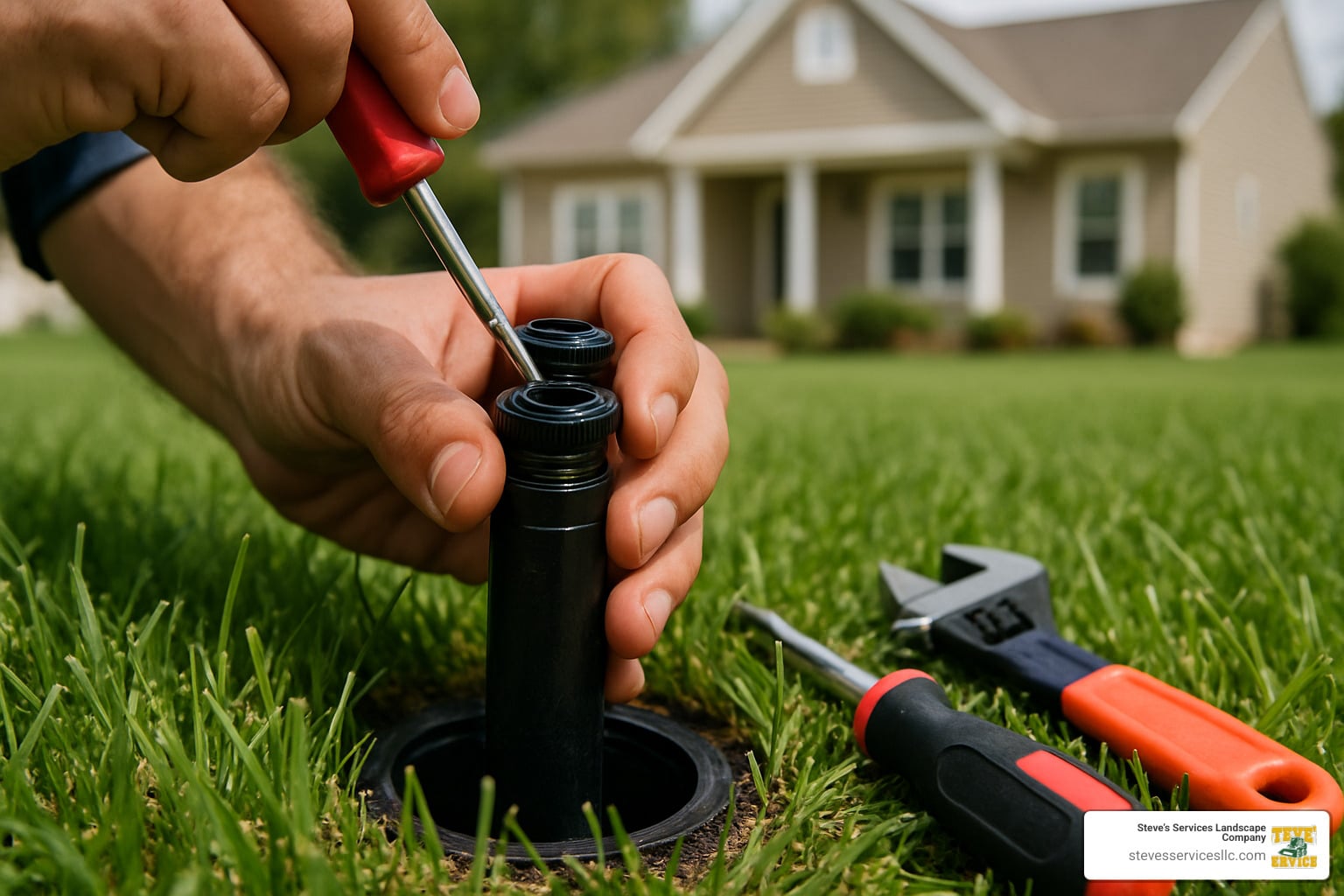
Water Sprinkler Repair Cost 2025: Top 5 Essential Positive Facts
Why Water Sprinkler Repair Cost Varies So Much in Massachusetts
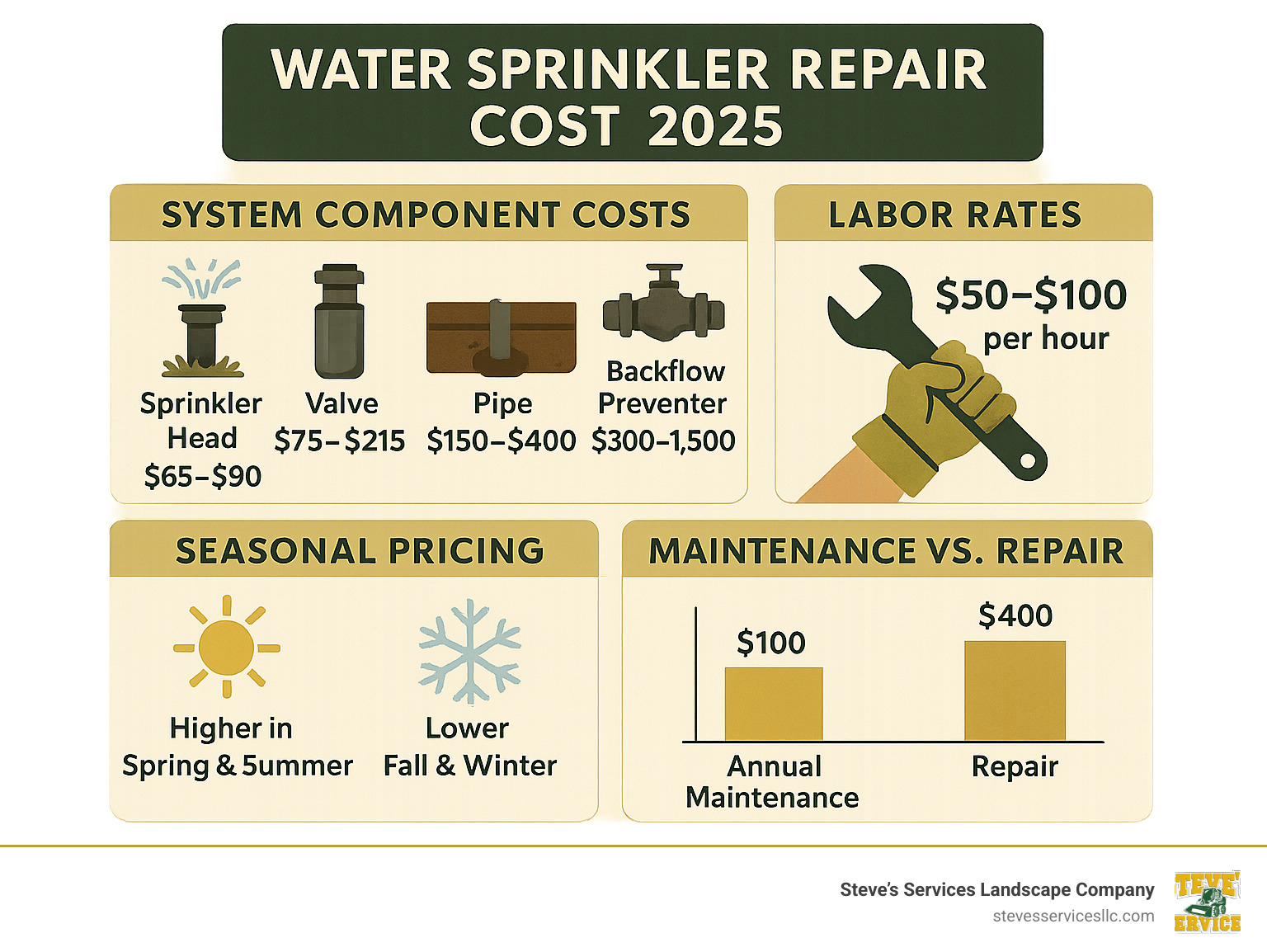
Water sprinkler repair cost can catch homeowners off guard, but understanding the basics helps you budget smart. Here’s what you need to know upfront:
Quick Cost Overview:
- National Average: $250 (range: $130-$360)
- Simple Head Replacement: $65-$90 per head
- Valve Repairs: $75-$215 each
- Pipe Breaks: $150-$400 depending on depth
- Backflow Preventer: $280-$1,550 (the big-ticket item)
- Emergency Service: Add $150-$300 to any repair
Note: These are average costs based on internet data and not actual costs for Steve’s Services.
Your final bill depends on several key factors: system type (above-ground vs. buried), component age, soil conditions, and timing. Spring and summer repairs cost more due to high demand, while winter scheduling often saves money.
Most sprinkler systems last 15-25 years with proper maintenance, and catching small issues early prevents expensive emergencies. A $120 annual tune-up beats a $500 pipe replacement every time.
As Steve Sylva, owner of Steve’s Services with over 25 years of landscape experience in Massachusetts, I’ve seen how water sprinkler repair cost surprises homeowners who skip regular maintenance. Understanding these costs upfront helps you make smart decisions about repair versus replacement for your property.
Must-know water sprinkler repair cost terms:
- average cost to install sprinkler system per square foot
- how much does a water sprinkler system cost
- water efficient sprinkler system
What Determines Your Water Sprinkler Repair Cost in 2025?
Ever wonder why your neighbor paid $150 for a sprinkler fix while yours cost $400? Water sprinkler repair cost depends on several key factors that can dramatically swing your final bill.
The biggest cost driver is your system type. Above-ground systems are like working on a car with the hood up – everything’s visible and accessible. In-ground systems require excavation first, then fixing, then restoration.
Size and complexity matter significantly. A simple 3-zone system behaves very differently than a sprawling 10-zone setup with separate areas for flower beds, lawn, and vegetable gardens. More zones mean more valves, more pipe, and more potential problems.
Part prices create sticker shock. Basic sprinkler heads cost $2 online, but premium gear-driven models can hit $50 each. The difference is lifespan and performance.
Labor rates in Massachusetts typically run $55-$120 per hour for regular service. Emergency fees can push that to $150-$300 per hour for after-hours calls.
Soil access affects every buried repair. Sandy soil digs easily, while Massachusetts clay can turn a 30-minute valve replacement into a 2-hour excavation project.
Seasonality creates the biggest price swings. Spring startup season hits everyone at once, driving up demand and prices. Smart homeowners schedule non-urgent repairs for fall and winter when contractors offer better rates.
According to scientific research on efficient watering, well-maintained systems not only cost less to repair but use significantly less water.
Note: Cost ranges mentioned are average costs based on internet data and not actual costs for Steve’s Services.
Above-Ground vs. In-Ground Systems
Above-ground systems are the repair-friendly option. When something breaks, you can see it immediately and reach it with basic tools. Most above-ground repairs run $80-$240 because labor stays simple and accessibility never becomes an issue.
In-ground systems cost more to fix because they’re designed to be invisible. That beautiful hidden infrastructure becomes a puzzle when something breaks underground. Excavation requirements drive up costs fast, with in-ground repairs typically ranging $100-$450.
System Size & Zone Count
Small yard systems with 1-3 zones covering under 5,000 square feet keep repair costs manageable, typically $100-$300. Simple systems mean simpler problems.
Multi-zone estate properties with 6+ zones covering 10,000+ square feet involve multiple valve manifolds and specialized heads. Complex systems create complex problems, with repair costs ranging $300-$900.
Component Age & Material Quality
PVC pipe remains the gold standard. Quality PVC installations from the early 2000s are just hitting their first major replacement cycle after 20+ years.
Polyethylene pipe offers flexibility but typically needs attention every 10-15 years. It’s more vulnerable to rodent damage and UV exposure.
Premium vs basic heads affects your repair budget for years. Basic pop-up heads cost $2-$8 but need replacement every 2-3 years. Premium gear-driven heads run $15-$50 but often last 10-15 years.
Average Costs by Component: Heads, Valves, Pipes & More
When your sprinkler system acts up, knowing what each component costs to fix helps you budget and avoid sticker shock. Water sprinkler repair cost varies dramatically depending on which part fails and how accessible it is.
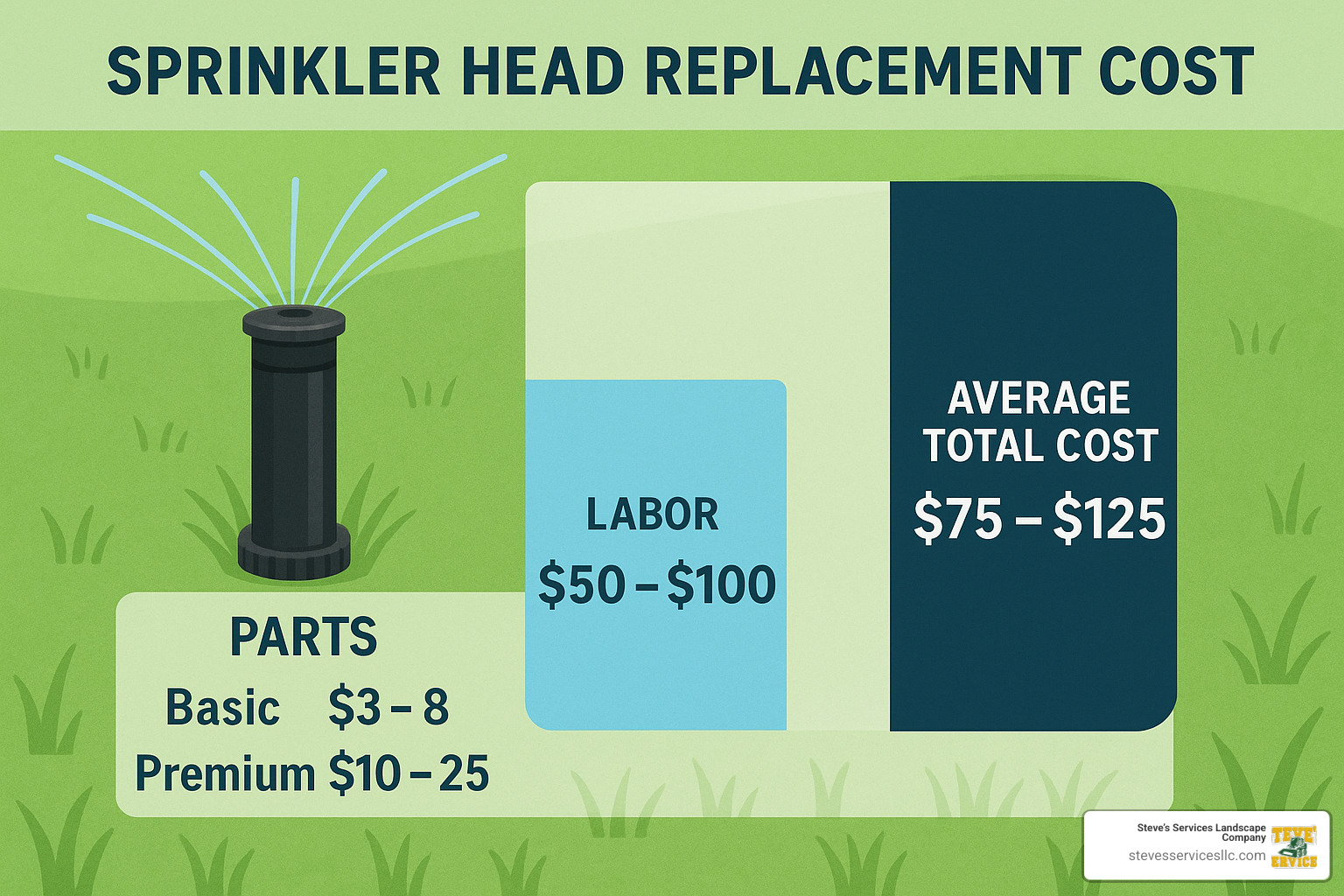
Here’s the reality: a simple sprinkler head might cost $2 for the part, but you’ll pay $65-$90 for professional replacement. Why? Because you’re paying for expertise, proper adjustment, and warranty coverage that prevents future problems.
The parts lifespan factor makes a huge difference in long-term costs. That $250 premium gear-driven head might seem expensive, but it’ll outlast three $65 basic heads over its 15-year lifespan. Sometimes spending more upfront saves money down the road.
Component pricing creates those wide ranges you see in estimates. A backflow preventer replacement can cost anywhere from $280 to $1,550 depending on the type required by your local code. That’s not a typo – the high-end models really do cost that much.
| Component | Low End | Average | High End |
|---|---|---|---|
| Sprinkler Heads | $65 | $85 | $250 |
| Valve Replacement | $75 | $150 | $450 |
| Pipe Repair (per foot) | $35 | $60 | $180 |
| Backflow Preventer | $280 | $650 | $1,550 |
| Controller/Timer | $200 | $325 | $975 |
| Manifold Repair | $125 | $275 | $825 |
Note: These are average costs based on internet data and not actual costs for Steve’s Services.
Sprinkler Heads: Pop-Up, Rotary, Gear-Driven
Pop-up sprinkler heads are the most common type we service, and for good reason. They disappear when not in use, protecting themselves from lawn mowers and foot traffic. Professional replacement runs $65-$110 per head, which includes proper pressure adjustment and zone balancing.
The beauty of pop-ups lies in their simplicity, but that doesn’t mean they’re all created equal. Basic models work fine for small areas, while larger zones need heads with better coverage patterns and flow rates.
Rotary heads step up the game with rotating streams that cover larger areas more efficiently. They cost $75-$150 each to replace professionally, but they’re worth it for medium to large lawn areas. The rotating action helps prevent puddling and ensures even water distribution.
Gear-driven heads represent the premium option with internal mechanisms that resist clogging and wear. At $85-$250 each for professional installation, they’re the most expensive but also the most reliable. We’ve seen gear-driven heads work flawlessly for 15+ years while basic heads need replacement every 3-5 years.
The $2-$12 material cost for basic heads versus the full service price shows why some homeowners consider tackling this themselves. However, proper head adjustment requires experience with spray patterns and pressure calculations that most homeowners lack.
Valves, Manifolds & Solenoids
Valve boxes might look like simple plastic containers, but they house the heart of your irrigation system’s control mechanism. When these crack from freeze-thaw cycles or get crushed by heavy equipment, replacement costs $75-$250 depending on size and valve complexity.
Solenoids are the unsung heroes of irrigation systems – those little electromagnetic switches that actually open and close your valves. The part itself only costs $15-$30, but professional replacement runs $85-$150 because of the electrical connections and system testing involved.
Manifold systems centralize multiple valves in one location, which sounds convenient until something goes wrong. A manifold repair typically costs $125-$400, but here’s the thing – when one valve in a manifold starts failing, others often follow within a year or two.
We’ve learned that valve problems rarely happen in isolation. That’s why we often recommend addressing multiple valves during one service call rather than making separate trips for each failure.
Piping & Leak Repairs
PVC crack repairs keep us busy, especially after harsh Massachusetts winters. Small cracks can be patched for $50-$150, but major breaks requiring pipe replacement jump to $150-$500 depending on how deep we need to dig.
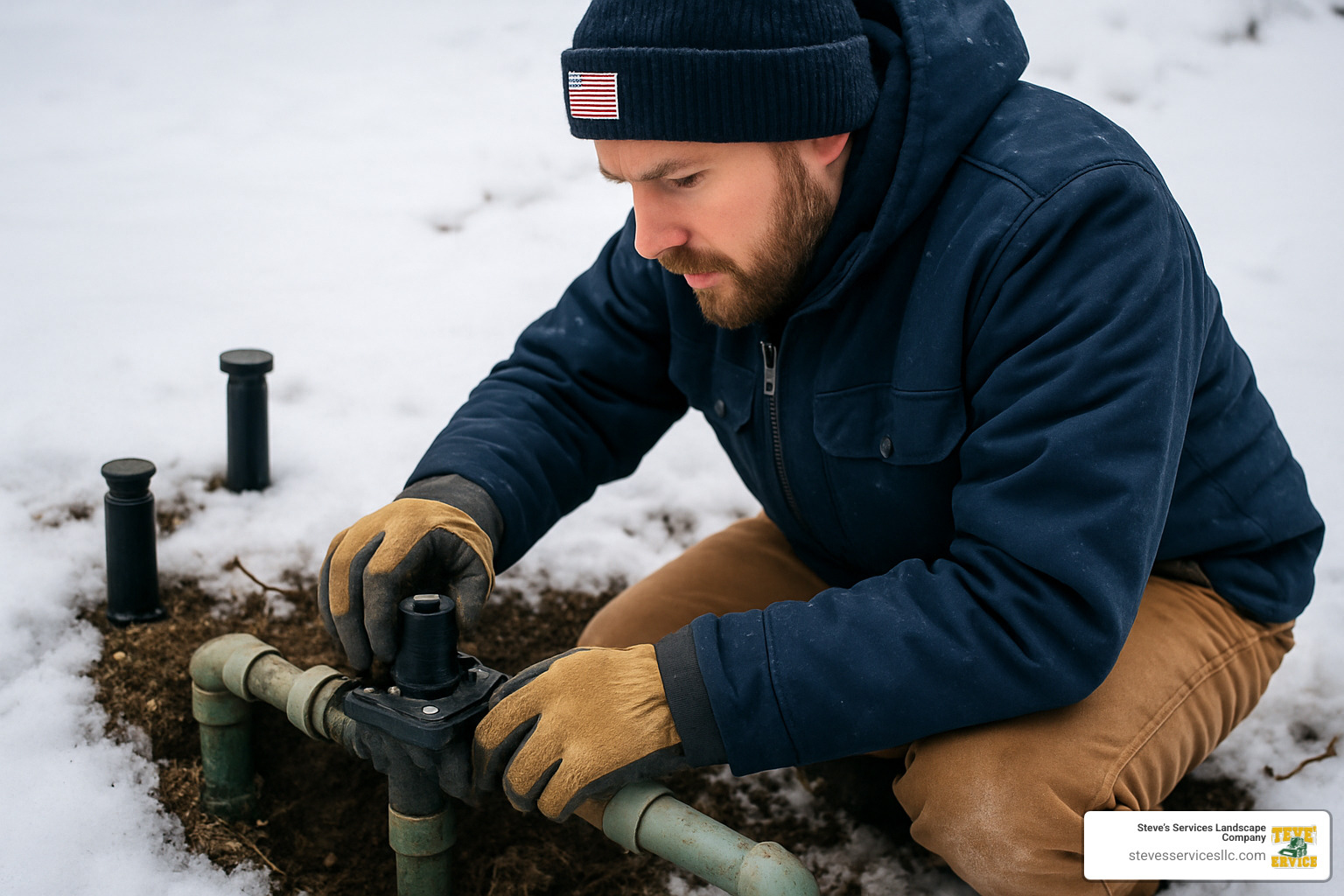
Frozen pipe damage creates some of our most expensive repair calls. When pipes aren’t properly winterized, they can burst and cause extensive damage requiring $300-$800 in repairs. The emergency nature of these calls and the extensive excavation needed drives up costs quickly.
Depth makes all the difference in repair costs. Shallow pipes near the surface are relatively easy to access, while main lines buried 18-24 inches deep require significant excavation time and often landscaping restoration afterward.
For detailed information about preventing these costly freeze issues, check out our guide on frozen sprinkler backflow issues.
Backflow Preventers: The Big-Ticket Item
Backflow preventers protect your home’s drinking water from contamination, and they’re required by code in most Massachusetts communities. Unfortunately, they’re also the most expensive single component you’ll likely need to replace.
Contamination risk makes these devices non-negotiable. When they fail inspection or stop working, replacement costs range from $280 for basic atmospheric vacuum breakers up to $1,550 for commercial-grade reduced pressure zone assemblies. Yes, that’s a real price range.
The wide cost variation reflects different protection levels and installation complexity. Simple devices mount on your house and protect against basic backflow, while complex RPZ assemblies require ground installation, drainage provisions, and sometimes heated enclosures for freeze protection.
Annual testing costs $75-$250 but prevents emergency replacement scenarios. We’ve seen too many homeowners skip testing only to face $1,000+ replacement bills when their device fails municipal inspection.
Labor, Seasonality & Other Hidden Fees
Labor rates form the largest portion of most water sprinkler repair costs. In Massachusetts, expect $55-$120 per hour for standard service, with rates varying by company experience, certifications, and service area.
Call-out fees of $50-$150 are common, especially for diagnostic visits or small repairs that don’t meet minimum service charges. Some companies waive this fee if you proceed with recommended repairs.
Travel fees may apply for properties outside a company’s primary service area. In our experience serving Burlington, Danvers, Everett, and surrounding communities, travel time affects scheduling and can add $25-$75 to service calls in outlying areas.
Landscaping restoration often gets overlooked in repair estimates. Excavation for pipe repairs requires sod replacement, soil amendment, and sometimes replanting. Budget an additional $50-$100 per hour for landscape restoration work.
When “Water Sprinkler Repair Cost” Spikes: Peak vs. Off-Peak
Spring and summer demand drives significant price increases. April through August sees 40-60% higher rates as every homeowner wants their system running perfectly for the growing season. Emergency calls during this period can cost $200-$500 per hour.
Fall and winter discounts offer smart homeowners substantial savings. October through February typically sees 20-30% lower rates as irrigation companies have more availability. Non-urgent repairs scheduled during off-peak periods can save hundreds of dollars.
Emergency after-hours service commands premium pricing year-round. Weekend, evening, and holiday calls typically add $150-$300 to standard rates. A $200 daytime valve repair becomes a $400+ emergency call.
We always recommend addressing minor issues before they become emergencies. That small leak you notice in October can become a major pipe burst requiring emergency service if left until spring startup.
Landscaping & Accessibility Add-Ons
Sod replacement becomes necessary when excavation damages established turf. Quality sod costs $0.50-$1.50 per square foot, plus installation labor. A typical pipe repair might require 20-50 square feet of sod replacement.
Trench digging in Massachusetts can be challenging due to rocky soil, tree roots, and underground utilities. Hand digging around sensitive areas adds significant labor time compared to machine excavation.
Landscape restoration at $50-$100 per hour includes soil preparation, grading, seeding or sodding, and initial watering. This “hidden” cost can add $200-$500 to major pipe repairs.
Accessibility issues multiply costs quickly. Systems installed under decks, through foundation plantings, or in tight spaces between utilities require more time and specialized tools, often doubling standard repair times.
Repair, Replace, or Maintain? Making the Smart Money Call
Here’s where water sprinkler repair cost gets really interesting – sometimes the smartest money move is not to repair at all. After 25 years in the landscape business, I’ve helped countless Massachusetts homeowners steer this decision.
System age tells most of the story. If your irrigation system is pushing 15-20 years old and components are failing regularly, you’re often throwing good money after bad.
Most well-maintained systems last 15-25 years, but that’s the key phrase: well-maintained. Neglected systems start having major problems around the 10-year mark.
Preventive maintenance is your secret weapon against surprise repair bills. We’ve seen homeowners skip the $120-$200 annual tune-up, then face $800+ emergency repairs when their system fails during peak season.
Winterization prevents about 70% of spring repair calls. Spending $60-$120 each fall to properly drain and protect your system beats dealing with burst pipes come spring.
For detailed maintenance tips, check out our irrigation system troubleshooting guide.
Long-Term Savings Through Regular Service
Annual inspections are like insurance policies that pay you back. That $150 inspection that catches a small leak early saves you from the $400+ emergency pipe replacement later.
Water efficiency improvements pay for themselves quickly. When we properly adjust heads and regulate pressure, most customers see 20-30% reductions in irrigation water usage, translating to $200-$500 in annual savings.
We consistently see 15-25% consumption reductions after comprehensive tune-ups. One Burlington customer dropped their summer water bill by $400 annually through proper system adjustments.
When Full System Replacement Wins
Obsolete parts can make repairs financially ridiculous. Controllers from the 1990s and discontinued valve models sometimes cost more to repair than modern replacements.
Repeated failures signal it’s time for replacement. When you’re spending $500+ annually on repairs for a system that still doesn’t work properly, replacement makes sense.
Full system replacement typically costs $1,500-$4,000 for residential properties, but modern systems offer benefits older systems can’t match.
Note: These are average costs based on internet data and not actual costs for Steve’s Services.
The math is straightforward: if annual repair costs exceed 15-20% of replacement cost for two consecutive years, replacement usually wins.
Getting an Estimate & Choosing a Sprinkler Pro
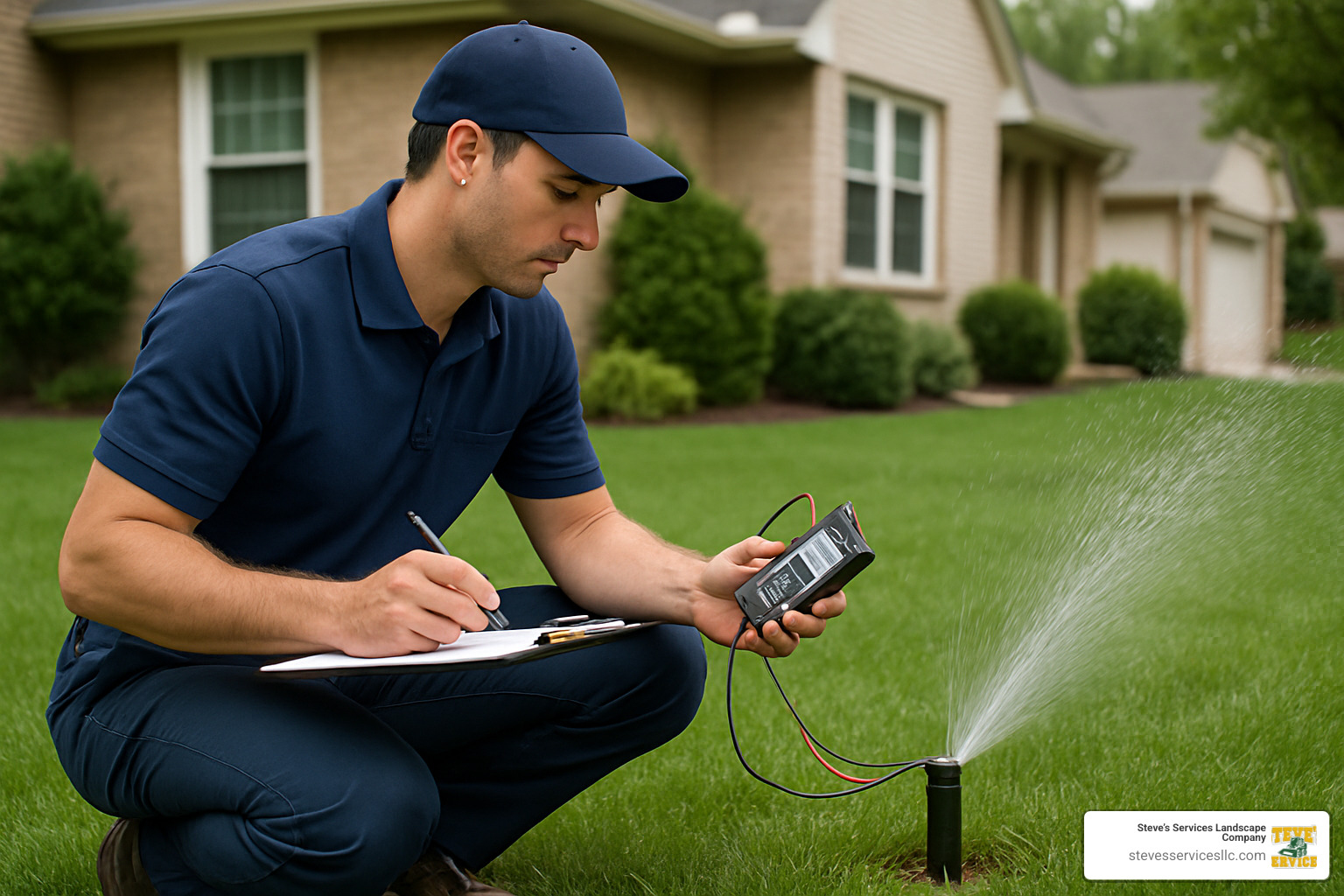
Getting a fair estimate for water sprinkler repair cost shouldn’t feel like solving a mystery. The best contractors walk you through their quote process step by step, explaining what they found, what needs fixing, and exactly how much it’ll cost.
A quality itemized bid breaks down everything – labor hours, part costs, travel time, and any extras like sod replacement. This transparency helps you understand where your money goes and makes comparing different contractors much easier. Red flags include vague “total cost” estimates without details or prices that seem too good to be true.
Licensing and insurance might sound boring, but they’re your safety net. Massachusetts irrigation contractors should carry general liability insurance and workers’ compensation coverage. Don’t feel awkward asking to see proof – legitimate contractors expect this question and have their paperwork ready.
Warranty coverage separates the pros from the fly-by-night operators. Reputable companies stand behind their work with 1-2 year labor warranties and honor manufacturer warranties on parts. We’ve seen too many homeowners get burned by contractors who disappear when problems arise.
For comprehensive sprinkler system repair services backed by experience and warranties, check out our sprinkler system repair page to learn more about our diagnostic and repair approach.
“Water Sprinkler Repair Cost” Questions to Ask
The difference between flat rates and hourly billing can significantly impact your final water sprinkler repair cost. Some contractors charge set prices for common repairs like head replacement, while others bill by the hour. Both approaches work, but knowing which applies helps you budget accurately.
Minimum charges often catch homeowners off guard. Many companies have $100-$200 minimums, which makes bundling multiple small repairs into one visit smart financial planning. That leaky head and stuck valve become much more affordable when fixed together.
Part markup is standard practice, but excessive markups can inflate your bill unnecessarily. Most contractors add 25-50% to wholesale part costs, which covers handling, warranty, and overhead. Ask about part pricing for major components – it keeps everyone honest.
Smart questions to ask during the estimate process include whether they provide free estimates, what their typical response time looks like for service calls, and if they offer annual maintenance contracts that might save money long-term. Don’t forget to ask for local references – talking to neighbors who’ve used their services gives you real insight into their work quality and reliability.
The goal isn’t to grill your contractor, but to feel confident you’re making a smart choice. Good contractors welcome questions because they know transparency builds trust and long-term relationships.
Frequently Asked Questions about Water Sprinkler Repair Cost
What is the typical labor rate for sprinkler repairs?
Labor rates in Massachusetts typically run $55-$120 per hour for standard service calls. However, don’t be surprised if emergency repairs, weekend calls, or complex jobs push rates up to $150-$300 per hour – especially during peak season when every contractor is swamped.
Most water sprinkler repair cost estimates include 1-3 hours of labor, depending on what’s actually broken and how easy it is to reach. A simple sprinkler head swap might take 30 minutes, while tracking down a mysterious leak could eat up half your day.
Several factors bump up those hourly rates. Companies with extensive certifications and decades of experience charge premium rates – but they also fix things right the first time. Geographic location matters too; if you’re way out in the sticks, expect travel time charges.
Time of year makes a huge difference. Spring startup season and summer emergencies command top dollar because everyone needs service right now. Fall and winter repairs? That’s when smart homeowners save 20-30% on the same work.
Does DIY really save money on water sprinkler repair cost?
We don’t recommend tackling sprinkler repairs yourself – there’s just too much that can go wrong. What looks like a simple fix often involves water pressure calculations, electrical connections, and system integration that takes years to master.
The apparent savings of buying a $15 sprinkler head versus paying $85 for professional installation disappear quickly when things go sideways. We’ve seen homeowners turn minor repairs into major disasters by misdiagnosing problems or using incompatible parts.
Consider the hidden costs of going solo: diagnostic time when you’re not sure what’s actually broken, specialized tools you’ll use once, and the very real risk of causing expensive damage to other system components. Plus, there’s no warranty when you do the work yourself.
Professional repairs typically cost 2-3 times the material cost alone, but that premium includes proper diagnosis, quality parts sourcing, system testing, and warranty coverage. When you factor in your time and the peace of mind, professional service usually wins the cost-benefit analysis.
How do seasonal factors affect scheduling and pricing?
Spring season (April-May) hits homeowners with sticker shock as water sprinkler repair cost jumps 25-40% above winter rates. Everyone wants their system perfect for the growing season, creating a perfect storm of high demand and limited availability.
Summer months (June-August) maintain those premium rates, with emergency calls reaching $300+ per hour. The heat makes outdoor work more challenging, and system failures during peak watering season feel truly urgent.
Fall scheduling (September-November) offers the sweet spot for non-emergency repairs. Rates drop 15-25% as contractors have more availability, and you can tackle those nagging issues before they become spring emergencies.
Winter season (December-March) delivers the year’s best rates – often 30-40% below peak pricing. Outdoor work is limited to emergencies and indoor controller repairs, but it’s perfect timing for system planning and getting estimates for spring work.
Smart homeowners use this seasonal pattern to their advantage, scheduling routine maintenance and non-urgent repairs during the off-season to avoid the spring rush and premium pricing.
Conclusion

Smart homeowners who understand water sprinkler repair cost make better decisions about their irrigation systems. After helping Massachusetts families maintain their landscapes for over 25 years, I’ve seen how knowledge saves money.
Budget $250-$500 annually for repairs and maintenance once your system hits 10 years old. That’s far less than the $1,000+ emergency bills we see when homeowners skip regular care.
Timing makes a huge difference. Spring repairs cost 25-50% more than off-season service. Plan ahead and save hundreds.
Preventive maintenance pays for itself. That $150 annual inspection catches small problems before they become $500+ disasters.
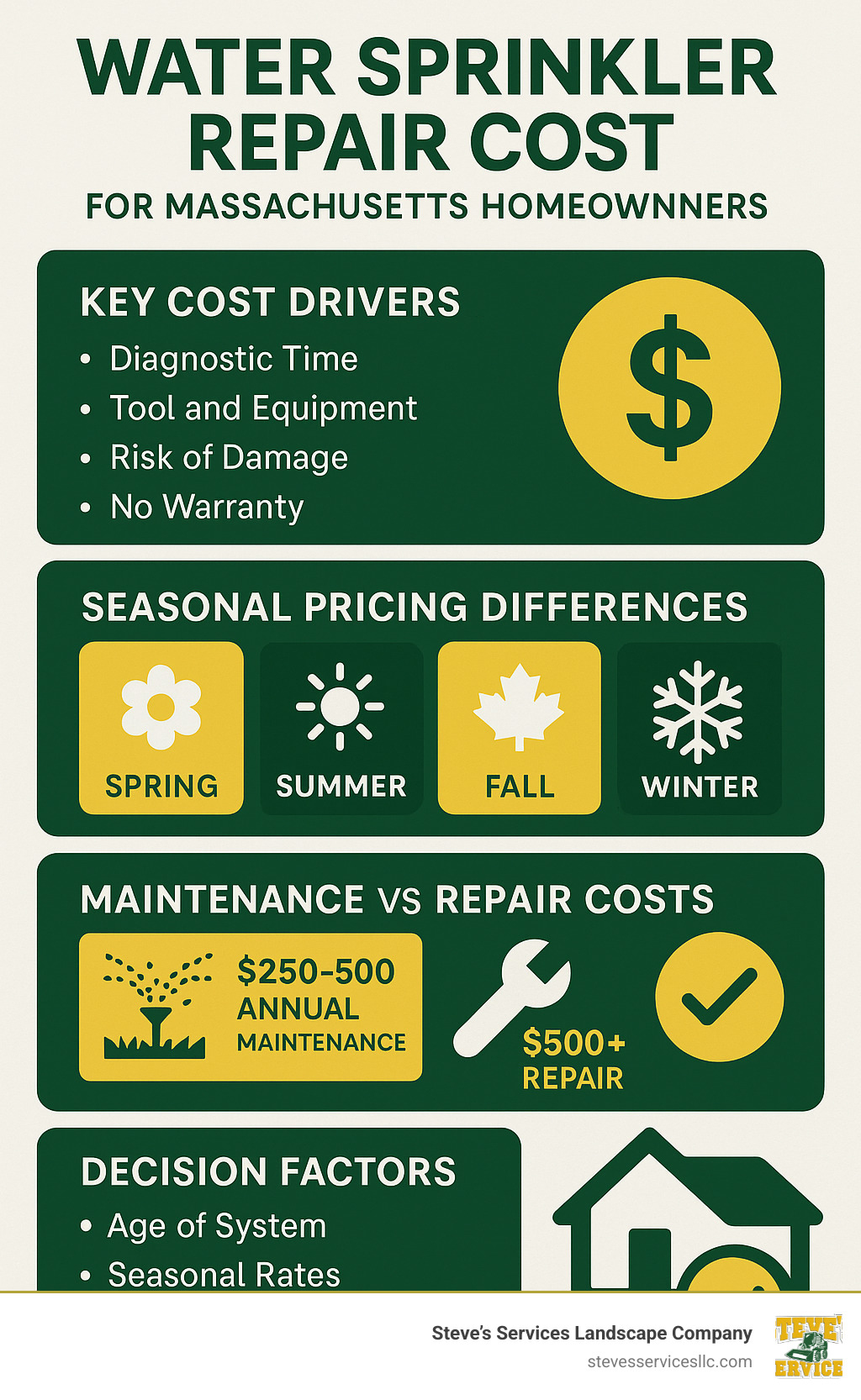
System age matters. When your irrigation system hits 15 years old and needs frequent repairs, consider replacement. If annual repair costs exceed 20% of replacement value, newer is usually smarter.
Component quality affects your wallet long-term. Premium parts cost more upfront but last twice as long as budget alternatives.
Massachusetts weather creates unique challenges for irrigation systems. Our freeze-thaw cycles and variable conditions across Burlington, Danvers, Everett, and surrounding communities mean your system works harder than those in gentler climates.
Water sprinkler repair cost becomes manageable when you plan ahead. Schedule annual inspections to catch problems early. Bundle multiple repairs to avoid repeated service charges. Address small issues before they become emergencies. Winterize properly to prevent costly freeze damage.
Don’t wait until something breaks. The homeowners with the lowest repair bills schedule annual maintenance in fall, not panic calls during the first heat wave.
For comprehensive irrigation services, visit our irrigation system repair page to learn about our diagnostic services and maintenance programs.
Need a professional eye on your system? Trust the team at Steve’s Services to keep your lawn thriving year-round—schedule your inspection today!