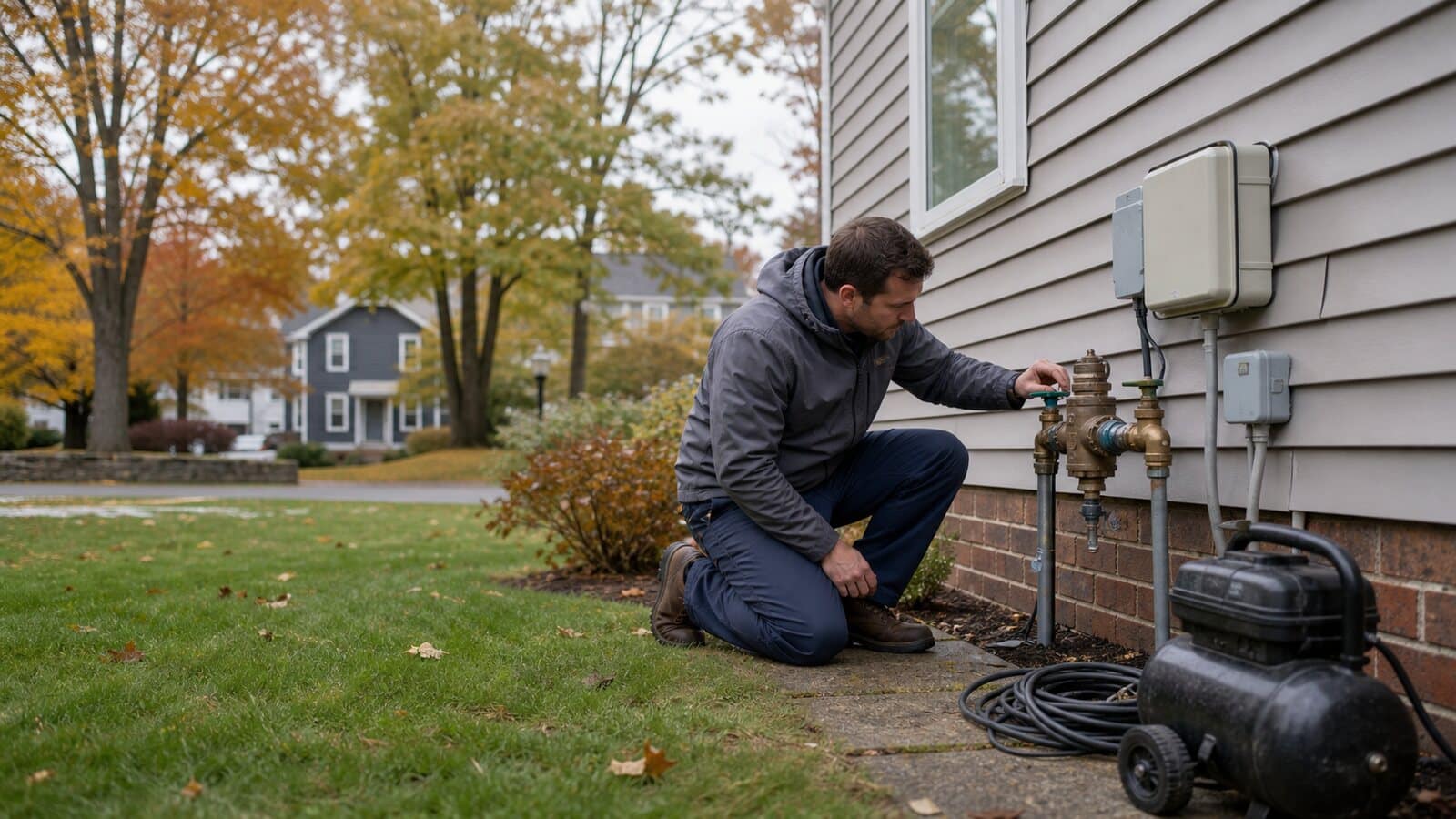
When to Winterize a Sprinkler System in Massachusetts
The best time to winterize a sprinkler system in Massachusetts is after the landscape’s regular irrigation demand has eased but before freezing weather can reach water left in the system. For a Greater Boston property, that means watching conditions rather than waiting for one universal calendar date. Book early enough to get a service window, and flag exposed components or a new lawn that is still being watered.
Use three signals instead of one date
A practical winterization decision uses three signals together:
- Landscape demand: Established lawns and beds generally need less irrigation as days shorten and temperatures cool. A newly seeded, sodded, or planted area may still need a separate watering plan, so do not simply stop its care without discussing the installation and current conditions.
- Freeze exposure: Above-ground valves, backflow assemblies, and shallow or exposed piping are more vulnerable than a system with every component protected below grade. These features move a property toward the front of the schedule.
- Service lead time: The first cold forecast is a poor time to start calling. Reserve an appointment while there is still room to coordinate access, ongoing watering, and any repair notes.
The result is a window, not a magic day: reduce unnecessary watering as fall conditions change, keep any newly installed landscape on its prescribed care plan, and complete winterization before freezing becomes an immediate risk.
Prioritize the most exposed part of the system
People often judge risk by the depth of buried lines, but the first concern may be the equipment they can see. A backflow device, shutoff, or pipe section in open air loses heat quickly. A sheltered system with no exposed water-bearing components presents a different scheduling problem than one mounted beside a foundation or in an unheated area.
Make a short visual inventory without taking the assembly apart:
- Note any above-ground irrigation pipe, valve, or backflow equipment.
- Identify the controller location and whether the technician can reach it.
- Count the zones shown on the controller if the labels are readable.
- Write down known leaks, broken heads, weak zones, or recent landscape changes.
This information helps the service provider plan the visit. It is not a substitute for identifying the system design on site.
Coordinate winterization with fall watering
Winterization and fall watering are related, but they are not the same decision. An established landscape may be ready for irrigation shutdown while a new lawn still requires attention. If there is active seed, fresh sod, a recent planting, or a warranty care plan, tell the irrigation provider when you schedule. The solution may involve timing the last irrigation, using a temporary watering method, or choosing a later appointment that still stays ahead of freeze risk.
Do not keep an entire system operating by default for one small area. Separate the plant-care need from the freeze-protection need, then choose a workable handoff.
Prepare for the appointment without changing the system
A useful pre-visit checklist focuses on access and information:
- Clear a safe path to the controller, water shutoff, backflow assembly, and other known irrigation equipment.
- Unlock gates and arrange access to fenced or tenant-controlled areas.
- Move fragile items away from sprinkler heads that may activate during service.
- Keep pets inside or otherwise separated from the work area.
- Share the zone count, system map, previous service notes, and known problems if available.
- Point out new plantings or lawn areas that still need water.
- Ask what should remain powered, open, closed, or untouched after the visit for this specific system.
Do not guess at the compressed-air setup. Colorado State University Extension’s winterization guidance explains that air volume, pressure, piping material, zone flow, and system design all affect the procedure and the risk of damage. That is why this article stops at scheduling and access preparation rather than offering a generic blowout sequence.
What to confirm when service is complete
Before the technician leaves, ask for a plain-language handoff. Confirm which water supply was shut down, how the controller was left, whether any component needs protection or follow-up, and whether a repair was discovered that should be handled before spring startup. Keep that note with the controller or property maintenance record.
For a commercial or multi-unit property, also record who controls spring reactivation. A named owner prevents a well-intended tenant, vendor, or staff member from turning the system on without the appropriate startup check.
A simple Massachusetts scheduling rule
If regular irrigation demand is declining, freezing weather is moving closer, and service calendars are filling, it is time to reserve winterization. Move sooner when components are exposed. Coordinate rather than guess when a new lawn or planting still needs water.
Steve’s Services provides irrigation installation and maintenance for Greater Boston properties. Review the company’s irrigation system services to discuss seasonal system care and the conditions at your property.