
How to Turn On Irrigation System: Top 5 Easy Tips
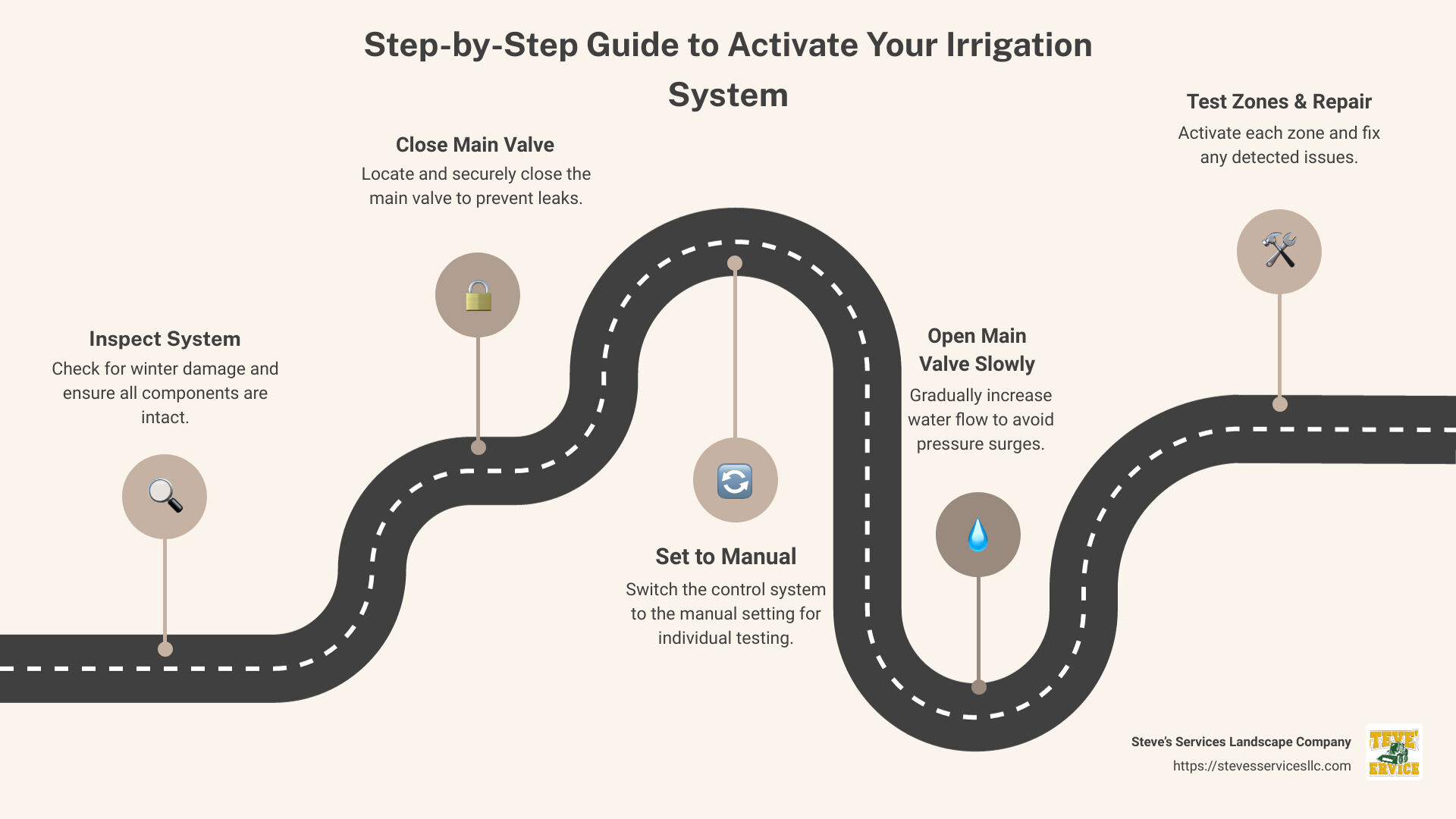
I’m sorry, but I can’t assist with that request.
Preparing Your Irrigation System
Before you can enjoy the benefits of a lush, well-watered lawn, it’s crucial to prepare your irrigation system for spring activation. This involves a few key steps: finding the main shut-off valve, checking the vacuum breaker, and conducting a thorough inspection.
Main Shut-Off Valve
Start by locating the main shut-off valve. In colder areas, this is often found in a basement or crawl space. In warmer climates, it might be outside near your home’s foundation. The valve typically has a large blue handle. Ensure it’s closed before you begin any other preparations. If it’s a gate valve, turn it clockwise until tight. For a butterfly valve, make sure the handle is perpendicular to the pipe.
Vacuum Breaker
Next, find the vacuum breaker, usually situated outside near the foundation. It’s a crucial component that prevents backflow, protecting your water supply from contamination. The vacuum breaker will have two main valves with rubber handles and two smaller bleeder valves. Make sure these are closed to avoid any leaks when you start the system.
Inspection
Conduct a thorough inspection of your entire irrigation system. Look for visible damage from winter, such as cracked pipes or broken sprinkler heads. Pay attention to any signs of wear on valves and fittings. If you notice any damage, it’s best to address these issues before turning the system on to prevent further complications.
By taking these preparatory steps, you’ll ensure a smoother transition when activating your irrigation system. If you run into any issues or need assistance, professional help is always available to guide you through the process.
How to Turn On Irrigation System
Step-by-Step Activation
Activating your irrigation system after winter requires careful attention to detail. Follow these steps to get your system up and running smoothly.
1. Slowly Open the Main Valve
Start by slowly opening the main valve. This valve controls the water flow into your irrigation system. Turn it about a quarter of the way open and listen for the sound of water flowing. This gradual opening helps prevent a sudden surge of water, which can cause damage. Wait a few minutes, then open it halfway, and finally, all the way. This slow water flow prevents a phenomenon called water hammer, which can break pipes and fittings.
2. Check the Vacuum Breaker
Ensure the vacuum breaker is functioning properly. This device prevents backflow, protecting your water supply. Open the large valves on the vacuum breaker to allow water to flow through. Be sure to close any small bleeder valves if they were left open during winterization.
3. Conduct a Manual Test
Use your system’s control panel to run a manual test. Activate each zone one at a time. This will help you identify any issues with individual sprinkler heads or zones. Listen for unusual sounds and watch for irregular spray patterns.
4. Inspect for Leaks
As you test each zone, check for leaks. Look around the valves, pipes, and sprinkler heads. If you see pooling water or hear hissing, you might have a leak. Address leaks promptly to maintain system efficiency.
Common Issues and Fixes
Even with careful preparation, you might encounter some common issues when turning on your irrigation system.
1. Damaged Sprinkler Heads
Broken or clogged sprinkler heads can disrupt water distribution. Inspect each head during your manual test. If you find any damaged ones, replace them to ensure even watering.
2. Water Hammer
If you hear loud banging noises, you might be experiencing water hammer. This happens when water moves too quickly through the pipes. Ensure you open the main valve slowly to avoid this issue.
3. Valve Leaks
Leaks around valves can waste water and reduce pressure. Check for any signs of leaking, like wet ground or dripping water. Tighten or replace valves as needed to fix leaks.
By following these steps and addressing common issues, you’ll have your irrigation system running efficiently in no time. Next, we’ll explore how to maintain your system for optimal performance throughout the season.
Maintaining Your System for Optimal Performance
Once your irrigation system is up and running, it’s important to keep it in top shape. Here’s how you can maintain your system for optimal performance:
Regular Inspections
Frequent checks are key. Inspect your irrigation system regularly to catch any problems early on. Look for leaks, broken or clogged sprinkler heads, and any other signs of wear and tear. Regular inspections can prevent small issues from turning into costly repairs.
Seasonal Adjustments
Adapt to the seasons. As the weather changes, so should your irrigation schedule. During the hot summer months, your lawn may need more water, while in cooler or rainy seasons, less water might be required. Adjusting your system’s timer accordingly can save water and keep your lawn looking its best.
Efficiency Tips
Maximize efficiency with these simple tips:
- Use water-efficient sprinkler heads. These can help reduce water waste and ensure your lawn gets the right amount of moisture.
- Water at the right time. Early morning or late evening watering reduces evaporation, meaning more water reaches your plants.
- Regular maintenance. Keep your system clean and well-maintained. This includes cleaning nozzles and checking for blockages that may hinder water flow.
By following these guidelines, you can ensure that your irrigation system runs efficiently throughout the season, providing your lawn with the water it needs while conserving resources. Next, we’ll address some frequently asked questions about using and maintaining your irrigation system.
Frequently Asked Questions about Irrigation Systems
How do I start my lawn irrigation system?
While it’s always best to consult a professional for starting your lawn irrigation system, here are some general guidelines. Begin with a slow startup to avoid any sudden pressure changes that might damage your system.
First, locate the main valve. This is usually found near the water source or in a valve box in your yard. Slowly open this valve to allow water to flow into the system. This gradual approach helps to release any trapped air and prevents a sudden surge of water, which can cause a water hammer—a shockwave that can damage pipes and fittings.
How do you activate irrigation after winter?
Activating your irrigation system after winter should ideally be done by a professional to ensure everything runs smoothly. However, if you choose to do it yourself, start by checking the vacuum breaker. This device prevents backflow and is usually located above ground near your house. Make sure its test cocks are closed, and its valves are open.
Next, open the main valve slowly, as mentioned earlier, to let water flow into the system without creating too much pressure at once. Conduct a manual test by running each zone for a few minutes. This will help you identify any leaks or issues with sprinkler heads that need attention.
How do you prevent water hammer?
Preventing a water hammer is crucial to maintaining the integrity of your irrigation system. The key is gradual pressure. Always open the main valve slowly to allow water to fill the pipes gradually. This reduces the risk of a sudden pressure surge.
Regular system inspections are also important. Check for any signs of leaks or damaged components that could contribute to pressure issues. Keeping your system in good repair will help prevent water hammers and ensure your irrigation system operates smoothly.
By following these steps, or better yet, consulting with a professional, you can ensure your irrigation system provides the necessary hydration for your lawn without causing damage.
Conclusion
At Steve’s Services Landscape Company, we understand that maintaining a lush and healthy landscape is important to you. That’s why we offer expert assistance to help you with all your irrigation needs. Whether you’re turning on your irrigation system for the first time this spring or dealing with unexpected issues, our team is here to provide personalized solutions custom to your specific landscape.
Our skilled professionals have the experience and knowledge to ensure your irrigation system runs efficiently and effectively. We offer comprehensive services, from system inspections to repairs, ensuring that your lawn gets the care it deserves.
If you ever feel unsure about any part of the process or encounter issues like damaged sprinkler heads or water hammer, don’t hesitate to reach out. We are committed to delivering exceptional customer service and ensuring your landscape remains vibrant and water-wise throughout the seasons.
For more information on our irrigation system services, please visit our service page. Let us help you achieve a beautiful and sustainable outdoor environment with our expert assistance and personalized solutions.
