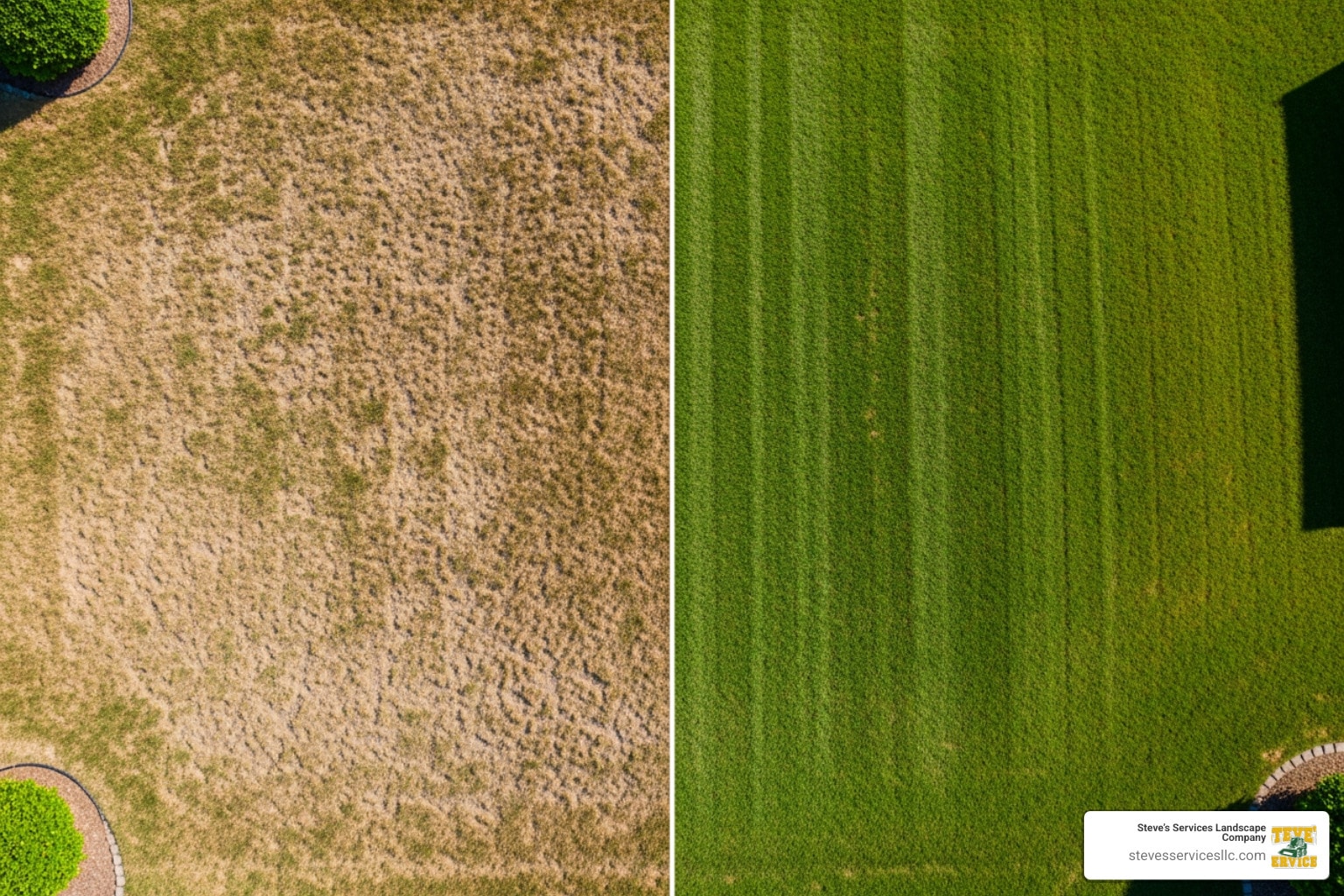
Why Homeowners Are Turning to Liquid Lawn Solutions
A DIY liquid seed coating formula is a lawn repair system that combines grass seed, a mousse coating additive, soil amendments, and a green dye indicator in a spray-on application designed to attach seed to soil and promote faster germination. Here’s what you need to know:
How It Works:
- Attaches to a standard garden hose for spray application
- Uses “Spray n’ Stay Technology”-style tackifiers to bond seed to soil
- Contains a water-absorbing formula to reduce surface tension
- Includes a green dye to show where you’ve planted
- Covers up to 100 square feet per standard kit
What’s Included:
- Spray head/nozzle
- Coating chamber (canister)
- Proprietary grass seed blend (Fescue, Kentucky Blue, Perennial Rye)
- Liquid mousse formula (soil amendments and tackifier)
Expected Results:
- Germination in 7-14 days with proper watering
- Requires watering 3 times daily until grass reaches 3 inches
- Safe for pets and children once dry, according to typical manufacturer claims
If you’ve ever stared at bare patches in your lawn and wondered whether those “spray-on grass” products actually work, you’re not alone. The promise is simple: attach a bottle to your hose, spray green foam on the dirt, and watch grass appear. But the reality, according to hundreds of customer reviews for various consumer spray-on seeding products, is far more complicated. Many users report clogged sprayers, minimal seed dispersal, staining on concrete, and disappointing germination rates.
I’m Steve Sylva, owner of Steve’s Services in Malden, MA, and over my 25 years in the landscape industry, I’ve seen countless homeowners try consumer spray-on seeding solutions before calling us for professional hydroseeding that actually delivers consistent, lasting results. Understanding how these products are supposed to work—and why they often fall short—can help you make the right choice for your lawn.
If you want to understand the science behind seed coatings and hydroseeding in a more general sense, the overview of Seed coating is a useful neutral reference.
DIY liquid seed coating formula glossary:
What is a DIY Liquid Seed Coating Formula?
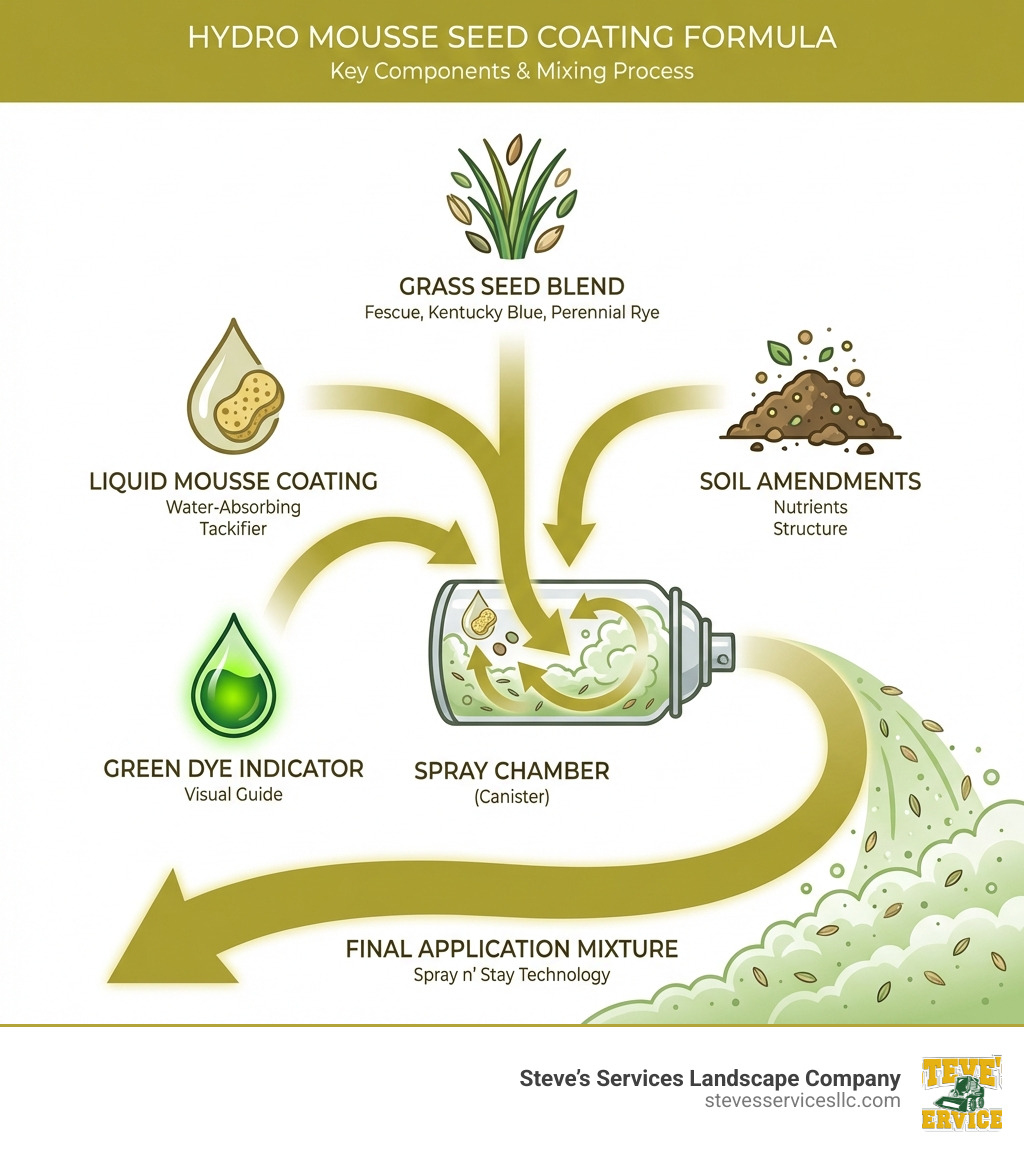
When we talk about DIY liquid seed coating formulas, we’re referring to popular consumer “spray-on grass” products designed to make lawn repair as easy as watering your plants. It is a liquid lawn repair system that aims to simplify the hydroseeding process for the average homeowner. The kit typically comes with a spray head, a coating chamber (or canister), a proprietary blend of grass seed, and a liquid mousse formula. The core idea is to combine all the necessary elements for grass growth into a single, easy-to-apply spray.
The liquid mousse additive itself is a crucial component. It acts as a carrier for the seeds, ensuring they adhere to the soil, and it often contains soil amendments intended to create a more favorable environment for germination. The grass seed blend is typically a mix chosen for its adaptability to various climates and conditions. And, of course, there’s the distinctive green dye visual indicator, which is perhaps the most recognizable feature, designed to show users exactly where they’ve sprayed, eliminating guesswork. This is particularly appealing for patching up bare spots or establishing new grass in small areas.
For those looking into more extensive lawn changes, understanding the basics of new lawn installation is key. We at Steve’s Services often guide our clients through options beyond consumer kits, especially for larger projects or when dealing with challenging Massachusetts soil conditions. You can find More info about new lawn installs on our website.
The “Spray n’ Stay Technology”
At the heart of many liquid seed coating formulas is what marketers often describe as “spray-and-stick” or “Spray n’ Stay”-style technology. This feature is designed to address a common problem with traditional seeding: seeds blowing away or washing out before they can germinate. The mechanism works by creating a strong bond between the seed and the soil.
Essentially, the liquid mousse acts as a tackifier agent, helping the seeds “stick” to the ground where they’re sprayed. This is intended to improve seed-to-soil contact, which is vital for successful germination. Beyond just adhesion, the formula also aims to improve water absorption. It reduces the surface tension of the water, allowing the seeds to soak up more moisture more efficiently. This is a clever concept, as proper moisture is critical for a seed to sprout and establish itself. The green dye also plays a role here, making sure you don’t miss any spots and ensuring even coverage.
Key Ingredients in a Liquid Seed Coating Formula
Understanding what goes into a liquid seed coating formula helps us appreciate its intended function. The primary components are:
- Seed Blend: Many manufacturers promote a proprietary blend suitable for “all climates,” often specifying a mix of common grass types known for their resilience and ability to grow in various conditions. These can include Perennial Rye, Kentucky Blue, Tall Fescue, and Fine Fescue. This combination is chosen to provide a lawn that can withstand different levels of sun, shade, and foot traffic, offering a versatile solution for patching and repair.
- Soil Amendments: The liquid mousse itself isn’t just a carrier; it typically contains a blend of soil amendments. These are substances designed to improve the soil’s condition, making it more conducive to seed germination and growth. While the exact blends aren’t always fully disclosed, their purpose is to provide initial nutrients and moisture retention capabilities. Some deluxe kits even include an optional soil conditioner, often marketed as an additive that promotes healthy grass and roots, reduces disease and heat stress, and retains moisture and nutrients within the root zone.
- Non-Toxic Green Dye: This is the most visually striking ingredient. The green dye serves a practical purpose by allowing users to see exactly where they’ve sprayed, ensuring even coverage and preventing missed spots or over-application. Manufacturers generally state that this dye is safe and non-toxic for humans and animals, and that it will fade naturally from concrete or hands with sunlight and washing.
These ingredients work in concert to create a system that, on paper, sounds like a homeowner’s convenient option for basic lawn repair. For additional background on how seed treatments in general are formulated, the article on Seed treatment offers a good technical overview.
How the System is Designed to Work
The appeal of DIY liquid seed coating formulas lies in their promise of simplicity. The intended application process is designed to be straightforward, allowing anyone to tackle bare spots or thin areas in their lawn without professional equipment.
First, proper soil preparation is recommended. This usually involves loosening the top 3 inches of soil or applying a layer of topsoil to the area you’re treating. Removing any debris or dead grass is also a crucial step to give your new seeds the best chance. Once the soil is prepped, you would mix the formula (seed and liquid mousse) in the provided canister.
The next step is to attach the spray unit to your garden hose. The unit typically has a dial that allows you to control the flow, often with settings for “light seed” or “heavy seed,” depending on your water pressure and desired coverage. The spraying technique involves moving the nozzle evenly and rapidly, usually from about 4 feet above the ground, to try to achieve an even distribution of the green mixture. The green dye is key here, as it instantly shows you where the seeds have been laid, helping to prevent gaps or overlaps. After spraying, some instructions suggest rolling or compacting the soil to ensure good seed-to-soil contact, which helps activate the sticking solution.
If you’re curious to see these consumer systems in action from an independent perspective, there are many third-party reviews online, such as the YouTube video Does Hydro Mousse Work? Lawn in a Bottle Review, that walk through typical application steps and results.
Intended Aftercare and Growth
Once the liquid seed coating formula has been applied, proper aftercare is paramount for successful germination and growth. The instructions for most products emphasize consistent watering. Users are typically advised to gently water the newly seeded areas three times a day to keep the soil surface consistently moist. This diligent watering regime should continue until the new seedlings have reached about 3 inches tall. The importance of moisture cannot be overstated, as it’s a critical factor in encouraging the seeds to sprout.
According to common product claims, users should start seeing results quite quickly. The typical germination time for these products is stated to be between 7-14 days after planting. However, it’s worth noting that if temperatures drop below 50 degrees Fahrenheit at night, germination might take a bit longer. Once the grass reaches a height of approximately 3 inches, it’s usually considered ready for its first mow. The recommended planting season for new grass, generally speaking, is between March and October, allowing for optimal temperatures and growing conditions.
Coverage and Kit Options
When considering a consumer lawn repair solution like a liquid seed coating formula, understanding the coverage area and available kit options is crucial for managing expectations and planning your project.
A standard kit typically contains one bag of grass seed and is designed to cover up to 100 square feet. This makes it suitable for addressing small bare patches or dog spots rather than large sections of your lawn.
For those with larger areas to cover, or for subsequent applications, refill options are often available. Refill kits are commonly marketed to cover up to 200 square feet per bag, and they usually include an additional bottle of the liquid mousse seed coating formula. Some retailers even offer larger refill bags that claim to cover up to 400 square feet.
For more extensive projects, or for homeowners who anticipate needing a lot of product, “pro”-style bundles are sometimes offered. These larger packages might include additional grass seed and several refill bags, providing more coverage for multiple applications or larger problem areas. These different packages allow users to choose an option that best fits the scale of their lawn repair needs, while professional hydroseeding or traditional seeding services from companies like Steve’s Services are generally more appropriate for full-lawn renovations.
The Reality: Advertised Benefits vs. Common User Complaints
While the concept of a spray-on lawn is undoubtedly appealing, the real-world experience with DIY liquid seed coating formulas often presents a different picture than the one painted by advertisements. We’ve compiled a table comparing the typical product marketing claims with the common complaints reported by users.
| Advertised Benefits | Common User Complaints |
|---|---|
| Easy Application, Attach to Hose | Sprayer Clogging, Inconsistent Spray, Unit Breaking |
| Fixes Patches, Grows Thick Green Grass | Poor Germination, No Growth, Damaged Surrounding Grass |
| Professional Results, Cost-Effective | Waste of Money/Time, Not as Advertised, Unrealistic Expectations |
| Green Dye Shows Where You’ve Sprayed | Staining Concrete, Green Water Instead of Mousse |
| “Spray n’ Stay” for Seed Adhesion | Seeds Washing Away, Minimal Seed Dispersal |
| Water-Absorbing Formula | Requires Excessive Watering, Still Dries Out Quickly |
Advertised Benefits
The marketing for these spray-on grass seed formulas paints a very attractive picture for homeowners. They promise an easy-to-use solution that attaches directly to your garden hose, changing patchy lawns into lush, green carpets. The idea is to achieve “professional results” right at home, but at a fraction of the cost of hiring a landscaper or laying down sod.
These products are frequently highlighted as ideal for repairing a variety of common lawn issues, such as unsightly dog spots, worn-out high-traffic areas, or stubborn bare patches. The visual indicator of the green dye is touted as a major benefit, eliminating the guesswork of traditional seeding by clearly showing where the product has been applied. This seemingly simple, convenient, and cost-effective approach makes them popular items for do-it-yourselfers, appealing to homeowners looking for a quick fix.
Common Issues and Drawbacks
Despite the appealing advertisements, customer reviews of liquid seed coating formulas frequently highlight significant issues and drawbacks. Many users express deep dissatisfaction, often describing the products as a “waste of money” and a “waste of time.”
One of the most prevalent complaints centers around the application unit itself. Numerous users report that the sprayer clogs easily, leading to inconsistent spray patterns or, in some cases, rendering the unit unusable. Some describe getting “green water” instead of a thick mousse, indicating that the seed and formula weren’t mixing or dispensing correctly. This often results in minimal seed dispersal, leaving the lawn largely untouched or with uneven, patchy growth. There are also anecdotes of units breaking quickly or being defective right out of the box.
Beyond application problems, the effectiveness of the seed coating formula is a major point of contention. Many customers report “poor germination” or “no growth” at all, even after carefully following the instructions. Some even claim that the product damaged the grass around the spots they sprayed, which is certainly not the desired outcome. The quality of the included seed is often questioned, with users stating it was “no better than regular grass seed” and that the advertised results felt exaggerated.
Another common annoyance is staining. While the dye is said to be non-toxic and temporary, it has been reported to stain concrete, driveways, and even hands, causing frustration for users. These real-world experiences suggest a significant gap between marketing claims and actual performance for many consumers. This is why when homeowners in Malden, Everett, or any of our other service areas need reliable results, they turn to us for professional assistance. We specialize in More info about landscape maintenance and know how to get your lawn looking its best.
DIY Kits Compared to Professional Lawn Services
When we look at DIY liquid seed coating formulas and similar consumer kits, it’s clear they aim to mimic professional hydroseeding services. However, the comparison often stops at the superficial level of “spray-on green stuff.” While convenient for small patches, these kits have inherent limitations compared to the comprehensive approach of professional lawn services.
The most obvious kit limitations include the small coverage area, the potential for equipment failure (as seen in customer reviews), and a basic formula that can’t be customized for specific soil or climate conditions. A small plastic sprayer attached to a garden hose simply cannot replicate the power, precision, and quality of industrial-grade hydroseeding equipment.
The Professional Advantage
At Steve’s Services, we understand that a truly lush and healthy lawn requires more than just spraying some green liquid. When we perform hydroseeding for our clients in Massachusetts communities like Burlington, Danvers, and Reading, we bring a distinct professional advantage:
- High-Quality Equipment: We use powerful, specialized hydroseeding equipment that ensures an even, consistent application of the seed slurry across large areas. This equipment is designed for uniform distribution, helping avoid the patchy results often seen with DIY kits.
- Superior Materials: We don’t rely on generic “proprietary blends.” Instead, we use custom seed blends chosen for the specific climate and soil conditions of your property, whether you’re in Medford or Woburn. Our professional-grade seeds typically have higher germination rates and are selected for durability and appearance.
- Soil Testing and Expert Knowledge: Before we even spray, we can conduct soil testing to understand its composition and nutrient deficiencies. Our team has the expert knowledge to recommend and incorporate the right soil amendments and fertilizers, ensuring the best possible start for your new lawn. This personalized approach is something a one-size-fits-all kit simply can’t offer.
- Even Application: Professional hydroseeding ensures that the seed, mulch, and fertilizer are mixed correctly and applied uniformly, leading to a consistently green and healthy lawn from edge to edge.
For a deeper dive into how professional hydroseeding can transform your property, visit our page on More info about hydroseeding lawns.
Professional Mulch and Seed Coating Solutions
Beyond the application method and seed quality, one of the most significant differences between DIY kits and professional hydroseeding lies in the mulch and seed coating solutions used. While DIY spray-on formulas include a basic liquid mousse, professional hydroseeding uses high-grade mulches that are a critical element of the process.
Professional-grade mulches are far more sophisticated. They are typically made from wood fiber, paper blend, or a combination of both, often with added tackifiers and other beneficial components. When cured, this mulch does several vital jobs:
- Stabilizes the Soil: It creates a protective layer that holds the soil in place, helping to prevent erosion.
- Keeps Seed in Place: Unlike basic liquid coatings, professional mulch forms a mat that effectively anchors the seeds, protecting them from wind, rain, and hungry birds.
- Superior Water Retention: These mulches are designed to absorb and retain significantly more water than simple liquid formulas. This creates a moist micro-environment essential for seed germination and early seedling growth, reducing the need for constant, excessive watering.
- Temperature Moderation: The mulch layer insulates the soil, helping to maintain a consistent temperature. This protects young seeds and seedlings from extreme heat or cold, crucial for successful establishment in our Massachusetts seasons.
There are different categories of hydroseeding mulches, from standard mulches for revegetation to high-performance mulches designed for serious erosion control on steep slopes. These specialized materials can be engineered to include advanced bonding agents and interlocking fibers, offering substantial protection and growth support. For a neutral technical overview of how hydraulic mulch systems work in general, see Hydroseeding. This level of material science and customization is simply not available in a retail kit.
Frequently Asked Questions about DIY Liquid Lawn Solutions
We often get questions about DIY lawn products from our clients in Everett, Lynnfield, and Saugus. Here are some of the most common inquiries about DIY liquid seed coating formulas:
Are these spray-on lawn products safe for pets and children?
Yes, according to most manufacturers, these liquid seed coating formulas are designed to be safe for both pets and children. The formulas are generally described as non-toxic, and once they have dried on your lawn, they are promoted as posing no known risk. If you happen to get some on your hands during application, a simple wash with dish soap and water is usually all that’s needed to clean it off. This emphasis on safety is a key selling point for many homeowners with families and furry friends.
Can you use your own grass seed with the system?
While these kits come with their own proprietary blend of grass seed, you can often use your own grass seed with the system. However, manufacturers strongly recommend that you still use their specific liquid mousse formula for optimal results. The liquid mousse is what provides the “spray-and-stick” adhesion and the beneficial soil amendments. Without the mousse, you would miss out on the hydroseeding-style benefits that the system is designed to provide, essentially just spraying plain seed and water.
How do they perform in different climates and soil types?
DIY liquid seed coating formulas are often marketed with a “proprietary blend of grass seed suitable for all climates,” implying broad adaptability. They are typically designed to work in both sunny and shady conditions. As for soil types, the products commonly claim to be suitable for sandy, clay, and loamy soils, which covers a wide range of common conditions we see across Massachusetts.
For particularly challenging environments, such as very hot, dry climates, while the product might technically work if watered diligently, many manufacturers recommend planting in the fall for better establishment. Similarly, if your lawn has excessive acidity due to factors like pine needles, the best approach is to first remove the pine needles, add new topsoil, and work to change the soil’s pH before applying any seed. While these products might grow in such conditions, it’s generally understood that amending the soil for optimal pH is always the best practice for long-term success. You can learn more about general lawn establishment principles from independent resources like the Lawn overview, and then rely on Steve’s Services for a plan custom to your specific property.
Conclusion: The Best Path to a Flawless Lawn
In conclusion, the DIY liquid seed coating formula represents an intriguing concept: a system designed to simplify lawn repair. It promises ease of use, quick results, and a cost-effective solution for patching bare spots and improving lawn density. The spray-on adhesion, proprietary seed blends, and soil amendments are all intended to make achieving a lush, green lawn accessible to everyone.
However, as we’ve explored, the reality for many users is a mixed bag. While some report success, numerous customer reviews highlight significant drawbacks, including sprayer clogging, inconsistent application, poor germination, and general dissatisfaction with the results. This often leaves homeowners feeling frustrated and out of pocket, still staring at patchy lawns in Malden, Wakefield, or any of our other service areas.
This brings us back to the professional advantage. When you choose a reputable landscape company like Steve’s Services, you’re investing in reliability, quality materials, and expertise that a consumer kit simply cannot match. Our professional hydroseeding services use specialized equipment, custom-blended seeds suited to your specific property, and high-grade mulches that support water retention, erosion control, and optimal growing conditions. We offer custom solutions for new lawns, lawn renovations, and landscape maintenance that are designed for consistent, lasting results.
For a truly flawless lawn that stands the test of time and thrives in our New England climate, we believe that professional expertise is the best path. Instead of relying on a quick spray-on fix, consider the proven methods and quality assurance that come with professional services. To discuss your lawn care needs and find expert lawn solutions, please don’t hesitate to Contact Steve’s Services for professional liquid grass solutions. We’re here to help you grow green with genuine ease.