Liquid Lawn Feed: 7 Powerful Benefits for a Lush Lawn 2025
The Fast Track to a Greener Lawn: Understanding Liquid Lawn Feed
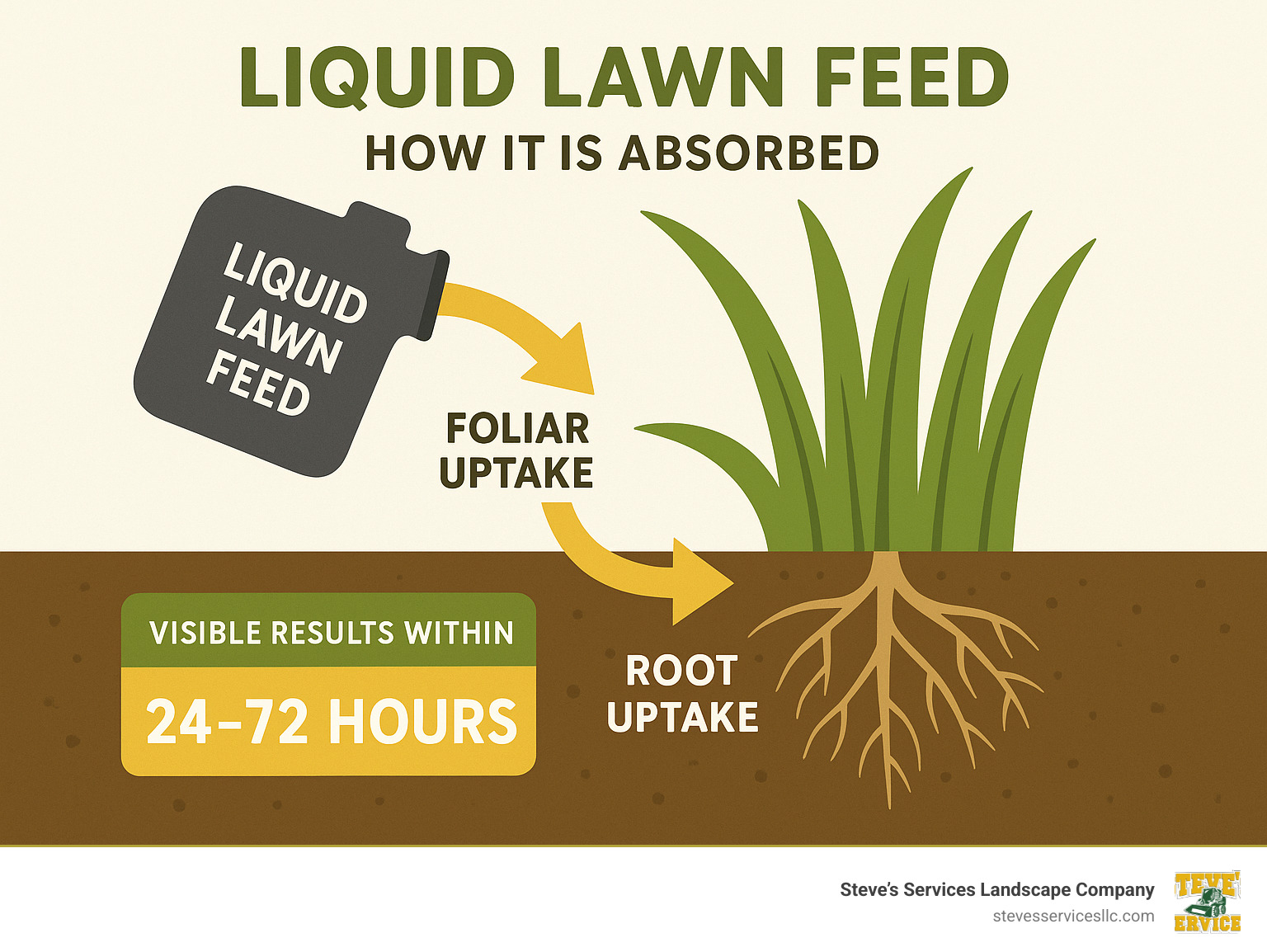
Liquid lawn feed is a fast-acting fertilizer solution that delivers nutrients directly to grass blades and roots, typically producing visible results within 24-72 hours. Unlike granular fertilizers, liquid feeds are immediately available to plants without needing to break down in the soil first.
| Quick Facts: Liquid Lawn Feed |
|---|
| Typical NPK Ratios: 27-0-1 (maintenance), 16-21-2 (new lawns), 14-0-14 (stress recovery) |
| Application Method: Hose-end sprayer, watering can, or backpack sprayer |
| Visible Results: 24-72 hours (vs. 1-2 weeks for granular) |
| Application Frequency: Every 4-6 weeks during growing season |
| Coverage: One 32 oz bottle typically covers 2,000-3,000 sq ft |
| Safety: Safe for children and pets once dry |
Liquid lawn feeds work through two primary mechanisms: foliar uptake (absorption through grass blades) and root uptake. This dual-action approach means your lawn receives an immediate nutrient boost while also establishing a reserve of nutrients in the soil for sustained feeding.
The main advantages of liquid lawn feed include:
- Rapid greening – often visible within 24 hours
- Even application – no risk of burning from fertilizer granules
- Immediate availability – no waiting for rainfall or irrigation to activate
- Precision feeding – easily adjust concentration for specific lawn needs
- Versatility – can be combined with other lawn treatments
I’m Steve Sylva, owner of Steve’s Services Landscape Company, and I’ve been using liquid lawn feed products for over two decades to transform lackluster lawns into vibrant, healthy turf throughout Massachusetts. My experience has shown that liquid lawn feed provides the quickest visible results when clients need rapid improvement in lawn color and vigor.
Liquid Lawn Feed 101 – What It Is & How It Works
Ever wonder why some lawns seem to green up almost overnight? The secret might be liquid lawn feed. Unlike traditional granular products, these water-soluble fertilizers deliver an immediate nutrient boost that your grass can start using right away.
At its core, liquid lawn feed is exactly what it sounds like – plant nutrition in liquid form. It comes either as a ready-to-use solution or as a concentrate you dilute with water. Your lawn absorbs these nutrients through foliar uptake (grass blades) and root uptake as the solution soaks into your soil. This dual-action approach is why you’ll often see results within just a day or two.
The magic behind liquid lawn feed is its complete solubility. There’s no waiting around for granules to break down – the nutrients are already dissolved and ready for your grass to use immediately.
Most quality formulations contain the three primary macronutrients your lawn craves:
Nitrogen (N) gives you that lush green growth, phosphorus (P) builds strong roots (especially important for new lawns), and potassium (K) helps your grass handle stress and fight off disease. These are the three numbers you’ll see on the label, like 27-0-1 or 16-4-8.
Premium liquid lawn feeds often include micronutrients like iron and magnesium for deeper green color, plus bio-stimulants like humic acid and sea kelp that improve soil health and help your grass use nutrients more efficiently.
“We’ve seen remarkable changes using liquid feeds with bio-stimulants,” says Steve Sylva. “Not only do they green up lawns quickly, but they also improve soil structure over time, which means healthier grass year after year.”
How Liquid Formulations Deliver Nutrients Fast
When you spray your lawn, you’re creating thousands of tiny droplets that stick to each blade of grass. These droplets contain nutrients that can penetrate the waxy protective layer (called the cuticle) that covers your grass.
This process begins almost immediately after application. Within minutes, your grass starts absorbing nutrients directly through its blades. Meanwhile, the solution that reaches the soil is already dissolved and ready for root uptake – no breakdown required.
Think of it like the difference between drinking a protein shake versus eating a steak. Your body can access the liquid nutrition almost immediately, while the solid food takes time to digest.
Typical NPK & Micronutrient Profile
Different lawn situations call for different nutrient ratios:
- For regular maintenance: high-nitrogen formulas like 27-0-1 or 29-0-3
- For new lawns: starter formulas with higher phosphorus (like 16-21-2)
- For overall health: balanced formulas such as 16-4-8
- For stress recovery: high-potassium options like 0-0-5 with iron
Many premium liquid lawn feeds also include valuable extras like magnesium, humic acid, and sea kelp for improved soil structure and natural growth stimulation.
How Liquid Lawn Feed Differs From Granular Products
The most obvious difference is in application method. Liquid lawn feed goes on as a fine spray that evenly coats every blade of grass and the soil beneath. Granular fertilizers are applied as solid particles that must dissolve before your lawn can use them.
Key advantages of liquid include:
* Immediate availability (vs. days or weeks for granular)
* Perfectly even distribution across your entire lawn
* Lower risk of burning when diluted properly
* No fillers (granular products often include carrier salts and binding agents)
Key Benefits & Seasonal Timing
When it comes to creating that enviable green carpet in your yard, timing is everything. Liquid lawn feed isn’t just about what you apply—it’s about when you apply it.
Quick Greening & Stress Recovery
Unlike slower granular options, liquid formulations can visibly transform your lawn in as little as 24 hours. This rapid greening happens because the soluble nitrogen compounds in liquid lawn feed bypass the usual breakdown process and get absorbed directly through the grass blades.
Many premium formulations include fast-acting iron that immediately boosts chlorophyll production, giving you that deep green color without waiting weeks to see results.
When summer stress hits our Massachusetts lawns, liquid lawn feed with bio-stimulants like sea kelp and humic acid can be a real lifesaver. These ingredients jump-start your lawn’s natural recovery processes, strengthening cell walls and helping grass conserve water during brutal heatwaves.
Best Timeframes by Grass Type
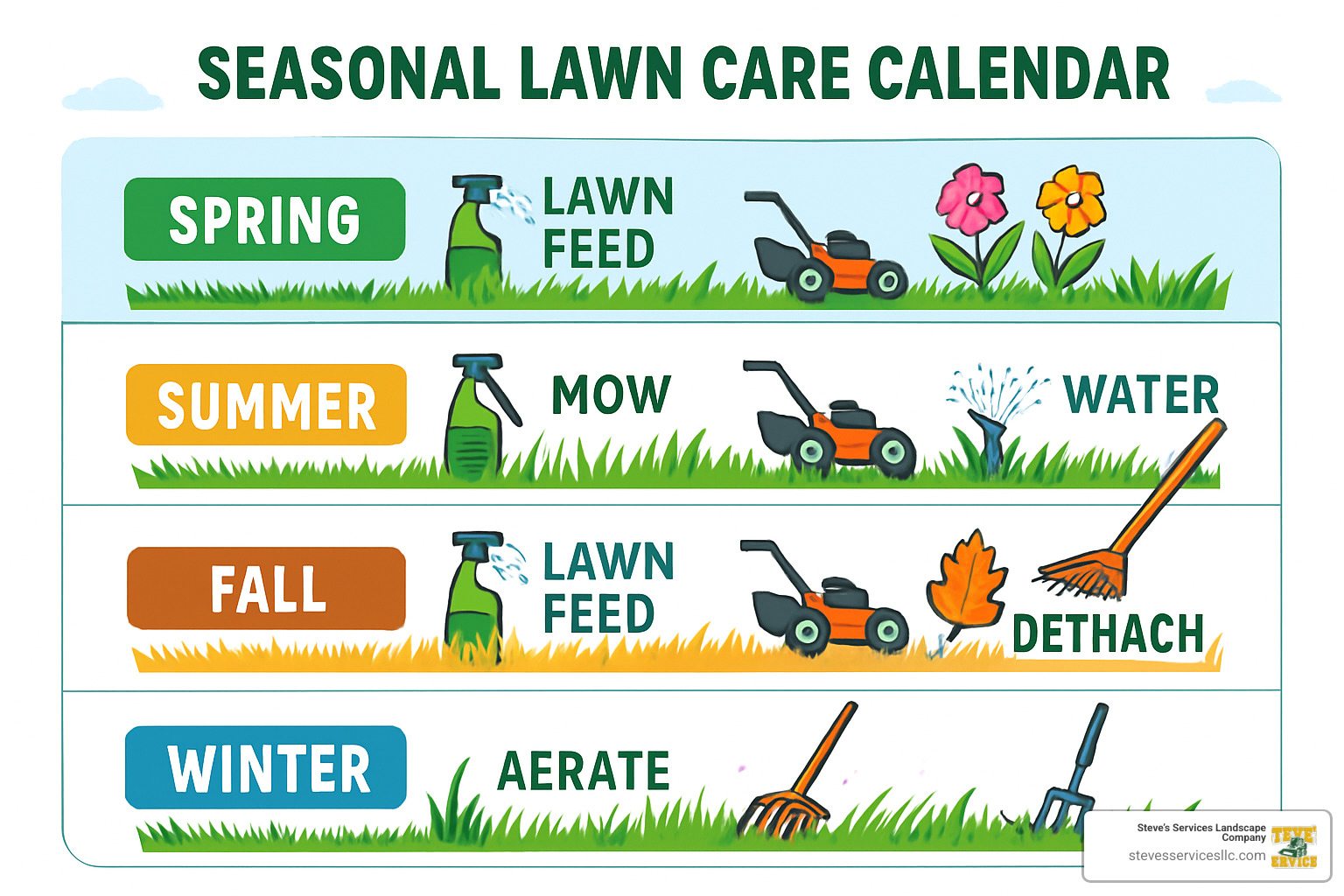
For our Massachusetts clients with cool-season grasses like Kentucky bluegrass and fescue, timing your liquid lawn feed applications correctly makes all the difference.
Spring awakening happens when soil temperatures consistently hit about 55°F—typically mid-April in our area. This is your signal to apply the first liquid lawn feed of the season.
Summer feeding should be approached with caution. While your lawn is still growing, it’s also under more stress, so we typically recommend lighter applications with stress-recovery formulations.
Fall is actually the golden season for feeding cool-season grasses. Applications in September and October help develop strong root systems before winter sets in.
For the complete annual cycle, we typically recommend applications every 4-6 weeks during the growing season, with a final feed about 2-3 weeks before the first expected frost.
Situations When Liquid Feed Shines
While liquid lawn feed works great for regular maintenance, there are specific situations where it’s absolutely the perfect solution:
- New sod installation: After laying fresh sod, we immediately apply a high-phosphorus (16-21-2) liquid lawn feed to help those roots establish quickly. More info about How to Fertilize New Sod
- Seeding projects: The gentle, immediately available nutrition won’t burn delicate seedlings but gives them exactly what they need to accelerate establishment.
- Compacted soil: When combined with liquid aeration products, it can improve oxygen penetration while delivering nutrients and beneficial microbes right where they’re needed.
- Drought-stressed lawns: Some premium formulations can reduce watering requirements by up to 50%. The potassium-rich formulas we apply improve drought tolerance while providing quick nutrition to help lawns recover from stress.
- Phosphorus-deficient soils: Liquid lawn feed delivers this critical nutrient in a form that’s immediately available without long-term soil binding issues.
Application Methods & Frequency
Getting the most from your liquid lawn feed comes down to proper application. The right equipment, technique, and timing make all the difference in achieving that lush, green carpet everyone desires.
Hose-End Sprayer Step-by-Step
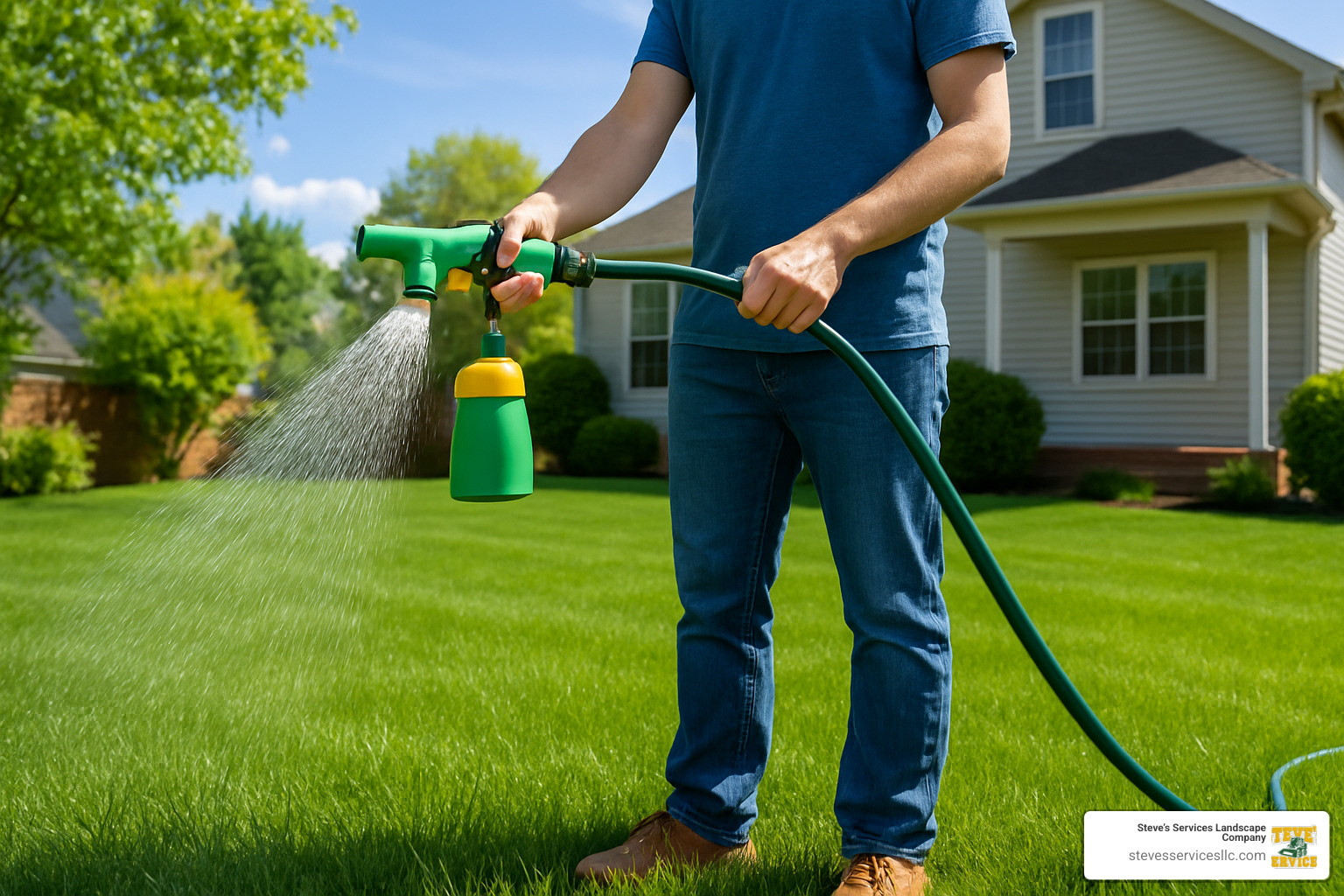
Most homeowners find a hose-end sprayer the simplest way to apply liquid lawn feed. The process is straightforward:
- Measure your lawn’s square footage and check the product label for the recommended dilution rate
- Water your lawn lightly the day before application unless it’s recently rained
- Choose a calm day when temperatures are below 85°F to prevent evaporation
- Attach the sprayer to your garden hose, fill the reservoir with concentrate, and adjust the dilution setting
- Start at one corner and walk at a consistent pace (about 3 feet per second)
- Keep the nozzle 2-3 feet above the grass and follow a systematic pattern with slightly overlapping strokes
- For a typical 2,000-3,000 square foot lawn, you should finish in about 10-15 minutes
- Rinse your sprayer thoroughly with clean water afterward
Some products recommend a light watering afterward, so check the label. Keep kids and pets off the lawn until it’s completely dry.
Watering Can or Backpack Alternatives
For smaller areas or more precise applications, consider these alternatives:
- Watering can: Perfect for areas under 500 square feet. Use one fitted with a rose or sprinkle bar attachment for even distribution. Mix according to the label (typically about 40ml per 4L water for 4 square meters).
- Backpack or pump sprayer: Ideal for medium-sized lawns between 500-2,000 square feet. These provide more control than hose-end sprayers. Mix the concentrate in the tank, use a fan-tip nozzle, and maintain consistent pressure while walking in slightly overlapping lines.
These methods are particularly useful for irregularly shaped lawns with obstacles and tight spaces.
Liquid Lawn Feed Application Mistakes to Avoid
Even the best liquid lawn feed won’t work its magic if applied incorrectly. Common pitfalls include:
- Concentration errors: Too strong can burn your grass, while too diluted won’t be effective. Always measure precisely using the product’s measuring cap.
- Timing mistakes: Avoid applying during high heat (evaporation), right before heavy rain (washout), to drought-stressed turf (potential burning), or to dormant grass (wasted product).
- Technical errors: Walking too quickly or slowly, failing to overlap passes, or holding the sprayer at inconsistent heights all lead to uneven results.
- Post-application care: Don’t skip recommended watering, allow pets on wet lawns, mow too soon (wait 24-48 hours), or apply other treatments too close to fertilization.
For best results, apply liquid lawn feed every 4-6 weeks during the growing season. This schedule provides continuous nutrition without over-fertilizing.
More info about How to Fertilize New Sod
Liquid vs. Granular Fertilizers – Side-by-Side Comparison
When choosing between liquid lawn feed and granular fertilizers, understanding the key differences helps determine which option best suits your lawn’s needs and your maintenance preferences.
| Feature | Liquid Lawn Feed | Granular Fertilizer |
|---|---|---|
| Application Speed | 10-15 minutes per 2,000 sq ft | 20-30 minutes per 2,000 sq ft |
| Visible Results | 24-72 hours | 7-14 days |
| Nutrient Availability | Immediate | Gradual release |
| Duration of Effect | 2-4 weeks | 4-8 weeks (standard) or 2-6 months (slow-release) |
| Weather Dependency | Needs dry period after application | Needs rainfall/irrigation to activate |
| Equipment Needed | Hose-end sprayer, backpack sprayer, or watering can | Broadcast or drop spreader |
| Risk of Burning | Low (when diluted properly) | Moderate to high |
| Application Uniformity | Very even when applied correctly | Can be patchy or streaky |
| Storage Considerations | Liquid; needs protection from freezing | Dry; needs protection from moisture |
| Average DIY Cost Range | $15-$60 per application (1,000 sq ft) | $10-$40 per application (1,000 sq ft) |
| Professional-Grade Cost | $40-$180+ per application (1,000 sq ft) | $30-$120+ per application (1,000 sq ft) |
Speed & Uptake
The most significant advantage of liquid lawn feed is its rapid action:
- Foliar absorption: Nutrients enter grass blades within minutes of application
- Visible results: Color improvement often appears within 24 hours
- Complete availability: All nutrients are immediately available in solution
In contrast, granular fertilizers require dissolution by moisture before becoming available, depend on soil microbes to break down certain components, and typically take 7-14 days to show visible results.
Cost, Coverage & Convenience
When comparing costs and convenience factors:
Cost Considerations:
– Liquid lawn feed: Generally more expensive per application ($15-$60 for DIY products, $40-$180+ for professional-grade formulations per 1,000 sq ft)
– Granular fertilizer: Usually more economical ($10-$40 for DIY products, $30-$120+ for professional-grade products per 1,000 sq ft)
– Coverage: A typical 32 oz bottle of concentrate covers 2,000-3,000 sq ft
Note: These are average costs based on internet data and not actual costs for Steve’s Services.
Convenience Factors:
– Liquid lawn feed: Easier to apply evenly, no heavy bags to lift, can be applied with simple equipment, mixes easily with other treatments
– Granular fertilizer: Requires a spreader for even application, heavier to transport and handle, must be watered in to activate, longer-lasting
Integrating Both for Best Results
Many lawn care professionals find that integrating both liquid lawn feed and granular fertilizers creates optimal results:
Foundation + Boost Approach:
– Use slow-release granular fertilizer as a foundation (3-4 times per year)
– Supplement with liquid lawn feed for quick green-up, recovery from stress periods, correction of specific deficiencies, and improved fall root development
Seasonal Integration Strategy:
– Early spring: Granular with pre-emergent weed control
– Late spring: Liquid lawn feed for quick green-up
– Summer: Liquid applications focusing on stress reduction
– Early fall: Granular for sustained feeding during recovery
– Late fall: Liquid lawn feed with high potassium for winter hardiness
Safety, Environmental & Regulatory Essentials

When creating that perfect green space for your family to enjoy, safety should always come first. Using liquid lawn feed responsibly means understanding not just how to apply it, but how to protect those who use your lawn.
Child & Pet Safety Wait Times
The good news is that most modern liquid lawn feed products are designed with family safety in mind.
The golden rule is simple: follow the dry-to-touch principle. Once the product has completely dried on grass blades, it’s typically safe for children and pets to resume their outdoor activities. This usually takes about 2-4 hours on a warm day with light breeze.
Always check the specific label directions, though. Some professional-grade liquid lawn feed products might have slightly longer waiting periods, especially those containing additional beneficial ingredients.
Runoff Prevention & Local Laws
Being good environmental stewards means understanding how liquid lawn feed interacts with our local ecosystems. Massachusetts has specific regulations we need to follow to protect our lakes and streams.
Key environmental practices include:
- Creating buffer zones of at least 10-15 feet near water features
- Never applying liquid lawn feed when heavy rain is in the forecast (ensure a 24-hour rain-free window)
- Being aware of local phosphorus restrictions (many Massachusetts communities limit its use to new lawns or situations where soil tests confirm a deficiency)
The middle number in the N-P-K ratio tells you the phosphorus content – something worth checking before purchase.
Eco-Friendly Formulas & Water-Saving Additives
Today’s liquid lawn feed products often include innovations that actually improve the environment rather than harm it.
Humic acid, often included at concentrations up to 12% in premium liquid lawn feeds, does double duty by both nourishing your lawn and improving soil structure. This means better water retention, reduced runoff, and healthier microbial activity in your soil.
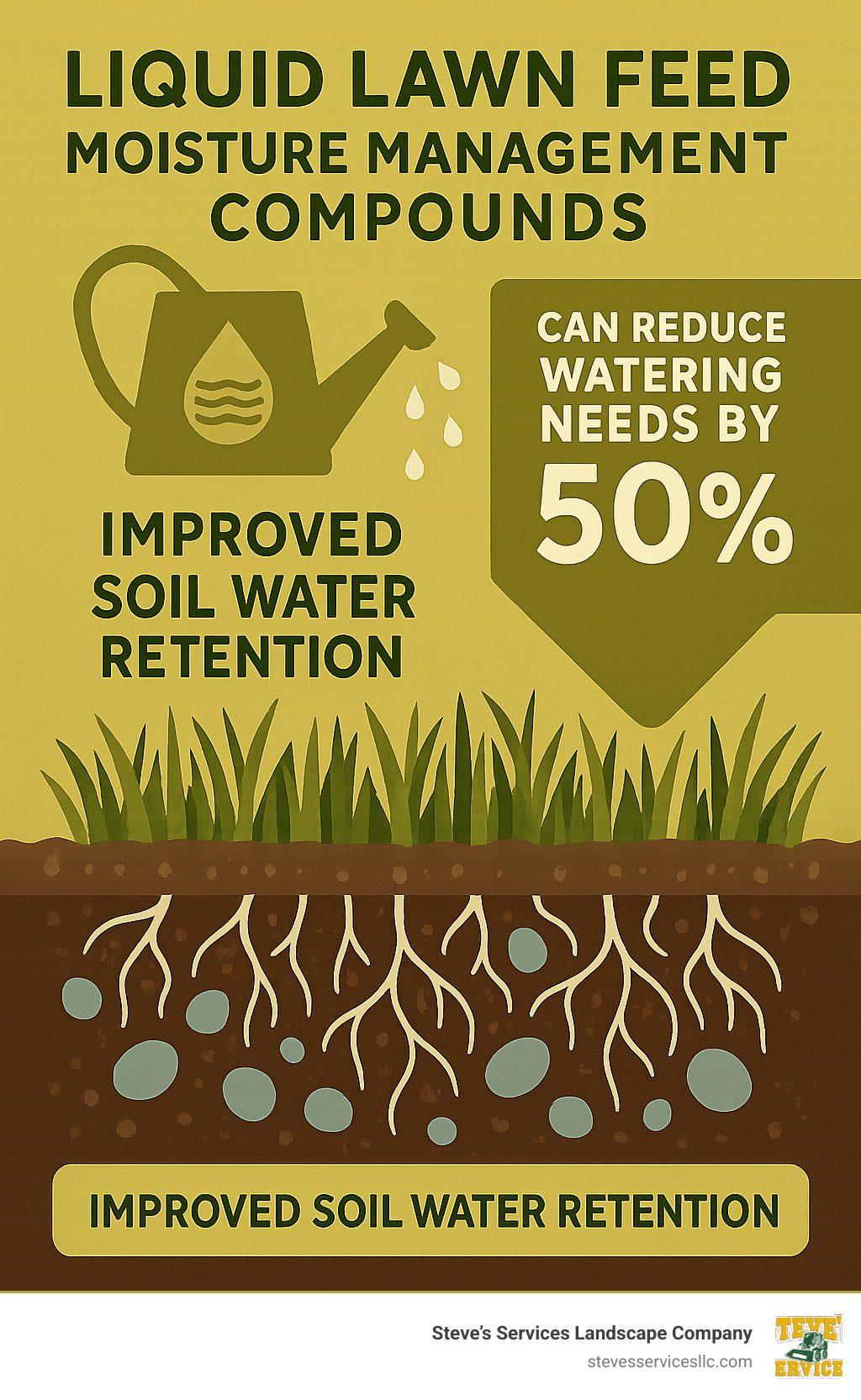
Perhaps most impressive are the moisture management compounds now available in many liquid lawn feed products. These remarkable additives can reduce your watering needs by up to 50% by helping soil hold moisture exactly where grass roots need it.
At Steve’s Services, we’re proud to offer these eco-friendly options throughout our service area. Many of our clients share our commitment to environmental stewardship and appreciate that they can have both: a beautiful lawn and a clear environmental conscience.
Scientific research on sustainable turf care
Frequently Asked Questions about Liquid Lawn Feed
How soon will I see results?
One of the most exciting things about liquid lawn feed is how quickly it transforms your lawn:
- Initial color improvement: That satisfying green-up often appears within just 24-72 hours
- Noticeable thickening: Within 7-10 days, you’ll typically see your lawn becoming fuller
- Full response: The complete change usually takes 14-21 days
Your lawn’s response depends on its current health, soil temperature, moisture levels, and grass type. Weather after application plays a big role too – warm, slightly moist conditions create the perfect environment for rapid improvement.
We’ve consistently seen that satisfying “wow” moment within about 48 hours of applying liquid lawn feed during active growing seasons.
How often should I reapply?
While every 4-6 weeks during growing season is a good general rule, your specific lawn might need a customized schedule.
Cool-season grasses typically benefit from more frequent feeding during their prime growing windows in spring and fall. Properties with sandy soil, which drains quickly and doesn’t hold nutrients as well, might need slightly more frequent applications. High-traffic areas also appreciate more regular nutritional boosts.
For most of our Massachusetts clients, we recommend 3-4 applications for standard maintenance lawns and 5-6 applications for showcase properties. We typically dial back frequency during the heat of summer when grass is naturally stressed, then increase applications when helping lawns recover from damage or heavy use.
Professional-grade formulations often provide longer-lasting results than consumer products, which is something to consider when planning your lawn care calendar.
Can I mix liquid feed with weed or pest controls?
While liquid lawn feed can often be combined with other treatments, it requires a thoughtful approach.
Many liquid lawn feeds work well when tank-mixed with selective herbicides that target specific weeds while leaving your grass unharmed. Some formulations also combine effectively with certain insect controls.
However, not all combinations are beneficial. Never mix products unless their labels specifically state it’s safe to do so. Combining with non-selective herbicides is generally a bad idea. Some chemical combinations can cause ingredients to precipitate out of solution or reduce each other’s effectiveness.
When in doubt, the safest approach is to apply liquid lawn feed about 7-10 days before or after other treatments. This gives each product time to work properly without interference.
If you’re determined to combine treatments, always read all product labels thoroughly, and consider testing a small, inconspicuous area first to ensure there are no negative reactions before treating your entire lawn.
Conclusion
There’s something truly satisfying about watching a lackluster lawn transform into a lush, green oasis in just a matter of days. That’s the magic of liquid lawn feed – it delivers results with a speed and precision that traditional fertilizers simply can’t match.
Throughout this guide, we’ve explored how liquid lawn feed works through immediate nutrient availability, even application across your entire lawn, and versatility that adapts to your specific lawn challenges. Whether you’re nurturing new grass, preparing for a backyard gathering, or helping your lawn bounce back after a stressful summer, liquid solutions provide that quick boost when you need it most.
Let’s remember what makes liquid lawn feed so effective:
- Speed – visible greening often appears within just 24-72 hours after application
- Absorption – your lawn starts drinking up nutrients immediately through both leaf blades and roots
- Environmental benefits – modern formulations include eco-friendly ingredients and water-saving technology
For the absolute best results year-round, we often recommend a combined approach – using granular fertilizers as your foundation and supplementing with liquid lawn feed for quick green-ups and targeted solutions to specific problems.
After more than two decades of changing lawns across Everett, Malden, Wakefield and beyond, we’ve seen how the strategic use of liquid lawn feed can make all the difference. Our experienced team at Steve’s Services Landscape Company knows exactly which formulations work best for each unique lawn situation throughout our Massachusetts service area.
Ready to see what liquid lawn feed can do for your lawn? We serve communities throughout Massachusetts including Burlington, Danvers, Everett, Lynnfield, Medford, Melrose, North Reading, Reading, Revere, Saugus, Stoneham, Winchester, Woburn, Malden, and Wakefield.
With the right approach to liquid lawn feed, you’ll soon be enjoying a healthier, more vibrant lawn that stands out in your neighborhood – all while using less water and fewer chemical inputs over time. That’s what I call a win-win for both your lawn and the environment.