
sodding landscaping: 10 Powerful Benefits for 2025 Success
Transform Your Property with Sodding Landscaping: The Fast Track to a Lush Lawn
Ever dreamed of having a picture-perfect lawn without the months of waiting? That’s exactly what sodding landscaping offers – a shortcut to the lush, green yard you’ve been envisioning.
Sodding landscaping is essentially nature’s version of instant gratification. Instead of sprinkling seeds and crossing your fingers, we install pre-grown grass with established roots that transforms your property almost immediately. The difference between walking on bare soil today and hosting a backyard gathering on your plush lawn in just a few weeks is truly remarkable.
What makes sodding landscaping special is its combination of beauty and practicality. When we lay sod, we’re not just giving you grass – we’re providing immediate soil stabilization that prevents erosion, especially valuable on slopes or areas prone to washing away. Your new lawn comes with significantly fewer weed seeds than traditional seeding methods, saving you countless hours of future weed-pulling.
The timeline advantage can’t be overstated. While seeded lawns might keep you waiting months before they’re fully established, sod becomes walkable in just 2-3 weeks as the roots knit themselves into your soil. Even better, we can install sod any time the ground isn’t frozen, giving you flexibility that seeding simply can’t match.
Here in Massachusetts, where our weather can be unpredictable, sodding landscaping provides reliability that seeding often can’t guarantee. Heavy rains can wash away seeds before they germinate, but sod stays put, continuing to establish itself regardless of what Mother Nature throws at it.
I’m Steve Sylva, and for over 25 years, my team and I have been changing properties throughout Massachusetts with expert sodding landscaping services. As the owner of Steve’s Services Landscape Company, I’ve seen the joy on homeowners’ faces when they see their property completely transformed in just a single day.
Yes, sodding costs more upfront than seeding – that’s just the reality. But when you consider the immediate results, reduced maintenance headaches, and the value of enjoying your lawn this season rather than waiting for the next, many of our clients find it’s worth every penny.

Sod Landscaping 101: Key Differences Between Seeding and Sodding Landscaping
Ever stood at the edge of a bare yard wondering how to transform that dirt patch into a lush, green oasis? You’re not alone. As we help homeowners across Massachusetts create beautiful landscapes, we’re often asked about the best approach to establishing a new lawn.
Let’s break down the two main contenders – seeding versus sodding landscaping – so you can make the best choice for your property.
| Feature | Sodding | Seeding |
|---|---|---|
| Installation Time | 1-2 days | Several hours (plus weeks of growth) |
| Initial Results | Instant green lawn | Bare soil with seeds |
| Time to Usable Lawn | 2-3 weeks | 8-12 weeks minimum |
| Weed Pressure | Minimal initially | High competition with new grass |
| Erosion Control | Immediate | Poor until established |
| Best Installation Time | Almost year-round (when ground isn’t frozen) | Late summer/early fall |
| Initial Cost | $1.50-$12 per sq ft installed | $0.10-$0.30 per sq ft |
| Root Development | Good, but less extensive initially | Deeper root system long-term |
| Water Requirements | Higher initially, then normalizes | Consistent moisture for weeks |
What Exactly Is Sodding Landscaping?
Picture a carpet of living grass that instantly transforms your yard – that’s sodding landscaping in a nutshell. These aren’t artificial turf squares but rather real, living grass that’s been carefully grown on specialized farms for 12-18 months.
“I like to tell my customers that sod is essentially a ready-made lawn that we’re transplanting to your property,” says Steve Sylva, owner of Steve’s Services. “We’re bringing in mature grass with its root system already developed, giving you that instant gratification that’s hard to beat.”
Each piece of sod typically covers about 2.67 square feet and includes a thin layer of soil with the established root system. The grass has been professionally maintained, fertilized, and trimmed before harvesting, which is why it arrives at your home looking perfect and weed-free. When properly installed, these living grass sections quickly knit together and root into your soil, creating a seamless lawn that looks like it’s been there for years.
How Seeding Works and When It Makes Sense
Seeding is the more traditional approach – spreading grass seed over prepared soil and nurturing it as it sprouts and gradually fills in. Think of it as starting from scratch rather than buying a ready-made solution.
While seeding requires significantly more patience (and often more initial babysitting), it does have its place in the landscaping world. Seeding makes good sense if you’re working with an extremely large area where sodding landscaping might strain your budget. The per-square-foot cost difference is substantial, with seeding coming in at just pennies compared to dollars for sod.
Another advantage of seeding is the potential for deeper root development. Because the grass germinates directly in your native soil, it can establish more extensive root systems over time. This can lead to better drought resistance once fully established.
That said, the tradeoffs are significant. With seeding, you’ll face a much longer wait (typically 2-3 months) before your lawn looks presentable. During this vulnerable establishment period, you’ll battle weeds that compete with your fragile grass seedlings, worry about erosion during heavy rains, and need to maintain consistent soil moisture for proper germination.
For most of our Massachusetts clients who value their time and want reliable results, sodding landscaping provides the perfect balance of immediate satisfaction and long-term performance. It’s particularly ideal for family homes where kids and pets need usable outdoor space sooner rather than later.
Curious about which approach might work best for your specific property? Our team at Steve’s Services is always happy to evaluate your site conditions and provide personalized recommendations based on your timeline, budget, and lawn goals. Sod vs. Seed research also offers additional insights to help with your decision.
Why Choose Professional Sodding: Top Environmental & Practical Benefits
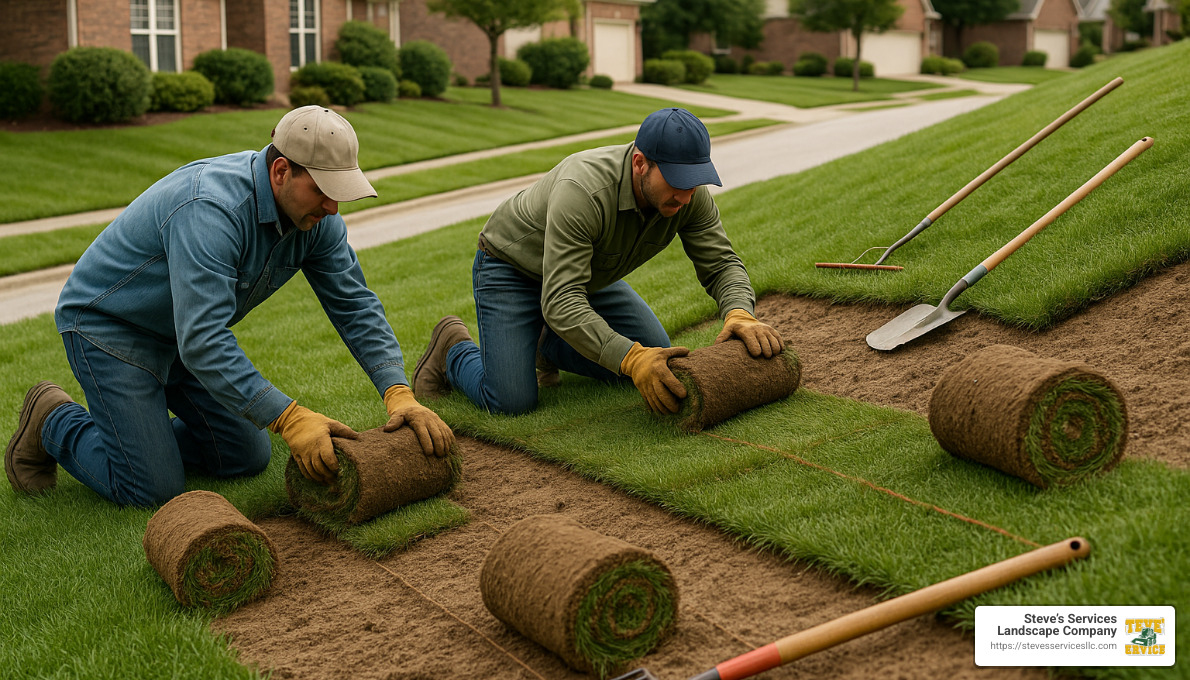
When it comes to changing your outdoor space, sodding landscaping offers a remarkable combination of immediate beauty and lasting benefits. At Steve’s Services, we’ve seen how professionally installed sod can revolutionize properties across Massachusetts, often in ways homeowners don’t initially expect.
Environmental Perks of Sodding Landscaping
That lush carpet of green does far more than just look pretty. On hot summer days in Everett or Medford, your sodded lawn naturally cools the surrounding area—often by up to 15 degrees compared to bare soil. This cooling effect helps fight the urban heat island effect that makes our cities so uncomfortably hot during summer months.
“I remember installing sod for a family in Revere whose backyard was basically a dust bowl,” shares Steve. “Two weeks later, they called to tell me their kids could finally play outside comfortably because the temperature difference was so noticeable.”
Your new lawn also works as a natural air purifier. Every day, the grass captures dust particles and pollutants that would otherwise circulate in the air you breathe. A modest 50’x50′ lawn area can capture hundreds of pounds of carbon annually, making your property part of the climate solution rather than the problem.
Living near busy roads in Burlington or Woburn? Sodding landscaping naturally dampens noise pollution by absorbing sound waves instead of reflecting them like concrete or bare soil. Many of our clients are surprised by how much quieter their outdoor spaces become after installation.
Perhaps most impressive is sod’s ability to prevent erosion. Massachusetts weather can be unpredictable, with heavy rains that wash away topsoil and damage properties. Unlike seeded lawns that take months to establish meaningful root systems, sod immediately stabilizes soil—even on challenging slopes where erosion risk is highest.
The dense root system of professionally installed sod also acts as a natural water filtration system. As rainwater passes through your lawn, the roots help break down environmental contaminants before they reach local water sources, contributing to cleaner groundwater throughout our communities.
Immediate Functional Advantages
When we install sod at a property in Winchester or Reading, the change is instantaneous. That’s why sodding landscaping is particularly valuable for homeowners preparing to sell—the curb appeal boost can make a significant difference in buyer interest and property valuation.
Unlike seeded lawns that remain off-limits for months, sodded lawns typically handle light foot traffic within just 2-3 weeks. For families with children or pets, this quick usability is often the deciding factor when choosing between sodding and seeding.
Professional sod comes virtually weed-free, having been grown under controlled conditions. This gives your new lawn a tremendous head start against invasive plants that would otherwise compete with grass seedlings in a traditionally seeded lawn.
“We had a client in Stoneham who called us in a panic,” our project coordinator recalls with a smile. “They were hosting their daughter’s wedding in just six weeks, but their yard was mostly patchy dirt. We installed sod, and by the time guests arrived, they had a picture-perfect lawn for the celebration.”
This event-readiness makes sodding landscaping invaluable for commercial properties too. Businesses in Melrose and surrounding areas often choose sod when preparing for grand openings, outdoor corporate events, or simply to improve their professional image with clients.
Challenging areas that typically struggle with traditional seeding—like steep slopes, shady spots, high-traffic zones, or areas with poor drainage—benefit tremendously from sod’s immediate establishment. The pre-grown root system adapts to these difficult conditions far more successfully than scattered seeds ever could.
By choosing professional sodding landscaping from Steve’s Services, you’re not just getting a beautiful lawn—you’re making a smart investment in your property’s environmental health, functionality, and long-term value. The combination of immediate results and lasting benefits makes sod the preferred choice for discerning Massachusetts property owners who understand that sometimes, the best solutions don’t require waiting.
Selecting the Best Grass: Matching Sod Types to Climate & Soil
Choosing the right type of sod for your Massachusetts property isn’t just about picking what looks pretty – it’s about finding a grass that will actually thrive in our unique New England conditions. At Steve’s Services, we’ve seen how matching the right sod to your specific situation makes all the difference between a struggling lawn and one that becomes the envy of your neighborhood.
Warm-Season Sod Options
While Massachusetts isn’t exactly known for tropical weather, there are some warm-season grasses that can work in specific situations:
Bermuda Grass loves the sun and can take a beating from kids, pets, and backyard football games. It’s incredibly drought-tolerant and will bounce back from damage quickly. The downside? It turns brown when temperatures drop, and it needs full sunshine to thrive – not ideal for many shaded Massachusetts yards.
Zoysia Grass offers a nice middle ground with better cold tolerance than Bermuda. Once established, it creates this amazing carpet-like feel underfoot that our clients absolutely love. It handles moderate traffic well and can tolerate some shade, making it occasionally suitable for protected areas in southern Massachusetts.
St. Augustine Grass is the shade champion among warm-season grasses, creating a lush, thick lawn even in partially shaded spots. However, it shivers at the first sign of cold weather, so we rarely recommend it except for very protected areas with specific microclimate conditions.
Cool-Season Choices for New England
For most Massachusetts properties, cool-season grasses are your lawn’s best friends, designed to handle our distinct four-season climate:
Kentucky Bluegrass is what most people picture when they think “perfect lawn” – that rich blue-green color that looks like it belongs on a golf course. It’s particularly popular in upscale communities like Lynnfield and Winchester, where curb appeal is everything. While it needs good sunlight and regular care, it rewards you with a self-healing lawn that recovers beautifully from damage.
Tall Fescue has become increasingly popular with our more environmentally-conscious clients. Modern varieties look much better than the coarse tall fescues of the past, and they require less water than bluegrass while handling drought conditions like champions. It’s also adaptable to various soil conditions, which is helpful in Massachusetts where soil quality can vary dramatically even within the same yard.
Fine Fescue is your go-to grass for those tricky shaded areas where the sun barely makes an appearance. If you’ve got properties in heavily wooded areas of Wakefield or Malden, fine fescue varieties (like creeping red, chewings, and hard fescue) will thrive where other grasses struggle. They’re also less demanding when it comes to fertilizer and water.
Perennial Ryegrass is often the supporting actor in a sod blend rather than the star. It establishes quickly and handles wear well, which is why we often see it mixed with Kentucky bluegrass to create versatile sod that gives you both immediate results and long-term performance.
How to Judge Sod Quality Before Purchase
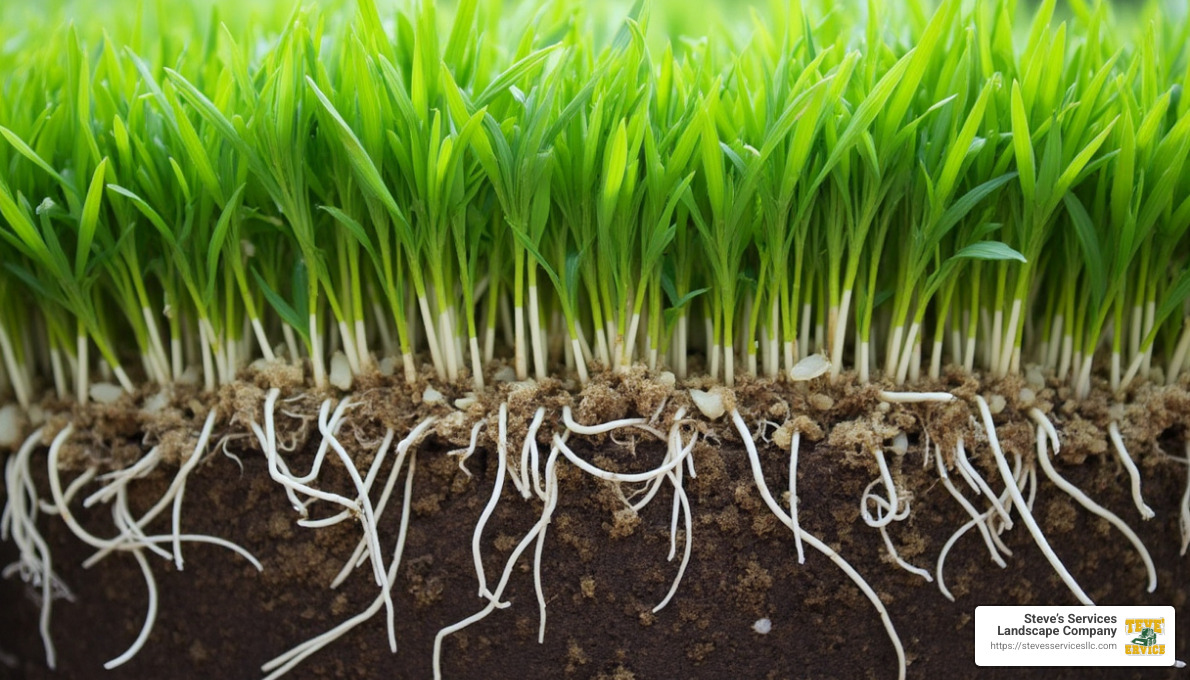
Not all sod is created equal, and at Steve’s Services, we’re pretty picky about what we’ll install on our clients’ properties. Here’s what we look for when sourcing quality sod:
A healthy sod should have a uniform, deep green color without patchy areas or thinning spots. The root system is crucial – when you flip a piece over, you should see a substantial root mat (at least 1-1.5 inches thick) with healthy white roots that look alive and vibrant, not dried out or brown.
The soil layer attached to the roots should be consistent in thickness throughout the piece. We always check for excessive thatch, which can prevent proper rooting in your soil. And freshness matters tremendously – sodding landscaping is most successful when the sod is installed within 24-48 hours of being harvested.
“When I’m inspecting sod deliveries, I’m looking for that perfect moisture balance,” says one of our installation team leaders. “Too dry, and the sod might not establish properly. Too wet, and you risk rot or fungal issues before it even touches your soil.”
Quality sod should be virtually weed-free – after all, why pay for a professional installation if you’re just importing someone else’s weed problems? And proper handling is essential – sod that’s been stacked too high or left on pallets too long can heat up internally, essentially composting itself before installation.
At Steve’s Services, we’ve built relationships with premium sod farms throughout the region to ensure our customers receive only top-quality turf for their Massachusetts properties. It’s this attention to quality that has our sodding landscaping projects in communities from North Reading to Saugus establishing quickly and thriving for years to come.
From Soil Analysis to Rolling Out: The Professional Sodding Process
The success of any sodding landscaping project begins long before the first piece of sod is laid. Our professional process at Steve’s Services follows a methodical approach developed over 25 years of experience in Massachusetts conditions.
Site Preparation Essentials
Great sod needs great soil beneath it – that’s why we’re so thorough with our prep work. We start with comprehensive soil testing to check pH and nutrient levels, aiming for that sweet spot between 6.0 and 7.5 that most grasses love. Based on these results, we’ll amend your soil to create the perfect growing environment.
Next comes the cleanup – we carefully remove rocks, sticks, and debris from the site. For properties with existing lawns, we use specialized equipment to strip away the old turf to a depth of 1-2 inches, giving us a clean slate to work with.
“Compacted soil is one of the biggest enemies of a healthy lawn,” explains our operations manager. “It’s like trying to grow grass on a sidewalk – those roots need room to breathe and expand.” That’s why we always take time to loosen compacted soil through mechanical aeration or tilling before laying a single piece of sod.
Proper grading and leveling isn’t just about aesthetics – it’s crucial for drainage. We carefully shape the landscape to ensure water flows away from buildings and prevent those annoying puddles that can drown sections of your lawn. Once graded, we add a generous layer of premium topsoil (typically 4-6 inches) and apply a specialized starter fertilizer to give your new sod the nutrient boost it needs right from day one.
If you’re including an irrigation system, we’ll complete that installation before the sod arrives – no sense disturbing your beautiful new lawn after it’s in place!
Installation Day: What the Crew Does
When installation day arrives, timing is everything. We coordinate same-day delivery of your sod to ensure maximum freshness – remember, sod is a living product that begins to deteriorate if left stacked on pallets too long.
Our crews begin by establishing straight lines along driveways, walkways, or other permanent features. This creates both a professional appearance and provides an efficient installation pattern. We lay each piece in a brick-like pattern with staggered seams – never lining them up in straight rows. This prevents visible seam lines and eliminates channels that could lead to erosion.
“The secret to a seamless lawn is in how the pieces fit together,” says our lead installer. “We press each piece firmly against its neighbors – tight enough to eliminate gaps but without overlapping.” Around curves, trees, or landscape features, we precisely cut each piece using specialized tools for that perfect custom fit.
After all the sod is placed, we roll the entire lawn with a weighted roller. This step is crucial – it eliminates air pockets and ensures good soil-to-root contact, which is essential for proper establishment. Finally, we give your new lawn its first deep watering to kick-start the rooting process and prevent drying.
The change is remarkable – in just a day, your property goes from bare soil to lush green lawn. As one Malden homeowner told us, “I left for work looking at dirt and came home to a gorgeous lawn. It was like magic!”
Safety & Timing Considerations for Sodding Landscaping
While we can install sod nearly year-round in Massachusetts (as long as the ground isn’t frozen), the optimal windows are spring (April-June) and fall (September-October). These seasons offer moderate temperatures and typically adequate rainfall, creating ideal conditions for root establishment.
“Fall installation gives the sod time to establish before summer heat stress, while spring installation allows establishment before winter,” notes our scheduling coordinator. “But don’t worry if you miss these windows – we successfully install sod throughout the growing season by adjusting our care protocols to match the conditions.”
Weather plays a crucial role in our planning. We closely monitor forecasts before scheduling installations, as extreme heat can stress new sod, while heavy rain can complicate installation and potentially cause erosion before roots establish. Sometimes we might need to reschedule at the last minute – not to inconvenience you, but to protect your investment.
Once your new lawn is in place, traffic restrictions are essential. We provide clear guidance on keeping foot traffic off new sod during the critical establishment period (typically 2-3 weeks) to allow proper rooting. For homes with pets, we develop specific plans to manage access during establishment – maybe creating a temporary pet area so Fido doesn’t damage your new lawn before it’s ready.
Before we leave your property, we’ll ensure you understand exactly how to care for your new lawn, particularly regarding watering needs. Consistent moisture is absolutely critical during those first few weeks as the roots establish in your soil. Many of our clients in Everett, Malden and surrounding communities tell us this guidance is invaluable for their long-term success.
Want to learn more about our professional installation process? Visit our Install Sod page for additional details on how we can transform your property with sodding landscaping.
After-Care & Long-Term Maintenance for a Thriving Sod Lawn
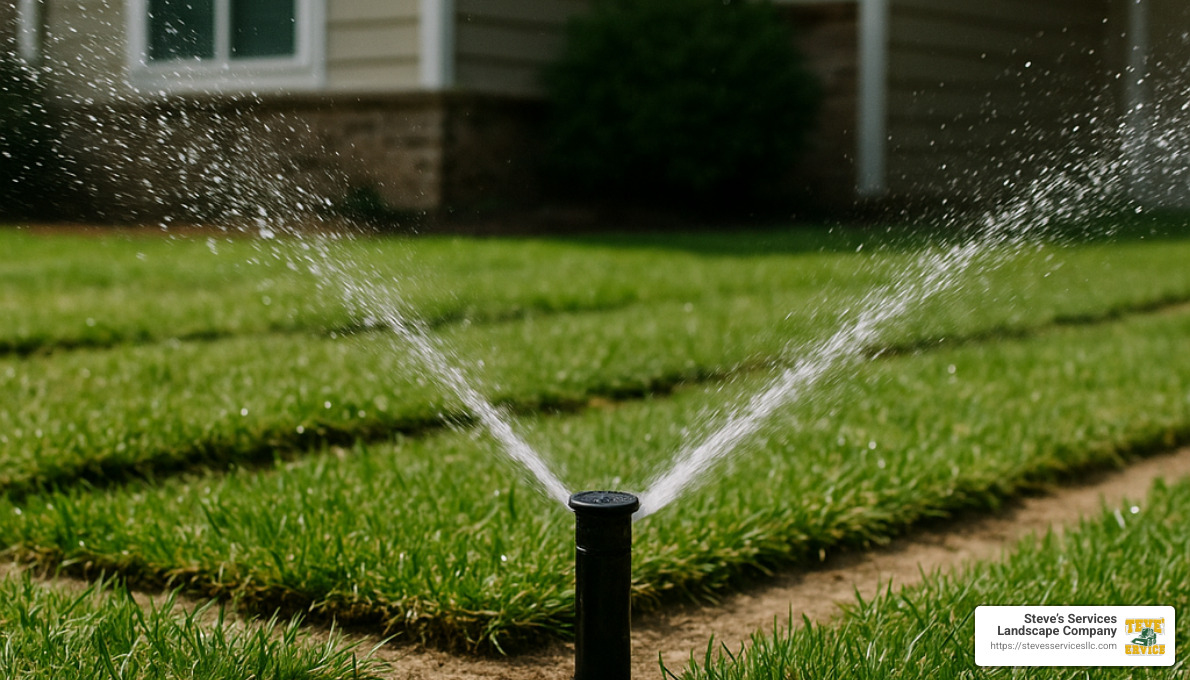
You’ve invested in a beautiful new lawn through sodding landscaping – now it’s time to protect that investment. The care you provide in the first few weeks will determine how well your lawn thrives for years to come. Let me walk you through everything you need to know about nurturing your new sod.
First 30 Days: The Critical Rooting Phase in Sodding Landscaping
The month following installation is make-or-break time for your new lawn. Think of your sod as a patient recovering from surgery – it needs extra attention during this healing period.
Water, water, water – this is your new mantra. For the first 7-10 days, your new sod needs deep watering 2-3 times daily. The soil beneath should feel like a well-wrung sponge – moist but not soggy. I can’t tell you how many times I’ve seen beautiful new lawns struggle simply because of inadequate watering during those crucial first weeks.
“I had a customer in Medford who thought she was overwatering her new sod because the soil felt damp,” shares our maintenance supervisor. “Two days of hot weather later, we were trying to rescue patches that had dried out. When in doubt during those first two weeks, more water is usually better than less.”
As you approach the two-week mark, you’ll begin a gradual watering transition. Start reducing frequency while increasing duration of each watering session. This change encourages those roots to dive deeper into the soil, creating a drought-resistant lawn for the long term.
Keep off the grass isn’t just a saying – it’s essential advice for new sod. Treat your lawn like it’s made of delicate tissue paper for the first 2-3 weeks. When you absolutely must walk on it (to move sprinklers, for example), tread lightly and vary your path to avoid creating worn areas.
Around day 14, perform a simple root establishment check by gently lifting a corner of sod in an inconspicuous area. Seeing white roots extending into the soil below? That’s cause for celebration – your lawn is bonding with its new home!
When your grass reaches about 3-3.5 inches tall (typically 2-3 weeks after installation), it’s time for the first mowing. Set your mower blade high, ensure it’s razor-sharp, and never remove more than one-third of the grass height. A dull blade tears rather than cuts, potentially pulling young plants right out of the ground.
Hold off on additional fertilizer until about 6 weeks post-installation. The starter fertilizer we applied during installation provides all the nutrients your new lawn needs during its establishment phase. Too much too soon can actually damage tender new growth.
Year-Round Maintenance Differences vs Seeded Lawns
Once your sodding landscaping project has established, your maintenance routine will be similar to other lawns, with a few important distinctions.
Your fertilization schedule might surprise you. Here in Massachusetts, we typically recommend 4-5 applications annually, with the first spring feeding often coming slightly earlier for sodded lawns compared to seeded ones. Their established root systems can process nutrients more efficiently right from spring’s start. Check out our guide on Best Fertilizer for New Sod for specific recommendations.
Mowing height matters tremendously for cool-season grasses in our New England climate. Keep your blade at 2.5-3.5 inches, adjusting to the higher end during summer’s heat. This taller height shades the soil, reducing moisture loss and discouraging weed germination. And please, keep those mower blades sharp – your grass will thank you!
One area where sodded lawns differ significantly is in thatch management. The dense growth habit of sod can lead to faster thatch buildup – that layer of dead grass between the green blades and the soil surface. Annual dethatching or core aeration prevents this layer from choking your lawn and improves water and nutrient penetration.
Once established (4-6 weeks post-installation), your watering efficiency should focus on depth rather than frequency. Aim for about 1-1.5 inches weekly, either from rainfall or irrigation. I always tell my customers: “Water deeply and infrequently. It’s like training your lawn to be drought-resistant.”
Even the most beautiful sodded lawn benefits from occasional overseeding – typically every 1-2 years in early fall. This practice introduces fresh grass varieties and maintains density as older plants naturally thin. It’s like giving your lawn a youth serum!
While initially weed-free, your sodded lawn will eventually face weed pressure. A pre-emergent application in spring helps prevent crabgrass and other annuals, while spot-treating broadleaf weeds maintains your lawn’s pristine appearance. Our Sod Fertilizer guide contains additional information about products that both feed your lawn and help manage weeds.
“The most rewarding part of our job is seeing lawns we installed years ago still thriving,” says our turf specialist. “I was just visiting a client in Winchester whose sodded lawn we installed 12 years ago. With consistent care, it still looks like it was installed last season. That’s the power of proper maintenance.”
For comprehensive guidance on long-term care, visit our detailed guide on How to Care for New Sod. And remember, while these maintenance tasks might seem overwhelming, our team at Steve’s Services offers customized maintenance programs for homeowners throughout our Massachusetts service area who prefer to leave the technical work to the professionals.
Investment & Sustainability: Costs, ROI, and Ecological Impact
Investing in professional sodding landscaping is like buying a finished product versus assembling it yourself – you’ll pay more upfront, but the immediate change and peace of mind often justify the premium for many Massachusetts homeowners.
Based on internet data and industry averages (not actual pricing for Steve’s Services), professional sod installation typically ranges from $1.50 to $12 per square foot. This wide range reflects several factors that influence your specific project:
“The size of your property makes a big difference,” explains our estimator. “Larger lawns often benefit from volume pricing, while smaller areas might have a higher per-square-foot cost because the same setup and equipment are needed regardless of size.”
Other factors affecting your investment include the sod variety you select, how much site preparation your property needs, how easily our teams can access your yard, and whether you’re adding irrigation or other improvements simultaneously.
While the initial cost exceeds seeding, the value proposition becomes clear when you consider the complete picture. A freshly sodded lawn doesn’t just look beautiful immediately – it works hard for your property and the environment from day one.
Sodding landscaping offers impressive ecological benefits that start working immediately. The established root systems prevent soil erosion during heavy New England rains, keeping valuable topsoil in place and preventing harmful runoff into local waterways. These same roots act as natural water filters, improving groundwater quality in your community.
“Many of our Lynnfield and Reading customers are surprised to learn their new lawn is actively fighting climate change,” notes our environmental specialist. “A healthy sodded lawn begins capturing carbon dioxide immediately, helping offset your carbon footprint while also cooling your property during hot summer months.”
The sustainability advantages continue with reduced need for herbicides during establishment (compared to seeded lawns) and improved water efficiency once the lawn is established.
From a financial perspective, professional sodding landscaping delivers tangible returns beyond just curb appeal. Properties with well-maintained professional landscaping typically command 5-12% higher values when selling. That beautiful lawn creates a powerful first impression that can significantly impact buyer interest.
The investment also pays dividends through reduced long-term maintenance. With fewer weed battles to fight during establishment and a more stable turf from the beginning, you’ll typically spend less on ongoing care. Many of our customers in communities like Winchester and Stoneham also report lower water bills once their sodded lawns fully establish, thanks to the efficient, mature root systems.
Perhaps most valuable to many families is the immediate usability – no lost summer days waiting for grass to grow, no muddy paw prints tracking through the house, and no erosion repairs needed after heavy storms.
How Much Sod Do You Need? Calculations & Ordering
Getting your sod quantities right is crucial for a smooth installation process. At Steve’s Services, we take precise measurements to ensure you have exactly what you need without wasteful excess.
For basic rectangular areas, we simply multiply length by width to determine square footage. When your property has curved beds or irregular shapes (as many Massachusetts landscapes do), we divide the space into manageable sections, calculate each separately, and add them together for an accurate total.
“Always account for some waste when ordering sod,” advises our project manager. “We typically recommend adding 5-10% to your calculated area to cover cutting waste around curves, replacing any damaged pieces, and accounting for any small measurement errors.”
Understanding how sod is packaged helps with planning too. Full pallets typically cover 400-450 square feet, half pallets about 200-225 square feet, and individual pieces approximately 2.67 square feet each. For most residential projects in communities like Malden and Melrose, we can determine exactly how many pallets you’ll need to cover your property efficiently.
Running short mid-installation creates real problems – if you need to order additional sod later, it may come from a different harvest batch, potentially creating visible color or texture differences in your finished lawn. That’s why our measurement process is so thorough before we place your order.
Comparing Short- and Long-Term Costs to Seeding
When weighing sodding landscaping against seeding, the complete financial picture extends far beyond the initial price tag.
In the short term, while professional sod installation requires a higher upfront investment, seeding often involves hidden costs that narrow the gap. Seeded lawns typically need multiple follow-up visits for overseeding bare patches where germination was spotty. They also demand more intensive watering for much longer periods, driving up water bills during establishment.
“What many homeowners don’t factor in is the cost of weed control,” explains our lawn care specialist. “New seeded lawns face significant weed competition during their vulnerable establishment period, often requiring multiple herbicide applications that sodded lawns simply don’t need.”
For properties with any slope or drainage challenges, the erosion repair costs after heavy rains can quickly make seeding false economy. We’ve seen countless examples throughout our service areas in Everett, Revere, and beyond where rain washes away seed and soil, requiring repeated applications.
The long-term value equation favors sodding landscaping in several ways. Professionally installed sod establishes more uniformly, creating a dense turf that naturally resists weeds and requires less ongoing spot treatment. The professional soil preparation that accompanies sod installation provides lasting benefits to your lawn’s health and resilience.
Perhaps most valuable to busy families is the time factor – enjoying a beautiful, usable outdoor space immediately versus waiting 2-3 months for a seeded lawn to become established enough for light use.
“When we discuss options with our Burlington and Danvers customers, we present the complete picture,” notes our customer service representative. “For many families, having that instant backyard ready for summer barbecues and kids’ play makes the sod investment worthwhile when all factors are considered.”
Frequently Asked Questions about Sodding Landscaping
How long before I can walk or play on my new sod?
The waiting period for a new sodded lawn is one of the most common questions we hear from our Massachusetts customers. While it’s tempting to enjoy your new green space immediately, patience truly pays off.
For light foot traffic – like walking across the lawn to water plants or check the mail – you’ll need to wait about 2-3 weeks after installation. By this time, the sod should have developed enough roots to anchor it firmly to the soil below. A simple test: gently try lifting a corner of the sod. If it resists and feels firmly attached, you’re good for careful walking.
More intensive activities require more patience. For children playing, pets running, or setting up lawn furniture, 4-6 weeks is the recommended waiting period. This allows the root system to develop more deeply and create a lawn that can withstand regular use without damage.
“I always tell our customers in Winchester and Woburn that those first few weeks of patience are an investment in your lawn’s future,” says our customer care specialist. “It’s like letting concrete fully cure – rushing it might seem fine at first, but could lead to problems down the road.”
Pet owners should be especially cautious, keeping their furry friends off the new turf for at least 3 weeks. Dogs in particular can damage new sod with their concentrated traffic patterns and natural digging behaviors.
What months are best for installation in Massachusetts?
The New England climate creates distinct windows for sodding landscaping success, though one of the benefits of sod is its flexibility compared to seeding.
Our primary recommended installation periods in Massachusetts are:
Mid-April through June: Spring installations take advantage of moderate temperatures and typically reliable rainfall patterns. The sod establishes quickly before summer heat stress might become an issue.
September through mid-October: Fall is arguably the ideal time for sodding landscaping in Massachusetts. Cooling temperatures reduce water stress while still allowing ample time for root development before winter dormancy.
That said, we successfully install sod during secondary windows as well:
Summer installations (July through August) can thrive with proper attention to watering, though they may require more vigilance during heat waves. Late fall installations (late October through November) establish more slowly but resume vigorous growth when spring arrives.
The beauty of sodding landscaping is that it can be done whenever the ground isn’t frozen – a significant advantage over the much narrower seeding windows in our region.
Can sod last decades with proper care?
Absolutely! Unlike hardscape elements that inevitably degrade over time, a professionally installed sodded lawn is a living ecosystem that can thrive indefinitely with proper care. Many of our customers are surprised to learn there’s no “expiration date” on their lawn investment.
The secret to long-term success lies in consistent maintenance custom to Massachusetts conditions. This includes:
Regular fertilization following a program designed for our specific New England soil conditions and cool-season grasses. Most lawns benefit from 4-5 applications annually.
Proper mowing practices – maintaining cool-season grasses at 2.5-3.5 inches, never removing more than one-third of the blade length, and always using sharp mower blades.
Strategic irrigation during dry periods, focusing on deep, infrequent watering rather than daily sprinkles. This encourages deeper root development.
Annual core aeration helps relieve soil compaction that naturally occurs in our clay-heavy Massachusetts soils, allowing roots better access to air, water and nutrients.
Periodic overseeding introduces fresh grass plants to maintain density and vigor, typically done in early fall for best results.
“We have customers in Lynnfield and Reading whose sodded lawns we installed more than 15 years ago that look absolutely beautiful today,” our senior technician proudly shares. “In fact, many of these lawns actually improve over time as the soil ecosystem develops and matures.”
The most successful lawns we see across our Massachusetts service area are those where small issues are addressed promptly before they become major problems. That vigilance, combined with seasonal maintenance, creates lawns that remain lush and vibrant for decades.
Conclusion
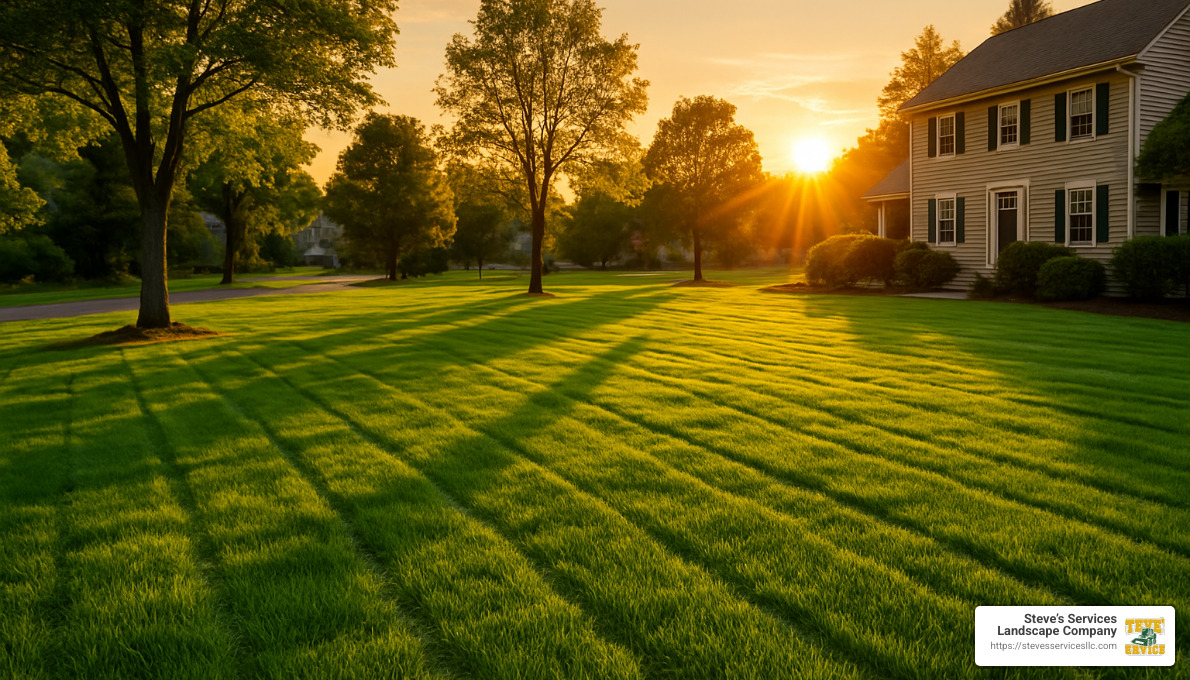
When you choose sodding landscaping for your property, you’re not just installing grass – you’re creating an instant outdoor paradise. There’s something magical about watching a barren yard transform into a lush, green oasis in just a single day. As we’ve seen countless times across Everett, Winchester, Revere and throughout our Massachusetts service area, that moment when homeowners first step onto their new lawn brings genuine joy that makes our work worthwhile.
The beauty of professional sodding goes far beyond surface-level aesthetics. Your new lawn immediately begins working as a natural environmental ally – cooling your property during hot summer days, capturing carbon from the atmosphere, and preventing erosion that can damage foundations and waterways. These living benefits only increase as your lawn matures and develops deeper roots.
Many of our clients initially hesitate at the investment compared to seeding, but quickly find the value proposition makes perfect sense. Think about it – rather than spending months battling weeds, erosion, and patchy growth, you’re enjoying a fully functional outdoor space within weeks. The time value alone often justifies the cost difference, especially for families eager to enjoy their yards or homeowners preparing to sell.
The sustainability aspects of sodding landscaping deserve special attention too. A properly installed and maintained sodded lawn creates a mini-ecosystem that benefits your entire property. The dense root network filters rainwater, reducing runoff and protecting our local waterways. The cooling effect can noticeably reduce summer energy bills. And the natural air filtration provides cleaner air for your family to breathe.
At Steve’s Services, we take tremendous pride in our sodding landscaping expertise. Over 25 years serving Massachusetts communities has taught us exactly how to prepare soil properly, select the right grass varieties for specific conditions, and install sod with precision that ensures optimal rooting and longevity. Our attention to those crucial details makes all the difference between a lawn that struggles and one that thrives for decades.
Proper maintenance following installation is the key to long-term success. The care guidelines we’ve outlined – from initial watering schedules to seasonal maintenance practices – aren’t just suggestions. They’re based on decades of experience watching what works in our unique Massachusetts climate. Follow them closely, and your sodded lawn will reward you with beauty and functionality for years to come.
Whether you’re creating a backyard retreat for your family, enhancing your business’s curb appeal, or preparing a property for sale, professional sodding landscaping delivers immediate impact and lasting value. We’d love to help transform your property with the lush, green carpet of grass you’ve been dreaming about.
Ready to experience the instant gratification and lasting benefits of professional sodding? Contact us at Steve’s Services Landscape Company to schedule a consultation. Let’s create the perfect lawn for your Massachusetts property together.
Learn more about our Lawn Installation Service
