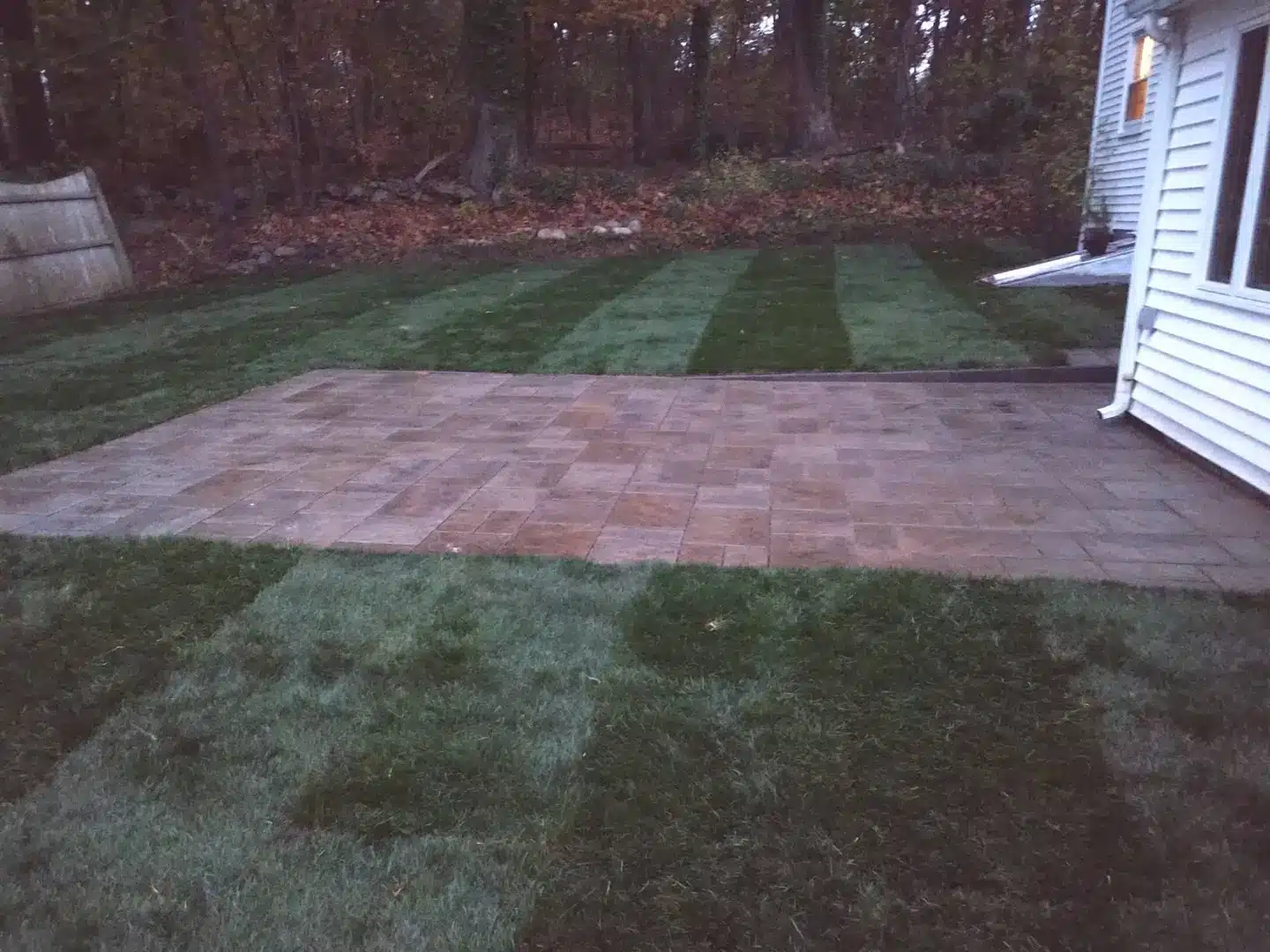
What Landscape Installation Actually Involves — and Why It Matters
Landscape installation is the process of physically building an outdoor space from the ground up — turning a design plan into a finished property with lawns, planting beds, hardscaping, drainage, and irrigation all working together.
Here’s a quick overview of what professional landscape installation typically includes:
| What’s Involved | Why It Matters |
|---|---|
| Site preparation and grading | Prevents drainage problems and ensures a stable base |
| Hardscaping (patios, walkways, walls) | Adds structure, function, and long-term durability |
| Softscaping (lawn, plants, trees, beds) | Adds beauty, privacy, and ecological value |
| Irrigation and drainage systems | Keeps plants healthy and protects your property |
| Lighting | Improves safety, security, and curb appeal |
| Final walkthrough and warranty | Ensures everything is installed correctly before handoff |
A professionally installed landscape does more than look good. Research consistently shows that quality landscaping can increase property value by anywhere from 5% to 20%, depending on scope and execution. And with the U.S. landscaping industry generating over $105 billion in revenue in 2023, it’s clear that homeowners and commercial property managers alike are investing seriously in their outdoor spaces.
But not all installations are created equal. The difference between a landscape that thrives for decades and one that fails within a few seasons often comes down to how well it was planned, graded, planted, and built — before a single seed or paver goes in.
Whether you’re starting from bare soil on a new construction property or renovating an overgrown yard that’s been neglected for years, understanding what professional landscape installation actually involves will help you make smarter decisions, ask better questions, and get results that last.
I’m Steve Sylva, owner of Steve’s Services Landscape Company in Malden, MA, and over my 25+ years leading residential and commercial landscape installation projects across Greater Boston, I’ve seen what separates a truly successful installation from one that creates expensive headaches down the road. In this guide, I’ll walk you through everything you need to know — from site prep and plant selection to costs, timelines, and long-term care.
Terms related to landscape installation:
- Commercial landscaping Burlington MA
- commercial landscape construction company
- commercial landscape design company
Understanding Professional Landscape Installation vs. Design and Maintenance

A strong landscape project usually includes three connected stages: design, installation, and maintenance. They sound similar, but they are not the same job.
Landscape Design is the planning stage. It answers questions like:
- Where should the patio go?
- How will water move across the property?
- Which plants fit the sun, shade, soil, and style of the home?
- What materials will look good and hold up through Massachusetts winters?
- Should the project be built all at once or in phases?
Landscape Construction and installation are the building stages. This is where the plan becomes real through excavation, grading, drainage, paver installation, lawn installation, irrigation, planting, and finishing work.
Landscape Maintenance is what protects the investment after installation. New lawns need watering and mowing at the right height. New shrubs need proper watering through their establishment period. Hardscapes need clean edges and seasonal care. Irrigation needs adjustment. Mulch needs refreshing. Basically, your landscape is alive, and like anything alive, it will not appreciate being ignored.
Professional coordination matters because each part affects the next. A patio that is built before drainage is solved may heave, settle, or send water toward the house. A lawn installed over compacted soil may struggle no matter how much seed or sod is used. Plantings placed too close to walkways, utilities, or foundations can become expensive problems later.
Good landscape installation is not just about putting things in the ground. It is about sequencing the work correctly so the finished space performs well for years.
Before starting, we look at minimum project requirements such as:
- Site access for crews, materials, and equipment
- Soil condition, compaction, and drainage capacity
- Sun and shade exposure
- Slope and grading limitations
- Existing utilities, irrigation, lighting, and structures
- Local permitting needs for walls, patios, drainage changes, or larger construction features
- HOA or property management requirements when applicable
- Climate realities in Malden, Burlington, Everett, Lynnfield, Medford, Melrose, Reading, Revere, Saugus, Stoneham, Wakefield, Winchester, Woburn, and nearby communities
That early review helps prevent the classic landscaping surprise: “Why is there a pond where my lawn used to be?” Funny in a cartoon. Less funny next to your foundation.
The Core Phases of a Professional Landscape Installation Project

Most professional landscape installation projects follow a structured process. The size of the project may change, but the order matters.
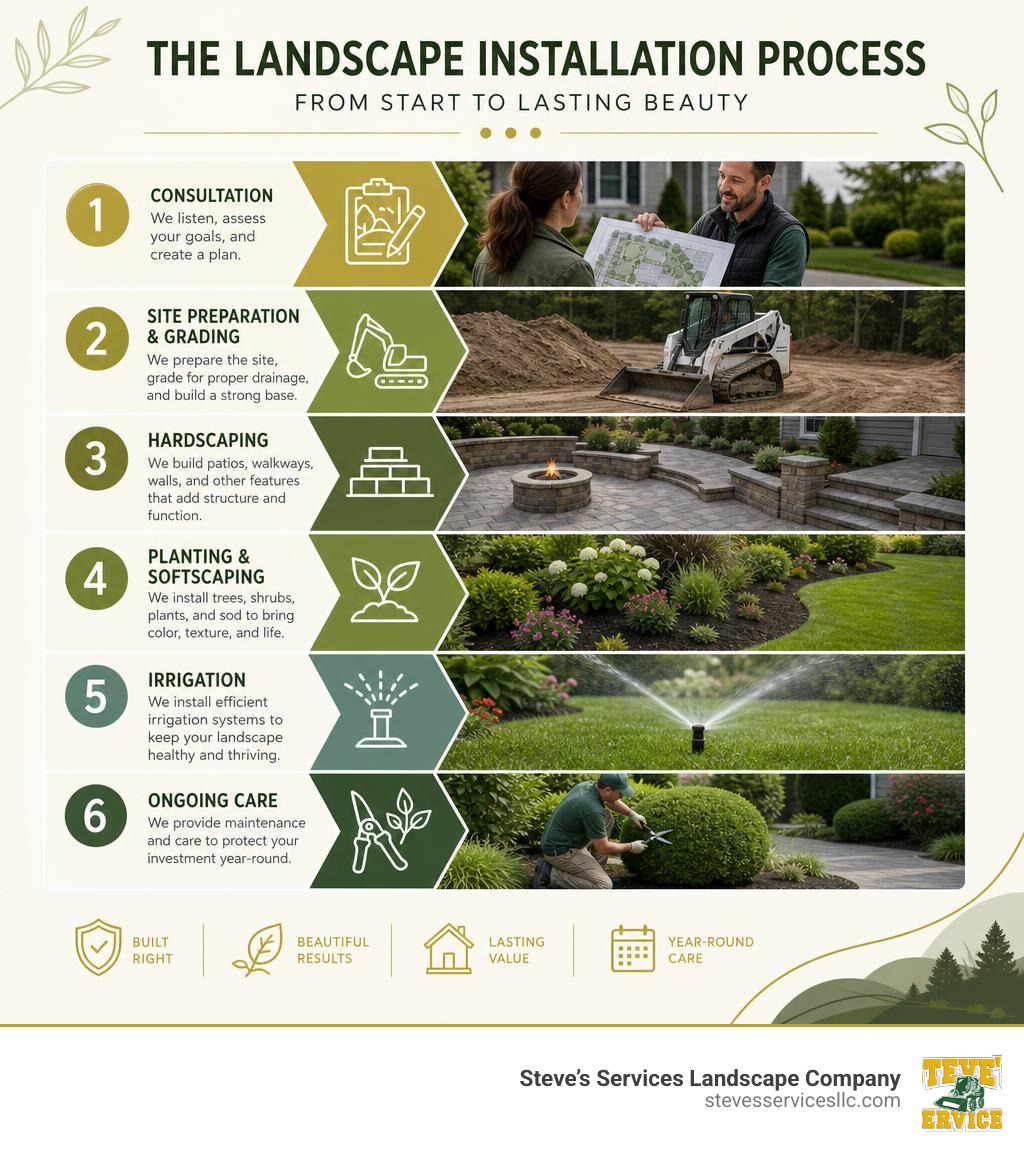
A typical process includes:
- Consultation and goals
- Site analysis and measurements
- Design review or installation planning
- Elevation checks and drainage planning
- Material selection and sourcing
- Crew scheduling and equipment planning
- Site preparation
- Hardscape installation
- Irrigation, drainage, and lighting installation
- Soil preparation, lawn installation, and planting
- Mulch, edging, cleanup, and detail work
- Final walkthrough and care planning
During the planning phase, we look at how the property is actually used. A front yard in Winchester may need curb appeal and easy maintenance. A backyard in Malden may need privacy, a new lawn, and a small patio. A commercial property in Burlington or Woburn may need durable walkways, clean sightlines, irrigation, and winter snow access.
We also evaluate practical details: access for machinery, where materials can be staged, whether soil needs to be removed or imported, and how weather may affect the timeline. In New England, the calendar matters. Spring and fall are often excellent windows for planting and lawn establishment, while hardscaping can often be scheduled across a longer season depending on conditions.
Quality control happens throughout the project, not just at the end. Grades are checked. Base materials are compacted. Drainage is tested. Plant placement is reviewed. The final walkthrough gives the property owner a chance to understand what was installed, how to care for it, and what to watch during the establishment period.
Site Preparation and Excavation for Landscape Installation
Site preparation is where long-term success begins. It is also the part most people do not see once the project is finished, which is why it is easy to underestimate.
Professional Excavation Work may include removing old turf, weeds, stumps, failing patios, unsuitable soil, or debris. For larger projects, Bobcat Services help move soil, prepare grades, and shape the site efficiently.
When a yard has low spots, uneven slopes, or water collecting near the house, Yard Leveling Services may be needed before lawns, patios, or planting beds are installed.
Site preparation usually includes:
- Clearing old landscape materials
- Marking or identifying utility areas
- Establishing rough and final grades
- Planning water flow away from buildings
- Removing or importing soil
- Preparing base areas for patios and walkways
- Reducing erosion during construction
- Improving soil for turf and plant health
Utility awareness is critical. Irrigation lines, electrical lines, gas lines, drainage pipes, and communication lines can all be present beneath a yard. Professional planning helps avoid damage and delays.
Drainage planning is just as important. Water should not collect against foundations, sit on patios, wash mulch into the street, or drown planting beds. Proper grading, soil preparation, and drainage systems are the difference between a landscape that ages gracefully and one that slowly turns into a swamp with decorative shrubs.
Hardscaping and Softscaping Integration in Landscape Installation
The best landscapes combine structure and life. Hardscaping gives the space form and function. Softscaping brings color, texture, shade, seasonal interest, and ecological value.
Our Hardscaping and Landscaping work often brings these elements together. A patio may need surrounding beds. A walkway may need grading and lighting. A retaining wall may create usable planting space. A firepit area may need safe access, drainage, and seating.
Common hardscape features include:
- Patios and Decks
- Retaining Walls
- Walkways
- Outdoor Firepits
- Masonry Services
- Broader Hardscaping Services
The order of installation is important. Heavy excavation and base preparation usually happen before delicate planting. Drainage sleeves or irrigation lines may need to go under walkways before pavers are installed. Retaining walls must be built with proper base, backfill, and drainage before soil and plants are added above or around them.
Planting design should also respect future growth. A shrub that looks small on installation day may be three times larger in a few seasons. Trees need room for roots and canopies. Plants should not be placed where they will block walkways, crowd entrances, trap moisture against siding, or interfere with utilities.
For Massachusetts properties, material selection also has to account for freeze-thaw cycles, snow removal, deicing exposure, and drainage. A pretty patio is nice. A pretty patio that still looks good after several winters is better.
Critical Infrastructure, Lawns, and Plant Selection
The visible parts of a landscape get most of the attention, but the hidden infrastructure often determines whether the project succeeds.
Irrigation System Installation can support new lawns, trees, shrubs, and planting beds through the establishment period and beyond. A well-designed system uses zones based on plant needs. Turf, shrubs, sunny beds, and shaded areas rarely need the same amount of water.
Smart irrigation controllers, rain sensors, and drip irrigation can reduce waste and improve plant health. Research on drought-tolerant landscaping shows that water-conscious landscapes can reduce outdoor water use significantly compared with traditional high-water lawn areas. In our region, the goal is not just using less water; it is using the right amount in the right place.
Low-voltage lighting also plays an important role. It improves safety along steps, walks, and entrances. It adds security around buildings. It highlights trees, walls, and architectural details. Lighting should be planned before final planting and hardscape completion so wiring can be installed cleanly.
Drainage solutions may include:
- French drains
- Catch basins
- Dry wells where appropriate
- Regrading
- Swales
- Permeable base preparation
- Downspout redirection
- Runoff control near patios and walkways
Lawns require their own planning. We offer several approaches depending on the property:
Sod provides an instant lawn appearance and can be useful where erosion control or fast establishment is important. Hydroseeding can be a good option for larger areas and slopes when conditions are right. Traditional seeding may be appropriate for certain lawn renovations, but soil preparation remains the deciding factor.
Plant selection should consider:
- Sun and shade patterns
- Soil type and drainage
- Salt exposure near roads, driveways, and walkways
- Mature plant size
- Deer pressure where relevant
- Maintenance expectations
- Seasonal interest
- Native or well-adapted plant options
- Compatibility with irrigation zones
In Greater Boston communities, we also think about snow. Plants near driveways and parking areas may face piled snow, salt spray, and winter winds. Choosing tough plants for those spots helps avoid sad spring surprises.
Project Timelines and Cost Expectations
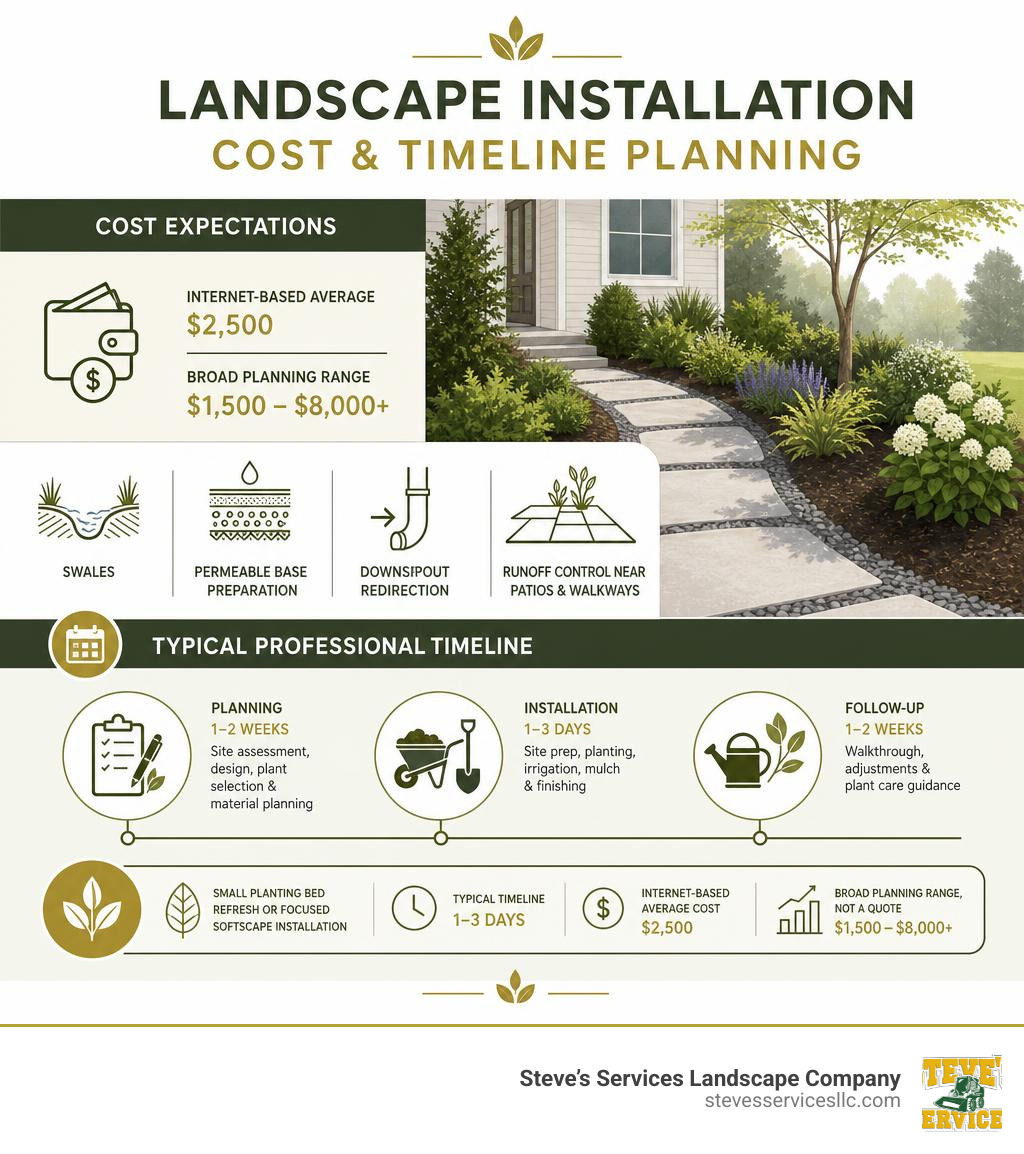
Every property is different, so no article can provide a true quote without seeing the site. The numbers below are internet-based averages and broad planning ranges only. They are not specific quotes from Steve’s Services Landscape Company.
| Project Scope | Typical Professional Timeline | Internet-Based Average Cost | Broad Planning Range, Not a Steve’s Services Quote |
|---|---|---|---|
| Small planting bed refresh or focused softscape installation | 1–3 days | $2,500 | $1,500–$8,000+ |
| New lawn installation, sod, or hydroseeding project | 1–5 days | $5,000 | $2,500–$18,000+ |
| Yard grading, leveling, and drainage improvements | 2–7 days | $7,500 | $3,500–$25,000+ |
| Patio, walkway, or hardscape installation | 1–3 weeks | $12,000 | $6,000–$40,000+ |
| Full residential landscape installation with lawn, beds, hardscaping, and irrigation | 2–6+ weeks | $30,000 | $15,000–$100,000+ |
Several factors can move a project toward the lower or higher end of a range:
- Site access for equipment and deliveries
- Amount of excavation or demolition required
- Drainage complexity
- Soil quality and amendment needs
- Slope and grading changes
- Patio, wall, or walkway materials
- Plant sizes and quantities
- Lawn size and installation method
- Irrigation and lighting scope
- Permit requirements
- Utility coordination
- Whether the project is completed at once or in phases
For context, research across the landscaping industry often places a typical residential professional installation in the $8,000 to $15,000 range, while larger or more complex projects can exceed $50,000. Full-property transformations with extensive hardscaping, irrigation, lighting, drainage, and mature plantings can go well beyond that.
Phasing can be a smart option. For example, grading and drainage may come first, followed by a patio, then lawn and plantings. The key is planning the full picture upfront so early phases do not block or complicate later work.
When evaluating contractors, homeowners and property managers should look for:
- Clear scope of work
- Proof of insurance
- Relevant experience with similar properties
- Written estimates and material details
- A realistic timeline
- Communication process
- Portfolio or project examples
- Knowledge of grading, drainage, hardscaping, irrigation, and maintenance
- A plan for protecting the property during construction
- A final walkthrough and care guidance
A low price is not always a bargain if drainage, base preparation, or soil work is skipped. In landscaping, what is underneath often matters most.
Frequently Asked Questions About Landscape Projects
Landscape projects bring up a lot of good questions. That is a good thing. The more questions we answer before installation starts, the fewer surprises there are once crews and equipment arrive.
Because every property is different, professional evaluation matters. Soil, slope, shade, utilities, roof runoff, driveway layout, and existing plant material all affect the right solution.
How do you prevent drainage issues during a major yard renovation?
Drainage prevention starts before installation, not after water problems appear.
We look at the property’s elevations, low spots, soil permeability, roof runoff, driveway runoff, and existing drainage patterns. From there, we plan grades that move water away from foundations, patios, walkways, planting beds, and lawn areas.
Common drainage strategies include:
- Regrading soil to create positive drainage
- Installing French drains where subsurface water needs relief
- Using catch basins in low collection areas
- Preparing proper compacted bases under hardscapes
- Redirecting downspouts
- Creating swales where appropriate
- Choosing plants that tolerate the site’s moisture conditions
- Avoiding over-irrigation
Hardscape base preparation is especially important. Patios and walkways need proper excavation, base depth, compaction, and pitch. If water sits under or against a hardscape, settling and freeze-thaw damage become more likely.
What is the best time of year to schedule a new lawn or planting project?
Spring and fall are usually the strongest seasons for lawn and planting projects in Massachusetts.
Spring offers warming soil, regular rainfall, and a long growing season ahead. Fall often provides cooler air, warm soil, and reduced heat stress, which is excellent for root development. Many lawns establish especially well in late summer to early fall when weather conditions cooperate.
Summer installations are possible, but they require more careful irrigation and monitoring. New sod, seed, shrubs, and trees can struggle during heat waves if watering is inconsistent.
The best timing depends on:
- Type of lawn installation
- Plant species
- Irrigation availability
- Sun exposure
- Soil preparation needs
- Project size
- Weather patterns
- Construction schedule
If irrigation is part of the project, installing it before or during lawn and planting work can make establishment much easier.
How does commercial snow plowing impact winter landscape protection?
Commercial snow plowing can either protect a landscape or damage it, depending on how the site is prepared before winter.
For commercial properties, snow pile placement matters. Snow should not be pushed onto delicate planting beds, young shrubs, low walls, walkway edges, or lawn areas that cannot handle heavy compaction and salt exposure. Curbs, islands, paver edges, and entrances should be marked before the first storm.
We specialize in Commercial Snow Management as part of our broader property services, so we think about winter access during landscape planning. A commercial site in Burlington, Woburn, Everett, or Reading may need landscape beds that look good in summer but still allow safe plowing, stacking, and pedestrian access in winter.
Good winter protection includes:
- Snow stakes along curbs, beds, and hardscape edges
- Clear plow maps for commercial sites
- Designated snow storage areas
- Salt-tolerant plant choices near pavement
- Protecting irrigation heads and lighting fixtures
- Avoiding snow piles around vulnerable young trees and shrubs
Snow is part of life here. Pretending otherwise is like buying a convertible and acting shocked when January arrives.
What should be done before winter to protect a newly installed landscape?
A newly installed landscape should be prepared before freezing temperatures, snow, and ice arrive.
Important winter preparation steps include:
- Final fall cleanup to remove leaves and debris
- Mulch protection around young plants, without piling mulch against trunks
- Proper watering before the ground freezes, especially for new trees and shrubs
- Irrigation winterization when applicable
- Pruning only when appropriate for the plant species
- Snow stake placement around beds, curbs, irrigation heads, and hardscape edges
- Protection from salt spray where needed
- Avoiding heavy snow storage on new lawns or plantings
New plant material is still establishing roots, so winter stress can be harder on it than on mature landscaping. A simple seasonal care plan can make a major difference by spring.
Conclusion
Professional landscape installation is about much more than making a yard look nice on day one. It is about building an outdoor space that drains properly, supports healthy plants, holds up through New England weather, and fits the way the property is actually used.
At Steve’s Services Landscape Company, we provide full-service landscape support from excavation and grading to hardscaping, lawns, irrigation, planting, maintenance, and commercial snow management. Based in Malden, MA, we proudly serve Burlington, Everett, Lynnfield, Medford, Melrose, Reading, Revere, Saugus, Stoneham, Wakefield, Winchester, Woburn, Danvers, North Reading, and nearby communities.
If you are planning a new landscape, renovating an older yard, improving a commercial property, or trying to solve drainage and lawn problems for good, we would be happy to help you plan it the right way.
Ready to start? Contact Steve’s Services to schedule a professional consultation.