Why Erosion Control Matters for Your Massachusetts Property
Erosion control hydroseeding is a spray-applied planting process that uses a slurry mixture of seed, mulch, fertilizer, and water to rapidly establish vegetation and stabilize soil. Here’s what you need to know:
- What it is: A hydraulic spray method that applies seed and protective mulch in one step
- How it works: A specialized truck sprays a slurry mixture that bonds to soil, holds moisture, and promotes fast germination
- Primary benefit: Reduces soil erosion by 70-80% compared to bare slopes while establishing vegetation quickly
- Best for: Slopes, hillsides, large areas, and hard-to-reach terrain where traditional seeding won’t work
- Timeline: Germination in 3-5 days, visible grass in 3-4 weeks
- Cost range: Internet data suggests approximately $1,900–$8,000+ per acre depending on slope, soil, materials, and site access; these are broad online averages and not Steve’s Services pricing.
If you’ve ever watched a heavy rain wash away topsoil from a slope, or noticed bare patches on your property that refuse to grow grass, you’re facing an erosion problem. Left unchecked, erosion destroys landscapes, damages foundations, and sends sediment into waterways.
Traditional methods like hand seeding or laying sod work fine on flat ground. But what about steep slopes? Hillsides? Areas where you can’t even walk safely? That’s where hydroseeding—also called hydraulic mulch seeding or hydromulching—becomes your best tool.
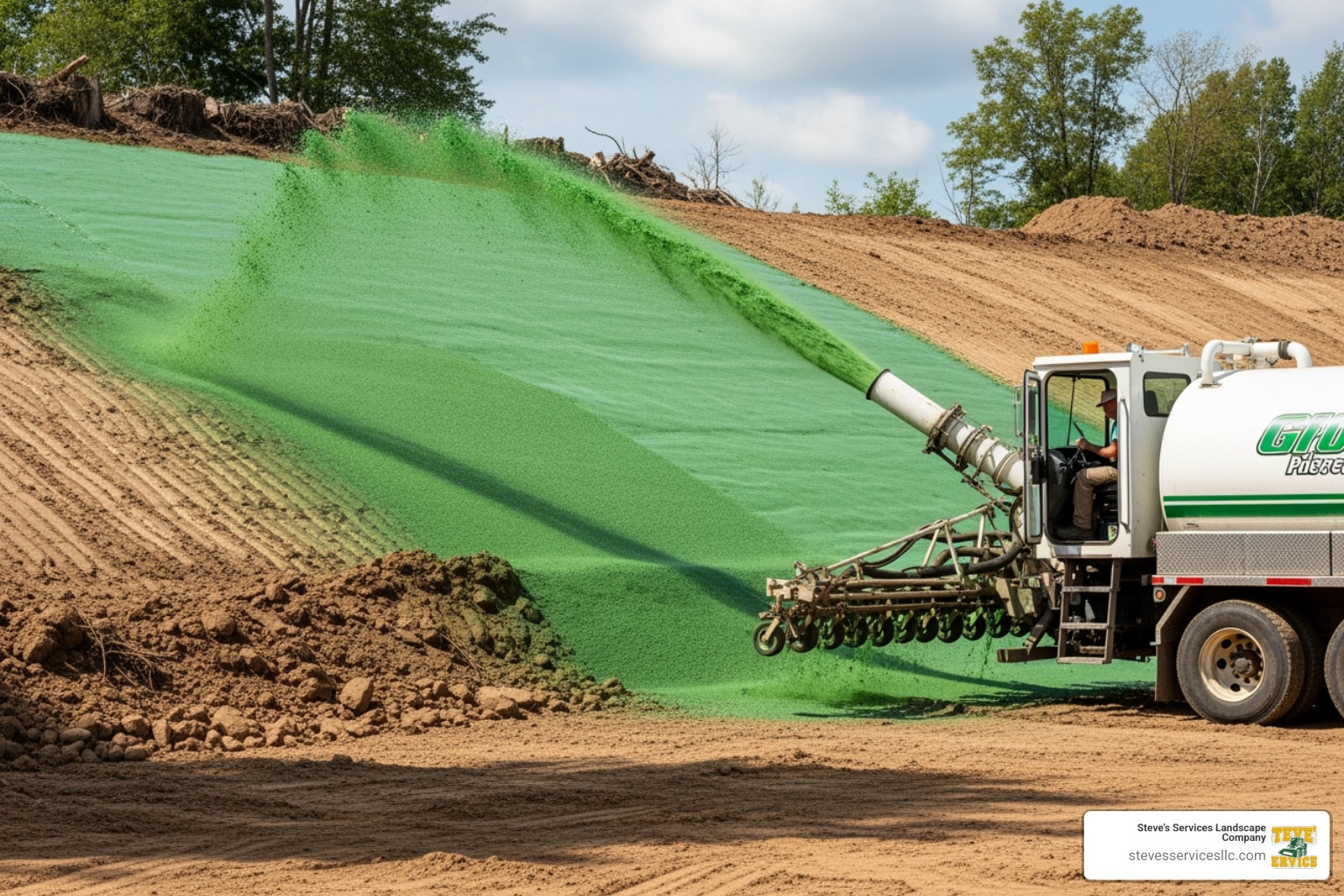
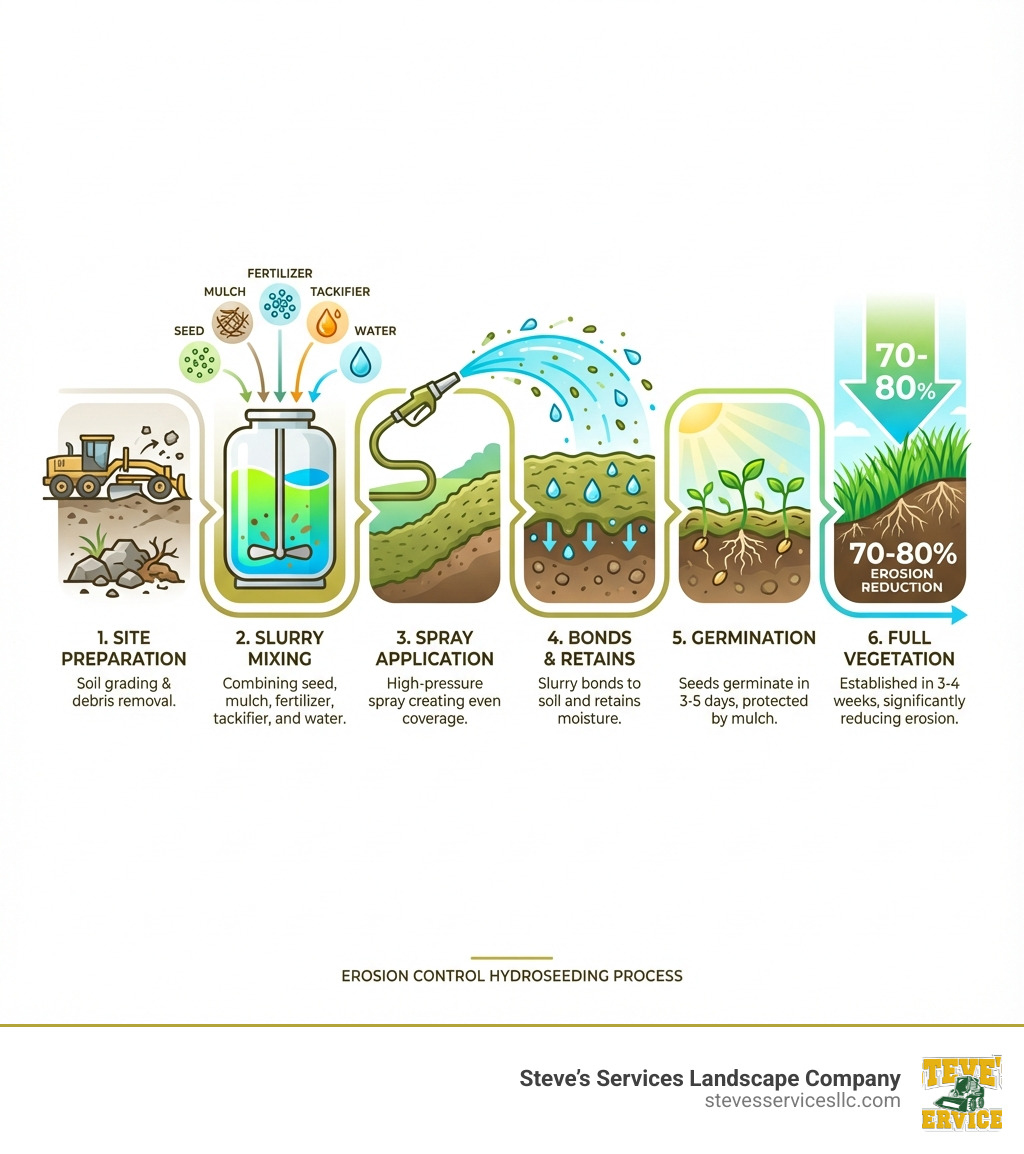
The process is surprisingly simple: A truck-mounted tank mixes water, seed, wood or paper fiber mulch, fertilizer, and a sticky tackifier into a slurry. The crew then sprays this mixture through a high-pressure hose, coating the soil with a protective blanket that holds up to 10 times its weight in water. The tackifier binds everything to the ground almost instantly, preventing washout. Within days, seeds germinate in this ideal moisture-rich environment.
As Steve Sylva, owner of Steve’s Services with over 25 years of landscape experience in the Malden, MA area, I’ve seen erosion control hydroseeding transform properties that seemed impossible to stabilize—from steep residential slopes to large commercial sites requiring fast, reliable vegetation establishment. This guide will walk you through exactly how hydroseeding works, when to use it, and what to expect from the process.
What is Hydroseeding and How Does It Work?
Hydroseeding, also known as hydraulic mulch seeding, hydro-mulching, or hydraseeding, is an advanced planting process that revolutionizes how we establish vegetation and control erosion. Imagine “spray-on grass seed” – that’s essentially what it is! This innovative method involves creating a specialized slurry mixture containing grass seed, fiber mulch, fertilizer, tackifying agents, and water. This mixture is then transported in a large tank, typically mounted on a truck or trailer, and applied to prepared ground using a high-pressure spray hose.
The magic of hydroseeding lies in this slurry. Once sprayed, it forms a protective, moisture-retaining blanket over the soil. This blanket creates an optimal environment for seed germination and early growth. The fiber mulch protects the seeds from wind and water erosion, retains crucial moisture, and helps regulate soil temperature. The fertilizer provides essential nutrients, giving the young seedlings a vital boost, while the tackifying agents act as a natural glue, binding the entire mixture—and the soil beneath—together. This firm bond is key to preventing soil displacement and ensuring the seeds stay exactly where they need to be to thrive.
One of the most remarkable aspects of hydroseeding is its speed and effectiveness in achieving soil stabilization. The rapid germination process means we see grass growth in about a week, with mowing maintenance often beginning around 3 to 4 weeks from application. This quick establishment of vegetation is crucial for erosion control hydroseeding, as it swiftly covers bare soil, which is the primary cause of erosion. By providing immediate protection and promoting robust plant growth, hydroseeding can initially reduce sediment generation by 70 to 80% compared to bare slopes, making it an incredibly powerful tool for maintaining the integrity of your landscape in areas like Everett, MA, and beyond.
The Science Inside the Slurry
The effectiveness of erosion control hydroseeding isn’t just about spraying liquid onto the ground; it’s about the carefully engineered cocktail within that liquid. Our hydroseeding slurry is a carefully balanced blend of components, each playing a vital role in fostering rapid growth and robust erosion protection.
Here’s a closer look at what makes up this powerful mix:
- Seed Types: This is the heart of the mixture. We select specific grass seeds or other plant seeds custom to your property’s needs, soil conditions, and desired outcome. Whether you’re looking for a lush lawn, a hardy groundcover for a slope, or native plants to blend with the local ecosystem in Burlington, MA, the seed blend is customized.
- Fiber Mulch: Typically made from wood or paper products, this is the bulky component that gives the slurry its texture and distinctive green color (though it can be dye-free). The fiber mulch is critical because it accelerates the growing process by maintaining moisture around the seeds, acting like a miniature greenhouse. It can hold almost ten times its own weight in water, ensuring seeds stay hydrated. It also protects them from harsh sun, wind, and heavy rainfall.
- Fertilizer: Just like any plant, newly germinating seeds need nutrients. We incorporate a balanced fertilizer into the slurry to provide the essential nitrogen, phosphorus, and potassium (N:P:K) required for strong, healthy root development and vigorous growth. Soil testing helps us determine the optimal fertilizer blend for your specific site.
- Tackifying Agents: These are the unsung heroes of the slurry. Tackifiers are sticky binders, often made from natural guar gum, that help the entire mixture adhere to the soil surface. They prevent the seeds and mulch from washing away, especially on slopes or during heavy rains. These agents bind to the soil almost instantly, providing immediate stability.
- Water: The carrier for all these components, water ensures the slurry can be evenly sprayed and helps initiate the germination process.
- Green Dye: Often included for visual purposes, the non-toxic green dye allows our operators to see exactly where the slurry has been applied, ensuring uniform coverage. It fades naturally over time.
- Soil Amendments: Depending on your soil’s unique characteristics, we might also add lime to adjust pH, gypsum to improve soil structure, or other organic matter and growth stimulators. These amendments help create an even more favorable environment for seed germination and long-term plant health.
This carefully formulated slurry ensures that each seed has everything it needs to establish quickly and effectively. To learn more about how we select the perfect mix for your project, visit our page on grass seed services: More info about our grass seed services
The Strategic Advantage of Erosion Control Hydroseeding
When it comes to tackling soil erosion, particularly on challenging landscapes common in the Medford, MA, area, erosion control hydroseeding offers a powerful strategic advantage. Its unique application method and slurry composition make it superior to many traditional methods, especially for large or difficult-to-access sites.
Here’s why hydroseeding stands out:
- Speed and Efficiency: Time is money, and hydroseeding saves both. It can be up to 50% faster than conventional seeding methods, and an entire process for a large area might take just one or two hours, compared to almost half a day for hand seeding. This rapid application means your project can move forward quickly, reducing overall labor costs and project timelines.
- Cost-Effectiveness: While initially costing more than dry seeding, hydroseeding is significantly more economical than laying sod. Internet data suggests it can be almost 50 percent less expensive than the overall cost of sod, offering a high-quality result without the premium price tag.
- Water Retention: The fiber mulch in our slurry is a moisture-retaining marvel. It can hold up to 10 times its weight in water, creating a consistent, humid micro-environment around each seed. This promotes faster germination and reduces the need for constant initial watering, especially beneficial during drier periods in Winchester, MA.
- Versatility: Hydroseeding isn’t just for grass. The slurry can be customized with a wide variety of seed types, including wildflowers, native plants, and custom field or pasture mixes. This versatility allows us to create specific vegetative covers that are perfectly suited to the local ecology and your project’s aesthetic or functional goals.
- Soil Bonding: Thanks to the tackifying agents, the hydroseeding slurry forms an immediate bond with the soil. This prevents seed wash-out, even on steep grades, providing instant protection against surface erosion from wind and rain. This immediate adherence is vital for effective erosion control.
- Accessing Difficult Terrain: One of hydroseeding’s greatest strengths is its ability to reach areas that are otherwise inaccessible or dangerous for manual labor. Steep slopes, hillsides, and large, sprawling disturbed areas can be uniformly covered from a distance using the high-pressure spray, making it ideal for roadside stabilization along Massachusetts highways or challenging commercial sites.
Key Benefits of Erosion Control Hydroseeding
The advantages of choosing erosion control hydroseeding are clear, offering a blend of effectiveness, efficiency, and environmental responsibility that makes it a top choice for soil stabilization and vegetation establishment.
- Quick Vegetation Establishment: Hydroseeding promotes incredibly fast germination. Seeds often sprout within 3-5 days, leading to visible grass growth in about a week. This rapid establishment is fundamental for erosion control, as it quickly covers bare soil, minimizing exposure to erosive forces like wind and rain.
- Superior Germination Rates: The protective and moisture-rich environment created by the hydroseeding slurry significantly improves seed-to-soil contact and moisture retention. This leads to higher germination rates and a more dense, uniform stand of vegetation compared to traditional dry seeding methods.
- Moisture Retention: The fiber mulch acts as a sponge, holding considerable amounts of water (up to 10 times its weight). This consistent moisture supply is crucial for young seedlings, especially in the variable New England climate, ensuring they have the hydration needed for robust growth.
- Soil Health Improvement: As the hydroseeded vegetation establishes, its root systems penetrate the soil, improving soil structure, increasing organic matter, and reducing compaction. This leads to healthier soil that is more resistant to future erosion and better able to support long-term plant life.
- Even and Uniform Coverage: The high-pressure spray application ensures that the seed, mulch, and fertilizer are distributed evenly across the entire area. This results in a consistently lush and healthy vegetative cover, free from the patchy growth often seen with broadcast seeding, providing comprehensive erosion protection.
Here are the Top 5 Benefits of Hydroseeding for Slopes:
- Immediate Erosion Protection: The slurry acts as a protective blanket, binding soil particles and preventing washouts on steep grades.
- Excellent Seed-to-Soil Contact: Ensures optimal germination on uneven or sloping surfaces where dry seeds might roll away.
- Moisture Retention on Inclines: The mulch holds water, preventing seeds from drying out on slopes that shed water quickly.
- Cost-Effective for Large Areas: Efficiently covers vast sloped terrains, reducing labor and material costs compared to manual methods.
- Rapid Stabilization: Quick germination means slopes are revegetated and stabilized faster, minimizing long-term erosion damage.
Hydroseeding vs. Other Methods
When considering methods for establishing vegetation and controlling erosion, it’s helpful to compare erosion control hydroseeding with other common techniques. Each has its place, but hydroseeding often offers a compelling balance of benefits.
Here’s a comparison of hydroseeding, erosion control blankets, and traditional dry seeding:
| Feature | Hydroseeding | Erosion Control Blankets – |
|---|---|---|
| Cost | Moderate | High – |
| Speed | Fast germination (3-5 days) | Immediate protection, but slower grass growth – |
| Effectiveness | High (70-80% erosion reduction) | Very high, especially on steep slopes – |
| Labor | Low to moderate | High, requires careful installation – |
For more detailed information on best practices, the EPA’s National Menu of Stormwater Best Management Practices (Construction) offers comprehensive guidelines on erosion control methods.