Why Quick Lawn Repair Matters for Your Property
Quick lawn repair is the process of fixing bare, thin, or damaged patches in your lawn before they spread — and here is the professional approach to doing it fast:
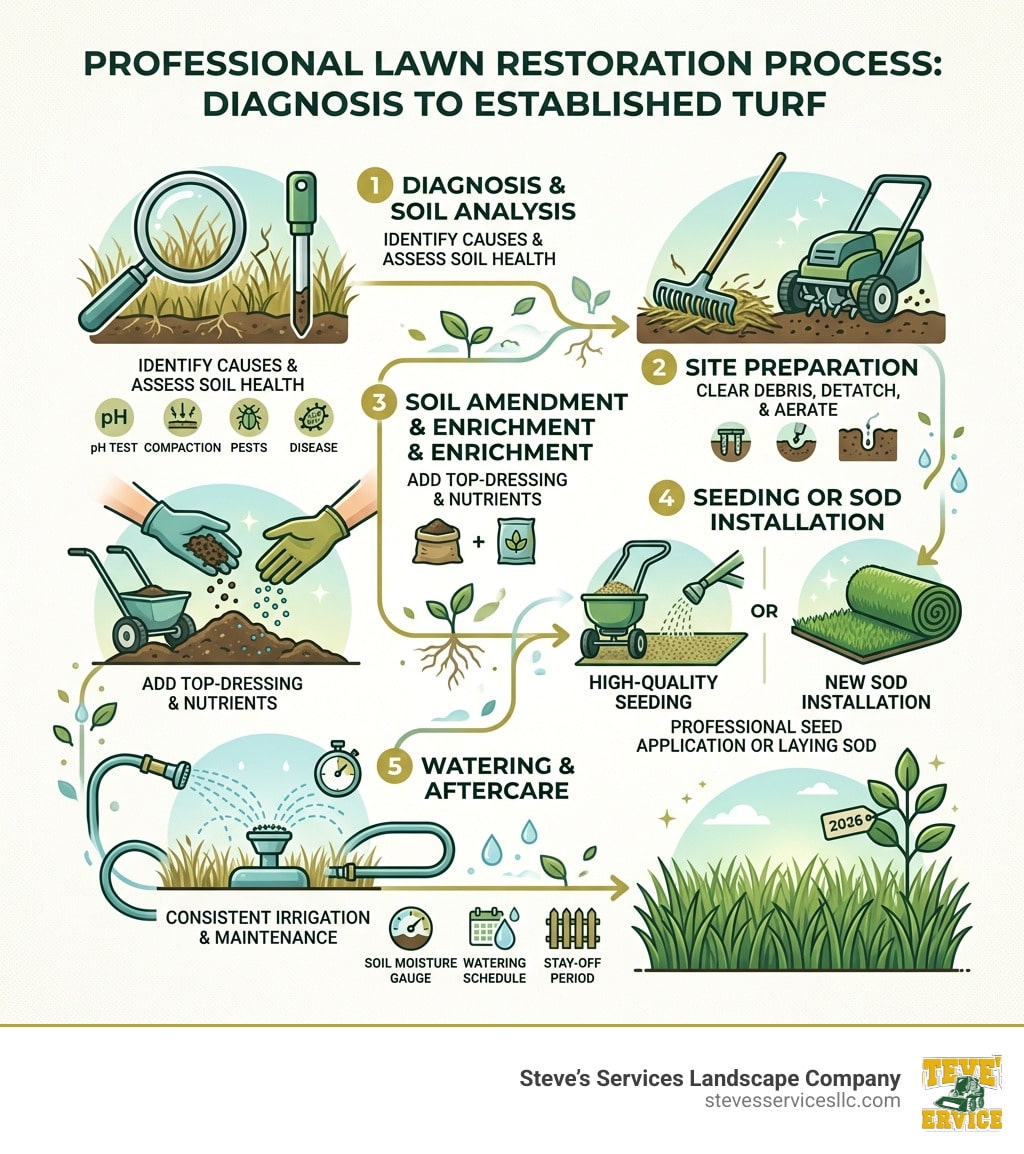
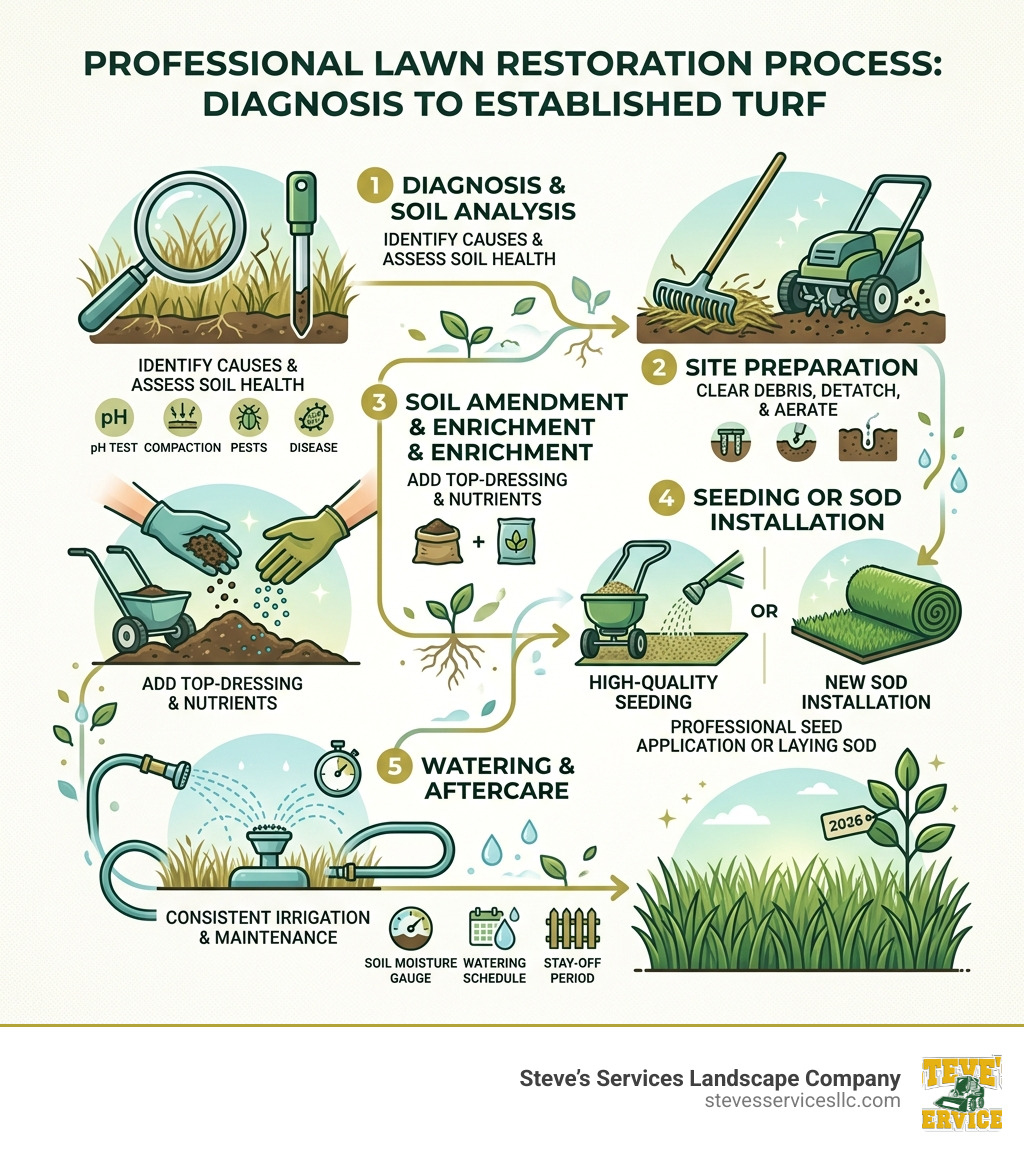
The professional process for quick lawn repair:
- Identifying the cause — pet urine, foot traffic, insects, disease, or compaction
- Preparing the area — raking out dead grass and loosening the top 6 inches of soil
- Applying the repair method — seed, professional-grade patch product, or sod
- Consistent watering — keeping the top inch of soil moist daily for at least 2 weeks
- Restricting traffic — minimizing foot traffic until new grass is established
Most homeowners see germination in as little as 5–7 days with the right products. Full results typically take 2–4 weeks.
Even a well-maintained lawn can develop bare spots out of nowhere. Pets, heavy foot traffic, harsh New England winters, de-icing salt, soil problems — any of these can leave your yard looking rough. And here’s the thing: most grass won’t fill those spots back in on its own. Left alone, bare patches tend to grow, not shrink. That’s frustrating, especially when you’ve put time and money into your outdoor space. A lush, healthy lawn can increase your property’s perceived value by up to 15% — so those patches are worth fixing sooner rather than later.
I’m Steve Sylva, owner of Steve’s Services in Malden, MA, and with over 25 years of hands-on landscaping experience, I’ve helped hundreds of homeowners across the region tackle quick lawn repair — from small pet damage spots to large-scale turf restoration. In the sections ahead, I’ll walk you through exactly what causes these problem areas and how to fix them the right way.
Quick lawn repair glossary:
Identifying the Culprits Behind Bare Spots
Before we can implement a quick lawn repair, we have to play detective. If you don’t fix the underlying cause, your brand-new grass will just die off again. In our experience serving communities like Melrose, Medford, and Reading, we see a few usual suspects.
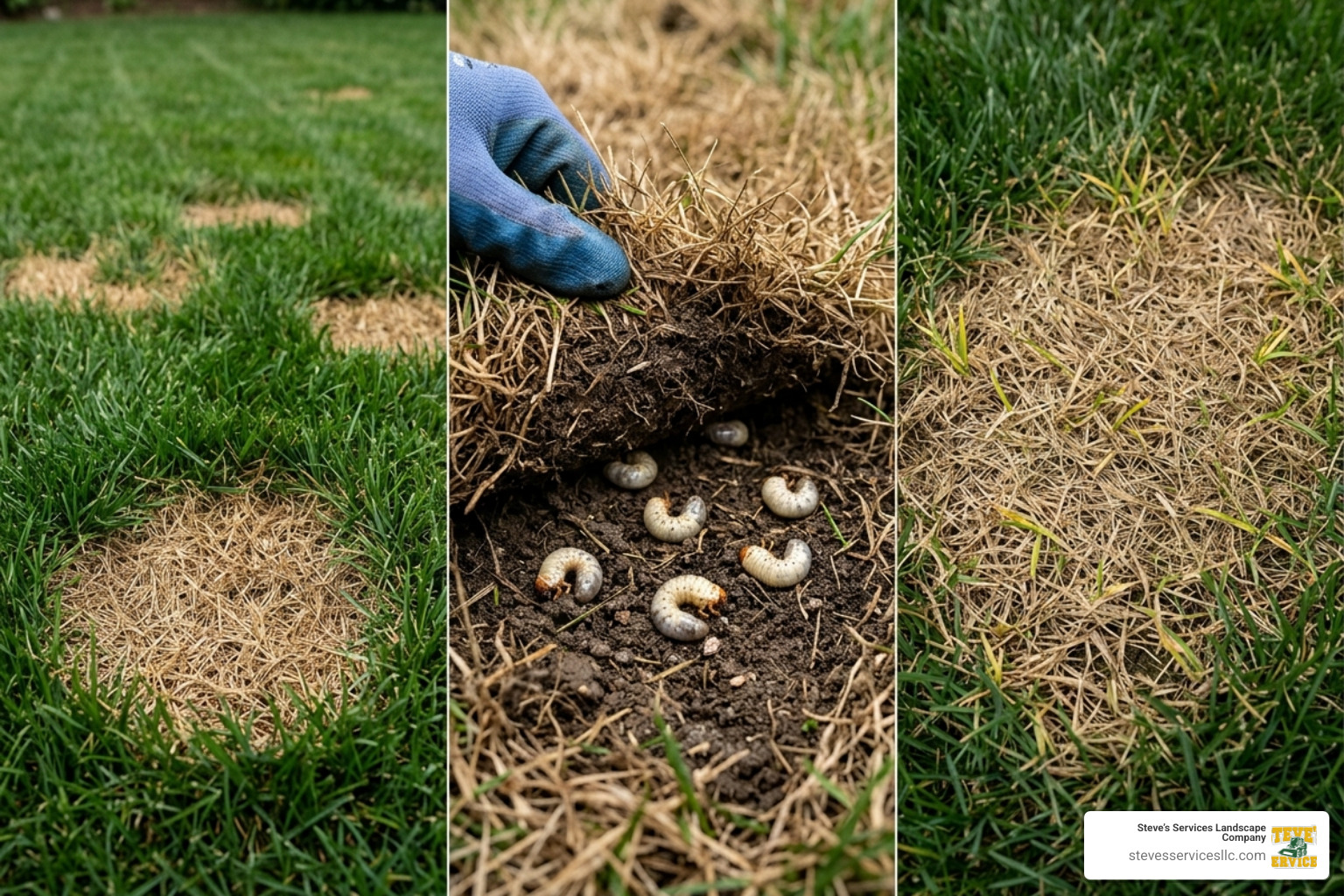
- Pet Urine: This is perhaps the most common cause of small, circular “burn” spots. The high nitrogen and salt content in dog urine can dehydrate grass. You’ll often see a bright green ring around a dead center where the diluted urine actually acted as a fertilizer.
- Soil Compaction: If you have a “shortcut” path across your lawn where people or pets always walk, the soil becomes packed tight. This squeezes out the oxygen your roots need to breathe.
- Grub Infestations: If you can pull up a patch of brown grass like a piece of carpet, you likely have grubs. These larvae eat the root system right out from under your turf. Products like Scotts® GrubEx® can help prevent this for up to 4 months.
- Fungal Pathogens: Circular patches that seem to spread quickly, especially during humid Massachusetts summers, are often fungal.
- Chemical Spills: Gasoline from a mower or an accidental fertilizer spill can kill grass instantly. If this happens, you often need to remove several inches of contaminated soil before the hydroseeded lawn patchy areas can be restored.
- De-icing Salt: Living in areas like Everett or Malden means dealing with municipal snowplows. The salt they spray to keep roads safe often ends up on your lawn, creating “salt burn” along the edges of your driveway or sidewalk.
Professional Strategies for Quick Lawn Repair
When a lawn needs more than just a “wait and see” approach, professional intervention is the most reliable way to get results. We don’t just throw seed on the ground; we follow a rigorous process to ensure the soil is ready to support new life.
Rapid Patching for Quick Lawn Repair
For most residential properties in the North Shore area, patching is the go-to for quick lawn repair. The secret to success is seed-to-soil contact. If the seed sits on top of dead grass or hard dirt, it won’t grow.
- Preparation: We rake out the debris and loosen the top 6 inches of soil. This provides a “soft” bed for the roots to dive into.
- Product Selection: We often use high-performance mixes. For example, Pennington Smart Patch II is known to show growth in as little as 5 days. These mixes often include a tackifier (a type of “glue” that keeps seed from washing away on slopes) and beneficial microbials to restore soil health.
- Hydroseeding: For larger thin areas, we recommend hydroseeding services. This is a “slurry” of seed, mulch, and fertilizer sprayed onto the lawn. It provides excellent moisture retention. Following hydroseeding pro tips ensures that the mixture stays in place and germinates evenly.
- Protection: Once applied, knowing when can I walk on hydroseeded lawn areas is crucial—usually, you want to wait until it’s been mowed at least once.
If you are planning a larger project, check out our guide on how to prepare lawn for hydroseeding or explore our lawn installation services for a complete overhaul.
Instant Results with Professional Sod Installation
If you need your lawn fixed today for a graduation party or a real estate showing, sod is the only answer. While seeding is cost-effective, sod provides an “instant lawn.”
Our sod installation services involve removing the old turf and leveling the ground to about an inch below the surrounding grade. This ensures the new “carpet” of grass sits flush with your existing lawn. Learning how to prep for sod is the most labor-intensive part, but it guarantees the roots will take hold.
While we mostly deal with cool-season grasses in Massachusetts, some specialized properties use different varieties. If you have a unique setup, you might need to know how to care for new Bermuda grass sod to prevent it from drying out in the summer heat.
Essential Post-Repair Maintenance and Timing
The work isn’t done once the seed is down. The first two weeks are the most critical period for any quick lawn repair.
- Watering: New seed needs to be kept moist, but not drenched. We recommend light watering twice a day (morning and late afternoon) for the first 14 days. Once the grass is about an inch tall, you can transition to deeper, less frequent watering to encourage deep root growth.
- Sod Care: Sod requires a different approach. You need to water it deeply every day for at least two weeks until the roots knit into the soil below. Check out our detailed guide on how to care for new sod for a full schedule.
- Hydroseed Care: Because hydroseed contains its own mulch, it holds moisture better than bare seed. However, you still need to follow a specific how to care for a hydroseeded lawn protocol to ensure the fertilizer in the mix doesn’t burn the tender new shoots.
Mowing Your Repair
One of the most common mistakes is mowing too soon. You should wait until the new grass is about 3.5 to 4 inches tall. For sod, this usually takes 2-3 weeks. For seed, it can take 6-7 weeks.
Optimal Timing for Quick Lawn Repair in Massachusetts
In Malden, Winchester, and Saugus, our climate dictates our schedule. We primarily use cool-season grasses like Tall Fescue, Kentucky Bluegrass, and Ryegrass.
- Spring (April – May): This is a great time for spring yard clean-ups and patching spots damaged by winter salt or snowplows. The rising temperatures and spring rains provide natural help for germination.
- Fall (Late August – September): This is actually the best time for quick lawn repair in Massachusetts. The soil is warm, but the air is cooling down, and there is less competition from weeds. We often combine this with fall yard clean-ups to prepare the turf for winter dormancy.
Avoiding Common Pitfalls and Estimating Costs
Many homeowners try to save money by simply “throwing seed” at a problem. Unfortunately, without proper soil prep, only about 10% of that seed will actually grow. Professional repair ensures a much higher success rate and prevents the need to do the job twice.
Comparison: Seeding vs. Sod
| Feature | Seeding / Hydroseeding | Sod Installation |
|---|---|---|
| Speed of Results | 5–21 days for growth | Instant “green” |
| Cost | Lower initial investment | Higher initial investment |
| Effort | High watering frequency | High initial watering, less long-term |
| Best For | Large areas, budget-friendly | Small patches, immediate needs |
Pricing Note: When looking at professional lawn repair, internet-based averages for a standard repair project typically sit around $1,200, though costs can range from $500 to over $4,500 depending on the size of the area, the method used (seed vs. sod), and the amount of soil remediation required. The high end reflects large-scale restoration or premium sod installation on difficult terrain. Please note these are internet-based averages and not specific quotes for Steve’s Services.
Investing in professional repair doesn’t just fix a brown spot; it builds a more resilient lawn. For example, Pennington Smart Seed varieties require up to 30% less water year after year than ordinary seed. Over time, this pays for itself in lower water bills. For those considering a full lawn replacement, you can research the cost to hydroseed to see how it fits your budget.
Frequently Asked Questions about Commercial Snow Plowing
As a full-service company, we often see lawn damage caused by improper winter management. Here is how we protect our commercial clients in Lynnfield, Wakefield, and beyond.
How does professional snow management prevent lawn damage during winter?
Professional crews use “stakes” to mark the edges of curbs and lawns before the first snowfall. This tells the plow driver exactly where the pavement ends and the grass begins. Additionally, using the right equipment—like adjustable blades—prevents the plow from “scalping” the turf when clearing parking lots.
What are the benefits of liquid de-icing for commercial properties in 2026?
Liquid de-icing (brine) is a game-changer for turf health. Unlike rock salt, which can bounce into the grass and cause chemical burns, liquid de-icers stay where they are sprayed. They use significantly less salt to achieve the same melting results, which means less runoff into your landscaping and local waterways.
Why is a pre-season site inspection critical for commercial snow contracts?
A pre-season inspection allows us to identify existing damage, drainage issues, and fragile landscaping features. We map out where snow “piles” should be placed to ensure that as the snow melts in the spring, the water drains away from the building and doesn’t saturate the lawn, which can lead to fungal diseases and rot.
Conclusion
A beautiful lawn is more than just a “nice to have”—it’s an investment in your home’s curb appeal and your family’s outdoor enjoyment. Whether you’re dealing with a few pet spots or a yard that’s seen better days, quick lawn repair is entirely possible with the right approach.
At Steve’s Services Landscape Company, we pride ourselves on delivering professional results for our neighbors in Malden and the surrounding North Shore communities. From installing precision irrigation systems to providing seasonal landscape maintenance, we have the tools and the expertise to keep your grass green all year long.
Ready to stop the brown and bring back the green? Contact Steve’s Services today for a consultation. Let’s get your lawn back to its best.