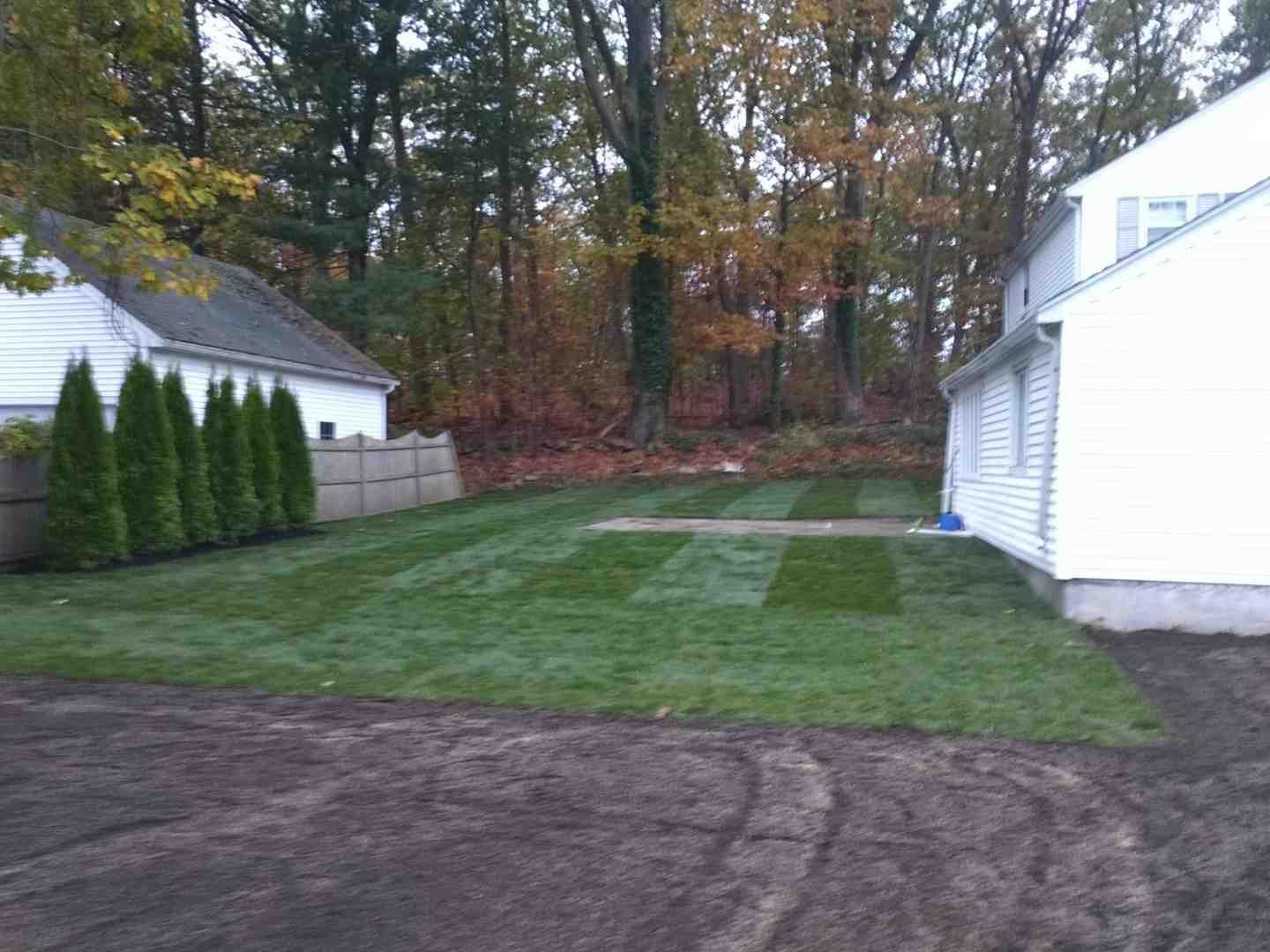
What You Need to Know About Caring for New Bermuda Sod
Caring for new Bermuda sod in the first 30 days is the single most important thing you can do to guarantee a thick, green lawn. Get it right, and you’ll have strong roots and lush turf. Get it wrong, and you’ll be dealing with dead patches and a wasted investment.
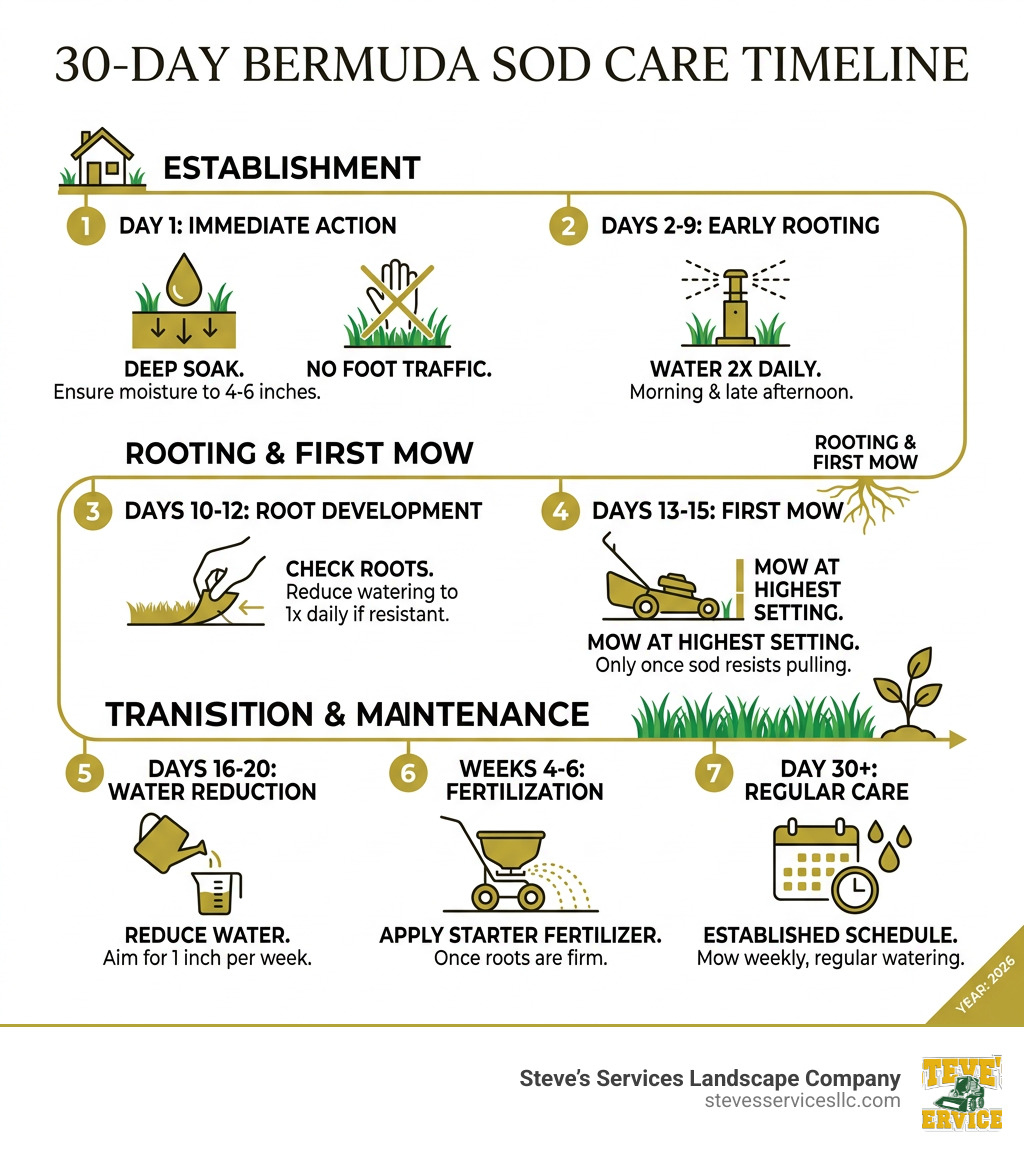
Here’s a quick overview of what proper Bermuda sod care looks like:
| Phase | Timeframe | Key Actions |
|---|---|---|
| Immediate | Day 1 | Deep soak to 4-6 inches; no foot traffic |
| Early rooting | Days 2-9 | Water twice daily (morning + late afternoon) |
| Root development | Days 10-12 | Reduce to once-daily watering; check roots |
| First mow | Days 13-15 | Mow at highest setting once sod resists pulling |
| Transition | Days 16-20 | Reduce to 1 inch of water per week |
| Fertilization | Week 4-6 | Apply starter fertilizer once roots are firm |
| Regular maintenance | Day 30+ | Mow weekly, water 1-1.5 inches/week, monitor for weeds |
The first six weeks are critical. Most new sod fails not because of bad grass, but because of inconsistent watering, mowing too soon, or fertilizing at the wrong time.
I’m Steve Sylva, owner of Steve’s Services Landscape Company in Malden, MA, and with over 25 years of hands-on landscaping experience, I’ve helped countless homeowners and property managers succeed at caring for new Bermuda sod from day one. In this guide, I’ll walk you through exactly what to do — and what to avoid — so your new lawn thrives without the guesswork.
Caring for new bermuda sod terms at a glance:
Preparing for Success: Soil and Installation Essentials
Before the first piece of green rolls out, the success of your lawn is decided in the dirt. We often tell our clients in Medford and Winchester that you can’t build a great house on a shaky foundation, and the same goes for caring for new bermuda sod.
Soil Testing and pH Balance
Bermuda grass is a hardy survivor, but it has a “sweet spot” when it comes to soil acidity. Ideally, you want a pH between 6.0 and 7.0. If your soil is too acidic or too alkaline, the grass won’t be able to absorb the nutrients it needs, no matter how much fertilizer you throw at it. We recommend conducting a professional soil test weeks before installation. This allows time to add lime (to raise pH) or sulfur (to lower it) and incorporate these amendments into the top few inches of soil.
Grading and Drainage
Poor drainage is the silent killer of new sod. We ensure the ground has a 1% slope away from any structures to prevent standing water. Standing water leads to root rot and fungal diseases that can wipe out a new installation in days. For those in our service areas like Revere or Saugus with heavy clay soil, adding a layer of compost or a specific landscape mix (50% loam and 50% compost) can drastically improve drainage and nutrient density.
Choosing the Right Variety
Not all Bermuda is created equal. For homeowners in the North Reading and Lynnfield areas who might have a bit more tree cover, we often recommend Tahoma 31. It’s a popular choice because it offers improved shade tolerance and cold hardiness compared to older varieties. Selecting a cultivar suited to your specific sunlight exposure is a key step in installing new sod lawn successfully.
While some might consider a DIY approach, the heavy lifting and technical precision required for how to prep for sod often make professional sod installation services the most cost-effective choice in the long run. Proper installation ensures the sod is laid tightly in a staggered brick pattern with no gaps, which is vital for moisture retention. For more technical details, you can review Scientific research on establishing lawns from sod.
The Critical First 14 Days: Watering and Rooting
Once the sod is down, your primary job is to be the “Chief Irrigation Officer.” The first two weeks are a race against time to keep the delicate roots from drying out before they can dive into the soil.
The Deep Soak
On Day 1, immediately after installation, you need to provide a deep soak. We aren’t just talking about a light mist; you want the water to penetrate through the sod and moisten the soil underneath to a depth of 4 to 6 inches. This initial “flood” eliminates air pockets and ensures the roots have immediate contact with wet earth.
Frequency and Timing
For the first 9 days, we recommend watering twice daily—once in the early morning (between 2 AM and 10 AM) and once in the late afternoon. This keeps the soil consistently moist. Avoid watering late at night, as sitting water on the blades overnight is an open invitation for fungus. Following a new sod watering guide is essential to avoid the common mistake of “set it and forget it.”
Monitoring Your Progress
How do you know if you’re doing it right? You have to get your hands dirty. Use the “tug test” or lift a corner of a sod piece. If you see white, fuzzy root hairs beginning to poke into the soil, you’re winning. If the soil underneath is bone dry, you need more water. If it’s a muddy swamp, back off.
| Sign | Underwatering | Overwatering |
|---|---|---|
| Color | Blue-gray tint or straw-like | Pale yellow or sickly green |
| Feel | Brittle, crunchy blades | Mushy, spongy sod |
| Seams | Gaps opening between pieces | Slimy or “greasy” appearance |
| Soil | Hard, cracked underneath | Muddy, foul-smelling |
For further reading on irrigation best practices, refer to the Home Lawn Watering Guide.
Checking if Your New Bermuda Sod Has Rooted
By Day 9 or 10, the “honeymoon phase” of constant watering starts to shift. This is when you perform the definitive root check. Gently lift the corner of several different sod pieces across the yard. If the sod resists being pulled up and you feel “tension,” congratulations—your lawn is anchoring itself. This resistance is the green light to begin slightly reducing watering frequency while increasing the duration of each session to encourage those roots to grow deeper.
Managing Irrigation for New Bermuda Sod
When caring for new bermuda sod, volume matters. Each zone typically needs about 1 to 1.5 inches of water daily during the first two weeks. A pro tip we use at Steve’s Services is the “tuna can test.” Place a few empty tuna cans around the yard; once they are full, you know you’ve hit your one-inch mark. To help you calculate your system’s output, check out this irrigation system conversion guide.
Mowing and Fertilizing Your New Bermuda Sod
Many homeowners are terrified of the first mow. They worry they’ll “suck up” the new sod with the mower. While that’s a valid concern if you mow too early, waiting too long can actually shade out the emerging roots and weaken the plant.
Mowing Your New Bermuda Sod for the First Time
The magic window for the first mow is usually between Days 13 and 15, provided the sod has passed the tug test. Knowing when to mow new sod is about height, not just time. When the grass reaches about 3 to 4 inches, it’s time to trim.
The Golden Rules of the First Mow:
- Sharp Blades: Dull blades tear the grass, which stresses the new plant and leaves it vulnerable to disease.
- The 1/3 Rule: Never remove more than one-third of the grass blade in a single cutting.
- High Setting: Set your mower to its highest or second-highest setting (around 2 to 2.5 inches) for the first few passes.
- Dry Grass: Only mow when the grass is dry to prevent the mower wheels from sinking into the soft, new soil and creating ruts.
Fertilizing New Bermuda Sod for Root Strength
While it’s tempting to blast your new lawn with nitrogen to get that deep green color, patience is a virtue here. We generally recommend waiting 4 to 6 weeks before applying your first round of fertilizer. The sod usually comes from the farm with enough nutrients to get started, and adding high-nitrogen fertilizer too early can actually burn the tender new roots.
When you are ready, look for the best fertilizer for new sod, which typically has a higher phosphorus content to encourage root development. Products like the Lawnifi New Lawn Starter Box are excellent because they provide a steady stream of nutrients specifically designed for establishment. Understanding how to fertilize new sod is the difference between a lawn that looks good for a month and a lawn that lasts for a decade.
Long-Term Maintenance and Troubleshooting
After the first month, your Bermuda grass is no longer a “newborn,” but it’s still a “toddler.” It needs consistent care to reach full maturity.
Weed and Pest Control for New Bermuda Sod
Weeds love the extra water and fertilizer you’ve been giving your new sod. However, you must resist the urge to spray herbicides immediately. Most weed killers can stunt or kill young Bermuda roots. We advise waiting at least 30 to 45 days—or until you’ve mowed at least three or four times—before applying any post-emergent herbicides.
In the meantime, the best defense is a good offense: hand-pull any large weeds and keep the grass mowed at the proper height to shade out weed seeds. For small bare spots where weeds might try to take hold, using a pro plugger for repairs to transplant healthy grass from other areas is a much better solution than overseeding, which often won’t match your high-quality hybrid sod.
Fungus and Disease Prevention
Overwatering is the most common cause of fungus in new Bermuda lawns. If you notice brown patches that feel mushy or see a “cobweb” like substance on the grass in the morning, you may have a fungal issue. Reduce watering immediately and consult with a pro about a safe fungicide. For more on managing soil moisture, see the Landscape Irrigation Management research.
Average Costs for Professional Sod Care
Maintaining a luxury lawn like Bermuda requires an investment. Based on general internet data, here are the average cost ranges for professional services (note: these are industry averages and not specific quotes for Steve’s Services):
- Professional Mowing: $49 to $150+ per visit, depending on lawn size and complexity.
- Fertilization Services: $0.02 to $0.25+ per square foot per application.
- Sod Installation: $0.60 to $5.00+ per square foot, including soil prep and labor.
Investing in professional care during the first year often pays for itself by preventing the need for a total resodding a lawn cost later.
Caring for New Bermuda Sod: A 30-Day Schedule
To make caring for new bermuda sod easier, we’ve broken it down into a simple daily checklist.
- Day 1: Installation day. Deep soak (1 inch of water). Absolutely no foot traffic.
- Days 2–9: Water twice daily. Keep the soil moist 1 inch deep. Spot-check the edges and seams, as these dry out fastest.
- Day 10: Perform the tug test. If rooted, reduce watering to once daily (early morning).
- Days 11–12: Monitor for signs of stress or fungus.
- Days 13–15: First mow! Use the highest setting and ensure the blades are sharp. Reduce watering to every other day.
- Days 16–20: Transition to deep, infrequent watering. Aim for 1 inch of water per week, delivered in two or three sessions. Apply a follow-up liquid fertilizer if using a starter kit.
- Days 21–29: Continue mowing weekly. Bermuda loves to be kept short (eventually 0.5 to 1.5 inches), but lower the height gradually over several weeks.
- Day 30: Your lawn is likely established. You can now transition to a regular maintenance routine. For more tips on long-term care, visit the new sod archives.
Frequently Asked Questions about Bermuda Sod Care
Can I walk on new Bermuda sod immediately?
We know it’s tempting to run out and feel the new grass between your toes, but please wait! Foot traffic on new sod can compress the soil and tear the tiny, emerging roots before they can anchor. We recommend a minimum of 14 days of “no-fly zone” for humans and pets. For the best results, wait a full 30 days before hosting that backyard BBQ. Heavy dogs should definitely stay off for the full month, as their running and “bathroom breaks” can be devastating to new turf.
What should I do if my new sod turns yellow or develops brown spots?
Yellowing is often a sign of “transplant shock,” which is common in the first week. However, if it persists, it’s usually one of two things: either the grass is thirsty (underwatering) or it’s drowning (overwatering). Check the soil moisture. If the soil is wet but the grass is yellow/brown and mushy, you likely have a fungus. If the soil is bone dry and the grass is straw-like, you need to increase your irrigation runtime.
How do I care for Bermuda sod installed during winter dormancy?
In our area, including towns like Burlington and Stoneham, Bermuda will go dormant in the winter. If you lay sod while it’s dormant (brown), your main goal is simply to keep it from drying out. It won’t need the intensive twice-daily watering of a summer install, but it still needs moisture. Once the soil temperatures rise in the spring, you can begin your regular fertilization and mowing routine. Avoid high-nitrogen fertilizers until the grass is at least 50% green.
Conclusion
Caring for new bermuda sod doesn’t have to be a source of stress. By following a structured watering schedule, being patient with the mower, and keeping off the grass during those first few weeks, you can ensure your investment pays off in a beautiful, durable lawn.
At Steve’s Services Landscape Company, we’ve spent decades perfecting the art of lawn establishment across Malden, Melrose, and the surrounding North Shore communities. Whether you need help with sod fertilizer and maintenance or a complete sodded lawn installation, our team is here to ensure your yard is the envy of the neighborhood. Ready to transform your landscape? Give us a call today!