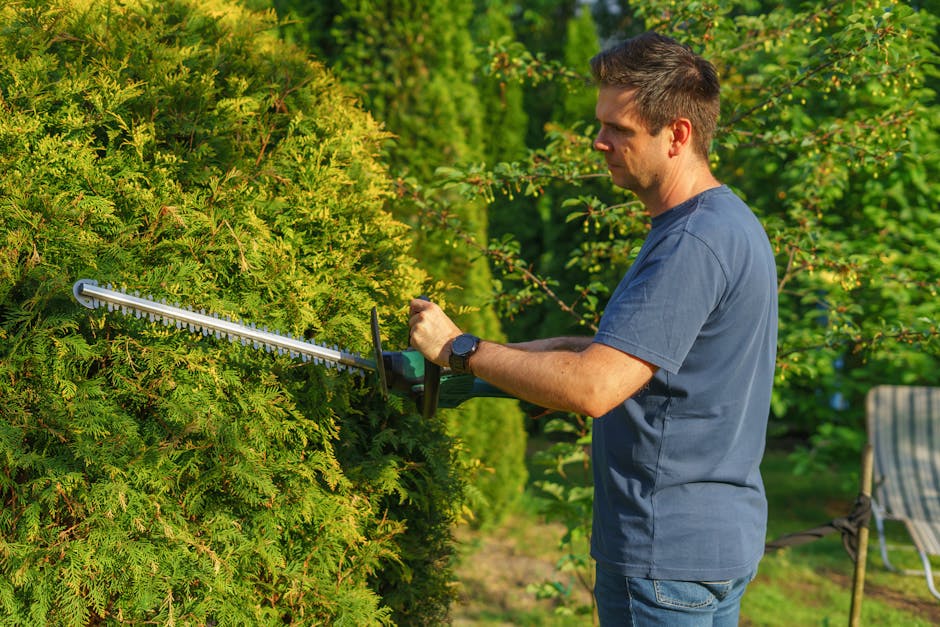
Will a Privet Hedge Survive Hard Pruning? (Quick Answer)
Yes — hard pruning privet hedge is one of the safest and most effective ways to rejuvenate an overgrown or leggy hedge.
Here’s what you need to know at a glance:
| Question | Answer |
|---|---|
| Can privet handle hard pruning? | Yes — it’s exceptionally resilient |
| How far back can you cut? | Down to 4–12 inches from the ground |
| Best time to do it? | Late winter (late February to early March) |
| Will it regrow? | Yes — often vigorously, within one growing season |
| Key aftercare needed? | Fertilizer, watering, and mulching |
Privet (Ligustrum) is, as gardeners often say, tough as old boots. It’s one of the few hedge plants that can be cut back almost to the ground and still bounce back with dense, healthy growth. Whether your hedge has grown too tall, gone bare at the base, or simply been neglected for years, hard pruning gives it a genuine fresh start.
That said, doing it correctly — at the right time, with the right technique — makes all the difference between a thriving hedge and a stressed one.
I’m Steve Sylva, owner of Steve’s Services Landscape Company in Malden, MA, with over 25 years of hands-on experience in landscape maintenance across the greater Boston area, including hard pruning privet hedge renovations for both residential and commercial properties. In the sections below, I’ll walk you through everything you need to know to get it right.
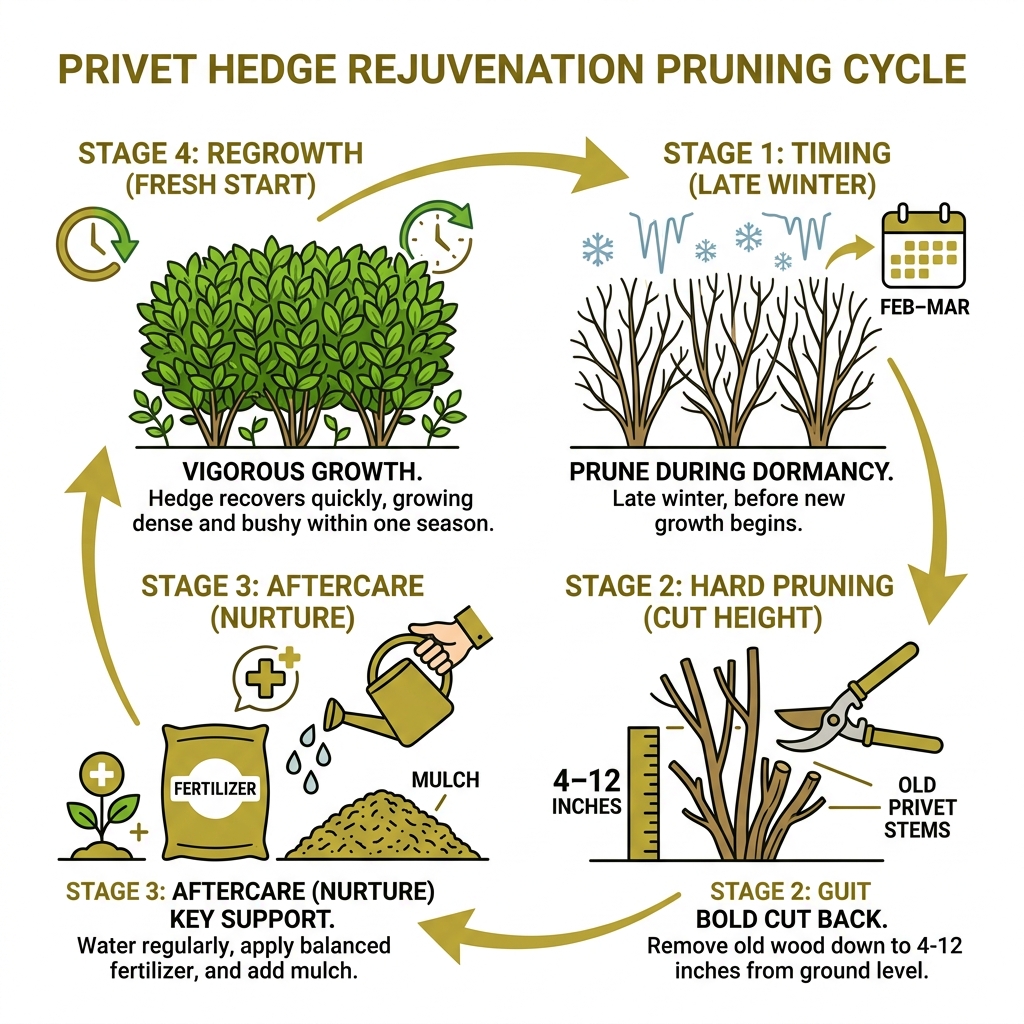
Quick hard pruning privet hedge terms:
Understanding Hard Pruning Privet Hedge Techniques
When we talk about hard pruning privet hedge, we aren’t just giving it a light haircut. We are talking about “rejuvenation pruning.” This is a drastic but necessary measure for hedges that have become unruly, excessively tall, or “leggy”—where all the green leaves are at the top and the bottom is just a skeleton of bare, woody stems.

In our service areas like Medford and Melrose, we often see privet that hasn’t been touched in a decade. These hedges might be 15 feet tall and leaning over sidewalks. The goal of hard pruning is to “reset” the plant. By cutting the stems back significantly, we force the plant to stop sending energy to the distant tips and instead activate dormant buds lower down on the main trunk.
According to the Privet Hedge Pruning Guide, this process relies on the plant’s natural state of dormancy. During the winter, the sap is low in the stems and stored in the roots. This is the safest time to perform major surgery because the plant isn’t actively trying to support new leaves. If you need help determining if your hedge is a candidate for this, our professional-hedge-trimming team can provide a site assessment.
The Science of Hard Pruning Privet Hedge Recovery
Why does privet survive being cut nearly to the ground when other plants might die? It comes down to “adventitious buds.” These are hidden growth points tucked under the bark. When the top of the plant is removed, hormonal signals tell these buds to wake up.
Furthermore, because a mature hedge has an established, massive root system, it has plenty of stored energy to push out new growth rapidly. While the top might look like a row of stumps, the roots are working overtime. This is why shrub-pruning for privet is so successful; the plant’s toughness is literally built into its biology.
When to Perform a Hard Pruning Privet Hedge Renovation
Timing is everything in New England. For our clients in Wakefield, Reading, and Stoneham, we recommend performing hard pruning privet hedge tasks in late February or early March.
There are three main reasons for this timing:
- Dormancy: The plant is still asleep, meaning it won’t “bleed” sap excessively.
- Nesting Birds: By pruning in late winter, we avoid the spring nesting season. It is vital to check for active nests if you are slightly late in the season, as disturbing nesting birds is often restricted by local guidelines.
- Recovery Window: Cutting just before the spring surge means the bare stumps will only be visible for a few weeks before the first flush of green appears.
If you wait until late spring or summer, you risk stressing the plant during the heat, and you’ll miss the primary growth window. For more complex landscapes, integrating this with tree-pruning schedules ensures your entire yard is ready for the spring bloom.
The Professional Process for Renovating Overgrown Hedges
When we arrive at a property in Winchester or Woburn to tackle an overgrown hedge, we don’t just start hacking away. There is a method to the madness. For a complete rejuvenation, we often cut the hedge down to 6 to 12 inches from the ground.
One of the most important professional secrets is the “Keystone Shape.” We always aim to keep the base of the hedge wider than the top. This allows sunlight to reach those new lower branches. If the top is wider, it shades the bottom, and you’ll end up with the same bare, leggy stems you were trying to fix in the first place.
| Feature | Formal Pruning (Maintenance) | Informal/Hard Pruning (Renovation) |
|---|---|---|
| Frequency | 2–3 times per year | Once every 5–10 years |
| Amount Removed | Top 2–6 inches of new growth | 70–90% of the entire plant |
| Goal | Maintain sharp, straight lines | Restore health and density to the base |
| Tools | Electric shears/Hand shears | Loppers, chainsaws, pruning saws |
Phased Pruning for Privacy Screening
If you rely on your hedge for privacy—perhaps to block out a busy road in Revere or a neighbor’s yard in Saugus—cutting the whole thing to 6 inches can be a shock. In these cases, we use a “phased” approach.
We hard prune one side of the hedge one year, cutting it back close to the center stems. This leaves the other side intact to provide a green screen. One to two years later, once the first side has filled back in, we return to hard prune the second side. This keeps your yard private while still achieving a total renovation over a 3-year period. This technique is similar to how we handle beech-hedge-pruning for older specimens.
Essential Tools and Safety Standards
Safety is our top priority. Privet stems can be incredibly thick and woody, requiring more than just simple garden shears. For hard pruning privet hedge projects, we use:
- Bypass Loppers: For branches up to 2 inches thick.
- Pruning Saws or Chainsaws: For the main “legs” of an old hedge.
- Safety Gear: Goggles and heavy-duty gloves are non-negotiable.
It is worth noting that privet sap can be a skin irritant for some people. Our crews follow strict safety standards to prevent rashes and injuries. If the job looks too daunting or requires heavy machinery, searching for hedge-trimming-near-me will connect you with our specialized teams who handle these removals and trims daily.
Essential Aftercare for Rejuvenated Privet
Once the cutting is done, the work of “rebuilding” begins. You’ve just put the plant through a major surgery, and it needs “physical therapy” in the form of nutrients and water.
According to experts at Gardener’s World, the three pillars of aftercare are:
- Fertilization: Apply a general-purpose fertilizer (like a 10-10-10 ratio) at the base. We typically use about 0.5 to 1 lb per 100 square feet.
- Watering: Copious watering is essential during the first spring. The roots need to support a massive amount of new leaf production.
- Mulching: Apply a 2-3 inch layer of organic mulch. This keeps the roots cool, retains moisture, and suppresses weeds that might try to steal nutrients from your recovering hedge.
Managing New Growth and Thinning
By mid-summer, you will see a “forest” of new shoots exploding from the stumps. This is exciting, but it requires management. To create a dense hedge, you need to “pinch back” or lightly trim these new shoots once they reach about 12 inches in length. This encourages them to branch out rather than just shooting straight up.
A good rule of thumb is the 30% rule: never remove more than 30% of the new foliage during these shaping trims. This ensures the plant still has enough “solar panels” (leaves) to feed the roots. Our bush-and-shrub-trimming services often include these follow-up visits to ensure the hedge is being “trained” correctly from day one.
Investment and Costs for Professional Hedging
We understand that budget is a major factor for homeowners in communities like Lynnfield and Burlington. Hard pruning is more labor-intensive than a standard trim because of the sheer volume of wood that must be cut and hauled away.
Based on average internet data, a standard professional hedge trimming can range from $250 to $900. However, for a major hard pruning privet hedge renovation on a very long or very tall hedge, costs can exceed $2,700+ depending on the accessibility and the amount of debris removal required.
Please note: These are average costs based on internet data and are not actual costs for Steve’s Services. Every property is unique, and we provide custom quotes based on your specific needs.
Estimated Service Pricing
| Service Type | Estimated Low End | Estimated High End (3x+) |
|---|---|---|
| Basic Annual Trim | $200 | $750+ |
| Overgrown Renovation | $600 | $2,500+ |
| Large Estate Hard Pruning | $1,200 | $4,500+ |
Factors that influence the price include the height of the hedge (requiring ladders or lifts), the thickness of the trunks, and the distance our crews have to carry the debris to our trucks. If you are looking for a bush-trimming-service, we recommend getting a professional on-site estimate to avoid surprises.
Frequently Asked Questions about Privet Renovation
Can you hard prune golden privet?
Yes, but with caution. As noted in the article Use rejuvenation pruning method on golden privet hedge, Golden Privet (Ligustrum x vicaryi) is slightly less vigorous than the standard green variety. It is more prone to winter dieback in our New England climate. While it handles rejuvenation well, it may take a little longer to fill in, and it’s even more important to fertilize and water it properly after the cut.
Will hard pruning kill an old hedge?
It is very unlikely. We have seen 40-year-old hedges that looked completely dead at the bottom regrow into lush, green walls within two seasons. As long as the plant is producing some green leaves at the top before you cut it, the roots are alive and the plant will regrow. Cutting to 4–6 inches is standard for these old “spindly” hedges.
How long does it take for privet to regrow?
Privet is one of the fastest-growing hedge plants available. In many cases, a hedge cut to 6 inches in March will be 2–3 feet tall and bushy by the end of the summer. Research shows that a severely pruned privet can reach 9 feet in height within 5 years if left unmaintained, though we recommend regular trimming to keep it dense and at your desired height.
Conclusion
Hard pruning privet hedge is the ultimate “reset button” for your landscape. It takes a bit of courage to see your hedge cut down to stumps, but the reward is a thick, healthy, and beautiful screen that adds immense curb appeal to your home.
At Steve’s Services Landscape Company, we’ve spent decades perfecting the art of hedge renovation. Whether you’re in Malden, Everett, or any of our surrounding New England communities, we have the tools and the expertise to handle your toughest landscaping challenges. From the initial hard cut to the precision of seasonal maintenance, we treat every hedge as if it were our own.
Ready to reclaim your yard from an overgrown hedge? Visit our services page or contact us today to schedule an estimate. Let’s get your privet back to its best!