Why Malden Homeowners Are Choosing Instant Lawns Over Traditional Seeding
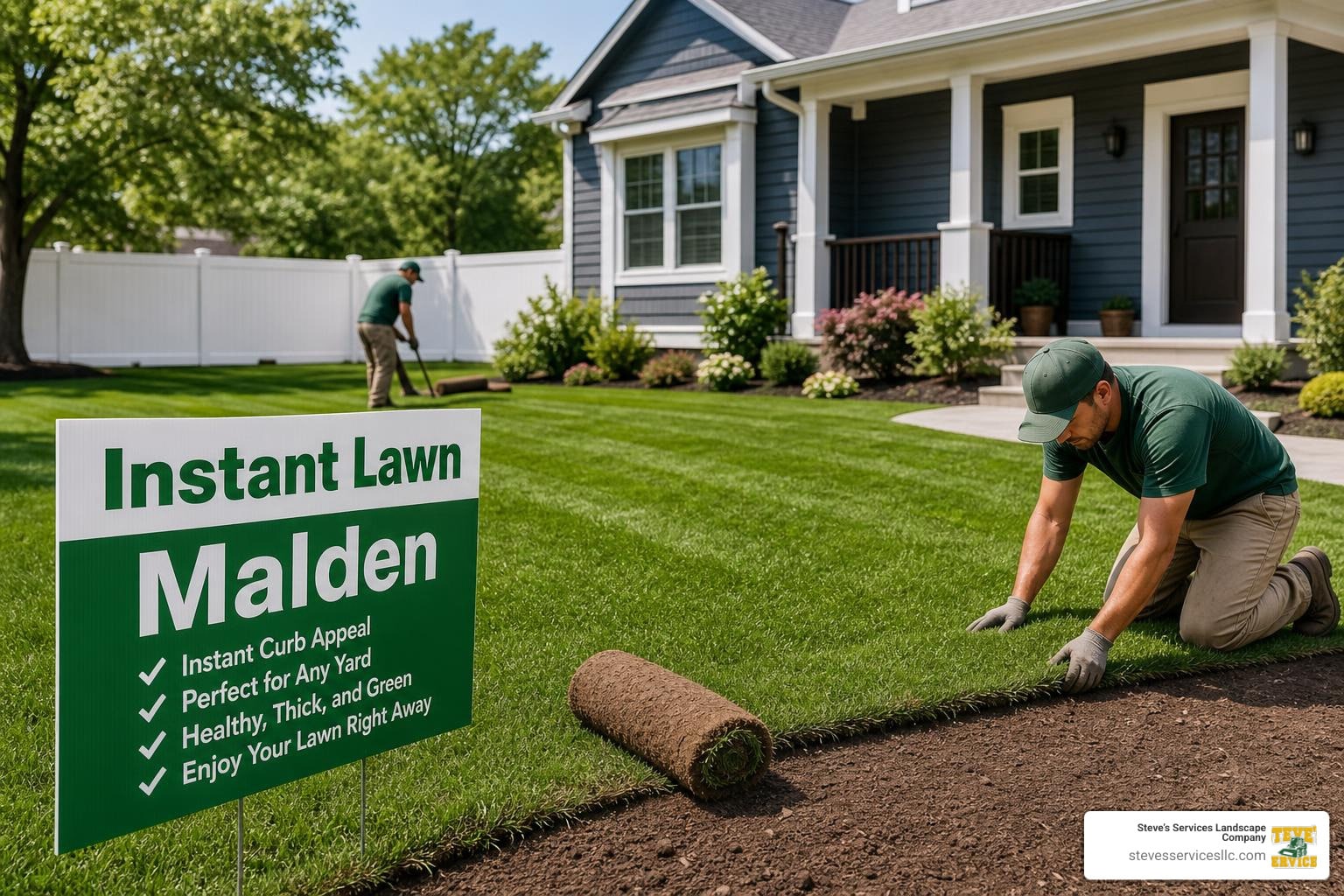
Figure 1: Professional sod installation for an instant lawn in Malden, MA.
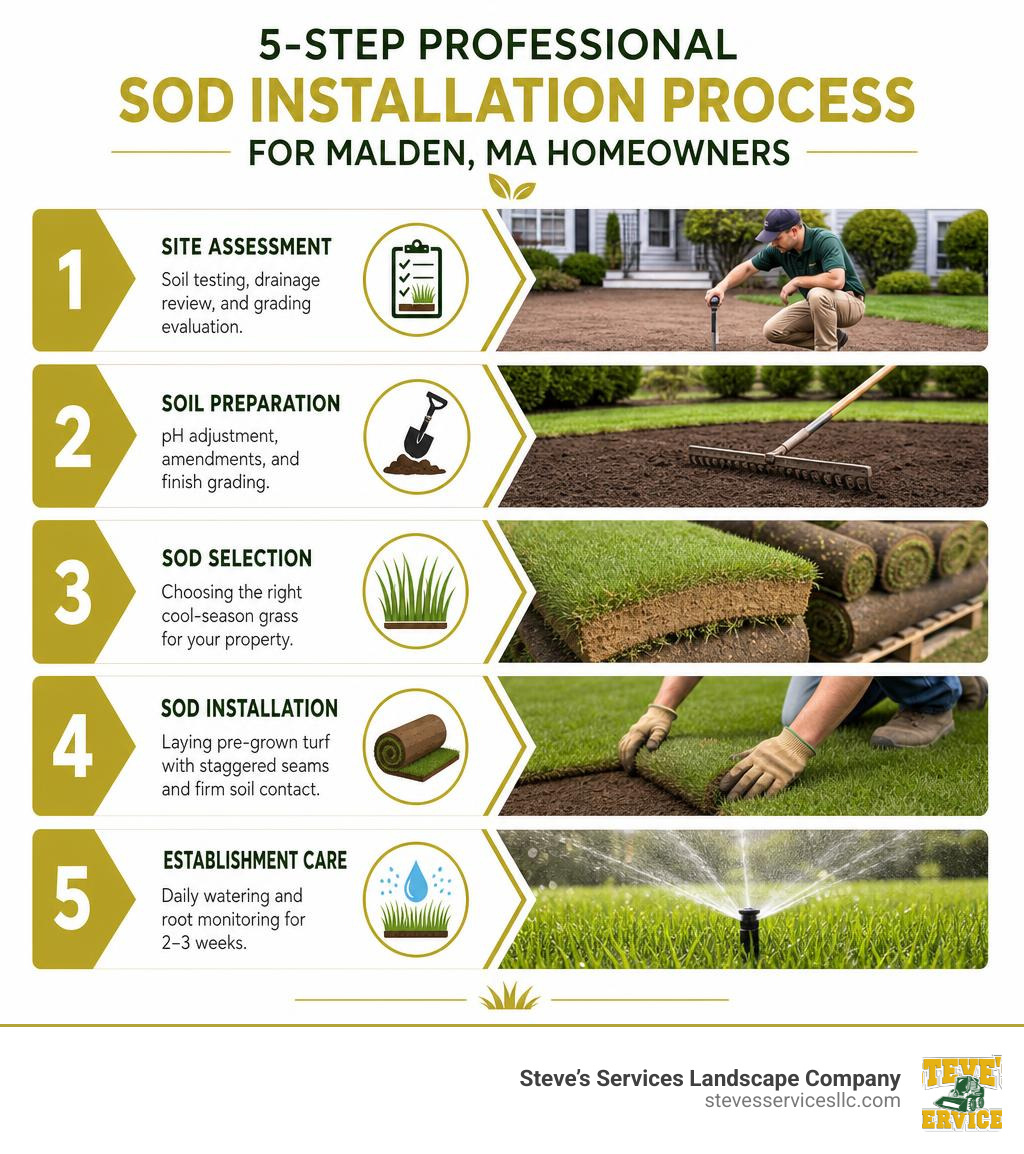
If you want instant lawn in Malden without waiting weeks or months for grass seed to sprout, professional sod installation is the fastest way to get there. Here’s a quick overview of what’s involved:
How to Get an Instant Lawn in Malden:
- Site assessment — soil testing, drainage review, and grading evaluation
- Soil preparation — pH adjustment, amendments, and finish grading
- Sod selection — choosing the right cool-season grass for your property
- Sod installation — laying pre-grown turf with staggered seams and firm soil contact
- Establishment care — daily watering and root monitoring for 2–3 weeks
Seeding takes patience. Sod gives you a usable, green lawn the same day it’s installed.
That’s the core idea — and it’s why more Malden homeowners and property managers are skipping the seed bag entirely.
Traditional seeding works, but it asks a lot of you. You wait. You baby it. You hope the weather cooperates. And even then, you’re looking at weeks before the lawn fills in — if it fills in evenly at all.
Sod is different. Pre-grown grass arrives on pallets, gets laid directly onto prepared soil, and within a few weeks it roots in and becomes your permanent lawn. No guessing. No patchy results. No bare soil sitting exposed to weeds and erosion.
For busy homeowners and commercial property managers in Malden, that trade-off makes a lot of sense.
I’m Steve Sylva, owner of Steve’s Services Landscape Company, and with over 25 years of experience delivering instant lawn in Malden and surrounding communities, I’ve seen how the right sod installation transforms a property in a single day. In the sections below, I’ll walk you through everything you need to know — from soil prep and sod selection to cost ranges and post-installation care.
Instant lawn Malden word guide:
What Is Sodding and Why Choose an Instant Lawn Malden?
Sodding is the process of installing pre-grown grass, usually delivered in rolls or slabs, over professionally prepared soil. Instead of starting from seed, you are essentially installing a mature turf surface that already has grass blades, roots, and a thin soil layer attached.
That is why people call it an instant lawn. It looks green right away.
Seeding is different. With seeding, grass seed is spread over prepared soil and must germinate, sprout, thicken, and mature over time. In Malden and nearby communities, that can be a good option for certain projects, but it depends heavily on the season, watering consistency, erosion risk, soil quality, and how much patience you have.
And let us be honest: patience is not always abundant when your front yard looks like a construction site.
Professional sod installation is often the better solution when you need:
- Immediate curb appeal
- Faster coverage for a bare or damaged lawn
- Erosion control on slopes or exposed soil
- A more uniform appearance than seed
- Less weed pressure compared with bare-soil seeding
- A cleaner finish around walkways, patios, driveways, and commercial entrances
- A lawn that can begin rooting within weeks when watered correctly
Sod is especially useful after construction, drainage work, hardscaping, utility repairs, or a full lawn renovation. It is also a strong choice for rental properties, condo associations, office properties, and homes going on the market where appearance matters right away.
For Malden homeowners comparing options, we usually frame it this way:
- Seeding is slower and usually less expensive upfront.
- Hydroseeding can be a smart middle-ground for larger or sloped areas.
- Sod is the fastest route to a finished, green lawn.
If your goal is “I want grass now,” professional sod is the answer. If your goal is “I want the cheapest possible way to maybe have grass later,” seed might be more your speed. No judgment. We just like lawns that do not require a motivational speech every morning.
For more on professional lawn options, visit our lawn installation services.
Professional Site Preparation, Soil Grading, and Sod Selection

A great instant lawn starts before the sod ever arrives. The biggest mistake property owners make is thinking sod is like green carpet: roll it out and call it a day.
It is not carpet. It is a living plant system. If the soil underneath is compacted, poorly graded, too acidic, full of construction debris, or draining toward the wrong place, the sod will struggle.
In Malden and nearby Massachusetts communities, professional preparation matters because local properties often have a mix of:
- Urban fill
- Compacted soil
- Rocky material
- Glacial till
- Acidic soil conditions
- Shaded yards from mature trees
- Tight access between homes
- Sloped areas near driveways, sidewalks, and retaining walls
Many Malden-area soils trend acidic, often around pH 5.5 to 6.5. Cool-season turf usually performs best closer to about pH 6.0 to 7.0, depending on the grass type and site conditions. That is why soil testing and amendment planning are so important.
Professional site preparation may include:
-
Existing turf and debris removal
Old grass, weeds, roots, rocks, and construction debris are removed so the sod can make direct soil contact. -
Soil testing
Testing helps identify pH, nutrient levels, organic matter needs, and amendment recommendations. -
pH adjustment
Lime may be recommended when soil is too acidic. Some Malden-area guidance suggests lime applications can range widely depending on the test result, sometimes around 50 to 100 pounds per 1,000 square feet for acidic soils. The exact amount should always be based on actual soil conditions. -
Organic matter and soil amendments
Compost or screened loam may be incorporated to improve rooting, moisture retention, and soil structure. -
Drainage review
Water should move away from foundations, patios, walkways, and low spots. Sod does not fix bad drainage by itself; it can hide it briefly, then politely reveal it later by turning yellow. -
Finish grading
The final grade should be smooth, firm, and shaped for proper water movement. -
Sod selection
We choose sod suited to Massachusetts conditions, sun exposure, expected traffic, and maintenance goals.
For some larger areas, steep slopes, or budget-sensitive projects, hydroseeding may be recommended instead of sod. Hydroseeding can be useful where broad coverage is needed and instant finished appearance is less important. To learn more, see our hydroseeding services in Massachusetts.
Cool-Season Sod Options for Malden Properties
Malden and the surrounding communities generally rely on cool-season grasses. These grasses grow best during spring and fall, tolerate New England winters, and can perform well with the right watering and mowing schedule.
| Sod Type | Appearance | Traffic Tolerance | Shade Tolerance | Drought Tolerance | Maintenance Needs | Common Professional Use Cases |
|---|---|---|---|---|---|---|
| Kentucky Bluegrass | Dense, rich green, classic lawn look | Medium to high | Low to medium | Medium | Moderate to higher | Front lawns, showpiece yards, sunny residential areas |
| Tall Fescue | Slightly coarser blade, deep roots | High | Medium | High | Moderate | Family yards, commercial lawns, areas needing stronger drought tolerance |
| Fine Fescue | Fine texture, softer look | Low to medium | High | Medium | Lower to moderate | Shaded lawns, tree-lined properties, low-traffic areas |
Many sod farms use blends rather than single grass types. That is usually a good thing. Blends can improve disease resistance, seasonal performance, and adaptability.
For example:
- A sunny front yard in Malden may benefit from a Kentucky bluegrass blend.
- A shaded yard in Melrose, Stoneham, or Winchester may need more fine fescue.
- A high-use rental property or commercial site in Everett, Revere, or Saugus may need a tougher tall fescue blend.
The right choice depends on the property, not a one-size-fits-all label.
Investment, Cost Breakdown, and Professional Installation
An instant lawn Malden project can be simple, or it can involve grading, drainage, disposal, irrigation, and municipal considerations. The more site work required, the more planning matters.
Before installation, a professional contractor may need to account for:
- Property access for equipment and sod delivery
- Removal and disposal of existing turf
- Soil import or amendment needs
- Finish grading requirements
- Irrigation access
- Drainage corrections
- Slope stabilization
- Nearby storm drains
- Utility locations
- Wetland or resource-area proximity
- Parking and staging in dense neighborhoods
In Massachusetts, underground utilities must be marked before excavation. That means contacting Dig Safe before digging, grading, or soil disturbance. For many projects, this is a routine step, but it is not one to skip. Nobody wants a lawn installation to become an accidental utility adventure.
Some projects may also require local review. In Malden, grading permits may be relevant when large amounts of cut or fill are involved. Research for local sod projects often references grading permit thresholds around 50 to 100 cubic yards of soil movement, but requirements can vary by project and should be confirmed with the appropriate municipal department.
Environmental rules may also apply. If a property is near wetlands, streams, flood-prone areas, or protected resource areas, Conservation Commission review and Massachusetts Wetlands Protection Act) considerations may be involved. Work near storm drains may also require extra care for erosion and sediment control under stormwater management expectations, including MS4-related best practices.
For most typical residential sod projects, the process is straightforward. For larger commercial properties, apartment communities, or sites near water or steep slopes, professional planning is especially important.
Seasonally, sod installation in Malden is best scheduled when temperatures support rooting and watering is manageable. As of May 2026, the preferred windows are generally:
- Mid-April through May, after the risk of hard frost has passed
- Late August through mid-October, when cooler temperatures and fall moisture help rooting
Summer installation can be done in some cases, but it requires more careful watering and heat management. Winter installation is usually avoided because frozen soil prevents proper rooting.
Understanding the Cost of an Instant Lawn Malden Project
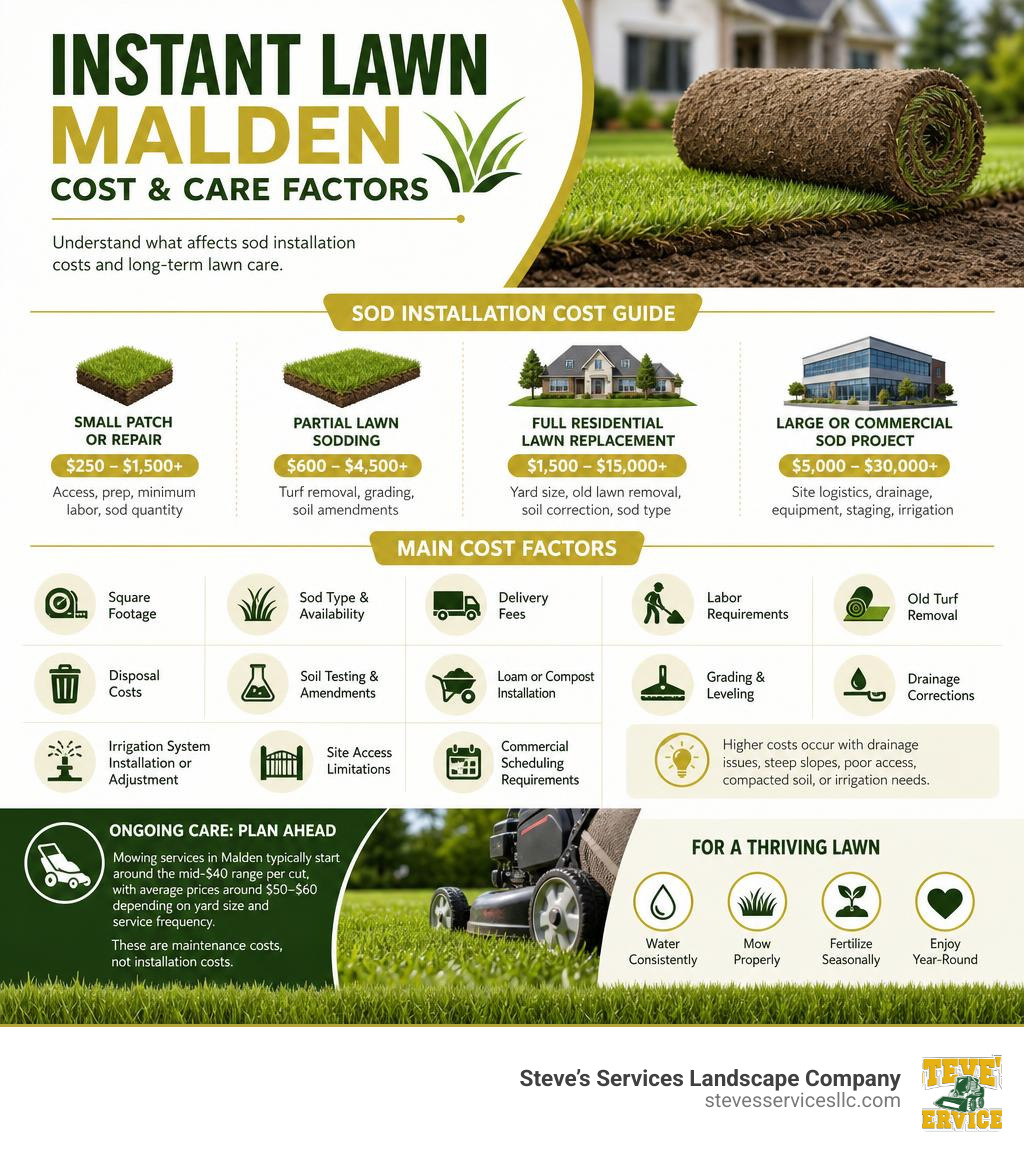
Sod pricing varies widely. Any numbers below are internet-based averages only and are not specific quotes from Steve’s Services Landscape Company. Every property is different, and an accurate price requires a professional site assessment.
Online project data for Malden-area lawn sodding commonly places small repairs in the hundreds of dollars, partial lawn projects in the low thousands, and full lawn replacements from several thousand dollars upward. Larger or commercial projects can be much higher.
A broad planning range may look like this:
| Project Type | Internet-Based Planning Range Only | What Affects the Price |
|---|---|---|
| Small patch or repair | $250 to $1,500+ | Access, prep, minimum labor, sod quantity |
| Partial lawn sodding | $600 to $4,500+ | Turf removal, grading, soil amendments |
| Full residential lawn replacement | $1,500 to $15,000+ | Yard size, old lawn removal, soil correction, sod type |
| Large or commercial sod project | $5,000 to $30,000+ | Site logistics, drainage, equipment, staging, irrigation |
The higher end is intentionally broad because sod installation can become several times more involved when there are drainage problems, steep slopes, poor access, compacted soil, or irrigation needs.
Main cost factors include:
- Square footage
- Sod type and availability
- Delivery fees
- Labor requirements
- Old turf removal
- Disposal costs
- Soil testing and amendments
- Loam or compost installation
- Grading and leveling
- Drainage corrections
- Irrigation system installation or adjustment
- Site access limitations
- Commercial scheduling requirements
It is also helpful to compare sod installation with ongoing maintenance. Local lawn mowing data for Malden shows mowing services often start around the mid-$40 range per cut, with average mowing prices reported around $50 to $60 depending on yard size and service frequency. Those mowing numbers are not sod installation costs, but they are useful for understanding long-term lawn care budgeting after your new grass is established.
For more cost guidance, visit our sod installation cost page.
Why Professional Installation Is Key for Your Instant Lawn Malden
Professional sod installation is not just about speed. It is about giving the lawn the best chance to survive, root, and look good long after the first week.
A professional installation helps with:
- Correct soil preparation
- Smooth finish grading
- Proper drainage pitch
- Tight seams between sod rolls
- Staggered joints to reduce visible lines
- Clean fitting around beds, walkways, patios, and driveways
- Firm soil-to-sod contact
- Rolling to remove air pockets
- Immediate watering after installation
- Proper disposal of removed turf and debris
Sod should generally be installed quickly after delivery, often within 24 to 48 hours, so it does not dry out on the pallet. During installation, each piece needs full contact with the soil below. Gaps, overlaps, air pockets, and curled edges can lead to drying, weak rooting, or uneven settling.
Professional crews also understand how to handle transitions. The edge along a walkway, driveway, patio, or retaining wall should be clean and level. A lawn that looks good on day one but creates mowing problems later is not a win.
For commercial sites, professional installation also helps reduce downtime. Apartment buildings, retail properties, office sites, and municipal-facing landscapes need clean staging, safe access, and predictable scheduling.
To discuss a professionally managed project, visit our lawn installation service.
Post-Installation Care and Long-Term Maintenance

Once sod is installed, the first few weeks are critical. The grass is green, but it is not fully established yet. Think of it like moving into a new house: it looks settled, but the boxes are still everywhere.
New sod needs consistent moisture so roots can grow into the prepared soil below. A common establishment target is about 1 to 1.5 inches of water per week during the first 2 to 3 weeks, adjusted for rain, heat, shade, soil type, and drainage. In hot or windy conditions, watering may need to be more frequent. In cooler or shaded conditions, overwatering can become the bigger problem.
Professional aftercare usually includes guidance on:
- Watering frequency
- Soil moisture checks
- Avoiding heavy foot traffic
- Watching for dry edges
- Adjusting watering for slopes and sunny areas
- Timing the first mowing
- Fertilization planning
- Weed control after establishment
- Long-term mowing height
The first mowing usually happens when the grass reaches about 3 to 4 inches and has rooted enough to resist lifting. A gentle tug test can help confirm rooting. If the sod lifts easily, it needs more time.
When mowing begins, avoid cutting too short. For many cool-season lawns, mowing around 2.5 to 3.5 inches is healthier than scalping. The one-third rule is a good guideline: never remove more than one-third of the grass blade at a time.
Long-term maintenance should include:
- Proper mowing height
- Seasonal fertilization
- Core aeration when needed
- Overseeding thin areas if appropriate
- Weed monitoring
- Irrigation checks
- Drainage inspections
- Leaf cleanup in fall
An irrigation system can make establishment and long-term lawn health much easier, especially on sunny properties or larger commercial sites. Learn more about our irrigation systems.
Frequently Asked Questions About Malden Sod Installation
Malden’s climate is well suited to cool-season turf, but timing and aftercare matter. Spring and fall are the friendliest seasons for sod because temperatures are cooler and moisture is easier to manage.
Professional installation helps account for local challenges such as compacted urban soil, shade from mature trees, rocky conditions, slopes, drainage patterns, and municipal stormwater considerations.
Here are the questions we hear most often.
How Long Does It Take for New Sod to Root in Malden?
New sod usually begins rooting within 10 to 14 days under good conditions, but fuller establishment often takes 2 to 3 weeks or longer. Weather, soil preparation, sod freshness, watering consistency, and grass type all affect the timeline.
In Malden, spring sod may root well after soils warm up following the last frost period, which typically occurs around late April. Fall sod often roots strongly because cooler temperatures reduce heat stress.
A basic establishment timeline looks like this:
- Day 1: Sod is installed and watered thoroughly.
- Days 2 to 7: Sod must stay consistently moist.
- Days 10 to 14: Early rooting often begins.
- Weeks 2 to 3: Roots strengthen with proper watering.
- After 3+ weeks: Normal use may gradually resume if the lawn is rooted.
The gentle tug test is simple: lightly pull up on a corner of the sod. If it resists, roots are grabbing the soil. If it lifts like a welcome mat, it needs more time.
Heavy use should wait until rooting is strong. Kids, pets, and foot traffic can return gradually, but the lawn should not host a backyard football championship in week one. The sod has enough going on.
Can Sod Be Installed Over an Existing Lawn Without Removing It?
In most professional situations, no. Sod should not be installed directly over an existing lawn.
New sod needs direct contact with prepared soil. If it is laid over old grass, the old turf creates a barrier between the sod roots and the soil below. That can cause poor rooting, uneven settling, trapped organic material, drainage issues, and dead patches.
Problems with sodding over existing grass include:
- Weak root contact
- Decomposition under the sod
- Uneven grade
- Increased pest or disease risk
- Poor drainage
- Higher chance of sod drying out
- Bumpy mowing surface
Professional turf removal allows the site to be regraded, amended, and prepared correctly. That preparation is what turns a same-day green lawn into a long-term lawn rather than a temporary green blanket.
How Should a New Instant Lawn Be Protected During Its First Winter?
A new instant lawn can handle winter if it has enough time to root before cold weather. That is one reason late summer through early fall is such a strong installation window in Malden and nearby communities.
For late-season sod, winter protection focuses on reducing stress:
- Avoid heavy foot traffic when turf is frozen or saturated.
- Keep snow piles away from delicate lawn edges when possible.
- Minimize salt exposure near sidewalks, driveways, and parking lots.
- Mark lawn edges before snow season.
- Avoid scraping plow equipment across turf areas.
- Inspect the lawn in spring for winter damage, compaction, or salt stress.
If sod is installed close to winter, professional aftercare becomes even more important. The goal is to help the turf enter dormancy with enough root strength to recover well in spring.
How Does Professional Snow Plowing Affect a New Instant Lawn in the Winter?
Professional snow plowing can protect a new lawn when it is planned correctly. It can also damage turf if lawn edges, curbs, walkways, and snow storage areas are not clearly marked.
For properties with newly installed sod, winter service coordination should include:
- Marking lawn edges with stakes before the first storm
- Identifying curbs, islands, walkways, and planting beds
- Planning snow stacking areas away from vulnerable turf when possible
- Avoiding excessive salt near grass edges
- Using careful plow blade positioning near lawn borders
- Communicating new sod areas to the snow management crew
This is especially important for commercial properties, apartment communities, retail sites, and business entrances where plowing is frequent. Snow piles can compact turf, delay spring recovery, and concentrate salt runoff. With proper planning, the lawn has a much better chance of waking up in spring looking like grass instead of a flattened green pancake.
At Steve’s Services Landscape Company, our experience in both landscaping and commercial snow management helps us think about the property year-round, not just on installation day.
Conclusion
An instant lawn is one of the fastest ways to transform a property. With professional sod installation, Malden homeowners, property managers, and commercial clients can go from bare soil or patchy grass to a clean, green lawn in a single day.
The key is doing it correctly:
- Assess the site
- Prepare the soil
- Correct grading and drainage
- Choose the right cool-season sod
- Install with tight seams and full soil contact
- Water consistently during establishment
- Maintain the lawn through each season
At Steve’s Services Landscape Company, we help homeowners and businesses achieve professional instant lawn results in Malden and surrounding communities, including Burlington, Everett, Lynnfield, Medford, Melrose, Reading, Revere, Saugus, Stoneham, Wakefield, Winchester, Woburn, and nearby service areas.
Whether you are repairing a damaged lawn, improving curb appeal, preparing a rental property, upgrading a commercial landscape, or starting fresh after construction, we can help plan the project from soil preparation through establishment.
Ready for greener grass without the waiting game? Contact us to schedule a professional consultation for lawn installation services.