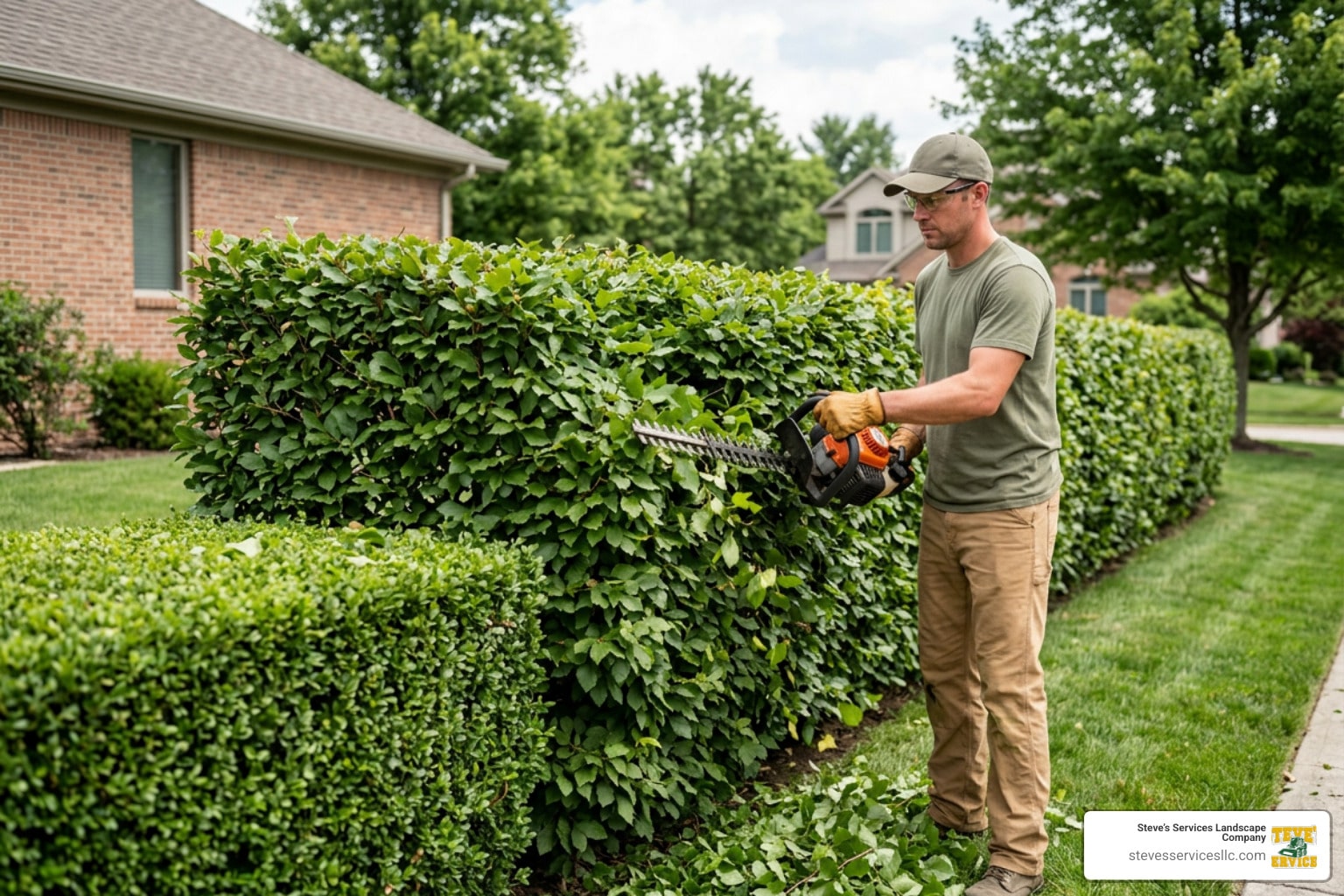
Is Your Beech Hedge Getting Out of Hand?
Beech hedge reduction is the process of cutting back an overgrown Fagus sylvatica hedge — in height, width, or both — to restore its shape, density, and manageable size.
Here’s a quick summary of what the process involves:
- Best time: Late winter (February) for hard pruning; August for maintenance trimming
- How much to cut: Up to 50% of height and width in one season — sometimes more
- Do both sides at once? No — cut one side per year to protect the plant’s ability to photosynthesize
- Key aftercare: Balanced fertilizer, deep watering, and a 10cm layer of mulch at the base
- Recovery time: Most hedges regain density within two to three growing seasons
Picture this: you move into a new home and the beech hedge along the back fence is taller than your roofline, blocking light and spilling into the neighbor’s yard. It’s a common situation — and the good news is that beech is one of the most forgiving hedging plants when it comes to hard pruning. Unlike conifers, it can regenerate even from old, bare wood.
But timing, technique, and aftercare make all the difference between a hedge that bounces back beautifully and one that struggles for years.
I’m Steve Sylva, owner of Steve’s Services Landscape Company, and with over 25 years of hands-on experience in landscape maintenance across Malden, MA and surrounding communities, I’ve handled more beech hedge reduction projects than I can count — from modest suburban trims to full-scale renovations on seriously overgrown estates.
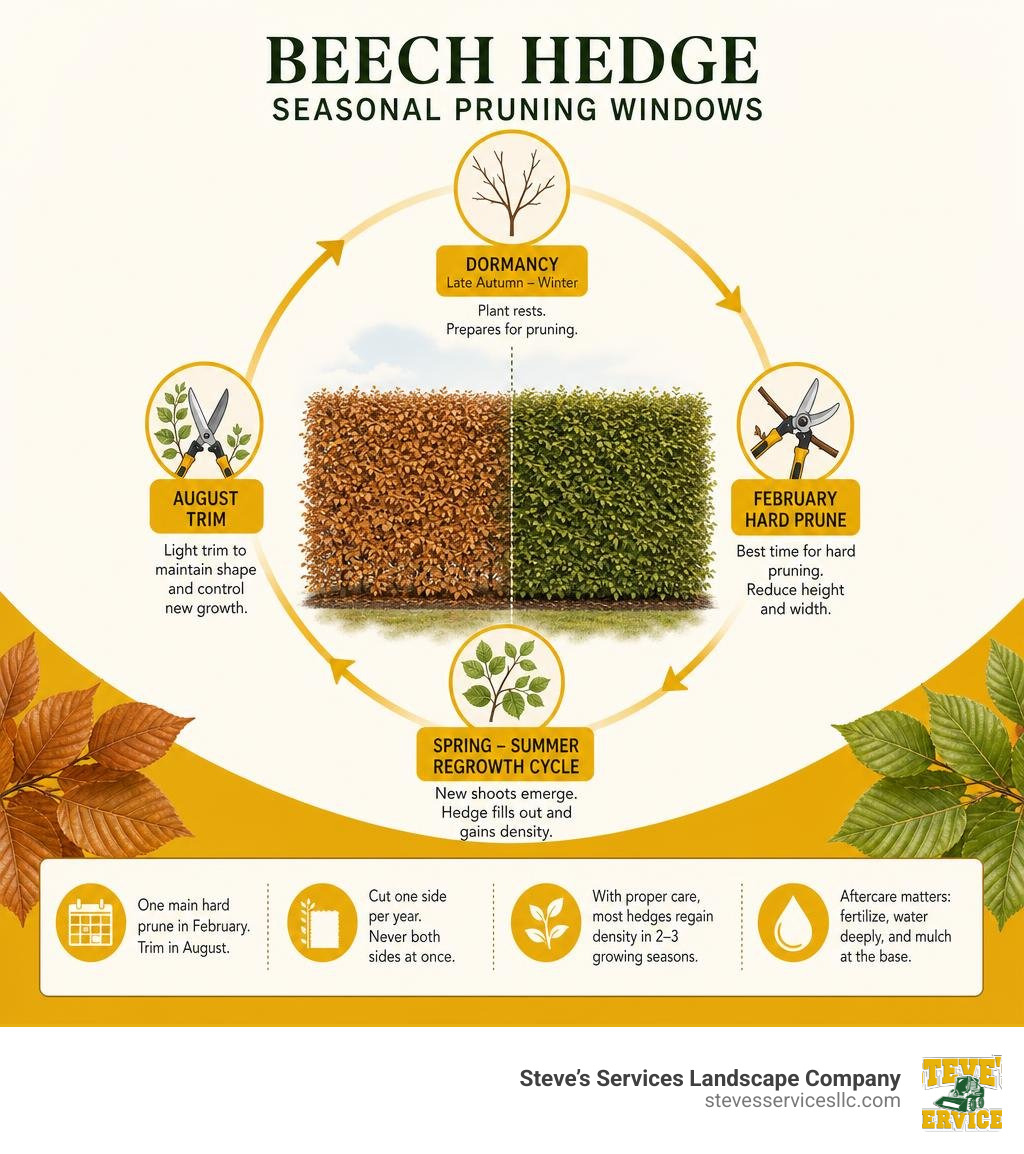
Beech hedge reduction terminology:
Understanding Beech Hedge Biology and Growth Habits
To successfully execute a beech hedge reduction, you first need to understand what makes Fagus sylvatica (common green beech) and its stunning cousin, Fagus sylvatica ‘Purpurea’ (copper or purple beech), tick.
Beech is a vigorous, deciduous tree that, when planted closely and pruned regularly, transitions into a dense, formal hedge. In our local Massachusetts climate, a healthy beech hedge is a fast grower, putting on roughly 40 to 60 centimeters (about 15 to 24 inches) of new growth every single year. This rapid growth rate is fantastic when you are trying to establish privacy quickly, but it also means that if you neglect your annual trimming duties, your neat boundary can quickly morph into a row of towering forest trees.
When managing these plants, referring to professional resources like the How to grow beech / RHS Growing Guide is highly beneficial. For tailored local advice, exploring our guide on Beech Hedge Pruning will help you understand how these growth habits manifest in New England landscapes.
Why Beech Hedges Require Specialized Care
What truly sets beech apart from other deciduous hedging options is a botanical phenomenon known as marcescence. This is the process by which the plant retains its dead, coppery-brown leaves throughout the winter months rather than dropping them in the autumn. It only occurs when the hedge is pruned regularly, which keeps the plant in a juvenile state.
These retained copper leaves provide excellent year-round privacy and wind protection, acting as a stunning visual feature against the winter snow. However, this unique habit relies entirely on a delicate hormonal balance within the plant. If you cut the hedge at the wrong time or too aggressively, you can damage the buds responsible for holding these winter leaves, leaving your hedge looking bare and skeletal when you want privacy most.
Furthermore, beech stems are highly sensitive to sunlight exposure and physical damage. Heavy, unguided cuts can expose previously shaded inner wood to sunscorch, while ragged tears from dull tools invite pathogens like silver leaf disease (Chondrostereum purpureum). This fungal disease enters through open wounds and can slowly rot the wood, eventually killing entire sections of your hedge. Ensuring clean, precise cuts and proper timing is essential to keeping the wood healthy and maintaining that gorgeous winter foliage.
The Best Time of Year for a Beech Hedge Reduction
Timing is everything. If you attempt a massive reduction at the wrong time of year, you risk shocking the root system, inviting disease, or stripping the hedge of its winter color.
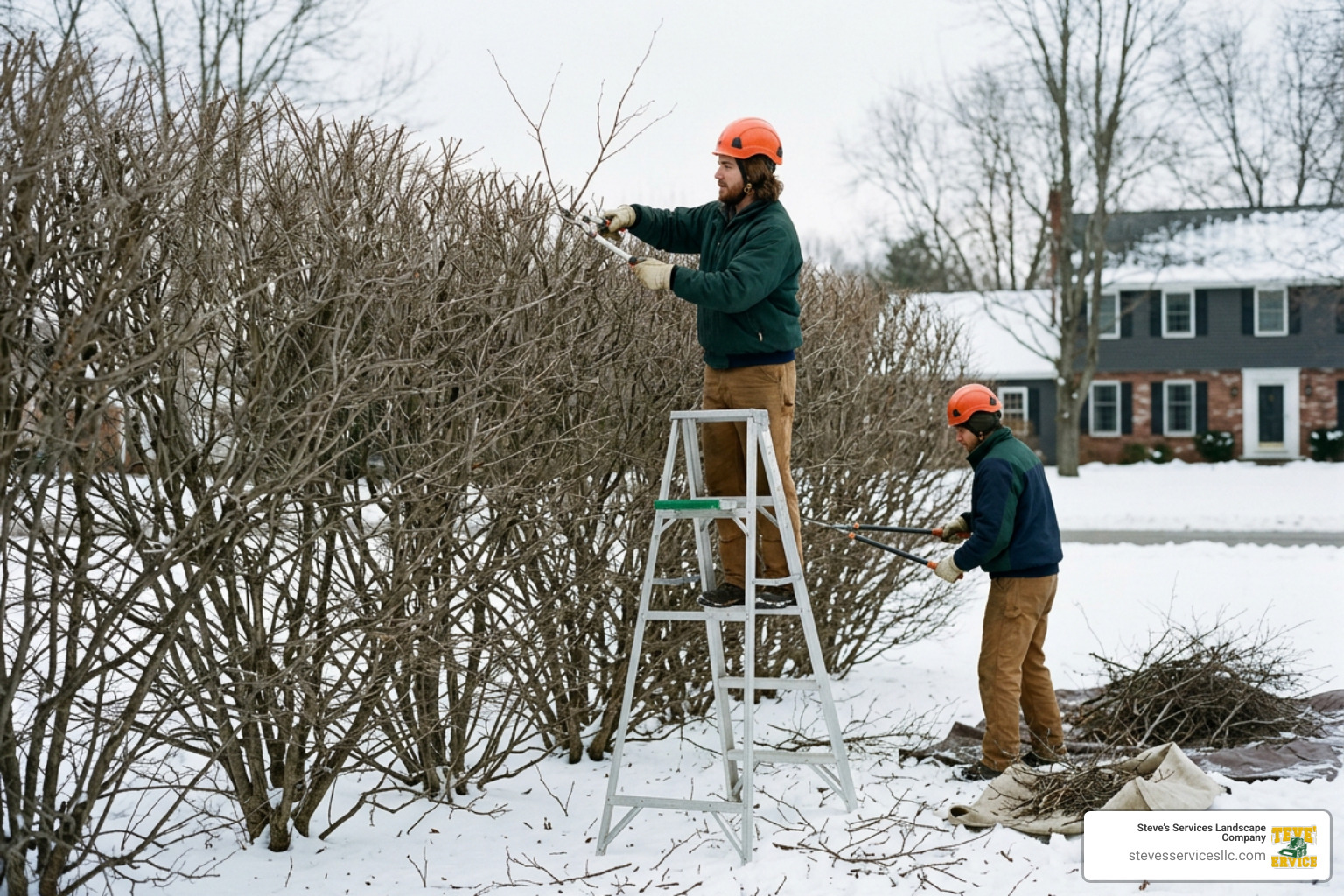
When planning a major renovation, we always align our schedule with the natural dormancy of the plant. While light maintenance can happen in the warmer months, a severe structural reduction requires a winter start. For a deeper look at seasonal timing principles, you can reference this detailed When to Cut a Beech Hedge: UK Timing Guide (Surrey), which outlines the biological reasons why specific months yield the best recovery results.
Winter Dormancy vs. Summer Maintenance
For a standard, healthy beech hedge, the annual maintenance calendar typically features two main events:
- The Late June Trim: A light tidy-up after the first spring growth spurt to keep the lines clean.
- The Mid-August Trim: The most crucial cut of the year. Trimming in the second week of August stresses the plant just enough to strengthen the abscission layer bond, ensuring the leaves turn a rich copper and stay firmly attached all winter.
However, when it comes to a severe, hard beech hedge reduction, summer is off the table. A radical cut when the sap is rising and the plant is actively growing will cause severe shock and massive sap bleeding.
Instead, major structural pruning must take place in late winter (specifically February or early March) while the hedge is fully dormant and before the spring bud burst. Pruning during this window ensures the plant’s energy remains safely stored in its root system. When spring arrives in April and May, that stored energy surges upward, fueling vigorous, healthy regrowth from the newly cut stems.
Legal Restrictions and Wildlife Protection
Before starting any hedge reduction project, we must also consider our local wildlife. In Massachusetts, nesting birds are protected under federal law via the Migratory Bird Treaty Act.
The core bird nesting season runs from March through August. During this time, it is illegal to disturb or destroy active nests. If you schedule your major reduction for February, you completely bypass this issue, as birds have not yet begun nesting.
If any maintenance trimming is scheduled for late spring or summer, our team always performs a thorough, hand-and-fingertip nest search throughout the hedge. If an active nest is discovered, all work in that immediate section must stop until the fledglings have fully left the nest.
The Staged Reduction Process: Height, Width, and Shaping
If your beech hedge is severely overgrown — for example, 4 meters high and 2 meters wide — trying to cut it down to a neat 2-meter by 1-meter box in a single day is a recipe for disaster. While beech is resilient, removing more than half of its total biomass in one go can starve the root system, leading to widespread dieback or total plant failure.
Instead, we recommend a staged, multi-season approach.

| Phase | Timeline | Action Taken | Biological Purpose |
|---|---|---|---|
| Phase 1 | Year 1 (Late Winter) | Cut back one vertical side hard, leaving the top and other side untouched. | Allows the untouched side to photosynthesize and support root health while the cut side regenerates. |
| Phase 2 | Year 2 (Late Winter) | Reduce the height of the hedge to roughly 9 inches below your final target height. | Encourages strong, bushy lateral growth at the new top line without starving the plant. |
| Phase 3 | Year 3 (Late Winter) | Cut back the second vertical side hard to match the first side. | Completes the reduction once the first side and top have successfully established dense new growth. |
Staging a Severe Beech Hedge Reduction Over Multiple Seasons
Spreading the work over three years might require some patience, but it guarantees the long-term survival and beauty of your hedge.
During Phase 1, when we cut one vertical face back, we don’t cut flush to the main trunk. Instead, we leave short stubs of the lateral (side) branches. These stubs contain dormant buds that will quickly burst into life come spring.
By leaving the opposite side and the top completely intact, the hedge can still produce plenty of food through photosynthesis. This food is sent down to the roots, keeping the entire plant strong enough to push out thick, dense foliage on the renovated side. If you want to ensure this staged process is executed flawlessly, it is often best to hire Professional Hedge Trimming Services to manage the precise cuts and structural planning.
The Art of the Batter: Shaping for Optimal Light
When reducing and shaping a beech hedge, you should never cut the sides perfectly vertical. If the top of the hedge is the same width as the bottom, the top branches will cast a shadow over the lower sections. Over time, this lack of sunlight causes the bottom branches to lose their leaves, go bald, and eventually die back, leaving you with an unsightly, leggy hedge.
To prevent this, we always trim beech hedges into a trapezoid or “A-frame” shape, also known in the industry as a batter.
The rule of thumb is to make the base of the hedge at least 20% wider than the top (aiming for a taper of about 10cm narrower at the top per meter of height). This sloped profile ensures that sunlight reaches the very lowest branches, keeping the hedge thick, green, and private right down to ground level. As an added bonus, this sloped shape allows heavy New England snow to slide off easily, preventing devastating snow-load damage during our harsh winters.
Post-Reduction Aftercare and Professional Execution
A successful beech hedge reduction doesn’t end when the last branch is cut. The aftercare you provide in the weeks and months following a heavy prune will dictate how quickly and densely the hedge recovers.
Professional Tools and Techniques for Beech Hedge Reduction
Reducing a mature, woody hedge is heavy, demanding work that goes far beyond what standard residential hedge trimmers can handle. Stems inside an overgrown hedge can easily reach wrist thickness, requiring heavy-duty equipment.
- Cutting Tools: We utilize professional-grade chainsaws and high-performance sabre saws equipped with coarse, clean-cutting blades. Clean cuts are vital; ragged cuts leave torn wood fibers that collect water and fungal spores.
- Safety & Access: Working on a shaky ladder with a chainsaw is incredibly dangerous. Our crews use stable, elevated access platforms and towered scaffolding to ensure straight, level cuts along the top line while maintaining a safe working environment.
- Wound Care: For massive cuts on main structural stems (larger than 2 inches in diameter), we apply specialized wound treatments to seal the exposed wood and block moisture and airborne pathogens during the initial recovery phase.
Estimating the Cost of Professional Renovation
Because every hedge is unique in its height, accessibility, and degree of overgrowth, pricing for a professional renovation varies. To give you a realistic expectation, professional hedge renovation costs generally fall into a broad pricing range from $450 to $2,500, depending on the size and complexity of the project.
Please note: these figures represent internet-based averages for landscape services across the country and are not specific, binding quotes for Steve’s Services.
Factors that influence where your project will fall on this spectrum include:
- The total length and height of the hedge.
- The volume of green waste that needs to be chipped, hauled, and responsibly disposed of.
- The proximity of the hedge to power lines, buildings, or delicate garden features.
- Whether specialized access equipment or climbing gear is required.
To get a better understanding of how these costs are calculated, you can check out our comprehensive Hedge Trimming Cost Guide.
Frequently Asked Questions about Beech Hedge Reduction
How much can you safely reduce a mature beech hedge in one go?
If you are staging the reduction over multiple seasons (cutting only one side or just the top), you can safely reduce the height and width by 50% or even more in a single winter. However, if you must cut the entire hedge back all at once due to space constraints or property disputes, you should limit the reduction to no more than one-third of the total volume to protect the plant’s health and prevent permanent shock.
How long does it take for a heavily reduced beech hedge to regain its density?
With proper aftercare, a heavily reduced beech hedge will begin pushing out vigorous new shoots during its first spring. It typically takes two to three growing seasons for the hedge to fully fill in, regain its signature density, and restore complete privacy. Because beech grows rapidly (up to 60cm per year once established), the recovery process is surprisingly fast.
When is it better to replace an old beech hedge rather than attempt renovation?
While beech is incredibly tough, renovation may not be viable if:
- The hedge is suffering from widespread, severe decay or fungal root rot (such as honey fungus).
- More than 40% of the individual plants in the row are already dead or completely hollowed out.
- The soil is permanently waterlogged, which beech hates (in this case, replanting with a species like hornbeam, which tolerates wet soil much better, is the superior option).
Conclusion
An overgrown beech hedge doesn’t have to be a source of stress or neighborly disputes. With a carefully planned, staged beech hedge reduction executed at the right time of year, you can transform a towering, messy barrier into a neat, dense, and beautiful architectural feature that enhances your property’s value and privacy.
At Steve’s Services, we’ve spent decades perfecting the art of hedge renovation. Whether you are in Malden, Burlington, Medford, Reading, or any of our surrounding service communities, our team has the professional tools, horticultural expertise, and local experience to bring your landscape back into perfect balance.
Ready to reclaim your yard and restore your hedge to its former glory? Schedule Professional Landscape Maintenance with Steve’s Services today, and let our family take care of yours!