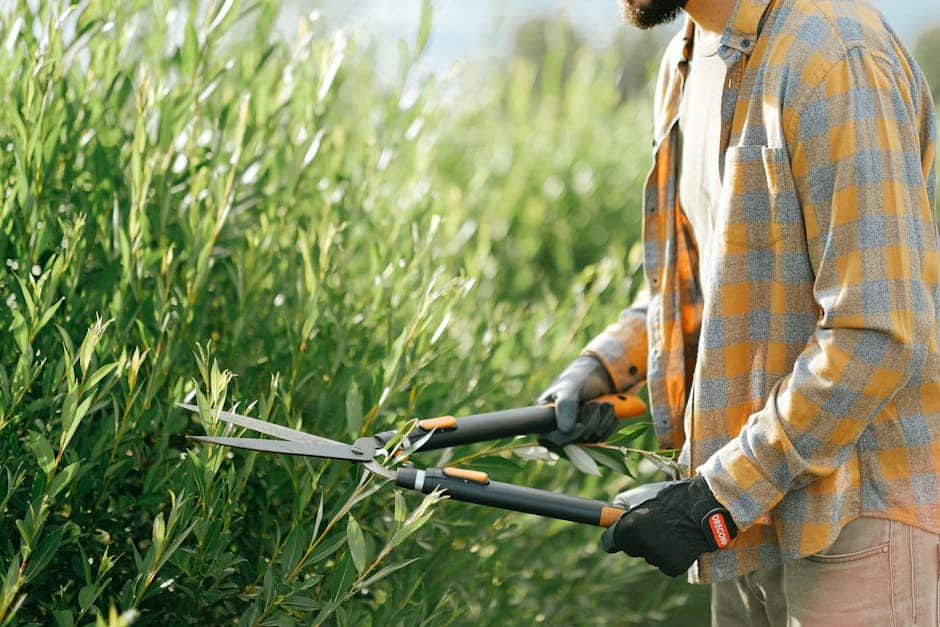
Hedge Trimming Cost: Top 5 Factors Influencing Prices in 2024
The True Cost of Hedge Trimming: Everything You Need to Know
Hedge trimming cost is a crucial factor for homeowners looking to maintain neat and tidy outdoor spaces. Trimming hedges not only boosts your property’s curb appeal but also promotes healthy growth and shapes your yard’s aesthetic. Here’s a quick summary of what you can expect to pay for hedge trimming services:
- Average Cost: $200 to $600
- Small Jobs: As low as $10/hour (low-end companies)
- Comprehensive Services: Up to $150 for large jobs
Maintaining well-trimmed hedges can significantly increase the visual appeal and value of your property. Whether it’s for privacy, beautification, or wind reduction, well-maintained hedges are a vital part of your landscape. However, regular trimming is essential, and the frequency will depend on your specific plants.
I’m Steve Sylva, owner of Steve’s Services, with over 25 years of experience in landscape maintenance. I understand the intricacies of keeping hedges in top shape while offering competitive prices without sacrificing quality. Let’s dive deeper into the factors influencing hedge trimming costs and why investing in professional services can be beneficial.
Understanding Hedge Trimming Costs
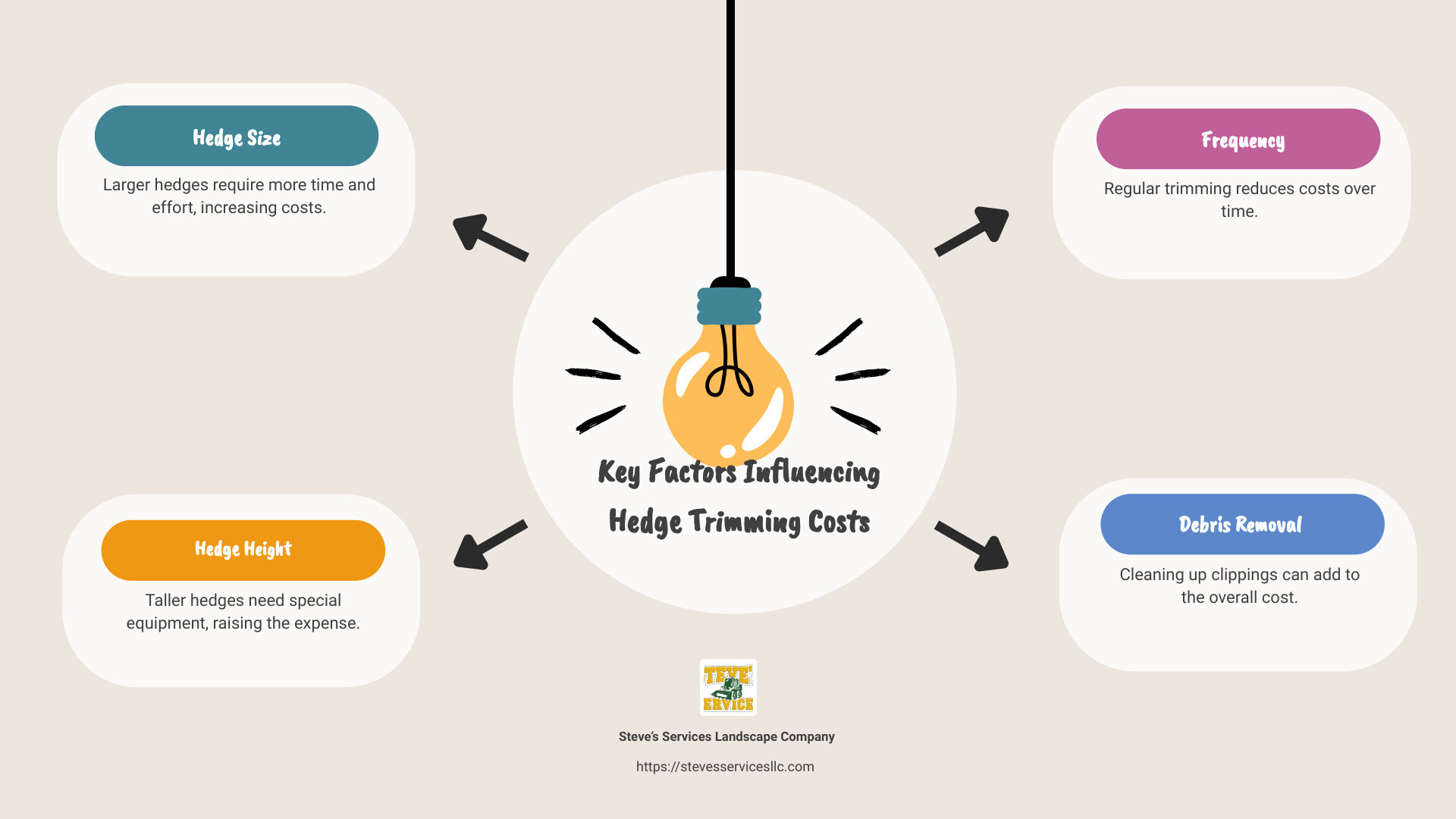
Factors Influencing Hedge Trimming Cost
National Averages and Price Ranges
Professional hedge trimming can cost anywhere from $200 to $600, with the national average being around $429. However, these prices can vary widely based on several factors. On the extreme ends, you might pay as little as $30 for a minimal job or as much as $900 for a more complex task.
Size and Height of the Hedge
One of the most significant factors affecting hedge trimming cost is the size and height of your hedge. For hedges up to 6 feet tall, you might pay between $2.50 and $4 per foot. If your hedges are taller than 6 feet, expect to pay between $4 and $6 per foot. For example, trimming a 12-foot-long hedge that’s 6 feet tall could cost around $30 to $48, while a 150-foot-long hedge of the same height might run you $375 to $600.
Type of Hedge
The type of hedge you have also plays a role in determining the cost. Delicate hedges with small leaves may require more time and precision, making them more expensive to trim than hardy evergreen hedges. For instance, intricate topiary work will cost more than a simple shearing job.
Level of Difficulty
If your hedge is overgrown or difficult to manage, the trimming job will naturally be more labor-intensive and costly. Healthy, well-maintained hedges are easier and cheaper to trim. Creating complex shapes or topiaries also adds to the difficulty and cost.
Frequency of Trimming
How often you trim your hedges can impact the overall cost. Regular trimming (2 to 3 times a year) can keep your hedges in good shape and reduce the amount of work needed each time. Some fast-growing hedges might require trimming up to 5 times a year.
Debris Removal
Don’t forget about cleanup. Some companies include debris removal in their service, while others might charge extra. Always ask if cleanup and disposal are included in the quote to avoid surprise fees.
Growth Regulators
Using plant growth regulators can help maintain the height and shape of your hedges for longer periods, reducing the frequency of trimming needed. This can save you time and money in the long run.
By understanding these factors, you can better estimate your hedge trimming costs and make informed decisions about maintaining your landscape.

Next, let’s dig into a detailed cost estimator by size, so you can get a clearer picture of what to expect based on the specific dimensions of your hedges.
Hedge Trimming Cost Estimator by Size
When it comes to estimating the hedge trimming cost, the size of your hedge is one of the most significant factors. Let’s break down the costs for short and tall hedges to give you a clearer picture.
Cost for Short Hedges (up to 6 feet)
Short hedges, those up to 6 feet tall, are generally easier and less expensive to maintain. Here’s a quick look at the typical costs:
- Cost per foot: $2.50 to $4 per foot
- Average expenses: For a 12-foot hedge, expect to pay between $30 and $48. For a 50-foot hedge, costs range from $125 to $200.
Here’s a table to summarize:
| Hedge Length | Typical Cost (up to 6 feet in height) |
|---|---|
| 12 feet | $30 – $48 |
| 50 feet | $125 – $200 |
| 100 feet | $250 – $400 |
Cost for Tall Hedges (above 6 feet)
Tall hedges, those over 6 feet, require more effort and equipment, leading to higher costs. Here’s what you can expect:
- Cost per foot: $4 to $6 per foot
- Increased expenses: For a 12-foot hedge, the cost ranges from $48 to $72. For a 50-foot hedge, you could pay between $200 and $300.
Here’s a table to summarize:
| Hedge Length | Typical Cost (taller than 6 feet) |
|---|---|
| 12 feet | $48 – $72 |
| 50 feet | $200 – $300 |
| 100 feet | $400 – $600 |
Example Calculation: If you have a 75-foot hedge that’s 10 feet tall, the cost could be around $450. This includes the added complexity due to its height.
By understanding these typical costs, you can better plan your budget and avoid surprises. Next, let’s explore additional services that might impact your hedge trimming expenses.
Additional Services That Impact Hedge Trimming Cost
When it comes to maintaining your yard, hedge trimming isn’t the only task that might affect your budget. Here are some additional services that can influence the overall cost:
Bush Trimming
Bushes might not grow as tall as hedges, but they can spread out and become unsightly. Bush trimming keeps them neat and prevents them from encroaching on walkways and driveways. The average cost to trim a bush ranges from $50 to $850 per plant, depending on its size.
Lawn Mowing
Why stop at hedge trimming? Many companies offer lawn mowing services as well. The average cost for mowing a lawn is between $35 and $100, depending on the size of your yard. Bundling this with hedge trimming can sometimes get you a discount.
Mulching
Mulching is an excellent way to keep your hedges healthy. It helps retain moisture, suppress weeds, and insulate the soil. The cost of mulching will vary based on the type of mulch and the area covered, but it’s a worthwhile investment for the health of your plants.
Yard Cleanup
Trimming hedges can generate a lot of debris. Some companies include yard cleanup in their service, while others charge an extra fee. The cost for hauling away debris typically ranges from $100 to $600.
Tree Services
If you have trees that need attention, many landscaping companies offer tree trimming and tree removal services. Trimming a tree can cost between $50 and $1,700, while removing a tree can range from $200 to $2,000. These services can help you avoid potential hazards and promote healthy tree growth.
Hedge Removal
If you’re looking to replace your hedges, hedge removal is another service to consider. Professional removal ensures a safer and smoother process, avoiding potential injuries and saving you time. Costs will depend on the size and complexity of the job.
Landscaping
For a more comprehensive approach to yard care, consider landscaping services. These can include planting flowers, shrubs, and other plants. The cost will vary based on the scope of work and the size of your yard, but bundling services can often save you money.
By considering these additional services, you can get a more accurate estimate of your overall yard maintenance costs. Next, we’ll look at how seasonal and geographical variations can affect hedge trimming prices.
Seasonal and Geographical Variations in Hedge Trimming Cost
Optimal Times for Hedge Trimming
When to Trim: Timing is key for hedge trimming. The best seasons to trim hedges are spring, summer, and late fall. Each season has its pros and cons, affecting both the hedge’s health and hedge trimming cost.
- Spring: Ideal for most hedges, especially non-flowering types. The cooler weather and increased rainfall help plants recover quickly. However, avoid trimming during the hottest months to prevent stress on the plants.
- Summer: Trimming in mid-summer is common for fast-growing hedges. Be mindful of heatwaves, which can stress the plants. Some hedges may require up to five trims per year to maintain their shape.
- Late Fall: This season is perfect for heavier pruning, preparing the hedges for winter dormancy. It’s crucial to avoid trimming in late summer to early fall when plants are preparing for winter.
Cost by Location: Your geographical location plays a significant role in hedge trimming costs. Areas with longer growing seasons, like the southern U.S., often need more frequent trims, increasing overall costs. Conversely, colder regions may offer lower rates during off-peak seasons like winter or early spring when demand for landscaping services drops.
Weather Impact: Weather conditions also affect hedge trimming costs. For instance, wetter winters can make it difficult for contractors to access your yard, potentially raising prices due to increased labor and equipment needs. Contractors often charge more for challenging site conditions, such as limited access or muddy terrain.
By understanding the best times for hedge trimming and how location and weather impact costs, you can better plan your yard maintenance. This knowledge helps you budget more effectively and ensures your hedges remain healthy and attractive year-round.
Frequently Asked Questions about Hedge Trimming Costs
What is the best time of year to trim hedges?
The best time to trim hedges depends on the type of shrubs you have. For most hedges, late spring or early summer is ideal. This period allows the plants to recover quickly and promotes healthy growth. However, for early bloomers like azaleas and forsythia, trimming right after they finish flowering is best.
Avoid trimming during the hottest months of spring and summer, as extreme heat can stress the plants. Late fall or winter is also a good time for heavier pruning, especially for evergreen hedges, but be cautious of the “dead zone” where no new growth occurs.
How often should hedges be trimmed?
On average, hedges should be trimmed 2 to 3 times per year. However, fast-growing hedges may need trimming up to 5 times per year to maintain their shape. Regular trimming encourages thicker growth and keeps the plants healthy.
Cutting less of the plant more often is generally better for the shrub’s health. As a rule of thumb, avoid trimming more than one-quarter to one-third of the hedge at one time.
Can trimming frequency affect overall costs?
Absolutely. Frequent trimming can actually save you money in the long run. By trimming hedges more often, you cut less each time, which is easier on the plants and requires less labor-intensive work. This can reduce the overall cost, even though you might have more trimming sessions.
For example, trimming a 50-foot hedge might cost $125 to $200 if done once or twice a year. But if you schedule more frequent trims, the cost per session might be lower, and the total annual cost could be more manageable.
Additionally, some companies offer discounts with annual contracts, which can further reduce your overall expenses. Regular maintenance also helps avoid the higher costs associated with reshaping overgrown hedges, which can double the trimming costs.
By understanding these factors, you can plan your hedge trimming schedule more effectively and keep your yard looking neat without breaking the bank.
Conclusion
At Steve’s Services Landscape Company, we understand that maintaining your hedges can be a daunting task. That’s why we strive to provide top-notch hedge trimming services that cater to your specific needs. Our commitment to customer satisfaction is at the core of everything we do.
We take pride in offering personalized solutions for every yard. Our team of experienced professionals ensures that your hedges are trimmed to perfection, enhancing the beauty and health of your landscape. Whether you need a one-time trim or regular maintenance, we have flexible options to suit your schedule and budget.
For more information on our hedge trimming services and to get a free estimate, visit our landscape maintenance page. Let us help you keep your outdoor space looking its best all year round.