What Are Grass Prices per Square Foot? (Quick Answer)
Grass prices per square foot vary widely depending on whether you choose sod, seed, or artificial turf — and whether you hire a pro or do it yourself.
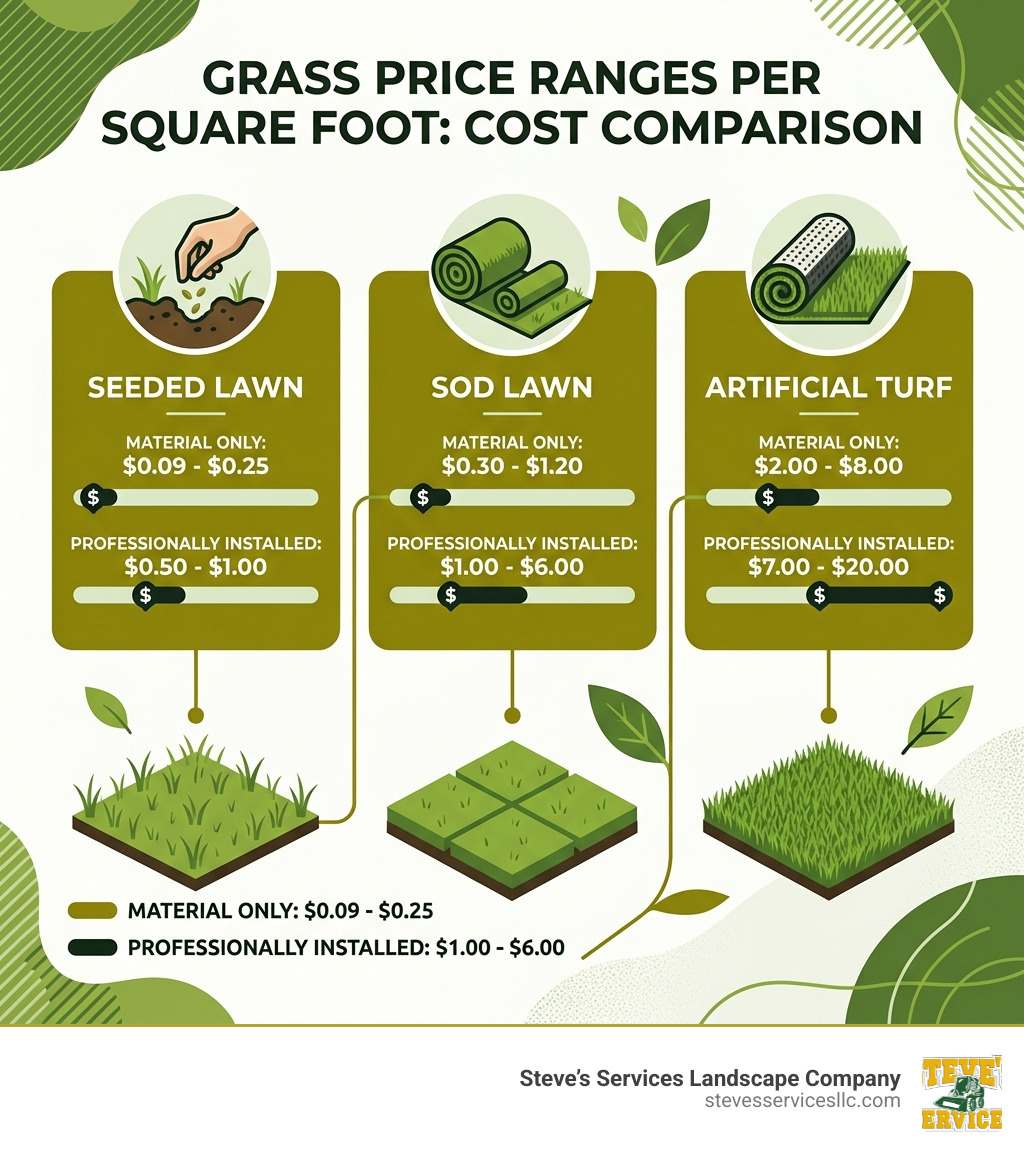
Here’s a quick overview based on average internet data (not actual Steve’s Services pricing):
| Grass Type | Material Only | Professionally Installed |
|---|---|---|
| Seeded lawn | $0.09 – $0.25/sq ft | $0.50 – $1.00/sq ft |
| Sod (average) | $0.30 – $1.20/sq ft | $1.00 – $6.00/sq ft |
| Sod (premium types) | $0.70 – $1.20/sq ft | $2.00 – $9.00/sq ft |
| Artificial turf | $2.00 – $8.00/sq ft | $7.00 – $20.00/sq ft |
Note: These are average cost ranges based on national internet data. Actual costs in Massachusetts and the greater Malden area may differ.
So if you’re planning a new lawn, your total cost can range from a few hundred dollars for a small seeded patch to well over $10,000 for a professionally sodded yard. The gap between the low and high end is wide — and that’s exactly where homeowners get surprised.
The truth is, most people focus on the material price and forget about everything else: delivery, site prep, labor, old grass removal, and soil amendments. Those “hidden” costs can easily double your budget if you’re not prepared.
That’s why understanding the full picture of grass pricing — before you commit — can save you a lot of frustration (and money).
I’m Steve Sylva, owner of Steve’s Services, a landscape company based in Malden, MA, with over 25 years of hands-on experience helping homeowners across the region budget accurately for sod installation and new lawn projects. In that time, I’ve seen exactly where costs creep up — and how to avoid paying more than you should for grass prices per square foot in the Northeast market. Let’s break it all down so you know exactly what to expect before a single piece of sod hits the ground.
Grass prices per square foot word guide:
Introduction

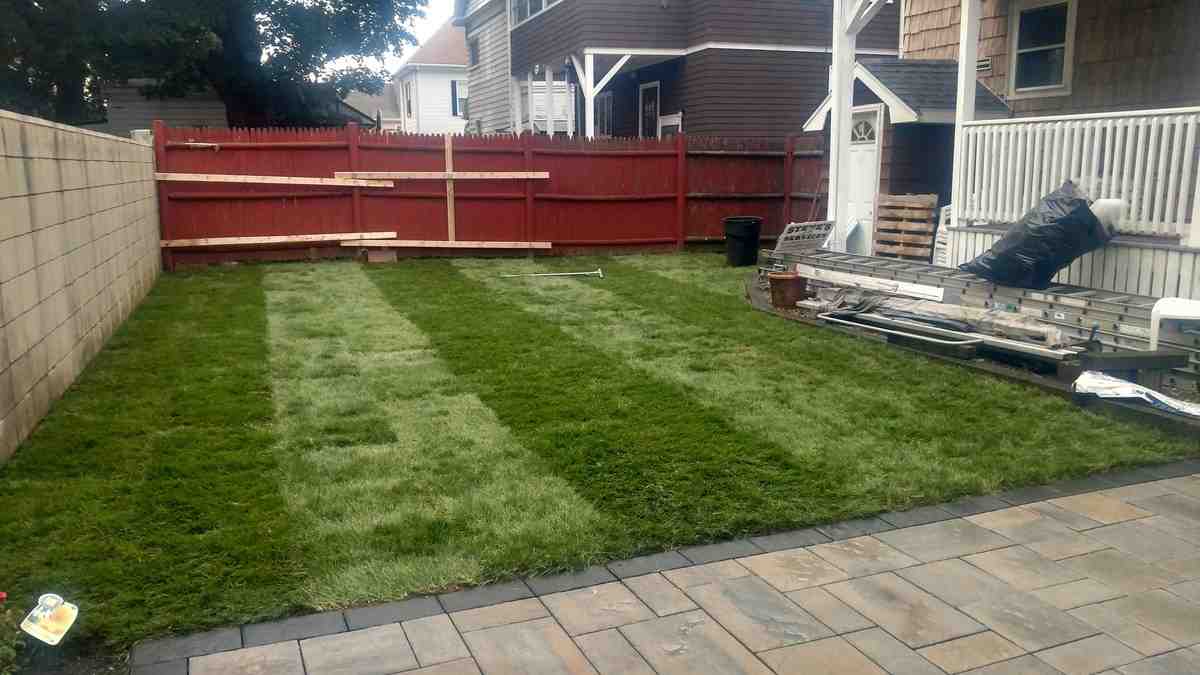
When you look at a patchy, brown yard, it’s easy to dream of a lush, emerald carpet that appears overnight. That “instant lawn” is exactly what sod provides. Beyond the immediate gratification, a professionally installed lawn significantly boosts your home’s curb appeal and can increase overall property value.
However, achieving that perfect look requires more than just unrolling some grass. Timing is everything—especially here in the Northeast. While you can technically lay sod whenever the ground isn’t frozen, the sweet spot is typically late summer or early fall when temperatures are milder and moisture is more consistent. Understanding the logistics and the true grass prices per square foot is the first step toward a successful transformation.
Understanding Average Sod Prices per Square Foot
When researching grass prices per square foot, it is important to distinguish between the cost of the raw material and the cost of a full-service installation. Based on broad internet data, the national average for sod material alone typically falls between $0.30 and $0.85 per square foot. However, premium varieties or local market demands can push those material costs higher.
When you factor in professional labor, the price naturally increases. According to How Much Does Sod Cost in 2026?, the average price with installation rises to roughly $1.65 per square foot, though in high-cost areas or complex projects, this can easily reach $6.00 or more. For more localized insights, you can check out more info about the price of sod per sq ft.
Disclaimer: These figures are based on general internet data and market averages. They do not represent the specific pricing of Steve’s Services. Our quotes are customized to your specific property needs.
The total range you might see for material and installation combined spans from roughly $1.00 per square foot on the low end to over $9.00 per square foot for high-end, specialty turf projects.
How Project Size Impacts Sod Prices per Square Foot
In landscaping, size often works in your favor. Most sod farms and suppliers offer “economies of scale.” This means that while a small patch of grass might have a high price per square foot, a large project often benefits from bulk discounts.
Sod is typically sold by the pallet. A standard pallet covers approximately 450 to 500 square feet. If your project requires multiple pallets, the cost per unit often drops. Conversely, if you only need a small amount, you might encounter “minimum order fees” or higher delivery charges because the logistics of moving a single pallet are nearly the same as moving five. For a deeper look at smaller projects, see these details on 500 sq ft sod pricing.
Regional Variations in Sod Prices per Square Foot
Where you live matters just as much as what you buy. In the Northeast, and specifically the Massachusetts market, prices tend to be higher than the national average. This is due to several factors:
- Climate: Our shorter growing season impacts sod farm production cycles.
- Labor Rates: Coastal and urban areas like Malden, Medford, and Winchester generally see higher labor costs than rural regions.
- Shipping: If the sod farm is located several hours away, fuel and transport fees will be reflected in your quote.
According to the Sod Installation Cost Guide, regional differences can swing the total project cost by 20% or more. In suburban areas like Lynnfield or Reading, accessibility is usually better than in dense urban spots like Everett or Revere, which can also influence the final tally.
Factors Influencing the Cost of Sod Installation
The “flatness” of your yard is a major price driver. A perfectly rectangular, level lot is a landscaper’s dream and keeps labor costs low. However, most yards aren’t that simple.
Several factors can increase the labor required:
- Yard Shape: Curves, tight corners, and cutting around flower beds or walkways require extra time and result in more material waste (usually 5-10%).
- Site Accessibility: Can we get a forklift or a Bobcat into the backyard? If we have to move pallets by hand through a narrow gate, the labor hours will climb.
- Soil Quality and Drainage: Sod won’t survive on hard-packed clay or sandy pits. If we need to install drainage systems or regrade the land to prevent pooling, those are essential “prep” costs.
You can learn more about sod installation price per sq ft to see how these variables play out in a real-world estimate.
Comparing Sod Types: From Bermuda to Zoysia
Not all grass is created equal. In Massachusetts, we primarily use “cool-season” grasses that can handle our snowy winters and humid summers.
- Kentucky Bluegrass: The gold standard for aesthetics. It’s lush and self-repairing but requires plenty of sun and water.
- Tall Fescue: A rugged choice that handles shade and drought better than Bluegrass. Many homeowners find this to be the best “all-around” value. You can find more research on fescue sod costs per sq ft here.
- Zoysia: While often associated with the South, some cold-hardy varieties exist. It’s incredibly dense and feels like a carpet, but it turns brown (dormant) earlier in the fall.
- Bermuda and St. Augustine: These are “warm-season” grasses. While popular in places like Houston or California, they aren’t suitable for the Massachusetts climate and usually aren’t offered by local suppliers.
When choosing, consider your yard’s sun exposure and how much “traffic” (kids, pets, sports) the lawn will endure.
Hidden Costs: Site Prep, Delivery, and Labor
This is where the “Don’t Get Buried” part of our guide comes in. The price of the grass is often the smallest part of the bill. To ensure your investment doesn’t die in two weeks, the following steps are non-negotiable:
- Old Grass Removal: We can’t lay new sod over old weeds. Stripping the existing turf and disposing of it is labor-intensive.
- Land Leveling and Grading: Essential for proper drainage and a smooth mow.
- Soil Amendments: We often add 2-4 inches of fresh topsoil or compost to give the roots a healthy home.
- Delivery Fees: A single pallet of sod can weigh up to 3,000 pounds. Specialized trucks are required for transport.
- Irrigation Adjustments: If you have a sprinkler system, it may need to be flagged and adjusted to ensure the new sod gets 100% coverage.
Using a Sod Installation Cost Calculator can give you a baseline, but it often misses the nuances of understanding how much is sod per sq ft when site-specific prep is involved.
Long-Term Value and Benefits of Natural Sod
While the upfront grass prices per square foot for sod are higher than seed, the long-term ROI is significant.
- Erosion Control: Sod provides instant stabilization for sloped yards.
- Weed Suppression: Because the grass is already mature and dense, it naturally chokes out most weed seeds, reducing your future herbicide costs.
- Property Value: A beautiful lawn is one of the few home improvements that begins paying for itself the moment it’s installed.
- Environmental Impact: Natural grass cools the air, traps dust, and filters rainwater—benefits you won’t get from hardscaping or artificial alternatives.
Frequently Asked Questions about Sod Prices
How many square feet are in a standard pallet of sod?
Most pallets in the Northeast cover between 450 and 500 square feet. Because sod is a heavy, organic product, the exact coverage can vary slightly by the farm’s cutting standards, but 500 is the standard benchmark for budgeting.
What are the long-term benefits and costs of natural sod?
The primary long-term benefit is an “instant” established ecosystem. Costs include regular mowing, fertilization (3-4 times a year), and consistent watering during the first few weeks of establishment. Over time, a healthy sod lawn requires less “rescue” work (like overseeding or heavy weeding) than a seeded lawn.
What is the best time of year to install new grass in the Northeast?
Late summer (late August) through September is ideal. The soil is warm, which encourages fast root growth, but the air is cooling down, which prevents the grass from drying out too quickly. Spring is the second-best option, though you’ll have to compete with more weed pressure.
Conclusion
At Steve’s Services Landscape Company, we know that a new lawn is a big investment. Whether you are in Malden, Melrose, or Stoneham, we believe in transparency when it comes to grass prices per square foot. Our goal is to provide professional expertise that ensures your sod takes root and flourishes for years to come.
We proudly serve the communities of Burlington, Everett, Lynnfield, Medford, Melrose, Reading, Revere, Saugus, Stoneham, Wakefield, Winchester, and Woburn. Don’t leave your lawn’s success to chance—or a “too good to be true” internet quote.
Ready to transform your yard? Request a quote for new lawn installation today and let us help you build a lawn that makes the neighbors green with envy.