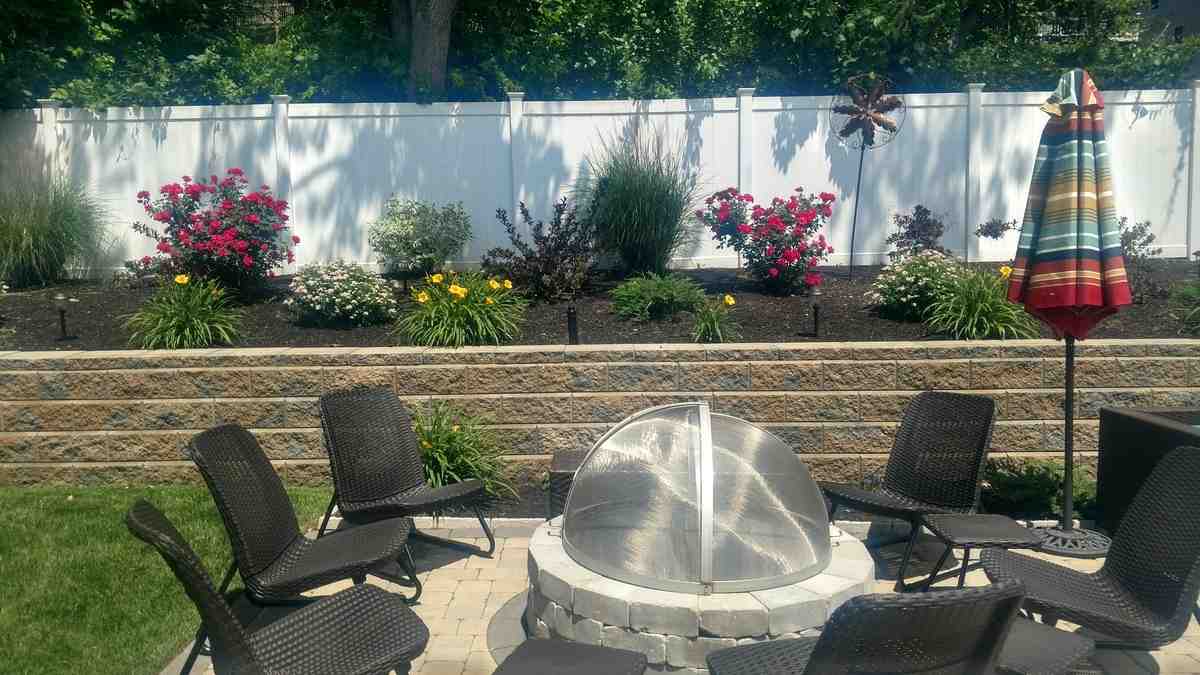
Why Custom Hardscaping in Burlington, MA Is Worth Planning Carefully
If you’re exploring custom hardscaping Burlington MA options — from poolside patios to stone walkways and retaining walls — here’s a quick summary of what you need to know:
Quick Answer: Custom Hardscaping in Burlington, MA at a Glance
| Topic | Key Facts |
|---|---|
| Most popular features | Patios, pool surrounds, fire pits, retaining walls, walkways, outdoor kitchens |
| Best materials for Burlington | Concrete pavers, bluestone, granite, permeable pavers |
| Typical project timeline | A few days (small patio) to several weeks (outdoor kitchen or pool deck) |
| Permits may be needed | Structural walls, excavation, gas lines, electrical, pool barriers |
| Maintenance required | Seasonal sweeping, joint sand, sealing, drainage checks, spring inspection |
| Average cost range* | Roughly $3,000–$75,000+ depending on scope and materials |
Internet-based averages only — not a quote from Steve’s Services.
Burlington’s freeze-thaw winters, glacial till soil, and mix of older suburban lots and newer builds make outdoor projects demanding. A patio or retaining wall that looks great in June can crack, heave, or drain poorly by March unless it’s designed with New England conditions in mind from the start. That’s the difference between a generic job and truly custom hardscaping built for this area.
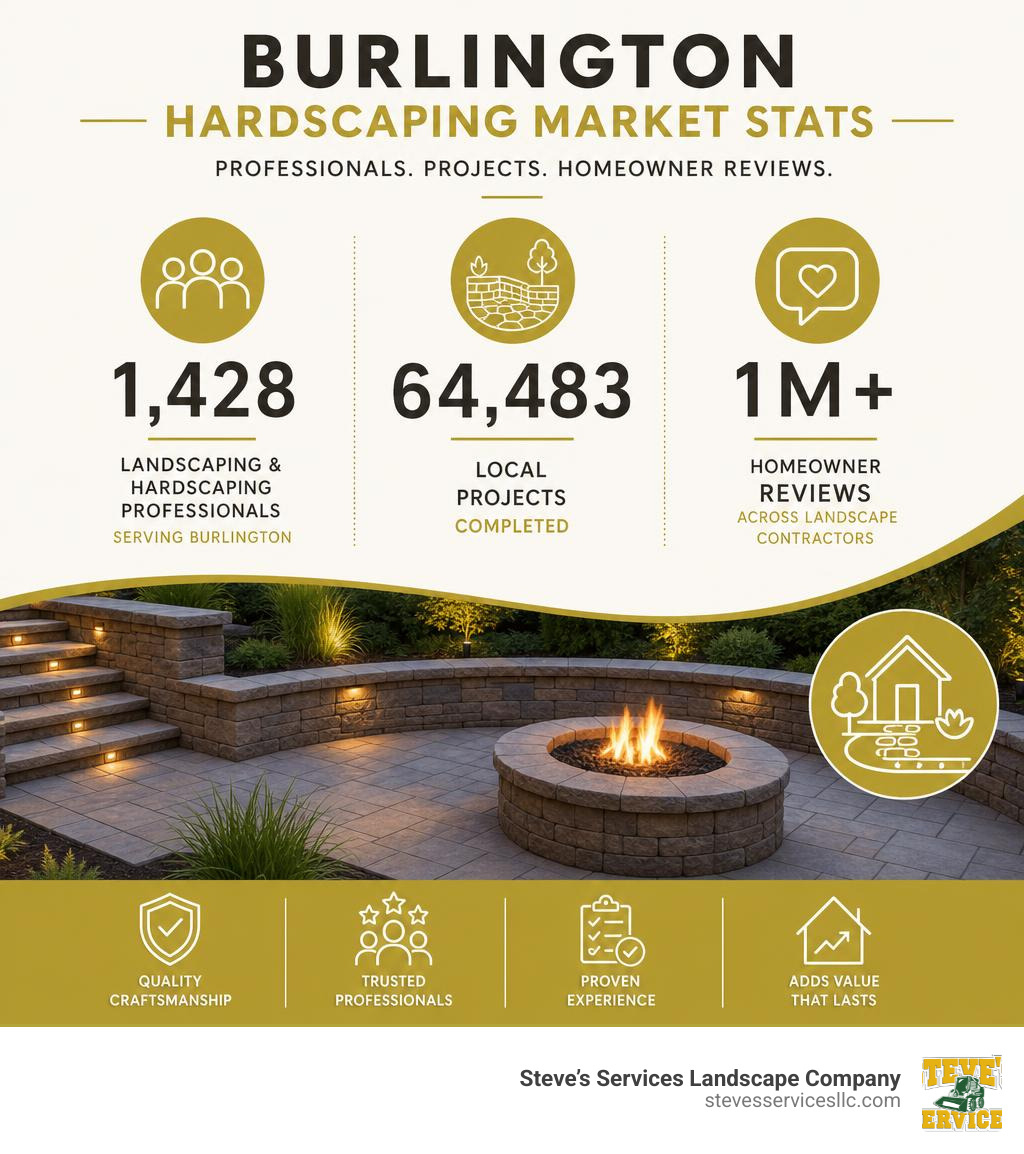
With over 1,400 landscaping and hardscaping professionals listed on Houzz serving the Burlington area — and more than 64,000 local projects completed — homeowners have plenty of options. Knowing what to look for, which materials hold up, and what the process involves will help you make a smarter decision.
I’m Steve Sylva, owner of Steve’s Services. With 25+ years delivering custom hardscaping in Burlington, MA and surrounding communities, I’ve seen what works and what fails in this climate. This guide covers everything you need to plan your project with confidence.
Custom hardscaping Burlington MA glossary:
What Custom Hardscaping Burlington MA Means for Your Home
Custom hardscaping is the planning, design, and installation of the non-living parts of your outdoor space. That includes patios, pool surrounds, walkways, retaining walls, outdoor kitchens, fire pits, steps, stone borders, paver driveways, seating walls, and drainage-focused masonry.
In simple terms: landscaping is the green stuff, hardscaping is the stone, block, paver, concrete, and masonry stuff. A great yard usually needs both.
For Burlington homeowners, custom hardscaping is not just about choosing pretty pavers. It is about building outdoor features that fit the home, the slope of the yard, the way water moves, how snow will be cleared, and how the space will be used in real life.
A custom plan accounts for:
- Where people naturally walk from the driveway to the front door
- How a patio connects to a deck, pool, kitchen door, or lawn
- Where water flows during heavy rain
- How freeze-thaw movement affects pavers and walls
- How much privacy is needed from neighbors
- Where lighting, seating, grilling, and fire features should go
- How the design will look with the home’s architecture
If you are comparing hardscape and softscape planning, our guide to Hardscaping and Landscaping explains how the two work together.
Custom Hardscaping Burlington MA vs. Standard Landscaping
Standard landscaping focuses on lawns, shrubs, mulch beds, seasonal color, trees, irrigation, pruning, and general yard maintenance. These services are important, but they do not create structural outdoor living areas by themselves.
Custom hardscaping Burlington MA projects are different because they involve construction. We are talking about excavation, grading, compacted base layers, masonry, paver installation, wall engineering, drainage design, and long-term durability.
Here is the practical difference:
| Standard Landscaping | Custom Hardscaping |
|---|---|
| Lawns, gardens, shrubs, mulch | Patios, walkways, walls, steps |
| Seasonal growth and maintenance | Structural outdoor features |
| Soil, plants, irrigation | Stone, pavers, block, concrete |
| Aesthetic and ecological function | Usability, access, drainage, outdoor living |
| Changes over time as plants grow | Built for long-term performance |
A Burlington backyard may need both. For example, a poolside patio with a retaining wall looks unfinished without plantings, lighting, and irrigation. Likewise, a beautiful lawn may not solve a muddy traffic path from the driveway to the back gate. That is where hardscaping earns its keep.
Why Burlington Properties Need Climate-Smart Hardscape Planning
Burlington, MA sits in classic New England territory: cold winters, wet springs, humid summers, fall leaf loads, snow, ice, and repeated freeze-thaw cycles. That means hardscapes must be designed to move water away, flex when needed, and avoid trapping moisture where it can freeze and expand.
Local conditions that affect hardscape projects include:
- Mixed glacial till soils: Burlington properties can have rocky, compacted, or variable soils that require proper excavation and base preparation.
- Seasonal heaving: Water in the soil freezes, expands, and pushes upward. Poorly built patios and walkways can become uneven.
- Snow and ice exposure: Walkways, steps, driveways, and pool patios need traction and durable materials.
- Drainage challenges: Sloped lots, older grading, and compacted soils can send water toward foundations or low patio areas.
- Suburban lot layouts: Many Burlington homes from the 1960s through 1980s have mature yards, older walkways, settled concrete, or limited access for equipment.
- Newer rebuilds and additions: Teardown-rebuild activity can create opportunities to modernize outdoor living, but it also requires careful coordination with grading, utilities, and setbacks.
The goal is simple: build something that still looks good after February has had its way with it. New England does not give participation trophies to poorly compacted patios.
Popular Custom Hardscape Features: Patios, Pools, Fire Pits, Walls, and Walkways
Burlington homeowners often want outdoor spaces that feel like an extension of the home. The most requested features are practical, attractive, and useful for entertaining.
High-demand hardscaping features include:
- Paver patios
- Pool surrounds and pool coping
- Outdoor dining areas
- Fire pits and fireplaces
- Retaining walls
- Seating walls
- Walkways and front paths
- Stone steps and entry stairs
- Outdoor kitchens and grill stations
- Paver driveways
- Terraces for sloped yards
- Water features
- Privacy walls and stone borders
- Landscape lighting integration
For a broader look at options, visit our Hardscaping Services page.
Poolside Hardscaping Ideas for Burlington Backyards
Poolside hardscaping needs special planning because it must handle water, foot traffic, bare feet, sun exposure, drainage, and safety.
Popular poolside hardscape ideas include:
- Slip-resistant pool patios: Textured concrete pavers, natural stone, or other traction-friendly surfaces.
- Pool coping: A finished edge around the pool that protects the shell and improves comfort.
- Drainage channels: Subtle systems that move splash water and rain away from the pool deck.
- Retaining walls: Helpful when the pool sits on a sloped property.
- Privacy walls or planted borders: Useful for suburban lots where neighbors are close.
- Lounge zones: Dedicated areas for chairs, umbrellas, and tables.
- Outdoor showers: A practical add-on near pools.
- Low-voltage lighting: Safer movement at night and a better atmosphere.
- Pergolas or shade structures: Relief from hot summer sun.
- Stone borders: A clean transition between pool patio, lawn, and planting beds.
Poolside materials should stay comfortable underfoot, resist water damage, and provide traction. Dark surfaces can become hot in summer, so material color matters more around a pool than many homeowners expect.
Patios, Deck Connections, and Outdoor Dining Areas
A patio is often the heart of a custom hardscape. It may serve as an outdoor dining room, grilling zone, conversation area, or transition between the house and yard.
Good patio design considers:
- Table and chair clearances
- Grill placement and smoke direction
- Steps from doors and decks
- Traffic flow to the pool, lawn, driveway, or garden
- Drainage pitch away from the house
- Lighting and electrical needs
- Furniture size, not just patio square footage
Common patio materials in Burlington include concrete pavers, bluestone, granite accents, and natural stone. Pavers are popular because they offer design flexibility and can handle freeze-thaw movement when installed over the right base.
If your project involves a patio or deck connection, see our Patios and Decks services.
Fire Pits, Fireplaces, and Outdoor Kitchens
Fire features are popular in Burlington because they extend outdoor living into cooler spring and fall evenings. A fire pit can turn a basic patio into a gathering space.
Common options include:
- Wood-burning fire pits
- Gas fire pits
- Built-in masonry fireplaces
- Fire bowls
- Seat walls around fire areas
- Grill islands
- Built-in prep counters
- Outdoor kitchens with storage
Outdoor kitchens require more coordination than basic patios. Gas lines, electrical outlets, lighting, appliance clearances, and counter materials all need to be planned early. If utilities are involved, licensed trade work and permits may be required.
Fire features should also be located with safety in mind, away from structures, low branches, fencing, and high-traffic walkways.
Retaining Walls, Walkways, Steps, and Front Entries
Retaining walls are not just decorative. In Burlington yards, they often solve slope, erosion, and drainage issues. They can turn an awkward hill into a usable patio, lawn, garden, or pool area.
A properly planned retaining wall may include:
- Compacted base material
- Drainage stone
- Filter fabric
- Weep holes or drain pipe
- Proper setback or batter
- Suitable wall block or natural stone
- Engineering review for taller or structural walls
Walkways and steps are equally important. They affect curb appeal, safety, and daily convenience. A front walkway should be wide enough, easy to navigate, and pitched correctly so water does not sit and freeze.
Explore our services for Retaining Walls and Walkways if these are part of your plan.
Best Materials for Burlington’s Freeze-Thaw Climate and Soil Conditions
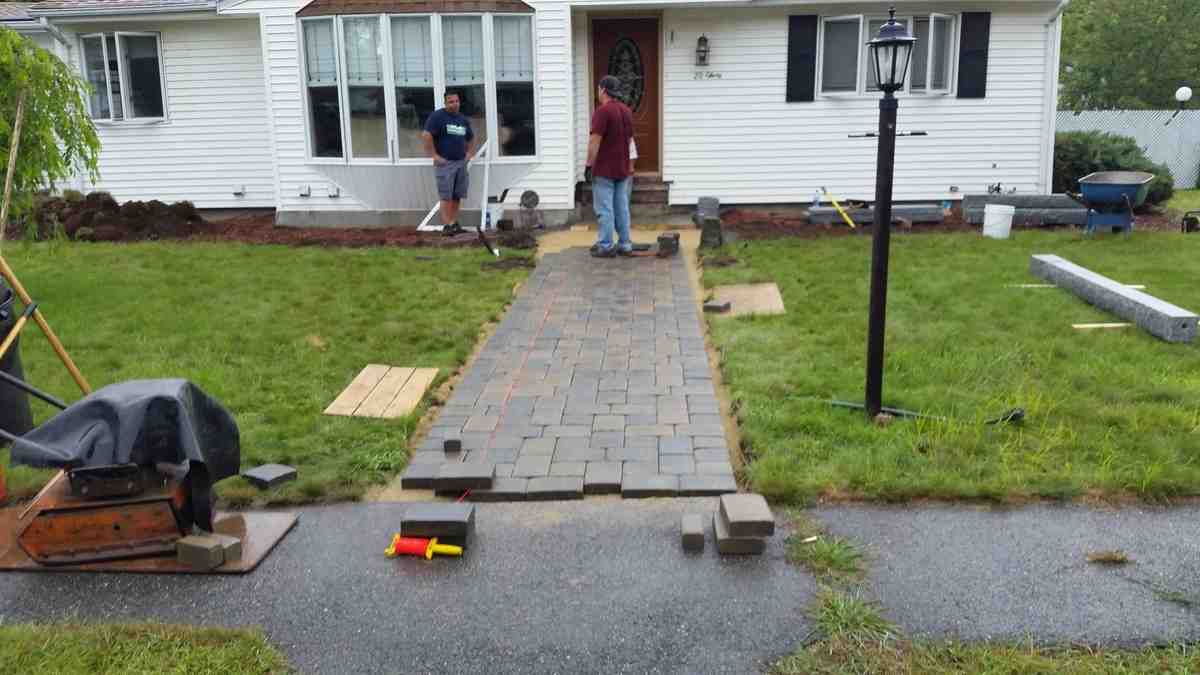
The best hardscape material is the one that fits the use, budget, style, and site conditions. Burlington’s climate rewards materials that handle moisture, frost, salt exposure, and temperature swings.
| Material | Freeze-Thaw Durability | Traction | Maintenance | Cost Tier | Pool Suitability | Drainage Performance | Design Style |
|---|---|---|---|---|---|---|---|
| Concrete pavers | High when installed properly | Good | Moderate | $$ | Good | Good with proper base | Flexible, modern, traditional |
| Permeable pavers | High | Good | Moderate | $$$ | Good if detailed correctly | Excellent | Modern, eco-friendly |
| Bluestone | Good to high | Good if textured | Moderate | $$$ | Good, can get warm | Moderate | Natural, classic New England |
| Granite | Excellent | Good if thermal finish | Low to moderate | $$$$ | Excellent for coping and accents | Moderate | Premium, timeless |
| Brick | Moderate to good | Good | Moderate | $$-$$$ | Fair to good | Moderate | Traditional |
| Cobblestone | Excellent | Uneven for bare feet | Low | $$$$ | Better as border/accent | Moderate | Historic, durable |
| Retaining wall block | High | Not a walking surface | Low to moderate | $$-$$$$ | Useful near pools | Good with drainage | Structural, clean |
Pavers, Natural Stone, Granite, and Bluestone
Concrete pavers are one of the most practical choices for Burlington patios, walkways, and pool decks. Interlocking paver systems can tolerate small movements better than rigid concrete slabs because the joints allow flexibility.
Natural stone, including bluestone and flagstone, offers a high-end look. Bluestone is especially popular in New England because it pairs well with colonial, cape, ranch, and updated suburban homes. Granite is extremely durable and works beautifully for steps, borders, coping, and accents.
Brick and cobblestone can be excellent for traditional designs, especially front walks and driveway aprons. Around pools, however, surface texture and comfort matter. Cobblestone may look great but is not always the friendliest surface for bare feet. Your toes will have opinions.
Polymeric sand is commonly used in paver joints to reduce weed growth, stabilize the surface, and resist washout. It still requires proper installation and occasional maintenance.
Drainage, Base Preparation, and Soil Stabilization
The base is what separates a long-lasting hardscape from one that shifts after a few winters. The visible paver or stone is only the top layer. Underneath, a successful installation usually includes excavation, compacted crushed stone, bedding material, proper pitch, and edge restraint.
Drainage and base details may include:
- Crushed stone base
- Mechanical compaction
- Geotextile fabric where soil conditions require separation
- Proper slope away from the foundation
- French drains
- Swales
- Permeable paver systems
- Downspout routing
- Wall drainage pipe
- Stormwater infiltration areas
For Burlington homes with mixed soils or slope changes, base preparation is not the place to save a few dollars. It is the part you never see, but it decides whether the surface stays level.
Learn more about our construction approach on our Hardscape Construction page.
Eco-Friendly and Sustainable Hardscaping Options
Sustainable hardscaping is becoming more popular in Burlington because homeowners want attractive yards that also manage water responsibly.
Eco-friendly options include:
- Permeable pavers: Allow water to filter through joints into a stone base below.
- Local or regional stone: Can reduce transportation impact and fit the New England look.
- Rain gardens near hardscapes: Help absorb runoff from patios and walkways.
- Native plant integration: Adds habitat value and reduces maintenance when paired with hardscape borders.
- Reduced lawn area: Less mowing, watering, and fertilizer use.
- Light-colored surfaces: Help reduce heat buildup compared with dark paving.
- Efficient irrigation: Keeps nearby plantings healthy without overwatering.
- Recycled-content materials: Available in some paver and hardscape products.
A balanced plan combines hardscape and landscape so the yard drains well, looks natural, and does not feel like an airport runway. For more planning basics, read The Essential Guide to Understanding Hardscape and Landscape Services.
Codes, Permits, HOA Rules, Costs, and Project Timelines in Burlington
Permits, zoning, utility coordination, and neighborhood rules can affect custom hardscaping in Burlington. Not every patio needs a permit, but many projects require review when structural work, utilities, grading changes, pool barriers, or drainage impacts are involved.
Before excavation, contractors must also coordinate utility mark-outs through Dig Safe. This is especially important for outdoor kitchens, lighting, gas fire pits, pool work, and projects near driveways or utility lines.
Permits and Local Rules That May Affect Your Project
Rules vary by project, property, and location. Burlington homeowners may need to consider:
- Building permits for certain walls, stairs, structures, or outdoor kitchen elements
- Zoning setbacks from property lines
- Easements
- Wetlands or Conservation Commission review if near protected resource areas
- Stormwater rules and drainage discharge restrictions
- Impervious surface limits
- Pool fencing and barrier requirements
- Electrical permits for lighting, outlets, and pool equipment
- Gas permits for fire pits, grills, or outdoor kitchens
- HOA or neighborhood covenants where applicable
- Access restrictions for equipment and excavation
A good contractor should help identify likely permit triggers early. The worst time to discover a rule is after materials are delivered and half the yard is open.
Internet-Based Average Cost Ranges for Custom Hardscaping
The following are broad internet-based averages only and are not specific quotes from Steve’s Services. Actual pricing depends on site access, materials, excavation, drainage, base depth, design complexity, permits, utilities, and finish level.
| Project Type | Broad Internet-Based Average Range |
|---|---|
| Simple walkway | $3,000-$15,000+ |
| Small to mid-size patio | $5,000-$30,000+ |
| Larger custom patio | $15,000-$60,000+ |
| Poolside hardscape or pool deck | $20,000-$90,000+ |
| Fire pit area | $4,000-$25,000+ |
| Retaining wall | $8,000-$75,000+ |
| Outdoor kitchen | $15,000-$100,000+ |
| Full backyard transformation | $40,000-$200,000+ |
Factors that influence price include material selection, square footage, demolition, excavation depth, soil conditions, drainage needs, wall height, poolside detailing, utility work, lighting, access, permit requirements, and design complexity.
For example, a basic paver patio on a flat, accessible yard will usually cost far less than a poolside patio with retaining walls, lighting, drainage, coping, and an outdoor kitchen.
How Long Design and Installation Usually Take
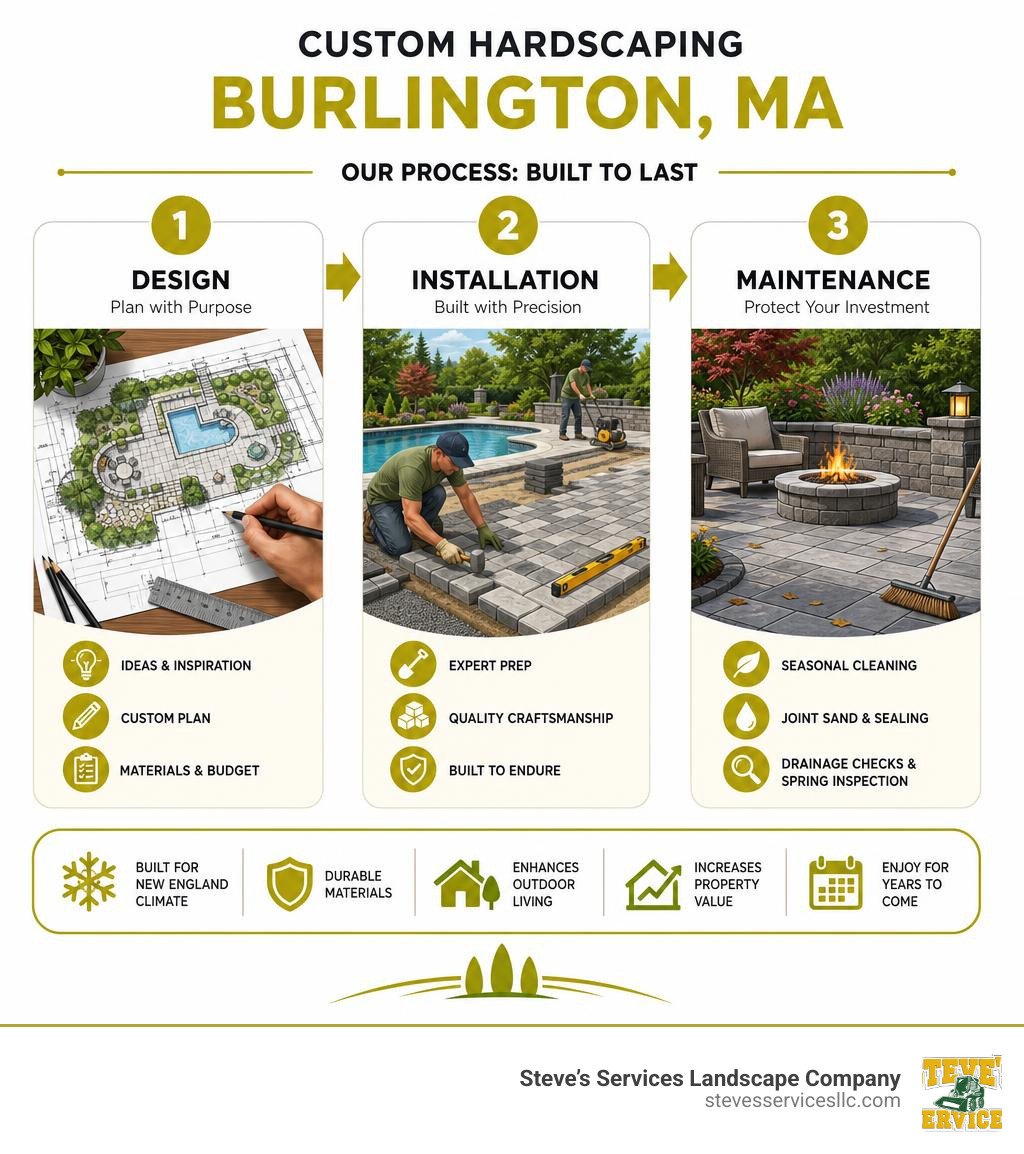
Most custom hardscaping projects follow a similar process:
- Initial consultation
- Site visit and measurements
- Design discussion
- Material selection
- Estimate and scope review
- Permit review if needed
- Scheduling
- Excavation and base installation
- Paver, stone, wall, or masonry installation
- Joint sand, cleanup, grading, and final walkthrough
Typical timelines:
| Project Scope | Common Timeline |
|---|---|
| Small walkway or landing | A few days to 1 week |
| Standard patio | 1-2 weeks |
| Patio with fire pit or seating wall | 1-3 weeks |
| Retaining wall project | 1-4 weeks |
| Poolside hardscape | 2-6+ weeks |
| Outdoor kitchen or full backyard | 4-10+ weeks |
Weather can stretch timelines. Heavy rain, frozen ground, material delays, utility coordination, and permit review can all add time. In New England, scheduling is part construction science and part weather negotiation.
Maintenance, Property Value, and Choosing the Right Hardscaping Contractor
A well-built hardscape is lower maintenance than a lawn, but it is not zero maintenance. Seasonal care keeps patios, walkways, walls, and pool surrounds looking sharp and performing properly.
Industry directory data shows the Burlington-area market is active, with 1,428 landscaping and hardscaping professionals listed on Houzz serving the area, 64,483 local projects completed, and more than 1 million homeowner reviews across landscape contractors. That means homeowners have many choices, but it also means contractor vetting matters.
Year-Round Hardscape Maintenance in New England
Recommended maintenance includes:
- Sweep patios and walkways regularly
- Rinse surfaces when dirt, pollen, or pool residue builds up
- Refill or refresh joint sand as needed
- Remove leaves before they stain
- Clean food, grease, and fire pit stains quickly
- Inspect drainage after heavy rain
- Check for low spots or edge movement in spring
- Seal pavers or stone when appropriate
- Control moss in shaded, damp areas
- Avoid harsh deicing chemicals when possible
- Use plastic-edged snow shovels or proper snow equipment
- Keep drains and channel grates clear
- Schedule fall cleanup before freeze season
For pavers, joint maintenance is especially important. If joints wash out, weeds and movement become more likely. For walls, watch for bulging, leaning, blocked drains, or soil washing through the face.
We offer support through our Hardscape Maintenance Service.
How Custom Hardscaping Adds Value and Curb Appeal
Custom hardscaping can improve property value by making the yard more usable, attractive, and functional. While exact return on investment depends on the home and market, buyers often respond well to outdoor spaces that feel finished and easy to enjoy.
Value-boosting benefits include:
- Expanded outdoor living space
- Better first impression from the street
- Safer, more attractive walkways and steps
- Improved drainage around the home
- Lower lawn maintenance
- More useful pool areas
- Better entertaining space
- Defined outdoor dining and seating zones
- Improved access around the property
- A design that fits the neighborhood and architecture
In Burlington neighborhoods, a thoughtfully designed front walk, stone steps, or patio can make an older home feel updated without losing its character. For more on this topic, see Hardscaping Enhancing Your Property’s Value and Aesthetic Appeal.
How to Choose a Reputable Burlington-Area Hardscaping Contractor
Choosing the right contractor is one of the most important decisions in the project. The finished surface matters, but the hidden base, drainage, and construction process matter even more.
Look for:
- Local experience in Burlington and nearby communities
- Proper insurance
- Relevant licensing or qualified trade coordination where required
- A portfolio of similar hardscape projects
- Clear written scope of work
- Knowledge of pavers, stone, walls, drainage, and grading
- Understanding of freeze-thaw construction
- Permit guidance
- Realistic timelines
- Clear communication
- Material recommendations based on site conditions
- References or verified reviews
- Warranty information
- A plan for cleanup and final walkthrough
Be cautious if a proposal is vague, unusually low, or skips drainage and base preparation. Hardscaping is not just surface decoration. It is construction that lives outside in New England weather all year.
If you are comparing options, our resources on finding a Hardscaping Contractor Near Me and choosing a Hardscaping Contractor can help.
Frequently Asked Questions About Custom Hardscaping in Burlington, MA
What is the best hardscaping material for Burlington, MA?
The best materials for Burlington are typically concrete pavers, permeable pavers, granite, and bluestone. These materials can perform well in freeze-thaw conditions when installed over the right base.
- Concrete pavers: Great for patios, walkways, and pool decks because they are flexible, durable, and available in many styles.
- Granite: Excellent for steps, borders, coping, and premium accents.
- Bluestone: A classic New England choice for patios and walkways.
- Permeable pavers: Best when drainage and stormwater management are priorities.
- Cobblestone and brick: Strong choices for traditional designs, borders, and front entries.
Around a pool, we usually look for textured surfaces, safe edges, proper drainage, and materials that are comfortable for bare feet.
Do Burlington homeowners need a permit for patios, retaining walls, or outdoor kitchens?
Sometimes. A simple ground-level patio may not require the same approvals as a structural retaining wall, outdoor kitchen, gas fire pit, electrical lighting system, or poolside project.
Permit triggers may include structural retaining walls, major excavation, significant grading changes, drainage changes, gas lines, electrical work, outdoor kitchens, pool barriers, work near wetlands, or work near easements. Because rules depend on the property and project details, it is best to review requirements before work begins. We help homeowners think through these issues during planning.
Can hardscaping help fix drainage problems around a Burlington home?
Yes, hardscaping can help manage drainage when it is designed correctly. Poorly designed hardscaping can make drainage worse, so the details matter.
Drainage solutions may include:
- Pitching patios away from the house
- Installing permeable pavers
- Adding crushed stone drainage layers
- Routing downspouts away from hardscape areas
- Building retaining walls with proper drain pipe and stone
- Creating swales
- Installing French drains
- Reducing runoff toward foundations
- Stabilizing slopes and erosion-prone areas
A good hardscape plan should consider where water comes from, where it goes, and what happens during heavy rain or snowmelt.
Conclusion
Custom hardscaping can completely change how a Burlington property looks, feels, and functions. From patios and pool surrounds to retaining walls, walkways, outdoor kitchens, and fire features, the right design gives you more usable space and better long-term performance in New England weather.
The key is planning for Burlington’s real conditions: freeze-thaw cycles, mixed soils, snow, drainage, grading, and local rules. Pretty materials matter, but proper base preparation, drainage, and construction details are what keep the project looking good year after year.
At Steve’s Services, we are based in Malden and proudly serve Burlington, Medford, Melrose, Reading, North Reading, Woburn, Winchester, Stoneham, Wakefield, Saugus, Revere, Everett, Lynnfield, Danvers, and nearby communities. We specialize in landscaping, hardscaping, irrigation systems, and commercial snow management, and we bring practical New England experience to every outdoor project.
If you are ready to plan a patio, poolside space, retaining wall, walkway, or complete outdoor living area, schedule a hardscaping consultation with our team.